By Sleepy
On the early morning of June 9, 2026, Beijing Time, Apple's WWDC 2026 arrived as scheduled.
During the event, Siri was renamed Siri AI. Apple announced a deep partnership with Google, utilizing Gemini's modeling capability to train its next-generation foundational model. For the first time, Private Cloud Compute was extended to Google Cloud and Nvidia's GPUs.
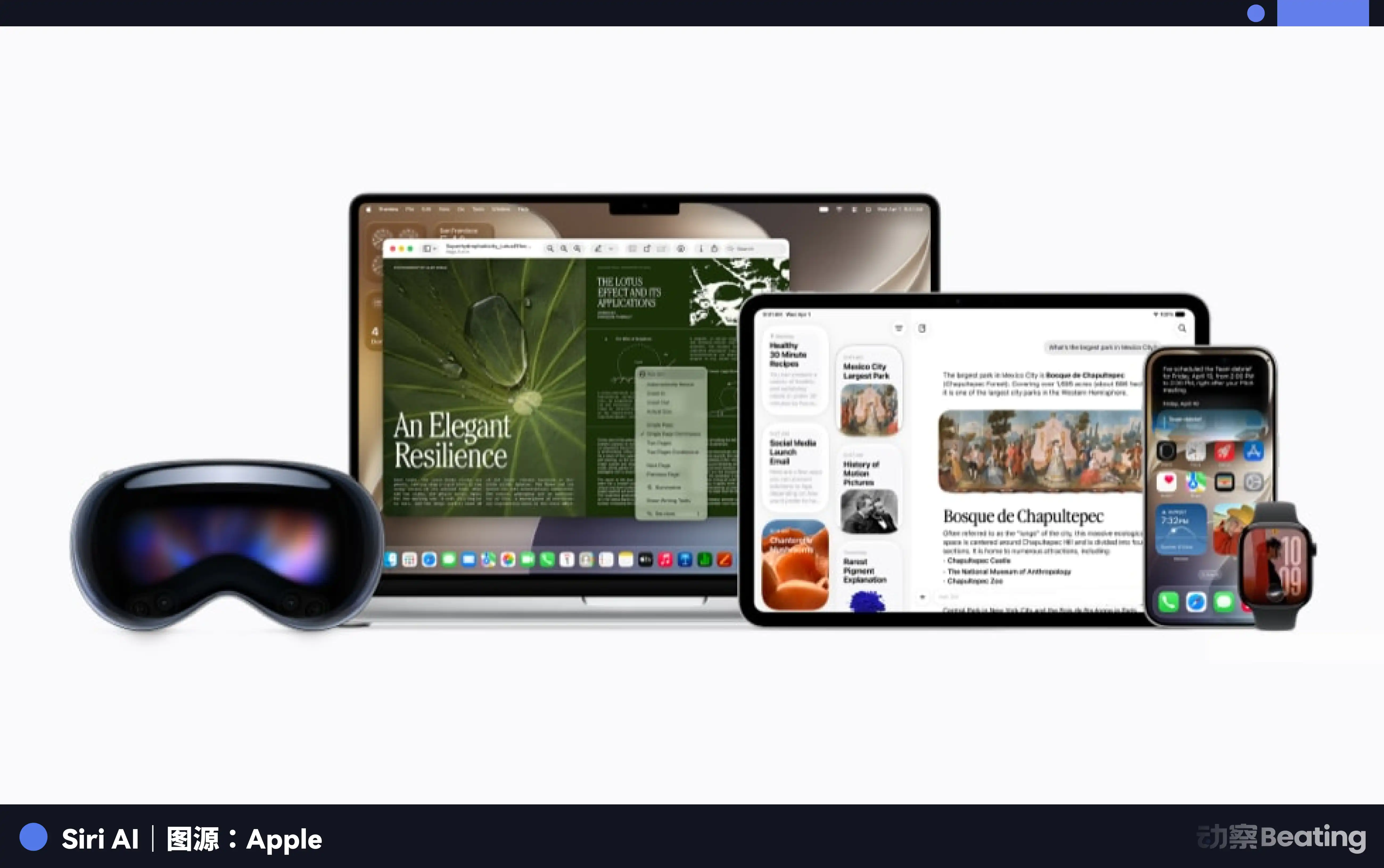
Apple introduced five Apple Foundation Models, with a minimum of 3 billion parameters at the edge and the largest optimized for Nvidia GPUs in the cloud. Almost every everyday app was rewritten from scratch. Siri now has its own standalone app, can save conversations, sync across devices, and has gained memory.
This was Apple's most information-packed event in recent years.
Taming a Future
Apple's AI story can be traced back to the fall of 2011, at the iPhone 4S launch event where Siri stepped onto the stage for the first time.
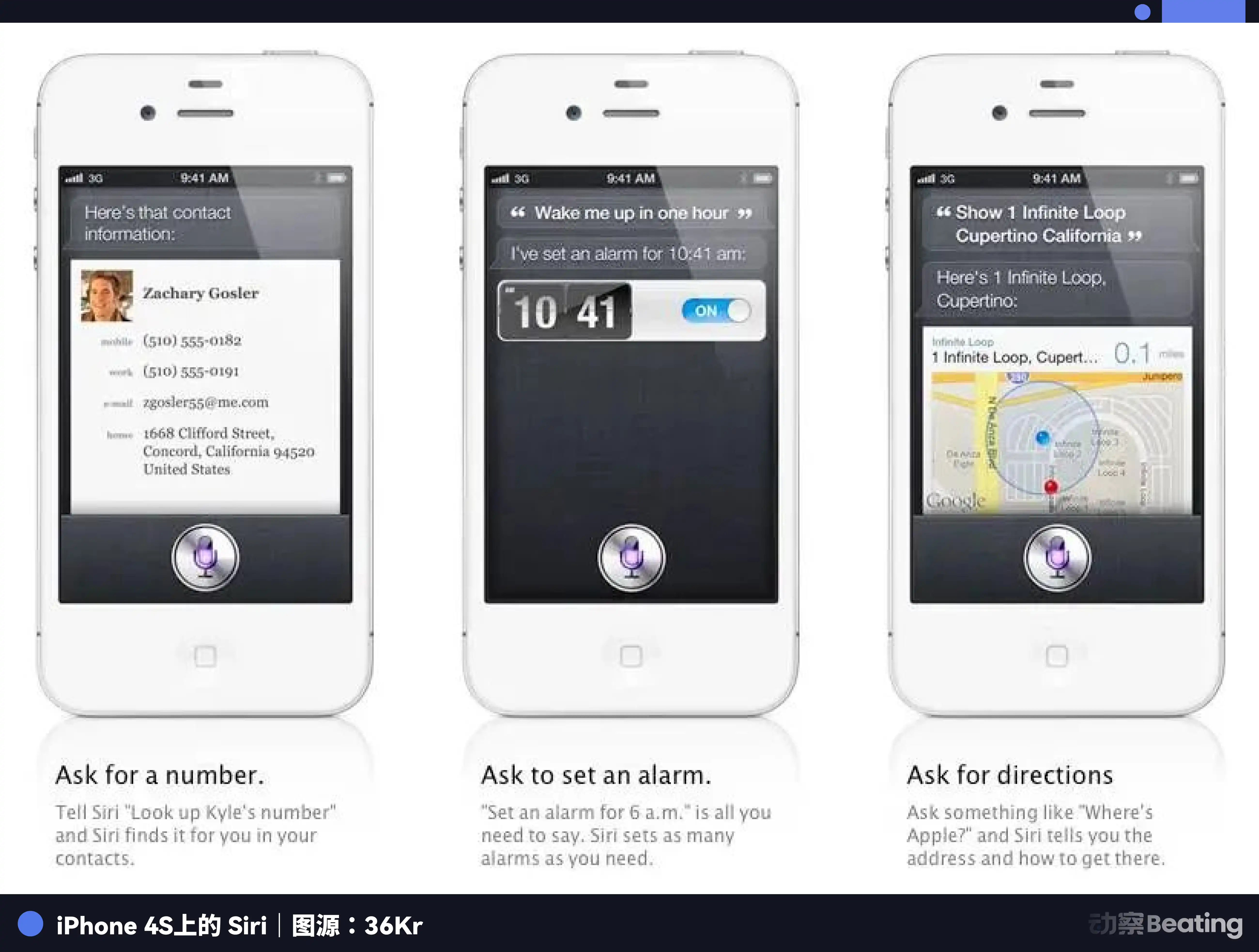
At that time, Steve Jobs was already seriously ill, and Apple was standing at the cusp of an era. Siri appeared like a creature from a sci-fi movie. You could ask about the weather, restaurants, set an alarm, and it would respond in a slightly mechanical voice, making you feel for the first time that your phone was more than just a cold piece of glass.
Siri originated from SRI International's CALO project, originally a military-grade AI assistant funded by DARPA. In 2010, Apple acquired it, reportedly for over $200 million, according to TechCrunch. A year later, Siri debuted with the iPhone 4S, with Apple claiming it could understand natural language and act as a personal assistant for you.
At that moment, Apple obtained the world's best personal AI interface. Then it stalled for over a decade.
Looking back today, the first thing Siri changed was the way humans interacted with machines. In 2011, as the iPhone was transforming from a communication tool to a personal computing device, the App Store was redefining software distribution, and the mobile internet was shifting from desktop PCs to the palm of our hands. Siri emerged at the peak of this rising wave. However, after joining Apple, it quickly transitioned from an ambitious personal assistant to a compliant voice remote control.
Apple inherently believes in closed-loop control. But a true personal assistant needs to access more services, understand more context, and tolerate more uncertainty. And uncertainty means making mistakes, facing privacy risks, and dealing with the disorder that Apple is least adept at handling.
So Siri is only allowed to perform deterministic tasks, like a tamed creature of the future. It has a name, a voice, a personality package, but lacks the initiative and memory required by a true personality. Users were initially amazed by it, then made fun of it, and eventually hardly used it.
Apple was the first to put a "personal assistant" into a phone, only to lock it up later.
Looking back at the Agent that the entire industry is working on today, the Siri of 2011 was almost its prototype. It could be said that Apple was the first company to create a rudimentary Agent, but ended up being the last one to complete it.
AI That's Not Like AI
In the years when Siri didn't grow up, has Apple's AI progress stalled?
The answer is quite the opposite. Apple has done a lot of AI, just not in a way that resembles traditional AI.
If we consider the volume of announcements at events, Apple seems to have only started taking AI seriously in 2024. However, looking back along the technological path, Apple has been taking action for the past decade.
In 2015, Apple acquired two companies in succession—one focused on natural language dialogue and the other exploring running deep learning directly on mobile phones. That same year at WWDC, they introduced the Proactive Assistant, attempting to provide suggestions to users before they even ask. This idea was very forward-thinking, but under the technological conditions at the time, it was more like a slogan.
The following year, they launched SiriKit, partially opening Siri to developers, and publicly discussed Differential Privacy, stating their intention to learn from large-scale data while protecting individual privacy. In 2017, with the iPhone X, Apple introduced the Neural Engine, Face ID, and a camera that relied on on-device machine learning. Apple also released Core ML, enabling developers to run models on Apple devices, and acquired Workflow, which later became Shortcuts.
These are very Apple-esque responses. Apple wants AI, but doesn't want to bet on the cloud and massive personal data like Google does. They want developers involved but don't want Siri to turn into a mishmash. So Apple chose the most difficult and slowest path: doing things on the device side, focusing on privacy, and integrating into the system.
Around 2020, Apple successively acquired several companies specializing in low-power edge AI and speech recognition. In the same year, the M1 chip was released, featuring a 16-core Neural Engine on Mac, advancing on-device AI capabilities from smartphones to computers. The following year, Live Text and Visual Look Up were launched, allowing text in photos to be directly copied, the camera to recognize objects like flowers and plants, and more voice commands to be processed on-device.
Over the past decade, Apple indeed did not release a standalone AI App, but it did make smartphones smarter.
There is a reason why Apple chose this path. The AI on the phone is not just a question-answering machine; it needs to analyze photos, understand speech, recognize contacts, launch apps, monitor battery life, location, and time. Ideally, it should be able to perform some tasks offline and not package every user request to the cloud. Apple's hardware control gives it the authority to take this path.
However, there is a deep chasm between localized intelligence and overall smartness. Apple excels at breaking down technology into reliable components, while generative AI requires it to piece these components together into a whole.
These components quietly lie within the system, waiting for an opportunity.
But the opportunity did not come first. ChatGPT arrived first.
By the end of 2022, when ChatGPT emerged, Apple was not unprepared. Tim Cook has repeatedly emphasized in various instances that AI and machine learning are core technologies of Apple products over the years, and Bloomberg revealed in 2023 that Apple internally has the Ajax large-scale model framework and an internal Chatbot project.
However, the issue is not whether Apple holds the cards, but that the rules of the game on the table have changed.
ChatGPT shifted users' focus from "function" to "capability." Users now expect AI to be a standard feature on their phones and then compare which is more powerful. When ChatGPT can already organize a jumble of thoughts into a coherent email, Siri is still saying, "I found this online."
At WWDC in 2024, Apple unveiled Apple Intelligence. Writing tools, notification summaries, photo searches, personalized Siri understanding, and integration with ChatGPT. Apple finally acknowledged that solely relying on in-house models, at least by 2024, couldn't meet user expectations. However, the promises Apple made did not materialize as quickly as advertised.
$111.4 million
Google as Siri's Tutor
Behind the delay of Apple Intelligence was not just a technological lag, but the entire Siri team's inability to keep up with this AI wave.
Multiple media sources have confirmed that Apple's former AI chief, John Giannandrea, has exited, with Craig Federighi taking over the AI direction. Mike Rockwell, head of Vision Pro, has been brought in to lead the Siri team, and a large number of Siri engineers have been sent to learn AI programming tools. This is not just a decent rotation; Apple internally has realized that they cannot keep up with the current pace with the same people and the same approach.
In January 2026, Apple and Google released a joint statement, announcing that Apple will leverage Gemini technology to customize Apple Intelligence features for the iPhone and other products. Reportedly, Apple plans to pay Google about $1 billion annually, using a customized Gemini model at a 1.2 trillion parameter level to support Siri's transformation. Apple had also tested models from OpenAI and Anthropic before ultimately choosing Google.
This is entirely different from the ChatGPT integration in 2024. That time, ChatGPT was more like a savior that users authorized when Siri couldn't respond, with the brand being OpenAI and the interface being pop-up style. This time, Gemini goes directly to the core, becoming part of Apple's new generation foundational model.
The key action is distillation. Google has given Apple full access to Gemini, allowing Apple to use large models in Google data centers to generate high-quality answers and reasoning processes, and then take these results to train smaller, cheaper models that can run on the iPhone.
The day before WWDC, Apple's published technical article packaged this collaboration as the third-generation Apple Foundation Models, co-developing five models with Google. On the client-side, there is the 30 billion parameter AFM 3 Core, as well as the 200 billion parameter AFM 3 Core Advanced, which only activates a portion upon request. On the cloud side, there are AFM 3 Cloud and image model ADM 3 Cloud, and the most powerful AFM 3 Cloud Pro.
A more tangible shift is seen in computing power. No matter how smart the on-device model is, it cannot handle all tasks. Apple's Private Cloud Compute infrastructure struggles to independently support full Gemini-level inference, with some requests offloaded to Google Cloud's Nvidia GPUs. Apple later confirmed that PCC had expanded beyond Apple's own data centers for the first time, incorporating technologies such as Nvidia Confidential Computing, Intel TDX, and Google Titan chips. Apple emphasized that it still maintains control of PCC software, with devices only trusting programs approved by Apple's encryption. The related binaries will also be open for security researchers to inspect.
Apple has not relinquished true control but has given up full self-sufficiency.
Borrowed Bones
To understand Apple's position in the AI age, one must first recognize its most core asset.
It's not the chip, not the model, but the device. Inside these devices are Photos, Mail, Calendar, Maps, and Apple Pay, carrying a wealth of ordinary people's life fragments. Whichever AI can tap into these fragments is not just a chatbot; it can become a true personal intelligent hub.
Apple began laying the groundwork for this hub early on. The acquisition of Workflow in 2017 later evolved into Shortcuts, deeply integrated with Siri and system automation. The introduction of App Intents in 2022 allows third-party apps to expose their capabilities to system entry points. In the era of Apple Intelligence, these interfaces have become the hands and feet for AI to invoke real-world actions.
With these interfaces, OpenAI can come in, Gemini can come in, the Chinese market can find local partners in the future. However, their entry is not about taking over the iPhone directly; it is about being incorporated into Apple's permission framework and privacy rules.
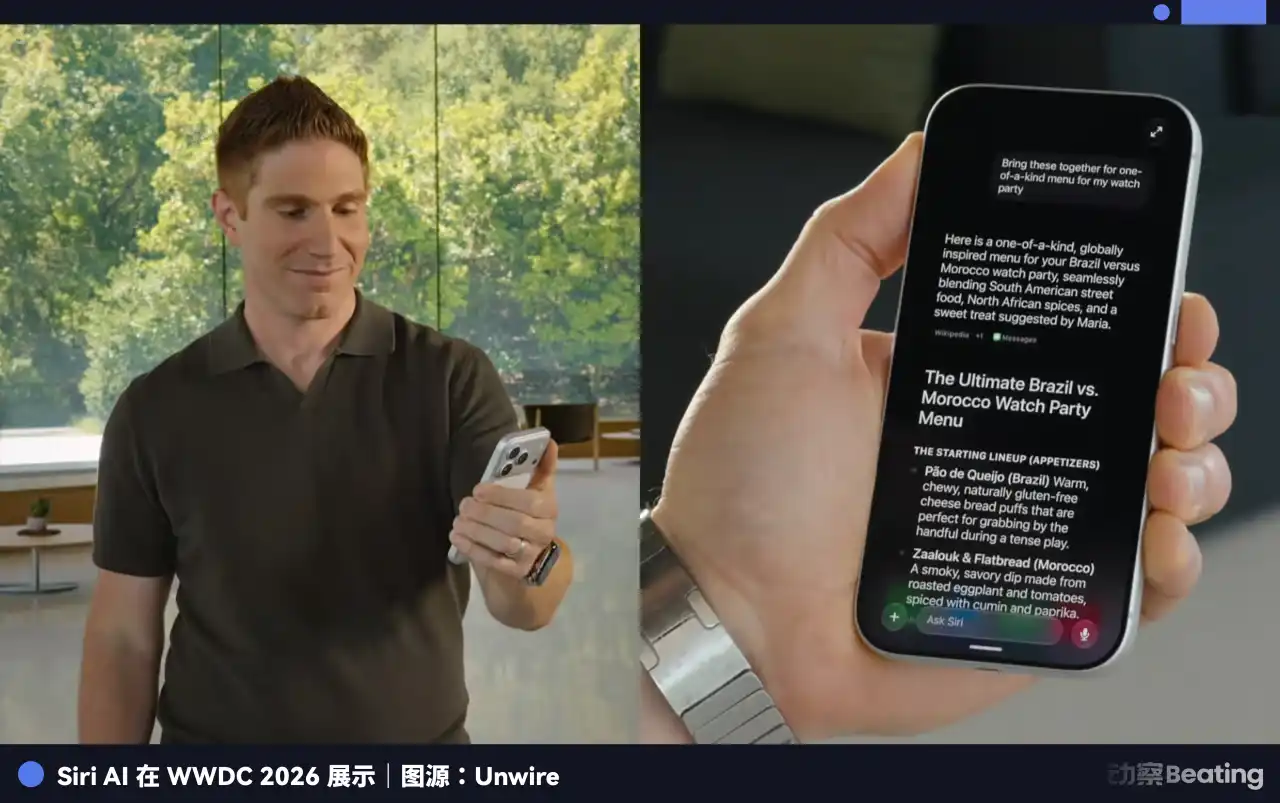
Apple's biggest fear is not someone else's model outperforming its own. It fears users bypassing the system and handing over their lives directly to another entry point. If one day users open not apps but an AI assistant that can manage everything for them, Apple will degrade into a well-crafted shell.
Therefore, from now on, in the phrase Apple Intelligence, Apple signifies more of product control than complete technological sovereignty. While the skin is of its own making and the clothes are self-tailored, the bones are borrowed. Google provides the skeleton, Nvidia offers the joints, and Apple's task is to dress this body in its own attire and send it out into the world.
Google got a huge endorsement from this deal, with even Apple acknowledging Gemini's superior underlying technology. Nvidia, on the other hand, received another validation that, despite Apple's powerful consumer-grade chips and ambitions in self-owned servers, when it comes to edge inference and complex agent tasks, there is no way around the GPU cloud.
The more bones you borrow, the less your body belongs to yourself. Behind every borrowed bone lies the vendor's commercial considerations, regulations, and technological cadence. The question of whether Apple can stand firm if someone wants to take back the bones is one it does not need to answer for now, but it will have to answer eventually.
A New Tenant in the System
The average person does not care about model parameters. What the average person cares about is whether their phone can bother them less.
At WWDC26, Apple said on stage, "There are times when you expect more from Siri."
For Apple, this was almost an apology.
Then it tried to show you a different morning.
You wake up, and there are twenty notifications on the screen. In the past, you had to swipe each one off one by one, but now the system has sorted them for you by importance. The message from your boss is at the top, while ads and promotions are grouped together in faint gray. You open your email, and a long work email has already been summarized into three sentences. You decide to reply, and Siri drafts a response for you based on your typically calm tone. You remember you need to call a vendor this afternoon to return a purchase. Before you dial, the system retrieves the order number from your emails two days ago and sticks it on the call interface.
This is the story Apple wants to tell you – the layer of intelligence laid under the system that saves you from the daily cognitive chores. Read a little less nonsense, search for files a little less, be interrupted by notifications a little less.
To tell this story well, Apple almost redesigned Siri's entrance. On the iPhone, it is placed in the Dynamic Island, where you can converse by pulling down. On the iPad and Mac, it is combined with Spotlight. It now has a standalone app that can save and continue past conversations, syncing across devices via iCloud. Apple wants Siri to become an AI assistant living in the system, with memory and context, but trying not to make it look too much like ChatGPT.
Visuals are also a key focus. The camera now has a Siri mode, where you can take a picture of food to get nutrition information or snap a shot of something you don't understand to identify and search. System-wide transcription is not just speech-to-text; it also automatically punctuates and formats the text, turning vernacular into text that can be sent directly.
Developers are also paving the way. Apple has opened up the Core AI framework, allowing third parties to load their own models on the device. With the upgrade of App Intents, Siri can now more easily understand third-party apps. The Foundation Models Framework no longer only calls its in-house on-device models but also supports integration with external vendors such as Claude and Gemini. Apple is laying the groundwork for the entire ecosystem, as Siri will need to work across apps in the future, requiring developers to hand over content and actions to the system for understanding.
If these plans come to fruition, Apple's AI will no longer just be "Siri for chatting."
However, this time Apple is much more cautious than in the past. Siri AI will only be made available to users later this year in beta form, starting with English. When the same Apple Intelligence reaches China, it is likely no longer the same product.
For Chinese users, looking at Apple's AI is basically just for fun. The launch event is lively, the features look good, but it is "not supported" in the Chinese region.
The Chinese market has a set of regulations for generative AI, including filing requirements, content security, and data localization. Apple needs to find local model partners and go through regulatory approval. Apple Intelligence in China is not just a matter of launching a few months later; from the ground up, it may not be the same thing.
What U.S. users see is a combination of self-developed models and Gemini, while what Chinese users see may be a version of Apple Intelligence that is a combination of Apple's system permissions, local cloud services, local models, and regulatory requirements. They are all called Apple Intelligence, but their actual capabilities and boundaries of accessibility may be completely different.
iCloud services in mainland China are operated by Guizhou-Cloud Big Data. The cloud stores files, AI needs to understand the files; the cloud stores photos, AI needs to interpret the photos; the cloud syncs notes, AI needs to extract your plans, habits, and relationships from the notes. In the AI era, this data has new uses, naturally facing different levels of regulation.
A more realistic threat comes from competition. Domestic smartphone manufacturers are moving quickly on on-device large models, Chinese language assistants, and image AI. For Chinese users, if they spend tens of thousands to buy a new iPhone but can't use the core AI features, they might as well switch to another brand.
The daily scenarios in the Chinese market pose a particularly tricky situation for Apple. WeChat, Alipay, Meituan, Douyin, ride-hailing, government services, hospital appointments — these are the things many people really deal with on their phones every day. If an AI assistant cannot enter these scenarios, understand group chats, receipts, verification codes, and various expressions that only locals can instantly comprehend, it is hard to be called "smart."
Understanding a Person
Apple Intelligence also has an issue, as it doesn't cover all iPhones.
iOS 27 can cover up to the iPhone 11 and the 2nd generation iPhone SE, but Apple Intelligence requires at least the iPhone 15 Pro and newer models, M-series iPads, and Macs. The most powerful on-device models require even more, such as the iPhone 17 Pro, iPhone Air, and an M4 iPad or M3 Mac with at least 12GB of unified memory.
In recent years, the smartphone replacement cycle has been getting longer. With screens and cameras being good enough, many people no longer upgrade their phones annually. AI might be the reason for Apple to stimulate upgrades again. On-device AI indeed requires more powerful chips and greater memory, creating an inevitable hardware threshold. A personal capability packaged as "understanding you better" may ultimately become a pricing threshold.
Over the past decade, Apple has continuously asked, "What comes after the iPhone?" They tried the watch, the headphones, the TV, and the ambitious car project that was ultimately shelved after a decade. In 2024, some employees from the car project team were transferred to the generative AI team.
AI arrives at the right time, giving Apple a next-generation story without having to create a new hardware category from scratch, just transforming the devices held by over a billion users. Perhaps after the iPhone, it will still be the iPhone, but it must become something else.
Tim Cook's successor, Ternus, overseeing the future hardware product roadmap, hints at Apple's next move. He is pushing forward with a set of unreleased AI devices, camera-equipped glasses and wearables that understand the surrounding environment through computer vision. If these products materialize, Apple Intelligence will expand outward from the phone, with the phone, headphones, glasses, and home hub potentially becoming new senses.
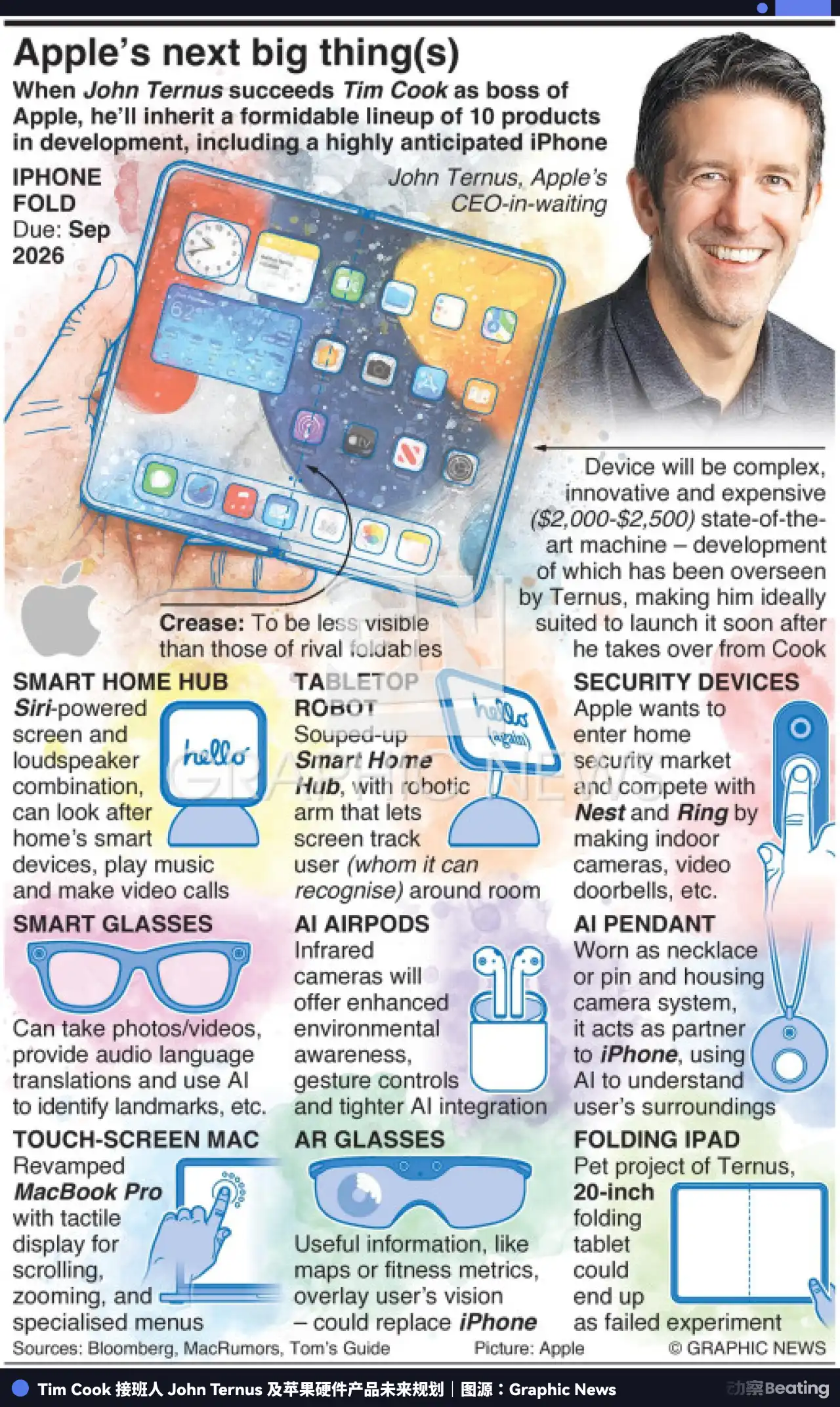
But no matter how the senses extend, the core issue remains the same.
The relationship between people and their phones is mostly not a deep conversation but rather mutual disruption in mundane scenarios. You're rushing for the subway, the kid is crying, the boss is nagging, and the screen is filled with 20 notifications. For the average person, the most tangible meaning of Apple Intelligence is not an all-powerful assistant but rather having the phone start to share some cognitive load with you. Read a little less nonsense, search for a document a little less, and get interrupted by notifications a little less.
Apple has always positioned itself as a company that stands with the user. It says privacy is a fundamental human right, that devices belong to the user, and that technology should serve people. In the AI era, this rhetoric will face a real test. Because once a system begins to understand you, it is not just protecting your data; it is also shaping your actions. It gives you summaries, provides recommendations, filters information for you, and decides what is important and what can be ignored on your behalf.
The challenge of personal intelligence has never been just intelligence; it also involves the "personal" aspect. A person's life is not a database; it contains emotions, misunderstandings, indecencies, and corners that no system should see. For AI to enter these spaces, it cannot rely solely on efficiency as a pass.
In "Klara and the Sun," Kazuo Ishiguro wrote about an AI companion named Klara. She spent her entire existence trying to understand a girl, learned to observe changes in light, read expressions and silences, and learned to be silent when silence was needed.
But the most touching part of the book is when Klara finally understands that there is a part of the girl that she can never reach. It's not that she is not smart enough, but she understood one thing: understanding a person and having access to a person's data are two completely different things.
It took Apple fifteen years to admit that Siri was not good enough. On this night of WWDC, it borrowed a model from Google, computing power from Nvidia, and another year of patience from its users. It proved that it was willing to humble itself, but humility is only the beginning.
What Apple has to learn next is what Klara knew a long time ago. It's not about becoming more intelligent; it's about knowing where to stop once you step into a person's life.
-END-
Welcome to join the official BlockBeats community:
Telegram Subscription Group: https://t.me/theblockbeats
Telegram Discussion Group: https://t.me/BlockBeats_App
Official Twitter Account: https://twitter.com/BlockBeatsAsia
