The prediction market has suddenly started to "accelerate evolution".
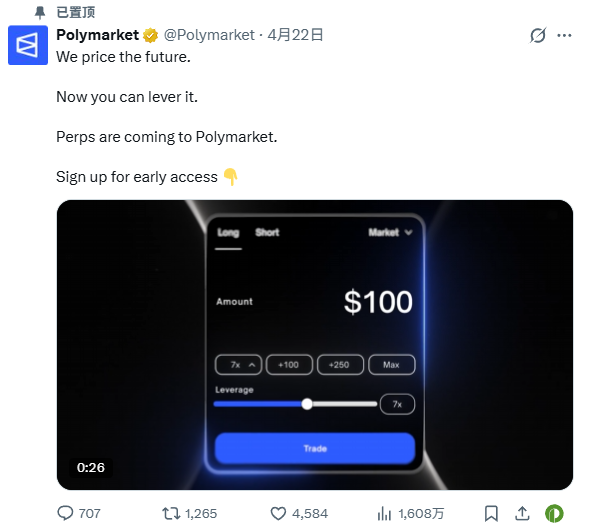
Yesterday, Polymarket posted on X platform, announcing the launch of perpetual futures contracts (Perps) linked to cryptocurrencies, US stocks, and commodities. Users will be able to use leverage to participate in prediction market trading on the platform in the future, and the early access registration channel is now open. As of now, the tweet has received over 16 million views, instantly igniting market sentiment—the prediction market is moving from "making judgments" to "leveraging up".
In addition, another giant, Kalshi, has also started to send signals. On April 14, in its official teaser video, a continuously rotating green spiral finally converged into "Timeless," implying that the product will break the restrictions of "time". The community generally speculates that this update may introduce perpetual prediction markets without expiration dates.

Moreover, according to The Information's exclusive disclosure on April 22, Kalshi plans to launch perpetual futures products, initially starting with cryptocurrency-linked perpetual contracts, and may expand this model to include commodities and other asset classes in the future. Initially collateralized in US dollars, stablecoin support will be introduced later on.
Looking at these actions together, this is not just a simple product upgrade, but more like a significant expansion. Derivatives newcomer Hyperliquid is rewriting rules from the ground up—allowing anyone to issue perpetual contracts on its platform, including event-based underlying assets like election results, match scores, macro data, etc. In other words, the most fundamental layer of the prediction market's "betting demand" is being directly absorbed by the native derivatives protocol. This proposal was already live on the testnet in early February.
Under such pressure, Polymarket synchronized with Kalshi to "Perpify," which, rather than being an offensive move, was more of a proactive defense — by introducing perpetual contracts to address the spillover impact of Hyperliquid on its core needs.
But the true variable goes beyond this. As decentralized protocols begin to encroach on the prediction market domain, on the other side, centralized exchanges have also quietly entered the scene. The prediction market is becoming a piece of infrastructure that must be contested.
Binance: Integrates BNB Chain's ecosystem prediction market predict.fun into the main site, currently available in some regions
Binance chose not to build a prediction market from scratch but instead directly integrated with the largest prediction market platform on the BNB Chain, predict.fun.
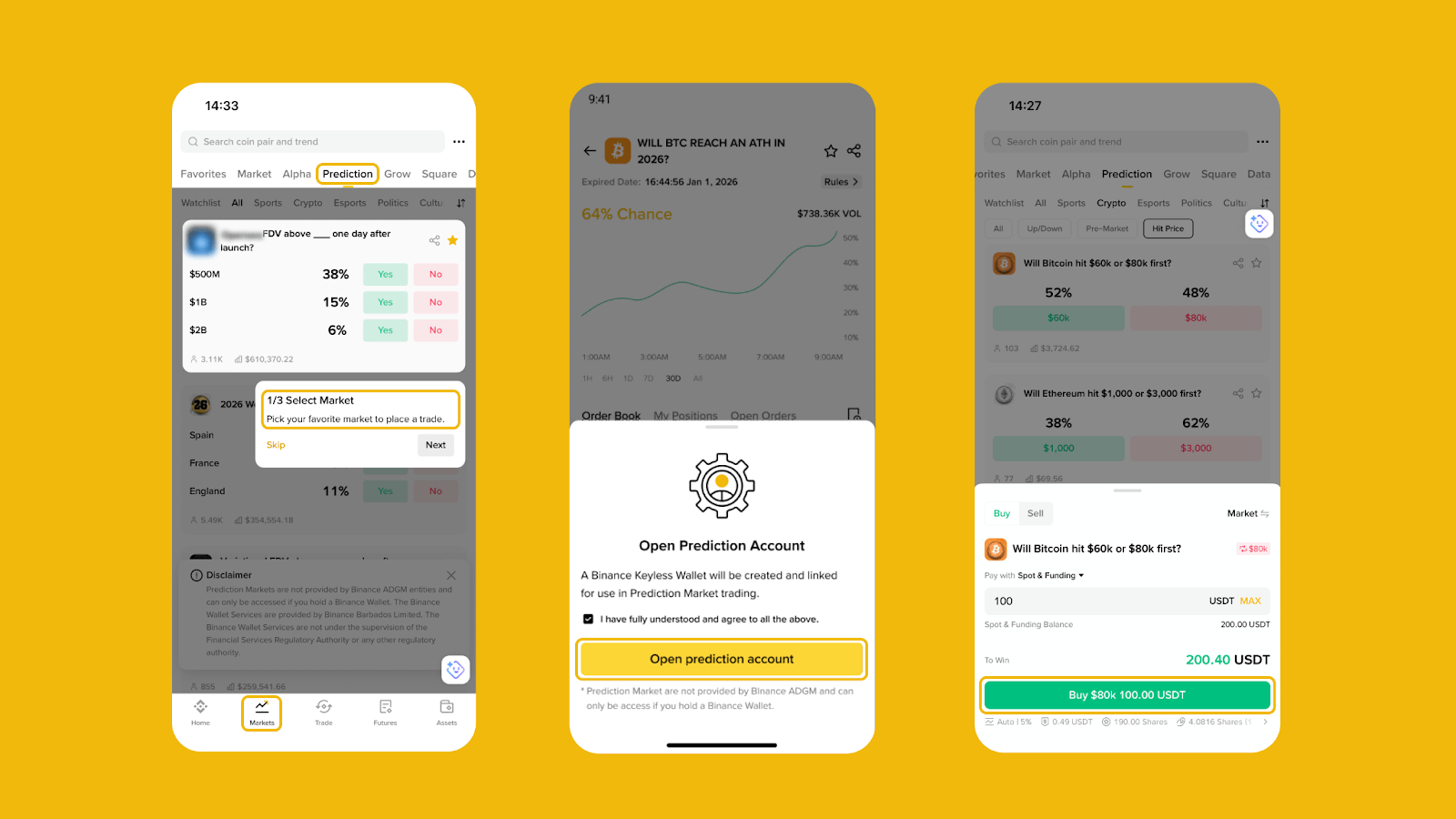
On March 31, Binance Wallet announced the launch of Prediction Markets functionality, with the core partner being the leading protocol on the BNB Chain, predict.fun. Users can participate in prediction trading using their USDT directly within the app without having to navigate external platforms, supporting market price, limit orders, and other trading methods. With the independent Prediction Account (based on MPC technology) and Gas Fee Subsidy, this design essentially does one thing — transforms the on-chain prediction market into a product that provides a "platform-like trading experience."
On April 9, Binance released an official announcement stating that they have integrated Prediction Markets functionality into their Wallet by integrating with the third-party on-chain prediction market platform, Predict.fun, opening a probability trading portal for users. The product covers various categories such as sports, macro, and crypto, but Binance itself does not participate in market-making or arbitrate results but focuses on the "entry layer" — facilitating the connection between users and on-chain prediction protocols.
Furthermore, over the weekend at an offline event hosted by BNB Chain in Hong Kong, based on user feedback, predict.fun not only appeared as a major sponsor but also received a prominent display position at the event.
OKX: Insider Reveals Plan, Predictive Market Strategy Gradually Emerging
Long before any official product signals appeared, rumors about OKX's market strategy had been circulating within the industry. In February, a job posting indicated that OKX had started hiring "DeFi Traders (Predictive Market/Sports)."

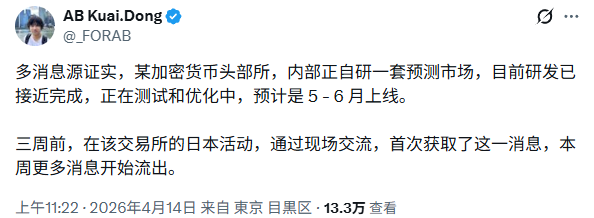
Subsequently, KOL AB Kuai.Dong leaked that a leading exchange was actively seeking KOLs for long-term promotion of its upcoming predictive market product. The internal product was close to completion, with a planned launch between May and June. Combining this information with discussions from an offline event in Japan, the market generally believes that OKX is the platform in question.
By early April, these rumors began to materialize into actual product-related developments. In early April, the OKX product documentation page quietly published content related to "Predictive Markets/Event Contracts," including documents on "How to Trade Event Contracts and Delivery Logic Introduction" and "What is an Event Contract."
The documents mentioned that an event contract is a derivative product that defines an event in natural language and settles profits based on the final outcome. This design is widely interpreted by the public as a "simplified version" of a predictive market structure.
More importantly, last weekend, OKX CEO Star made a post directly confirming this direction: Events & Options have been upgraded, allowing users to predict and trade around events such as 15-minute price fluctuations and daily price ranges, supporting individual trades and multi-strategy combination trades. This statement further connected the previously scattered product signals and market speculations.
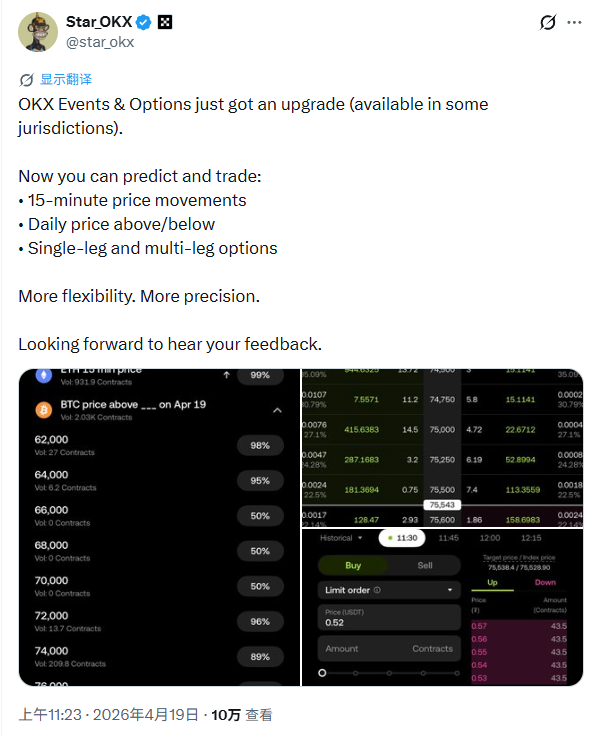
From the information currently disclosed, the so-called "event contracts" appear more like a CEX version of a predictive market in its early stages, focusing mainly on short-term price outcomes of BTC and ETH, such as price movements within 15 minutes or reaching a target price. Without altering the derivative framework, incorporating "event judgment" into the trading structure reduces the barrier to understanding and leaves room for future product expansions.
MEXC: Launches In-House Prediction Market Platform
On March 16, 2026, MEXC officially launched the Prediction Market Beta (Event Contract), becoming one of the few early movers to release its in-house prediction market among CEXs.
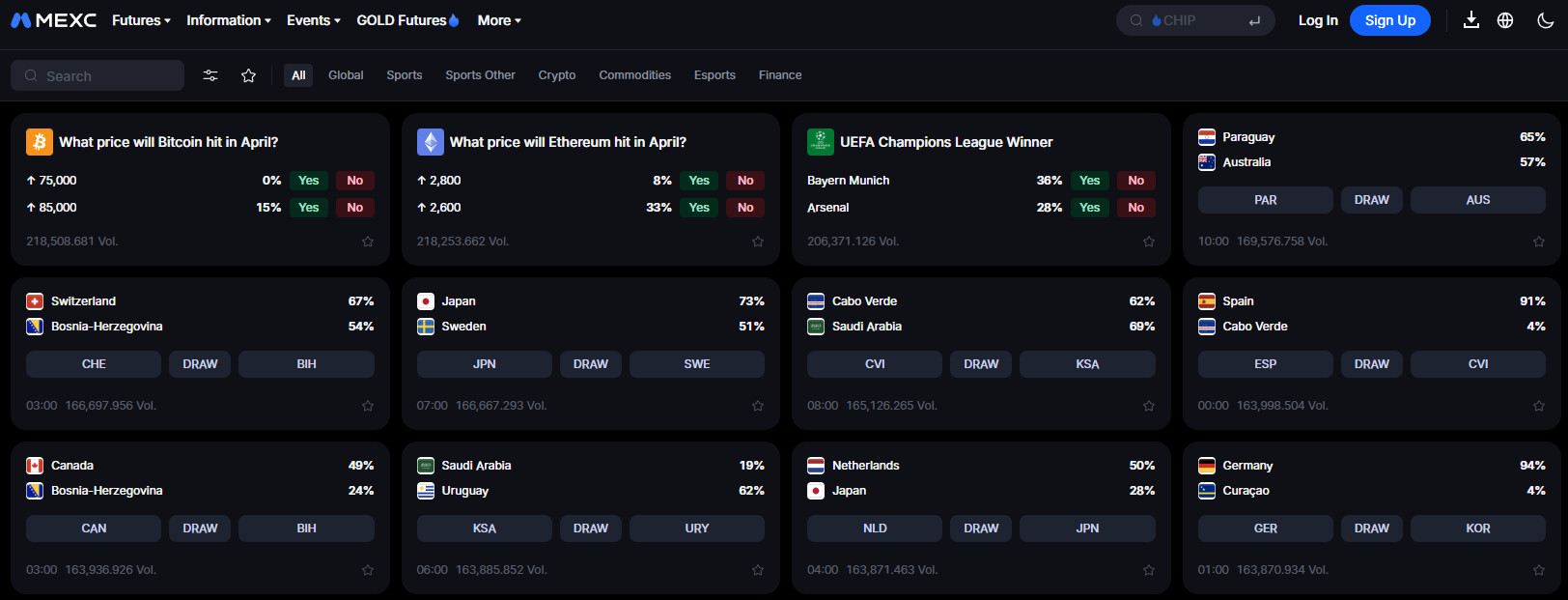
In terms of product form, MEXC's prediction market is essentially a centralized version of an event contract, allowing users to trade around key geopolitical, macroeconomic, and crypto industry events.
On the experiential level, MEXC emphasizes "native integration": under a unified account system, users can directly use spot or contract account funds to participate in trading without the need for on-chain operations or asset migration. Additionally, with zero trading fees, zero settlement fees (during the public testing period), and millisecond-level settlement, it further reduces the entry barriers. Overall, its approach is more direct—treating the prediction market as a new type of contract product within the trading platform rather than an external extension feature.
Gate.io and Bitget: Both Connect to Polymarket, Yet Take Completely Different Paths
Outside of in-house development and protocol integration, Gate.io and Bitget have chosen a third path—directly integrating with the leading prediction market platform, Polymarket. However, their entry methods and product forms are significantly differentiated.
Gate.io has taken the most direct product integration approach. On March 24, it directly embedded the Polymarket entrance within its main app, allowing users to participate in Yes/No share trading using USDT in their accounts without the need to navigate away or connect a wallet. The backend automatically handles USDC settlement and Polygon on-chain operations.
Building upon this, Gate.io also offers two interfaces: "Prediction Mode" (more user-friendly) and "Trading Mode" (order book, K-line, and other professional tools). Essentially, it has fully integrated Polymarket into its trading platform system, retaining the original liquidity while significantly reducing the usability threshold.
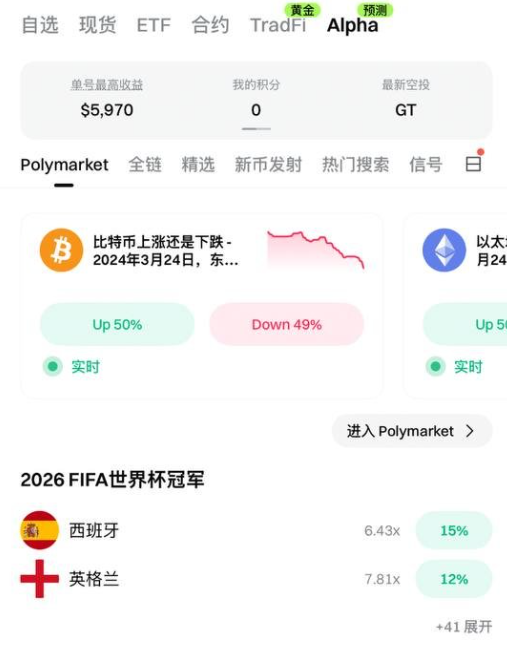
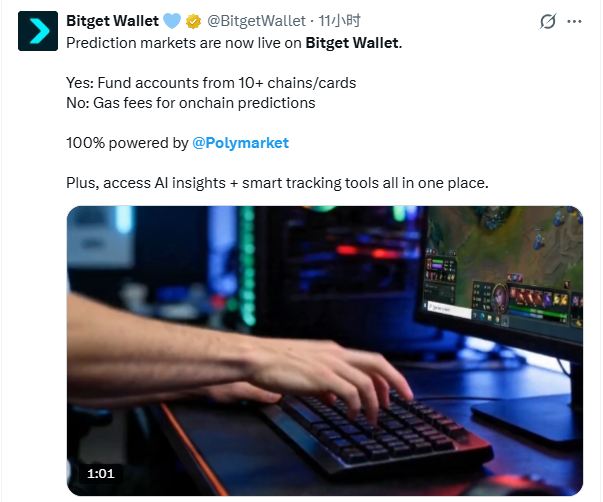
In contrast, Bitget's integration is currently taking place on Bitget Wallet. On April 21, Bitget Wallet natively integrated Polymarket, allowing users to directly browse and trade relevant events in a self-custodial environment. It also introduced AI tools to provide data analysis and decision-making references for high-frequency events such as sports. In this mode, users still control their assets, the experience leans more towards decentralization, and operation complexity is reduced through gas fee abstractions and convenient deposit methods.
Summary
Rather than saying that Polymarket and Kalshi are vying for the perpetual contract battleground, it is more accurate to say that centralized exchanges have begun systematically entering the prediction market, capturing users and trading demands that originally belonged to native platforms.
In contrast, centralized exchanges still demonstrate clear advantages in terms of fund inflow, liquidity, and user base. As various platforms continue to join the fray, the prediction market cake is being redistributed.
