On April 24, 2026, the preview version of DeepSeek V4 was officially released.
This domestically produced large-scale model, which includes a Pro version with 1.6 trillion parameters and a Flash version with 284 billion parameters, has smashed its most core selling point into the market: millions of contexts, becoming a free standard feature for all official services. Almost simultaneously, on the other side of the ocean, OpenAI also unveiled GPT-5.5, with greater computing power and richer Agent functionality, but at a much higher price.
Translating "millions of contexts" into plain language, it means AI is no longer a "goldfish" that can only remember your last few sentences but has transformed into a "super brain" that can digest three volumes of "The Three-Body Problem" in one gulp, understand a two-hour movie in a second, and even help you spot spelling mistakes on the side.
For a most direct example, you can feed V4 with all the company's contracts, emails, financial reports from the past three years and let it find the default clause hidden in the attachment on page 47. In the past, this would require a team of lawyers; now, it's free.
GPT-5.5 explicitly prices this super brain, with the standard version charging $5 per million input tokens and $30 per output; while the GPT-5.5 Pro version for advanced tasks is sold at a sky-high price of $30 per million input and $180 per output.
However, according to DeepSeek's official pricing, for V4-Flash, the price for input cache hits is only 0.2 RMB per million tokens, and $2 for output; even for V4-Pro, which rivals top-tier closed-source models, the input price for cache hits is $1, for cache misses $12, and the output price is only $24.
Everyone always thought that the AI competition between China and the U.S. was a race of model capabilities, but in reality, it has long turned into a fork in the road of business models.
OpenAI was once the dragon-slaying teenager who loudly proclaimed to "benefit all humanity," but is now selling high-priced deluxe apartments; while DeepSeek, with almost free computing power, is turning AI into water, electricity, and gas.
As OpenAI has become a savvy contractor, why is DeepSeek tirelessly turning top-notch AI into free tap water regardless of costs? What hidden undercurrents lie behind this shift in pricing power?
The Cold Wind of Ulanqab
A decisive showdown of large-scale models in a data center in Inner Mongolia at minus 20 degrees.
Shortly before the V4 release, an unexpected position was added to DeepSeek's job posting: Data Center Senior Delivery Manager and Senior DevOps Engineer, with a maximum monthly salary of $3,000, 14 salaries, stationed in Ulanqab, Inner Mongolia.
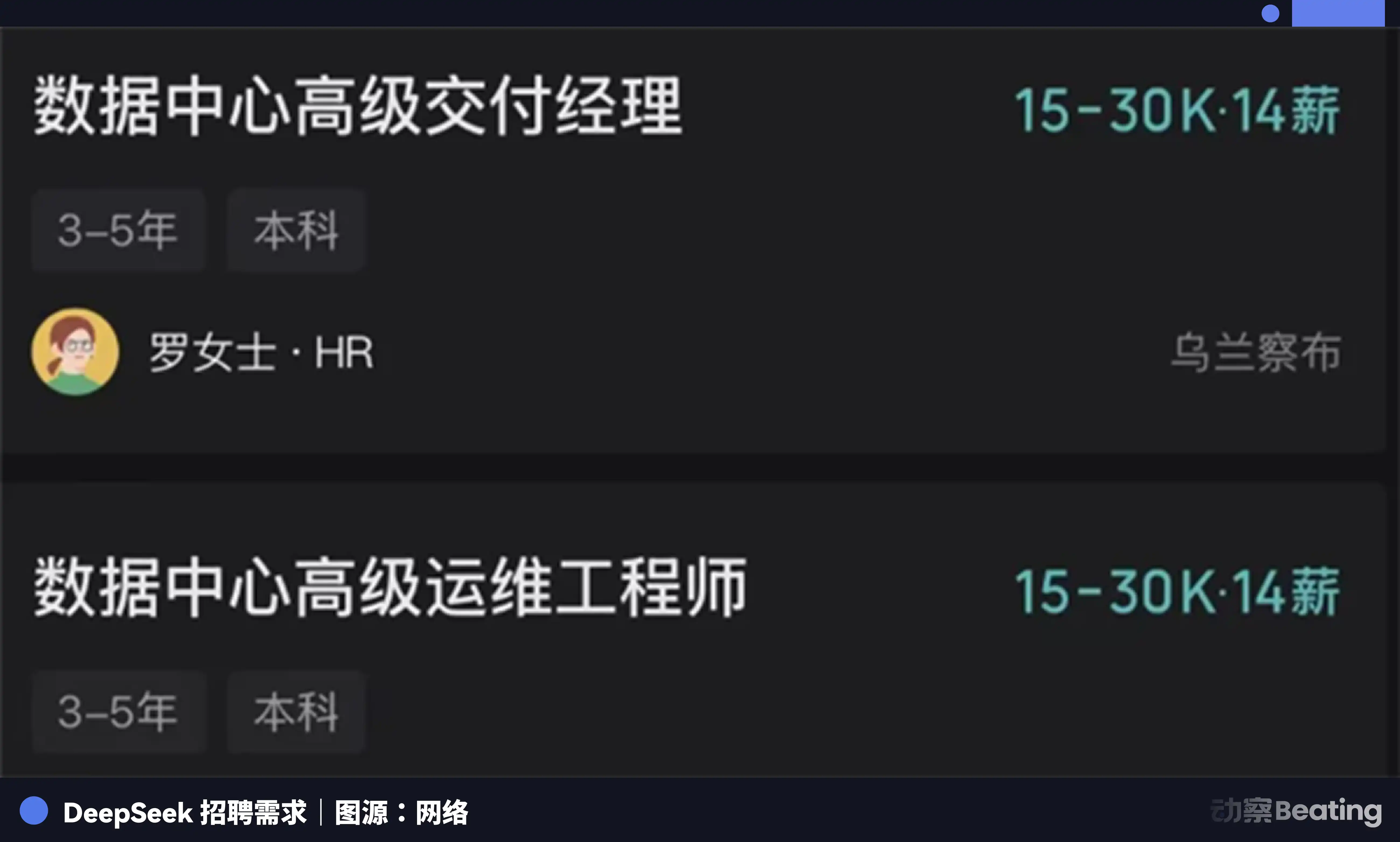
This is a company that once touted itself as "simple, pure, algorithm-only." Over the past two years, their proudest label has been "lightweight with extraordinary power," using a training cost of less than $6 million to launch the DeepSeek-R1 that caused a crash in the US stock AI sector.
However, the massive computing power requirements of V4, combined with the increasingly tight US computing power blockade, completely shattered this pastoral poetry of light assets.
In 2025, the US Department of Commerce further tightened the export control of AI chips to China. NVIDIA's H100 and H800 are no longer available, and even the downgraded H20 has been added to the control list. This means that DeepSeek's future computing power expansion must fully turn to the Huawei Ascend ecosystem. In the V4 release notes, it was explicitly stated that the new model has received "Huawei Ascend's blessing," and it was revealed that after the mass listing of the Ascend 950 super nodes in the second half of the year, the price of Pro will be significantly reduced.
This shift is not something that can be accomplished by changing a few lines of code for adaptation. It requires starting from scratch and establishing a complete domestic computing power infrastructure at the physical level.
The trillion-parameter scale of V4 (pre-training data of up to 330 trillion tokens), combined with the huge computing requirements of millions of contexts, means that you need thousands of Ascend chips, data centers to accommodate these chips, power grids to supply these data centers, and an operations team to ensure that these machines in the -20-degree cold wind do not go offline.
Liang Wenfeng has taken the methodology from the bit world to the atomic world. Ultimately, computing power needs to take root in concrete and power lines.
On one side are AI elites in checkered shirts coding in Silicon Valley and drinking pour-over coffee, on the other side are operations personnel in military coats guarding data centers deep in the Inner Mongolian grasslands. This difference constitutes the foundation of China's AI resistance to computing power blockades today. The cold wind of Ulanqab has become the most powerful physical attachment for China's AI.
Transitioning from a pure algorithm company to a "heavy asset" player with self-built data centers means that DeepSeek has bid farewell to the guerrilla warfare era of "achieving wonders with minimal resources" and has officially put on the armor of heavy infantry. The cost of this transformation is enormous—repairing data centers, purchasing chips, laying network cables, each one is a money pit. More importantly, this heavy asset model implies that operating costs will increase exponentially, while DeepSeek's commercialized revenue remains extremely limited. This pricing strategy is essentially exchanging losses for ecosystem, exchanging free for infrastructure influence.
How Long Can a Tough Guy Holding Out Against Giants, Subsidizing AI with Quantitative Trading, Last in the Face of This Abyss?
A $20 Billion Compromise
In April, DeepSeek was reported to have initiated its first external financing round, with a target valuation of up to 300 billion RMB (approximately $44 billion), planning to raise 50 billion, with 30 billion raised externally. Rumors of Tencent and Alibaba vying to enter the fray were rampant.
Many people thought this was because building data centers was too expensive. But in reality, the core driving force behind DeepSeek's financing was not only to buy graphics cards but also because of its "pure technical ideal." Faced with the talent meat grinder of tech giants, DeepSeek was no match.
During the critical sprint of the V4 development, domestic tech giants embarked on a crazy targeted poaching of DeepSeek. From the second half of 2025 to the present, at least 5 core R&D members of DeepSeek have confirmed their departure. The core author of the first-generation model, Wang Bingxuan, went to Tencent, V3 core contributor Luo Fuli was poached by Lei Jun for a multimillion-dollar annual salary to Xiaomi, and R1 core author Guo Daya joined ByteDance's Seed team.
This is the most naked operation of a market economy. When your competitors have unlimited ammunition and you insist on using your own funds to keep the operation running, the talent market is your most vulnerable spot. You can ask geniuses to take a pay cut and work overtime for the ideal of changing the world. However, when a big company slaps a check on the table with millions in cash and options written on it and promises unlimited computing resources, the pricing power of idealism is no longer in your hands.
Liang Wenfeng's dilemma is actually a dilemma that every entrepreneur trying to run a "slow company" in China will encounter. In a market where big companies can buy anyone with money, the path of "no financing, no commercialization, only technology" is extremely luxurious. The price you have to pay is that you must accept that your team may be cleared out by the opponent with money at any time.
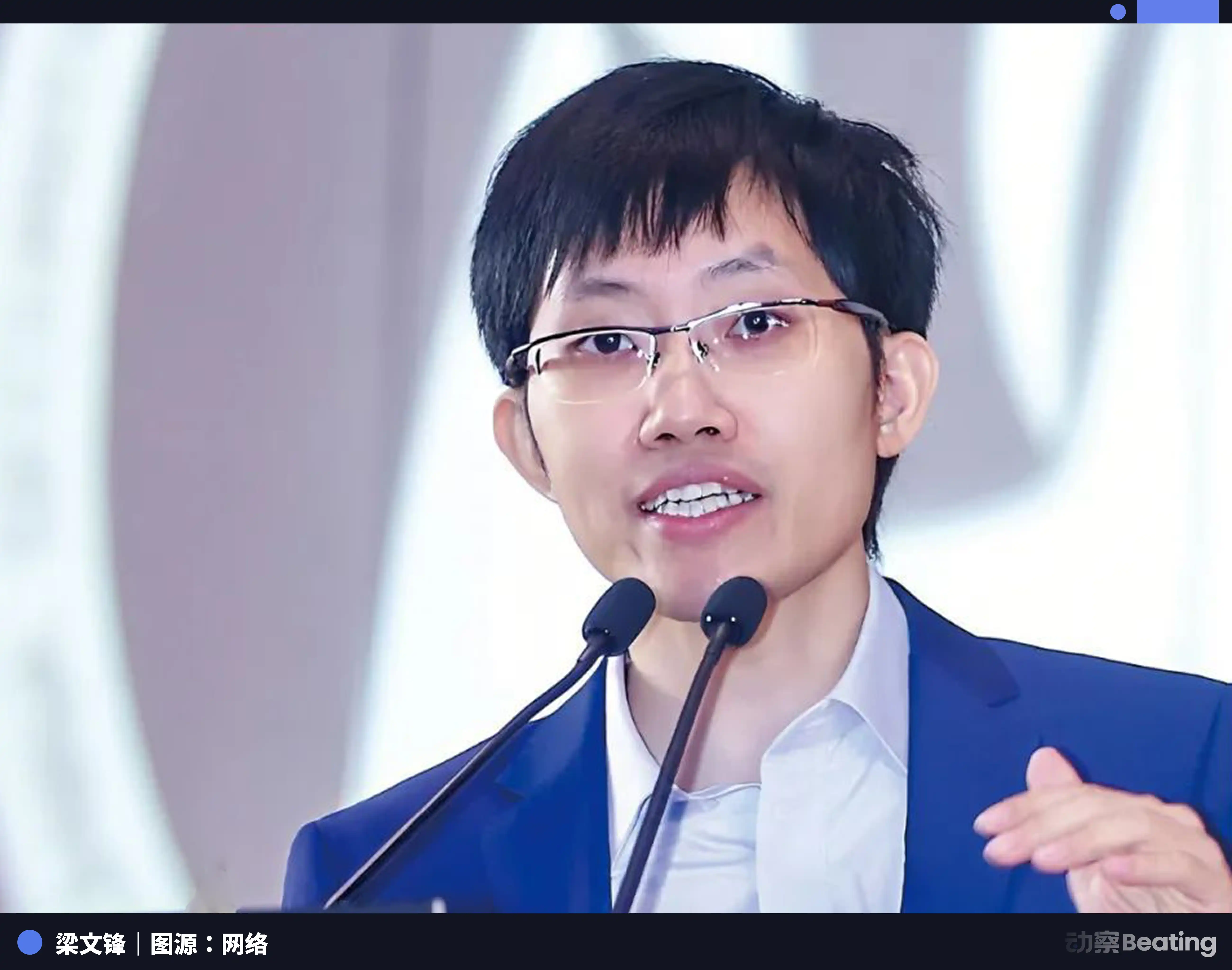
This $44 billion valuation financing is not Liang Wenfeng's compromise with capital, but a personnel redemption war he launched against the big companies to retain the V4 development team. He must sit at the table of capital and, with the same hard cash, give the remaining people enough reasons to stay.
The possible entry of Tencent and Alibaba signifies that DeepSeek is no longer the lonely, pure technical idealist. It has become a company with external shareholders and commercialization pressure. The cost of this transformation is that the kind of "research freedom unaffected by external pressure" that Liang Wenfeng once prided himself on will inevitably be diluted.
But he had no choice.
When idealism is forced to don the armor of capitalism, what is the source of the confidence that sustains this massive machine, that keeps the Ulanqab data center running day and night?
Another Kind of "Herculean Effort"
The answer is not in the algorithms, but in the power grid.
What Silicon Valley is most anxious about now is not a shortage of chips, but a shortage of electricity. Musk is frantically building a super data center in Memphis, Tennessee, OpenAI is even discussing investing in nuclear power plants, and Microsoft has announced the restart of the Three Mile Island nuclear power plant in Pennsylvania to power AI data centers. At the end of computing power lies electricity, a very cold physical fact.
In the United States, the electricity consumption of a large AI data center is equivalent to that of a medium-sized city on a daily basis. However, the U.S. power grid is an old network built in the 1950s, slow to expand, regionally fragmented, and simply unable to keep up with the computing power expansion of the AI era.
What is supporting China's AI catch-up with the U.S. is not only the algorithm geniuses earning millions in salary, but also the unnoticed ultra-high-voltage transmission lines.
The reason why the Ulanqab data center can rise rapidly is due to the abundance of green electricity in Inner Mongolia and China's world-leading power grid dispatching capability. Public data shows that the installed capacity of green electricity in Ulanqab reaches 19,402.0 MW, accounting for approximately 65.9%, with local low-cost green electricity being about 50% cheaper than in eastern regions. In addition, with an average annual temperature of only 4.3°C and a natural cooling period of nearly 10 months, the equipment can save energy by 20% to 30%.
When DeepSeek V4 is running, what is truly transfusing it is China's vast and extremely inexpensive power infrastructure. This is another kind of "Herculean Effort" in a different dimension.
Here, there is a very interesting and cruel historical contrast. In 1986, the United States used the "U.S.-Japan Semiconductor Agreement" to bring Japan's semiconductor industry to its knees, forcing Japan to open its market, accept price controls, and undergo profound restructuring. Japan's global semiconductor market share plummeted from 40% in 1986 to 15% in 2011. Japan took thirty years to barely recover.
Today, the United States is trying to use the same logic to strangle China's AI, block chips, limit computing power, and cut off the tech supply chain. However, China's counterattack path is entirely different from Japan's. The reason for Japan's failure back then was its heavy reliance on U.S. technology licensing and market access in the semiconductor industry. Once cut off, it lost the ability to survive independently. In contrast, China's AI counterattack is starting from the most basic physical infrastructure, rebuilding from the ground up—making its own chips, building its own data centers, expanding its own power grid, and open-sourcing its models.
This is an extremely cumbersome, extremely expensive, but also an extremely difficult-to-“strangle” route. While Silicon Valley is building magnificent skyscrapers in the cloud, China is digging trenches in the soil.
If the intense battle of computing power in the cloud is an extremely brutal war of heavy asset consumption, besides going to Inner Mongolia to build data centers and lay power lines, do we have another way to escape the cloud dominance?
Escaping the Cloud
As Silicon Valley giants make their data centers bigger and bigger, even planning billion-dollar-scale computing power clusters like OpenAI, China's counterattack line has quietly shifted underground.
The ultimate weapon against the U.S. computing power blockade is not to create chips stronger than the H100, but to cram large models into everyone's phone.
Since we can't beat the heavy firepower in the cloud data center, let's bring the battlefield back to 1.4 billion smartphones and edge devices. This is a typical guerrilla warfare tactic, and it is a tactic that is extremely difficult to block. You can ban the export of high-end GPUs, but you can't confiscate the smartphones in every Chinese person's pocket.
In 2026, with the computing power anxiety triggered by DeepSeek, Chinese smartphone manufacturers Xiaomi, OPPO, vivo started a crazy "edge-side shift." They are no longer satisfied with just using the phone as a display for calling cloud APIs, but through extreme model distillation and compression, they have forcibly squeezed a miniaturized super-brain into a domestically produced smartphone that costs only a few thousand RMB.
The core of this technological route is "distillation." Simply put, it is to use a super-large model (teacher) to train a small model (student), allowing the small model to learn the teacher's "way of thinking," rather than just memorizing all the teacher's "knowledge." Through extreme distillation and quantization compression, a large model that originally required several hundred GPUs to run has been compressed to a size of only 1.2GB to 2.5GB, and can run smoothly on a mobile phone chip.
Mobile AI applications like MNN Chat can already allow users to locally run the DeepSeek R1 distillation model on their phones. The significance of this edge-side AI is that you don't need to be constantly connected to a 5G signal, you don't need to pay Silicon Valley giants $100 in subscription fees every month. The large model is in your pocket, can run offline, without spending a penny on cloud computing power.
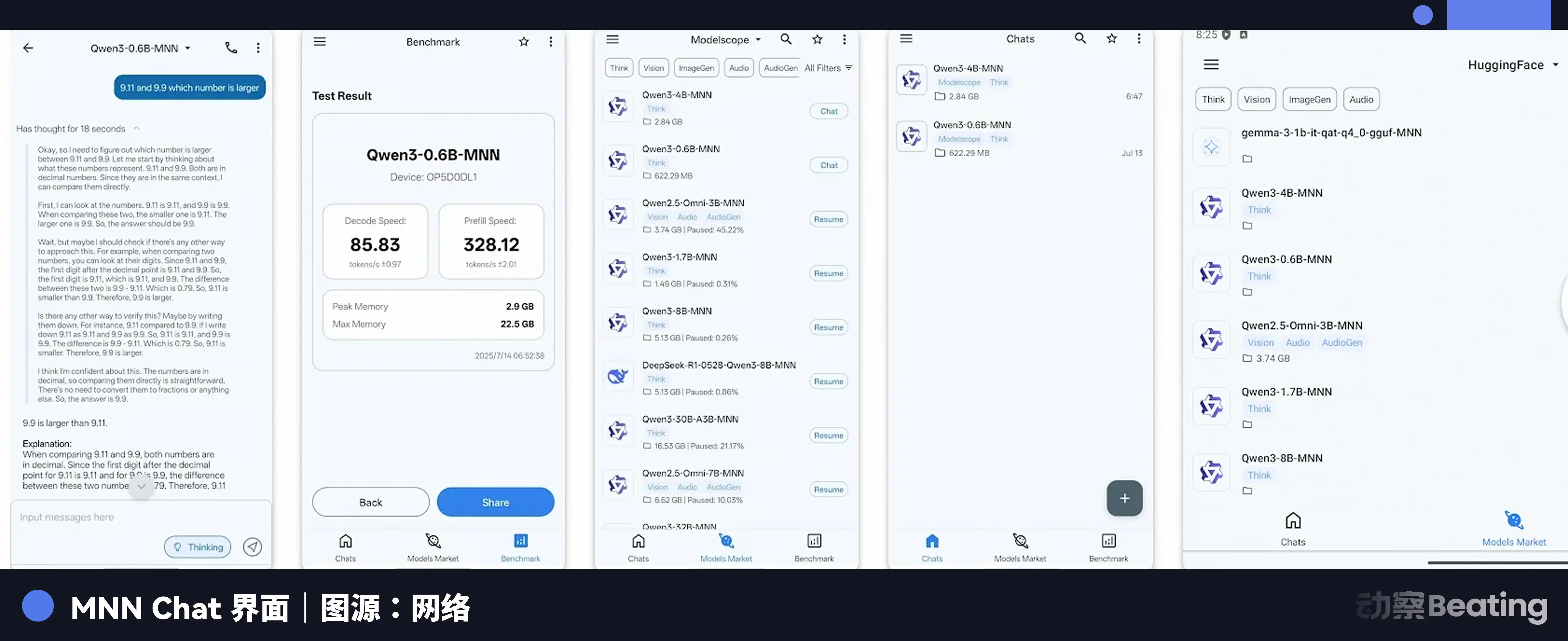
Since I can't afford a centralized heating super boiler room, I'll give each household a small stove.
Of course, edge AI is not perfect. Limited by the computing power and memory of mobile chips, the capabilities of edge models are far below those of cloud-based super-sized models. It can help you write an email, translate a piece of text, summarize an article, but if you want it to deduce a complex mathematical theorem or analyze a several-hundred-page legal contract, it will still fall short.
But this is already sufficient. Because for the vast majority of ordinary people, the AI they need has never been the super brain that can deduce mathematical theorems, but an "assistant" that can help them deal with daily trivial matters.
When large models become extremely cheap, small enough to fit in your pocket, how will they change those forgotten corners of Silicon Valley?
Global Digital Empowerment of the Global South
If you are sitting in a Manhattan panoramic glass office, you are likely to feel that the price increase of GPT-5.5 to $100 is worth it because it can help you write a perfect M&A financial report in one second.
But if you are standing in a cornfield in East Africa, facing crops that have withered due to abnormal weather, no one can afford the $100 subscription fee because the average monthly income in Uganda is less than $150.
The giants of Silicon Valley are discussing how to rule the world with AI, while farmers in Uganda and impoverished students in Southeast Asia have stepped into the digital age for the first time because of DeepSeek's open source initiative.
GPT-5.5 serves those who can afford it, and its corpus is almost entirely in English. If you ask it a question in Swahili or Javanese, not only will it respond haltingly, but it will consume Tokens several times more than for English. The Silicon Valley giants voluntarily gave up these edge markets because of "low commercial return."
Meanwhile, China's open-source models have become the digital infrastructure of the Global South.
In Uganda, the local NGO Sunbird AI, using the Sunflower system fine-tuned based on the Chinese open-source model Qwen, expanded the supported local languages from 6 to 31 in one fell swoop. This system is now deployed in the Ugandan government's agricultural extension system, providing planting advice to farmers in Swahili.
In Malaysia, tech companies have fine-tuned AI models based on open-source frameworks to align with Islamic law, supporting not only Malay and Indonesian languages but also ensuring that the output content complies with the religious and cultural standards of the Muslim market. From Indonesia's digital identity system to Kenya's Swahili medical Q&A, Chinese technology is penetrating the social infrastructure of these countries.
The Global AI Model API Aggregation Platform OpenRouter, in data released in early 2026, revealed that the Token consumption of Chinese AI models on the platform has surpassed its American competitors for the first time. During a certain week of statistics, the top 10 popular models globally consumed 87 trillion Tokens, with Chinese models accounting for approximately 61%.
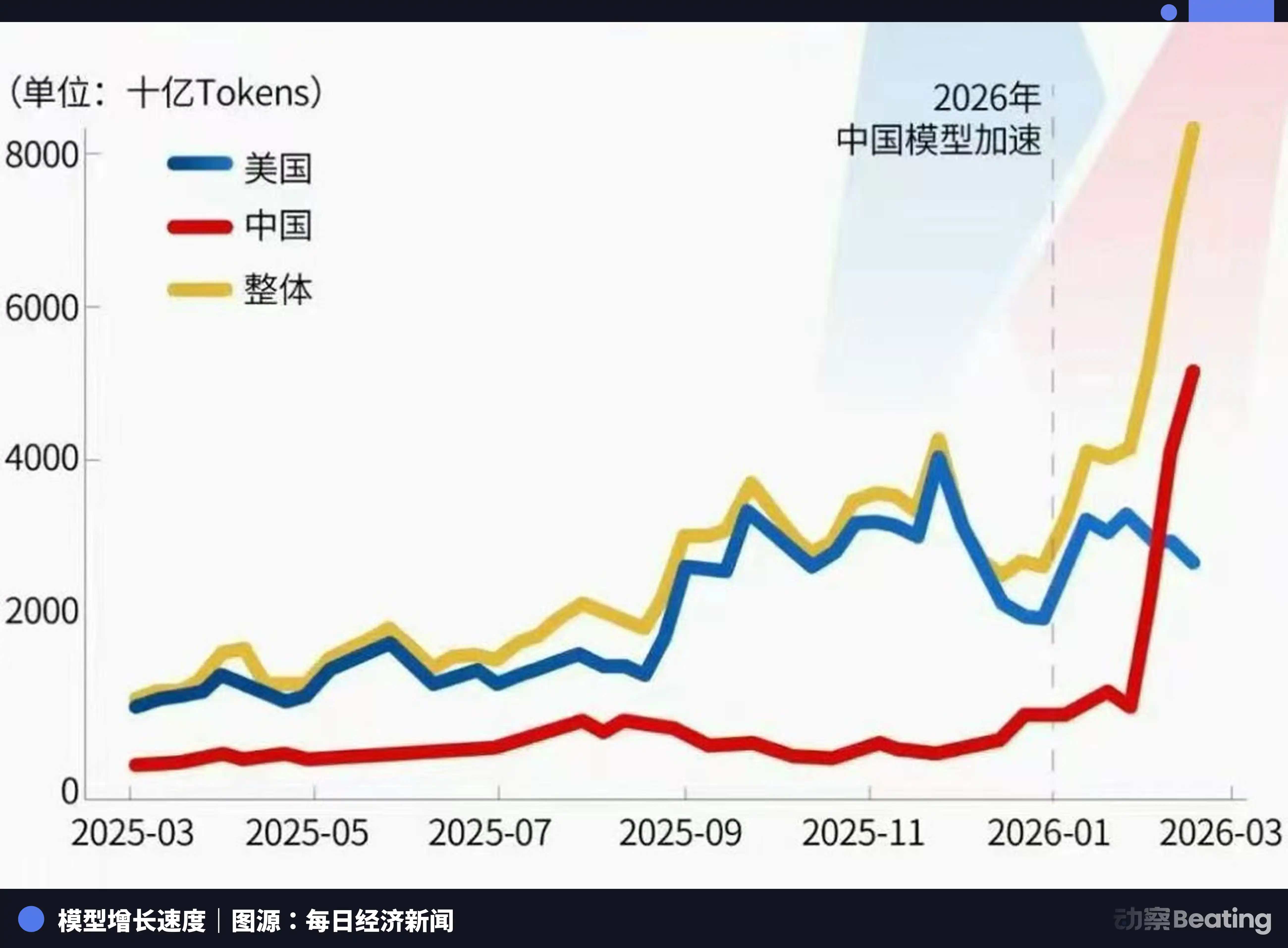
Open source has shattered the U.S. monopoly on AI discourse, allowing resource-constrained developing countries to bridge the digital divide. This is not a grand narrative of China-U.S. rivalry; this is the true "rural siege of the city" in the AI era.
China's AI open-source strategy is objectively becoming an extremely effective form of "soft power" output. While Silicon Valley giants are building tall walls in the cloud and trying to become the new digital landlords of the era, those who cannot afford the rent, the "technology refugees," have finally found the spark that belongs to them in the soil of open source and the edge.
Tap Water
Technology should never have been a high-end luxury.
Silicon Valley has built exquisitely crafted luxury condos with strict access control, open only to VIPs. But we have laid a pipeline that reaches thousands of households.
The starting point of this pipeline is in a data center in Inner Mongolia at minus 20 degrees Celsius, amidst the roar of ultra-high-voltage power lines, in the $300 billion valuation wars. Every segment of it is heavy, expensive, and filled with coercion and compromise. Liang Wenfeng once wanted to build a purely technical company, but reality forced him to build data centers, raise funds, and compete with big tech for talent. He had no choice because he chose a more challenging path: not to turn AI into a luxury but to turn it into tap water.
And the endpoint of this pipeline is on an inexpensive domestic smartphone, in the rough fingers of a Ugandan farmer, in the lives of ordinary people yearning to bridge the digital divide.
No matter how high the wall of computing power is built, it cannot stop the flow of tap water downstream.
