A vibrant city always attracts ambitious individuals, and Shenzhen is such a city.
Over forty years ago, Shenzhen was just rice paddies and a few fishing villages on the east bank of the Pearl River Estuary. But in the following forty years, it turned Huaqiangbei into the world's largest electronic components distribution center, converted Dafen Village into a global oil painting factory, and became the birthplace of Huawei, Tencent, DJI, and BYD. In this city, there are too many people who have realized price differences through information, liquidity, and regulatory arbitrage.
Arez is such a typical Shenzhener.
In his early thirties, he and his friends opened a "plucking wool" studio in an office building in Nanshan, having made a good amount of money for the team in the airdrops of Arbitrum, Starknet, and LayerZero in 2023. At its peak, he maintained over a thousand on-chain addresses, running scripts, IP proxies, KYC resources, and fund rotations.
A year ago, in an article titled "The Escalating Anti-Fleecing Trend, While Clever Wool-Pluckers Still Earn Thousands Per Month?" by BlockBeats, Arez's wool-plucking studio, although having set up a Hong Kong stock IPO team, was still mainly focused on wool-plucking in the cryptocurrency circle.
However, starting in the second half of the year, Arez's wool-plucking studio decided to fully transition to Hong Kong stock IPOs.
Hong Kong Stock IPO: From "Little Spring" to "Bull Market"
To understand why Arez's wool-plucking studio made this strategic shift, let's first talk about how attractive the current "Hong Kong Stock IPO" is.
Since the beginning of 2026, over 80% of the newly listed stocks in the Hong Kong stock market have closed higher on their first day of trading, with an average first-day gain of over 38%.
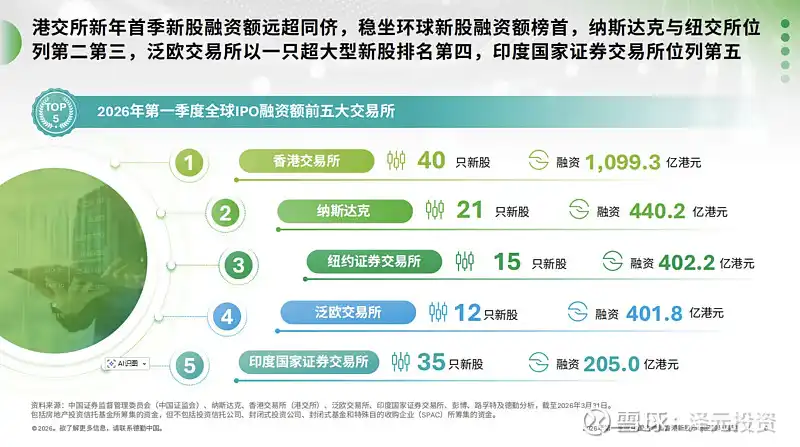
By the end of the first quarter, Hong Kong had seen 40 new listings, raising a total of HK$109.9 billion, surpassing major global exchanges such as NASDAQ (21) and the New York Stock Exchange (15), topping the global quarterly IPO fundraising chart.
Most of the rally came from hard technology companies. On the first day of the year, Beijing Ren Technology became the first domestic GPU company to list on the Hong Kong stock market, with an offer price of HK$19.6 and an oversubscription of 2346.5 times, rising by 75.82% on the first day. On January 9, MiniMax surged 109.1% on its debut, reaching a market value of over a hundred billion. On February 13, Huafei Technology Group skyrocketed by 242.20% on its first day of trading.
What impressed Arez the most was the craziest three days in April. The new listings since April were even more exaggerated, all rising across the board, with none breaking the IPO price.
On April 16, Sigen New Energy was officially listed. Founded by a Huawei-backed team, the distributed energy storage company saw its revenue grow from 580 million to 9 billion in two years. The stock price doubled on the first day of trading, with the maximum gain from one hand reaching over 34,000 Hong Kong dollars. The entry fee was 32,700, and investors recouped their investment in a day. The entire Shenzhen IPO community was buzzing that evening. The following day, April 17, both Qunhe Technology and Chang Guang Satellite Technology made their debuts. Qunhe Technology, the first IPO of the "Hangzhou Six Little Dragons," rose by 144% on the first day, with a cumulative increase of nearly 4 times over two trading days. Chang Guang Satellite Technology went public on the same day, rising by 75% on the first day, and a few days later, the highest price was more than 145% above the IPO price.
Three days, three new listings, each making successful applicants thrilled.
According to LiveReport's big data analysis, since 2026, based on selling one hand of each Hong Kong IPO at the opening price, the unrealized gains from new Hong Kong IPOs (excluding handling fees) have exceeded 128,000 Hong Kong dollars.
This is no longer a "mini spring" for Hong Kong IPOs but a "bull market" for Hong Kong IPOs.
Shenzhen Scalpers Have Fully Transitioned to Hong Kong IPOs
According to Arez, not only his scalping studio but also several scalping offices he knows in Shenzhen have either been engaged in Hong Kong IPOs all along or have mostly shifted their focus to Hong Kong IPOs since the second half of 2025.
"We mainly have two strategies," Arez told BlockBeats: "One is to apply for new shares through an account matrix to profit from successful allotments, and the other is the strategy we learned this year and are still practicing, collaborating with some onshore distributors and Hong Kong tour groups to onboard new clients for banks and brokerages, earning CPA commissions per head."
Earned Millions in April
Let's review Arez's operations during the craziest week in mid-April 2026.
When applying for new shares himself, Arez mainly analyzes new listings from several aspects: good fundamentals, high market enthusiasm, large-cap stocks, low issue valuation, and high subscription multiples.
"Take the recent example; Sigen New Energy perfectly met every criterion." The energy storage race that Sigen New Energy is in represents the fundamentals; the Huawei-backed team adds market hype and narrative; and the HK$4.4 billion fundraising is for a large-cap stock.
“More importantly, Stag New Energy has a high entry fee, with an IPO price of HKD 324.2, 100 shares per board lot, and requiring HKD 32,700 to subscribe for one board lot. The high entry fee means fewer retail investors participating and a higher chance of allotment,” analyzed Arez.
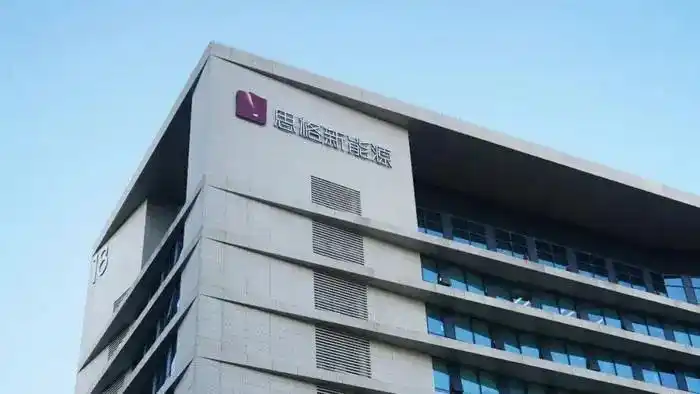
On April 8, Stag New Energy started its IPO. That morning, Arez and his partners held a meeting and were very bullish on this new stock, deciding to subscribe for the maximum shares per account, fully leveraging margin financing.
Over the next few days, Arez's team was busy with work, “but when the allotment results were announced, we were still quite lucky.”
On April 15, from 16:15 to 18:30, the grey market opened, and Stag New Energy soared by over 81%. With one board lot allotted, Arez saw an unrealized gain of HKD 26,000. Arez liquidated most of the position in the grey market, locking in the first wave of profits. The next day at the market open, Stag New Energy opened at HKD 581, and the remaining position was also sold within the first half hour of trading. Subsequently, on April 17, there was a double listing surge in Qunhe Technology and LongiTech Core.
Arez’s studio made nearly a million Hong Kong dollars in profit in less than half a month.
Comparing it to the wave of 2023's Arbitrum, the studio's profit share was also of the same magnitude, but the ARB project took a whole 14 months from the start of interaction to token issuance.
A typical rug pull project takes an average of 12-18 months from the start of interaction to issuance. During this time, funds are frozen, ETH may experience a significant price drop, and the project team may also delay.
However, the Hong Kong new shares market happened to give exactly the opposite signal — short cycle, quick feedback, and high certainty. The entire cycle of a new stock from IPO to listing takes only 7 to 10 days.
Turning Account Opening into a Routine Business
Open V2EX, Zhihu, Xiaohongshu, Xianyu, Telegram, search for “Changqiao cashback,” “Futu invitation code,” “Tiger channel rebate,” and you will see a CPA distribution market more mature than that of Taobao customers.
“A general brokerage gives the channel a minimum commission of HKD 500. For our internet rebates, we usually give HKD 250 to customers, and the remaining amount is our intermediary net profit,” said Arez. He mentioned that participating in new stock offerings is like a main business for him, while earning commissions is a passive side business.
Arez also revealed to BlockBeats of Dooon: An intermediary with a stable channel can achieve a comprehensive income of HKD 1,500-3,000 from bringing in a single client.
Recent data shows that in the first quarter of 2024, HSBC Hong Kong added 130,000 private banking clients; by the first quarter of 2025, this number had soared to 300,000. This wave of new accounts has led to a thriving agency ecosystem. Taking HSBC Hong Kong accounts as an example, the service fee for processing an account opening in Hong Kong is $1200, while the fee for processing it in mainland China is $2500.
In early 2026, Arez's studio also set up a "Hong Kong Trip for Account Opening + Securities Account Opening" team, with reasonable pricing. The fee for a complete set of services for each client (2 Hong Kong bank accounts + 3 securities accounts) is between $2000 and $3500. The comprehensive gross profit for one client ranges from $3000 to $5000 Hong Kong dollars.
"The process is similar to a tour group, gathering at a designated location in Shenzhen, going through customs together, being accompanied throughout the entire process, and visiting bank branches in Central, Yuen Long, and Tsuen Wan in rotation," Arez told BlockBeats.
They even cooperate with some tour groups, including visits to Victoria Harbour and Tsim Sha Tsui in the itinerary. If they handle 5 orders in a month, they can generate a stable cash flow of around $100,000 Hong Kong dollars.
Although this amount is not substantial, compared to the uncertainty of "waiting one and a half years for a coin airdrop" kind of income, the monthly stable cash flow is one of the reasons that truly motivate the studio to transition.
Blockchain-based Hong Kong Stock IPO, the Next Trend
Recently, while chatting with friends, BlockBeats also discovered a new trend—blockchain-based Hong Kong stock IPOs.
Users only need a wallet, deposit USDT/USDC, complete KYC, to directly trade Hong Kong stocks on the blockchain, including participating in Hong Kong stock IPOs. StableStock is one such project.
By partnering with a licensed brokerage firm named HabitTrade to obtain the underlying trading channel, StableStock holds the real shares of US and Hong Kong stocks in a 1:1 ratio in institutions like Coinbase Institution and SafeHeron, and then issues corresponding tokenized stock assets on the blockchain. This information has also spread spontaneously within the blockchain community.
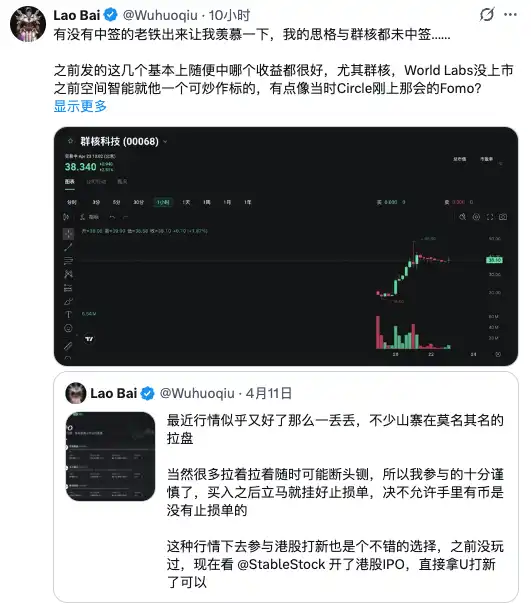
In February 2026, the platform's trading volume increased by 206% compared to the previous month, about three times the volume of January, exceeding the total volume of the previous three months. Behind this steep curve, a significant portion of the driving force comes from on-chain arbitrage players attracted by initiatives like Hong Kong stock IPOs.
As the frenzy of Hong Kong IPO subscription reaches a fever pitch, the "On-chain IPO Subscription" trend is also becoming increasingly popular.
