Over 200 U.S. public companies have already established some form of digital asset treasury, but very few have truly scaled. On the Ethereum track, this number may be only two. One of them is Sharplink, led by Joseph Chalom.
With the ETH price experiencing a sharp decline from its peak, the DAT model itself is also facing questions about its intrinsic value beyond speculation. Therefore, BlockBeats seeks to explore in this context whether the logic of DAT can still hold when the narrative no longer aligns with the price, and what insights an industry veteran like Joseph Chalom has that others may have overlooked.
Joseph Chalom is the force behind IBIT, ETHA, and BUIDL, personally ushering BlackRock from a traditional asset management giant into the on-chain world. In 2025, after retiring from BlackRock, he decided to reenter the industry by taking on the role of CEO at Sharplink (Nasdaq: SBET), transforming this Nasdaq-listed company into an Ethereum Digital Asset Treasury (DAT) currently holding over $20 billion in ETH.
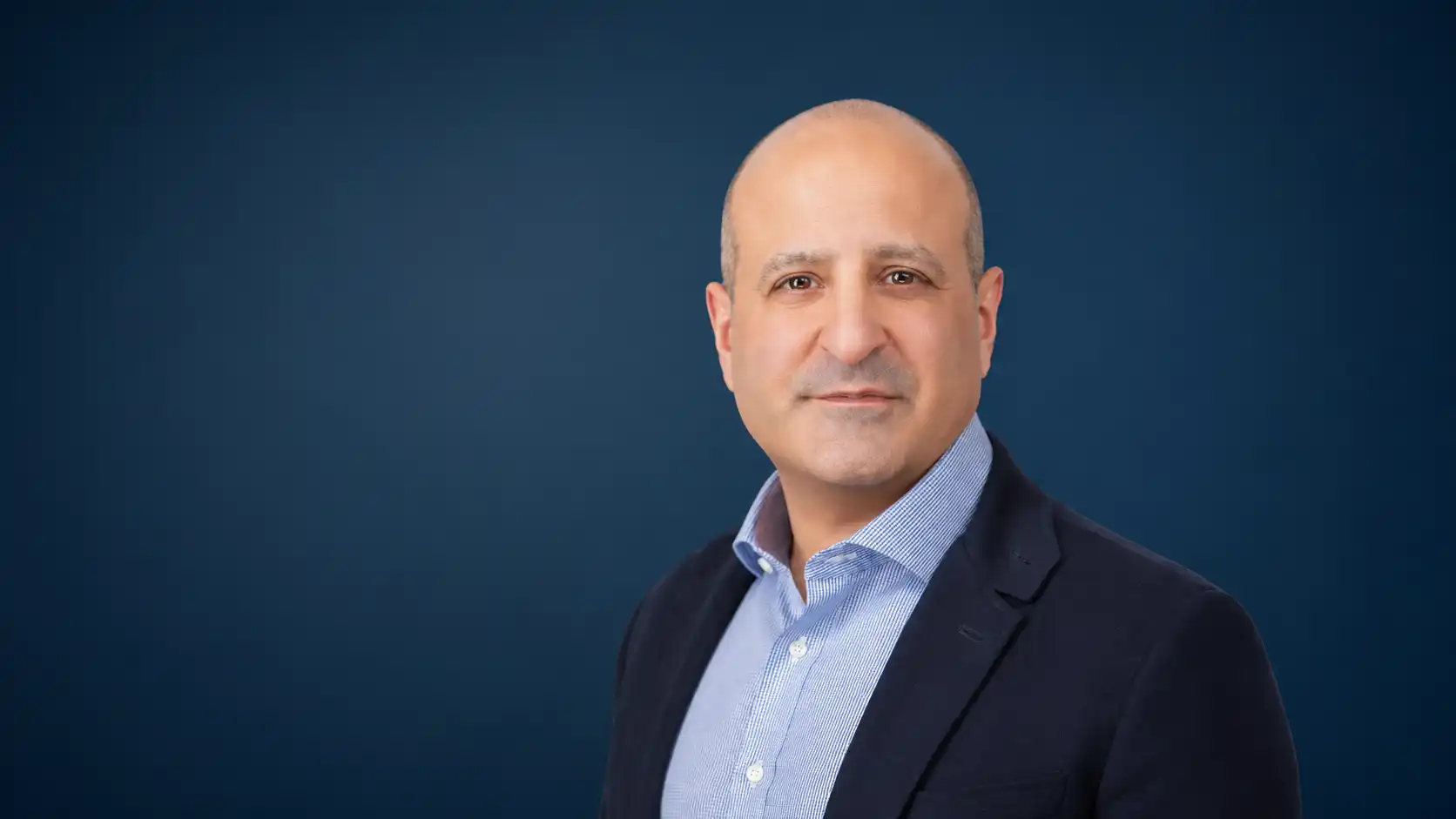
Joseph's rationale is that Ethereum is meant for deployment. Sharplink has almost entirely staked its ETH, engaged in restaking, and institutional-grade DeFi, becoming the first in the industry to achieve a "DeFi on-ramp while assets remain in regulated bank custody" structure. In his view, this is not a bet on the token price but a long-term investment in the migration of capital market infrastructure. Stablecoins, tokenized assets, the smart economy—all tracks ultimately converge on the same chain.
Below is the full interview of Joseph Chalom by BlockBeats.
From BlackRock to Sharplink: Why Ethereum
BlockBeats: You spent 20 years at BlackRock, personally launching IBIT into the market. What core judgment led you to leave and take on the role of CEO at Sharplink?
Joseph Chalom: From 2021 to the present, we did three things at BlackRock around digital assets, but before the official launch, the team actually prepared for several years. The outside world thought IBIT was an overnight decision, but in reality, we spent years ensuring that all standards met the expectations of large institutional clients.
The first thing was to invest in Circle and become the sole manager of its entire treasury bond portfolio. Through this partnership, we realized the need to understand the future of fund flows.
In traditional finance, U.S. stock and bond trades settle T+1, while many Asian markets still operate on T+2 or even T+3, rooted in the slow movement of securities and funds. Stablecoins will become the future's instant, counterparty-risk-free means of fund transfer.
The second thing was to respond to customer demand. Many institutional and wealth management clients only wanted exposure to Bitcoin and Ethereum, and nothing else. So, in 2024, we launched IBIT and ETHA, with IBIT subsequently becoming the fastest-growing ETF in history. The launch of ETHA required us to delve deep into understanding how staking works, as we anticipated the SEC would eventually allow ETFs to engage in staking, which indeed happened.
The third thing was tokenization. We introduced BUIDL, an income-generating security token deployed on Ethereum, marking the first time in BlackRock's 39-year history that an asset was tokenized.
To choose the right public blockchain, we spent almost a year conducting due diligence and ultimately concluded that only Ethereum met three criteria: security (nearly 1 million validators), reliability (operating without interruption since 2015), and liquidity (holding the most stablecoins and richest ecosystem opportunities). Over 60% of stablecoin settlements occur on Ethereum L1 or L2 ecosystems, making Ethereum the primary underlying network for Web3 fund transfers.
These experiences shaped my complete understanding of Ethereum. I left because the young team leading these businesses had gained enough experience, and I have a strong belief in Ethereum's ability to transform the capital markets and financial system. I wish to personally lead this revolution. My entire career has revolved around one mission: delivering better technological solutions to institutional clients. Sharplink is here to continue that mission. And I am not alone.
BlockBeats: Not alone?
Joseph Chalom: The core team of Sharplink and key shareholders come from early Ethereum participants such as Consensys, with Ethereum co-founder Joseph Lubin serving as our board chairman. This is not just a story about capital.
We have accumulated an institutional operational methodology at BlackRock, while the Ethereum OGs brought a deep understanding of the Ethereum technology stack and protocol ecosystem. The combination of these two abilities is the foundation of Sharplink's DAT.
DAT Methodology: More Than Just HODLing
BlockBeats: You mentioned that DAT has surpassed the buy-and-hold stage. What is the core difference between buying Sharplink stock and directly buying spot ETH?
Joseph Chalom: Anyone can directly buy spot ETH, but then you need to manage your own wallet, decide whether to stake, and when to unstake. Even though ETFs can now stake, they do not stake 100% of ETH due to redemption queue considerations and charge higher fees from the returns.
The difference with Sharplink lies in three points. First, we have almost staked 100% of ETH from day one, being the first publicly traded company to do so. Second, we can make ETH more efficient than basic staking rewards. We not only stake but also engage in liquidity restaking and are starting to enter high-quality DeFi for higher returns. Third, we have permanent capital, do not need to sell ETH, and can make multi-year lock-up commitments, thereby allowing protocol partners to provide higher economic incentives.
Ethereum is different from Bitcoin. Bitcoin can be bought and held; however, Ethereum needs to be used, productively deployed. Sharplink accomplishes all this for investors and provides this exposure in the form of a Nasdaq-listed company.
BlockBeats: Could you introduce to readers your layered ETH investment strategy, from native staking to DeFi deployment, and what is the risk-reward structure at each level?
Joseph Chalom: We hold over $2 billion in ETH, considering it a portfolio that can be allocated across different yield buckets.
The largest allocation is in native staking and liquidity staking. Due to the team's deep understanding of the Ethereum ecosystem, we are the only Ether DAT company that has achieved higher returns than native staking. We have an in-house team building restaking and yield strategies on Ethereum-native protocols like Consensys, Linea, EtherFi, and EigenCloud. EtherFi and EigenCloud are very important DeFi protocols in the Ethereum ecosystem. Because we can commit ETH to these partnerships for multiple years, we receive higher incentives and returns.
We are gradually moving into more complex revenue generation methods, but the process is cautious and risk-managed. On the risk management front, first, we have internally established a risk management team with institutional-level experience. Second, we always place staked ETH and even liquid staked ETH in qualified custodial institutions—how exactly we do this, I will explain later.
BlockBeats: The stock prices of most DAT companies have retraced from their highs, including Sharplink. Some people doubt that DAT only amplifies the volatility of crypto assets rather than creating real shareholder value. What is your view?
Joseph Chalom: In fact, ETFs and digital asset treasury companies are beneficial for the tokens themselves. First, they create demand upon purchase. Second, as long-term holders rather than traders, they sometimes reduce volatility; just like after BlackRock launched a Bitcoin ETF, Bitcoin's volatility decreased.
ETH itself is a highly volatile asset, and our stock price does indeed follow ETH price fluctuations, which can be understood as a beta. When ETH drops, the stock will fall; but when ETH rebounds, we expect to bring about better long-term capital appreciation.
It is worth noting that currently Bitcoin and ETH are both relatively low, but we are witnessing the largest institutional adoption in Ethereum's history: the world's largest exchanges are advancing 24/7 trading, the largest asset management companies are entering the crypto industry, banks are rushing to launch ETFs and custody services, and global regulatory authorities are starting to approve stablecoins. All of these positive developments are happening during a period of low prices, mainly due to geopolitical risks, tariffs, and other external factors. From a risk-reward perspective, now is a great buying opportunity for DAT.
BlockBeats: Over 200 publicly traded companies in the U.S. now hold some form of digital asset treasury. As the race becomes increasingly crowded, where will the differentiation between DAT companies ultimately manifest?
Joseph Chalom: Digital asset treasury companies related to ETH and even Solana only started appearing last summer, making this a very young industry. However, even in such a short time, differentiation has already begun. Among the eight or nine companies launched last summer, only two have truly reached scale, being able to raise billions of dollars in funding, reaching both retail and institutional investors, and establishing the ability to generate returns on ETH.
Sharplink has quickly established its differentiation. Our direction is very clear: to become the most productive and cost-effective company in all Ethereum-based DATs. Through an in-house asset management team, our cost structure is more fixed, allowing more revenue to be retained by investors regardless of whether the ETH price doubles or more ETH is accumulated.
BlockBeats: If the ETH price drops, the USD income corresponding to staking rewards will also decrease. How does this model continue to operate?
Joseph Chalom: The digital asset treasury can operate both in a market uptrend and in a downtrend or sideways movement. This is because our focus remains the same regardless of whether the ETH price is $4,000 or $2,000, which is to increase the productivity of ETH. When the ETH price is lower, the USD equivalent of staking rewards will indeed decrease, but this will not change our strategy. The price will eventually rise again, and so will the income.
Furthermore, the DAT company itself is profitable. Staking rewards are considered income for public companies. In the future, the DAT company may also develop or acquire operational businesses to generate more Ethereum-related revenue or use this revenue to purchase more ETH.
Bridging TradFi and DeFi
BlockBeats: What is the fundamental difference between institutions participating in DeFi and retail users in DeFi?
Joseph Chalom: Institutional-grade DeFi first and foremost means conducting thorough due diligence on partners and protocols, rather than simply injecting funds into DeFi and hoping for the best.
But the most significant difference lies in asset custody. When retail users enter DeFi, their assets leave the banking custody system and enter a Web3 wallet. In contrast, we were the first in the industry to enter DeFi, hold liquidity provider tokens, and still keep assets in regulated bank custody.
BlockBeats: How did you achieve this? You chose Anchorage Digital as a qualified custodian; what were the selection criteria?
Joseph Chalom: We use two custody providers for staked ETH: Anchorage Digital and Coinbase, both leading global cryptocurrency custody platforms. The key reason for choosing Anchorage is that it was the first institution willing to support liquidity provider DeFi tokens within a qualified custodial framework.
This innovative collaboration is driven by both parties. As a result, while enjoying DeFi yields, the assets always remain within the federally regulated banking custody system, fundamentally reducing operational risks. This is a first in the industry—entering DeFi does not mean giving up compliant custody.
BlockBeats: In terms of security tokenization and AMM compliant trading, what key trends do you see?
Joseph Chalom: We are witnessing a trend where all assets are being tokenized, including stocks, bonds, funds, real estate, and commodities. The driving force behind this is not experimental but stems from the inefficiencies of the existing market structure: long settlement cycles, numerous intermediaries, high counterparty risks, and trapped capital.
Tokenization offers five core values: instant settlement, 24/7 trading, programmable smart contracts, cross-border circulation, and broader geographical coverage. The world's two largest stock exchanges, the New York Stock Exchange and Nasdaq, have both announced plans to enable 24x7 trading of tokenized stocks.
I have always believed that instead of pushing from the bottom up on a company-by-company basis, it is better to wait for top-down signals. These signals have now emerged as top exchanges worldwide are stepping up, with the ability to tokenize all assets and make them tradable. In the long run, a tokenized version of holding an asset will be preferable to holding the traditional version. In a world where a war could break out on a Friday evening, investors will want liquidity to enter and exit the markets over the weekend.
BlockBeats: There is a current trend where many are leaning towards CeFi, no longer believing in the power of DeFi. What is your take on this?
Joseph Chalom: I believe the focus should be on four main trends rather than fixating on where they occur.
The first is stablecoins, which represent the first successful use case of tokenization, offering instant settlement, programmability, and cross-border mobility. The current scale is around $340 billion, circulating in both CeFi and DeFi.
The second is asset tokenization. Initially, this primarily occurred on CeFi exchanges, but as more people hold crypto wallets, assets such as tokenized Tesla and tokenized Sharplink will begin to be lent and traded on DeFi protocols.
The third is the Agentic Economy. As Web3 wallets become more prevalent, a significant amount of lending, trading, and exchange activities will take place in decentralized finance, whether in DeFi protocols like MetaMask, Phantom, or within the banking and brokerage systems.
Ultimately, as our chairman and Ethereum co-founder Joe Lubin said, TradFi and DeFi will ultimately become Fi (Finance). They operate on parallel tracks, and over time, they will not collide but converge.
The Future of AI Agents with Ethereum
BlockBeats: You mentioned that AI Agents are the next key variable for Ethereum. Can you elaborate?
Joseph Chalom: By combining elements such as Web3 wallets, digital assets, tokenized assets, and stablecoins, in the future, your AI Agent will help you make on-chain micropayments, rebalance your portfolio, and optimize returns every day. They will read your bank account, automatically transfer funds to the optimal account when you receive your salary, or invest according to your preset strategy.
Some say that humans will become masters of their own Agents. Indeed, this is the case in the early stages. But over time, you will also learn from your Agent, which does not sleep, does not make low-level mistakes, and can access the world's best models. Although you still control it, it will teach you behind the scenes how to achieve better financial outcomes.
And these things need to happen on a decentralized network. Stablecoins, tokenized assets, DeFi, and the smart economy all come together to form a new Internet paradigm.
BlockBeats: Do you really believe AI won't make mistakes?
Joseph Chalom: Human financial advisors also make mistakes, sleep, and may not return your calls. More importantly, I have never seen an AI Agent whose interests are not aligned with your financial interests. Bankers, brokers, and financial advisors' interests may conflict with yours, but your Agent serves you according to your rules.
Of course, Agents will make mistakes, but that's usually because humans programmed them incorrectly.
BlockBeats: What is Sharplink specifically doing in the AI Agent field?
Joseph Chalom: We are not directly building AI Agent products. However, ETH is the token that secures the Ethereum network. If more stablecoins, tokenized assets, DeFi, and smart agent activities occur on Ethereum in the future, more ETH will be needed to ensure transaction security, increasing the demand for ETH.
We are driving the Ethereum ecosystem forward through staking and investment protocols, providing exposure to this investment opportunity.
In the words of Bill Gates: Humans always overestimate what a technology can do in one year but underestimate its impact over a longer period. I feel the same way about this digital transformation.
Stablecoins and the Value Transmission of ETH
BlockBeats: As one of the largest corporate ETH holders, how do you view the transmission of value from stablecoin prosperity to ETH?
Joseph Chalom: The success of stablecoins so far has mainly been within the crypto narrative, serving as an on-ramp for funds and a medium of exchange. However, stablecoins are becoming part of a broader infrastructure: enterprises use them for instant fund transfers, cross-border payments are starting to utilize stablecoins, and payment platforms use them to expedite salary payouts. In the smart economy, whether it's micro or large payments, the ability for instant fund transfers will rely on stablecoins.
The key is scale. The settlement volume of stablecoins in the Ethereum ecosystem is about 10 times that of Solana. If you believe that future fund flows, transactions, and smart economy payments will all occur through stablecoins, then holding the underlying ETH rail is valuable, which is exactly the exposure Sharplink provides.
BlockBeats: Does Sharplink have any plans for Asia?
Joseph Chalom: This is my third time in Hong Kong in five months. Sharplink keeps coming back to Hong Kong because it combines four key features: high capital density, a positive regulatory trend, new stablecoins being issued, and a strong talent density in financial markets and frontier technology.
We participated in launching the first Ethereum offline community center in Asia, ETH HK Hub, with support from the Ethereum Foundation's Ethereum Everywhere team, jointly operated by SNZ and ETHTAO, located in West Kowloon. Ethereum founder Vitalik and Foundation Chair Aya also attended the opening event on April 21.
Today, Hong Kong is not competing with the U.S. but is competing with Tokyo, Seoul, and Singapore for the position of the Asian digital financial center. Hong Kong has the regulatory foundation, depth of capital markets, top-tier talent, and one extremely valuable element in today's world — stability. In an era full of conflict and capital flows, do not underestimate the value of stability.
BlockBeats: What is your assessment of the broader geopolitical and economic environment?
Joseph Chalom: From the perspective of stablecoins, the United States is strategically embracing crypto and digital assets, with one key reason being that the US dollar stablecoins must be backed by US Treasury bonds. Against the backdrop of traditional buyers (China, Russia, Europe) reducing their purchases of US Treasury bonds, the demand for Treasury bonds created by stablecoin issuers such as Tether, Circle, and PayPal is very beneficial to the US economy. It can be said that US dollar-dominant stablecoins are driving the financial services' remonetization.
During my travels in Asia, I observed that the primary regulatory issue that governments in various countries are focusing on is the issuance of local currency stablecoins, including Tokyo, Singapore, and Hong Kong. This is because these jurisdictions aim to ensure that local on-chain activities and commercial payments are denominated in local currency stablecoins. This is a geopolitical competition about "who will own the future digital capital market." The US is currently leading, and countries across Asia are closely watching the signals coming from the West.
BlockBeats: One last question, if you were to give one piece of advice to a traditional CFO considering setting up a digital asset treasury, what would you say?
Joseph Chalom: The most important point is that you must have a genuine long-term investment thesis for your reserve assets. Bitcoin has its logic, digital gold, scarcity, capital appreciation. Ethereum also has its logic, capital market transformation, stablecoins, tokenization, DeFi, and smart contract payments. Last summer, we saw people launching so-called treasury strategies around very small tokens, but the thesis was not clear.
The second piece of advice is that you need scale. Operating a public company has fixed costs, and in the Ethereum space, only a treasury that reaches a sufficient scale can truly provide liquidity and investment opportunities.
Welcome to join the official BlockBeats community:
Telegram Subscription Group: https://t.me/theblockbeats
Telegram Discussion Group: https://t.me/BlockBeats_App
Official Twitter Account: https://twitter.com/BlockBeatsAsia
