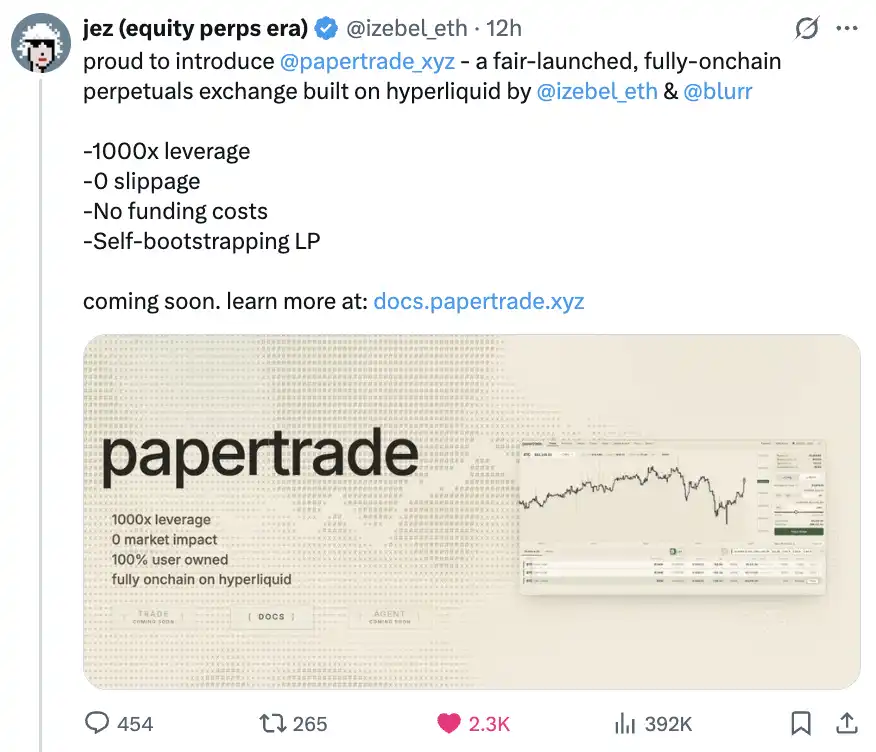
Crypto trader Jez announced today a new protocol named PaperTrade developed on HyperEVM, sparking lively discussion in the English crypto community.
Jez, a longtime advocate of perpetual contracts, heavily invested in Hyperliquid early on, with his wallet address ranking high on the Lighter and Variational airdrop leaderboards. This time, he personally created a feeless, slippage-free, and funding-rate-free Perp DEX.
Old-School Off-Chain Casino
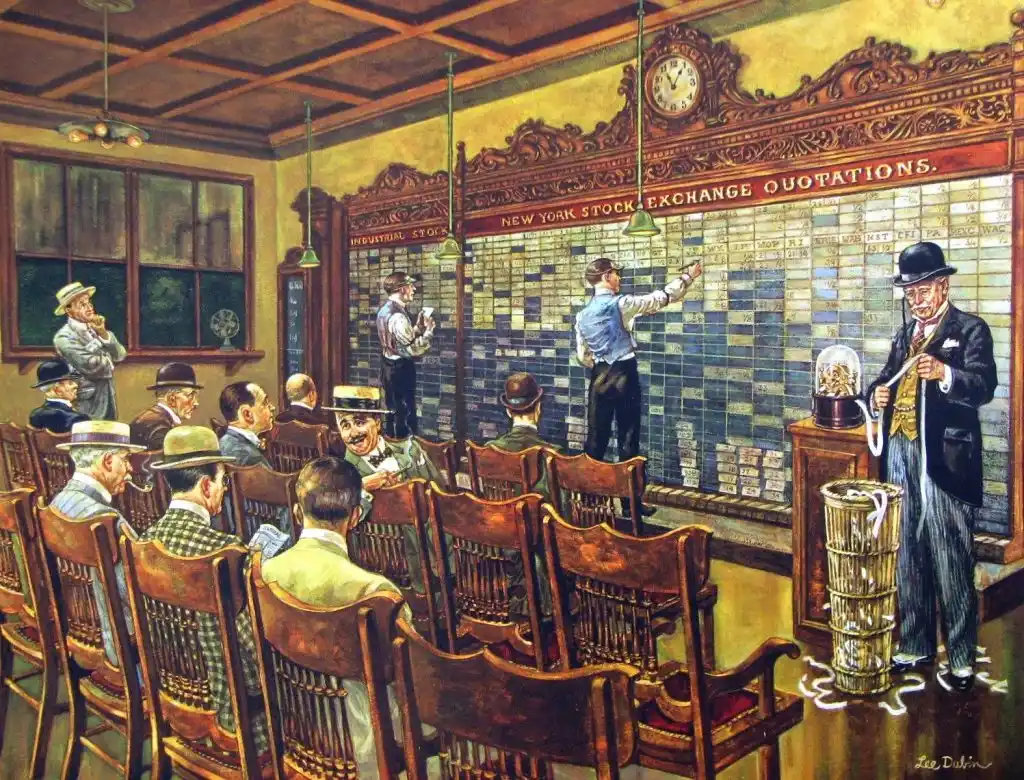
The mechanism of PaperTrade has a dubious predecessor in financial history. In the 1900s, the bucket shop in a small American town, bearing a securities firm sign, would transcribe real-time quotes from the NYSE behind the counter with chalk, but customer orders never left the shop owner's drawer. Essentially, it was a bet between customers and the shop owner. This business was banned by New York state legislation in 1909 and nearly vanished by the 1920s.
When users open or close a position on PaperTrade, the platform directly reads the order book price from Hyperliquid, settling directly with the public LP pool based on the difference between opening and closing. Throughout the process, no orders enter Hyperliquid's matching engine, and there is no actual perpetual contract turnover. The trading parties are always the user and the LP pool, with no third-party counterparty.
Perpetual Contracts + P2P + DeFi Ponzi
PaperTrade also draws inspiration from the DeFi mining and P2P lending models.
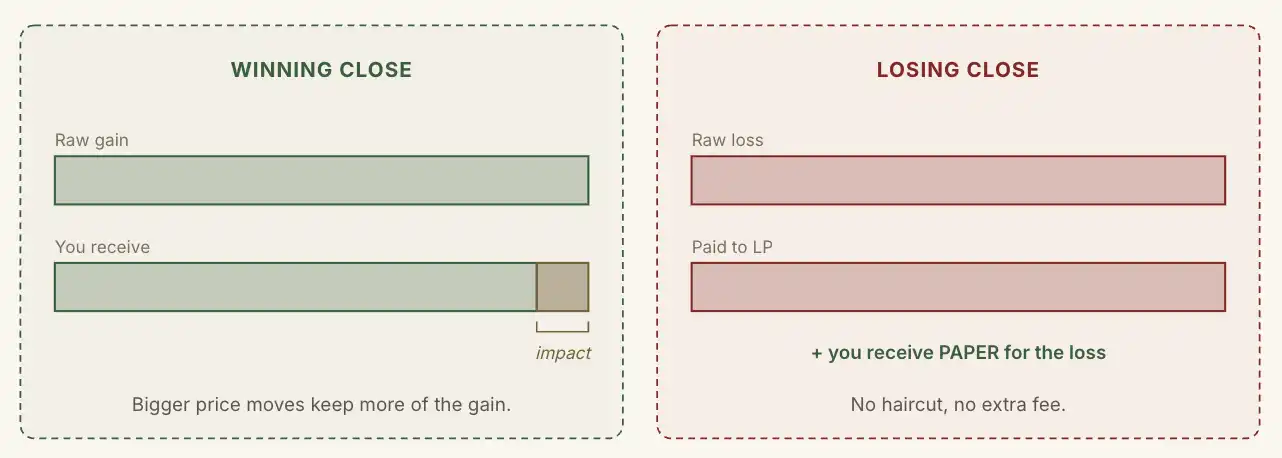
User losses on PaperTrade are made whole and placed into the protocol's LP pool, while the platform takes a cut of user profits. The smaller the price fluctuation, the more profit is taken. In other words, the more users earn, the less the protocol takes.
Unlike HLP, PaperTrade's LP pool has no team allocation, no VC funding, and does not accept any form of external deposits. Its only source of funds is the margin from user losses.
Now, the big question: if the LP pool only has $100, but users earn $5000, how does the protocol compensate?
PaperTrade has moved the traditional P2P lending credit queue onto the chain.
This $5000 will enter a sequenced on-chain queue, waiting for the next losing trade to fill the gap, with payments made sequentially from the front of the queue. The user's principal will always be returned first, and only the profit portion will be queued.
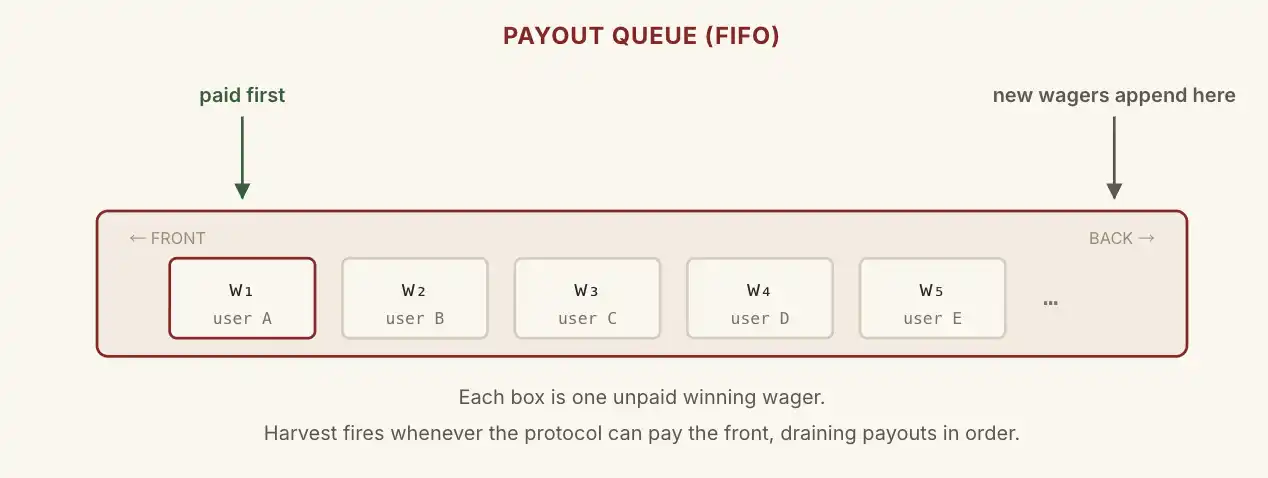
In theory, LPs can undergo "phased bankruptcy," but every winner will eventually be paid out unless the loser's loss is unable to cover the platform's debt to the winner.
If it ends here, the project is destined to fail because if the LP pool runs out of funds, winners may have to wait a long time to receive their profits, naturally losing the incentive to trade. Traders will leave in droves, even the losers will be gone, and the platform's debt to the winners will turn into bad debt.
The essence of PaperTrade lies in its token PAPER.
For every $1 loss by a user, the protocol will mint a certain amount of PAPER following a curve.
When the LP balance falls below $2 million, the minting rate is fixed at 100 PAPER per $1 loss; once the LP exceeds $2 million, the rate starts to decay, with the more significant the LP balance, the fewer PAPER minted.
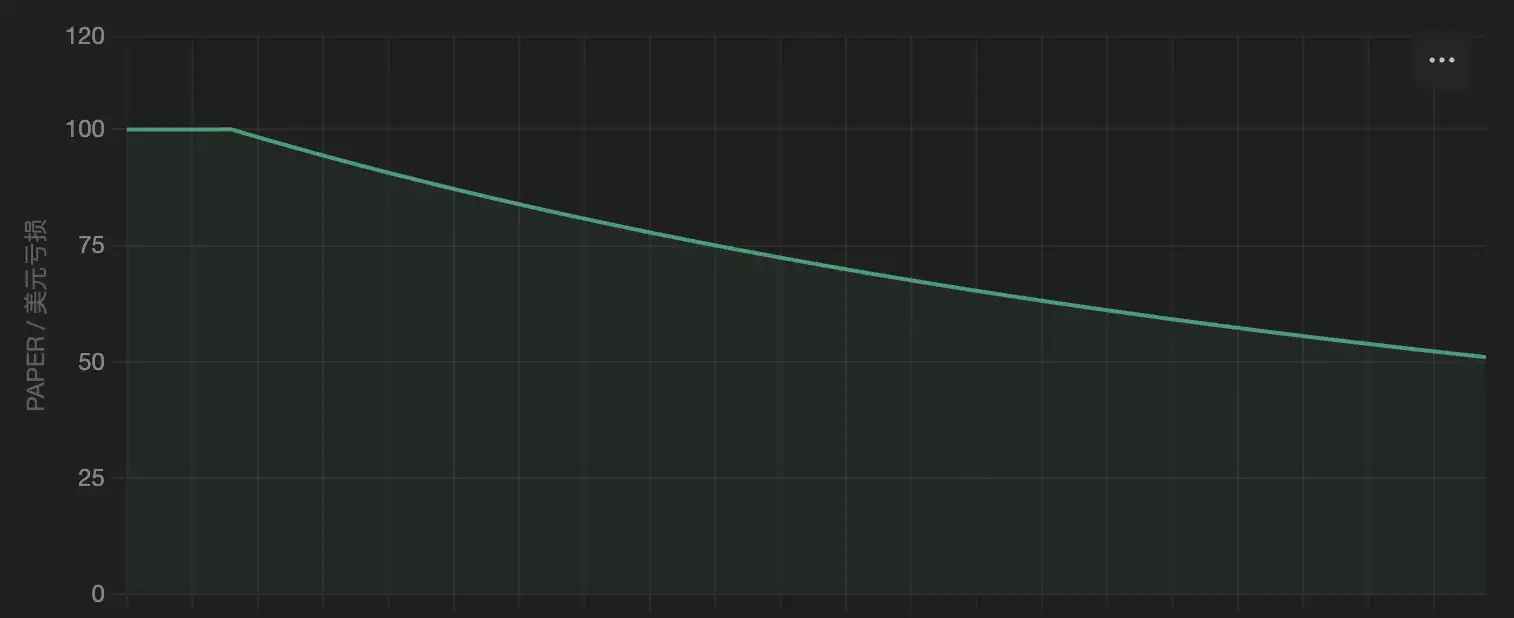
Staking PAPER allows for two types of dividends: protocol trading fees and, once the balance surpasses $5 million, all excess will be allocated to stakers.
In other words, the LP pool size has a $5 million cap, and beyond this, users' losses will be fully redistributed to PAPER holders. This creates a cycle where "losers gain platform shares, winners take losers' money, platform fees subsidize winners, and losers."
Therefore, a sound participation strategy can be summarized as: bet on losing trades to mint PAPER when the LP pool TVL is low, and stake PAPER to earn dividends when the LP pool TVL is high.
HyperEVM Stress Test
In the author's opinion, the biggest uncertainty of PaperTrade lies in its deployment of HyperEVM.
PaperTrade simply uses Hyperliquid's price as a free native oracle, with all remaining logic in the HyperEVM contract.
This means that any high-performance chain with similar capabilities can replicate PaperTrade's entire mechanism on their chain as long as they are willing to integrate an external price oracle. The replicator can even offer things that HyperEVM cannot: lower gas fees, higher TPS, more generous initial subsidies, and more aggressive token incentives.
During last year's Q1 HyperEVM meme season, which saw a period of slow on-chain speed and high gas fees, PaperTrade's launch was another test for HyperEVM.
Welcome to join the official BlockBeats community:
Telegram Subscription Group: https://t.me/theblockbeats
Telegram Discussion Group: https://t.me/BlockBeats_App
Official Twitter Account: https://twitter.com/BlockBeatsAsia
