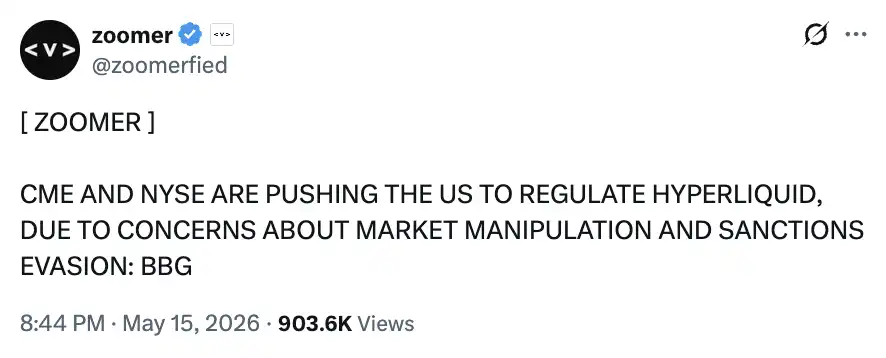
Two weeks ago, the parent company of the New York Stock Exchange, ICE, and CME together presented a "small report" to the CFTC and the U.S. Congress. A platform registered in Singapore, with traders remaining anonymous throughout, Hyperliquid, is now exposing the global oil price to manipulation risks, potentially being exploited by insiders or even by state actors under sanctions. Bloomberg reported that these two long-standing exchanges hope for tighter regulation on Hyperliquid.
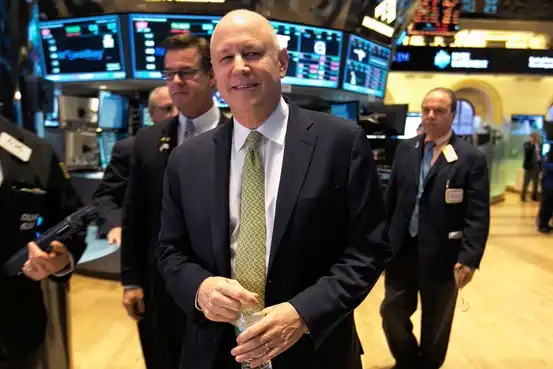
Two weeks later, at Bernstein's investor conference, ICE's founder, chairman, and CEO Jeffrey Sprecher talked about how Hyperliquid has completely transformed. He mentioned that this platform is "bigger than Nasdaq," with only 11 employees in the entire company, and it is truly impressive at first sight. Sprecher has met with the Hyperliquid team several times, with both sides learning from each other, and concluded by saying, "Salute to these people, really wish I were younger and could personally do such a thing."
ICE's dilemma is not about its wavering attitude. It has long believed that tokenization will prevail, but it has not yet qualified to compete in the same arena as the winners.
Tokenization Track
In Sprecher's view, value will eventually be tokenized via the internet, achieving round-the-clock uninterrupted flow. The reason is simple: banks have business hours, but the global supply chain and global energy resources operate around the clock. With operations in 13 exchanges and 6 clearinghouses globally, once banks in a time zone close, funds in that region are forced to halt. As the world moves towards 24/7, capital will flow to channels that never close.
Tokenization also brings profit advantages. Currently, ICE holds extra collateral at each of the 6 clearinghouses it collaborates with to prepare for local clearing at any time. Imagine a multinational company having an account in each of six countries, each with locked-up reserve funds that cannot be touched. Tokenization can consolidate these six funds into one, enabling almost instantaneous fund transfers based on where trading starts and where margin is needed. For a company with clearinghouses worldwide, this is a tangible upgrade in fund efficiency.
With the decision made, action must follow. ICE initially planned to tokenize the New York Stock Exchange's stocks directly, but investors were not on board. Consequently, ICE took a detour, establishing a subsidiary named Blue Ocean and applying to the SEC for round-the-clock, year-round trading of stocks. Sprecher emphasized that the approval of this application is unrelated to whether the Clarity Act passes, and he is currently optimistic about receiving approval.
Vertical Integration Betting
After approval, where will the incremental come from?
ICE anticipates that when the 7x24 tokenized U.S. stocks go live, most domestic institutions will not participate. Weekend and late-night trading are not in line with their habits, and compliance may not be readily granted.
The real incremental demand will come from Asia.

OKX, the world's second-largest global crypto exchange after Binance, with 120 million users in hand, perfectly complements ICE's shortcomings in terms of geography and customers. OKX has stumbled during the Biden administration, facing hefty fines, accepting on-site regulators, committing to thorough KYC and AML procedures, which convinced ICE of OKX's determination to legitimately stay in the U.S.
So, the two companies made an equivalent exchange. ICE helped OKX obtain a broker-dealer license, be included in FINRA and SEC oversight, and ushered it into the U.S.; OKX, leveraging its Asian network and millions of customers, distributed products for ICE. In March 2026, ICE invested around $200 million in OKX, corresponding to a $25 billion valuation, and secured a board seat.
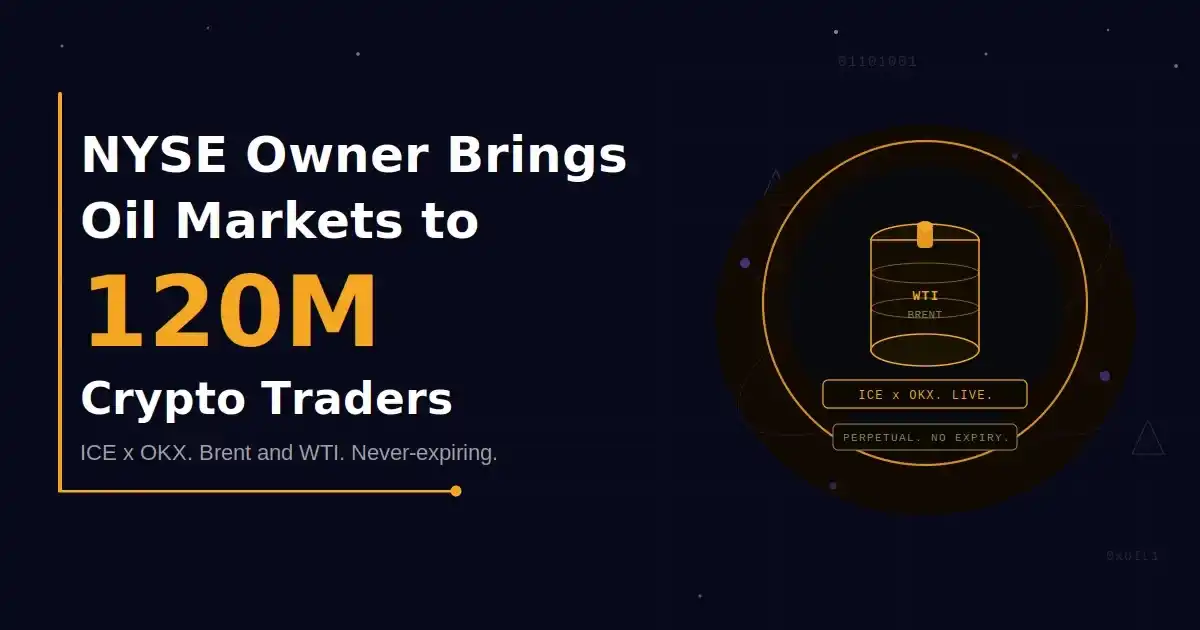
Two weeks ago, their first product collaboration landed, with OKX launching crude oil perpetual futures contracts based on the Brent Crude and WTI Crude benchmarks.
Settlement Layer Positioning
Buy distribution, buy data, but lacking a chain capable of carrying it all.
Sprecher knows well that the current L1 and L2 solutions on the market cannot yet meet ICE's performance requirements. According to him, the NYSE's daily trading volume surpasses even Google's search queries. The bigger issue is latency. Decentralization relies on a set of validators reaching consensus and confirming ownership transfer, which takes time, while ICE's algorithmic trading on the platform is calculated in microseconds. No one is willing to regress a decade in speed just to put trades on the chain.
ICE's approach is to split the workflow in half. Matchmaking stays off-chain, and collateral transfers move on-chain.
ICE has already taken action on these two steps.
Internally, it has put the NYSE on a blockchain for settlement, running within its own data centers and not exposed to the public.
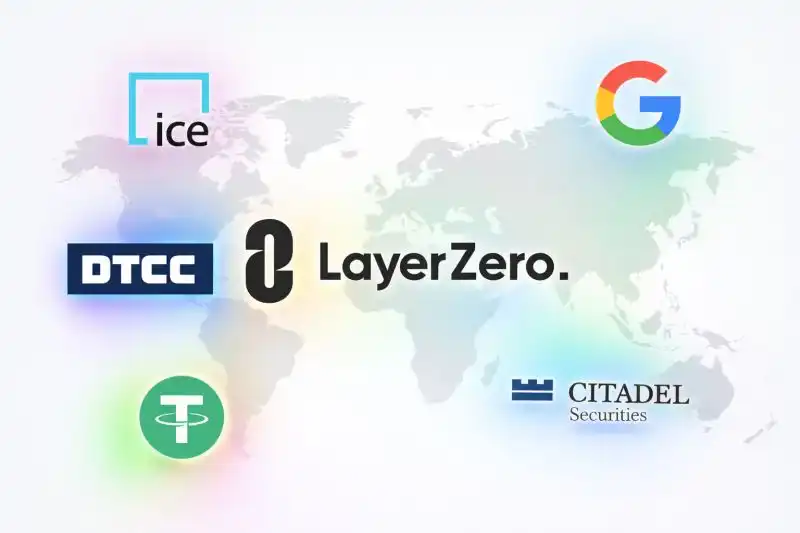
Publicly, ICE invested in LayerZero, a cross-chain protocol, in February 2026, just before the launch of its Zero mainnet. The investors in Zero read like a who's who of the traditional financial world, including the DTCC responsible for U.S. securities clearing, market maker giant Citadel, Google Cloud, ARK, and Tether.
Regulatory Double Standard
Regarding the "challenger" Hyperliquid, Sprecher has been closely monitoring two things they can do that ICE currently cannot.
With the ongoing Middle East conflict, major news often breaks over the weekend when the traditional oil markets are closed. Hyperliquid has taken over this window, leading the way in oil price discovery over the weekend.
Another example is the SpaceX pre-market contract launched on Hyperliquid. Sprecher is curious whether a price "discovered" on-chain private market can actually reflect the real price on opening day. He mentioned that he is willing to wait a few more weeks before making a judgment.
When asked about ICE's "FUD" against Hyperliquid two weeks ago, Sprecher addressed it head-on: "In fact, we did not feel panicked. On the contrary, we are engaging with these people, understanding their ideas. They are understanding what we are doing. We are helping them understand our world, and they are helping us understand theirs. So, in a sense, this is a mutually appreciative relationship."
The underlying message in this statement is what ICE truly wants to convey to regulatory agencies.
"No one is penalizing Hyperliquid for what they are doing, so why shouldn't we? ICE needs a level playing field. If regulators deem what Hyperliquid is doing as legal, then ICE wants to do more; if you believe it is illegal, then why hasn't Hyperliquid received the kind of warning letters you often send to us?"
Welcome to join the official BlockBeats community:
Telegram Subscription Group: https://t.me/theblockbeats
Telegram Discussion Group: https://t.me/BlockBeats_App
Official Twitter Account: https://twitter.com/BlockBeatsAsia
