Article by Sleepy
Silicon Valley is also starting to show signs of aging.
Of course, not that kind of aging. There are no small-town girls calling middle-aged men "brother" here, nor $20 WeChat red envelopes with a "You're amazing" message. Silicon Valley's version is a bit more dignified, and a lot more expensive.
The "aging" here refers to a group of people in their twenties and thirties, holding Nvidia options or OpenAI stock, living in high-rise apartments in the SoMa district. They are young in age but already carry themselves like old men. They have money, lots of ideas in their minds but no one to talk to about them. Even if they find someone to talk to, no one takes them seriously. Eventually, they discover that the act of "someone listening to me seriously" can be bought. In a small town, it costs $20 each time, but in Silicon Valley, it costs $3,000 to $6,000 per hour.
There are two faces of San Francisco in June 2026.
The daytime face is easily recognizable. OpenAI and Anthropic have successively submitted confidential IPO filings to the U.S. Securities and Exchange Commission, with both AI giants preparing to go public almost simultaneously. Prior to this, OpenAI allowed over 600 employees to cash out approximately $6.6 billion through the secondary market. Huang Renxun also mentioned that Nvidia has created many billionaires.
This is the daytime story, a wealth creation story written in financing news and financial headlines.
The nighttime face is not often seen. In the same city, a group of young women who claim to understand AI, GPUs, longevity, and cryptocurrency have started to provide high-end companionship services to Silicon Valley tech workers for thousands of dollars per hour. A significant portion of their clients are the same people who appear in the financing news during the day.
AI has sucked money in, money has changed the city's shape, the city has changed the people living inside, and the loneliness and dignity of the people have also grown in price.
Money Changed the City's Shape First
Three years ago, everyone thought San Francisco was finished.
The pandemic emptied downtown office buildings. Remote work sent programmers to Austin, Miami, and even Bali. In the Mid-Market area where Twitter headquarters is located, tents lined up, and the faded rental ads on vacant storefronts remained untorn.
During those years, when you told someone you were still in San Francisco, they looked at you with pity in their eyes. An American city that survived on "innovation" was described as "decaying" for the first time.
Then AI came with money.
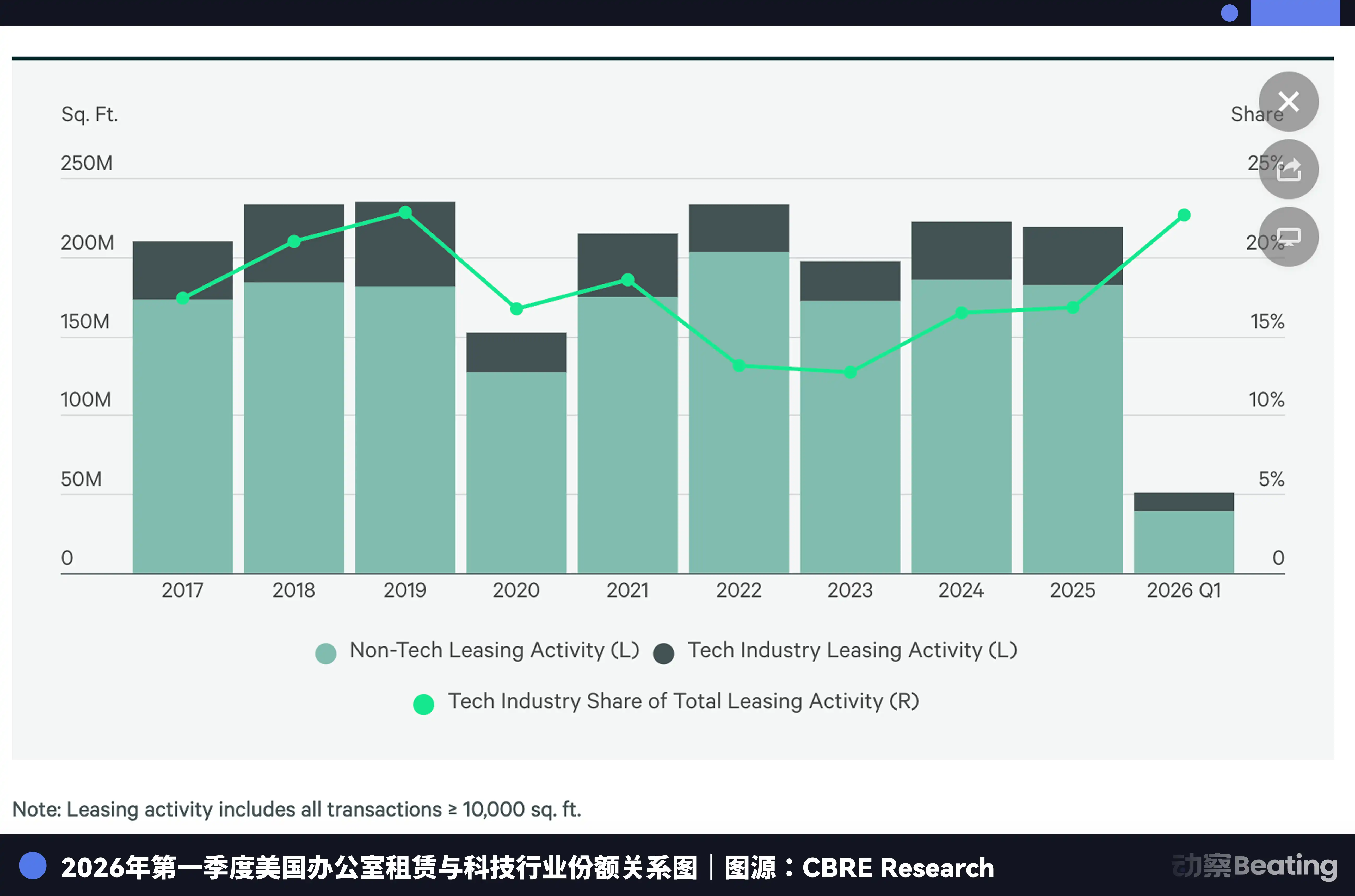
In its May 2026 report, CBRE said that AI companies are driving a strong recovery in office leasing in the San Francisco Bay Area. Anthropic leased a large office building in the SoMa district, OpenAI moved into a new landmark in Mission Bay, and AI companies of all sizes have filled up South Beach and the Design District. Three years ago, half of these buildings were empty, but now, renting an office on these streets requires lining up.
Once the office buildings were filled, residential prices followed suit.
By June 2026, the median rent for a one-bedroom apartment in San Francisco had risen to $4,000, a 20% increase from a year ago. Rents in SoMa increased by 36%, Mission Bay by 22%, and South Beach by 21%. These numbers have spread outward in a concentric circle largely following the location of AI company offices.
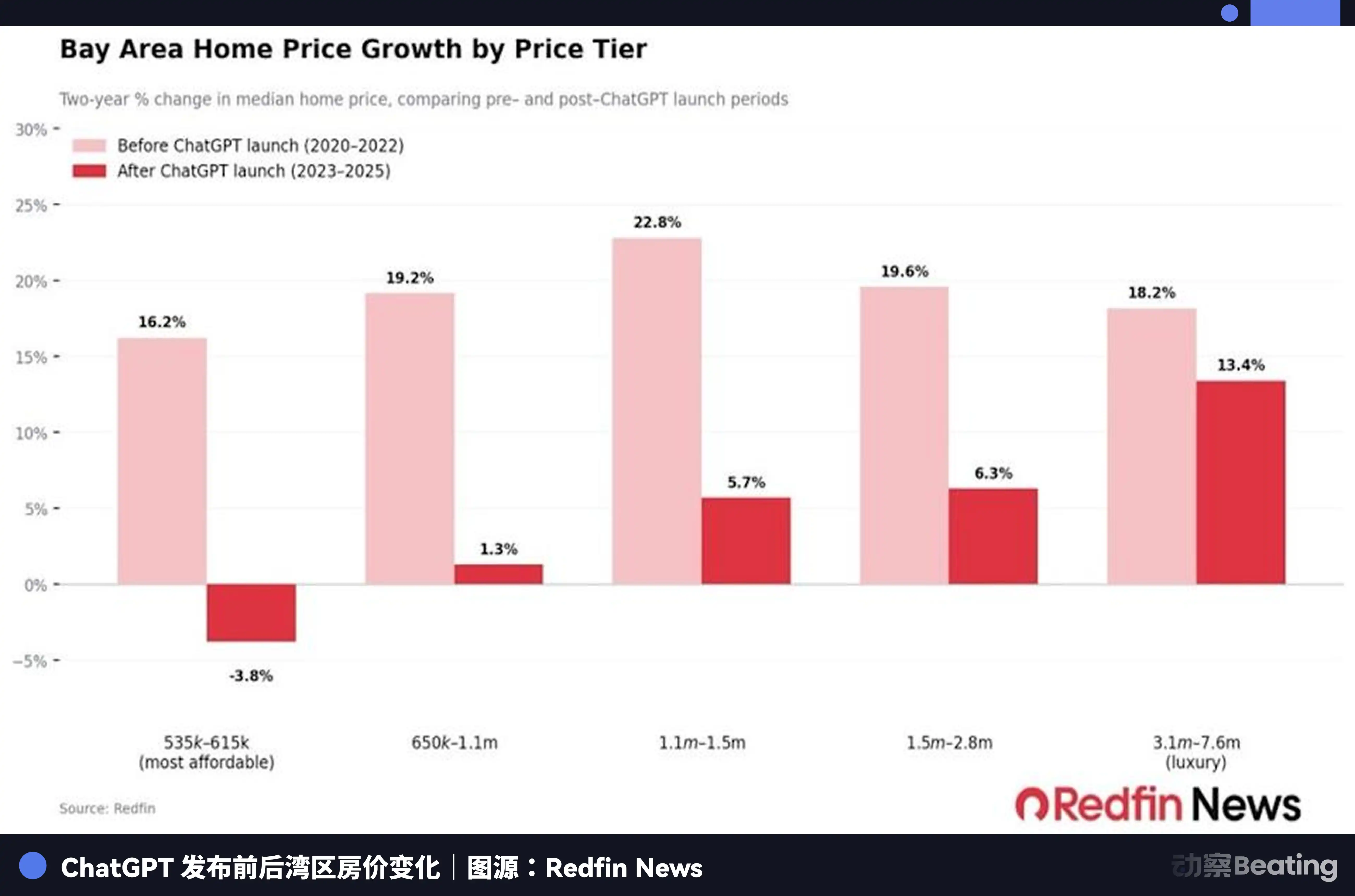
There is a listing for a $2.995 million Edwardian Era home, and the property description specifically includes this line: "Seller accepts payment in Anthropic or OpenAI stock."
The way a city comes back to life can sometimes be as specific as this. In the past, buying a house relied on cash, loans, and help from family. Now, you can also rely on stock from a pre-IPO AI company they give you.
Luxury homes are getting more expensive, while regular people are finding it increasingly difficult to afford a house. In the same city, during the same boom, which world you live in depends entirely on whether you are part of the AI food chain.
San Francisco and Oakland are separated only by a bay, but their rents are worlds apart. By the end of 2025, the rent for a one-bedroom apartment in San Francisco was about 70% higher than in Oakland. Some people stay in the city to code for these companies, clean their offices, serve coffee, deliver food; while others have to go farther to find a place they can still afford.
San Francisco has indeed come back to life. But this time, it has come back to life around a small group of people. The office buildings lease to them, house prices rise with them, and the whole city is increasingly operating as if designed specifically for this small group of people.
Next to a Gold Rush, a Street Always Grows
Once a city's physical shape is changed, the next thing to be altered is the lives of the people in the city. This is not a new story. California's own history has played out in full.
In 1849, California discovered gold, and hundreds of thousands of people rushed to San Francisco. Eventually, most gold miners didn't make much money. Levi Strauss made a fortune selling dry goods, fabrics, and workwear, Wells Fargo made a fortune with remittances from the mining areas, and Sacramento's hotels, saloons, and casinos made a fortune. Miners led the way, and the businessmen followed.
It's common sense to think about this matter. A bunch of people suddenly have money, are all crowded in one place, they need to eat, need a place to stay, need to have some fun after a tired day. If someone wants to buy, there will be someone to sell. The first ones to arrive are those selling shovels and tents, then come the ones opening banks and post offices, and finally those opening bars, casinos, and brothels. From surviving to living it up, it has always been this sequence.
AI's current wave is no different. The shovel sellers arrived first: GPUs, cloud computing, data centers, these businesses are out in the open for everyone to see. Then come the venture capitalists, lawyers, headhunters, wealth managers.
Once the money reaches individuals' hands, some people help them buy houses, some people teach them how to live longer, some people accompany them in fitness activities, some people do charity work for them.
Further down the line, it's time for the "Age Collapse."
A wealth advisor said that among the AI nouveau riche he has seen, many are not interested in luxury cars or watches, and some don't even know what to do with the money. They are too young, lack spending experience, and don't have many friends. However, they all share one thing in common: each person has a complete set of ideas about the future of the world in their minds—AGI, longevity, entropy reduction, how civilization should develop—and they can talk for hours without repeating themselves. The problem is no one listens; people around them start looking at their phones after three sentences.
Having a lot of money, little time, not knowing how to make friends, and having a head full of ideas with nowhere to express them. When these elements come together, there is a very clear demand, so clear that someone has specifically started a business to cater to it.
Being Coquettish Is Not as Good as Understanding GPUs
Forbes recently published a report, interviewing some individuals. From these people, one can see what this city is turning into.
Meida Marek originally wanted to work in finance.
She had just graduated and was working as a junior analyst at a company, running data, building models, and writing research reports every day. The work wasn't hard, and the path was clear. Then she did some calculations: a language model writes research reports ten times faster than her and doesn't even ask for payment. In that case, how long could she continue with her current job?
After calculating, she felt precarious.
But she had other skills. She was smart, could hold a conversation, and she truly understood AI, cryptocurrency, biohacking, and longevity, not just learning as she goes. These topics happened to be the favorites among the Silicon Valley nouveau riche. So, she changed direction, started providing high-end companionship, catering to tech people in the AI circle, charging $3,500 per hour. Within a few months, her schedule was quickly fully booked, and her prices nearly doubled.
A young person afraid of losing her job to AI took a turn, and ended up earning more money from the wealthy created by AI. It's inspirational and absurd at the same time.
She is not the only one interested in this business.
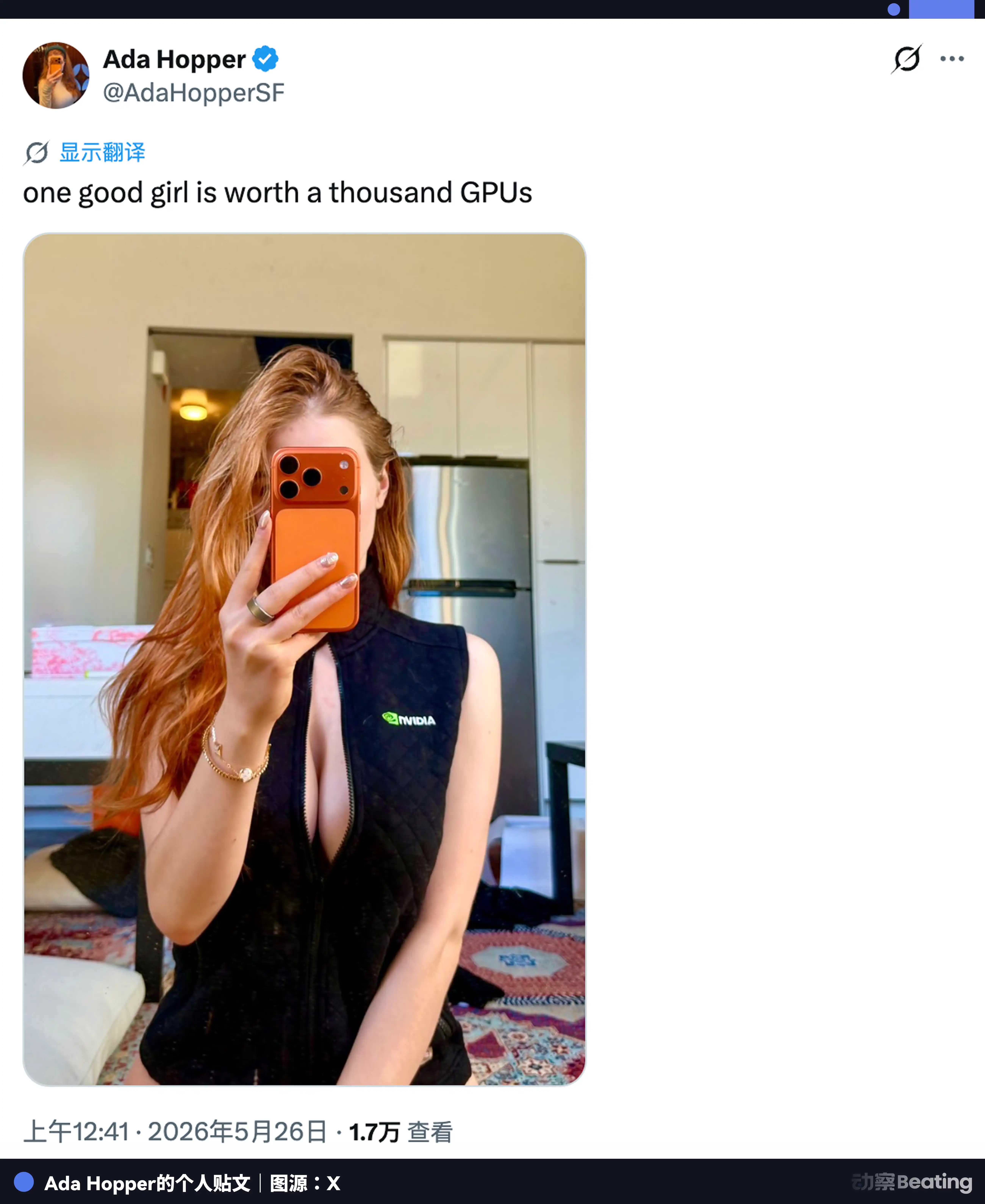
Ada Hopper charges $5,000 per hour. She once said something very incisive: Talking about AI with these clients is very effective; tech guys get excited because of a beautiful woman who knows what a GPU is.
Think about what this sentence is saying. Customers pay $5,000 per hour, they are not just buying beauty, a vase is not worth that price. What is worth that price is a beautiful person who also understands what you are talking about. When you mention GPU, she can engage in the conversation. When you talk about your worldview, she won't zone out, and you dare not underestimate her.
Talia Sable is a former programmer, describing herself as a huge nerd, loving Dungeons & Dragons, AI, and supply chain management. She charges $3,000 per hour and her schedule is always full.
Aella entered the industry earlier and reportedly charges up to $6,000 per hour. She promotes a concept called "nerd-first," which means that beautiful women not only spend time and their bodies with clients but also take clients' intelligence and ideas seriously. In plain language, when it comes to your worldview, I don't just listen, I genuinely find it interesting.
This business is new, but it caters to a much older demand than Silicon Valley.
In the karaoke halls of the 1980s and 1990s, the most valuable skill of the hostess was not beauty but being able to say, "Boss, you are amazing." The boss knew this compliment was insincere. But it didn't matter. Outside, he was a nobody, but in the karaoke hall, spending a few hundred bucks, he could be a big shot all night. He knew it was bought, but that was okay.
They have one good quality: they don't deceive themselves.
These Silicon Valley folks don't have this advantage. They pay $5,000 per hour to talk to a beautiful woman about AGI and the future of humanity, then tell themselves that this is a high-quality intellectual exchange. Maybe it is. But if it really is an intellectual exchange, why does the other person have to be both beautiful and good at praising you? Talking to an MIT professor is also an intellectual exchange, and you don’t have to pay for it.
The reason is simple. What they want is not communication, they want someone sitting across from them taking them seriously. It's just like the karaoke hall.
He talks to his friends about AGI, and no one cares; he discusses transformers, and people zone out after three sentences. Now there's someone smart and attractive sitting across from him, saying, "Go on." He finally feels taken seriously. This feeling costs $3,000 to $6,000 per hour, market price, no deception.
In this beautiful new era, understanding GPUs is more effective than being coquettish.
Longevity, Ketogenic Diet, and On-Device Models
Ada Hopper was extremely nervous before meeting her client for the first time. However, she soon realized that they were most interested in discussing topics similar to her own interests, such as intermittent fasting, metabolic health, and the ketogenic diet. The two spent the better part of the night discussing research papers. A high-end $5,000-an-hour companionship was spent on discussing the scientific aspects of meat consumption.
Traditional wealthy individuals spend money to show off. They buy a Ferrari, wear a Patek Philippe watch, and need others to see where their money goes. The Silicon Valley crowd, on the other hand, spends money to treat themselves or, more accurately, to treat their bodies. They don't buy luxury cars or designer watches. Ask an engineer who has just cashed out millions what they recently acquired, and they might say they bought a Mac Mini to run on-device models. Ask another, and they will talk about being on a ketogenic diet with a goal to live to 120.
Marek had a client who fully embraced the idea of longevity from her, even considering it a moral obligation. He believed that if technology could help people live longer, not pursuing it would be lazy. Later, under Marek's influence, he lost 50 pounds in weight.
Another client gifted Marek a Mac Mini. Not a designer bag or jewelry, but a small computer that could run AI models locally because he believed Marek should have her own on-device inference capabilities. Someone even created AI-generated digital art specifically for her.
International travel, shopping in Europe, and even indoor wingsuit flying—she has done it all. Yet, she prefers some old things herself. Antique jewelry, vintage clothing from the Edwardian era, and mechanical watch movements hidden in small objects. She enjoys watching those tiny gears turn one by one. This hobby strangely resonates with her clients' research on Transformers.
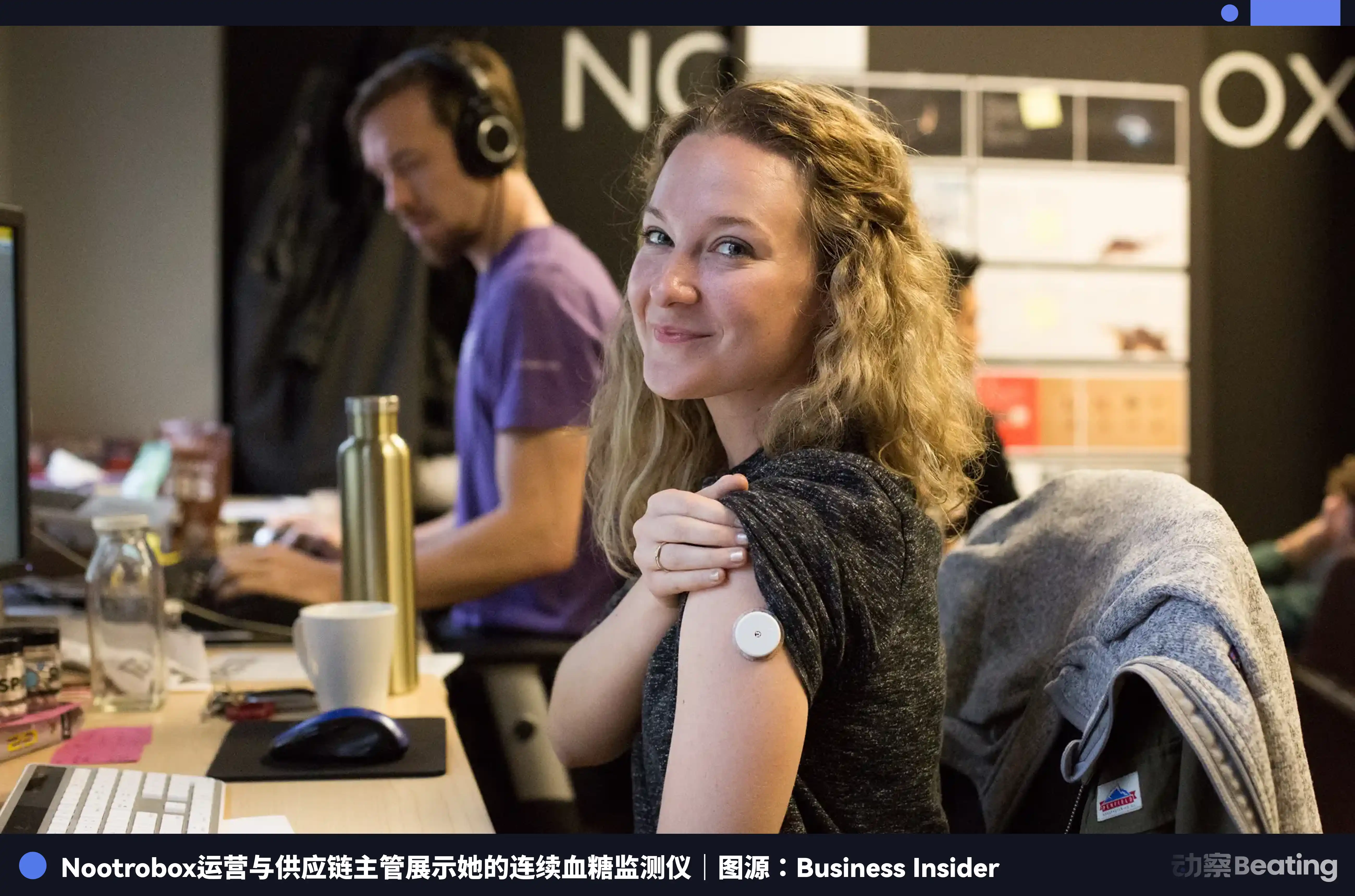
This is not the ostentation of traditional tycoons. Today's affluent are researching how to live an additional twenty years while casually running large models at home. They are very attentive to their bodies, like a diligent engineer caring for a newly purchased machine.
What to eat every day, how many hours to sleep, what is the heart rate, body fat percentage—all should be documented. As long as there is a curve, they will be a bit more at ease. Living, in their hands, has become much like a long-term experiment, where the subject happens to be themselves. While Qin Shi Huang sent people to sea, the wealthy in San Francisco focus on their sleep patterns. The methods have evolved significantly, but the aspirations have not changed much.
Unfortunately, some things are not very cooperative. For example, having someone sitting across from you, listening to some trivial talk. You don't know when they will get bored or why they suddenly start to laugh. This aspect cannot be quantified and does not offer stable returns. Thus, it becomes quite expensive.
Before the model changed the world, it first changed the nights of the wealthy.
Good Morning, City of Night
At this point, it's about time to see what this city looks like.
Here, companies don't need to be the mayor to decide who stays and who leaves. Someone just sold a portion of their options and added $30 million to their account. They research longevity, study sleep, explore how to tune their bodies to optimal performance. When bored at night, they can also spend a few thousand dollars to have an intelligent and attractive person sit down and have a conversation.
For others, life is much simpler. They wake up at 6 a.m., drive into the city from Oakland or even farther, enduring over an hour in traffic. Some write code for these companies, some clean the offices, some serve coffee, deliver food, or drive rideshare cars. With a monthly rent of $3,415 staring back at them, they can only live further and further away.
This city truly believes in technology. It believes the body can be optimized, sleep can be optimized, work efficiency can be optimized. Even relationships between people can become a service. Open the phone, select, book, pay, cancel. Not much different from hailing a cab.
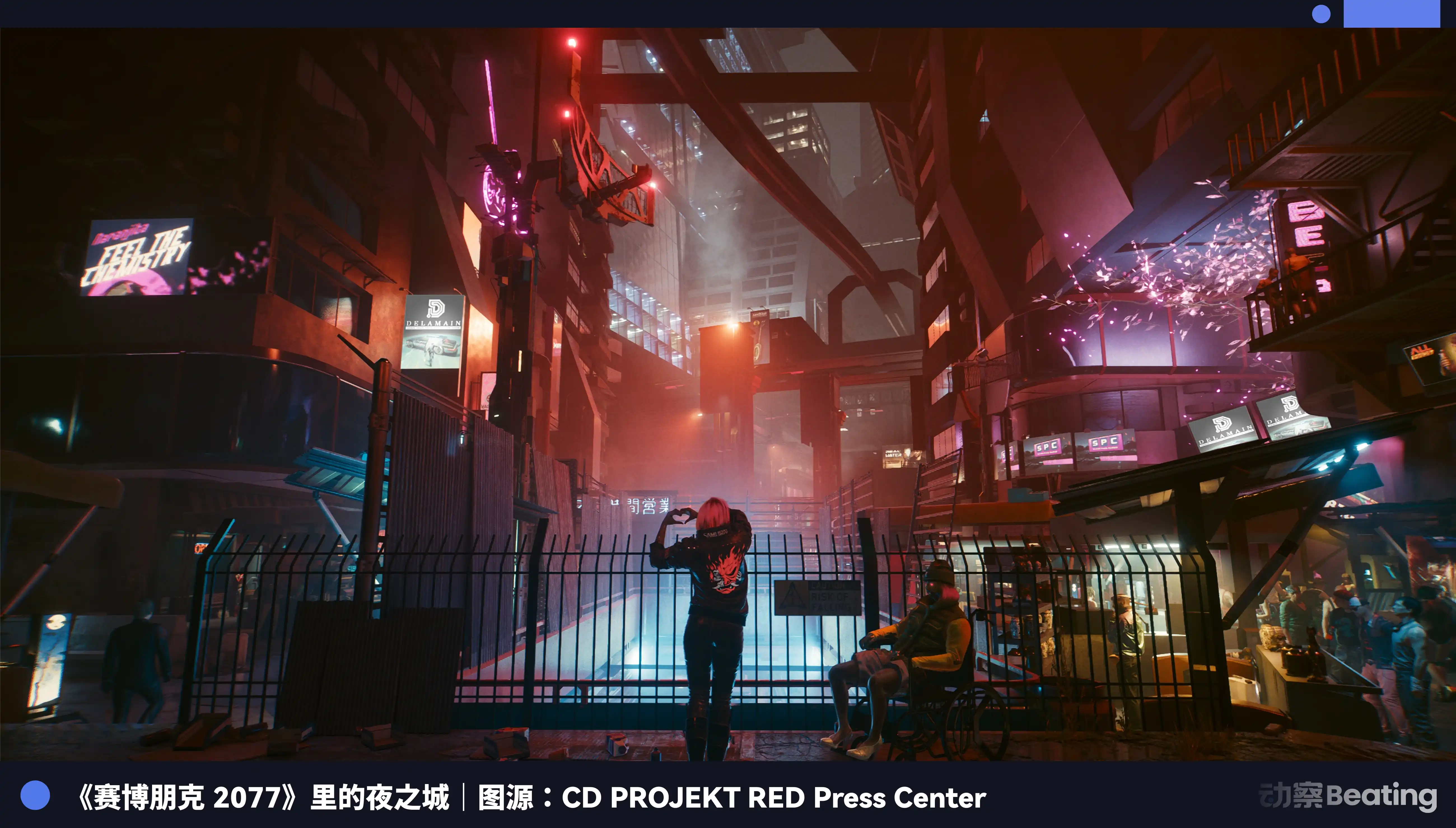
Those who have played Cyberpunk 2077 might find all of this somewhat familiar. Developer CD Projekt Red once described Night City as a place obsessed with power, allure, and body modification.
Swap out body modification for longevity and biohacking, change allure to AGI, and power to AI companies and valuations, and that statement could almost verbatim be pasted onto a city guide for 2026 San Francisco.
Cyberpunk has never been an aesthetic. Neon lights on the street aren't cyberpunk, nor are robots. It's a high-tech, low-rights social structure.
As technology becomes more advanced, people are becoming less and less like the same species. Some have begun to consider how to surpass the limitations imposed by nature, to live longer, keep their minds sharp, and outsource all the annoying parts of life. Others are still calculating how far they need to move to continue staying in this city.
The City of Night didn't start with cybernetic limbs.
It began with a city slowly acquiescing to such an arrangement. Some keep upgrading, some keep falling behind. Everyone has ridden the same elevator in the building, waited at the same traffic light on the same street, only to return to completely different worlds.
San Francisco doesn't have as many neon lights, and it rarely rains. But it always seems to evoke memories of the city that never sleeps.
Welcome to join the official BlockBeats community:
Telegram Subscription Group: https://t.me/theblockbeats
Telegram Discussion Group: https://t.me/BlockBeats_App
Official Twitter Account: https://twitter.com/BlockBeatsAsia
