On June 12, on the day SpaceX was officially listed, Musk chose to go to the Starship base in Texas. Along with hundreds of employees, he remotely rang the Nasdaq opening bell.
At the event, he said in his familiar self-deprecating style, "If someone had told me back then that we would have today, I would probably think that person was high. Because at that time, I myself believed this company would fail."
On this day, SpaceX officially landed on Nasdaq with an IPO price of $135, raising approximately $750 billion; it opened with an increase, briefly surpassing $176 during trading, with a market value momentarily exceeding $2 trillion.
From being forced to start a business in 2002 because he couldn't buy a rocket to completing the largest IPO in human commercial history, this 24-year journey is full of counterintuitive and unconventional stories.
While this company is nominally in the rocket-making business, the rocket business itself is not profitable. Its most iconic achievement is rocket reusability, but what supports its valuation are two other stories—Starlink and the newly added "space computing" in the prospectus.
We have compiled 15 of the most representative stories to help you develop a more comprehensive understanding of SpaceX.
1. SpaceX's Starting Point Came from a New Business Elite's "PR Stunt"
In 2001, shortly after cashing out from PayPal, Musk wanted to fund a project called "Mars Oasis": spending $20-30 million to send a mini greenhouse to Mars, take photos of green plants growing in the red soil, and use it to increase NASA's budget.
But he got stuck on the shipping cost. European rockets were too expensive, and his attempts to buy retired ICBMs in Moscow were dismissed as amateurish.
In later public speeches and media interviews, Musk stated that after this setback, he believed that what blocked humanity's path to Mars was neither public will nor congressional budget but rather the price of rockets themselves. Thus, "help NASA fundraise" turned into "make rockets cheaper on my own."
In 2002, SpaceX was officially founded.
2. In the First Six Years, This Company Was in a Continuous State of "Failure"
From 2002 to 2008, the first three launches of Falcon 1 all ended in failure.
During that era, all the know-how for building rockets was locked within the national aerospace system. SpaceX couldn't buy the blueprints or hire people. Musk later quipped in his autobiography, saying that he became the company's Chief Engineer because "the best people didn't want to come."
Even more brutal was the physics of the rocket: it couldn't be thoroughly tested on the ground, and the only way to learn was to launch, explode, and start over. The "three consecutive failures" were a company's tuition for self-learning spaceflight with live ammunition—except this tuition was priced in tens of millions of dollars, and Musk's money was only enough to cover four attempts.
3. The fourth launch succeeded, marking the beginning of the "Commercial Spaceflight" era
On September 28, 2008, Falcon 1's fourth launch was successful—the world's first privately developed liquid-fueled rocket funded by private money entered Earth's orbit.
Prior to this, "spaceflight" was by default a game of nations: the government spent the money, and the system did the work.
Three months later, NASA awarded a $1.6 billion contract for International Space Station cargo delivery (CRS) to this barely-survived company. The "Commercial Spaceflight" as an industry was officially born that day.
4. A new playbook for Commercial Spaceflight
Traditional space procurement was "cost-plus": contractors spent how much and billed how much, with the government adding a profit on top—spend more, earn more, and no one had any incentive to save money.
In the Commercial Orbital Transportation Services program (COTS/CRS), NASA awarded SpaceX a fixed-price contract: one price, and the savings are all yours, overshoots are on you. This seemingly mundane procurement clause was the true starting point for commercial spaceflight's system. It was the first time that "making rockets cheap" became a profitable business.
SpaceX's persistent cost focus that followed was partly inherent and partly forced by this contract.
5. Reusability Technology: Making the client willingly pay for "unreliable technology"
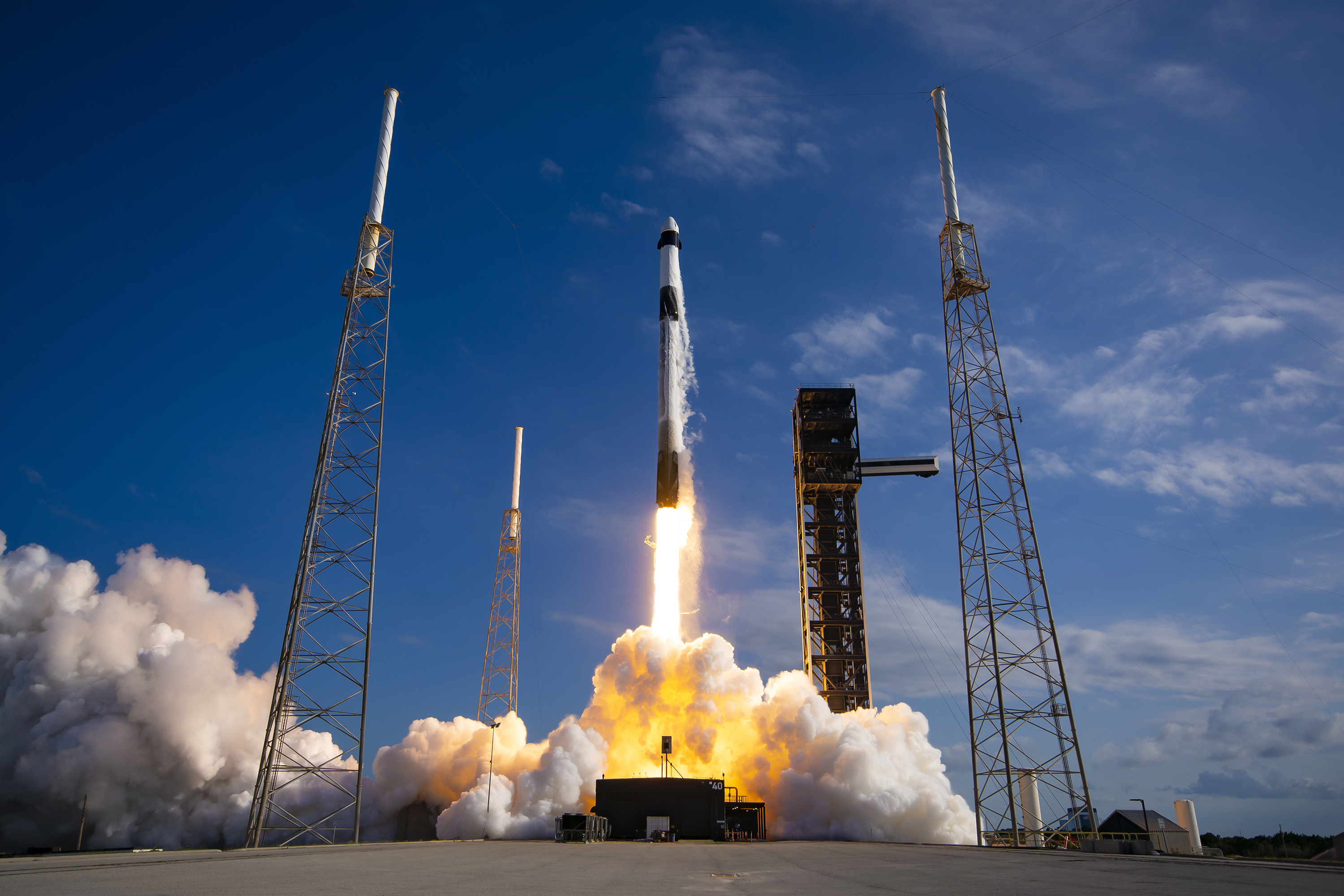
On December 21, 2015, the Falcon 9 first-stage rocket successfully landed back on the ground for the first time, exactly 13 years after the company was founded.
Prior to this, SpaceX's obsession with reusability went through lengthy experiments and failures: in 2010, during Falcon 9's first two flights, attempts were made to recover the first-stage rocket using parachutes—the rocket disintegrated before the parachutes could even be deployed upon reentry to the atmosphere. Starting in 2013, a shift was made to the propulsive landing scheme, and for over two years, nearly ten attempts were made: some crash-landed in the sea, some exploded and toppled on the drone ship deck, and not a single one returned intact.
However, almost all of these tests were not standalone self-funded experiments, but rather piggybacked on a customer's paid launch — the same rocket both carried out the primary mission and conducted the experiment. The customer's payload was delivered to orbit in the first half of the mission, completing the transaction; the first stage of the rocket, after payload delivery, traditionally considered space junk destined for a watery grave, was opportunistically used by SpaceX for landing practice.
Musk's calculus is this: if it blows up, the explosion takes out trash; if it succeeds, it rewrites space history. Therefore, SpaceX actually used NASA's orders as a scholarship, earning a "Reusable Rockets" degree for free. Today, the Falcon 9 success rate is approximately 99.4%, with only 3 missed recoveries out of 165 launches planned for 2025.
6. Today's SpaceX: Starlink Generates Revenue to Support AI
According to the prospectus, SpaceX is projected to have a total revenue of $18.7 billion and a net loss of $4.9 billion in 2025.
However, when broken down by segment, the story is completely different: the connectivity business, where Starlink operates, contributes approximately $4.4 billion in annual operating profit, making it the only profitable segment of the entire company; the space business, which includes rockets, incurs a small loss of around $660 million — primarily due to the $3 billion invested in Starship development.
The real black hole is the consolidated artificial intelligence expansion (xAI): generating an annual operating loss of approximately $6.4 billion, a single entity devouring all of Starlink's profits would still not be sufficient.
In other words, if we only look at "old SpaceX" (rockets + Starlink), it is already a profitable company; what is actually causing it to "lose money" again is the AI it acquired for the next chapter.
7. Starlink is Musk's "Internal Counterparty" Strategy for Reusable Rockets
In January 2015, Musk publicly announced the Starlink project, a "satellite internet constellation" composed of thousands of low Earth orbit satellites, offering internet services to ground users — especially in areas like maritime, wilderness, and remote regions unreachable by fiber optics and ground stations.
It was only in December of the same year that the Falcon 9 first successfully landed. In other words, before the "cheap rocket" concept was proven, the "customers of the affordable rocket" had already been internally earmarked.
This is not a coincidence, but two halves of the same arithmetic problem: the global rocket launch market is only $5-6 billion a year, and has not changed much in the past decade. So cheap launch capacity simply cannot meet the demand in this market; on the other hand, to deploy a network of thousands to tens of thousands of satellites globally, without affordable launch capacity, the math simply doesn't add up.
8. The Starship Hasn't Succeeded Yet, But Its "Buyer's Market" Has Gone Through a Round of Changes
A similar story of early betting happened with the next-generation heavy-duty rocket, Starship.
In 2014, SpaceX laid the foundation for the Starship at Boca Chica, Texas— the same year Falcon 9 hadn't even successfully completed one recovery. The previous generation had not landed, and the next generation had already started.
What's even more noteworthy is the transition of the first party: the initial narrative for Starship was "people"— Mars immigrants, space travel, a story Musk had been telling for many years; and after the concept of space computation power emerged, the number one party for Starship quietly switched to "data centers."
The logic remains the same: Falcon 9 with about 20-ton class low Earth orbit capacity, the first party being Starlink; Starship planned capacity of 100-150 tons (LEO, planned value), tourists cannot consume such a large capacity, but the equipment needed for space data centers might.
With every larger rocket, Musk has to "create" a first party with a bigger commercial dimension for them.
9. "Chopstick Rocket"
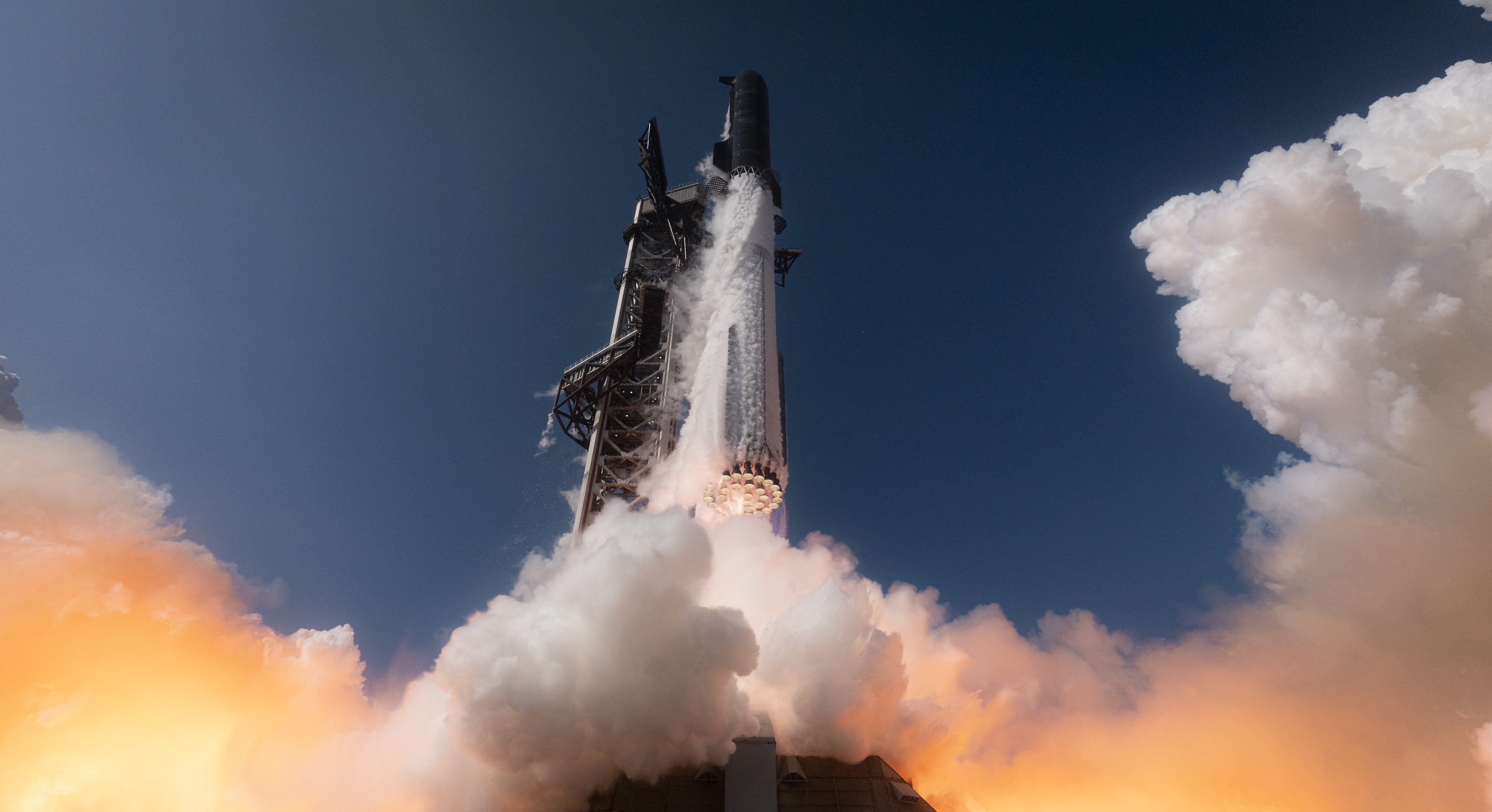
On October 13, 2024, during the fifth test flight of the Starship, two mechanical arms on the launch tower caught the descending booster in mid-air, causing a sensation on the internet.
Prior to this, Falcon 9 had proven that rockets could be "recovered" and "re-flown"— but each time it returned, it had to be retrieved from the sea, sent back to the factory for refurbishment; the cycle was on a weekly basis, essentially still "repaired and reused." What Starship aims for is a different story: like an airplane, land, check, refuel, and take off again.
The landing legs are dead weight and consume capacity; if they land far away, transportation is needed. Allowing the booster to return directly to the embrace of the launch tower means that where it lands is where it takes off again— the intermediate steps are pushed to the limit, and the turnover target changes from "weeks" to "hours."
The so-called "Chopstick Rocket" actually points out SpaceX's ultimate vision for rockets: from being able to recover, to "flight-like operations."
10. Not Necessarily "Domestic Starlink," But Definitely "Domestic Launch Capability"
The concept of a "Chinese version of Starlink" is popular, but there is a commonly overlooked fact: Starlink solves the issue of areas where "ground-based stations cannot reach" — such as oceans, wilderness, and sparsely populated areas. China, on the other hand, boasts the strongest global ground communication network, limiting the natural experience of Starlink-style services domestically.
The real proposition lies in another layer: satellites serve more than just communication purposes — remote sensing, navigation, future space computing power; each of these requires sending a large amount of payload into space inexpensively and frequently.
In other words, China may not need to replicate the "product" of Starlink, but it cannot avoid the "launch capability" behind Starlink. For the Chinese commercial aerospace industry, the most crucial question is not whether to have a "network in the sky," but whether there is a hand to weave that network.
11. Breaking the "Never IPO" Flag
SpaceX was once Silicon Valley's staunchest "never IPO" company. Musk's public reason was that the short-termism of the capital markets is incompatible with long-term goals like Mars.
A turning point occurred in the last quarter of last year: Starlink's user growth and per-user revenue both hit a ceiling, and the capital expenditure of this new story of "space computing power" is so massive that only the public market can handle it.
The prospectus revealed that in just the first quarter of 2026, the capital expenditure for the AI business exceeded the sum of the space and connectivity segments.
Therefore, going public is not a celebration ending but the next round of financing for the next big bet.
12. Space Computing Power is a "Consensus," but Details Remain Unknown
Although the concept of space computing power is new, it has indeed rapidly reached a super consensus in the tech industry over the past six months, with almost no one openly dissenting.
However, delving a layer deeper, it seems that there is no common answer to all the technical details:
What does a space data center look like? There is no public product definition. What kind of data does it process, and where does the data come from? No one knows either.
Using the classic three elements of the AI industry — algorithms are running wild on the ground, but "data" and "computing power deployment" in the space context are still blank. Is it pre-training or inference? The two have completely different requirements for power supply, heat dissipation, and networking, leading to completely different satellite designs. A direction valued at trillions, and the product form has not even converged.
Of course, looking from a different perspective, this precisely means that there are still plenty of empty seats at the table.
13. Silicon Valley Invests Heavily in "Space Computing Power"
Major tech giants in Silicon Valley have not just paid lip service to space computing power.
· Musk orchestrated a trillion-dollar company restructuring, merging SpaceX and xAI. The IPO filing clearly stated plans to deploy an in-orbit data center as early as 2028.
· Google initiated Project Suncatcher: releasing technical papers, planning to launch two prototype satellites equipped with in-house TPUs, and negotiating launch contracts with SpaceX.
· Bezos's Blue Origin submitted the "Sunrise Plan" to the Federal Communications Commission in March 2026 for 51,600 data center satellites.
· Former Google CEO Schmidt acquired rocket company Relativity Space in 2025 with the publicly disclosed aim of sending data centers into orbit.
· Starcloud, backed by NVIDIA, successfully launched an H100 chip into orbit in November 2025 and completed on-orbit model training.
Acquiring companies, transferring assets, submitting licenses, launching satellites—everyone's infrastructure race is already underway.
14. The Cold, Hard Cost Account
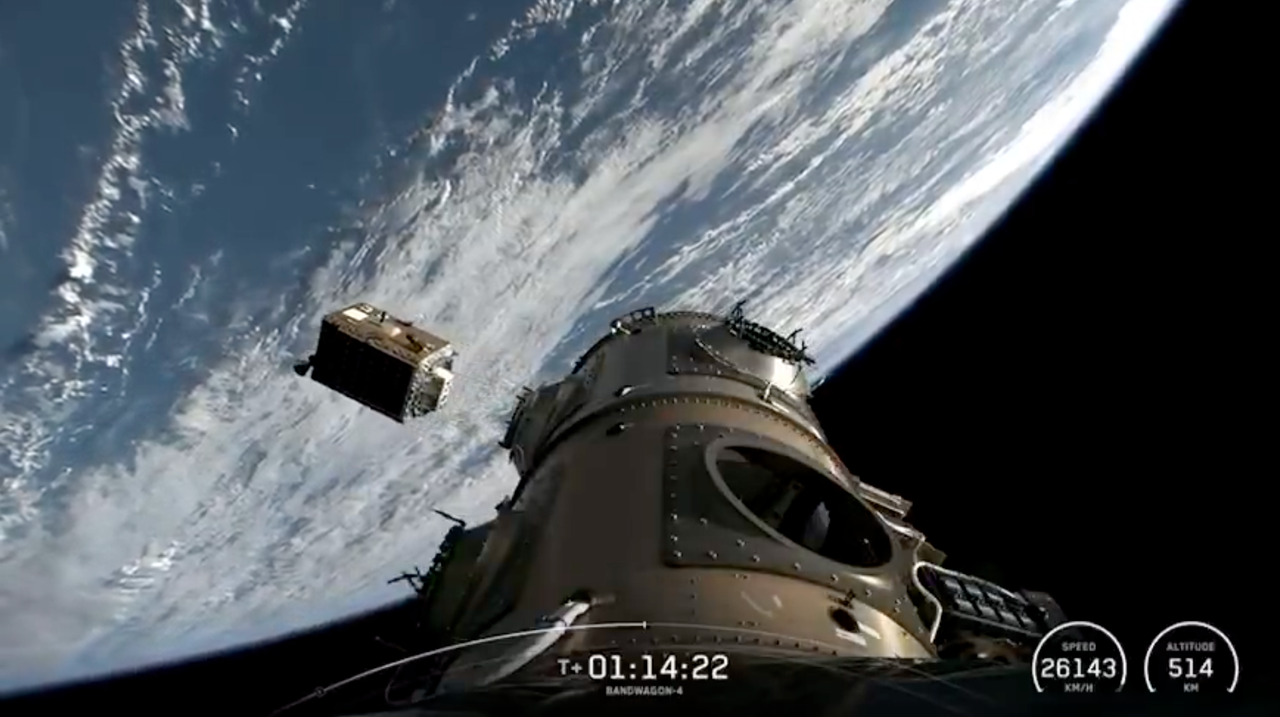
Aerospace engineers have publicly estimated: building a 1-gigawatt orbital data center (about 4,300 satellites, including five years of operation) would cost over $50 billion—roughly three times the cost of an equivalent ground-based facility.
To flip this account, the industry's general estimate is that the cost to launch into orbit must be kept below about $200 per kilogram, while today's equivalent launch cost for Falcon 9 (please note, "launch cost" and "orbit cost" are not exactly the same) is around $2,000–3,000 per kilogram. The difference is at least an order of magnitude.
To bridge this gap requires heavy-lift, reusable rockets like Starship. Therefore, the timetable for space computing power is closely tied to Starship's progress. In the end, the truth of the story will be confirmed by welding torches and launch pads.
15. The Bigger Story
Looking back at SpaceX's history, it started as a subcontractor with a customer who couldn't afford a cheap rocket; then it created its own primary project (Starlink); and now it has secured a larger primary project (space-based computing) for its next-generation rocket.
Over the past 24 years, it has turned the once-unbelievable stories of rocket reusability and Starlink into reality. Today, the still-unrealized promise of space-based computing has appeared on the open market with a target valuation of around $1.75 trillion.
This story is bigger than before, and the ticket price is higher.
Welcome to join the official BlockBeats community:
Telegram Subscription Group: https://t.me/theblockbeats
Telegram Discussion Group: https://t.me/BlockBeats_App
Official Twitter Account: https://twitter.com/BlockBeatsAsia
