According to AP, on June 23, US tech stocks and AI hardware-related stocks collectively declined, with the Nasdaq index dropping by 2.2% and the S&P 500 index falling by 1.4%. This pullback was not isolated to a single chip company but rather hit the most crowded AI hardware trades of the past year concurrently facing two types of pressure. One is the sudden increase in Fed rate hike expectations, and the other is investors starting to question when cloud providers' continuous ramp-up of AI capital expenditures will translate into clear profits.
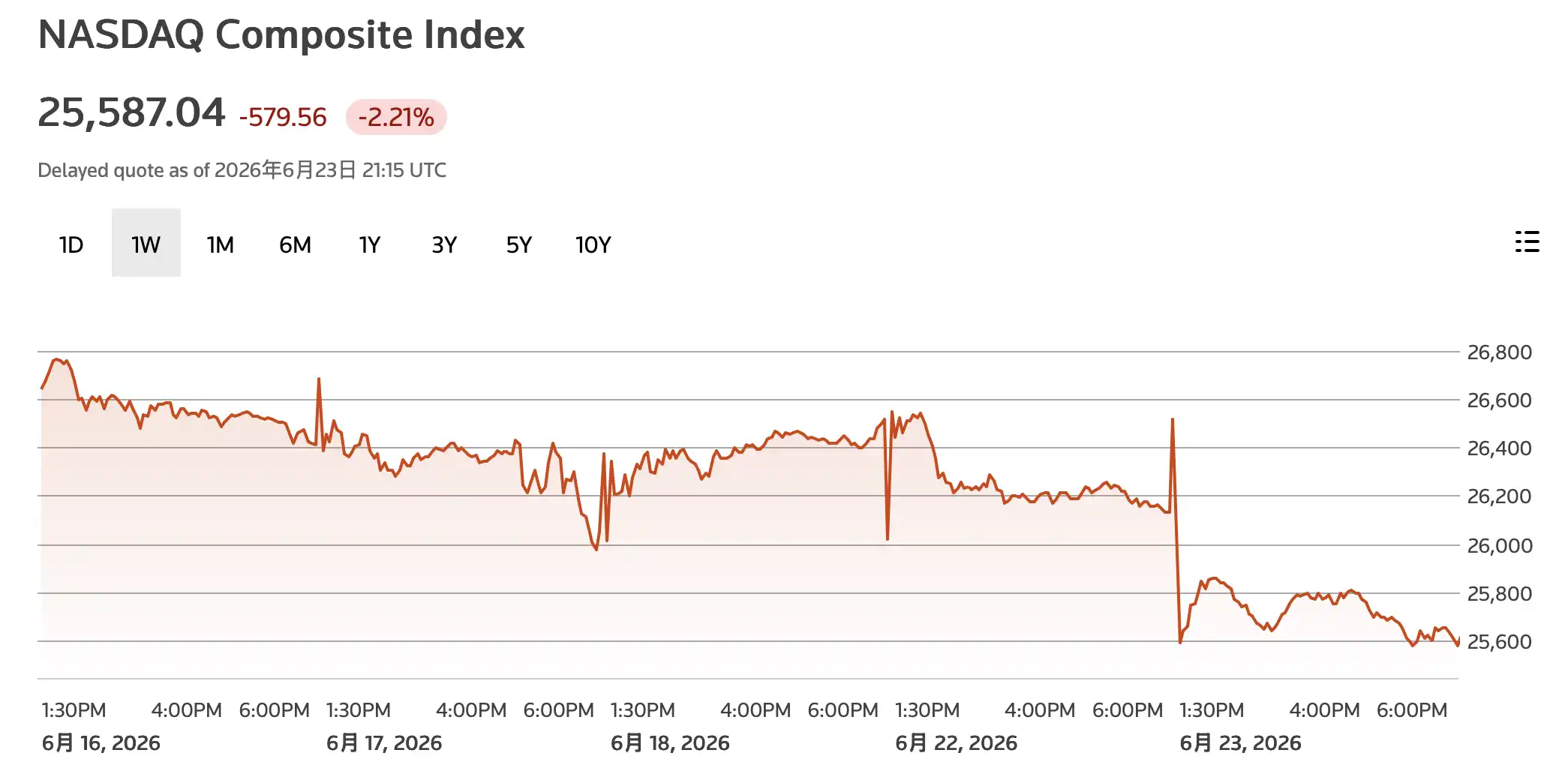
The most direct pressure fell on the hardware chain. Market data shows that Nvidia (NVDA) fell by about 4% on Tuesday, with its market cap dropping below $500 billion. Micron plummeted by 13.2%, Qualcomm dropped by around 8%, and SanDisk and Western Digital also saw significant declines. Memory, storage, AI chips, and mobile chips all weakened together, indicating that the sell-off was not limited to a specific industry segment.
The Asian markets also came under pressure simultaneously. On June 23, the South Korean KOSPI index fell by nearly 10%, with SK Hynix and Samsung Electronics both recording double-digit declines. Over the past few months, tight supply of HBM and memory chips has been supporting Korean tech stocks, but this time, the market chose to take profits first.
The AI Hardware Chain Was Sold Off First
The sequence of this decline is quite significant. Investors did not initially retreat from software or internet platforms but first targeted chip and memory stocks that had benefited the most from AI capital expenditures.
Nvidia remains at the core of the AI frenzy. Its GPU has almost defined this round of data center expansion and has become the most concentrated bet in the market's risk appetite. While falling below a $500 billion market cap does not change the company's industry position, from a trading perspective, this is a glaring price signal. When both interest rates and the ROI cycle are questioned, assets with the highest gains and the most crowded positions are often sold off first.
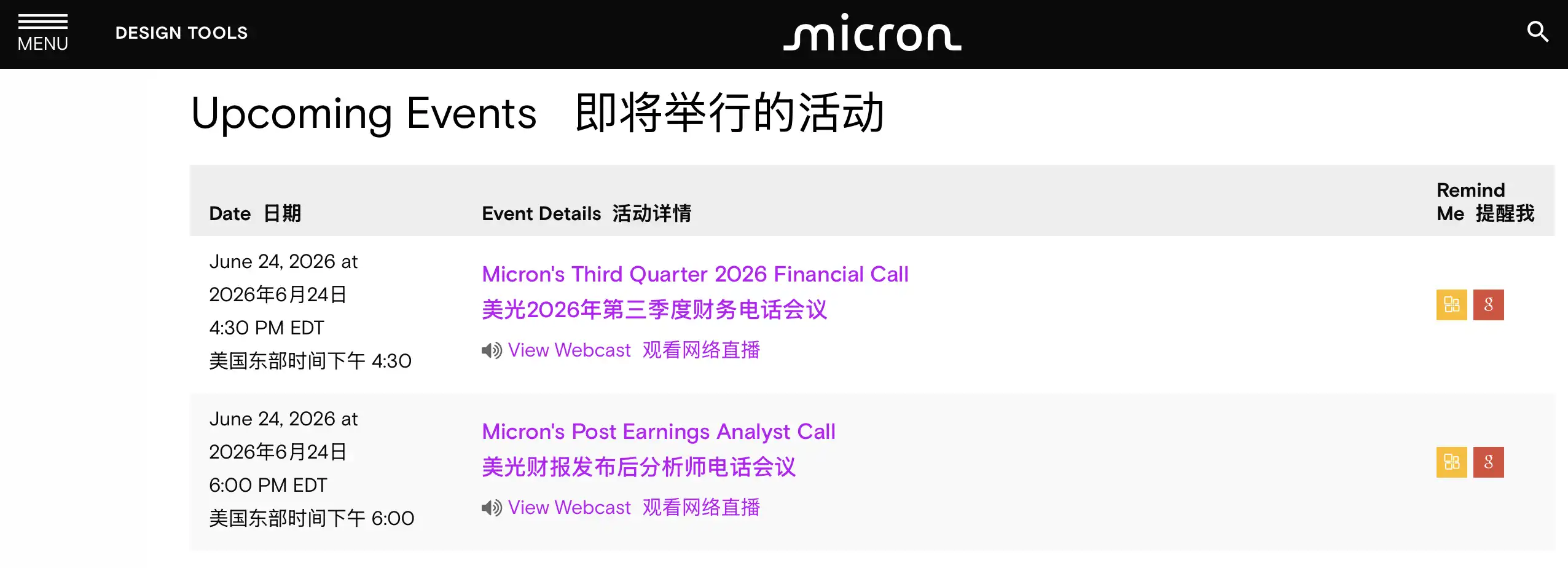
Micron saw a larger decline, in part due to its upcoming earnings report. The company announced that it will release its third-quarter performance for FY2026 on June 24 and hold an earnings call. The market had already bet on AI servers driving sustained high-bandwidth memory demand. If the guidance is not strong enough, investors are concerned that the previous price increase lacks new performance catalysts; even with strong guidance, it needs to be proven that high-priced memory and AI demand are not short-term rushes.
The reaction in the Korean market has further amplified these concerns. SK Hynix and Samsung, the key companies in the global memory and HBM chain, both experienced double-digit declines, indicating that this round of adjustment has spread from the U.S. stock market leader to the global AI hardware supply chain.
Prior to this, Broadcom's AI revenue guidance fell short of the most optimistic expectations, triggering a round of chip stock selling. Tuesday's market performance looked more like the concentrated release of these concerns. The demand for AI is still present, but the market is no longer willing to pay increasingly higher prices just for a "bright future."
Hawkish Shift in Rate Hike Expectations, Pressure Mounts on High-Valuation Tech Stocks
The macro-level trigger comes from a shift in the Fed's policy expectations.
The Federal Reserve announcement indicated that Kevin Warsh was sworn in as Fed Chair on May 22. Citing a forecast from Bank of America, Reuters reported that the Fed may raise interest rates by 25 basis points each in September, October, and December 2026, totaling a 75 basis points increase for the year. The reasons include the resilience of the labor market and lingering inflation pressures.
This is particularly unfriendly to tech stocks. The valuation of AI leaders relies on long-term growth expectations, and a rise in interest rates will increase the discounted cash flow pressure on future earnings, making low-risk assets such as U.S. Treasuries more attractive again. The recent high levels of U.S. bond yields and the futures market's clear increase in bets on rate hikes this year indicate a significant shift in policy expectations.
The market is not suddenly doubting the existence of AI but recalculating a more realistic question. If the cost of capital is higher and future profits are further away, how much are investors willing to pay for AI assets now?
This is also why the correction in chips, memory, and high-growth tech stocks is so synchronized. They previously benefited together from the combination of "continuously surging AI demand" and "eventual interest rate decline." Once one of these pillars weakens, the part with the highest gains and most expensive valuations will be the first to come under pressure.
Cloud Providers Are Still Spending, Investors Begin to Ask About Returns
Another pressure comes from AI capital expenditures themselves.
Giant cloud and AI investors like Alphabet, Amazon, Meta, are still maintaining high-intensity data center construction. Over the past year, such expenditures have been seen by the market as a guarantee of demand for companies like NVIDIA, storage chips, power equipment, and data center assets. As long as cloud providers keep spending money, the hardware chain will have income.
But now the question becomes, can this money be ultimately recouped?
AI model training and inference require significant computing power, electricity, and server investment. Cloud providers can monetize through enterprise customers, ad tools, developer platforms, and consumer-level subscriptions, but whether service pricing can cover capital expenditure has not been fully proven. The market is beginning to scrutinize AI product pricing, customer usage intensity, and whether enterprises are willing to pay high fees long-term for generative AI.
This is also why the "sell to heavy spenders" trade is gaining popularity. Investors are not only selling chip stocks but are also becoming more cautious of internet and cloud computing giants that continue to increase their AI budgets. The more aggressive the prior spending, the more easily questions arise about profit margins and free cash flow.
The volatility of high-valuation assets is also amplifying this sentiment. According to Axios, SpaceX's stock price dropped over 16% on Monday post-IPO, causing a market capitalization loss of around $400 billion. While it was not the primary driver of the recent chip stock decline, it demonstrates that strong narratives and high-valuation assets are facing a more rigorous market test.
Not quite a burst bubble yet, Micron and inflation data will provide answers
A more accurate description of this adjustment is that AI trading is experiencing a concentrated pullback after a substantial run-up, rather than a confirmed bursting bubble.
The demand for AI hardware still exists, and cloud provider capital expenditure has not ceased. The fundamentals of companies like NVIDIA, Micron, SK Hynix, etc., are still closely tied to data center construction, HBM supply, and AI server shipments. The real question is whether the current stock prices have already priced in too much good news.
The first validation point will be Micron's earnings report. The market will focus on three things: whether the memory demand driven by AI servers remains strong, if price increases can be sustained, and whether the management's guidance for the subsequent quarters is supportive enough of the previous uptrend. If the earnings report is strong, the chip sector may find some relief; if guidance falls short of expectations, the sell-off may continue to spread to more AI supply chain companies.
The second validation point is interest rates. Whether the Federal Reserve under Powell will indeed start raising rates from September will depend on inflation, employment, and energy prices. If inflation pressures persist, growth stock valuations will continue to be under pressure; if the data cools off, the market might reposition itself towards a policy pivot, providing tech stocks with room for recovery.
The current market divergence lies in whether this is just a normal profit-taking in the AI bull market or if investors are transitioning from "growth at all costs" to "must see returns." Tuesday's decline at least indicates that the AI narrative is still strong but can no longer offset the pressure from higher interest rates and a longer horizon for profit realization.
Welcome to join the official BlockBeats community:
Telegram Subscription Group: https://t.me/theblockbeats
Telegram Discussion Group: https://t.me/BlockBeats_App
Official Twitter Account: https://twitter.com/BlockBeatsAsia
