A new generation of Meme traders who have never opened a cross-chain bridge.
Fomo recently used this phrase to describe its users. In the last cycle, similar products emerged, but they not only lacked Fomo's social attributes but also did not provide a convenient way to onboard like Fomo.
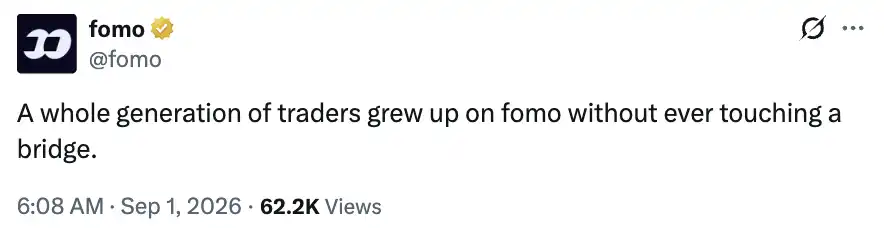
Today, when opening the Fomo or Pump.fun app, traders first see people they follow, popular tokens, and a buy button. The asset's chain has already been relegated to an afterthought in the trading decision. Social relationships are responsible for discovering opportunities, the app is responsible for executing trades, and bridging and gas fees are abstracted away in the background.
Capital Chasing Price Movements
When cross-chain is compressed into a single click, the trader's choice of blockchain standard also changes accordingly. "Best price action" usually means the strongest wealth effect, most concentrated liquidity, and most intense social discussions. Fomo and Pump.fun apps integrate these three signals into the same information flow, allowing capital to rapidly flow into the hottest chain and exit immediately when the heat shifts.
The early activity on the Robinhood Chain has already revealed this capital structure. A blockchain activity study by Blockworks Research shows that the Robinhood Wallet only contributed 2% of the activity, with 86% coming from cross-chain terminals and multi-chain wallets. The mainstay supporting the price action is still native crypto capital, which migrates to new venues through existing gateways like Fomo, with the new funds brought in by the Robinhood main app not yet becoming the core.
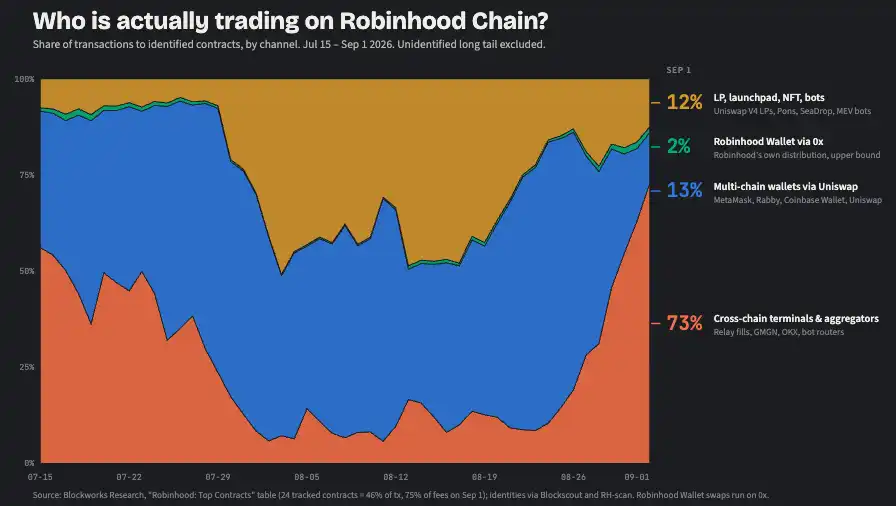
In the past, a new chain had to convince traders one by one to install a dedicated wallet, purchase Gas tokens, and take on bridging risks. Now, it just needs to enter the mainstream social trading front end to directly attract speculative funds from other chains. Front-end products have shortened the distance from "price action appears here" to "funds start flowing in" and have allowed the same pool of hot money to create prosperity across multiple chains continuously.
This will change the meaning of public chain growth. While transactions and fees remain on the chain, trader attention, asset discovery, and operational habits are solidified within the app. Popular chains gain transaction volume in a short period but may not necessarily retain trader favor over time.
Meme Culture is No Longer a Moat
Chain culture can still generate initial attention. Solana retains the Meme trading mentality, BNB Chain is best suited for Chinese memes, and Robinhood Chain can also shape narratives around RWAs. However, culture is more about branding, which can attract people but cannot prevent capital outflows.
When different chains can replicate similar token issuance and trading tools, and FOMO and Pump.fun apps can instantly change traders' focus, meme culture on a single chain becomes difficult to maintain as a moat. What determines whether capital stays is the gameplay, applications, and liquidity that are hard to replicate. Otherwise, users will go wherever the market is.
Public chains have thus lost the stickiness maintained by "operational hassle."
Gateways Now Control Pricing Power
FOMO's transaction fees are not cheap, and discussions often involve complaints about routing costs and execution effectiveness. However, in meme trading, opportunities usually arise rapidly with social hype, and just a few minutes late, the execution price is often drastically different. While traders complain about fees, they still prioritize frontend apps that offer fast discovery, quick execution, and direct asset purchase.
This necessity pushes pricing power towards a few gatekeeping applications. FOMO controls both asset discovery and the route orders take, while cross-chain bridges handle stable traffic in the background. Traders no longer compare platform fees, bridge fees, gas fees, and slippage separately; they only see the final amount received. As long as the total cost is not high enough to prevent a transaction, frontend apps and bridging services have a larger fee margin.
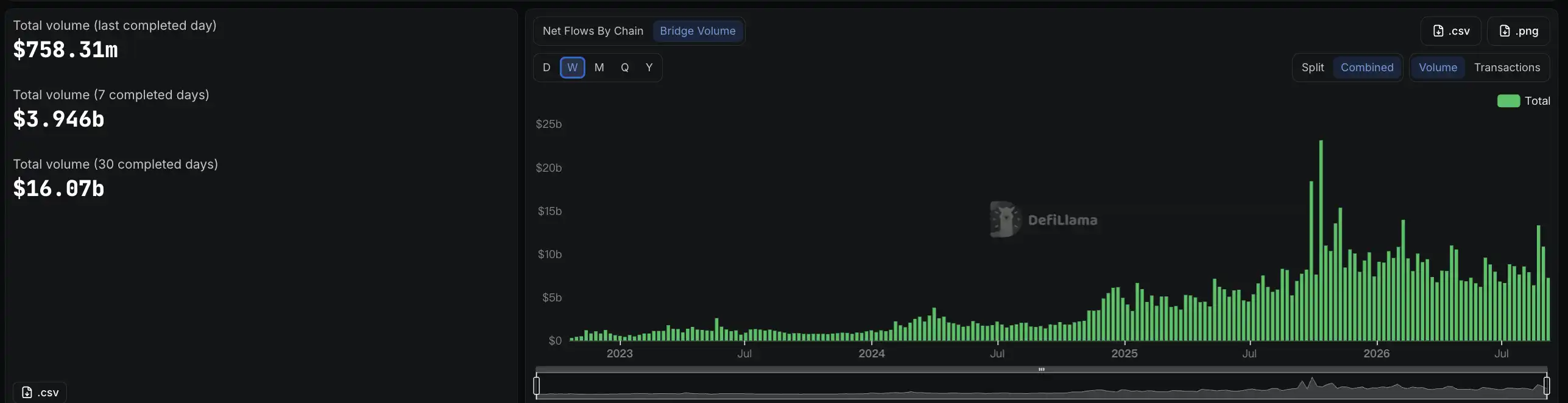
Cross-chain bridges have not lost business. They have simply transitioned from a product actively chosen by traders to infrastructure automatically utilized by frontends. Bridges are becoming increasingly invisible to users, quietly profiting behind the scenes of applications.
Bridgeless Transactions
FOMO was the first to introduce seamless cross-chain transactions into social trading, and leading DeFi applications are following suit. Jupiter's newly launched Universal Deposit allows traders to deposit assets from Ethereum, Base, Arbitrum, or Sui, with the system automatically handling routing, cross-chain transactions, and exchanges, ultimately delivering USDC in a Solana wallet.
The "chain abstraction" is shifting from a selling point of a few new applications to becoming a foundational capability of wallets and frontend trading interfaces.
The competition faced by public blockchains will also be redefined. Previously, transaction endpoints would integrate a certain chain based on user requests, but now power dynamics have started to shift.
The bridge still exists and may even carry more capital. However, it no longer occupies screen space or the user's mindshare; it simply ensures that the user is directed to the best market.
Welcome to join the official BlockBeats community:
Telegram Subscription Group: https://t.me/theblockbeats
Telegram Discussion Group: https://t.me/BlockBeats_App
Official Twitter Account: https://twitter.com/BlockBeatsAsia
