On October 12, 2026, DBS Bank hosted the inaugural Asia Future Forward forum in Singapore, where Broadcom Chief Executive Officer Hock Tan and Intel Chief Executive Officer Lip-Bu Tan shared the stage to discuss where the next trillion-dollar AI value will come from.
Moderator and DBS Bank Chief Executive Officer Tan Su Shan asked how rising long-end rates are driving up the debt costs of hyperscale cloud providers. Both executives' answers pointed to the same new variable: what is holding back AI expansion is no longer just chips, storage, and power, but also the price of money.
Hock Tan said the biggest constraint in his view is capital. Lip-Bu Tan responded that if there is a near-term challenge, it is capital and the cost of capital, and over the longer term, people want to see returns on investment.
Near-term demand has not stalled; the constraint has shifted to financing terms
Neither CEO said demand would stop, only that the next challenge has shifted from being unable to buy to being able to afford it and repay it.
Hock Tan judged that the tight balance in which compute infrastructure demand exceeds supply could last until 2029 or even 2030, with the storage shortage possibly easing within a year, while wafer tightness will only improve noticeably in 2028 to 2029. He added, however, that he does not even know what will happen in 2029, let alone 2030. Supply and demand forecasts are conditional statements, not orders.
Lip-Bu Tan divided the timeline into two phases: no obvious slowdown is in sight over the next two to three years, investment in the training phase has already partially paid off, and the next wave of growth lies in inference, agents, and physical-world AI. He also said that if the industry is truly tripped up, it may be by storage, substrates, or power rather than a broad brake, and that some kind of pullback would be a good thing.
The revenue-and-cost calculation Hock Tan did on site
What drew even more market attention was the calculation he did on site: those selling shovels are making money, while most of those using the shovels have yet to make money.
He cited the throughput of model routing platform OpenRouter for a rough estimate: running models globally costs about $200 billion a year, with about $150 billion recovered. Frontier labs spend about $100 billion and bring in about $120 billion in revenue, while the open-source weights camp spends a similar amount but recovers only about $30 billion.
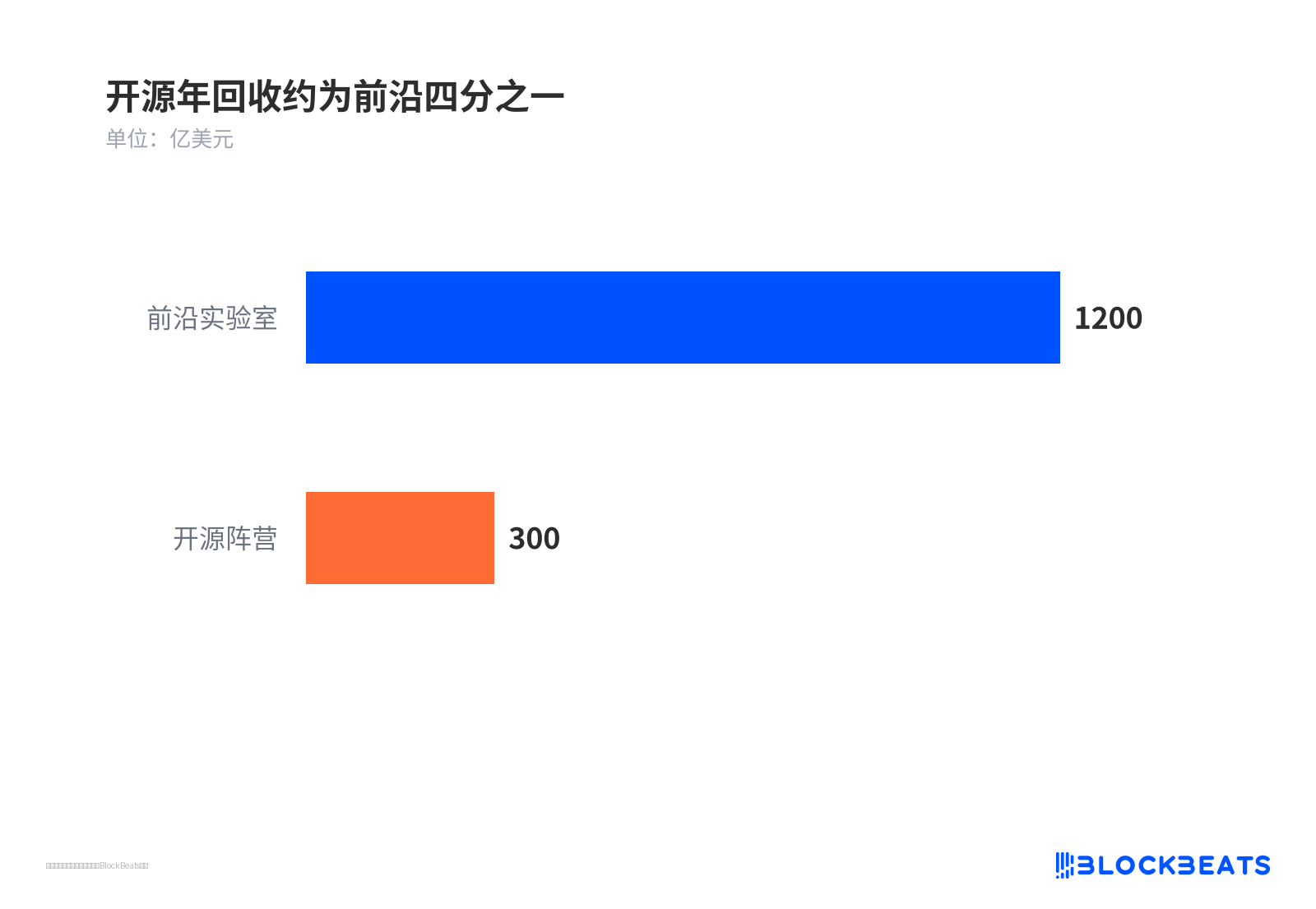
Most enterprises cannot find returns. His analogy is that a child spends $10 in arcade tokens in ten minutes but learns nothing.
He gave two samples: Anthropic's annualized revenue is about $65 billion, corresponding to less than 2.5GW of compute, and OpenAI's is about $50 billion annualized. These figures come from on-site CEO estimates and are unaudited, but the tiers are clear: shovel sellers make money, frontier labs barely break even, and the enterprise side and open-source camp are the thinnest.
The bond market gave signals earlier than the forum
Two days before the forum, the Financial Times cited Morgan Stanley data: global AI-related debt issuance fell to $23 billion in September 2026, less than half of August and far below the June peak of $113 billion. The first nine months totaled about $466 billion, but US investment-grade AI debt almost stopped issuing in September.
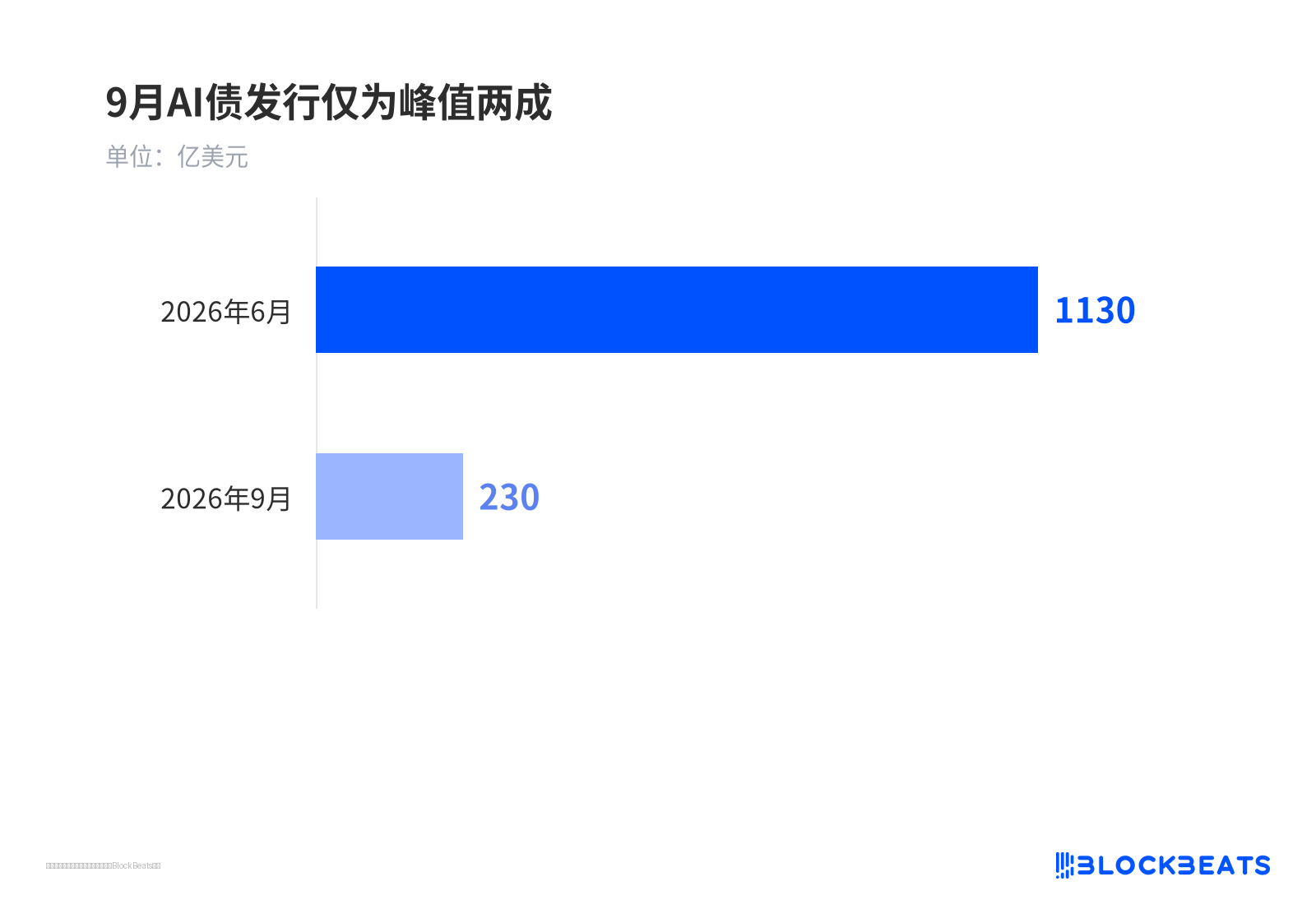
Morgan Stanley attributed the main reason to heavy front-loaded financing in the first half, while excess supply pushed up yields on some projects and raised borrowing costs for hyperscalers.
Tan Su Shan said in a Bloomberg TV interview during the forum that the market has already spoken, AI financing risk is being repriced, and investors want higher returns and cleaner structures. DBS has led multiple AI-related financings this year, mainly directed at semiconductors, storage, and data centers.
Emphasizing capital constraints while continuing to build financing pipelines
Hock Tan said capital is the biggest constraint, but Broadcom's actions are to keep building financing pipelines for itself.
In June this year, Broadcom, Apollo, and Blackstone jointly launched the AI XPV platform, with an initial tranche of about $35 billion, serving Anthropic's project of more than 1GW, and the platform is planned to exceed 20GW by 2028.
Wall Street is currently assembling about $60 billion in new financing, composed of senior secured debt and subordinated debt, with Broadcom also providing residual value support, meaning it bears part of the backstop if customers cannot repay.
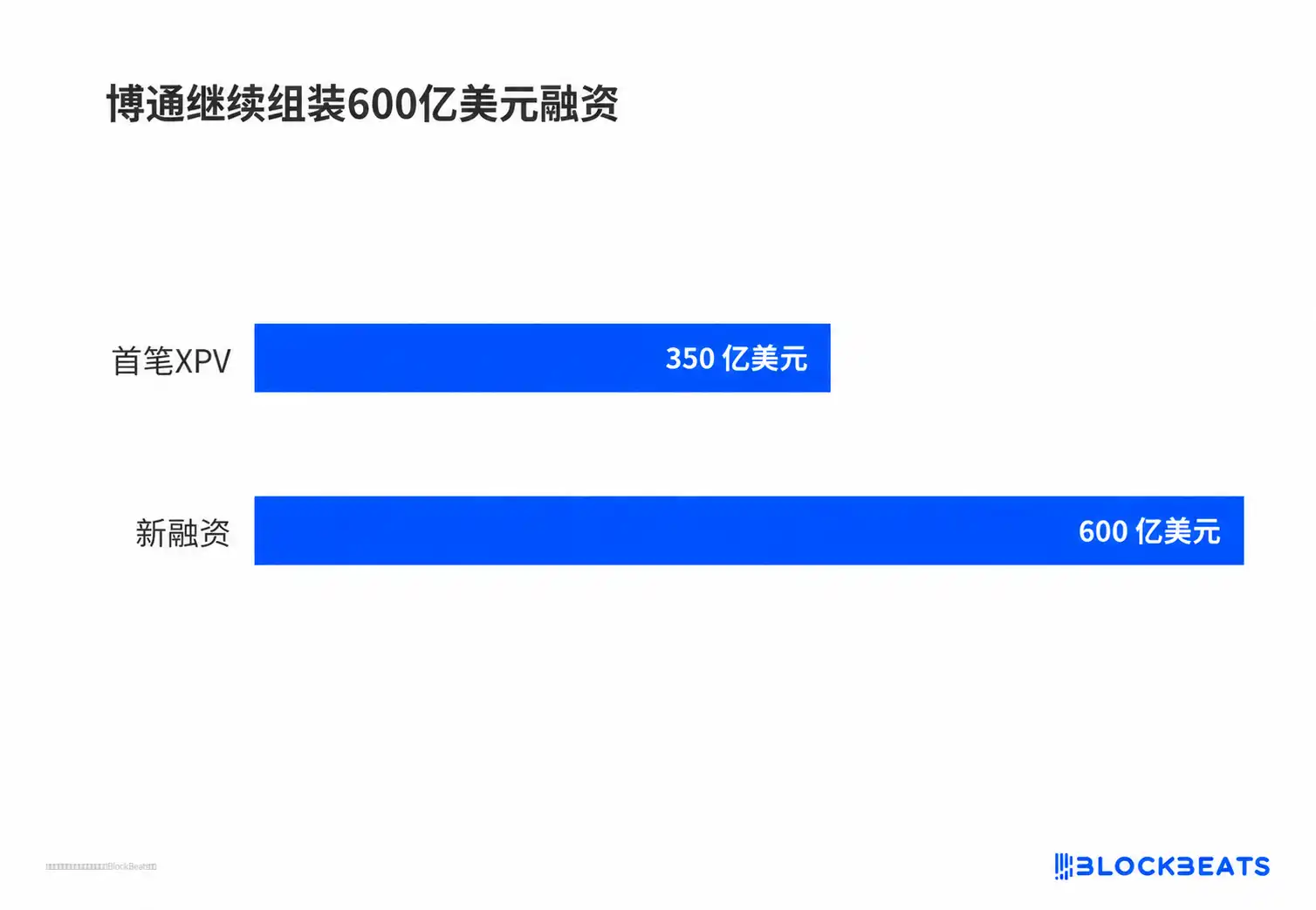
Based on analysts' models projecting the platform scaling to 20GW, the senior debt size of related vehicles could reach hundreds of billions of dollars. This falls under deal and model scope, not Broadcom's on-balance-sheet liabilities, but it points to the same thing: capital discipline does not mean halting construction, but rather ensuring clean structures and clear return narratives.
The Pricing Anchor Has Shifted; Validation Points Lie in Revenue and Subscription
On October 12, U.S. chip stocks did see adjustments, but it was hardly a sector crash. Broadcom fell about 1.5% in early trading and closed down about 1.9%. Intel closed down about 3.2% at $101.35, with trading volume still below its daily average.
Earlier, on October 8, market rumors that OpenAI's annualized revenue was about $50 billion, lower than the previously cited $68 billion, had already put pressure on Broadcom's stock price.
Directly attributing causation between a forum remark and a single-day mild pullback would magnify the significance of the fluctuation. The chip, storage, and power bottlenecks that were overcome one by one over the past two years are being alleviated by capacity ramp-up, and capital and commercialization validation have become the new pricing variables.
Morgan Stanley expects total AI-related debt for full-year 2026 to remain close to $570 billion, with the total still rising—what's changing is the growth rate and terms.
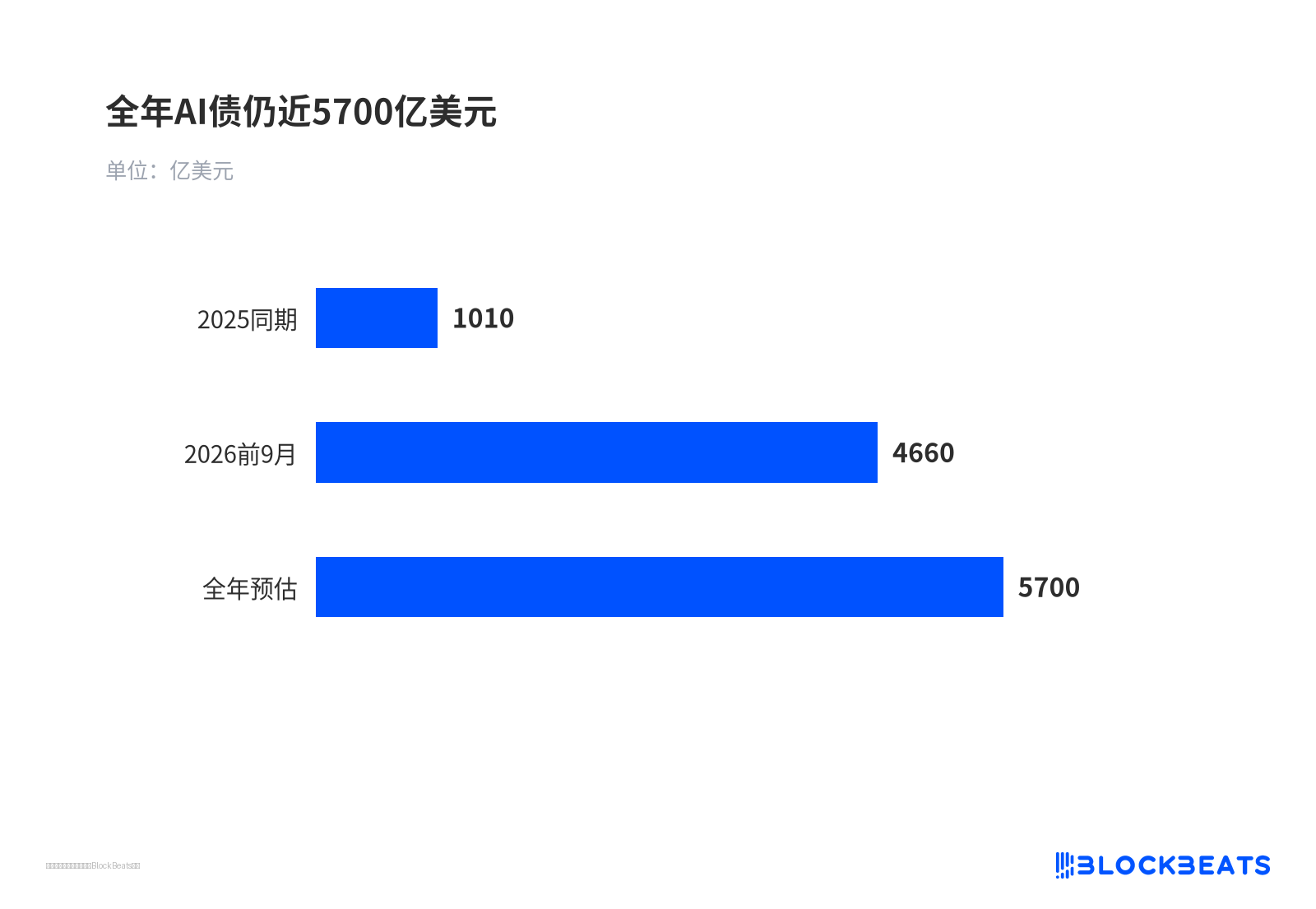
What needs to be validated is not compute chip shipments, but whether model companies can turn spending into auditable revenue, whether data center projects can maintain reasonable returns under higher financing costs, and whether the next batch of large-scale financings can still smoothly secure residual value support and institutional subscription.
The platform Broadcom has built itself is its response to this new test. Before the answer emerges, capital discipline looks more like a healthy adjustment rather than confirmation of a cycle top.
Welcome to join the official BlockBeats community:
Telegram Subscription Group: https://t.me/theblockbeats
Telegram Discussion Group: https://t.me/BlockBeats_App
Official Twitter Account: https://twitter.com/BlockBeatsAsia
