Last week, the 10-year U.S. Treasury yield rose intraday to 5.36%, the highest since 2002, while the 30-year touched about 5.73% over the same period. A subsequent $39 billion 10-year auction drew strong demand, and yields fell back to around 5.19%-5.24% this week.
Beyond the numbers, a rare split has emerged on Wall Street. The disagreement is not whether to buy Treasuries, but which segment of the curve to buy.
To understand the split, first grasp two terms. Duration measures a bond's price sensitivity to interest rate changes; the longer the maturity, the more prices fall when rates rise. Term premium is the extra compensation investors demand for holding long bonds. The short end focuses more on the Federal Reserve's policy path, while the long end must also digest Treasury issuance and long-term risks.
The main driver of the rise is real rates
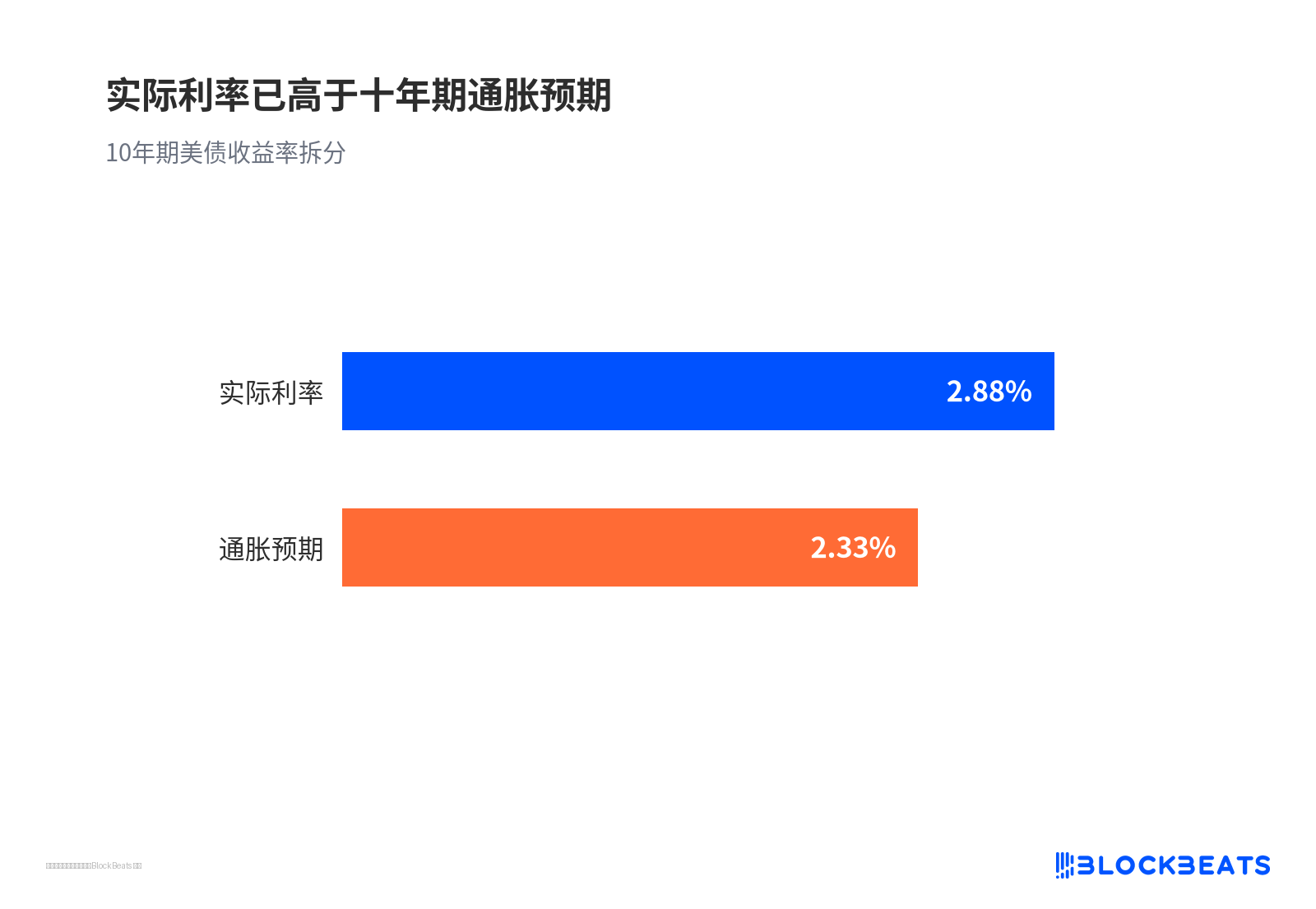
This round of yield increases has been driven mainly by real rates. By BlackRock's measure, the 10-year yield has risen about 110 basis points cumulatively this year, with the vast majority coming from real rates after stripping out inflation expectations.
In other words, the market is pricing in "higher for longer" policy rates and a higher term premium, rather than betting on long-term inflation spiraling out of control again.
Several additional forces are adding pressure. Expanding fiscal deficits mean rising Treasury supply, Middle East tensions are affecting oil prices, and massive capital spending on AI infrastructure is being discussed as a source of sustained demand for funds. The last item is more of a driver explaining market sentiment and has not yet been confirmed by data as causal.
The short end has a buffer, the long end needs more compensation
Facing the same high point, institutions are not acting in unison. The BlackRock Investment Institute recently upgraded short-term Treasuries to overweight, raised long-term Treasuries from underweight to neutral after nearly six years, and downgraded U.S. equities from overweight to neutral.
The judgment is that yields have reset to a long-term "higher rates" baseline, the short end has a thicker buffer against "over-tightening" expectations, and parking funds in the belly of the curve is more cost-effective.

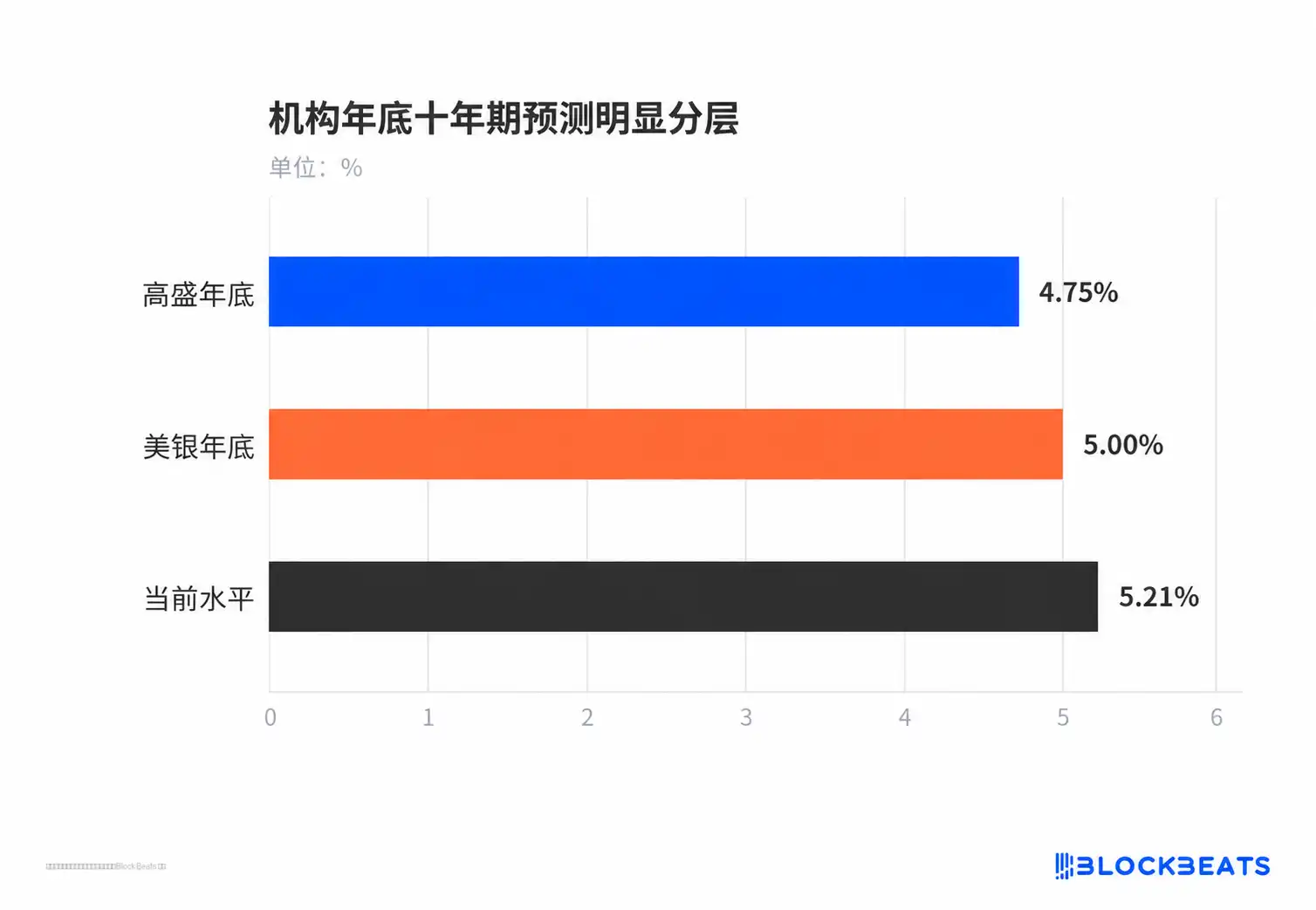
Goldman Sachs prefers to go long on the long end. Its rates strategy team believes long-end forward rates are significantly above fair value, funds are broadly underweight duration, mortgage-related technical selling pressure is fading, and maintains its year-end 10-year forecast at 4.75%.
Citi favors 2- to 3-year Treasuries, reasoning that with inflation and wages cooling, the Fed will find it difficult to hike back to previous highs.
The opposing side is equally vocal. BofA's Mark Cabana believes it is unwise to fight the trend, that upside risks to yields outweigh downside risks, and expects the 10-year to be around 5% by year-end.
Barclays maintains a slightly bearish duration stance and has raised its Q3 2027 10-year forecast to 5.25%, with growing discussion of the 30-year potentially rising toward 6%.
Fund flows also confirm the stratification. According to EPFR data, U.S. government bond funds have seen nearly $14 billion in inflows since October, with Q3 net inflows of $59.3 billion setting a record, but flows are clearly concentrated in the short and intermediate segments, still a small amount relative to the $32 trillion Treasury market.
PIMCO bearish on prices and bullish on returns simultaneously
PIMCO Group CIO Dan Ivascyn offered a seemingly contradictory combination. He believes yields may not have peaked yet, and the Fed may hike once or twice more before ending tightening. But he also says that buying from today's high starting point, bond returns over the coming years could reach 7% to 8%.
These two statements address different things. The former points to the price path, the latter to holding-period returns. The cheaper you buy, the thicker the coupon buffer, and even if prices fluctuate in the short term, hold-to-maturity returns remain attractive.
Bearish on prices and bullish on bonds can coexist in the same statement without contradiction.
September CPI and issuance pace will determine how long the stratification can hold
Technical relief versus unchanged fundamentals constitutes the biggest tension right now. The 10-year yield has recently pulled back about 4 to 5 basis points, with weaker Asian equities and falling oil prices bringing safe-haven bids, while strong auction demand has also eased liquidity pressure.
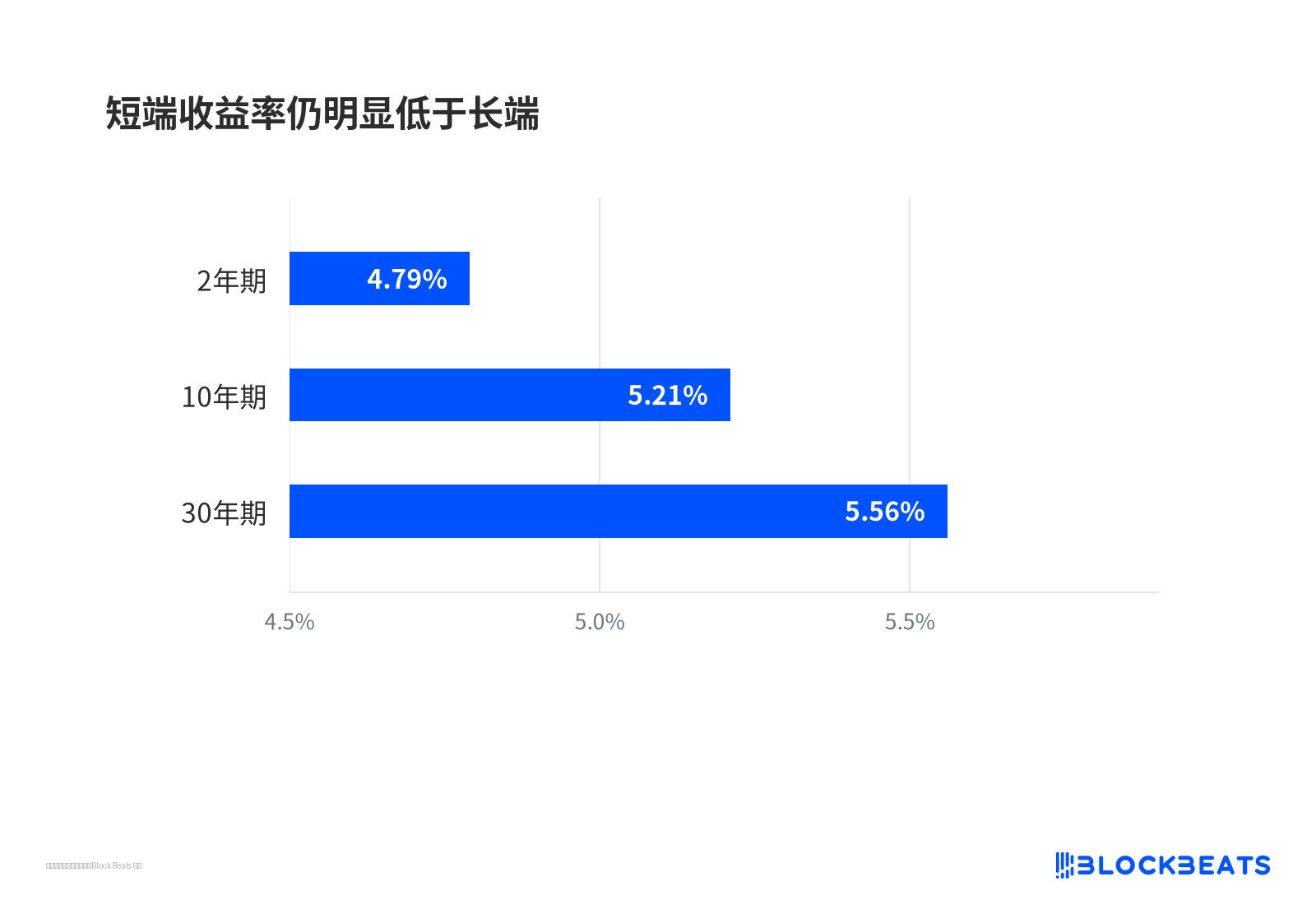
The curve structure shows the 2-year yield at about 4.79%, maintaining a positive spread of about 42 basis points versus the 10-year. The short end is relatively stable, confirming the preference for shorter duration.
The test falls on both inflation and supply. September CPI is due today, with the market expecting about 3.6% year over year, above August's 3.4%. If inflation accelerates again, rate-hike expectations will be hard to revise lower, and the long end may need even more compensation. If inflation cools, the short end's optimistic view on the policy path will have a basis.
Another thread is the Treasury's issuance structure. If the size of subsequent long-bond auctions rises, term premium may continue to be pushed higher, and the divergence between Goldman Sachs's year-end 4.75% target and Barclays' upwardly revised forecast will become more obvious.
BlackRock gives the long end only a neutral rather than overweight allocation, precisely to leave room for this uncertainty. For ordinary investors, this round of tiering looks more like a tactical repricing from a high starting point rather than the beginning of a bond bull market.
Whether the 10-year yield can firmly hold above 5% ultimately depends on the pace of inflation cooling and the absorption capacity of long-bond auctions.
Welcome to join the official BlockBeats community:
Telegram Subscription Group: https://t.me/theblockbeats
Telegram Discussion Group: https://t.me/BlockBeats_App
Official Twitter Account: https://twitter.com/BlockBeatsAsia
