On October 20, Musk confirmed on SpaceX's Q3 earnings call that Tesla and SpaceX have each established independent special committees of their boards at shareholders' request to discuss a potential merger. He recused himself as a conflicted party and stressed that the committees have not agreed on any terms, and "obviously there's no guarantee one will be reached."
This adds a procedural step beyond the rumors, but it is still far from a deal. What ordinary investors care about is whether Tesla shares would be exchanged for SpaceX shares, whether the exchange ratio would provide a sufficient premium, and whether Musk's voting power would become more concentrated after a merger.
The market has already offered two answers. Barclays analyst Dan Levy said in an October 14 client note that the merger "has increasingly become the consensus expectation" and could be announced before the annual shareholder meeting. CFRA's Garrett Nelson, after the Roadster presentation, put the "probability of completing the merger by the end of next year at 90%." Musk, however, played down the certainty and described the Tesla-side threshold as "quite high."
Special committees put the conflict-isolation process on the table
Special committees are a standard isolation measure for conflicted transactions, but they do not mean the two sides have already agreed on a price. The CEO is simultaneously the largest individual shareholder of both companies, so independent directors must form a small group to negotiate the price for the deal to withstand scrutiny in Delaware courts.
Musk said the committees have not reached terms and there is no guarantee they will, and that he is not participating in the discussions. Tesla's October 19 proxy statement set the annual shareholder meeting for December 3, and the agenda does not include a merger proposal.
Committee members, consideration, and timetable have not been disclosed, and there is no 8-K confirmation in public filings. What can be confirmed now is only that "exploratory talks have been formalized."
Independence also merits closer scrutiny. Ira Ehrenpreis, chair of Tesla's compensation and governance committee, is still listed as an independent director, and according to public information he has also served as a SpaceX director since February. This does not automatically invalidate the committee, but it will subject the word "independent" to closer scrutiny.
SpaceX's AI Revenue Changes Acquirer Math
If a merger happens, who becomes the acquirer depends on whose stock is more expensive and whose growth story is stronger. SpaceX delivered stronger pricing power in the third quarter.
Revenue was $14.58 billion, up 161% year-over-year, net income was $4.4 billion, and adjusted EBITDA was $8.8 billion. Superintelligence business revenue was $7.56 billion, up 830% year-over-year, operating profit was $431 million, and margin was 5.7%. Starlink revenue was $5.25 billion, operating profit was $2.37 billion, and margin was 45.1%.
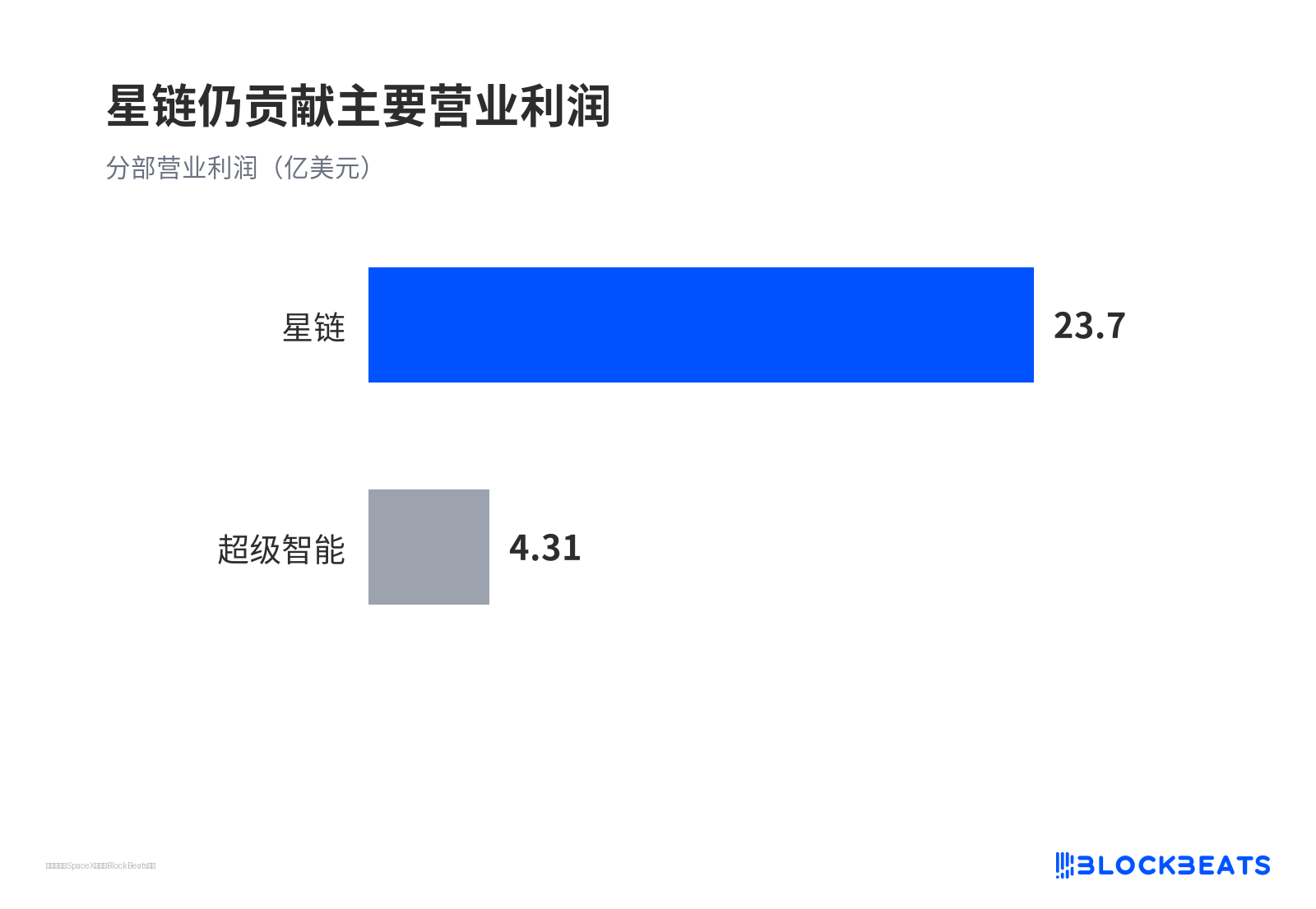
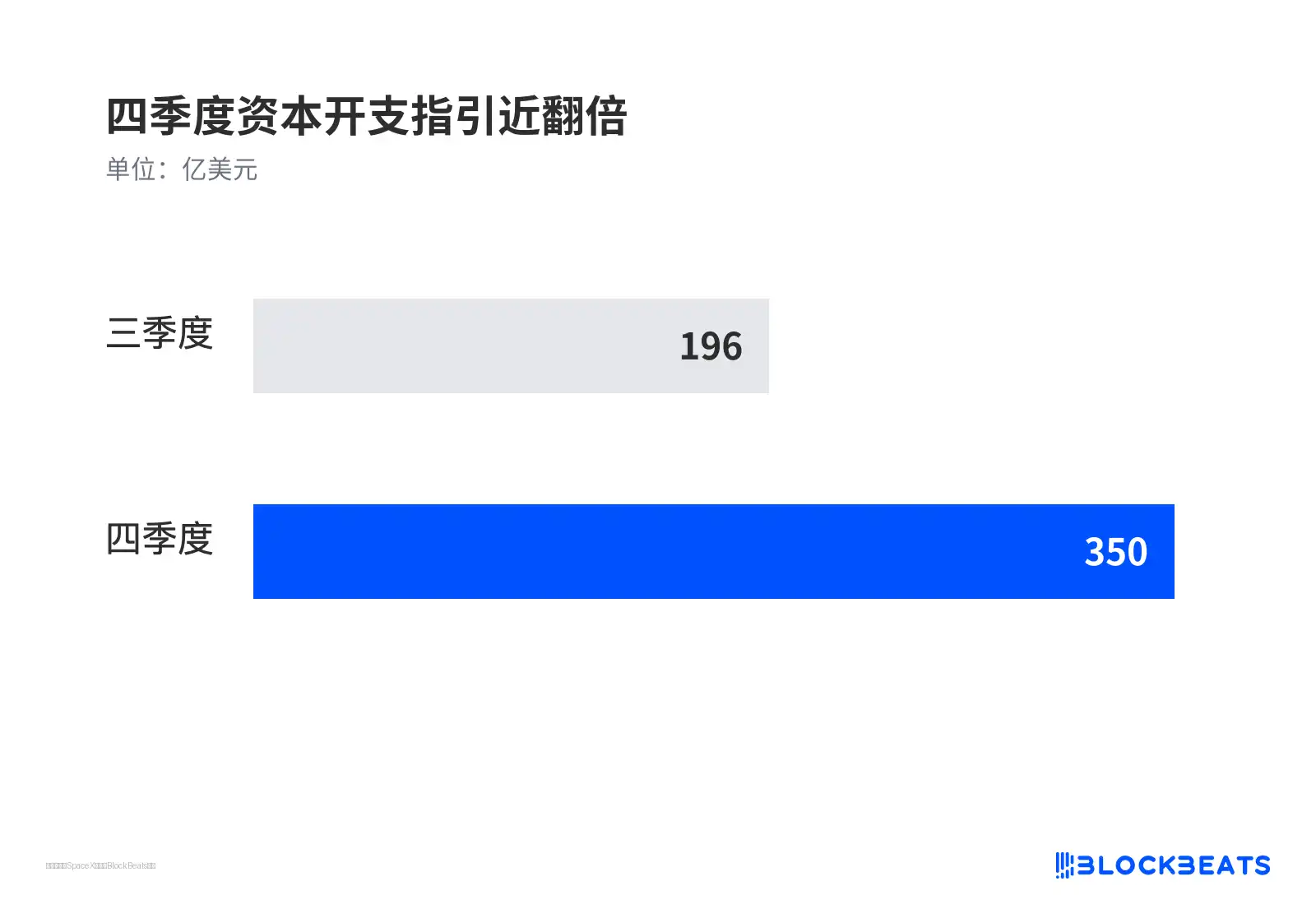
Capex was $19.59 billion, fourth-quarter guidance is $35 billion to $40 billion, and the first nine months still showed a loss of $413 million.
AI revenue expands SpaceX's narrative from rockets and Starlink to compute leasing, but Starlink remains the main profit driver.
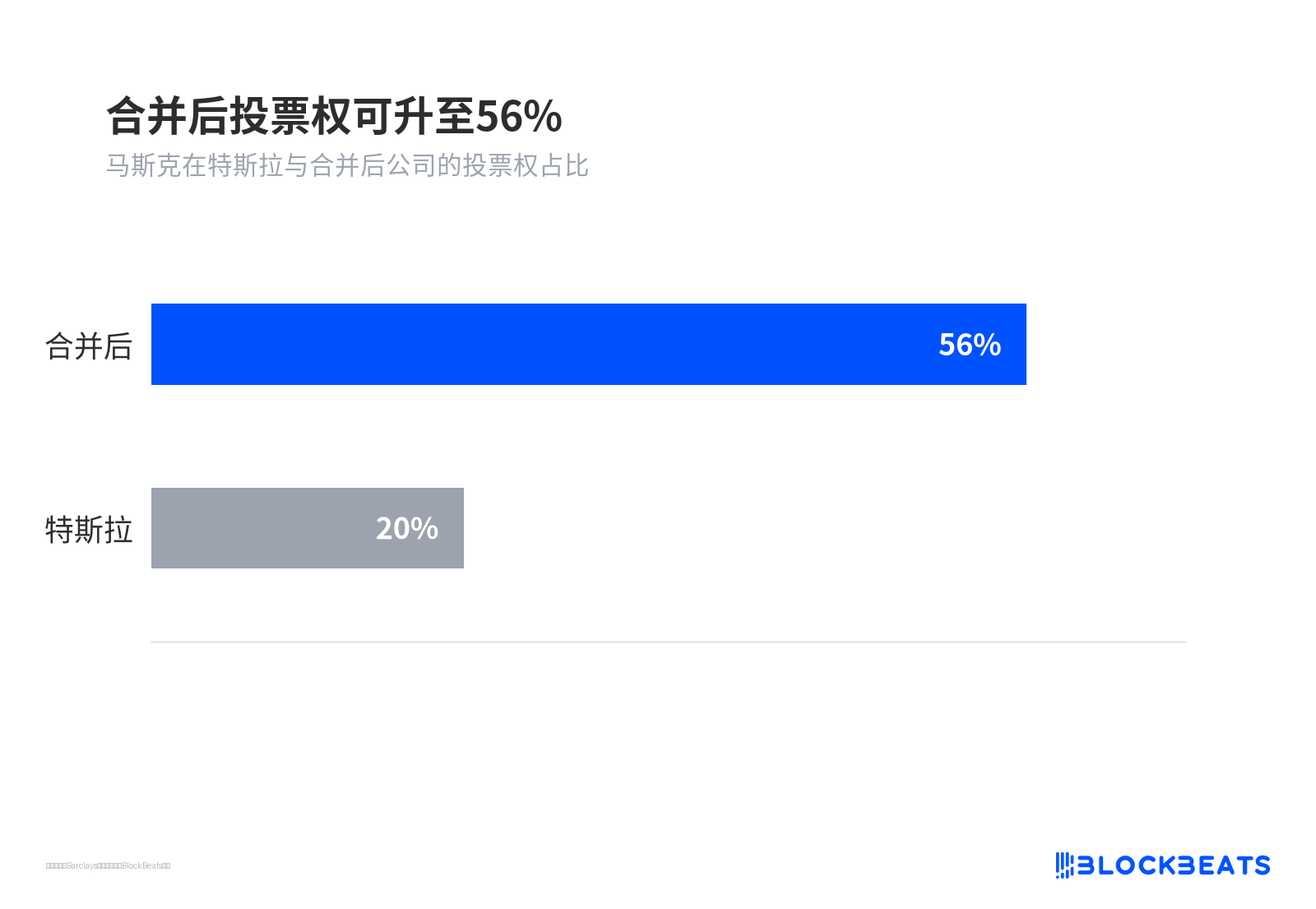
Based on current market caps, SpaceX is about $2.1 trillion and Tesla is about $1.5 trillion, implying an exchange ratio of about 0.7 before any premium. Sell-side estimates put Musk's stake after the merger at about 37% and voting power at about 56%. That explains why the sell side favors an all-stock SpaceX acquisition: Musk's roughly 20% voting power in Tesla could be pulled toward about 56% after the merger.
Analysts' Calendar Collides With Musk's Threshold
Wall Street is giving timelines and probabilities, while Musk is giving legal thresholds, and the two have different evidentiary strength.
Levy's note was written before the committee disclosure. He said that if it drags into late October or early November, completing approval within the annual meeting window becomes harder, and the deal could still emerge in the next 6 to 12 months. "No later than December 6" is inferred from SEC deadlines, and after the proxy statement, December 3 should be the reference date.
RBC's Tom Narayan said it is "not easy," and in substance it can only be an all-stock SpaceX acquisition of Tesla. Tesla investors could accept $480 per share, a premium of about 30%, valuing the combined entity at about $3.74 trillion, with Tesla shareholders' stake falling from 54% to 48%. The $480 figure is a target price plus premium assumption, not a quoted offer.
CFRA's Garrett Nelson raised his price target from $385 to $475, assigning a 90% probability by the end of next year, citing a resurgence of the "Musk magic" and technology convergence translating into products. The 90% points to the end of 2027, directly conflicting with Musk's "no guarantee" and "high threshold."
Levy provides the calendar window, Narayan provides the consideration difficulty, and Nelson provides the sentiment probability. Musk, meanwhile, stated that the Tesla side requires approval from 50% of all outstanding shares, not just a majority of voting shares, with abstentions counting as opposition. This threshold is far tougher than "announcing before the shareholder meeting."

Gross margin and document disclosure determine how far the story can go
For the merger to become a votable proposal, three hard elements are still missing: committee members and terms, formal documents, and whether Tesla's own finances can support AI investment.
Tesla's third-quarter earnings were released on October 21, with the market focused on automotive gross margin and AI capital expenditure. There are currently no verifiable figures, so they cannot be compared side by side with SpaceX's $14.58 billion in revenue. If gross margin is dragged down by AI investment, shareholder acceptance of a share exchange at a low premium will be even lower. If it holds steady, Narayan's $480 framework will have a basis for discussion.
On the committee front, there is currently only Musk's verbal confirmation, with no 8-K or DEFA14A-level documents. The December 3 shareholder meeting is already set and has no merger proposal, so the window to form a votable proposal before the meeting is extremely short. If it drags past late October or early November, it is more likely to slip to 2027.
Current evidence supports only one judgment: the merger has entered formal inquiries, while terms and consideration remain at zero. The core of the pricing disagreement is whether Tesla's third-quarter gross margin can sustain the AI narrative, whether the committee will disclose members and terms, and whether a formal proposal will appear before December 3. Without these three items, the 90% probability is merely an analyst's optimistic scenario, not a company commitment.
Welcome to join the official BlockBeats community:
Telegram Subscription Group: https://t.me/theblockbeats
Telegram Discussion Group: https://t.me/BlockBeats_App
Official Twitter Account: https://twitter.com/BlockBeatsAsia
