On October 22, U.S. stocks produced a rare combination. The Nasdaq Composite fell about 2.6%, the Philadelphia Semiconductor Index plunged about 6.7%, Meta dropped about 7%, and the Dow was nearly flat.
Looking only at the declines, this resembles another retreat from the crowded AI trade. But what is being priced has changed. Over the past two years, the market asked "how many more chips will be bought"; now it asks "where does this money come from, and whose shareholders bear it."
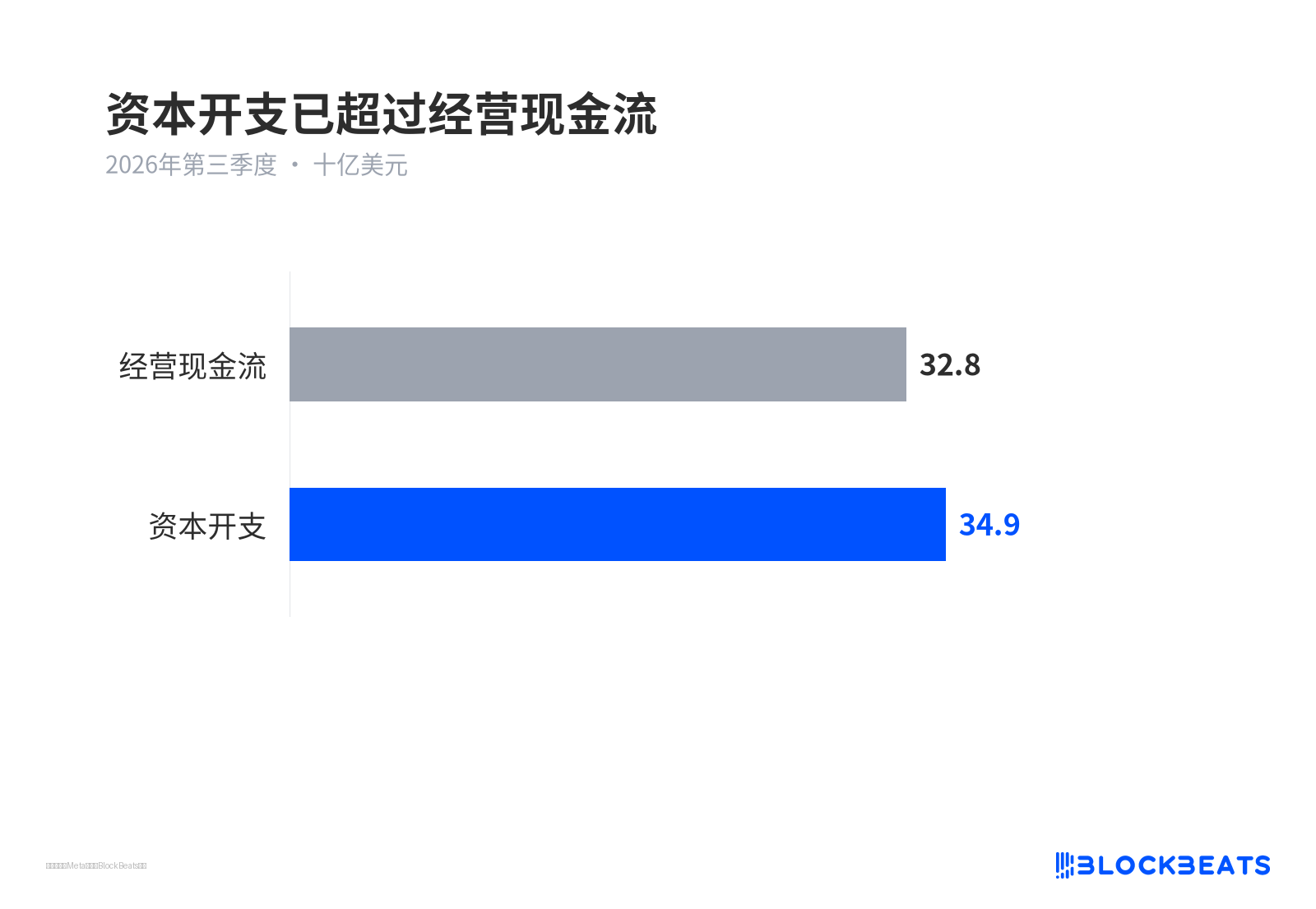
The trigger was Meta's fiscal Q3 report released the previous day. Revenue and adjusted profit both beat expectations, with adjusted earnings per share of $7.40, excluding $9.89 billion in legal expenses; on a GAAP basis it was only $3.83. But free cash flow swung from positive $10.63 billion in the year-ago period to negative $2.12 billion, marking its first quarterly net outflow.
The same evening, the 2026 capital expenditure guidance was narrowed to $135 billion to $145 billion, with the lower bound raised from the previous $130 billion. The board also approved a 1:1 distribution of non-voting Class C stock in January 2027. Put together, these three things shifted market attention from demand to financing.
Free cash flow turns negative for the first time
Meta's capital expenditure for the quarter was about $35 billion, and advertising revenue was still growing, but spending on servers and data centers has exceeded cash inflows for the quarter. The business isn't losing money, yet cash flowed out on a net basis for the first time.
Class C shares were designed with exactly this loophole in mind. These shares carry no voting rights, so the distribution does not alter Zuckerberg's control, and the company simultaneously retains the ability to issue similar shares in the future to raise capital. What the market sold off that day was not the stock split, but the "potential future equity supply."
This also explains why the revenue beat failed to support the stock price. When valuation is built on the assumption of perpetual cash flow growth, a change in financing method directly alters the discount rate, not just the next quarter's profit figure.
Jensen Huang says capital is scarce; Bernstein says more expensive capital means less demand
For the same day's decline, the upstream supply chain and the sell side offered opposite attributions.
Nvidia CEO Jensen Huang said in a CNBC interview that demand from neoclouds (cloud providers that rent GPUs to AI companies, borrowing money to buy cards and sublease them) is "off the charts," and what's lacking right now is working capital — capital demand far exceeds supply — but "this problem will be solved." His remarks pointed to liquidity and supply constraints, not disappearing orders.
The market, however, read it as corroborating evidence of a financing bottleneck. If even the most upstream player acknowledges that customers lack money, then the pace of chip orders must depend on the pace of financing, not the strength of demand.
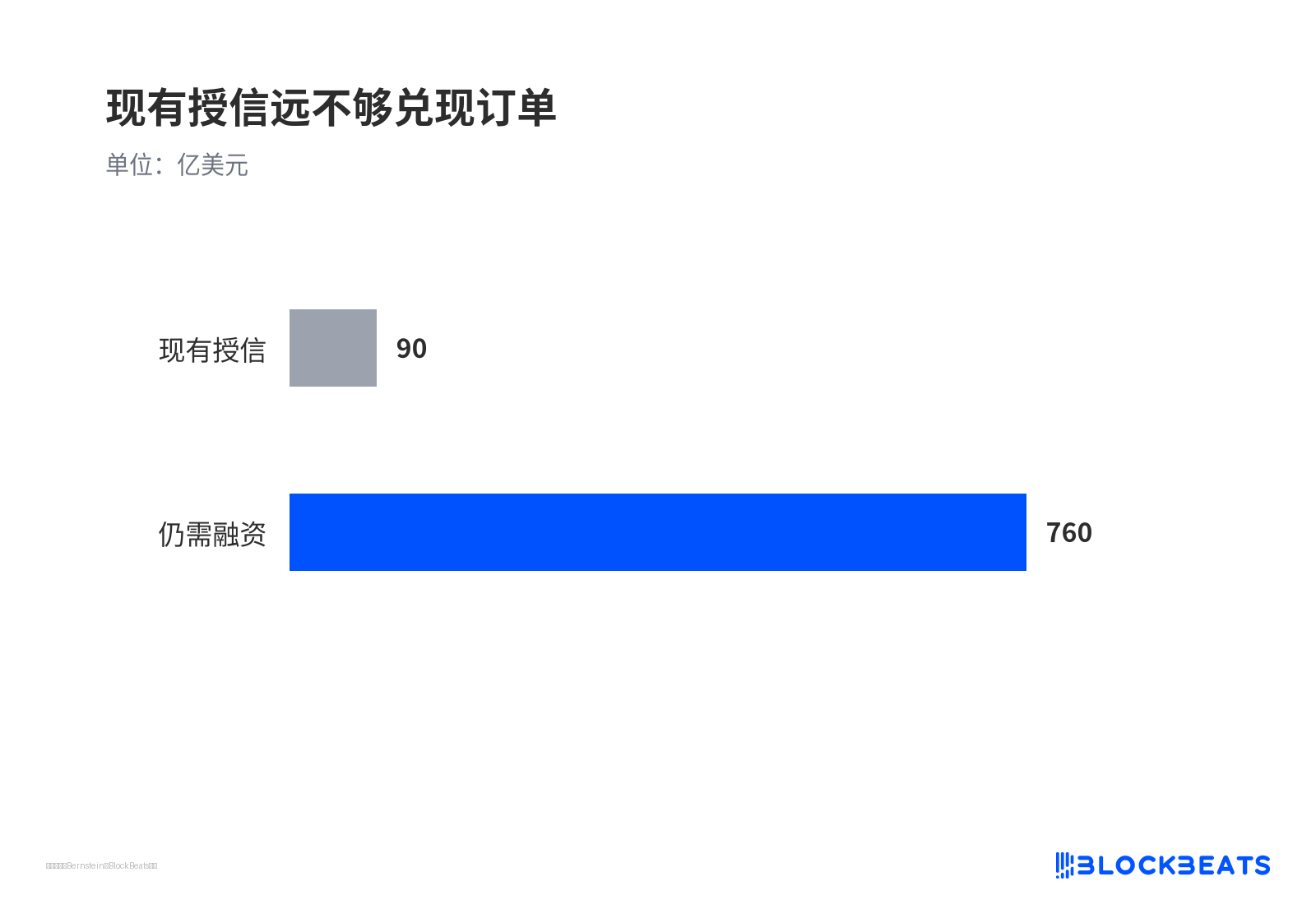
The other side is more direct. Bernstein analyst Madison Rezaei cut the CoreWeave price target from $74 to $51, maintained an underperform rating, and estimated that fulfilling its committed orders would require approximately $85 billion in financing.
The market's pricing is even more blunt. CoreWeave bond yields rose to about 15.8%, and the five-year credit default swap (the cost of insuring against bond default) spread exceeded 1,100 basis points. When the marginal cost of borrowing is above 15%, the expansion speed of the GPU rental business is no longer determined by demand, but by how much credit creditors are willing to extend.
The focus of the conflict is now clear. Jensen Huang believes demand is fine and the money problem will be solved; Bernstein believes that more expensive money itself means lower effective demand. The October 22 trading session was the first time the market voted on a large scale for the latter.
Lam's guidance transmits financing concerns to equipment orders
The chip sector fell more than cloud providers. Nvidia dropped about 4%, and CoreWeave fell about 10%.
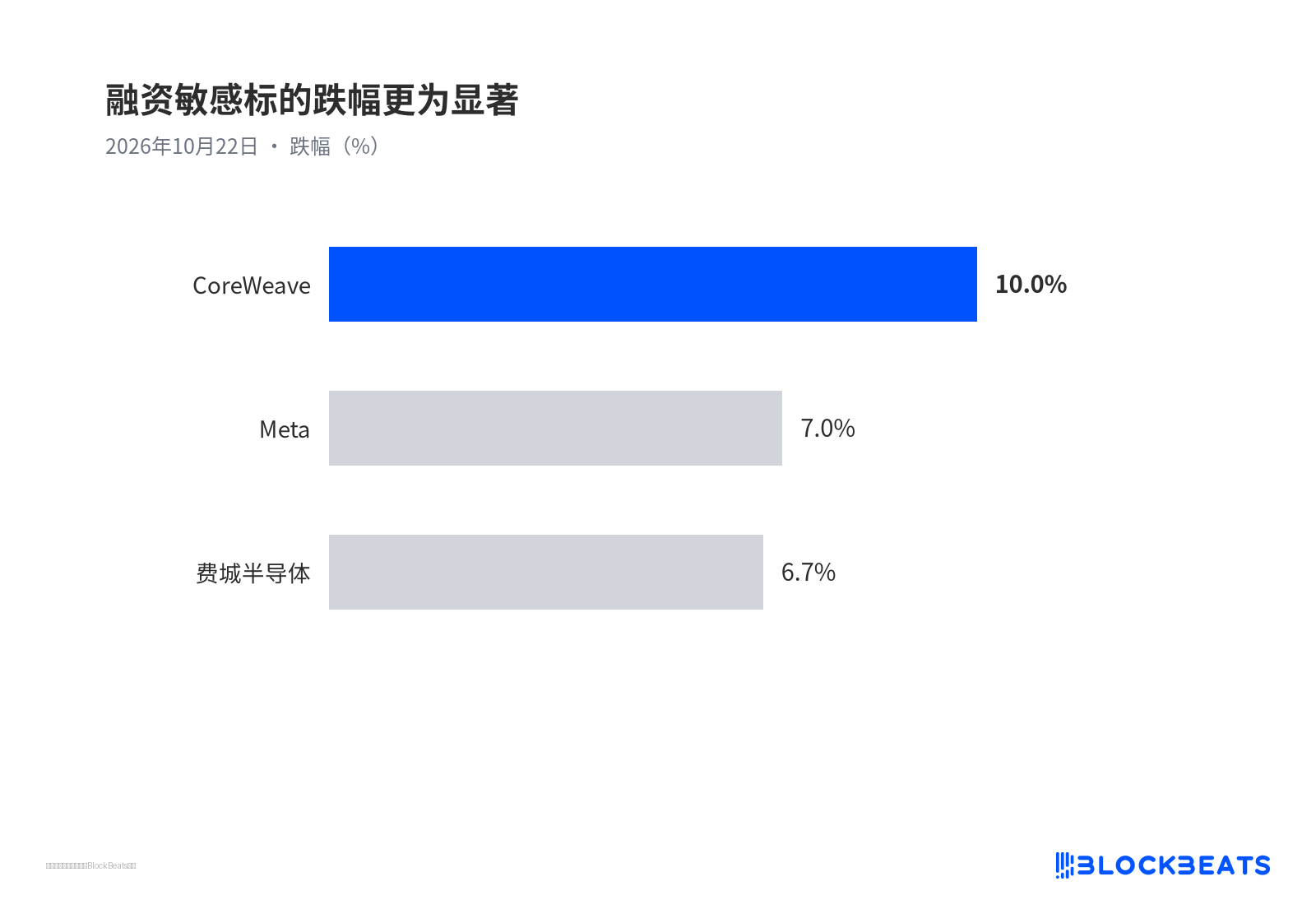
What amplified sentiment was Lam Research. The company's midpoint revenue guidance for the December quarter was slightly above analyst consensus but fell short of buy-side expectations that were higher in private, while also flagging a significant decline in the revenue share from Chinese customers and potential shipment delays from supply chain bottlenecks. The stock fell about 10% that day.
It's important to distinguish the magnitude. Lam's guidance can only explain the pullback in equipment stocks themselves, not the sector's 6.7% decline. Its role is as a concrete example of how financing concerns transmit from cloud providers' balance sheets to visibility on equipment orders.
Even as Lam emphasized that AI demand remains strong, that global wafer fab equipment spending could exceed $200 billion in 2027, and that gross and operating margins hit records for the quarter, the market still traded "marginally below expectations" first. That itself is evidence of how highly sensitive valuations are to the slope of capital expenditure.
Financing channels remain open, but pricing has changed
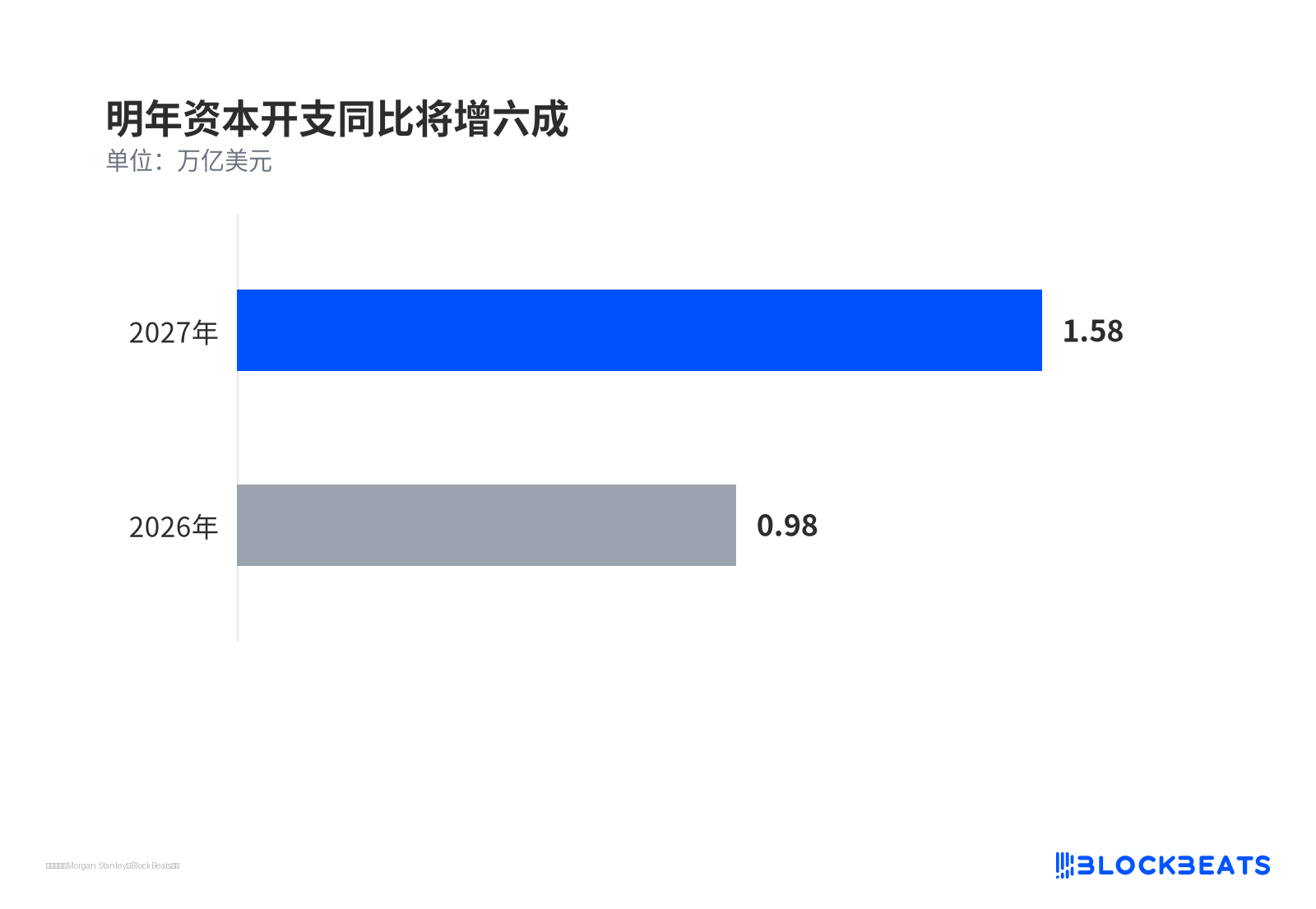
Zooming out, Meta is the first visible sample in this round of capital structure change. According to Morgan Stanley estimates, hyperscalers plus neo-clouds could spend as much as $1.58 trillion on related capex next year, with a free cash flow gap including leases potentially reaching $540 billion. Goldman Sachs' estimate is lower, at roughly $800 billion in capex for leading cloud providers in 2026.
The two banks' methodologies differ and their figures diverge by nearly a factor of two, yet they point to the same thing: the scale of AI buildout has exceeded what any single company's internal cash generation can cover.
Current evidence only supports going this far. The funding structure is shifting from internal cash flow to external capital, and the market is beginning to price dilution and credit spreads. It does not support "AI demand has peaked," nor does it support "the financing window has closed." CoreWeave's debt, though expensive, still finds buyers. Meta's Class C shares merely keep the channel open without immediately launching a large-scale offering.
What to watch is when "expected dilution" becomes "realized dilution." If major equity or new-form debt issuance from leading companies actually materializes, valuation pressure will shift from discount-rate assumptions to real equity supply. If tech sector credit spreads continue to widen and companies beyond neo-clouds are also required to pay higher risk premiums, financing constraints will no longer be isolated cases. Conversely, if capex is revised upward again next quarter and orders and revenue follow, this round of adjustment is more likely just a阶段性 repricing.
What October 22 left behind is not the conclusion that "AI is finished," but a new equation: demand is still there, but behind every GPU, the first question to answer is where the money will come from.
Welcome to join the official BlockBeats community:
Telegram Subscription Group: https://t.me/theblockbeats
Telegram Discussion Group: https://t.me/BlockBeats_App
Official Twitter Account: https://twitter.com/BlockBeatsAsia
