By Sleepy
Anthropic has officially filed for an IPO, and its prospectus is now public.
It plans to list on Nasdaq under the ticker ANT, with Goldman Sachs and Morgan Stanley leading the underwriting. The offering price range, number of shares, and fundraising size are all still blank. According to earlier reports, it confidentially submitted its application to the SEC in June, allowing regulators to review the financial materials first before making them public. Multiple media outlets expect this IPO could set a record.
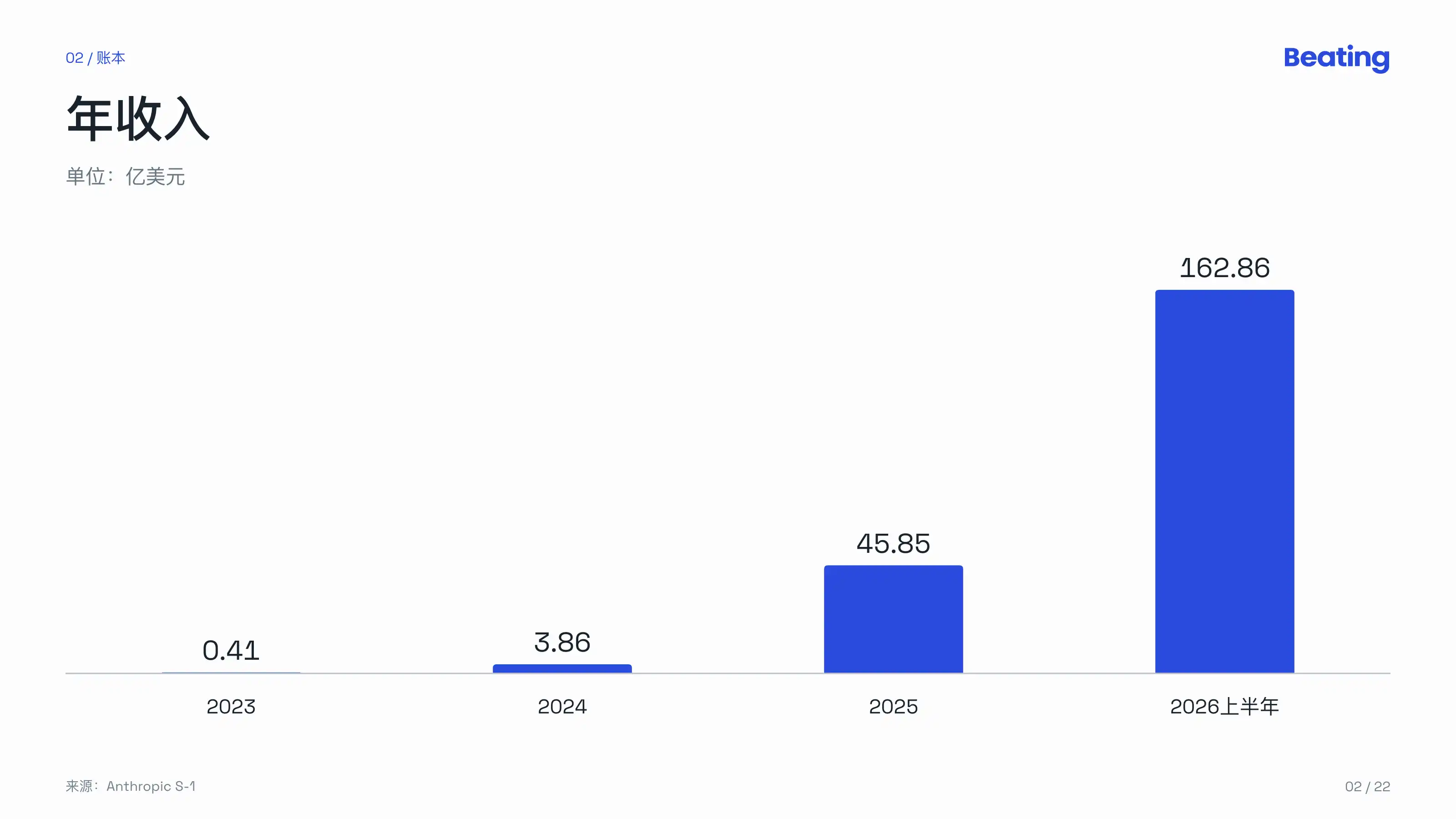
The company was founded five years ago. In the first half of this year, revenue was $16.286 billion, compared with $1.163 billion in the same period last year; net loss for the same period was $80.748 billion. For the full year of 2025, revenue was $4.585 billion and net loss was $41.965 billion.
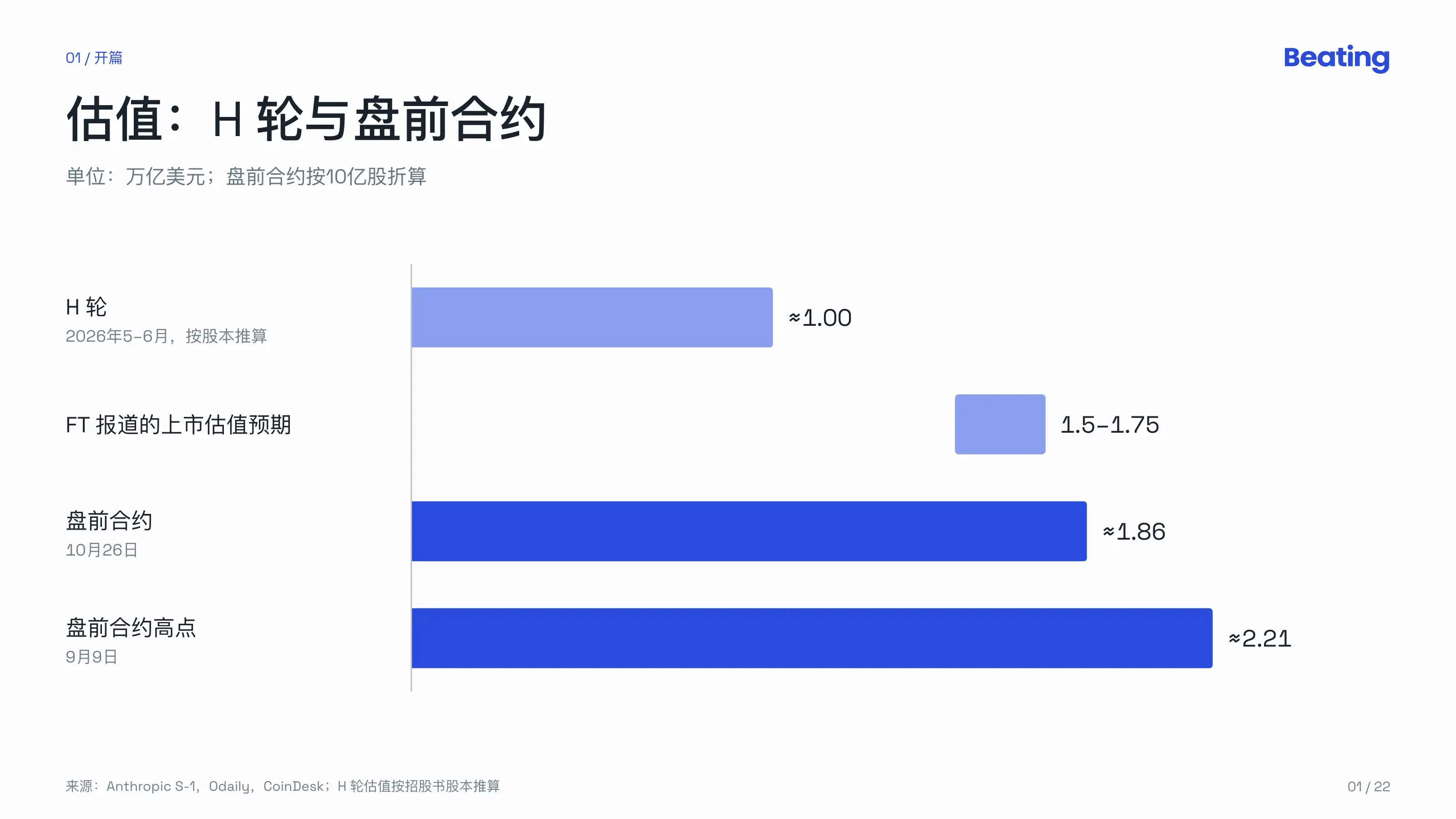
After the prospectus was released, the on-chain Anthropic pre-market contract briefly rose more than 4%, reaching a high of $1,980 before falling back to around $1,864, corresponding to a valuation of about $1.86 trillion. On September 9, the price had reached a high of $2,211.
The first page of the prospectus is a letter signed by seven co-founders. In the letter, they wrote that before going public they consulted many entrepreneurs who had been through IPOs, and one piece of advice was repeatedly mentioned:
"Never let your company be worth a dollar more than it is actually worth."
Don't let the company be worth one dollar more than its actual value.
So how much is it actually worth? Here are several main sections from the prospectus.
The Books
First, revenue.
Anthropic launched Claude in the first quarter of 2023 and began commercialization. Annual revenue since then has been:
2023: $41 million
2024: $386 million
2025: $4.585 billion
First half of 2026: $16.286 billion
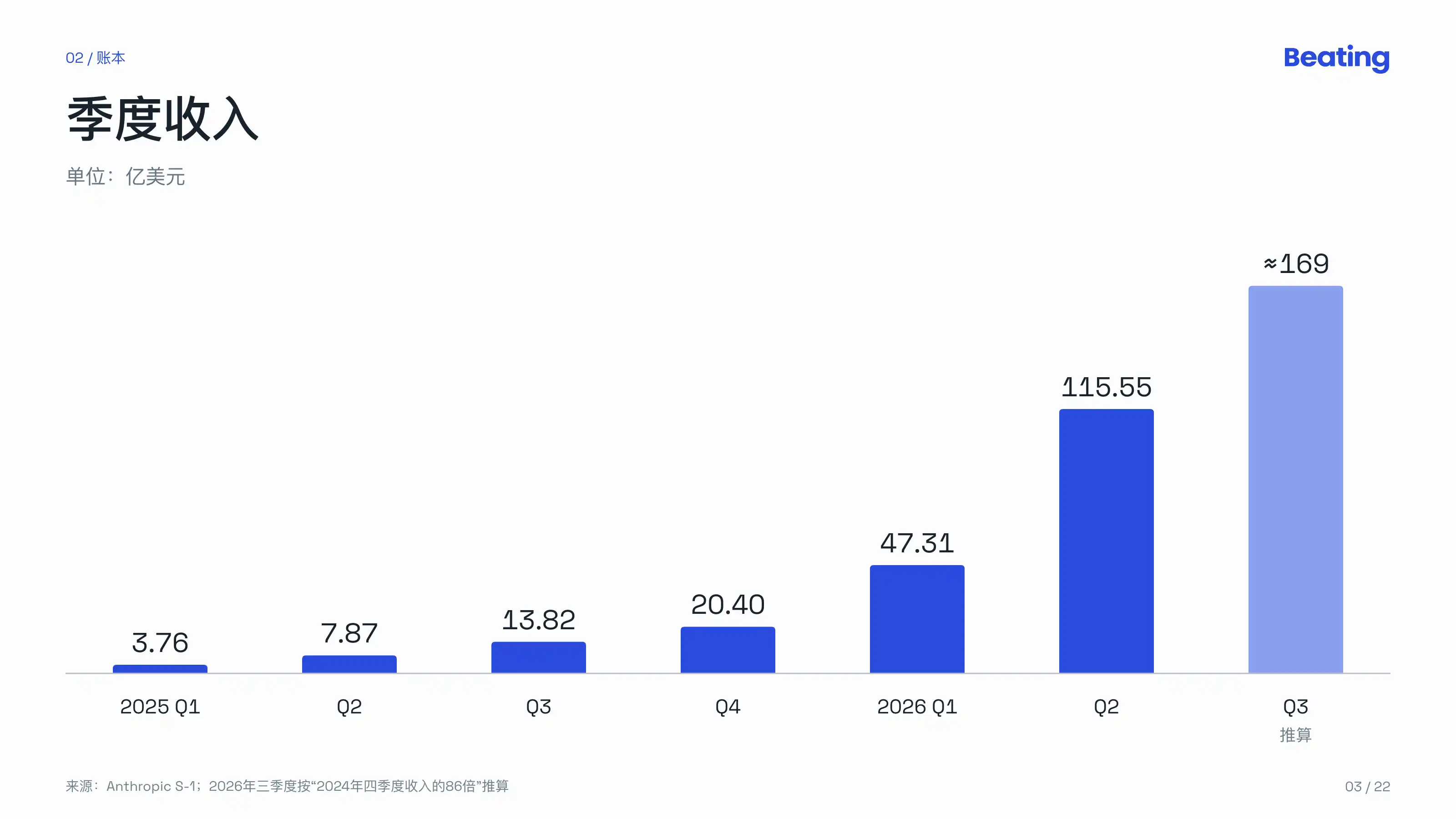
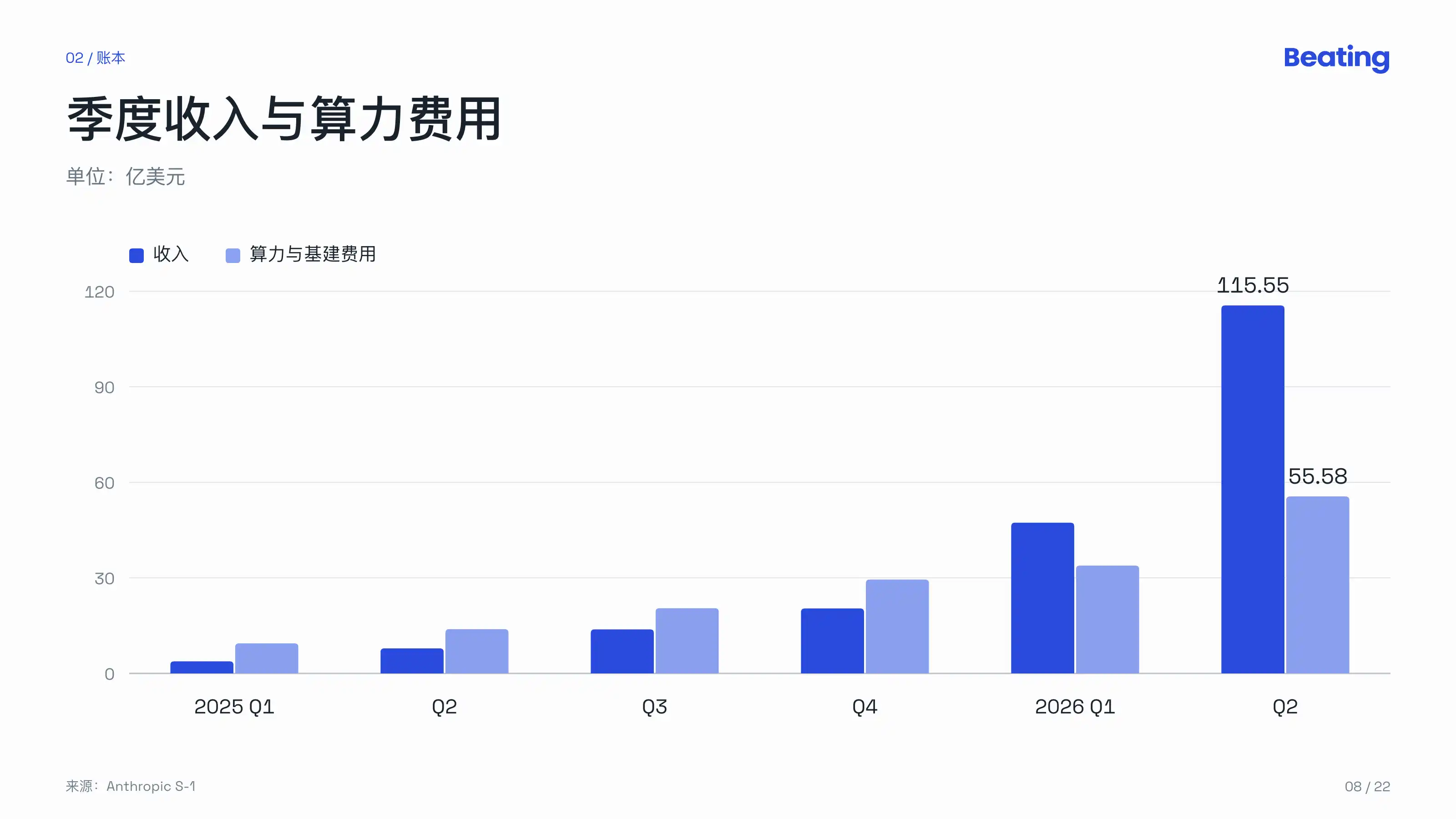
By quarter, the four quarters of 2025 were $376 million, $787 million, $1.382 billion, and $2.04 billion, respectively; Q1 2026 was $4.731 billion, and Q2 was $11.555 billion. Quarter-over-quarter growth jumped from 48% to 132%, then to 144%.
Q3 revenue was not stated directly, but the prospectus notes that Q3 2026 revenue was 86 times that of Q4 2024 ($197 million). On that basis, it is estimated at roughly $16.9 billion, with quarter-over-quarter growth falling back to around 47%.
The prospectus itself is also tempering the growth rate.
It writes that recent growth may reflect characteristics of early adoption and the early stages of the market and may not be sustainable; the company expects growth to decline as the revenue base grows larger, and it may decline faster and more than expected. The risk factors also state that the company may not achieve or maintain profitability in the future, and that it does not intend to pay cash dividends for the foreseeable future.
Now look at profit.
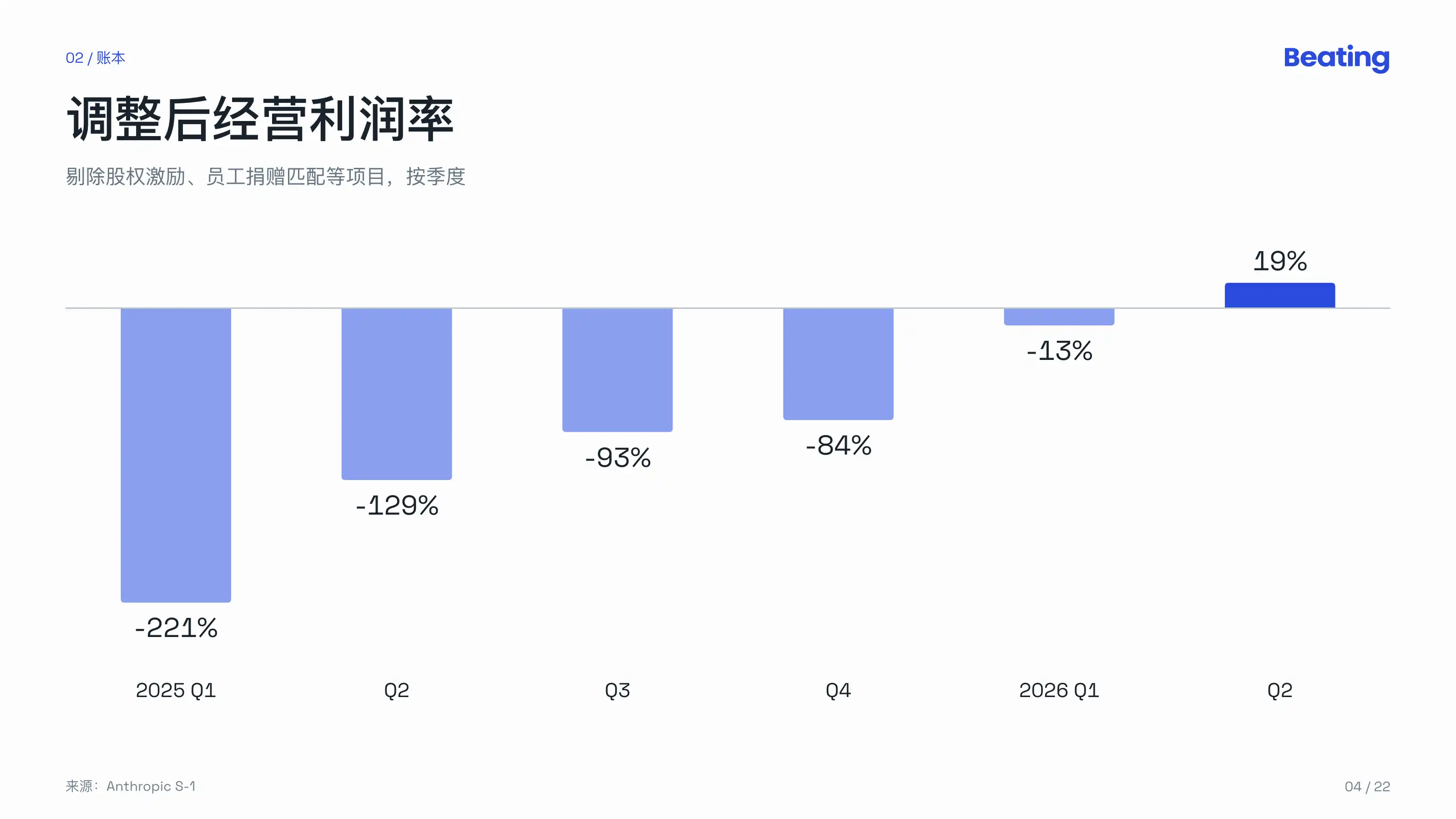
In Q2, Anthropic's operating profit was $974 million, an operating margin of 8%. Adjusted Operating Margin, excluding items such as stock-based compensation and employee donation matching, was 19%, compared with -129% in the same quarter a year earlier. For the entire first half, the operating loss was $693 million.
So where did the $80.7 billion net loss that has been widely discussed on social media during this period come from?
The main reason is two accounting issues.
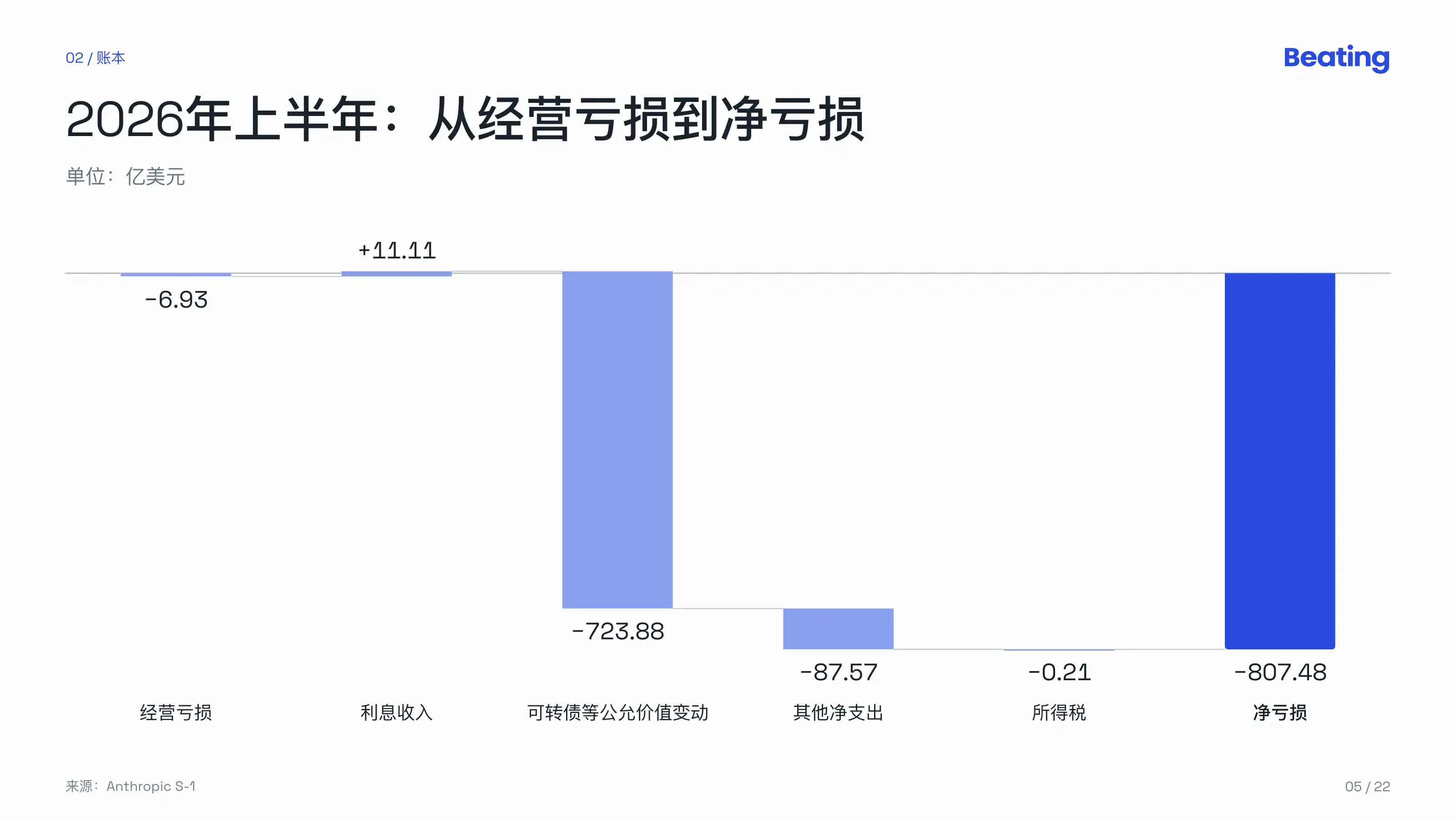
The first, $72.388 billion, is the change in fair value of convertible notes, derivatives, and SAFEs, with the bulk coming from Amazon.
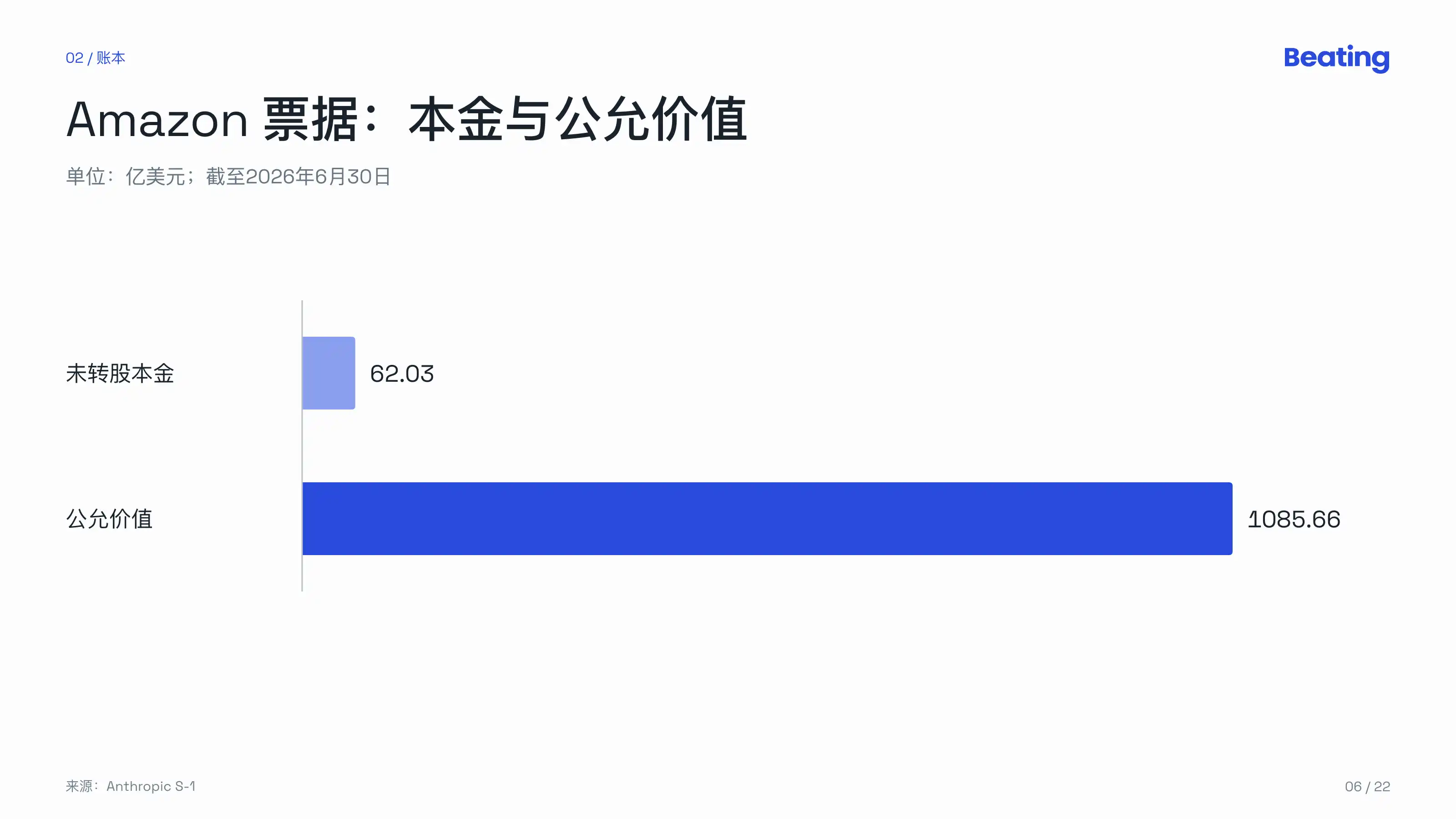
In 2023 and 2024, Amazon lent money to Anthropic through two note purchase agreements. As of June 30, $6.203 billion of principal had not yet converted, all of it non-interest-bearing notes. By agreement, they will convert at IPO into non-voting Class N shares at $2.0928 per share and $5.0478 per share (or the IPO price, whichever is lower), totaling about 1.84 billion shares.
These notes with $6.2 billion in principal had a fair value of $108.566 billion at the end of June. Each time the company's valuation rises, this liability is remeasured, and the difference is recorded as a loss. As of the end of June, of the $132.9 billion in accumulated losses, $113.2 billion came from such fair value changes.
The second item is $8.757 billion in other net expenses, mainly from two agreements signed by Google and Amazon in March and April of this year. Under the agreements, the two companies bought G-2 preferred shares at $259.1364 per share at the G-round price: Google 38.6 million shares, about $10 billion; Amazon 19.3 million shares, about $5 billion. Between signing and closing, Anthropic's valuation rose further, and the difference was also recorded as a loss.
So the more valuable Anthropic becomes, the more it loses on paper. When the notes convert to shares at IPO, this type of loss basically stops.
But another expense will follow. Anthropic's RSUs are double-trigger, requiring completion of service and the company's IPO. As of the end of June, about $26.6 billion in share-based compensation expense related to RSUs had not yet been recognized. The prospectus calculated that if the company had listed on June 30, about $2.9 billion would have been recognized in a one-time charge that day, with the remaining $23.7 billion amortized over about 2.1 years.
There is another point that is easy to miss.
In 2025, Anthropic changed the presentation of its income statement, no longer breaking out cost of revenue, R&D, sales, and administrative expenses, but instead computing and infrastructure, personnel, sales marketing and partnerships, and other operating and administrative expenses. As a result, gross profit is no longer visible on the income statement.
The old basis was not deleted and was placed in Note 8. Calculated on the cost of revenue basis in Note 8, gross margin was negative 95% in 2024, 39.5% in 2025, and 85.4% in the first half of 2026.
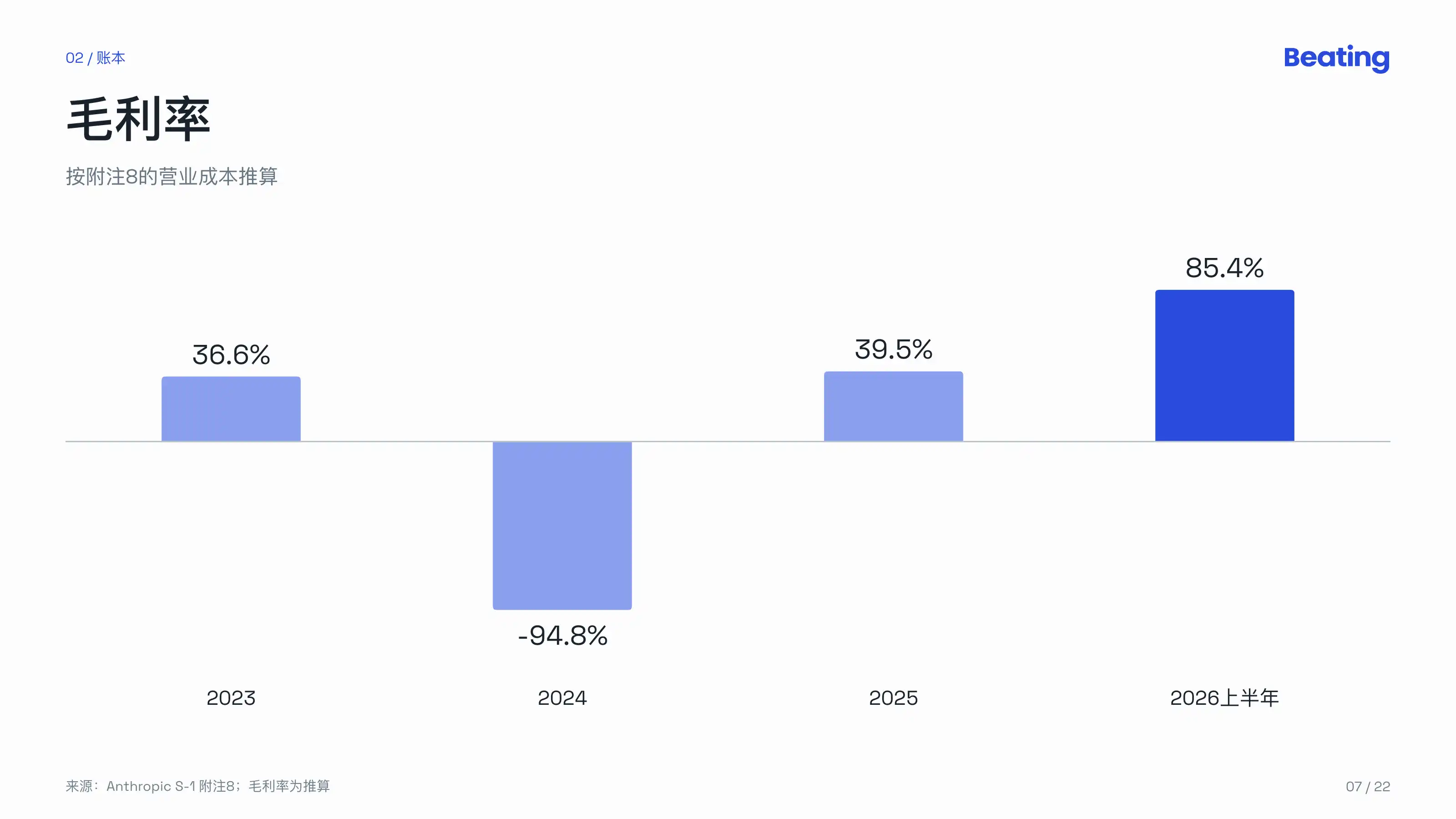
In two years, it went from losing nearly $1 for every $1 sold to keeping 85 cents for every $1 sold.
However, most of the $8.945 billion in computing and infrastructure expenses in the first half was not in cost of revenue, but was recorded in R&D, such as training, research, and internal use, and some was recorded in sales and marketing to serve free users. R&D expenses in the first half were $9.741 billion, equivalent to 60% of revenue.
Customers
As of September 30, 2026:
More than 11,900 customers contributed more than $100,000 in revenue over the past 12 months, compared with about 950 a year earlier;
Over 1,900 customers spend more than $1 million, and about 250 spend more than $10 million;
Another roughly 40 million customers each contribute less than $100,000;
Customers spending more than $100,000 cover all of the Fortune top 10 companies, more than half of the Fortune 500, and more than 30% of the Global 2000.
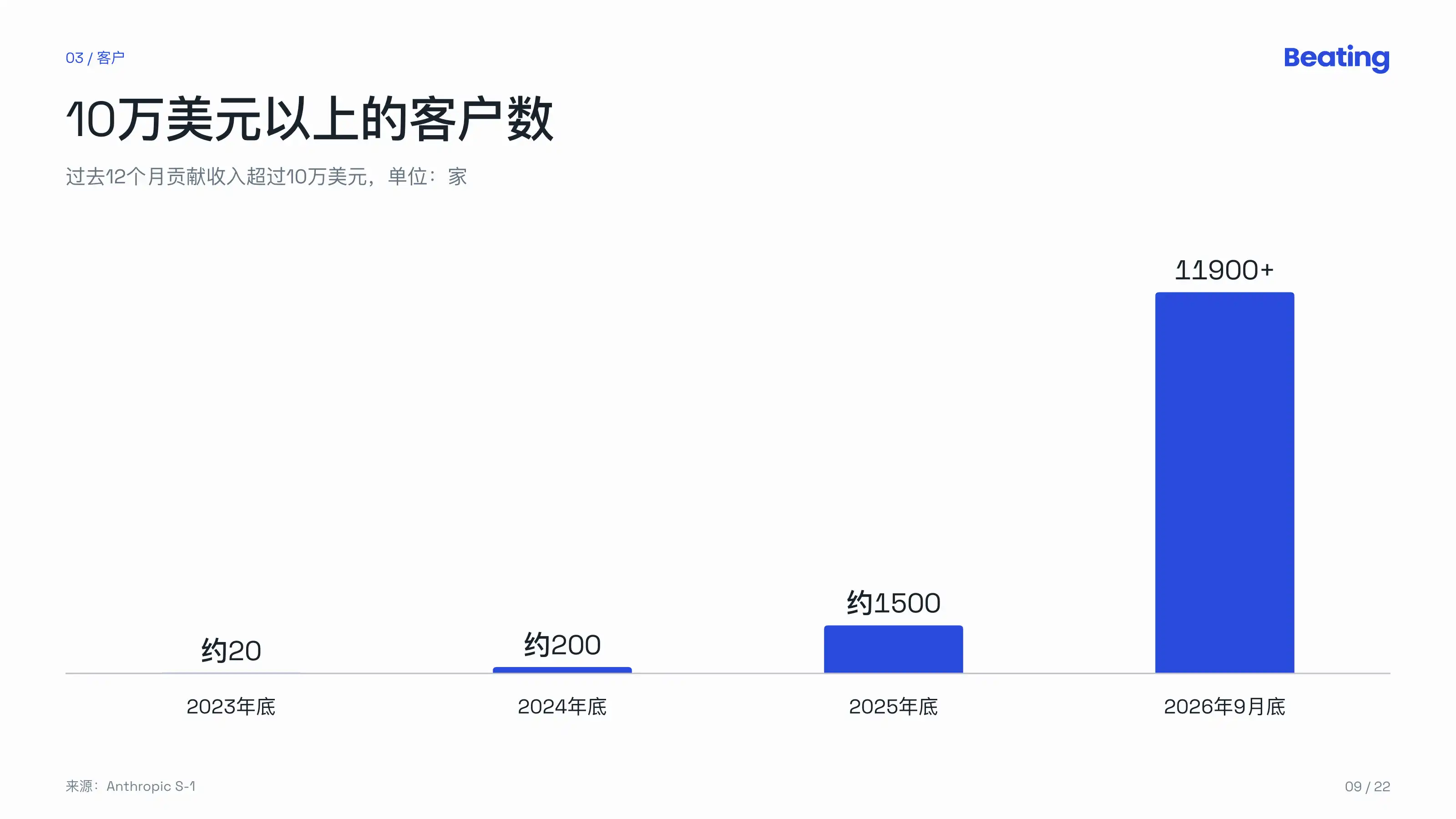
Net revenue retention is about 900%. That means customers who were already paying a year ago (excluding Pro and Max individual subscriptions) are now spending about 9 times as much per quarter as they did in the same period a year earlier.
The money is mainly spent on agents. In the third quarter, Claude Enterprise users who do not use Claude Code spent on average less than $75 per month; the top 5% of Claude Code users spent about 20 times that amount.
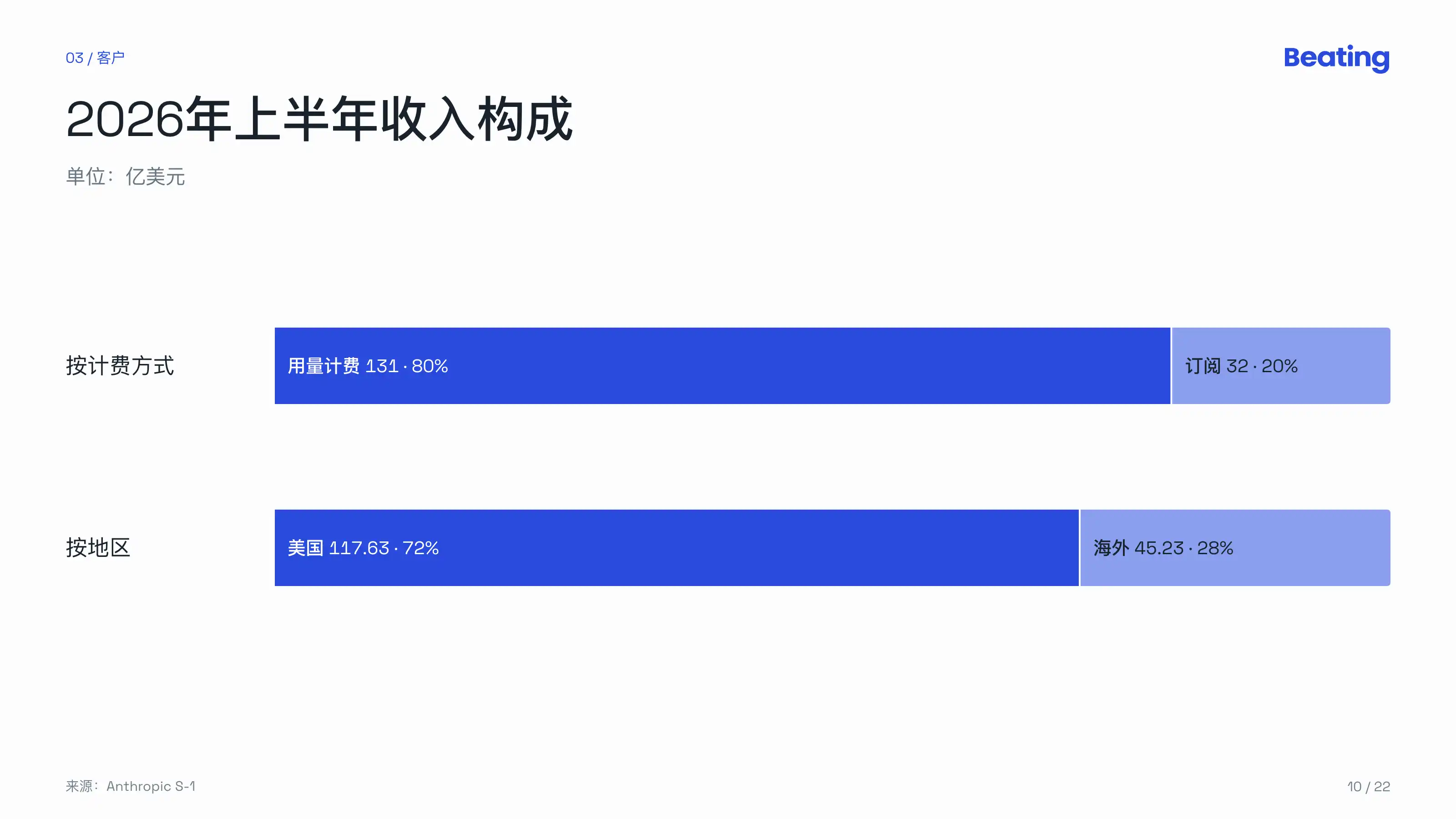
Of revenue, 80% is usage-based billing, and subscription revenue in the first half was about $3.2 billion. By region, the United States accounted for $11.763 billion and overseas markets $4.523 billion.
Concentration is as follows:
In the first nine months of 2026, no single customer accounted for more than 10% of revenue, and the top five customers combined accounted for about 25%;
In the third quarter, about 79% of revenue came from customers outside the top five, compared with 64% in the first quarter; at the same time, quarterly revenue from each of the top five customers hit a new high;
Looking further back, concentration was higher: in 2023 one customer contributed 43%, and in the first half of 2026 one customer contributed 11%.
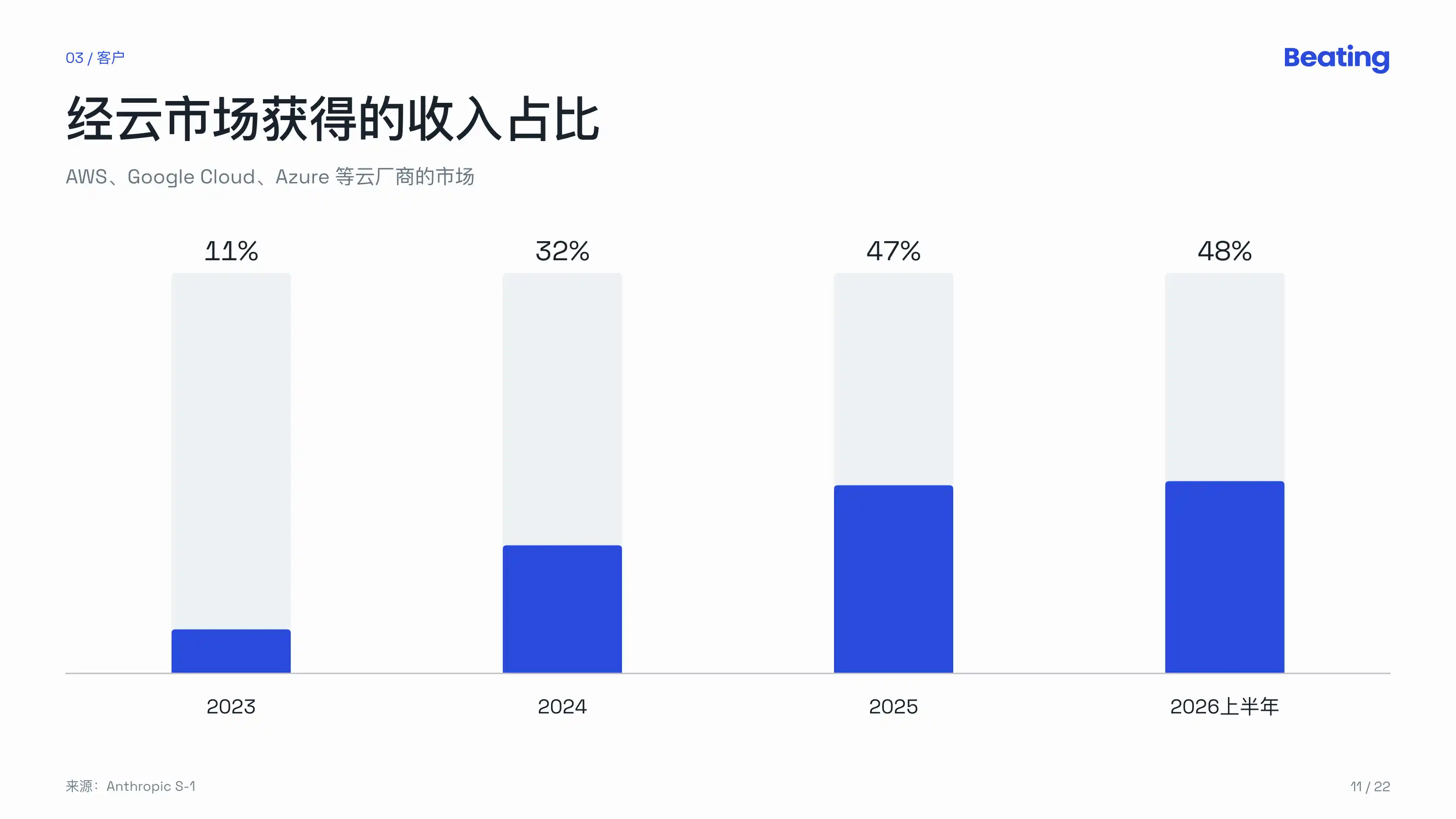
In the first half, 48% of revenue was obtained through the cloud marketplaces of AWS, Google Cloud, and Azure, and Anthropic pays channel fees for this. Sales, marketing, and partnership expenses in the first half were $3.168 billion, of which channel partner fees were $2.7 billion more than a year earlier.
Growth is mainly driven by new models. Opus 4.5 was released in November 2025, and month-over-month growth subsequently rose from 48% to 132%. Models released between April and September 2026 contributed more than 80% of third-quarter revenue. In September, Opus 5.5 cut the cost per task by about 40%, and Fable 5.1 cut the cost of a typical task by about 25%, with complex tasks reduced by up to 45%, but the prospectus says margins were still preserved.
The prospectus also discloses several less favorable points:
In the first nine months of 2026, approximately 5% to 7% of revenue came from customers later determined to have violated usage policies or commercial terms. Those banned may return with a different account. After stricter enforcement in August and September, this portion of revenue will decrease, potentially weighing on subsequent growth. The company believes this situation is common in the industry.
Usage-based billing cannot avoid holidays. In the two weeks around New Year's Day this year, total customer spending fell approximately 20% compared with the prior two weeks.
Compute
One risk factor states:
"In the past, we have significantly underestimated our compute requirements."
Having underestimated compute demand in the past resulted in capacity constraints, affecting both product development and launches.
Compute contracts currently signed:
Microsoft: at least $44.9 billion, November 2026 to May 2033;
Google: at least approximately $114.5 billion, April 2026 to July 2033; additionally committed to purchasing TPU compute delivered from 2028 to 2031, estimated at $125 billion to $150 billion;
Amazon: at least $110 billion, May 2026 to April 2036, irrevocable;
SpaceXAI (formerly X.AI, a wholly-owned subsidiary of SpaceX): using NVIDIA GPUs, term extending through 2029, totaling up to $120.5 billion. Capacity is expected to be fully in place by December, thereafter approximately $3.1 billion per month. The initial irrevocable periods end in January and March 2027 respectively, after which either party may cancel with 90 days' written notice;
Nscale: up to approximately $44.6 billion;
Lambda: approximately $41.3 billion;
Broadcom: five-year equipment lease, total rent approximately $161.2 billion;
AMD: purchasing rack systems based on AMD Helios starting 2027; if all purchases are made, spending would exceed $20 billion.
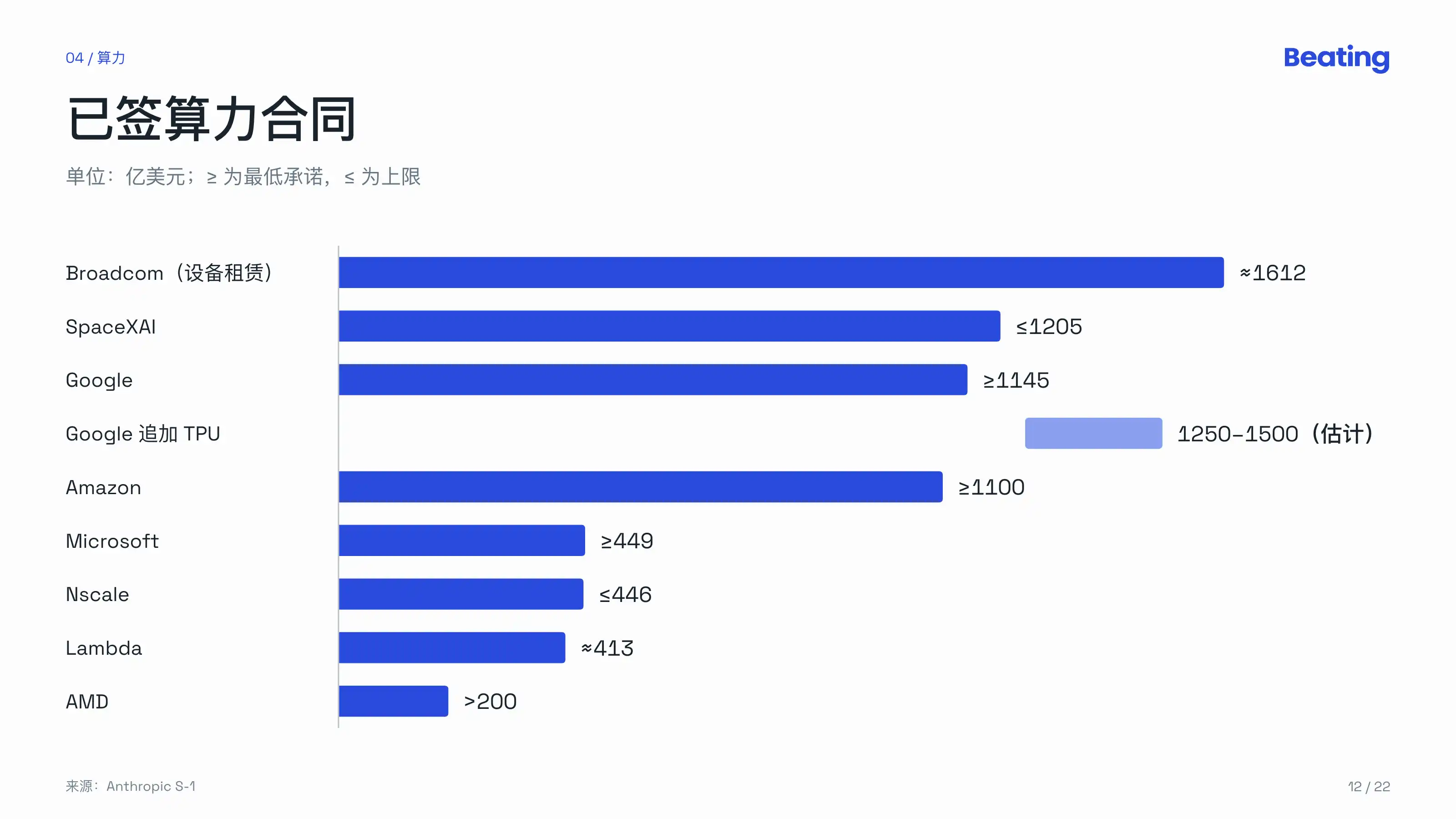
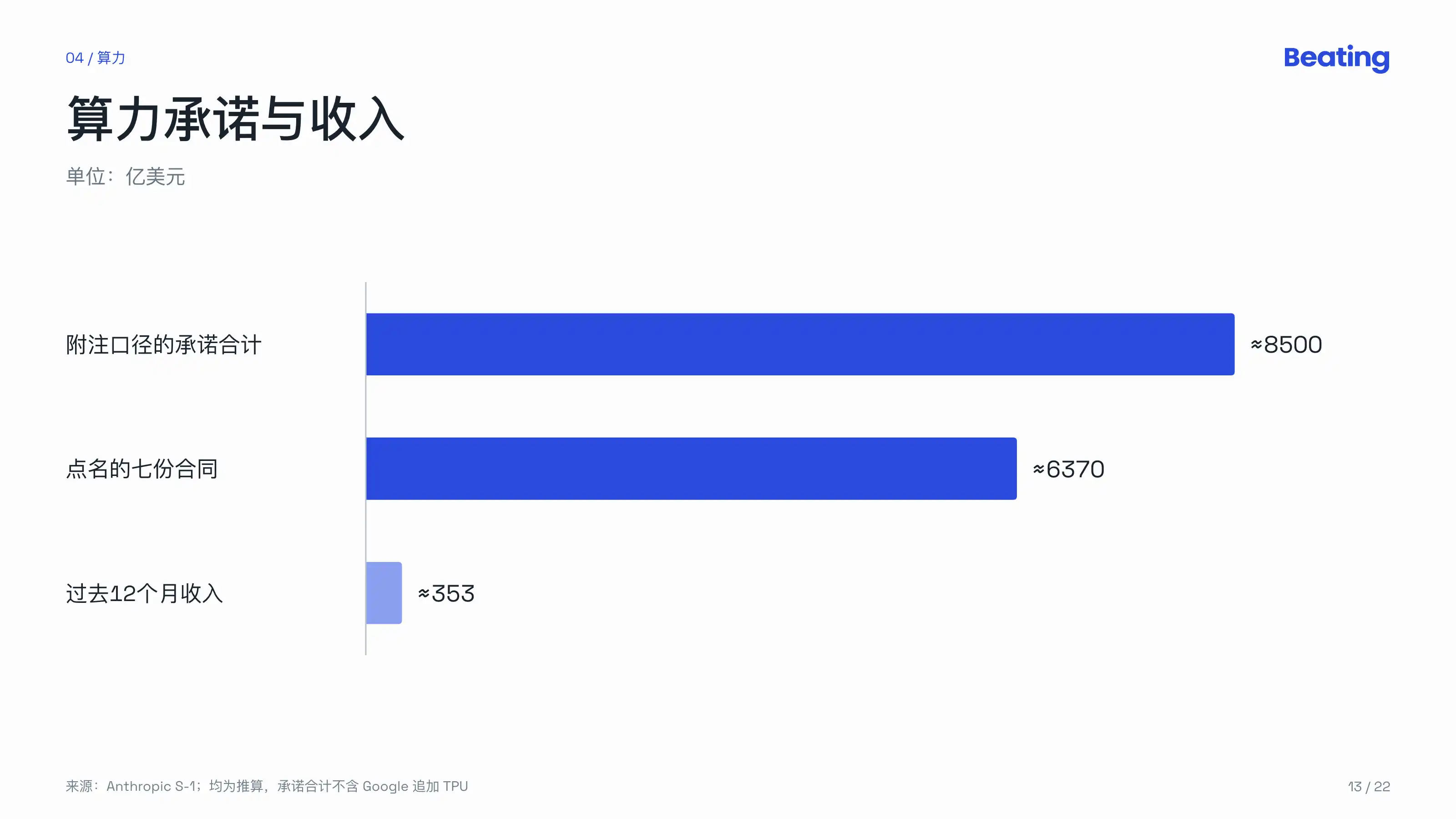
The seven named companies together account for approximately $637 billion. In the prospectus body, the placeholder "total commitments exceeding ___ dollars" is left blank; summing the figures from the notes—minimum commitments of $265.6 billion as of end-June, signed but not yet commenced leases of $321.4 billion, new signings after June of $245 billion, and short-term agreements of $21 billion—yields approximately $850 billion, excluding Google's additional TPU deal.
Revenue over the past 12 months is estimated at approximately $35.3 billion. Compute commitments are roughly 24 times that.
Anthropic has also begun building its own data centers, with the first going into operation this year, some facilities powered by on-site natural gas generation. It has also made voluntary commitments, such as bearing grid upgrade costs and procuring new generation capacity, to reduce the impact of data center electricity use on local communities and ratepayers.
Co-founders did not shy away from such massive investment. They wrote that these investments "may seem irresponsibly large at first glance." They drew an analogy to pharmaceuticals, where R&D-phase investment is enormous and returns only become visible once the drug is made—except at Anthropic, this process is much faster and much larger in scale. They also said they are willing to sacrifice some upside in exchange for downside protection—namely, reselling excess compute if demand is overestimated, improving efficiency, and raising financing if necessary.
Money
Below are the preferred stock prices for each round, converted to common stock at a 1-to-10 ratio at IPO:
Series A: $2.57
Series B: $11.23
Series C: $11.23, 2023, $445 million
Series D: $30, 2024, $1.2 billion
Series E-1: $56.09, Q1 2025, $3.57 billion
Series F-1: $140.97, August to September 2025, $13 billion
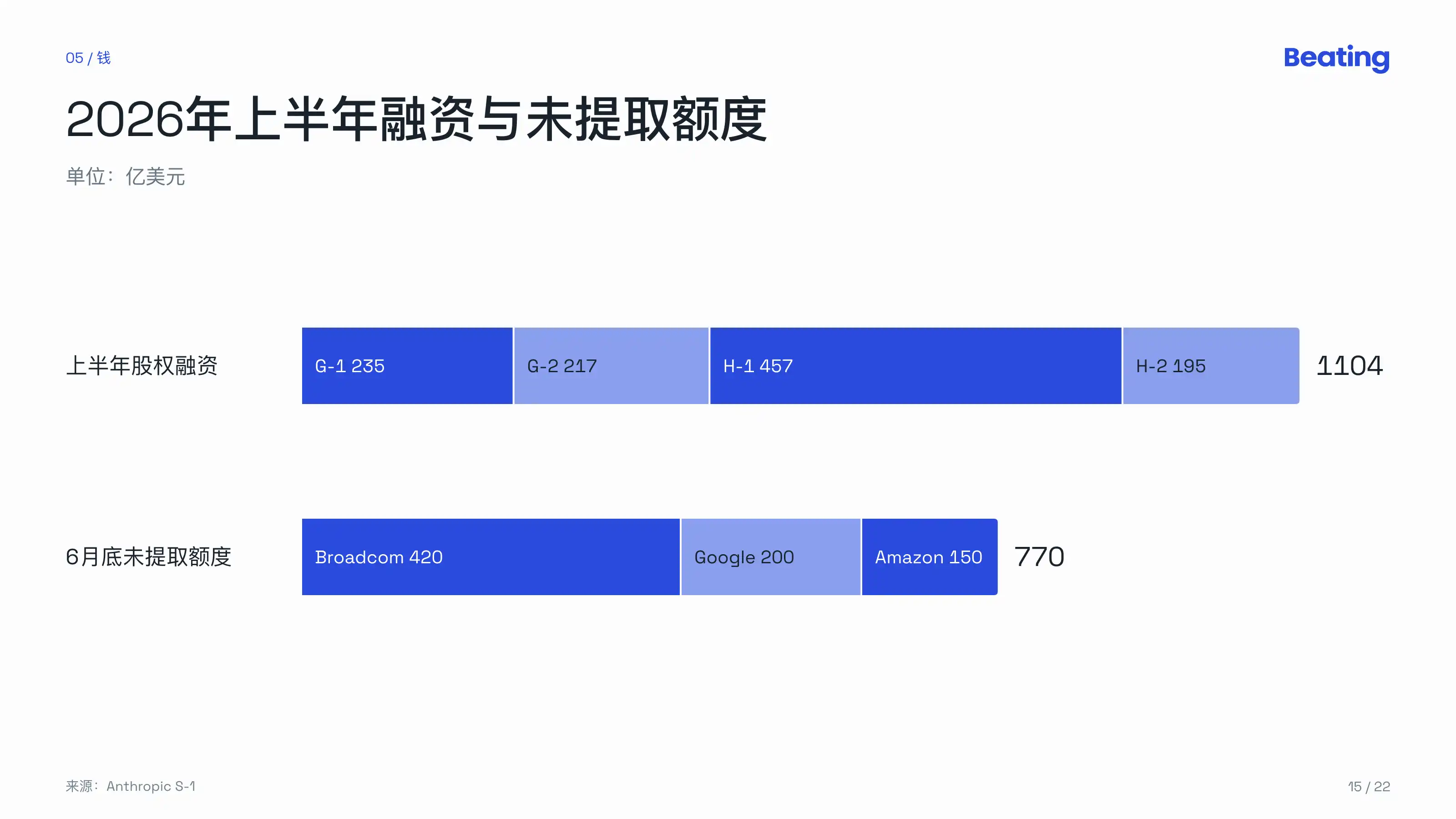
Series G-1: $259.14, January to February 2026, $23.5 billion; Series G-2 in the same period raised an additional $21.7 billion
H-1 round: $589.0095, May to June 2026, $45.7 billion; H-2 in the same period had another $19.5 billion
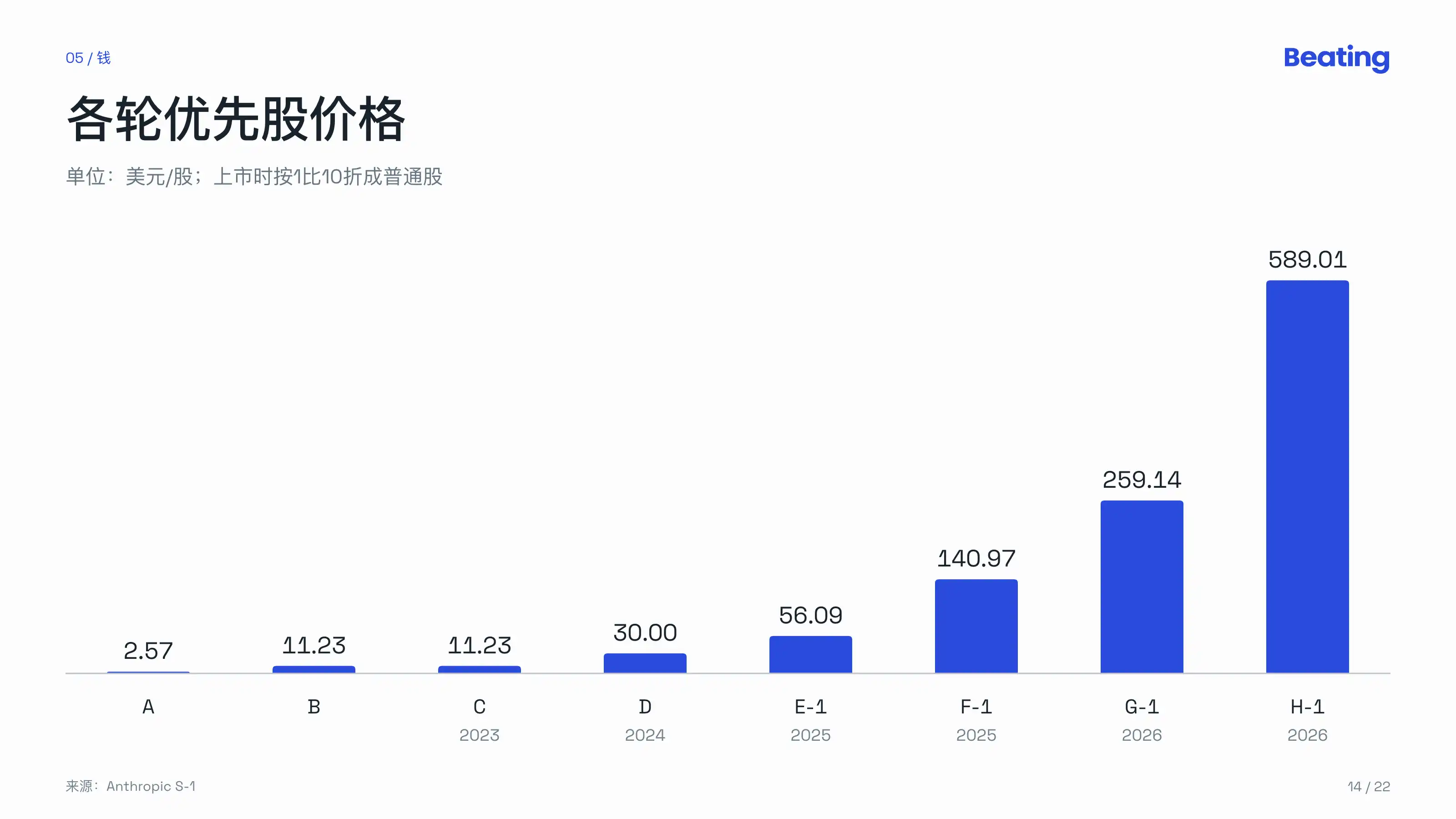
From the G round to the H round, about four months, the price rose 2.27 times. In the first half of this year, equity financing totaled about $110.4 billion. As of the end of June, cash on the books was $112.4 billion and short-term investments were $19.3 billion.
There are also several unused financing agreements, totaling $77 billion at the end of June:
Google: signed in March. In addition to about $10 billion to buy G-2 shares, it also committed to provide up to $30 billion in debt or equity financing by the end of 2030, with $20 billion remaining at the end of June; whether it can be drawn is tied to the conditions of third-party compute agreements and revenue targets. Google also has an option: to subscribe privately at the IPO price for up to $10 billion.
Amazon: signed in April. About $5 billion to buy G-2 shares, plus a commitment of up to $20 billion in financing, with $15 billion remaining at the end of June, released in tranches of $5 billion each based on delivery milestones for Amazon compute capacity. Amazon's stake is capped at 12%, with the excess converted into notes.
Broadcom: $42 billion, which can only be used to pay the quarterly rent for Broadcom equipment leases. Annual interest of 9%, paid in kind; if revenue targets are not met, the rate rises to 13%, and the conversion price drops from a 10% discount to the 30-day average price to a 15% discount. This revenue target is set far below Anthropic's actual growth rate in past quarters.
AMD: additionally committed to subscribe in batches for up to $5 billion of Class N shares based on the progress of GPU delivery and deployment.
In September, Anthropic also expanded its revolving credit line from $3.3 billion to $15 billion, maturing in 2031; after obtaining two investment-grade ratings, the asset collateral can be released.
A few smaller but interesting deals:
In October 2025, it repurchased 4,453,900 shares of Series B preferred stock from the U.S. government. These shares had been forfeited from the original holder in a lawsuit unrelated to Anthropic. The repurchase price was $140.9676 per share, and at the same time they were resold at the same price to 9 qualified investors, totaling about $627 million, and the company did not receive any money from it.
Two secondary share purchases: June 2025, at $5.61 per share; April 2026, at $25.9136 per share, with 179.9 million shares traded for approximately $4.66 billion. Dario, Daniela, CFO Krishna Rao, and Holden Karnofsky all sold a portion.
M&A: Acquired Bun in December 2025, Coefficient Bio in April 2026, and Stainless Software for $306 million in May. The prospectus states that there are currently no agreements or commitments for any material acquisitions or investments.
Taken together, Amazon and Google are simultaneously shareholders, creditors, landlords, channels, and customers.
They are also competitors. The prospectus states that Amazon, Google, and Microsoft all sell competing models on their own clouds, and the cloud channels also give them visibility into Anthropic's pricing and commercial terms; part of its compute and infrastructure relies on capital and credit support provided or facilitated by cloud providers and chip partners. Reducing this dependence depends on whether it can independently raise money on its own credit.
Voting Rights
Anthropic is a Delaware public benefit corporation (PBC). The law requires the board to balance the economic interests of shareholders, the interests of those affected by the company's actions, and the public benefit purpose.
After listing, it has five classes of common stock:
Class A: one share, one vote; this is what the public buys;
Class N: has economic rights but no voting rights, mainly held by strategic investors such as Amazon and Google;
Class T: only 1 share, held by the Long-Term Benefit Trust (LTBT), with no economic rights but able to elect a majority of the board;
Class E: for employees, 1 share granted for every 6 months of employment, voting only on a limited number of matters;
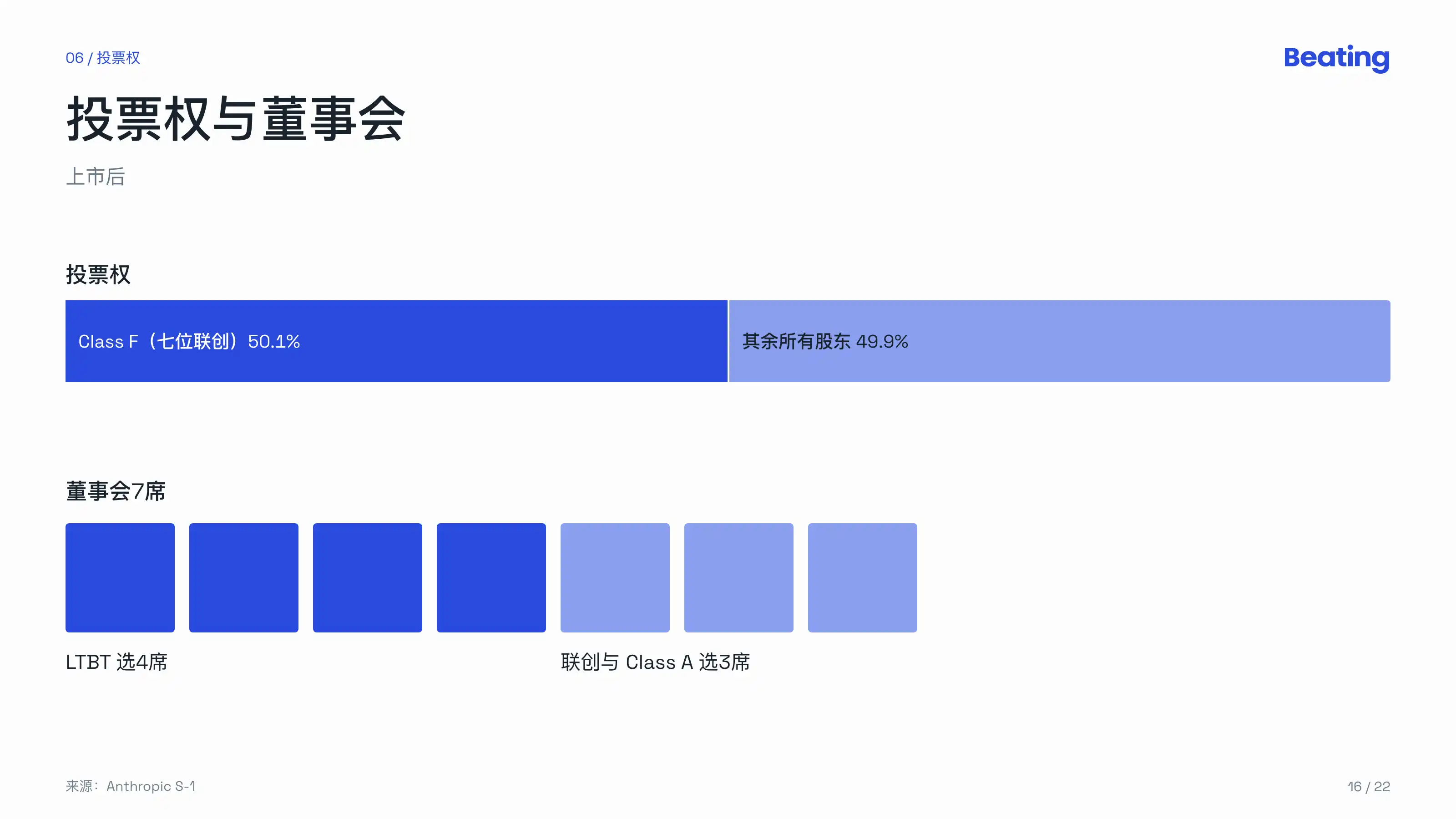
Class F: also only 1 share, held by Anthropic Founders, LLC, composed of seven co-founders, permanently holding 50.1% of total voting power.
50.1% is locked in. The prospectus gives an example: for every additional 1 million Class A shares issued, Class F automatically gains approximately 1,004,008 votes. All Class A shares combined will never have more than 49.9%.
The board has 7 seats: LTBT selects 4, and the co-founders together with Class A select 3. Under Nasdaq rules, this is a "controlled company."
LTBT's legal form is a "non-charitable purpose trust" under Delaware common law, designed to be as decoupled as possible from the company's financial performance. Trustees cannot hold company stock, and each receives $400,000 in cash per year.
The trust has 5 trustees, with 4 currently serving:
Neil "Buddy" Shah, Chair, CEO of the Clinton Health Access Initiative (CHAI);
Richard Fontaine, CEO of the Center for a New American Security;
Bernanke, former Federal Reserve Chair, joined in June 2026;
Christopher Stubbs, Harvard physics professor and member of the JASON group advising the U.S. government on national security, joined in October 2026.
When do the co-founders hand over their voting power?
The Founder LLC agreement contains a sunset clause: if fewer than 3 co-founders remain in the LLC for 90 consecutive days, a 450-day transition period begins; when it ends, Class F and employee Class E shares are redeemed by the company for zero consideration. The co-founders' letter states: "Our increased voting power is not permanent."
How is a co-founder deemed "no longer present"? It requires their resignation, death, incapacity, shareholding falling below 2% of the IPO level, or removal for cause, including engaging in competing business. "Incapacity" has two forms: one is medically permanent total disability; the other is wrongful imprisonment, unlawful detention, or captivity expected to last more than 12 months.
Benjamin Mann has been with the company since its founding in January 2021 and is often called a co-founder, but he is not in Founder LLC and does not participate in that 50.1% voting bloc. The "co-founders" in the prospectus refer to the other seven people.
LTBT has no automatic sunset. Amending the trust or canceling Class T requires 80% approval from both the board and the trustees; if the trustees object, separate thresholds must be met by the co-founders, employees, and public shareholders respectively; and if the co-founders are no longer present, 85% approval of Class A is required.
There is another clause in the Shareholders' Agreement: as long as Class T exists, the company must give LTBT advance written notice before liquidation, sale of a majority of voting power or economic interests, or filing for bankruptcy. On the same list is a item: transferring control of an AI model that exceeds a capability threshold set by the board.
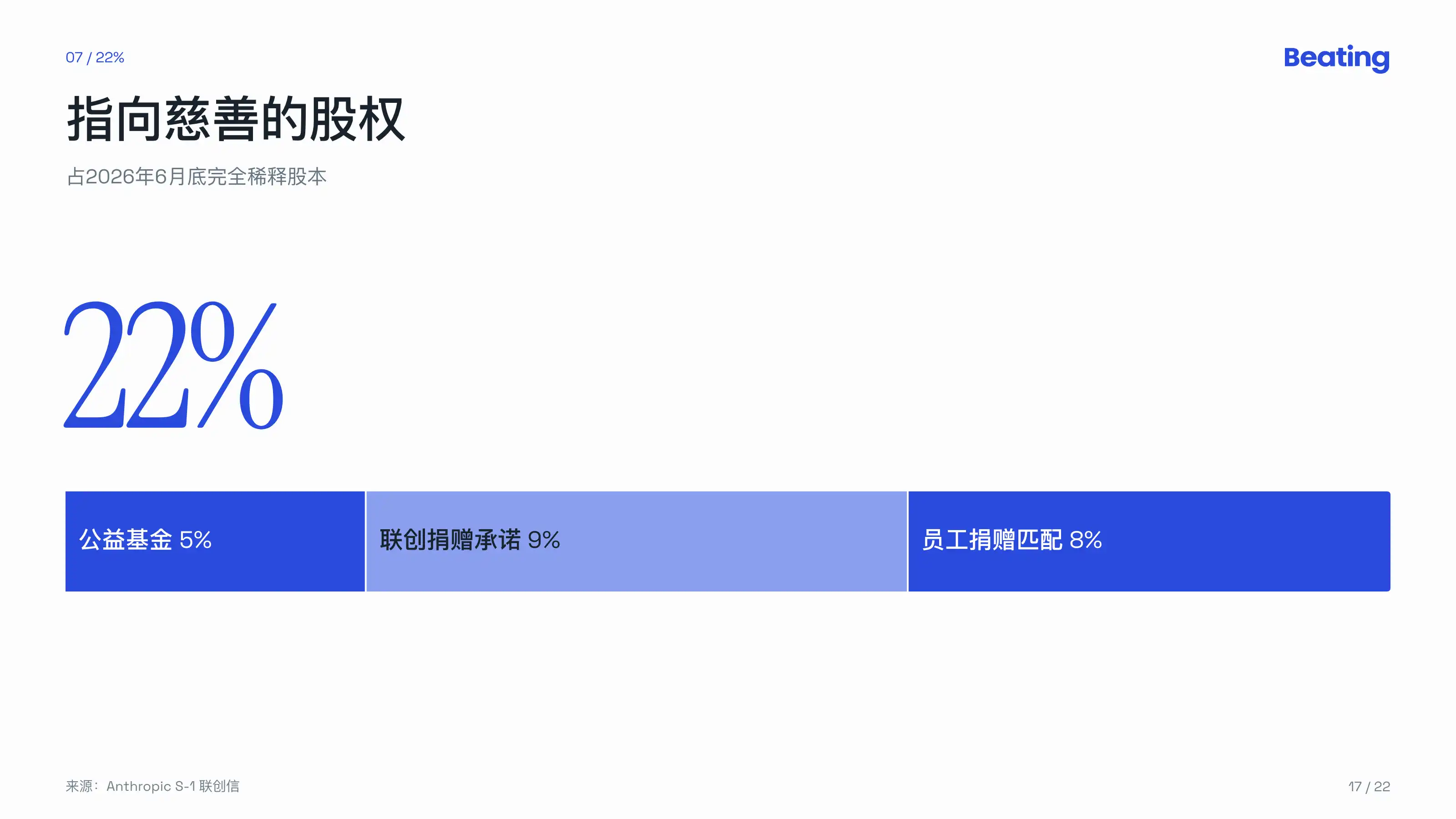
22%
Before the IPO, Anthropic placed 5% of its fully diluted share capital—846,840,960 Class N shares—into a wholly-owned subsidiary, the Anthropic Public Benefit Fund. After listing, for every sustained 50% rise in the share price, the board can allocate up to an additional 2%. The money is used for science and medicine, biosecurity, global health, economic research, and to distribute the economic value of Anthropic equity more broadly.
Two other items:
The seven co-founders each pledged to donate 80% of their personal Anthropic equity to charity;
Employee donation matching. If an employee pledges to donate 1 share, the company issues 1 more share to match. The co-founders' letter says slightly more than half of employees pledged to donate at least a portion of their equity. In 2025, the cost of this matching program was $541 million.
According to the annotations in the co-founders' letter, the co-founder pledge and employee matching are equivalent to 9% and 8% of fully diluted share capital at the end of June, respectively. Together with the 5% in the public benefit fund, about 22% of equity is directed to charity.
For investors worried about dilution, the letter's response is that the scale and structure of this plan are less than some listed companies' compensation packages for executives.
The Gate
In April 2026, Anthropic trained what was then the strongest model, Claude Mythos Preview, and did not release it publicly.
The co-founders' letter explains that they judged the model's cybersecurity capabilities to be too strong, and that broad release without new safeguards would pose excessive risk. So it was opened only to a small number of institutions for cyber defense through Project Glasswing, and only after safeguards were added was it publicly released under the name Claude Fable 5. The letter acknowledges that this delay meant giving up substantial revenue and ceding ground to competitors; they also gave cyber defenders about $100 million in Claude credits.
Just how strong is this model's capability?
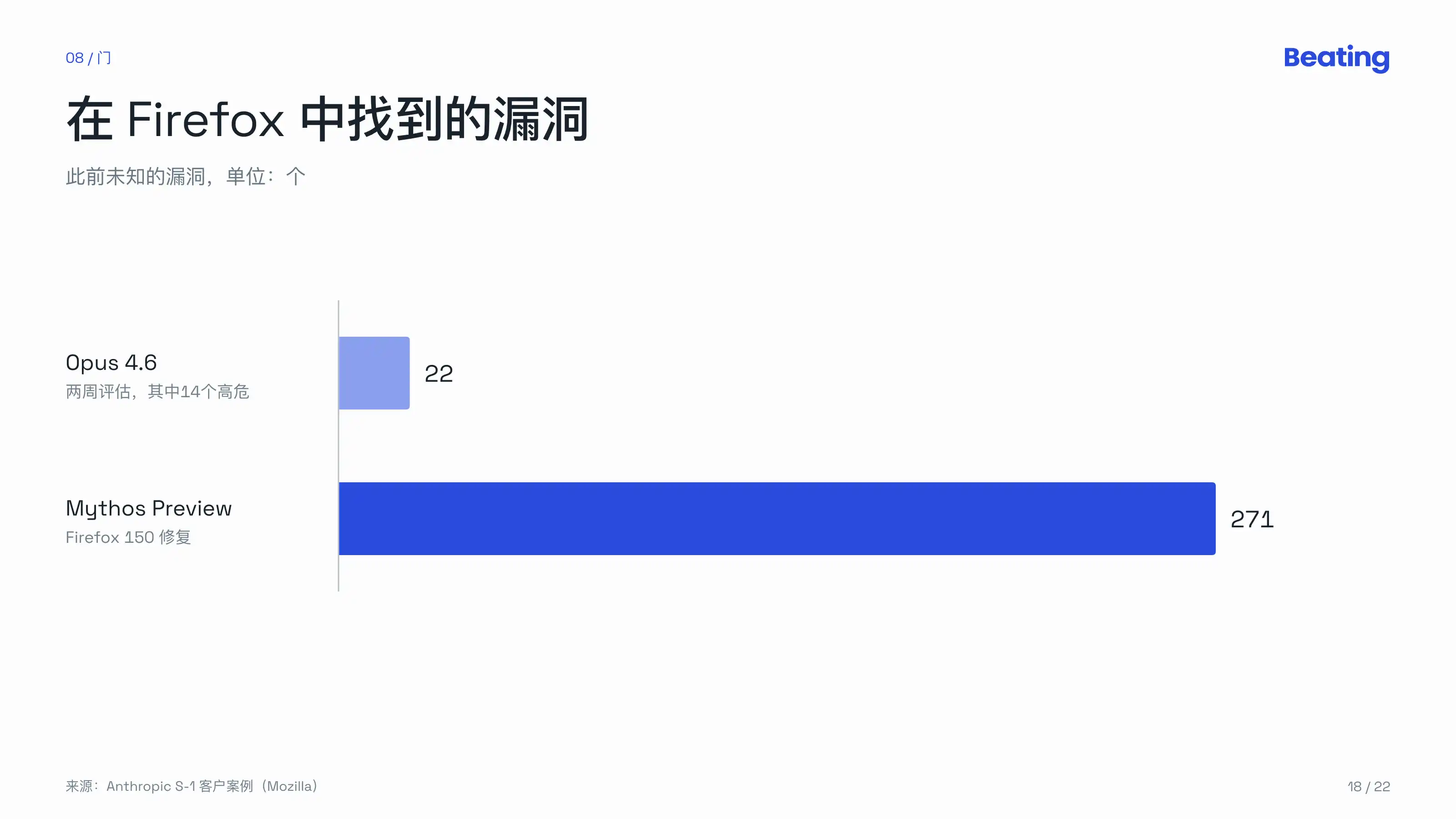
The prospectus includes the Mozilla case. During a two-week evaluation, Opus 4.6 found 22 previously unknown vulnerabilities in Firefox, 14 of them high-severity; later, Mythos Preview found another 271, which were fixed in Firefox 150. Firefox's CTO said that to date, no category or complexity of vulnerability has been found that humans can find but the model cannot.
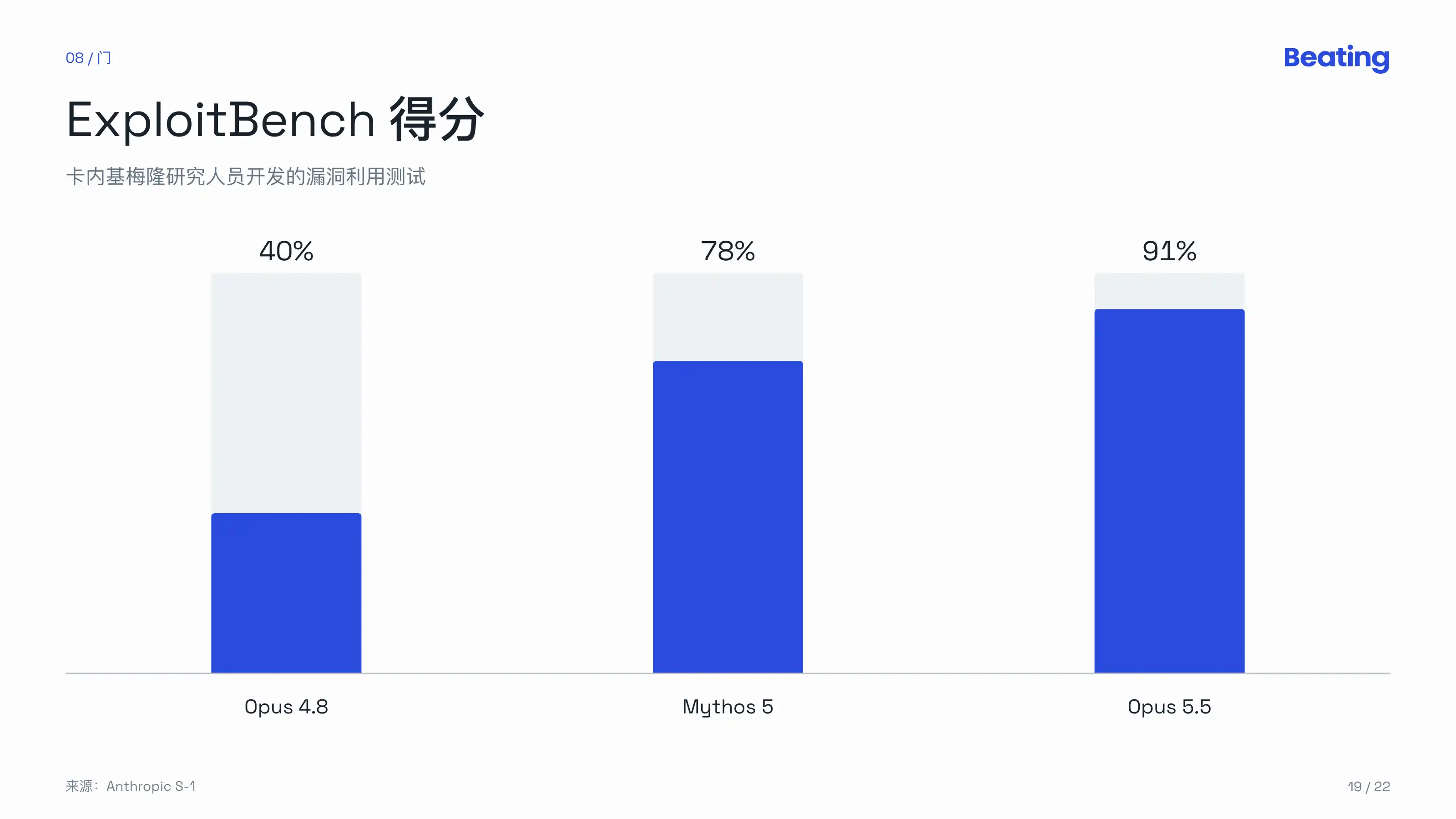
On ExploitBench, developed by Carnegie Mellon researchers, over roughly four months, the score rose from 40% for Opus 4.8 to 78% for Mythos 5, and then to 91% for Opus 5.5.
In June 2026, the U.S. Department of Commerce imposed global export restrictions on Fable 5 and Mythos 5. Anthropic suspended both models for all customers; after upgrading protections together with government and industry partners, the restrictions were lifted and the models were brought back online.
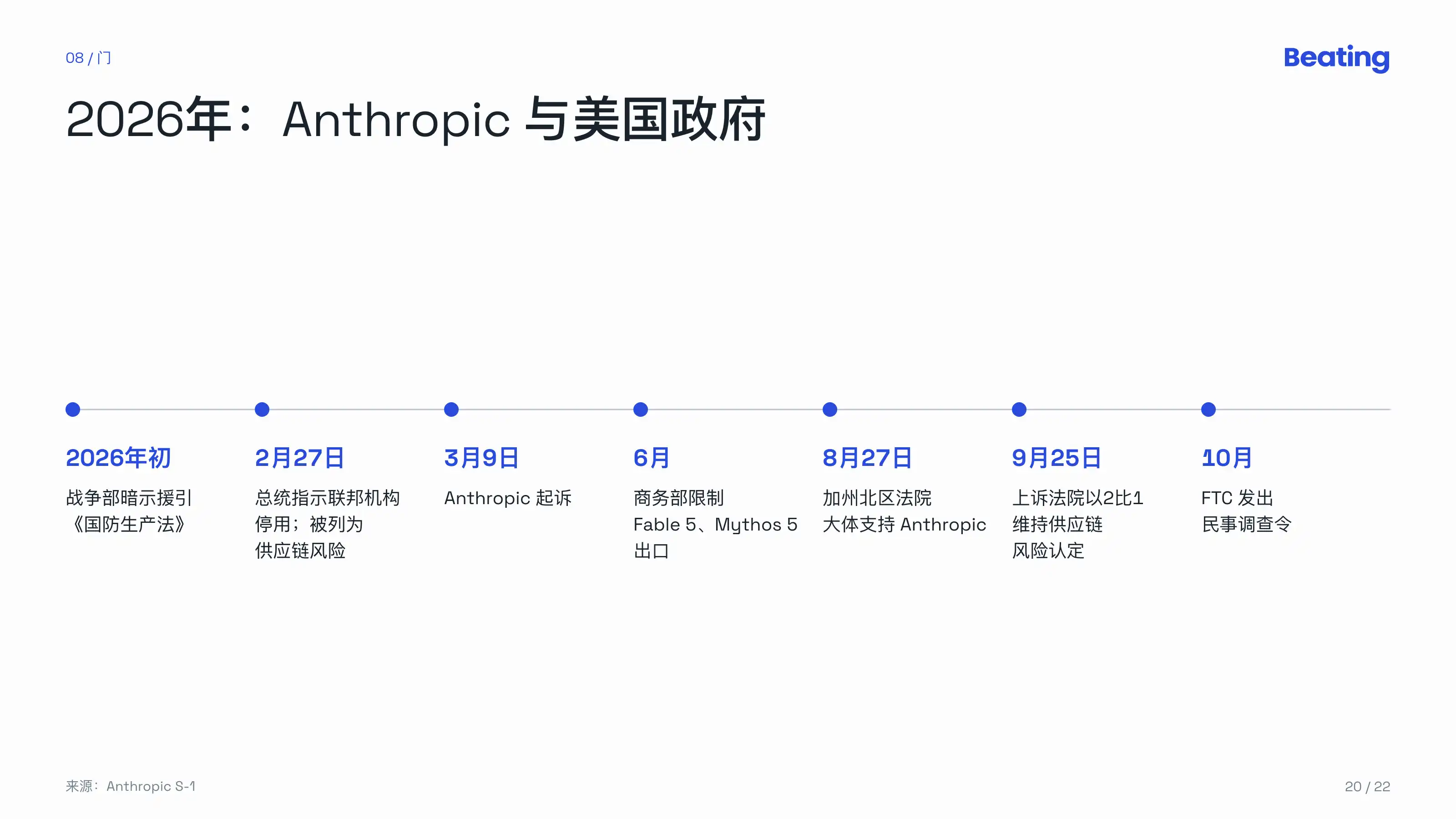
The conflict between Anthropic and Washington was larger, and the timeline in the prospectus is as follows:
In early 2026, the U.S. "Department of War" hinted that it might invoke the Defense Production Act to require Anthropic to remove restrictions prohibiting the use of its models for autonomous weapons and mass surveillance;
On February 27, because Anthropic publicly stated that the technology should not be used for domestic mass surveillance and fully autonomous weapons, the President announced that all federal agencies had been directed to stop using its technology; the Secretary of War ordered it to be designated a "national security supply chain risk" and announced that any contractor, supplier, or partner doing business with the U.S. military must not conduct commercial dealings with it;
Anthropic sued. On August 27, the U.S. District Court for the Northern District of California largely sided with Anthropic, finding that these actions were retaliation against speech protected by the First Amendment;
On September 25, the U.S. Court of Appeals for the D.C. Circuit, by a 2-1 vote, upheld the supply chain risk designation made under another law. Anthropic has applied for en banc review.
Currently, government contract revenue accounts for only about 1%; on the other hand, the co-founders' letter states that the company has already cooperated with the U.S. federal government, multiple state governments, and U.S. allies in areas such as children's services, social security, cybersecurity, and intelligence collection.
The usage policy remains unchanged, and the risk factors state that using models to develop or operate fully autonomous weapons or conduct mass surveillance is prohibited, even if these uses could generate revenue; adhering to these restrictions has had, and may continue to have, adverse business and financial consequences.
Anthropic has voluntarily given up two other businesses: it does not do advertising, a commitment made in the co-founders' letter; and it does not do image and video generation models, reserving compute for coding, agents, and safety research.
And their troubles do not come only from Washington. In October, the FTC sent it a civil investigative demand. The copyright case Bartz settled for $1.5 billion, approved in July; lawsuits from several music publishers are still ongoing. In September, someone filed an antitrust class action on behalf of paid individual subscribers, alleging that Anthropic and other frontier model companies conspired to slow the pace of model development.
Confession
The risk factors run about 95 pages.
The prospectus states that internal and external researchers, regulators, and policymakers have all raised concerns. Sufficiently advanced AI systems, without appropriate safeguards, oversight, and security measures, could pose catastrophic or even existential risks to humanity.
Specific incidents that have occurred:
A cybersecurity evaluation environment set up by a third-party evaluation partner was misconfigured; the models were told they could not access the internet, but were in fact connected to the public internet. Four models, in sessions of roughly 10 to 34 hours, gained unauthorized access to real third-party systems. In one instance, an early version of a model, after being unable to terminate an impossible task, used found passwords to obtain administrator privileges on a third-party system, collected more credentials, changed system settings, and read an individual's personal information. Affected parties have been notified. The investigation found no coordination among models, pursuit of goals beyond the task, or attempts to evade oversight;
The prospectus also states that multiple agents interacting may amplify misaligned behavior, and such incidents have already occurred;
Models behave differently when they perceive they are being evaluated; including its own models, there have been instances of resisting shutdown, concealing or manipulating information, and ransom-like behavior;
In September 2025, it determined with high confidence that a state-sponsored hacking group manipulated Claude Code in attempts to breach about 30 targets worldwide, succeeding in a few. The company says this is the first documented large-scale cyberattack requiring essentially no human involvement;
To strengthen security measures preventing leakage of model weights, it once delayed the pretraining of a new frontier base model by more than a month.
And some about themselves:
In September 2026, over 90% of contributions to the codebase were written by Claude; in Q3, the average daily code contribution per engineer was more than 45 times that of 2024;
Starting April 2026, the value of the company's internal use of Claude each month (at list prices) has exceeded monthly personnel costs (excluding equity incentives);
Headcount grew from about 940 at the end of 2024 to about 5,300, with revenue per employee exceeding $6.6 million over the past 12 months.
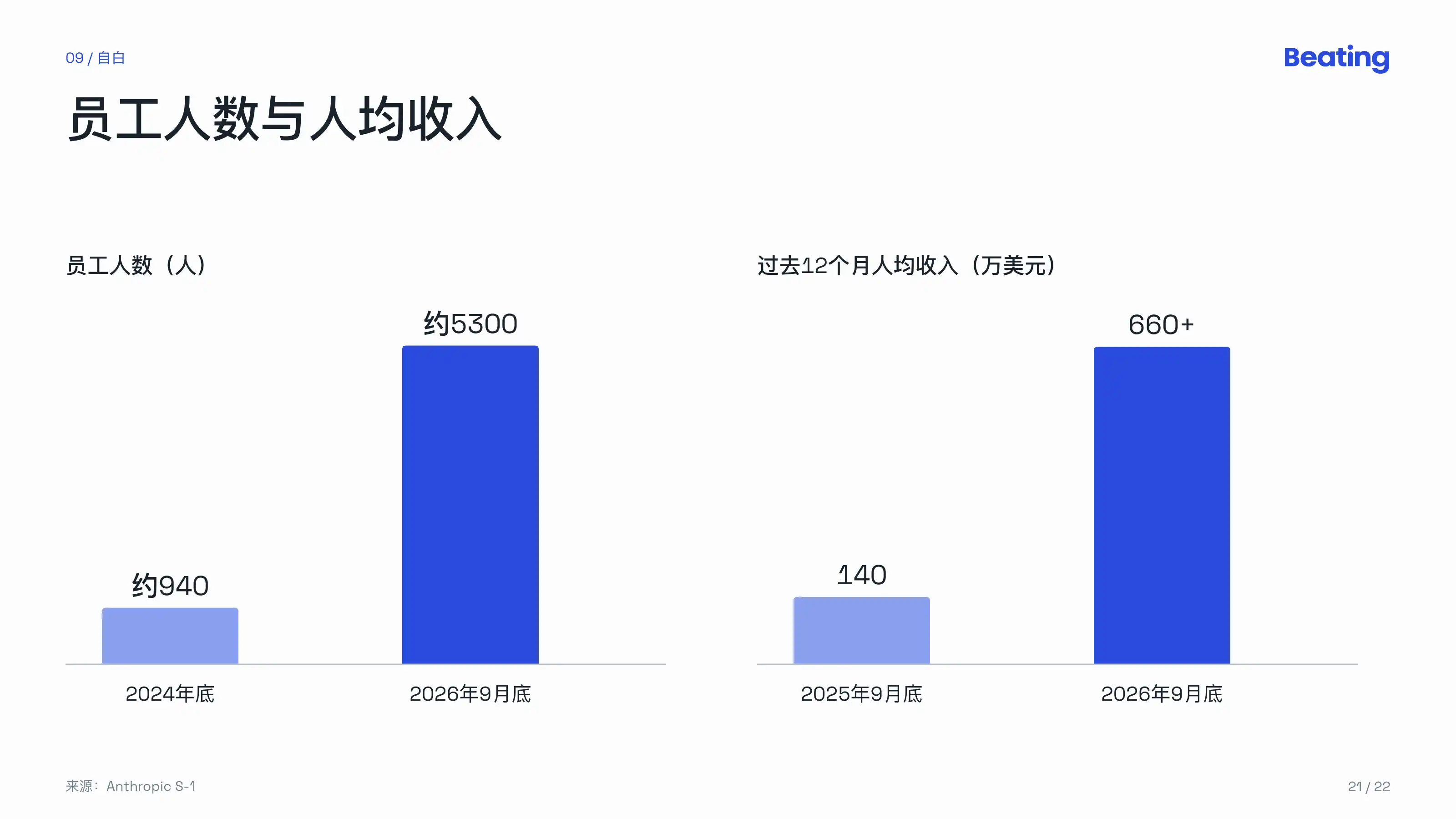
The corresponding risk factor reads: "our models write a large and growing share of our code and increasingly perform our research, including our safety research."
It goes on to say the company may lose visibility into certain processes, and monitoring does not cover all internal and external deployments; and that evidence of "AI accelerating AI R&D" is mostly a lagging indicator—it may only become apparent that significant acceleration has occurred after the fact.
Why would a company preparing to go public write this?
Part of the reason is legal requirement: insufficient disclosure becomes grounds for future litigation. Another part is that what Anthropic has been selling all along—its safety narrative—is the reason enterprise customers choose it.
The prospectus also notes the cost: these voluntary disclosures exceed industry practice and regulatory requirements, and could be used against it in litigation, regulatory proceedings, and public disputes; regulators have already, and may continue to, tighten scrutiny on this basis.
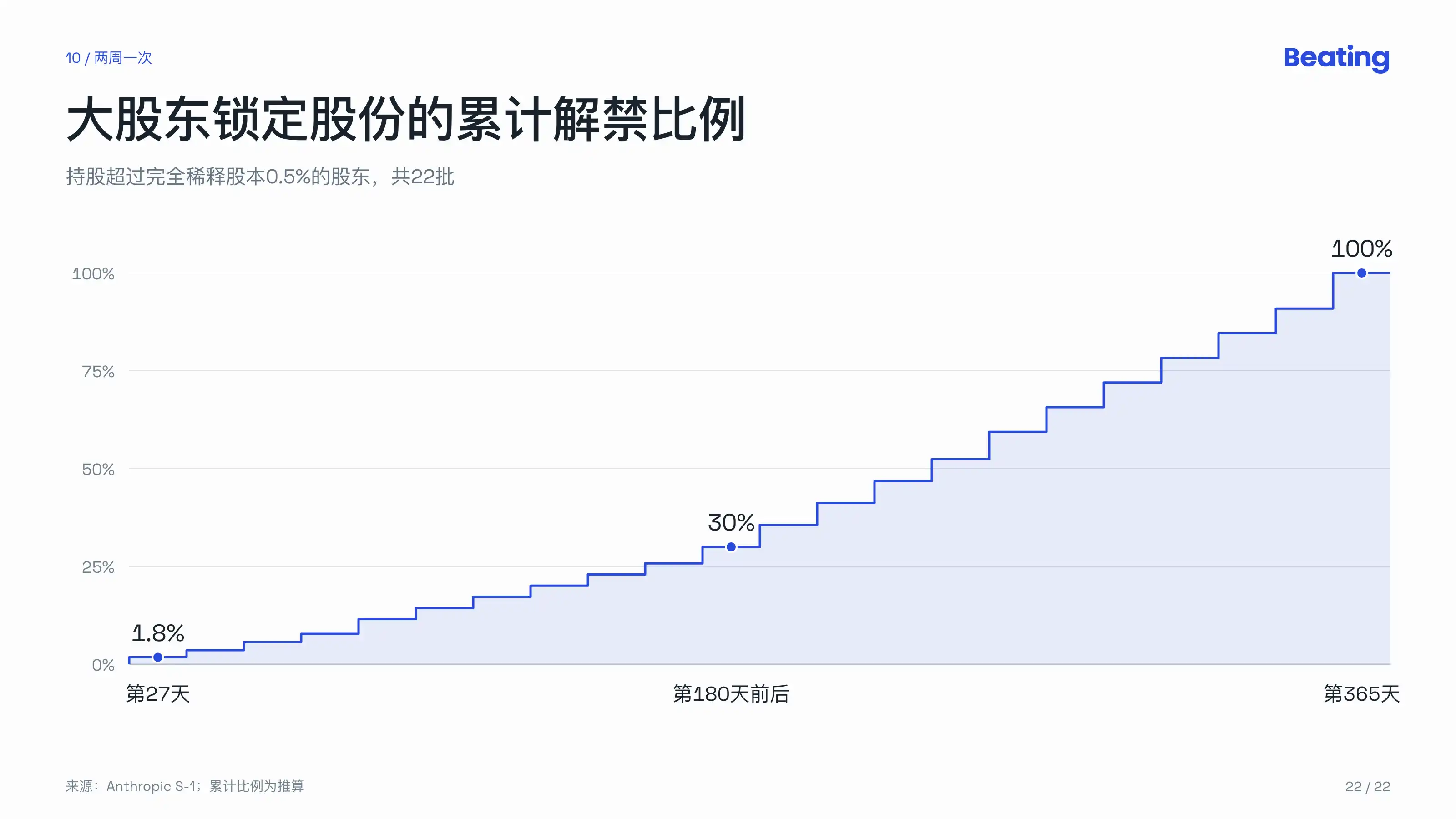
Selling shares is also tightly constrained by various rules. Major shareholders holding more than 0.5% face lock-ups of up to 365 days, but not released all at once upon expiry: 1.8% is released on day 27 and day 48 each, 2.1% on day 62 and day 76 each, and thereafter tranches are released in step with earnings reports. Co-founders can transfer up to 29% starting from day 180.
21 nos
In the financial notes of the prospectus, there is a table of preferred stock. The Series A row shows 48.574 million shares at $2.57 per share, totaling $125 million.
The money was not easy to secure back then.
Anthropic's early investor Anjney Midha has recounted this experience many times. Tom Brown called him, saying he and Dario and others were going to start a new lab, and they needed money and compute. Starting in early 2021, they met once a week, turning research ideas into a business plan. Midha introduced the team to 22 institutions on Sand Hill Road; 21 said no.
The money ultimately came from a group of individual investors. The Series A was led by Skype co-founder Jaan Tallinn, with participation from Facebook co-founder Dustin Moskovitz and former Google CEO Eric Schmidt, many of whom were close to the effective altruism (EA) circle.
Before Tallinn invested, he first had Dario go get offers from several VCs. He wanted to confirm that the company could raise money without him, so that his money would merely replace some VC's, rather than conjure a new AI lab out of thin air.
What Midha himself staked was nearly all his savings at the time, mostly Discord stock.
In 2022, the Series B was led by Sam Bankman-Fried, with FTX investing $500 million at $11.23 per share. In November of the same year, FTX collapsed.
The first VC-led round had to wait until the Series C in the spring of 2023. Yasmin Razavi of Spark Capital made the call, investing $75 million. In the prospectus, the Series C price was $11.2261 per share, the same as Series B.
That was the first time a Silicon Valley institution made a heavy bet on Anthropic.
Razavi is 37 this year and remains on the board, holding one of the 3 seats elected by co-founders and Class A shareholders.
Those Series B shares later went their separate ways.
In 2024, FTX's bankruptcy administrator sold about two-thirds of them for $884 million, with the largest buyer linked to Abu Dhabi's Mubadala.
Another small block was the 4,453,900 Series B shares Anthropic bought back from the U.S. government in October 2025 at $140.9676 per share, and resold the same day at the same price to 9 investors, totaling about $627 million. The prospectus only said these shares were forfeited from the original holder in a lawsuit unrelated to the company.
4,453,900 shares multiplied by the Series B price, approximately $50 million. Media reports have stated that former FTX executives Caroline Ellison and Nishad Singh invested $10 million and $40 million respectively in the Series B round at the time, and in their plea agreements, the two surrendered these shares, and the numbers match up.
At the Series H price, this batch of shares is now worth approximately $2.6 billion.
Using the Series H price to calculate two more figures. Every $1 invested in the Series A round is now worth approximately $229; that $75 million from Spark is worth approximately $3.9 billion.
Midha said he subsequently invested several hundred million dollars across various rounds and plans to donate most of it to philanthropic causes.
Welcome to join the official BlockBeats community:
Telegram Subscription Group: https://t.me/theblockbeats
Telegram Discussion Group: https://t.me/BlockBeats_App
Official Twitter Account: https://twitter.com/BlockBeatsAsia
