Stocks are falling, so why is gold falling too?
In its Cross-Commodity Outlook released on November 20, Citi noted that commodities had seen broad selling over the past few weeks, with the decline accelerating in the days before the report was published. Gold had fallen about $2,000/oz from nine months earlier, a drop of about 35%. Copper prices had fallen nearly $3,000/tonne, a decline of about 20%. Diesel, gasoline, and European TTF natural gas prices had also retreated 20% to 35% from their year-to-date highs.
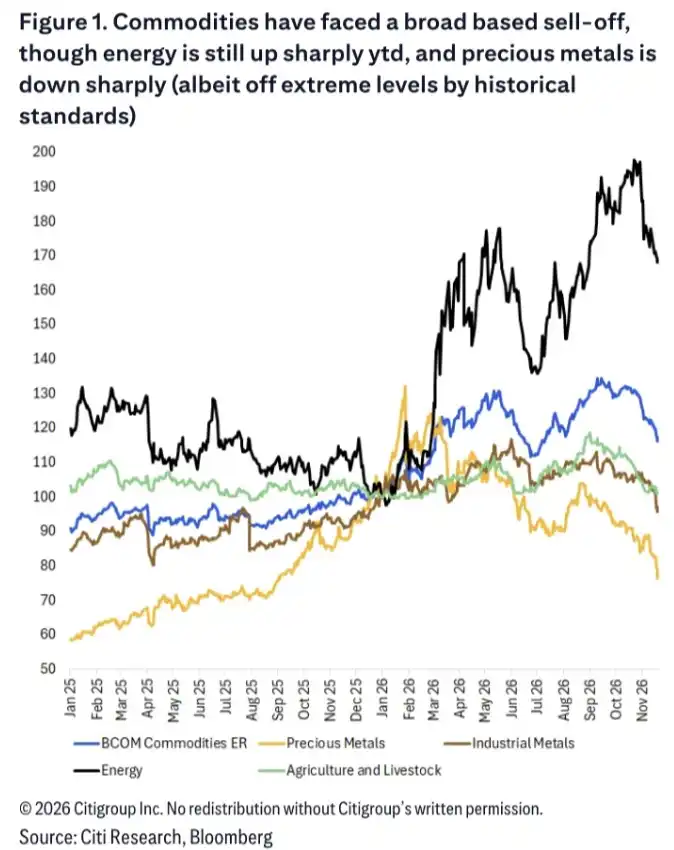
Citi views gold's decline within a broader risk-asset adjustment. As cyclical stocks weakened and tech stocks sharply pulled back, the Fed maintained a hawkish policy stance. Nominal rates rose while market-implied inflation expectations were falling, and together the two pushed up real rates. Gold itself pays no interest, so the higher real rates are, the more interest income is forgone by holding gold.
Before reallocating to gold, copper, and other metals, Citi wants to first see the tech stock selloff stabilize and the Fed begin adjusting policy more based on the economic and inflation outlook. In the near term, refined product supply faces geopolitical disruptions, and the risk of a U.S. government shutdown is also rising. Citi believes these factors may prolong weakness in the metals market.
$3,000 to $3,300 has allocation value, mine cost support remains below
Citi believes that after gold falls to $3,000 to $3,300 per ounce, the appeal of medium- to long-term buying will rise. Using a 12- to 24-month observation period, starting from this range, Citi estimates that gold prices could still fall by about $500/oz, with potential upside of up to about $2,000/oz.
In the body of its research report, Citi estimates that gold's mine cost support is about $2,800 to $3,000 per ounce. Based on the spot gold price of $3,558/oz marked in Figure 4, this range is about 16% to 21% lower. Figure 4 also lists two mine marginal cost estimate lines, both at more than $2,500 per ounce, corresponding to the roughly 25% to 30% distance stated in the figure title.
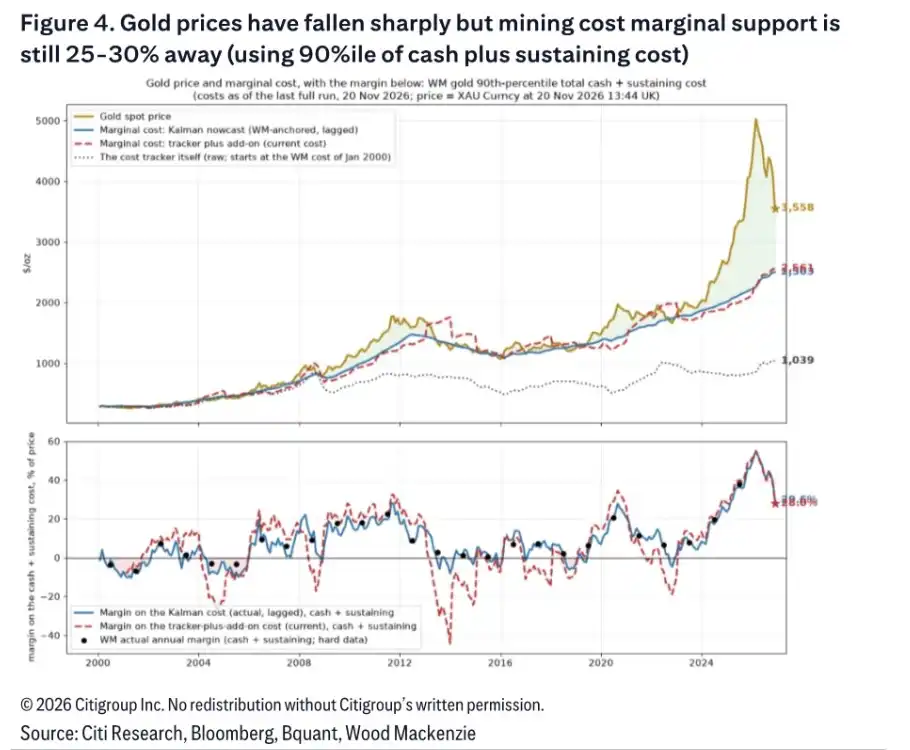
The pullback in gold prices has significantly squeezed mining company profits. The buying range given by Citi reflects potential returns over the next 12 to 24 months, while mine costs provide another reference for judging downside space. Even if gold enters the $3,000 to $3,300 range, Citi still retains the possibility of further declines in its scenario analysis.
The Strait of Hormuz may bring a turning point, gold is still waiting for the Fed
Citi's base case is that the Strait of Hormuz restores navigation for crude oil and refined products in early 2027. If this scenario materializes, energy prices may fall significantly, and the metals market may also usher in a turning point. However, Citi has low confidence in the timing of restored navigation and warns that the geopolitical stalemate or refined product supply tightness may persist into the first half of 2027.
By contrast, Citi has already regarded the pullback in some agricultural products as a buying opportunity and believes that rising diesel prices can hedge against another escalation of geopolitical tensions. For gold, the report still regards a shift in Federal Reserve policy as a key condition. Easing in the tech stock selloff would help risk assets stabilize, and whether real interest rates can fall will affect whether gold can emerge from this round of adjustment.
Welcome to join the official BlockBeats community:
Telegram Subscription Group: https://t.me/theblockbeats
Telegram Discussion Group: https://t.me/BlockBeats_App
Official Twitter Account: https://twitter.com/BlockBeatsAsia
