In 2026, The New York Times turns 175 years old.
Its circulation remains massive, and its display room still holds more Pulitzer trophies than any peer, yet this institution, which has sat on the throne of journalism for over a century, is degenerating into an incompetent media outlet.
On September 18, 1851, young editor Henry Raymond and his partner George Jones, a former bank clerk, printed the first issue of the New-York Daily Times in Manhattan, selling for one cent. Twenty years later, they had their battle for fame. At the time, New York City's municipal government was controlled by William Tweed's ring, with huge public funds for building courthouses and paving streets flowing into private pockets. A former sheriff who had a falling-out with Tweed over the spoils delivered a stack of copies of city government financial records to the newspaper office.
The motives of the leaker were not noble, but George Jones demonstrated what professionalism means. He closed the door and led the editorial team to verify the numbers page by page, and only after confirming them did he publish them one after another. Tweed sent someone to offer a staggering $5 million hush money, and Jones refused. A few years later, Tweed died in prison.
At that time, The New York Times established a standard: leads could be handed over by others, and the leaker could have ulterior motives, but verifying authenticity, weighing importance, and withstanding powerful forces—every step had to rely on the newspaper itself.
The abandonment of this standard began with a survival crisis and was completed through two commercial shortcuts.
In January 2009, in the harshest winter of the financial crisis, The New York Times borrowed $250 million from Mexican billionaire Carlos Slim at an annual interest rate as high as 14%; two months later, it sold 21 floors of the new headquarters building it had just moved into and then rented them back to continue office operations.
What pulled it out of the mire was Trump's rise to power. Within weeks after the 2016 election ended, it added about 132,000 paid subscriptions; by the end of 2020, total subscriptions soared to 7.52 million, with a net increase of 2.3 million digital subscribers in a single year, and even the company's CEO admitted it was "an exceptional year." Every time Trump cursed "the failing New York Times" on Twitter, its subscription curve jumped another notch. Political emotion became the most efficient money printer.
In 2022, it found a second shortcut, spending $550 million to buy the sports website The Athletic, and then paying seven figures for the word-guessing game Wordle. Now it has 13.76 million subscribers, and among those who pay, many are drawn by the daily crossword puzzle, weekend recipes, and sports commentary.
When a newspaper can make a fortune by selling political stances and dinner-table entertainment, its news capability begins to rapidly degrade. In 2018, it poured the entire newsroom's efforts into launching the star podcast "Caliphate," whose protagonist was a Canadian who claimed to have carried out executions for ISIS in Syria. The program won a Peabody Award and was shortlisted for a Pulitzer. Two years later, Canadian police charged the man with fabricating a terrorism hoax. When The New York Times went back to review, it discovered that the editorial department had not even verified basic entry and exit records, and ultimately had to return the trophy in disgrace.
By the autumn of its 175th year, this editorial incompetence turned into a disaster in the sensational Jensen Huang incident that gripped the entire United States.
The printing press that fed at full force
Reviewing this autumn's so-called exclusive reports that forced Jensen Huang out and then watched helplessly as he was reinstated, one finds that what The New York Times dug up on its own was inconsequential; the truly lethal material was all chewed up by others and fed straight into its mouth.
The upper limit of this newspaper's independent investigative capability was reached a year ago.
In August 2025, tech reporter Tripp Mickle, following tips from industry acquaintances, looked into a company called Megaspeed. Together with trade desk colleague Anna Swanson, he pored over Chinese-language materials, scrolled through LinkedIn photos, and checked trade records. On October 9 of the same year, the first article appeared, disclosing that the U.S. Commerce Department was investigating whether Megaspeed helped China circumvent chip controls. The piece mentioned in passing that the company's key figure, Huang Le, had social dealings with Jensen Huang; the two share the same surname but are not relatives.
This was a competent piece of investigative reporting, but The New York Times stalled right there.
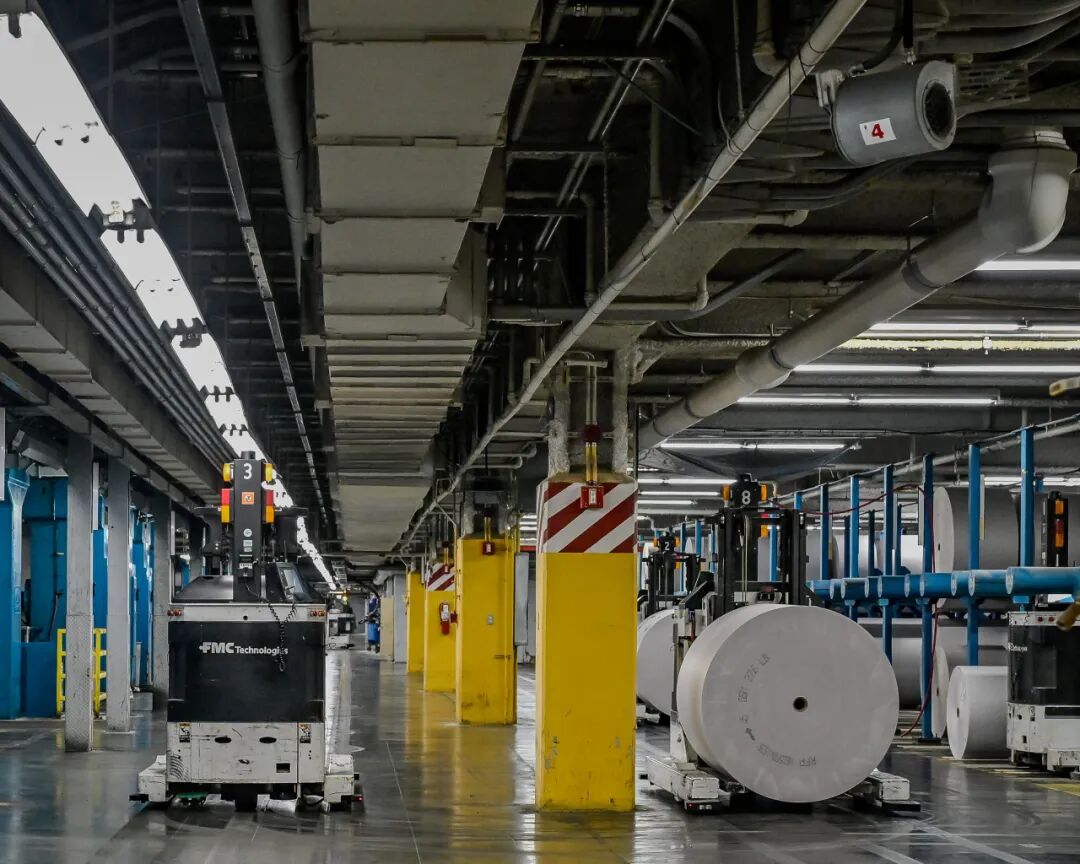
Over the following twelve months, Trump cleared the way for H200, Jensen Huang joined the President's Council of Advisors on Science and Technology, accompanied the president on a visit to Beijing, received the National Medal of Science, and Nvidia's market value repeatedly broke records. For a full year, The New York Times was unable to dig up even the slightest bit of additional material.
Where it couldn't dig, the national security machine did the job for it.
Huang Le's name surfaced in intercepted recordings alongside an unidentified American; officials with clearance applied to unmask the name and found it was Jensen Huang. In the fall of 2025, Trump received a briefing on the matter and took no action. On March 30, 2026, a highly classified memo drafted under the supervision of Secretary of State Rubio was delivered to a very small number of senior officials. On May 12, aboard Air Force One en route to Beijing, Rubio raised the matter with Trump in person.
For a full year, the New York Times, which claims to have the deepest connections in Washington, knew nothing about it.
Until the fall of 2026, when, according to Mikkel on the paper's podcast, colleagues on the national security beat suddenly "heard about Huang Le." About a month later, on October 29, the blockbuster story ran, with bylines added for the paper's most senior White House reporters, Jonathan Swan and Maggie Haberman, along with intelligence reporter Julian Barnes, with sources uniformly attributed to "people briefed on the intercepted communications."
Entering November, it dropped a new revelation almost every other day. November 6 brought a memo concluding that Huang Le had been recruited by China's Ministry of State Security; November 8 brought the classified memo drafted under Rubio's supervision; November 10 brought the conversation aboard Air Force One.
No investigative reporter could dig out the federal government's highest secrets from thin air at that density. The only explanation is that someone had prepared the material and fed it to the New York Times one piece at a time.
When a news organization that holds the line receives such targeted feeding, the first step must be cross-verification: how hard is the evidence in the intercepts, who is doing the feeding, and why this timing of all times.
The New York Times skipped that step. Whatever was handed to it, it printed on the front page. The verification it should have done was subsequently completed for it by its peers.
CNN quickly confirmed that CIA officials were not convinced by the intercepted content at all; Attorney General Todd Blanche publicly stated that the Justice Department had not reached a conclusion; Singapore's Ministry of Home Affairs found the evidence insufficient.
More tellingly, people familiar with the matter told the Washington Post that the underlying draft of Rubio's memo was originally a CIA report full of uncertainties, and that Rubio had merely rewritten it "in his own tougher wording." A former official involved in chip policy put it bluntly: those people wanted to destroy Jensen Huang's influence over the president.
An intelligence finding that even the CIA itself could not be sure of was rewritten by a politician into an unequivocal criminal charge, then announced to the world word for word through the front page of the New York Times.
In this political hunt, the only fact the New York Times uncovered through its own reporting was a sex scandal. On November 11, citing five Nvidia employees, it reported that Jensen Huang had an extramarital affair with an executive who reported directly to him, and the board accepted his resignation that same day.
The Fourth Estate Cut Off from Its Supply
Broadening the lens to Trump's second term, it becomes clear that the New York Times' embarrassment in the Jensen Huang affair was no accident. Over the past two years, it has completely lost its ability to hold power accountable.
Its pages remain lively, but its punches land on no one—every swing is a honeyed fist.
In the six months after Trump's inauguration, around his family's crypto business, the New York Times, Wall Street Journal, and Washington Post collectively ran 40 front-page stories.
The New York Times uncovered that a UAE state-backed entity spent $2 billion to buy the World Liberty stablecoin co-founded by the Trump family, and two weeks later the White House cleared the UAE to obtain hundreds of thousands of advanced AI chips; it also dug up that Defense Secretary Hegseth, in a Signal group on his personal phone, sent details of airstrikes on Yemen to his wife, brother, and personal lawyer.
Yet 40 front pages failed to cost even a single official their job. After the UAE story ran, the White House denied it, and there was no follow-up; faced with the Defense Department inspector general's finding that it "could have endangered U.S. forces," Hegseth brushed it off with "no classified information, completely clean, case closed."
By contrast, the facts that made waves over the past two years—from the $TRUMP token personally issued by Trump three days before his inauguration, to the website's dinner for top token holders publicly ranked by holdings, to the White House's high-profile announcement of a pardon for Zhao Changpeng—were all served up by the parties themselves. The only leak in the second term that actually cost a senior official his position was likewise unrelated to investigative reporters. In March 2025, National Security Advisor Waltz fumbled and added The Atlantic's editor-in-chief to a group chat discussing airstrikes on Yemen, gifting him a piece titled "The Trump Administration Accidentally Texted Me Its War Plans."
What the New York Times dug up through enormous effort had no lethality, and the truly lethal material was never its turn to dig up.
The reason behind this is that Washington's chain of accountability has broken, and the New York Times, beyond churning out stories using the playbook of a bygone era, can find no way to break the deadlock.
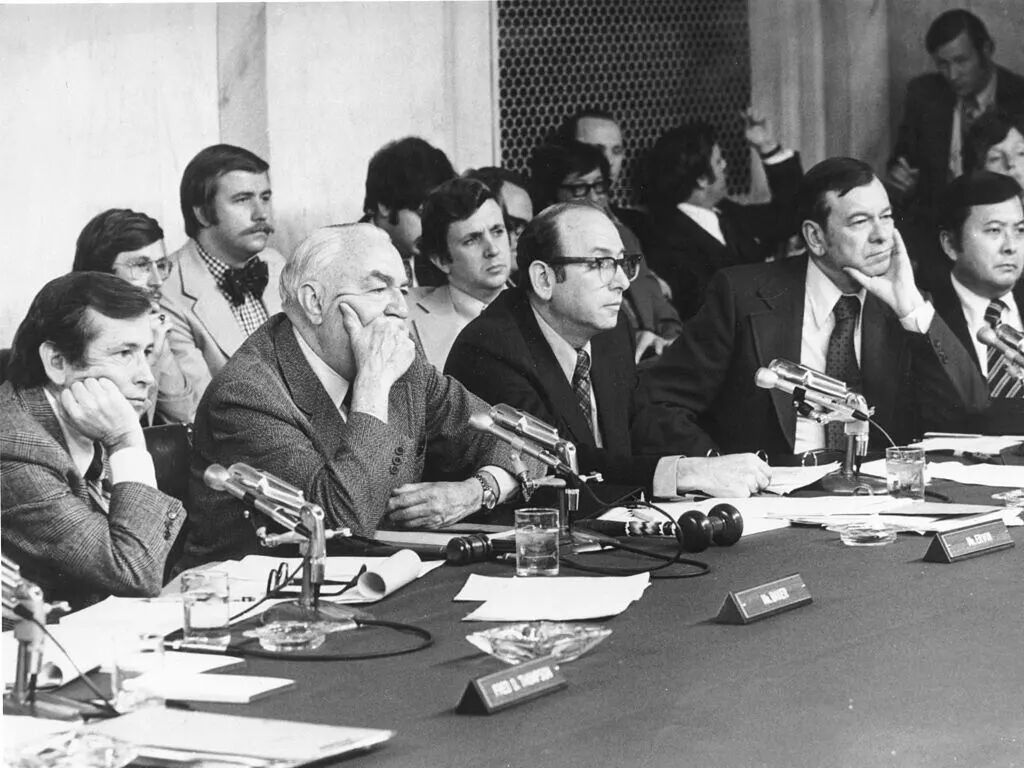
When Watergate brought down Nixon, it was never just Woodward and Bernstein pounding the pavement. It was Judge Sirica pressuring the burglars to talk, the Senate Watergate Committee putting hearings on television, the special prosecutor issuing subpoenas, until on July 24, 1974, the Supreme Court ruled 8-0 that the tapes must be handed over—a whole constitutional machinery meshing into motion before the resignation letter was forced out.
By Trump's second term, on his fifth day in office he fired about 17 federal agency inspectors general overnight, both chambers of Congress were in Republican hands, and Attorney General Blanche had previously been Trump's defense lawyer in his criminal case.
And that left this newspaper cut off from its supply.
During Trump's first term, those glamorous exclusives in the New York Times were largely fed by a batch of establishment bureaucrats. Back then the White House was filled with generals, Wall Street executives and establishment lawyers who fancied themselves "the adults in the room," disliked the boss's style, and turned around to call New York Times reporters.
The anonymous column signed "the resistance inside the government" that caused a national sensation in 2018 was written by Miles Taylor, deputy chief of staff at the Department of Homeland Security. That same year, the New York Times and the Washington Post shared a Pulitzer Prize for Russia investigation coverage, and the citation praised precisely their "deep sources."
By the second term, loyalty came first in White House hiring, and the establishment types who loved calling reporters were screened out before they got in the door. For the few who remained, the cost of speaking up rose sharply.
In April 2025, the Justice Department rescinded protections limiting subpoenas of journalists in leak investigations. In January 2026, the FBI searched the home of Washington Post reporter Hannah Natanson, taking her phone, computer and watch. This July, the New York Times revealed security vulnerabilities in the Air Force One gifted by Qatar, and the Justice Department promptly issued subpoenas to four New York Times reporters, even seeking call records of two reporters' spouses and one reporter's mother, before withdrawing them on July 23.
This July, intelligence reporter Julian Barnes took part in exposing the Qatar jet vulnerabilities and immediately drew a Justice Department subpoena; more than three months later, his name appeared in the byline of the Jensen Huang series, with several highly classified memos published in succession—and so far no Washington department has announced any leak investigation.
The only person publicly demanding a leak investigation was Jensen Huang's ally in Washington, former White House AI and crypto affairs chief Sacks.
Columbia Law School professor David Pozen said back in his 2013 piece "The Leaky Leviathan" that the U.S. government has always cracked down on leaks in words while tolerating them in practice, and that many so-called leaks are essentially organized trial balloons by senior officials.
When genuine independent investigations carry enormous risks, the only things circulating safely in the market are the dirt dug up by high-level factional infighting. A newspaper that has lost the courage to break the deadlock can only obediently open its mouth and become a sewage pipe for power struggles, all to keep manufacturing sensations.
Eleven Days as a Puppet on a String
Being used as a weapon by politicians is already a dereliction of duty; what's more pathetic is that after the shot is fired, it doesn't even understand whose target it was made to hit. During the 11 days of Jensen Huang's ouster and reinstatement, the political obtuseness displayed by The New York Times was even more astonishing than its editorial laziness.
On November 13, The Washington Post published a lengthy piece titled "Behind the Jensen Huang Scandal: A Shadow War Against China for Trump's Ear," which pointed directly at the mastermind behind the scenes: Rubio.
As the son of Cuban immigrants and a former senator from Florida, Rubio is one of Washington's most ferocious China hawks, having been sanctioned by China twice in 2020. In Trump's White House, the debate over chip exports to China has long been split into two irreconcilable camps. On one side are the hawks led by Rubio, with Treasury Secretary Bessent also chiming in during the storm that Nvidia needs a "dramatic restructuring"; on the other side are the Silicon Valley business faction represented by Commerce Secretary Lutnick and Sacks, whose most critical outside ally is Jensen Huang.
To weld shut the door on chip exports to China, the hawks must first move Jensen Huang away from Trump's ear. Chips are the goal; the extramarital affair and the wiretapping suspicions are merely tools to bring him down.
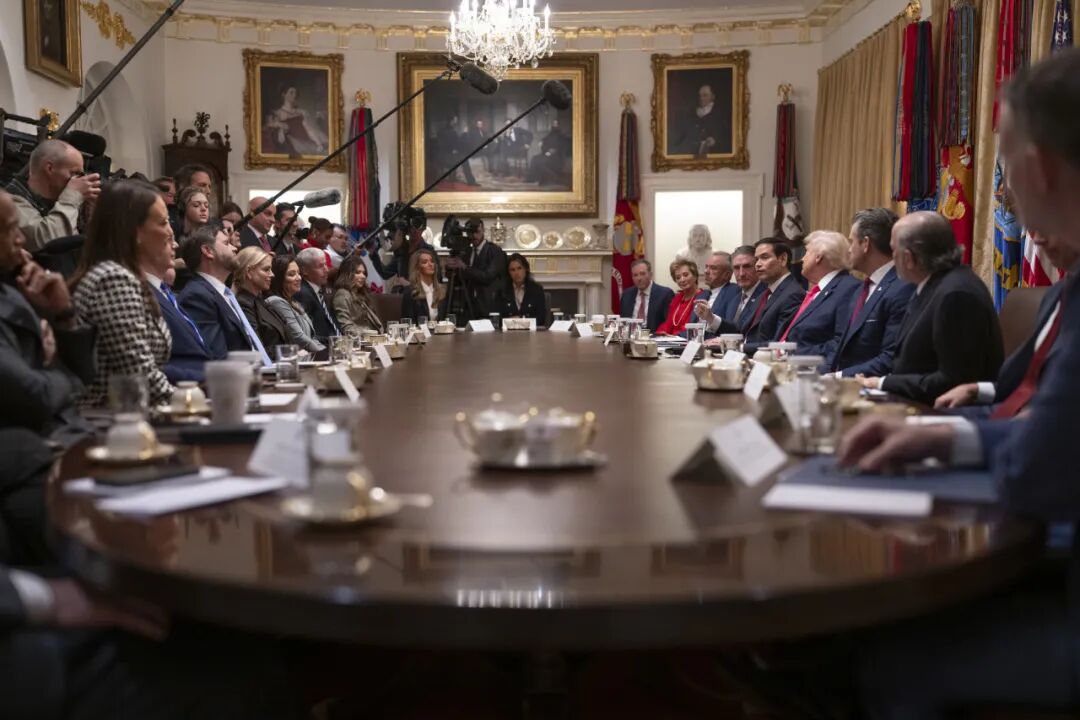
The timeline fits together seamlessly—Rubio's memo and the Air Force One conversation were all held back until after the midterm election votes were counted.
What follows next aligns with the China-U.S. summit window: in late September, China and the U.S. extended the Busan truce period to January 10, 2027, and it was precisely in those few days that The New York Times' national security reporter "heard about Huang Le"; the first report landed on October 29, and from November 18 to 19, Trump flew to Shenzhen to attend APEC.
The New York Times detonated an 11-day power vacuum for the hawks, and during those 11 days when Jensen Huang was away from Nvidia, the hawks completed everything that Silicon Valley lobbying groups had blocked in normal times.
On November 16, two days before Trump flew to Shenzhen, the U.S. Commerce Department swiftly issued new remote access rules: imports of advanced AI chips by Singapore, Malaysia, Thailand, Indonesia, and Brazil would all be subject to case-by-case approval, and data centers already serving Chinese companies must obtain retroactive licenses within 90 days. The new rules were drafted precisely under the direction of the Treasury Department and the National Security Council, and the head of the NSC is none other than Rubio. The next day, Nvidia's interim CEO Kress announced at the earnings call that shipments of already-licensed Hopper products to China would be halted.
By the time the Shenzhen dinner ended, the die was cast.
The most ironic part is that more than two decades ago, The New York Times broke its leg in an identical pit. On September 8, 2002, it ran a front-page story titled "U.S. Says Hussein Intensifies Quest for A-Bomb Parts," citing anonymous officials saying Saddam was purchasing aluminum tubes for uranium enrichment. That morning, Vice President Cheney sat in an NBC studio and, before a national audience, cited the report to prove Iraq's nuclear threat was imminent. The government first fed fabricated material to the newspaper, then used the newspaper's credibility to endorse itself. Half a year later, U.S. forces invaded Iraq, and those aluminum tubes were later confirmed to be more likely intended for conventional rockets.
In 2004, The New York Times published an editor's note acknowledging the reporting was "not as rigorous as it should have been." Earlier that same year, it had just revised its anonymous-source guidelines, requiring reporters to disclose to readers the stance and motives of anonymous sources. Twenty-two years later, it threw that self-imposed rule aside like a worn-out shoe. In the Huang Renxun series, the pages never mention which side the anonymous sources stand on in the chip roadmap dispute, or why the leaks clustered right before the Shenzhen summit.
It didn't even bother to pursue a logical flaw handed to it on a platter. The New York Times noted a detail as early as its first report on October 29 and repeated it on November 22: the U.S. government never gave Huang Renxun a defensive briefing on the Huang Le matter. Anyone with common sense knows that if intelligence agencies truly feared the helmsman of America's most important tech company faced national security infiltration, the first step in standard procedure would be to approach him directly. Yet the memo was written, the president was briefed, the newspaper ran stories for over ten days—and the only person not notified was the subject himself.
This shows the whole affair was never about preventing risk from the start; it was political knife-work by proxy. The New York Times itself wrote down the detail sufficient to bring down the entire edifice, yet without a single follow-up question, it slid right past it.
On November 17, Nvidia's board chairman stated he had no intention of reinstating Huang Renxun. By November 20, Nvidia plunged 14% in a single day, evaporating about $2.7 trillion in market value from its October high, and the stock market's agony reverberated to the White House. On Sunday, November 22, Trump publicly called on the board to rehire Huang Renxun, personally phoned into the board meeting, and dispatched Vice President Vance to reassure the directors.
The most comical scene of the whole farce was frozen on the evening of Sunday, November 22. On the same day Trump phoned into Nvidia's board meeting, The New York Times' ace reporter Haberman was still pushing a so-called new exclusive on X about Huang Le's background. Before the U.S. market opened the next day, Nvidia issued a reinstatement announcement, saying the board had heeded the views of senior U.S. government officials and was confident Huang Renxun's return "does not constitute a national security risk." Trump later revealed that before making the recommendation, he had consulted the Attorney General and the Director of National Intelligence.
On the same day, when a reporter confronted Rubio face-to-face and asked whether Jensen Huang's return constituted a security risk, he said nothing and turned away. Nvidia's stock surged 31.5% that day, adding nearly $1 trillion in market value in a single day, setting a record in U.S. stock market history. A few hours after the reinstatement announcement was issued, the Commerce Department added Megaspeed to the entity list.
Trump preserved the stock market and Jensen Huang, the hawks obtained the new remote access rules and the Megaspeed ban, and only the New York Times stood in place like a clown, still clutching the outdated smear material it had just published the night before.
When the New York Times came knocking, Trump opened by asking, "Didn't I do a good job last night?"
The people who conducted this interview and wrote this report were still Haberman and Swan, the same two who had originally pushed Jensen Huang off the cliff. The same two chief reporters first relayed messages for one faction in the government to conclude that Jensen Huang was a risk, and afterward relayed messages for another faction in the same government to guarantee that he was not a risk. Both sides cited intelligence invisible to the public, and they printed two completely opposite conclusions on the front page one after the other. As for which sentence was true, they neither knew nor cared.
Guarding a gold mine while picking up sesame seeds
If Washington's power struggle exposed the New York Times' cowardice and sluggishness, then in the face of the global chip war unfolding in plain sight, this newspaper also lost even the most basic business awareness and global on-the-ground perspective.
When a newspaper's own mind is locked down by Cold War thinking, the figures in its writing are reduced to black-and-white caricatures. In its reporting framework, Jensen Huang can only be two kinds of people: either the profiteer described by Senator Wyden who sells national security to the highest bidder for revenue, or a political vassal whose fate is decided by a single sentence from Trump.
It alone cannot see the most obvious third identity: a person who wants to sell chips to every customer in the world, a defender of free trade.
Over the past eight years, chips have been a weapon in the eyes of the hawks and a bargaining chip in the eyes of Trump. From the first term, in April 2018 a Commerce Department order sent ZTE into shock; a month later Trump tweeted goodwill, and two days after that Chinese negotiator Liu He flew to Washington; in May 2019 negotiations broke down, China removed the legally binding commitments from seven chapters of the draft, and a week later Huawei was added to the entity list; another week later Trump publicly said Huawei could be included in the trade agreement talks.
By the second term, in July 2025 H20 sales to China were restored, and Lutnick said bluntly that it was a condition packed into the rare earth magnet deal. In August, Nvidia and AMD were forced to agree to hand over 15% of certain China chip revenue to the U.S. government, and Trump later revealed with satisfaction that he had originally demanded 20%, and it was Jensen Huang who bargained it down to 15%.
The U.S. Constitution explicitly prohibits taxing exports, and Derek Scissors, a scholar at the American Enterprise Institute, points out that this practice is unprecedented. By the time it reached the H200, the 25% cut was simply packaged as an import tariff. According to public reports, chips manufactured in Taiwan, China must first be shipped to the U.S. mainland for a nominal test, pay the 25% toll, and then be shipped to China.
A single chip, to accommodate Washington's revenue-raising scheme, is forced to travel halfway around the world first. During the same period, the U.S. government took a 9.9% stake in Intel, inserted a "golden share" with veto power into U.S. Steel, and took the position of largest shareholder in rare earth company MP Materials. The state capitalism that Washington criticized for twenty years has now become the White House's own daily routine.
This trade war, which has lasted eight years, should never have been fought in the first place.
It was the United States that single-handedly built the General Agreement on Tariffs and Trade after World War II and preached comparative advantage to the world; it was the United States that granted China permanent normal trade relations in 2000 and welcomed China into the WTO the following year; and by July 6, 2018, it was still the United States that imposed a 25% tariff on $34 billion of Chinese goods and personally overturned the free trade table.
Overturning the table did not bring victory either. Research by economists Amiti, Redding, and Weinstein has long confirmed that the cost of tariffs was almost entirely passed on to American buyers, and by the end of 2018 Americans were losing about $1.4 billion in real income each month as a result. Over eight years, the two parties have been at odds on every issue, yet they are in lockstep on blocking trade. No one in all of Washington dares to tell the truth—only Jensen Huang is everywhere speaking common sense.
In Taipei in May 2025, he said bluntly that export controls have generally failed, because the policy is built on the mistaken assumption that the United States is the only source of AI technology. Half of the world's AI researchers are in China, and without enough Nvidia chips, they will build their own.
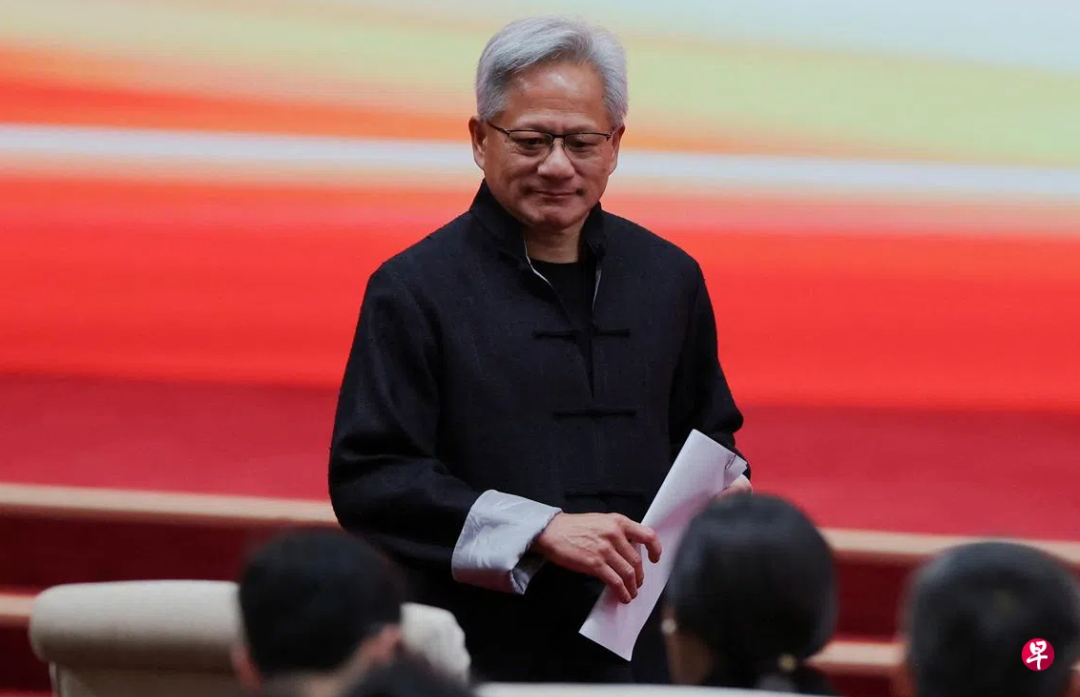
Jensen Huang himself was shaped by the wave of globalization. He was born in Taiwan, China, moved to Thailand at age 5, was sent to the United States at age 9, cleaned toilets at a boarding school in Kentucky, waited tables at a Denny's in Oregon as a teenager, and in 1993, at another Denny's in San Jose, plotted Nvidia with his partners. In July 2025, at the Beijing Chain Expo, he took off his leather jacket, put on a Tang suit, and delivered a speech in Chinese.
Of course, you could say he wears Tang suits and opposes controls because the Chinese market once contributed more than 20% of Nvidia's revenue, and he wants to sell more cards.
But Adam Smith said over two hundred years ago that our dinner does not come from the benevolence of the butcher, the brewer, or the baker, but from their regard for their own self-interest. Free trade has never needed saints—only a merchant who wants to sell things badly enough.
These common-sense truths that Friedman expounded in the pages of the New York Times for thirty years vanished without a trace in this round of more than a dozen blistering reports.
The best proof that the New York Times has lost its news judgment is precisely Megaspeed, which it dug up itself a year ago. It had personally touched the fatal weakness of the entire chip control regime's total failure, yet it turned a journalistic goldmine into a pile of trivia.
Smuggling is only the tip of the iceberg; the far larger part beneath the surface is entirely legal: chips cannot enter China, so Chinese companies take their money abroad—Moonshot, ByteDance, Alibaba, and Tencent are all renting Nvidia compute in Thailand, Malaysia, and Japan. Washington's four-year siege has only controlled the one column of numbers in Nvidia's financial reports tallied by destination of receipt.
At the same time, the controls personally raised a rival for Nvidia. According to IDC data, in 2025 Nvidia sold about 2.2 million accelerator cards in China, with a market share of about 55%, while Huawei held about 20%; by the first half of 2026, Nvidia's share had fallen to 34%, Huawei had caught up to 28%, and the gap between the two had narrowed from 35 percentage points to 6 percentage points. Cambricon's 2025 revenue reached 6.497 billion yuan, a surge of 453%, and in the first three quarters of this year it more than doubled again. In May this year, Jensen Huang said in front of CNBC cameras that Nvidia had basically ceded the Chinese market to Huawei.
Putting these puzzle pieces together, the real main line of the news is actually very clear: failed controls spawned shell-company middlemen, the middlemen attracted intelligence agency surveillance, and the groundless suspicions in that surveillance were then used by hawks as the reason to further tighten remote access controls on November 16. A man who had long seen through the futility of the controls ultimately became a sacrifice to escalated controls. The New York Times held onto this lead—enough to strip the chip controls down to their underwear—for a full year, and ended up writing it as one company's violation, with an extramarital affair pushed onto the front page.
And on the other side of the Pacific, the New York Times's coverage of China has degenerated even further into blind men feeling an elephant.
The most direct root cause is that it has almost no one left in mainland China. In 2020, a group of China-based reporters withdrew, with the main force retreating to Taiwan and South Korea; in February this year, another reporter based in Beijing was asked to leave. The New York Times, which at its peak had about a dozen reporters stationed in the mainland, now has only one resident correspondent left.
Thus, the vast and complex China is flattened into an empty symbol by its pen; it completely fails to see the real anxiety in China's tech community over computing power.
In November 2025, Tencent President Liu Chiping admitted that the availability of AI chips constrained cloud business growth, with capital expenditure for the quarter dropping about 24% year-on-year; in May this year, Alibaba CEO Wu Yongming said outright that not a single card in the servers was idle; ByteDance laid out a 160 billion yuan capital expenditure plan for 2026, of which 85 billion yuan is earmarked for AI processors, with the bulk originally intended for Nvidia purchases.
On the day the news of Jensen Huang's resignation was announced, Reuters reported that Chinese companies rushed overnight to lock down overseas Nvidia computing power, fearing Washington would use the turmoil to weld shut the door on remote access; four days later, the door was indeed sealed. In his final quarter before stepping down, Nvidia still shipped $2.4 billion of approved Hopper products to China; the moment he left, his successor announced a halt to shipments.
Beijing's attitude is likewise far from black and white: it wants to protect the man while also guarding against the business.
In the public opinion arena, the Foreign Ministry criticized US media for making groundless accusations, Global Times characterized the extramarital affair as America's own domestic matter, and Trump relayed Chinese leaders' assessment of Huang as "outstanding." Yet on industrial policy, the same Beijing is also blocking Nvidia: the Cyberspace Administration has summoned Nvidia for talks, regulators have advised halting purchases of specially supplied cards, about 600,000 H200 chips remain stacked in Hong Kong awaiting mainland clearance, state-owned data centers are required to procure domestic chips, and a draft public computing power plan of about 2 trillion yuan stipulates that domestic software and hardware must account for no less than 80%.
Beijing wants an Nvidia willing to sell goods, and also wants a China increasingly less dependent on Nvidia.
Washington has hawks, businessmen, and a president who treats everything as a bargaining chip; China has model companies desperate for computing power, cloud providers scrambling for cards, and chipmakers striving for domestic substitutes. Those on both sides who want to do business cannot bypass Jensen Huang. These complex and real textures are nowhere to be read—not a single word—in the pages of The New York Times, which has only one reporter left in mainland China.
Two Joneses
On February 26, 2017, during the commercial break of the Oscars, The New York Times aired its first television ad in seven years. White background, black text, line by line: The truth is hard, the truth is hard to find, the truth is hard to know, the truth is more important now than ever.
Loudly proclaiming truth at the top of its lungs, when it comes to truly testing its ability and backbone, this 175-year-old newspaper lacks even the courage to face its own historical stains.
In 1932, the Pulitzer Prize was awarded to Walter Duranty, the New York Times correspondent in Moscow. He had been stationed in Moscow for over a decade, conducted two exclusive interviews with Stalin, and was the Western journalist closest to the Kremlin in that era—and the one who best knew how to write headlines from high-level leaks.
In the spring of 1933, 27-year-old Welsh journalist Gareth Jones took a train into Ukraine, jumped off near Kharkiv, and walked from village to village with a backpack. After returning to Berlin, he alerted the world that Ukraine was in the grip of a massive famine, with countless people starving to death. Two days later, Duranty, who had official connections, published a rebuttal in the New York Times under the headline "Russians Hungry, But Not Starving." At the time, most Western correspondents stationed in Moscow sided with Duranty to preserve their interviewing privileges.
That famine ultimately killed millions.
In 1990, the New York Times acknowledged in an editorial that Duranty's reporting was one of the worst pieces of journalism in the newspaper's history. In 2003, the Pulitzer Committee decided not to revoke the award, and the New York Times never proactively applied to return it.

Duranty, who used connections to relay messages for the powerful, left his Pulitzer trophy in the newsroom display case; Gareth Jones, who measured the famine-stricken land on foot, never lived to see that day. In 1935, he was killed while reporting, one day short of his 30th birthday.
Gareth Jones and George Jones, who founded the New York Times in 1851, share the same surname but were not relatives.
In today's New York Times newsroom, it is full of Durantys queuing up for handouts from the higher-ups, guarding the 13.76 million subscriptions earned from word games and recipes, printing the dirt others hand them on the front page, and then sighing to the world that reporting the truth is just too hard.
-END-
Welcome to join the official BlockBeats community:
Telegram Subscription Group: https://t.me/theblockbeats
Telegram Discussion Group: https://t.me/BlockBeats_App
Official Twitter Account: https://twitter.com/BlockBeatsAsia
