On April 23, Bitcoin was priced around $78,000, breaking through $79,000 yesterday, setting a new high since February.
ETH, on the other hand, is still fluctuating around $2,400, with some altcoins experiencing significant gains.
According to Coinglass data, in the past 24 hours, the total net liquidation of contracts across the network was $462 million, with $353 million in short liquidations. According to the latest CMC data, the market's Fear and Greed Index has risen to 60, indicating a neutral sentiment.
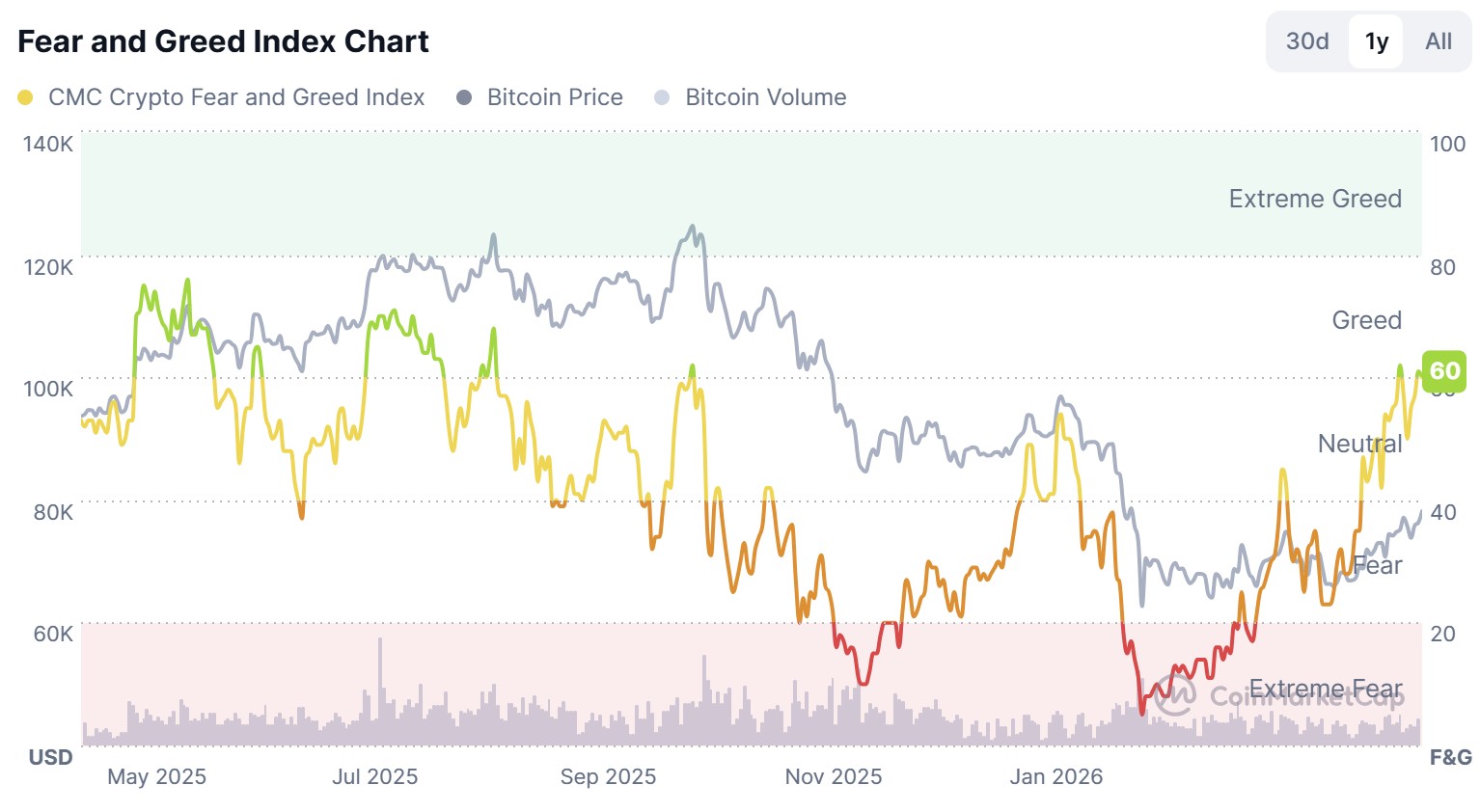
Global risk assets continue their rebound.
The U.S. stock market hit new all-time highs yesterday: the S&P 500 closed at 7,137.90, up 1.05% in a single day; the Nasdaq Composite Index reached 24,657.57, a 1.64% increase, setting a new record high; the Dow Jones Industrial Average closed at 49,490.03, up 340.65 points or 0.69%.
Meanwhile, the U.S. Dollar Index (DXY) stabilized near 98.61, showing slight fluctuations compared to the previous day.
Trump Extends Ceasefire Agreement on Wednesday
Trump announced on Wednesday that the U.S.-Iran ceasefire agreement would be extended by 3 to 5 days. Coupled with strong first-quarter corporate earnings, the U.S. stocks swiftly recovered from the previous two days of pullback.
On Wednesday, the S&P and Nasdaq hit new highs, semiconductor indices rose for the sixteenth consecutive day, while oil prices surged, showing a deviation from the market's optimistic sentiment.
Trump announced the extension of the ceasefire at Pakistan's mediation request, stating that talks with Iran could resume as soon as Friday. However, Iran later denied the news of potential talks on Friday.
The Iranian President stated, "We welcome dialogue and agreements," but also criticized Trump for "inconsistencies in words and actions." Mohammad Baqer Qalibaf, Speaker of the Iranian Parliament and chief negotiation representative, said that comprehensive ceasefire is impossible without lifting the blockade.
Oil prices soared on Wednesday, marking a three-day rally, with WTI crude futures rebounding to pre-negotiation breakdown levels and Brent crude approaching $102.
The three major U.S. stock indexes closed higher on Wednesday, with the S&P 500 hitting a new record high at the close and the Nasdaq reaching a new all-time high, led by the tech sector. The S&P 500 technology sector rose by about 2%, marking the best performance among the 11 sectors.
Furthermore, according to the latest data from Polymarket, the market's probability of the Fed cutting interest rates once this year has risen to 30%.
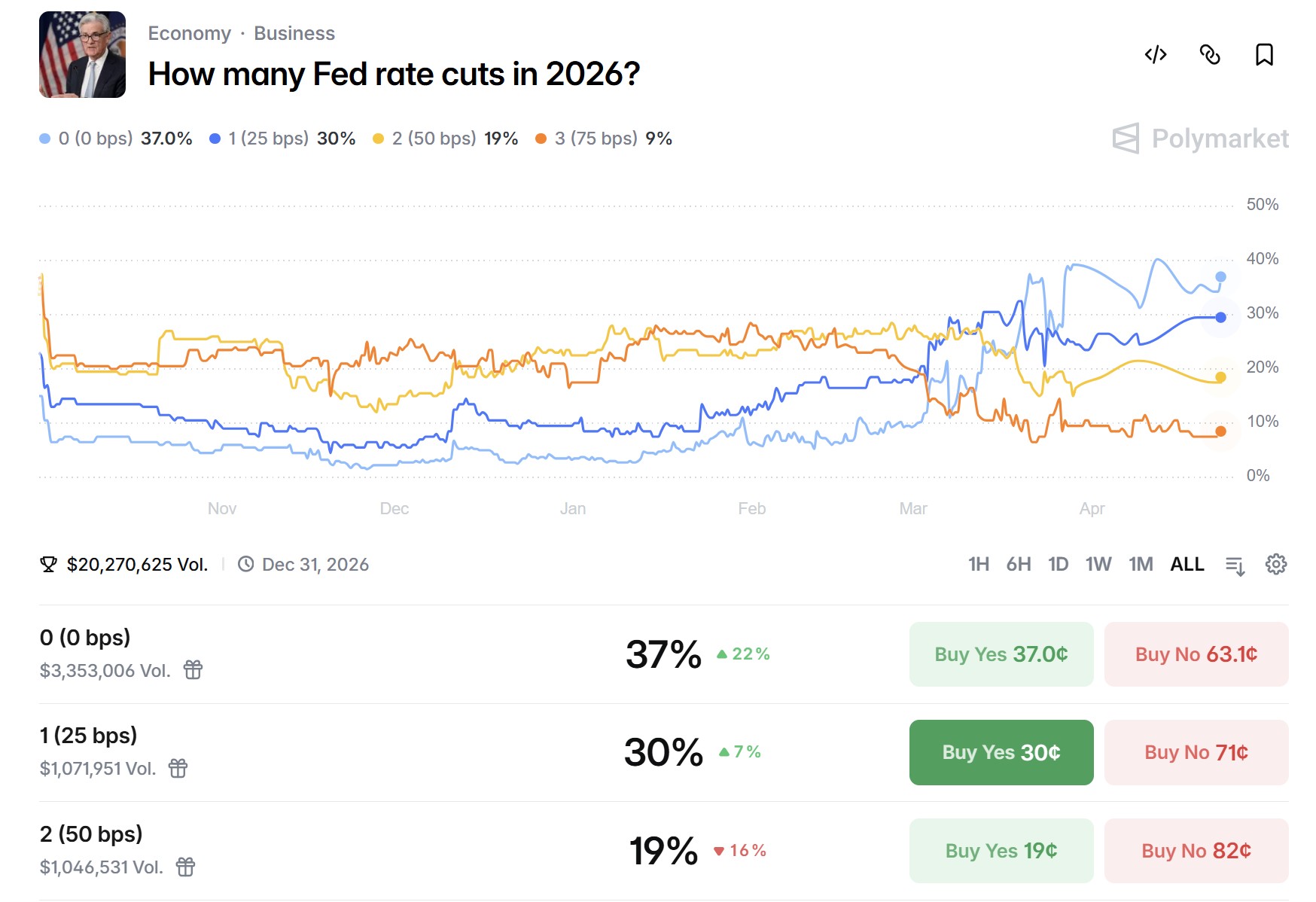
With expectations of easing tensions in the Middle East, the safe-haven status of the U.S. dollar has significantly weakened. Coupled with the return of market bets on a Fed rate cut this year, global funds are accelerating their exit from U.S. dollar assets.
Data shows that the U.S. dollar index has fallen by about 2.3% from its late-March peak, marking its worst monthly performance since August last year.
Wall Street institutions generally believe that the essence of this dollar weakening trend is a dual drive of "waning safe-haven premium + shift in policy expectations."
JPMorgan Chase has restarted its bearish U.S. dollar strategy, turning bullish on risk currencies such as the Australian dollar; the Bank of New York Mellon also pointed out that emerging market currencies have rebounded across the board, reflecting a significant recovery in global risk appetite.
BTC Spot ETF Sees 6 Consecutive Days of Net Inflows
Regarding BTC spot ETF data, it has seen 6 consecutive days of net inflows. From April 14th to 21st, the total net daily inflows for ETFs have all been positive.
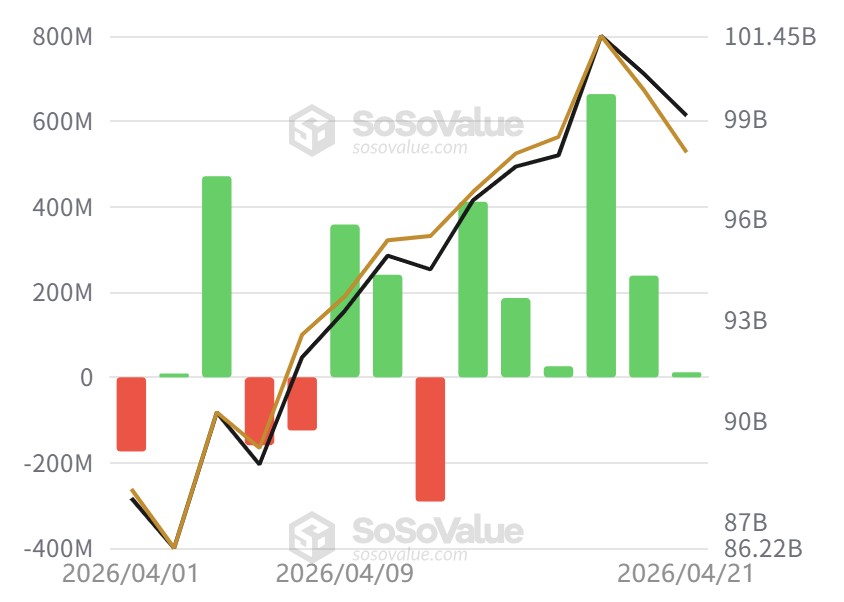
Among them, the single-day net inflow on April 17th reached as high as $663.91 million, the highest in the recent period; April 14th and April 20th saw net inflows of $411.5 million and $238.37 million respectively; contributing $186 million on April 15th.
As for net outflows, they have only occurred for 4 days, and the outflow amount on each day has not exceeded $400 million.
On the Ethereum spot ETF side, starting from April 9th this year, it has seen a rare 9 consecutive days of net inflows.
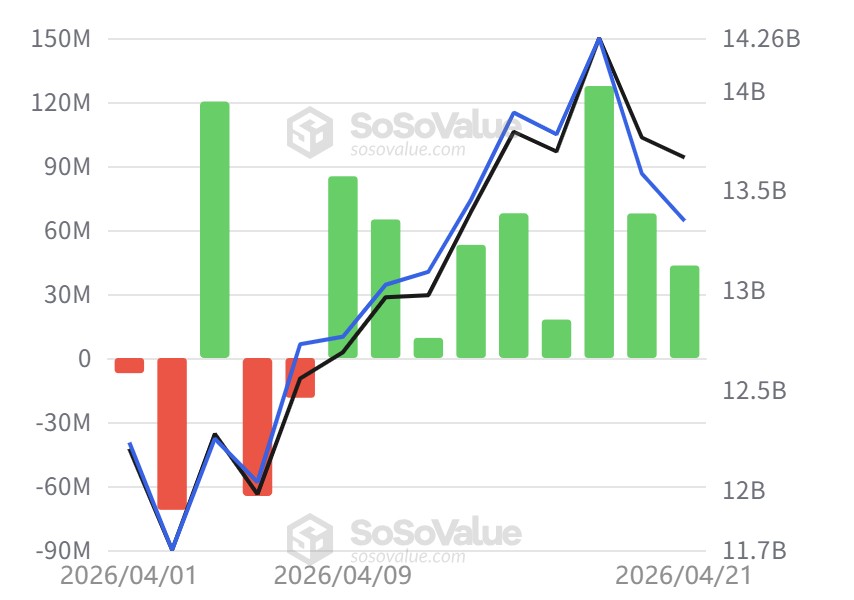
April 17th recorded a single-day net inflow of $127 million, setting a new high for this month. There have only been outflows on 4 days this month.
As for stablecoin data, according to DefiLlama, it has now risen to $320.6 billion, with a net inflow of $635 million over the past 7 days.
Subsequent Trend
glassnode released a data chart stating that Bitcoin regained the $78,000 level, with spot demand and ETF inflows both returning. Accumulated short positions accompanied by a negative funding rate have created the potential for a short squeeze.
However, elevated realized profits and subdued volatility have signaled caution, and the upside space near $80,000 faces resistance.
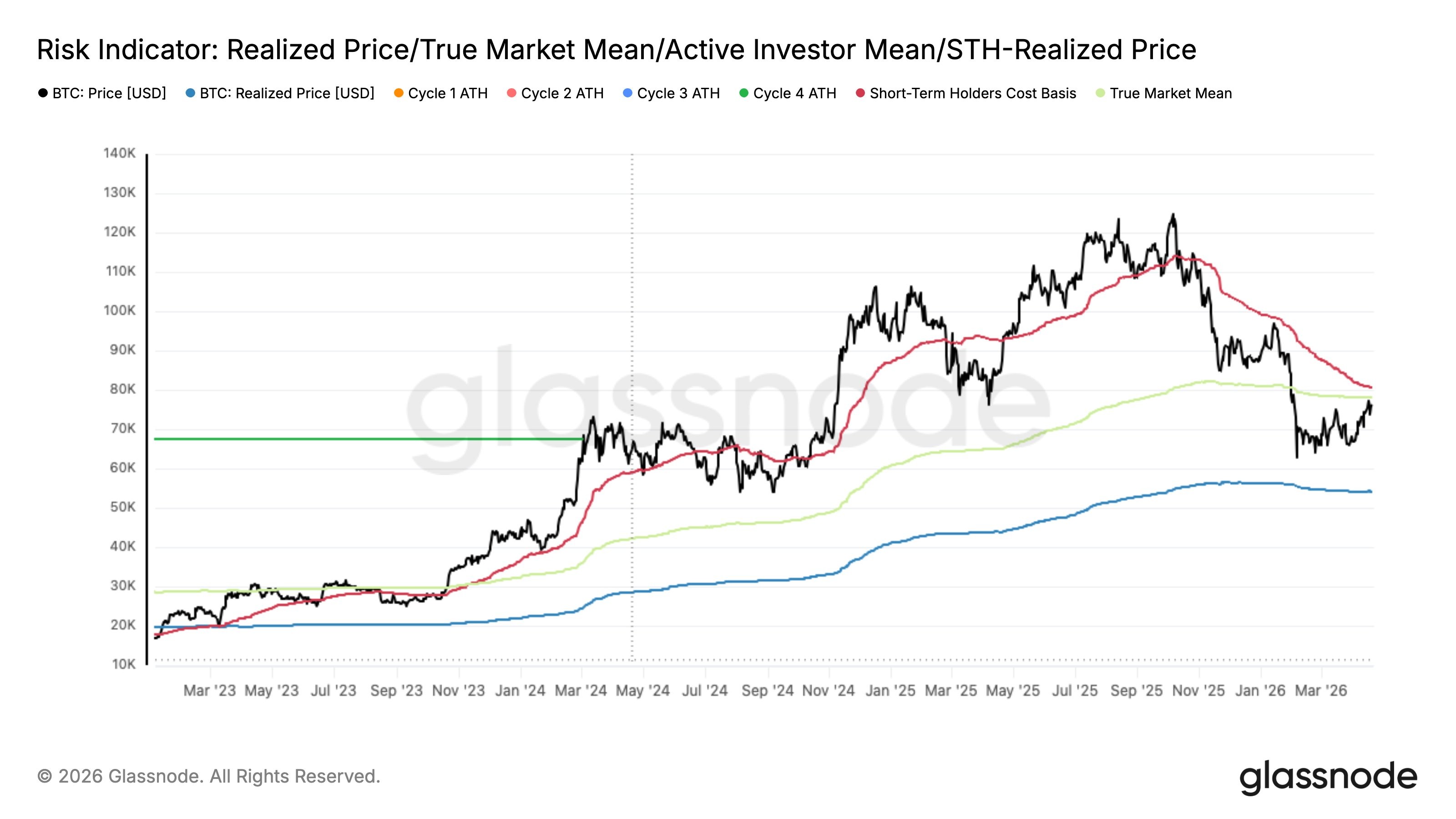
BIT's tweet indicated that new sources of Bitcoin demand are gradually emerging.
Ongoing accumulation by strategic investors has provided relatively stable buying support to the market, which is also beginning to show clearer signs of inflows from structured funds. Specifically, the Coinbase Premium continues to rise, and daily net inflows into spot Bitcoin ETFs reached approximately $664 million at one point, marking a high since mid-January.
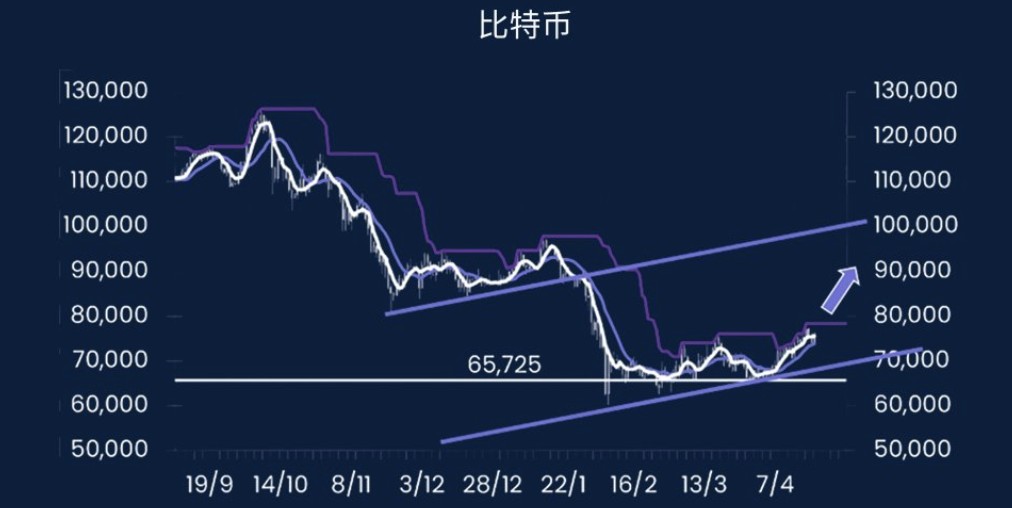
These signals collectively point in one direction: the demand structure is undergoing repair. Corporate treasury buying, ETF inflows, and U.S. spot demand are coming together, strengthening the support at price lows and boosting market participation, which is noticeably different from the previous consolidation phase.
Combined with yesterday's analysis on stablecoin fund inflows, support at the liquidity level is likewise gradually strengthening. These two clues corroborate each other, indicating that the market may be gradually forming a new consolidation range. This does not mean that the market will trend upward in a linear fashion, but if the above trends continue, the probability of price pushing towards the upper boundary of the range is increasing.
