This war has now entered its 55th day.
On April 22, Trump announced an indefinite extension of the ceasefire on Truth Social. He did not provide a deadline, only stating that the ceasefire would continue until Iran "presents a unified proposal."
While this statement may sound like a concession, it is actually a different way of applying pressure. The blockade continues, minesweepers continue their operations, and the Vance's planned flight to Islamabad was quietly canceled after Iran refused to attend. The ceasefire has been extended, but nothing has stopped on the battlefield.
The next day, Trump posted again on Truth Social. He stated that he had ordered the U.S. Navy to "kill" any ships laying mines in the Strait of Hormuz, vowing "no hesitation," and instructed mine-clearing operations to be "tripled in intensity." On the same morning, he wrote in another post: "No ships are allowed to enter or leave without U.S. Navy approval. It has been tightly sealed until Iran can reach an agreement."
The ceasefire and the "kill order" coexisted on the same morning, contradicting each other. This is Trump's negotiation style—offering a way out while raising the stakes.
The ceasefire agreement has been anything but smooth.
On April 11, the first round of Islamabad talks led by Vance, Trump's envoy Steve Witkoff, and Jared Kushner took place, with no results. After the talks collapsed, the U.S. began detaining Iranian-affiliated ships. Iran then retaliated by seizing foreign commercial vessels in the strait.
The U.S. subsequently imposed a naval blockade from April 13, citing Iran's failure to reopen the Strait of Hormuz, targeting all ships entering and leaving Iranian ports. Iran promptly announced the re-closure of the strait.
By the time of the new round of talks on April 21, the differences between the two sides had not narrowed.
However, it is apparent that the strait is the most direct pressure point in the current situation.
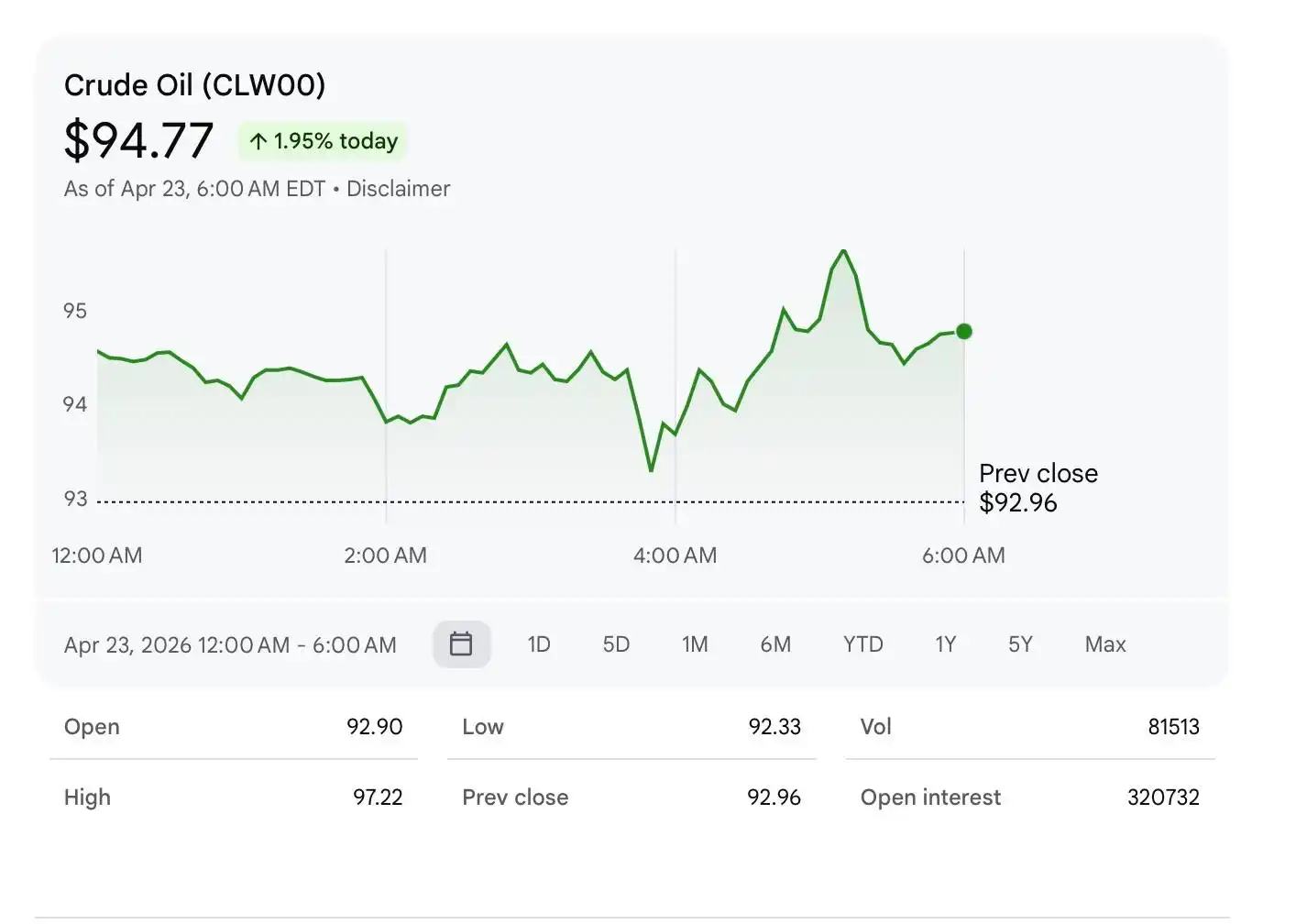
CENTCOM announced on April 23: the blockade operation involved over 10,000 U.S. troops, 17 warships, and more than 100 aircraft, and has ordered 31 ships (mostly oil tankers) to turn around or return to port. Brent crude prices surged over 4% in a single day after Iran's announcement of refusing to reopen the strait, approaching $100 per barrel.
Iran's response is not just military; it is also financial. Iranian Vice Speaker Haaji Babaei announced that Iran has started charging a "Strait of Hormuz transit fee" to passing ships, with the first batch of revenue already deposited into the central bank.
This is no small matter because it means that Iran has essentially transformed its authority over the strait into a fee right, attempting to solidify this claim through a fait accompli. The U.S. is blocking Iran's ports, while Iran controls passage through the strait. Both sides claim to control this waterway, but neither can make the other's claim disappear.
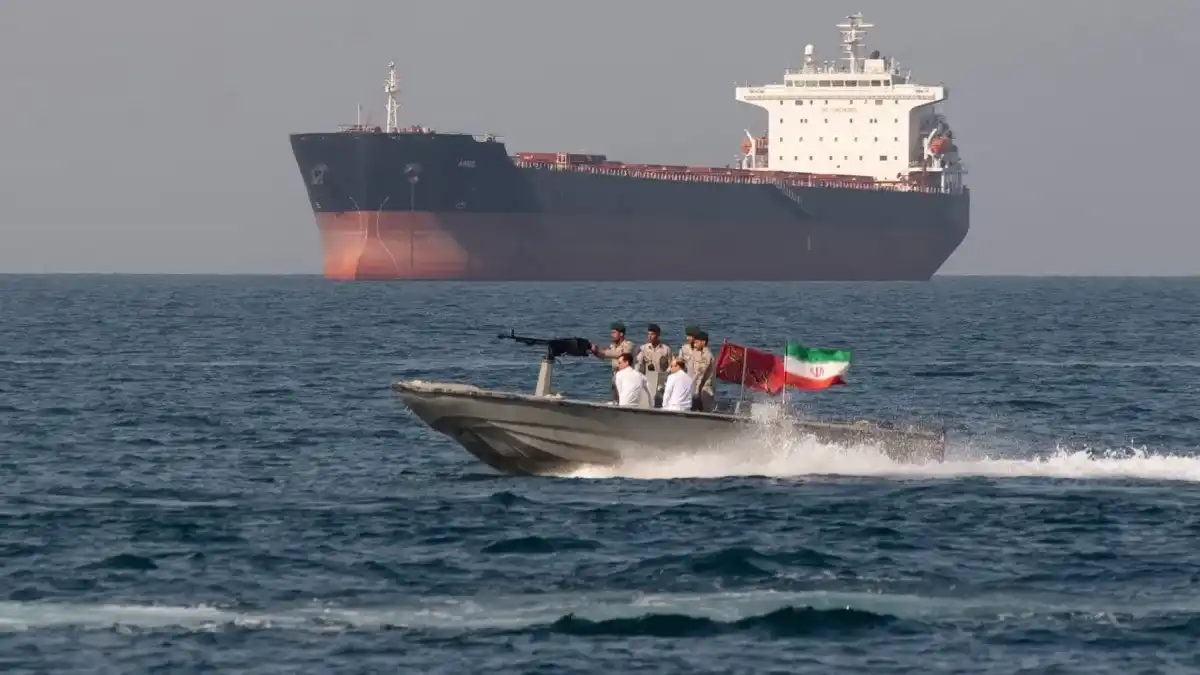
Meanwhile, the U.S. military intercepted another tanker allegedly smuggling Iranian oil, the "Majestic X," in the Indian Ocean, extending these actions towards the Indo-Pacific, which is a geographic expansion of the blockade.
Iran's statements have notably converged following the ceasefire extension.
President Pezeshkiyan, Speaker and Chief Negotiator Jalibaf, and Attorney General Muhseni Ejai issued a joint statement, rejecting Trump's claim of a "rift between moderates and hardliners" within Iran. This united stance is itself a form of information warfare: Trump deliberately portrays internal discord in Iran, while Iran seeks to project a united front, aiming to convince outsiders that any strategy to sow division will not work.
Foreign Minister Araghi has the clearest position: the blockade of Iranian ports is a "warlike act," and as long as the blockade remains, genuine negotiations cannot begin. Foreign Ministry spokesperson Baghaei explained Iran's hesitance to the outside world, stating that Iran's reluctance is not due to internal turmoil but because "Washington has sent out conflicting signals."
This explanation holds some truth. Trump can announce an extension of the ceasefire one day and order an attack the next. One day he says, "We will reach a very good agreement," and the next day he says, "Iran has no choice but to come to the table." For Iran, deciphering the other party's true intentions is itself a challenge.
Meanwhile, Washington is also not without its internal struggles.
Shortly after the ceasefire extension, Defense Secretary Hegses dismissed Navy Secretary John Fílan, the 34th senior official replaced by the Trump administration, reportedly due to personnel and management disagreements. The Navy is tasked with the most critical blockade mission in this war, and the civilian leadership overseeing the Navy is changing at this juncture, which raises questions.
Additionally, the Senate voted 55-46 to reject a resolution limiting the president's authorization to use military force against Iran, the fifth attempt by Congress resulting in failure for the fifth time. It is worth noting that Republican Senator Rand Paul supported the resolution this time, while Democratic Senator John Feitman stood with the majority of Republicans in opposition. The partisan lines on the issue of war are no longer clear-cut.
Furthermore, Congress received a classified Pentagon briefing: the longest estimated time to clear the mines in the Hormuz Strait is six months. This means that oil prices may remain high throughout the entire summer, burning through to the fall, with the midterm elections in November. Trump says the war has "no timetable," but the markets and the votes do.
Currently, this conflict is in a peculiar state of limbo: neither side has declared a full ceasefire nor resumed large-scale bombing; both sides claim to be willing to negotiate, but the premise for negotiation happens to be the one the other is least likely to accept.
The U.S. logic is as follows: sanctions create pressure, pressure forces Iran to compromise, compromise leads to negotiations. Iran's logic is: sanctions themselves are a breach of agreement, and negotiating under breach is equivalent to surrender, so negotiations must wait until sanctions are lifted.
The pulse of this conflict will continue to be closely monitored.
