Executive Summary
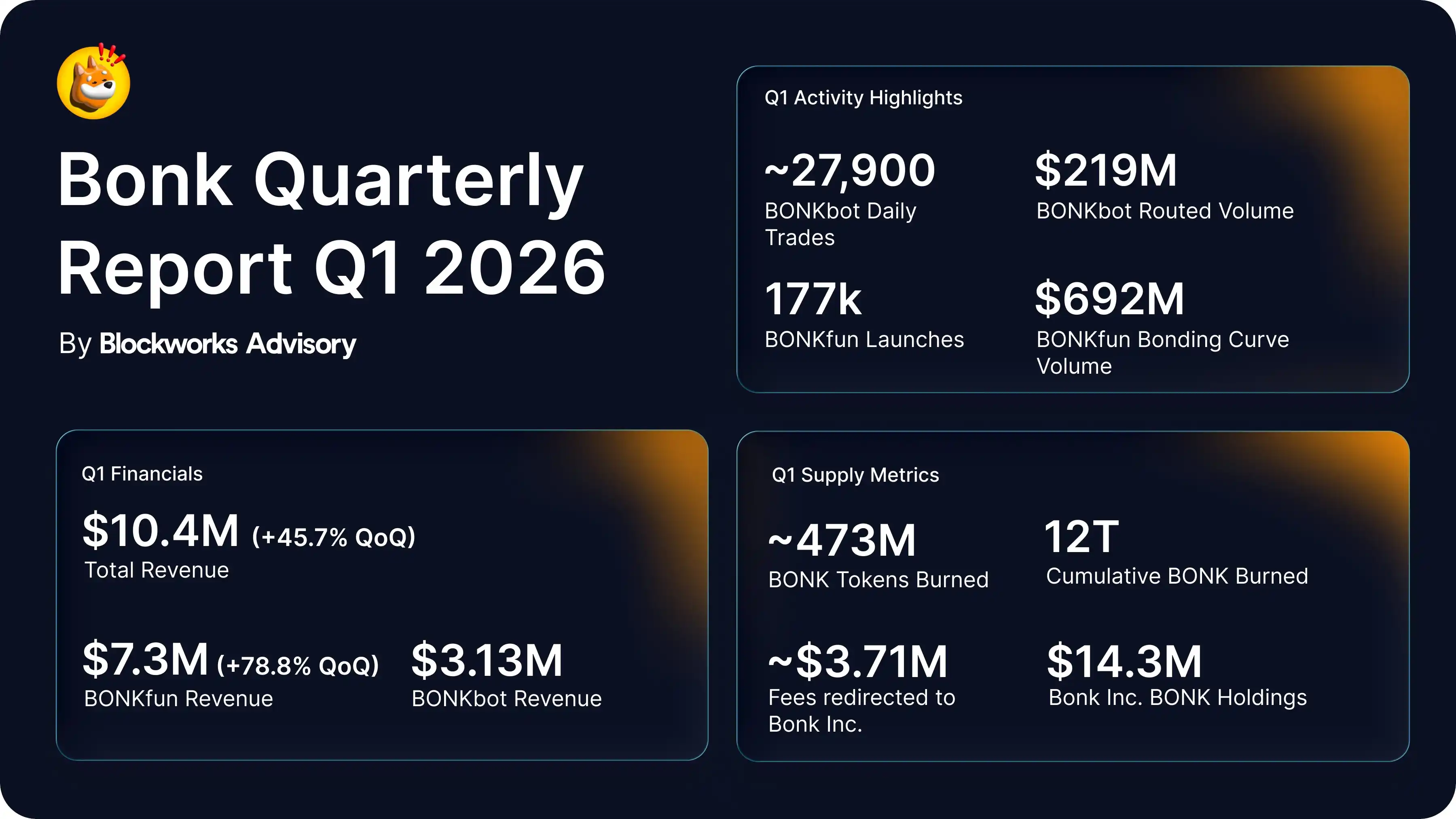
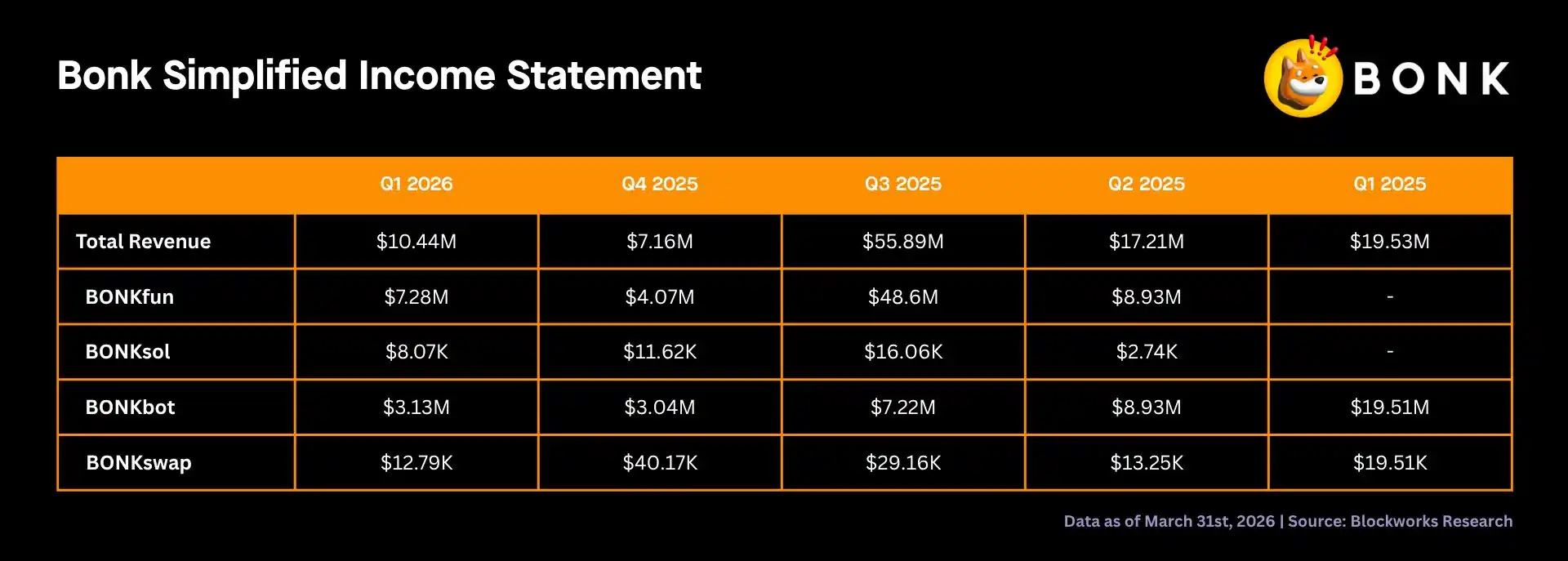
In the first quarter of 2026, Bonk's total revenue reached $10.44 million, a 45.7% increase from the previous quarter's $7.16 million in the fourth quarter of 2025. This recovery was mainly driven by BONKfun, which saw its revenue surge by 78.8% to $7.28 million as the Solana launchpad activities rebounded from the fourth-quarter slump. BONKbot contributed $3.13 million, holding relatively steady quarter-over-quarter with a 3.1% growth - showcasing the terminal's ability to sustain a robust revenue base under different market conditions. While this quarter's revenue is still far below the extraordinary peak in the third quarter of 2025 ($55.89 million), it represents a significant inflection point in the post-peak contraction phase, indicating the dual-mode flywheel's ability to recover as ecosystem activity resumes.
BONKfun reclaimed its position as the primary revenue contributor, accounting for 69.8% of total revenue, up from 56.9% in the fourth quarter of 2025, while BONKbot dropped from 42.4% to 30.0%. This structural shift reflects the resurgence of revenue driven by the launchpad as the primary growth engine, with BONKbot providing a stable baseline. BONKswap ($12.8K) and BONKsol ($8.1K) as contributors at the infrastructure level collectively represent less than 0.3%. BONKfun captured 6.8% of the Solana launchpad bonding curve transaction volume in the first quarter, within the normal 5-15% baseline range.
Management Commentary
Despite widespread challenges faced by the entire crypto market in the first quarter, Bonk's ecosystem made meaningful progress in every vertical - expanding its influence, strengthening the token's economic foundation, and laying the groundwork for future development.
Bonk Inc. (Nasdaq: BNKK) continued to execute its digital asset treasury strategy, adding 145 billion BONK to its long-term holdings during this quarter and increasing its operating capital. As market conditions ease, BNKK is poised to accelerate accumulation - a structural buy-in support for BONK that will only strengthen further as the company's revenue streams mature.
BONKfun has felt the impact of the overall cooling off of meme coin activity, with its revenue softening alongside the broader sector. Nevertheless, the platform's underlying infrastructure, partnerships, and market position remain intact—ready to swiftly recapture trading volumes when meme coin activity rebounds. During this quarter, the platform also dealt with a security incident stemming from a social engineering attack on an external vendor. While no internal personnel were affected, the resolution process was delayed due to the third-party domain provider's slow recovery of access—an frustrating timeline that the team has since addressed with the vendor and relevant authorities. All affected users received compensation equivalent to 110% of their losses. Through partnerships with Graphite Protocol, Raydium, and WLFI, BONKfun continues to be a major driver of USD1 stablecoin trading volume on Solana, explicitly committed to reclaiming and surpassing previous market share levels once activity returns.
BONKtrade, built in collaboration with dYdX, has entered the realm of perpetual DEX—a rapidly growing subsector within DeFi. The platform is preparing to launch new markets and plans to expand RWA trading functionality later this year. Targeted marketing efforts have yielded encouraging user growth, and with on-chain perpetual contracts continuing to take market share from centralized exchanges, BONKtrade's launch timing is opportune.
BONKswap has completed a significant upgrade to its internal routing mechanism, enhancing overall execution quality. The next focus is increasing TVL to further boost efficiency and provide deeper liquidity for new trading pairs generated by BONKfun.
One of BONK's core features is its distributed contributor model—different teams building different protocols yet united by a shared commitment to the ecosystem. This structure is intentionally designed. It reflects the project's decentralized ethos, allowing multiple product lines to advance in parallel. Coordination among independent teams is not without friction, but the results speak for themselves: a diversified ecosystem with multiple revenue verticals and a growing partner network.
Entering the latter half of 2026, the macro view is compelling. All remaining token inflation has concluded. BNKK accumulation is ongoing and accelerating. The product suite is maturing. The contributor community remains focused on a clear objective: creating lasting value for the BONK brand and token.
BONK has never had a formal management hierarchy—it never has. It is guided by early and core contributors who oversee, direct, and hold the entire ecosystem accountable. The focus for the next year is refining the narrative, aligning stories across verticals, and ensuring that when market attention returns, BONK cannot be ignored.
Financial Data
Revenue Performance
Bonk's revenue is derived from programmatic fees across Bonk-related businesses, including a 0.3% swap fee on its launchpad BONKfun, a 1% swap fee on its Telegram trading bot BONKbot, and minor fees from its exchange products and LST products BONKswap and BONKsol.
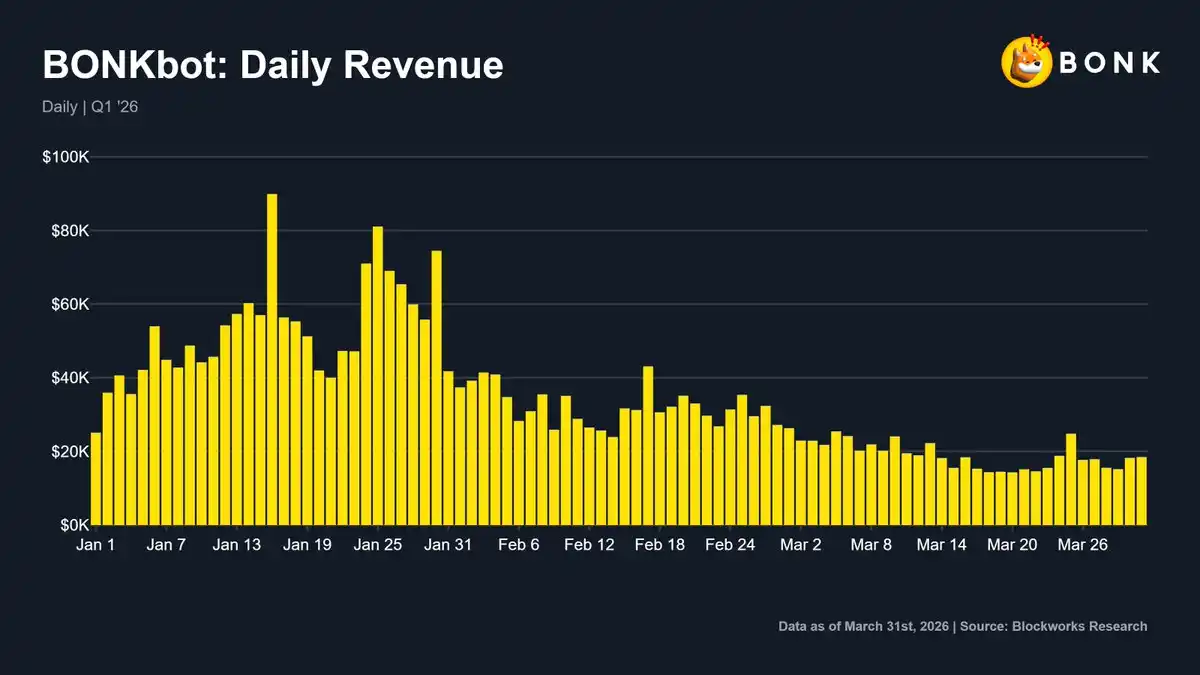
In the first quarter of 2026, Bonk reported a total revenue of $10.43 million, a 46% increase from the fourth quarter of 2025's $7.16 million. This rebound broke a two-quarter contraction trend since the anomalous peak of $55.89 million in the third quarter of 2025, driven by a resurgence in Solana launchpad activity that lifted BONKfun from its post-peak slump. January contributed $6.28 million to this quarter's revenue—60% of the total—reflecting concentrated early-quarter launchpad activity, followed by a slowdown in February ($1.85 million) and March ($2.31 million). This quarter marks the first positive inflection point since the peak in the third quarter of 2025, although revenue remains 81% below that anomalous high point and 66% below the level when BONKbot alone generated $30.89 million in the fourth quarter of 2024.
Revenue Mix Shift
The revenue mix has shifted back towards BONKfun dominance, accounting for 69.8% of total revenue, up from 56.9% in the fourth quarter of 2025. This reversal reflects the launchpad's rebound outpacing terminal growth and underscores Bonk's revenue characteristics' sensitivity to speculative cycle conditions. BONKbot's 30.0% share (down from 42.4%) is a result of the outperformance of BONKfun's growth rate rather than terminal deterioration, as BONKbot saw modest growth in absolute terms.
BONKswap and BONKsol remain foundational products with minimal direct revenue contribution. BONKswap's 68.2% revenue decline reflects a reduction in BONK's transactional activity, while BONKsol's revenue depends on staking rewards rather than fee capture.
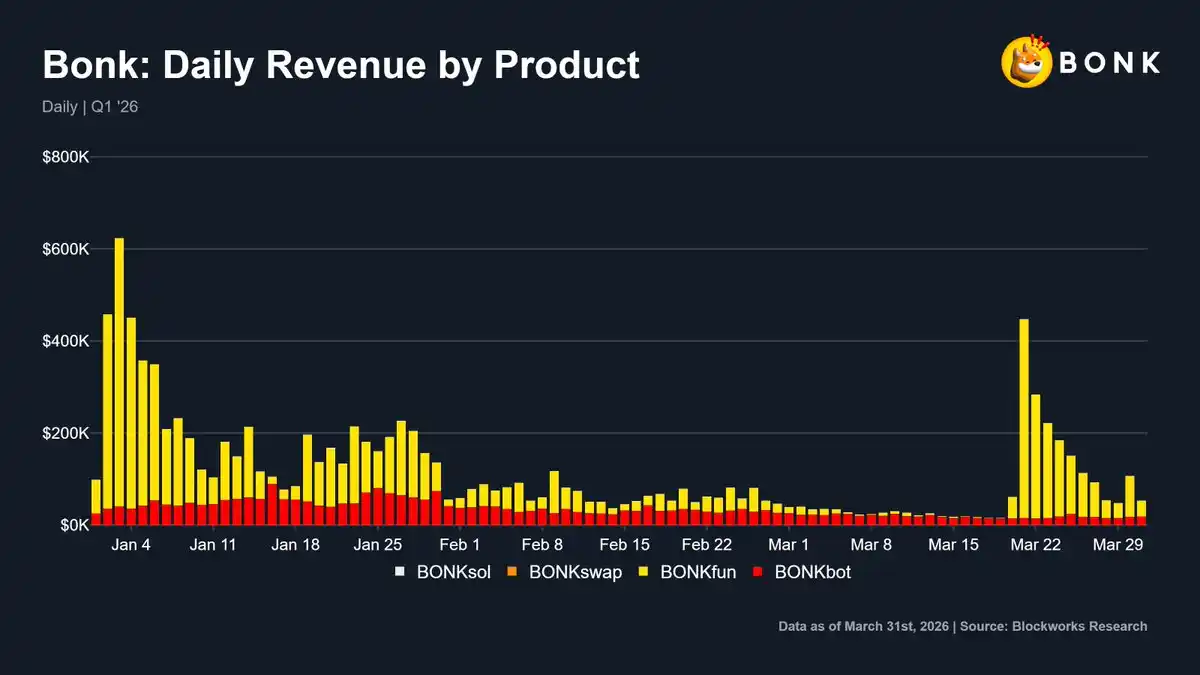
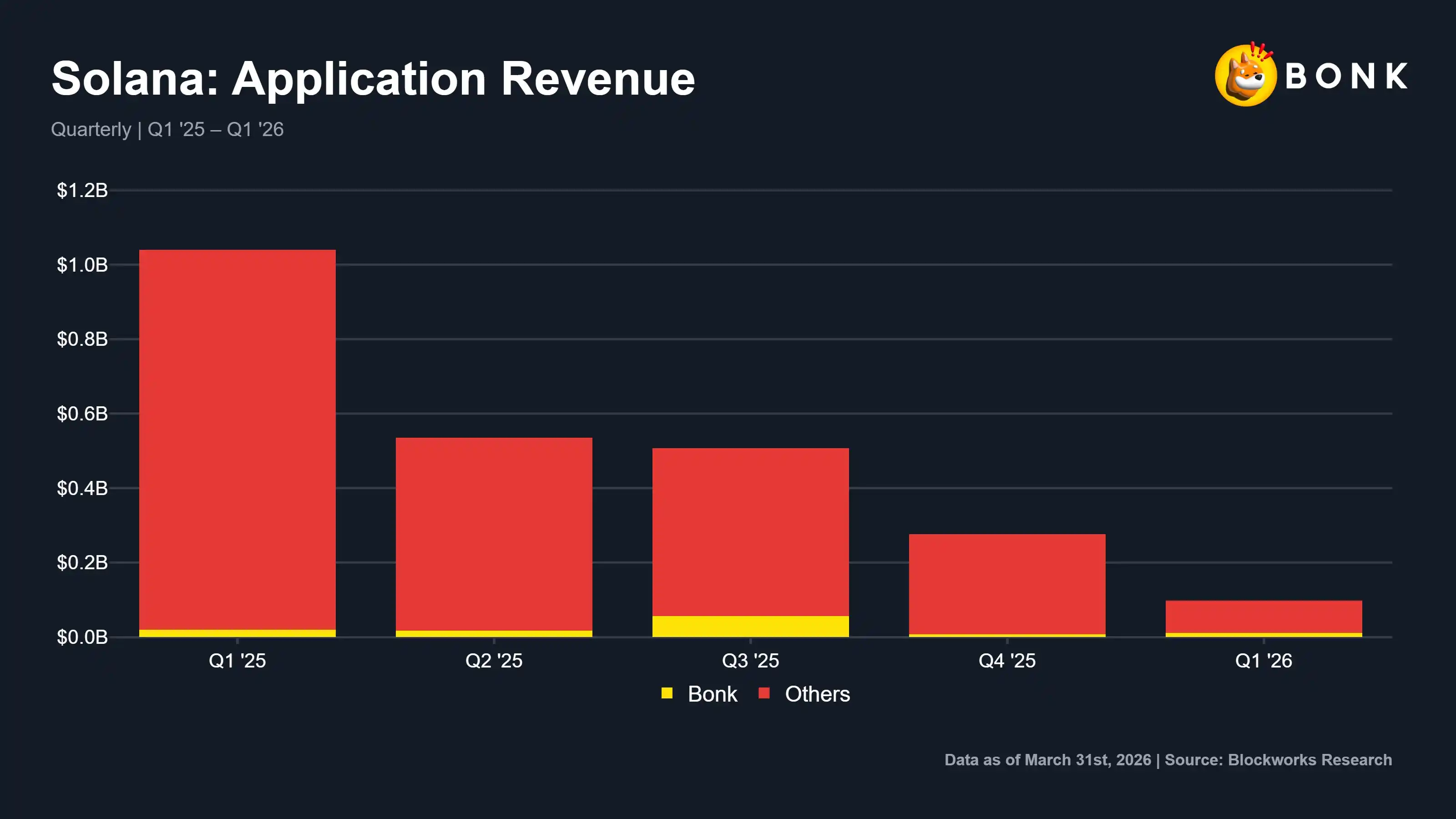
With a 46% sequential revenue growth, Bonk's revenue outpaced the broader Solana ecosystem's overall recovery trend. The first quarter of 2026 demonstrates that the protocol's multi-product model can capture excess revenue during ecosystem acceleration, reinforcing Bonk's position as a leading revenue-generating community protocol on Solana.
Buyback and Burn
The value accrual for BONK holders is achieved through a fee-to-burn mechanism and a 51% fee redirection to the Bonk Inc. (BNKK) digital asset treasury with governance authorization until December 2025. The first quarter of 2026 marked the first full quarter where both mechanisms operated at scale, with the 51% redirection alone from BONKfun fees providing approximately $3.71 million in BNKK DAT purchasing power. Under the platform's revenue level in Q1 2026 ($7.28 million), the new allocation offered a 5.1x multiplier effect compared to the previous 10% allocation (approximately $728,000).
In this quarter's 89 burn events, the protocol burned approximately 472.7 million BONK tokens, reducing the circulating supply through a direct mechanism activation. The burn volume this quarter was relatively moderate in absolute terms, aligning with the fee base flowing through the burn pipeline at the current revenue level. Monthly distribution was uneven: January contributed 58 million, February contributed 9 million, and March surged to 406 million, with March's spike reflecting the end-of-quarter burn execution event. The cumulative supply reduction by quarter-end reached approximately 1.2 trillion BONK tokens, accounting for about 12% of the Genesis supply eliminated through fee-to-burn and governance-directed burns since inception.
By the end of the quarter, 3.05% of the BONK supply had been removed from circulation through buyback or BNKK.
Institutional Products
Exchange-Traded Products (ETPs)
Osprey Investments continues to manage the Osprey Bonk Trust (ticker: OBNK), offering institutional custody and BONK exposure. As of quarter-end, the BONK assets under management in OBNK were approximately $13 million. The trust maintains a 2.5% annual management fee and requires a minimum investment of $10,000, serving as a key institutional custody tool.
Alongside BONK, the Bonk ETP (ticker: BONK) by Bitcoin Capital AG is the primary European ETP with BONK exposure. As of quarter-end, the BONK ETP held approximately $1 million in BONK assets under management. The ETP maintains a 1.5% annual management fee and is traded on the SIX Swiss Exchange.
Digital Asset Treasury Company (DATs)
Bonk Inc. (BNKK) as a NASDAQ-listed entity launched in October 2025 with a Treasury Instrument Operation. As previously mentioned, BNKK's core function is programmatic BONK accumulation through fee distribution. As per the governance vote in December 2025, 51% of BONKfun platform fees flow to BNKK DAT for BONK purchases.
At the end of Q1 2026, the tool's NAV was approximately $14.3 million, down from $18.5 million at the beginning of the quarter, primarily driven by the devaluation of the BONK token price. BNKK is the first NASDAQ-listed entity treasury with BONK as a primary strategic holding, establishing institutional legitimacy through a community vote via BonkDAO that subordinates treasury governance to the community (distinct from a top-down corporate treasury), running a programmatic demand channel independent of retail market sentiments.
Revenue Drivers
BONKbot (Trading Terminal)
BONKbot generated $3.11 million in revenue in Q1 2026, a 3.1% increase from the previous quarter's $3.04 million. The nearly flat growth masks dynamic shifts within the quarter: January saw $1.64 million (52% of the quarterly total), followed by a contraction to $0.903 million in February, further slowing to $0.593 million in March. The monthly decline trajectory aligns with the slowdown in Solana meme coin trading activity this quarter, yet even at the trough, the absolute revenue base remained above $0.5 million per month—a testament to the durable user base of BONKbot persisting across varying market conditions. Accounting for 30.0% of total revenue, BONKbot, after briefly claiming a majority share in the BONKfun's peak-to-trough in Q4 2025 (42.4%), has reverted to a minority revenue position. This regression is not a competitive concern; it reflects a normalization of platform activity that disproportionately lifted BONKfun.
Transaction Volume and User Activity
BONKbot averaged approximately 27,900 transactions per day in Q1 2026, with a total of 2.51 million transactions for the quarter. This is an increase from the Q4 2025 daily average of around 20,000 transactions, indicating additional user activity attracted to the trading terminal during the platform's rebound. The durable user base that persisted through the fourth-quarter contraction has expanded rather than just maintained, a constructive signal for terminal stickiness. In a competitive landscape, Axiom maintained a dominant terminal position with around 1.48 million daily transactions, while Phantom handled about 306,000 daily transactions. BONKbot's 28,000 daily transactions represent a niche share of terminal activity, aligning with its positioning as an ecosystem-integrated terminal differentiated by a burn mechanism rather than scale.
Per Transaction Revenue Dynamics
The per-transaction economics of BONKbot continue to reflect the industry-wide fee compression dynamic. The first-quarter average per-transaction revenue was approximately $1.25, slightly lower than the fourth quarter's average of around $1.75. Following a 55% compression from the third quarter to the fourth quarter, the stability of per-transaction revenue suggests that fee levels may be approaching a sustainable baseline for terminal category, although continued monitoring is necessary. The burn mechanism acts as a differentiating structural factor.
BONKbot remains the sole transaction terminal on Solana contributing to permanent supply reduction with every transaction. With quarterly revenue of $3.13 million, the fee-to-burn pipeline continues to convert a portion of each transaction into removing BONK from circulation. While the absolute burn volume remains modest at the current revenue levels, the significance of this mechanism lies in its composability: regardless of market conditions, each executed transaction increases cumulative supply reduction, creating a value accrual path for holders that is unique to the terminal.
BONKfun (Token Launchpad)
Revenue Rebound from Post-Peak Trough
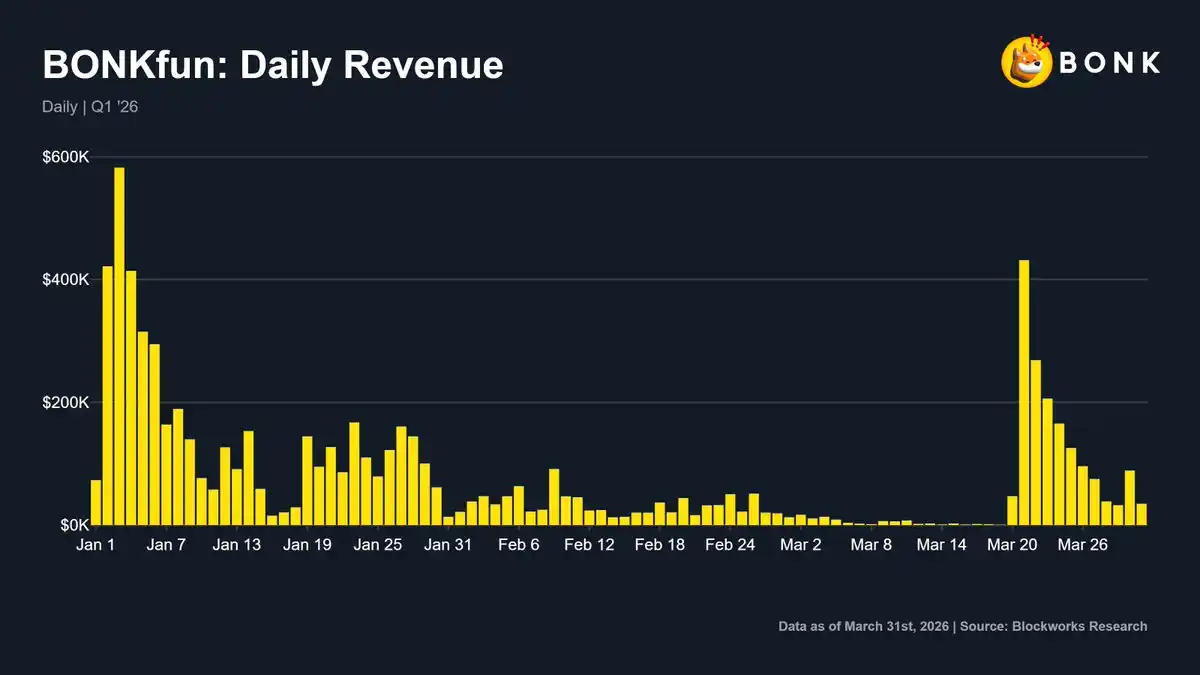
In the first quarter of 2026, BONKfun generated $7.28 million in revenue, a 78.8% increase compared to $4.07 million in the fourth quarter of 2025. This recovery marks the token launchpad's first positive inflection since the abnormal peak in the third quarter of 2025 ($48.62 million), primarily driven by the January Solana bonding curve event surge. January alone contributed $4.63 million (63.6% of the quarterly total), followed by a slowdown to $0.94 million in February and a partial recovery to $1.71 million in March. The quarterly pattern aligns with the broader Solana launchpad market, with the early 2026 enthusiasm around new token launches giving way to moderation as speculative activity normalizes.
For context, the fourth quarter of 2025 represented the trough following a sharp contraction from the meme cycle peak in the third quarter of 2025, during which BONKfun briefly captured over 78% of Solana launchpad bonding curve transaction volume. The first quarter of 2026's rebound to $7.28 million positions BONKfun's revenue between the trough of the fourth quarter of 2025 and the early levels of the second quarter of 2025 ($17.21 million).
51% Fee Redistribution: Structural Imperatives in Action
As previously mentioned, the December 2025 Governance Vote redirected 51% of BONKfun fees to BNKK DAT BONK purchases upon completing its first full quarter. With BONKfun revenue at $7.28 million, this redirection created approximately $3.71 million in programmatic BONK purchasing power. This structural demand mechanism now operates as a durable, non-discretionary buyer channel, scaling directly with platform activity.
At a January annualized run rate (with BONKfun revenue around $55.6 million), the 51% redirection will generate approximately $28.4 million in annual programmatic demand. At a more conservative March run rate (annualizing around $20.5 million), this figure is about $10.5 million. Under the Q1 2026 BONKfun run rate (annualizing around $29.1 million), the 51% redirection implies around $14.9 million in annual BNKK DAT purchasing power, forming a foundational structural demand base scaling directly with platform activity. The significance of this mechanism will increase if the Solana bonding curve market recovers to historical levels.
Infrastructure Ecosystem
BONKswap
BONKswap generated $12.8K in revenue in the first quarter, a 68.2% decrease from the $40.2K in the fourth quarter of 2025. The value of BONKswap lies in its ecosystem-connecting role rather than direct fee generation. It maintains BONK liquidity on aggregator interfaces, supporting the cross-product flywheel of BONKfun launches, BONKbot trades, and secondary market access.
BONKsol (Liquidity Staking)
BONKsol generated $8.1K in revenue in the first quarter, reflecting its earnings accretion design rather than fee capture. The BONKsol-to-SOL exchange rate increased from 1.154 at the beginning of the quarter to 1.169 by quarter-end, holding within the consistent 7-8% annualized yield range. The stable rate appreciation confirms the staking mechanism operated as designed throughout the quarter's price fluctuations.
Protocol Analysis
BONKbot Trading Activity
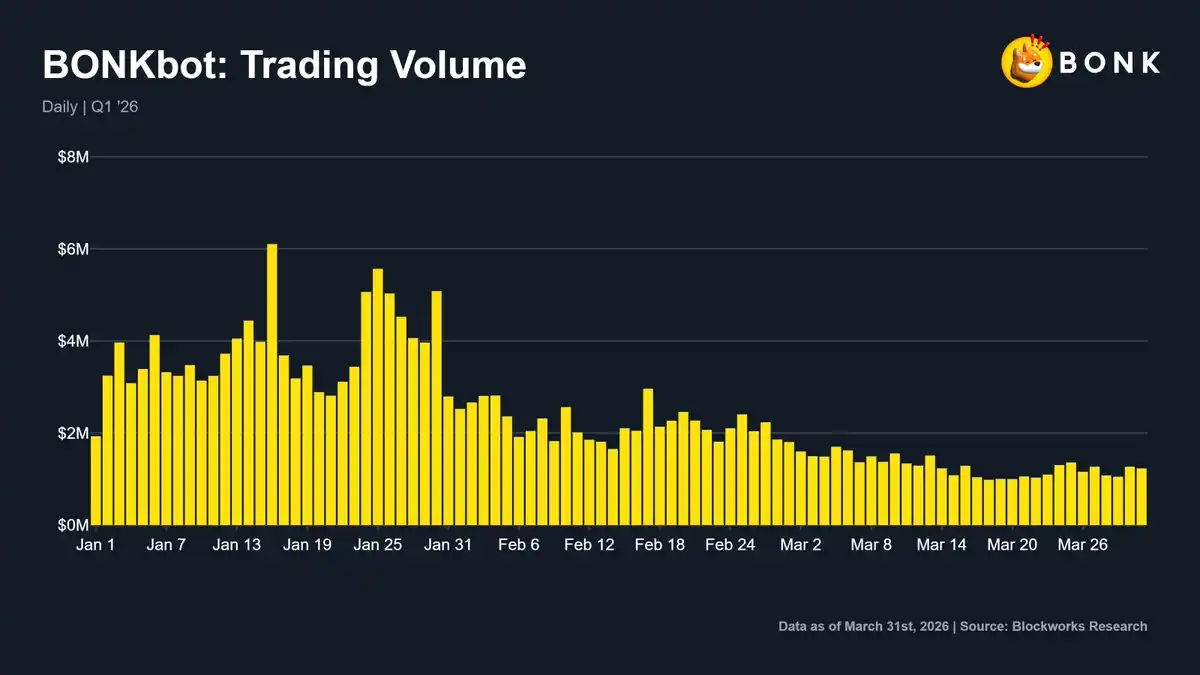
In the first quarter of 2026, BONKbot routed approximately $219 million in total trading volume, with around $117 million in January, $62 million in February, and $40 million in March. The monthly decline trajectory reflects a slowdown in Solana meme coin trading activity after a strong January opening. Daily routed trading volumes varied from under $1 million on the quietest days in March to over $6 million during the active periods in January. For context, the fourth quarter of 2025 saw around $186 million in total BONKbot trading volume, making the $219 million in the first quarter, despite only a 3.1% revenue increase, a roughly 18% growth in transaction throughput. The discrepancy between transaction volume growth and revenue growth indicates continued compression of revenue per transaction, with the platform handling a significantly larger volume to generate comparable fee revenue.
Transaction Volume by Destination Route
The AMM of Pump remains the primary execution venue, reaching $158 million (72% of categorized transaction volume), followed by Meteora with $38 million (17%) and Raydium with $23 million (11%). Orca captured a small amount of $309,000. The route distribution reflects the underlying liquidity landscape on Solana: Pump's integrated AMM (PumpSwap) naturally captures the majority of meme coin transaction flow, Raydium captures tokens graduating from BONKfun, and Meteora serves as a secondary liquidity venue. The cross-product flywheel between BONKfun's launch and Raydium route share is visible in the data. The period of elevated BONKfun launch activity in January corresponds to higher Raydium route shares on BONKbot as newly graduated tokens transition from the bonding curve to Raydium AMM pool for secondary trading. This structural relationship confirms that BONKfun activity directly generates downstream transaction volume for BONKbot through the graduation path.
Transaction Volume by Token Source
Tokens originating from Pump account for $174 million (79%) of BONKbot's token-categorized trading activity, tokens from BAGS contribute $17.7 million (8%), and tokens from BONKfun contribute $12.7 million (6%). Approximately $33.4 million (15.2%) of the volume occurs on the bonding curve, with the rest happening in post-graduation secondary market trades. BONKfun's 6% share of token-categorized trading volume is a modest number that underestimates the cross-product relationships. BONKfun tokens generate incremental Raydium route trading volume post-graduation, and BONKfun's overall economic footprint in the BONKbot ecosystem extends beyond direct token categorization. Nevertheless, Pump tokens remain the overwhelmingly dominant source of trading volume, reinforcing BONKbot's positioning as a cross-ecosystem execution layer that captures Solana meme coin trading activity regardless of the origin platform of the token.
BONKfun Launch Platform Activity
Bonding Curve Transaction Volume
The BONKfun bonding curve transaction volume totaled approximately $692 million in the first quarter of 2026, with $460 million in January, $93 million in February, and $138 million in March. The concentration in January reflects a surge in early-quarter Solana launch platform activity, with daily volumes peaking above $30 million and subsequently slowing to $10-50 million during the quietest period in February, then rebounding to $30-100 million in March. The broader Solana bonding curve market processed $10.16 billion in the first quarter, placing BONKfun's $692 million at a 6.8% market share. Pump dominated the Solana launch platform space, with bonding curve volume reaching $8.74 billion (86.0%). The monthly market share trajectory—10.5% in January, 3.2% in February, 4.8% in March—illustrates BONKfun's sensitivity to market conditions: the platform captures outsized shares during active launch platform periods, contracts more sharply during troughs, consistent with its secondary positioning in a winner-takes-all launch platform landscape.
Token Launches and Vesting
The daily token launch on BONKfun averaged around 1963 per day in the first quarter of 2026, totaling 177,000 launches. Pump, on the other hand, processed 2.53 million launches during the same period (an average of 28,000 per day). BONKfun maintained a vesting rate of about 0.6-0.7% in the first quarter of 2026 to achieve a bonding curve launch percentage for the secondary AMM liquidity pool. In absolute terms, this translates to an average of around 11 vestings per day for the USD1 quote pool and around 4 for the SOL quote pool. The vesting rate remained stable relative to the range in the fourth quarter of 2025, indicating that the quality of tokens measured by post-launch survivability did not deteriorate with the trading volume cycle.
Market Share and Competitive Position
In the first quarter of 2026, BONKfun captured 6.8% of the Solana Launchpad bonding curve trading volume (6.92 billion USD out of a total of 101.6 billion USD), establishing itself within the normalized 5-15% baseline range set during the peak-post period. The monthly trajectory shows significant variations: a 10.5% share in January (4.60 billion USD) reflected the early quarter Launchpad surge and BONKfun's participation in elevated launch activities, followed by normalization to 3.2% in February (93 million USD) and 4.8% in March (138 million USD). Pump maintained a dominant position, accounting for 86.0% of the bonding curve trading volume (87.4 billion USD), consistent with the winner-takes-all dynamic in Solana Launchpad infrastructure. The competitive question for BONKfun is not whether it can challenge Pump's scale dominance but whether it can sustain a durable share of the Solana launch activity significant enough to generate meaningful fee revenue for burns and BNKK DAT demand pipelines.
The total Launchpad trading volume (including secondary trading of launched tokens) tells a complementary story: BONKfun's total volume reached 2.47 billion USD in the first quarter, accounting for 6.5% of the Solana Launchpad ecosystem's 38.2 billion USD. This broader trading volume metric captures the full transaction lifecycle of BONKfun native tokens, including secondary market activity on Raydium post-bonding curve vesting.
TVL Overview
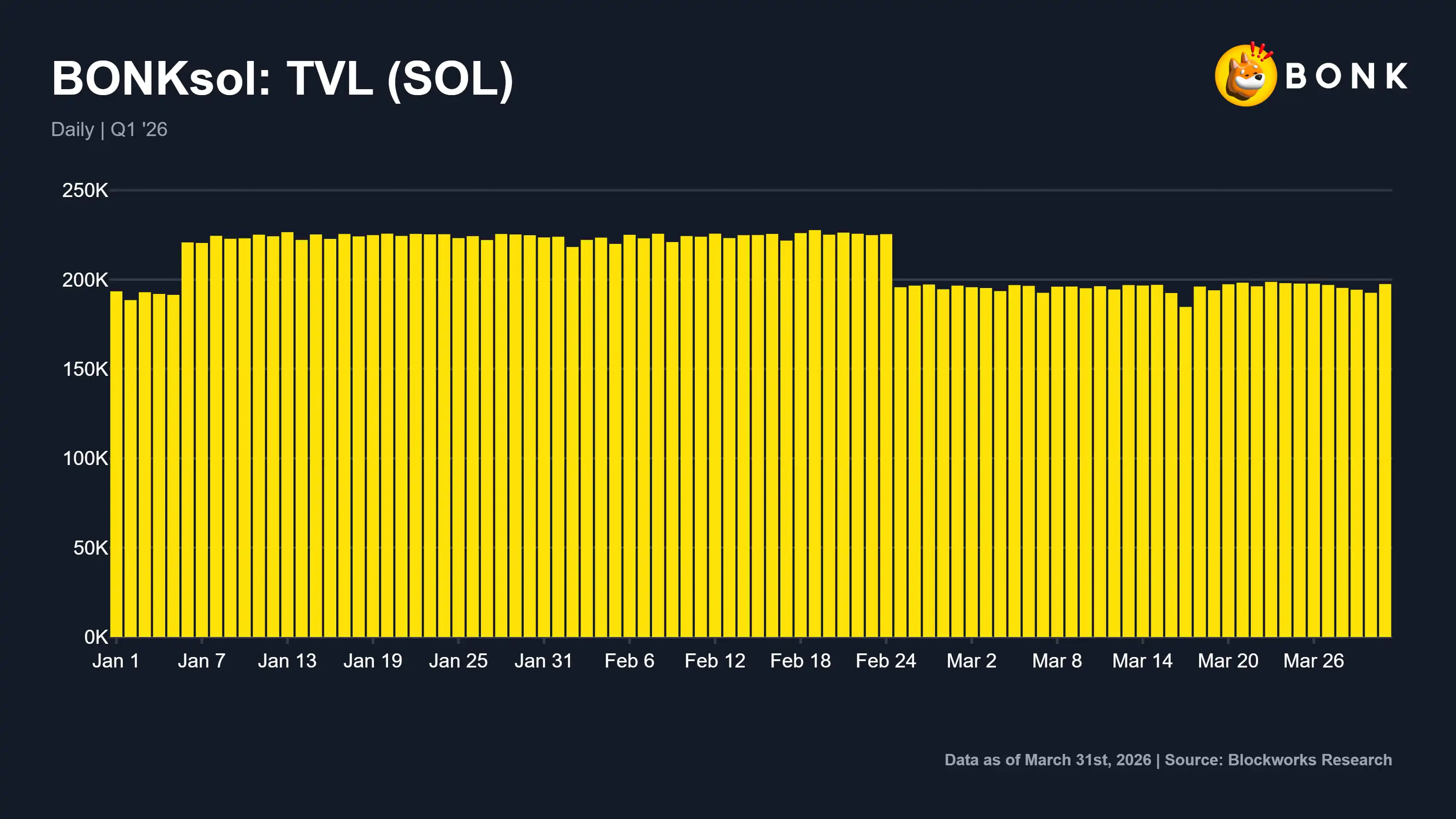
The total value locked (TVL) of BONKsol decreased from 24.2 million USD at the end of the fourth quarter of 2025 to 16.3 million USD at the end of the first quarter of 2026, shrinking by 32.7%. The decline was mainly driven by a 33% drop in SOL's price during this quarter. Parsing out the two factors: the underlying BONKsol TVL remained relatively stable to slightly positive growth (from 168,000 SOL at the end of the fourth quarter of 2025 to 169,000 SOL at the end of the first quarter of 2026), while the USD-denominated TVL decrease was exacerbated by SOL's price trajectory.
Staking Flow and Holder Identification
Outstanding BONKsol increased from 168,000 to 169,000 in Q1, with a net increase of approximately 1,259 BONKsol (0.75%). The daily flow exhibited mixed activity: burn events (unstaking) averaged around 22 BONKsol per day over 83 active days, while mint events (staking) averaged around 36 BONKsol per day. The net positive flow during a significant SOL price contraction period is a confidence signal, consistent with the observed pattern from the previous quarter that staking participation continues or grows despite adverse price conditions.
Yield Mechanism
The BONKsol-to-SOL exchange rate rose from 1.154 to 1.169 in Q1, representing an appreciation of about 1.3% during the quarter. The annualized yield ranged from 7.8% at the end of the quarter (measured over 90 days) to 9.1% (measured over 120 days), aligning with Solana's stable 7-8% APY. The monotonically increasing rate confirms that the staking mechanism continues to accrue SOL rewards to stakers regardless of market price dynamics. Stakers now receive approximately 16.9% more SOL than their original deposit upon redemption.
Supply Mechanism
Approximately 473 million BONK tokens were burned in Q1 2026, bringing the total historical burn to 120 trillion BONK (12.0% of the 1 quadrillion genesis supply). The quarterly burn figure reflects the cost-to-burn pipeline running at the current revenue levels, a mild but mechanistically consistent supply reduction.
The monthly burn distribution was uneven: January contributed 580 million BONK, February contributed 90 million, and March saw a total burn of 406 million. The concentration in March indicates a one-time burn execution event rather than stable daily burns, aligning with the protocol's periodic burn cadence, where accumulated buyback wallet BONK is burned in batches.
By the end of the quarter, a large portion of BONK holdings existed outside of active circulation: BonkDAO held around 443 trillion BONK, while BNKK increased by 220 billion BONK at quarter-end, bringing the total DAT holdings to 2.48 trillion BONK.
Product and Ecosystem Updates
BONKtrade
BONKtrade partnered with dYdX to introduce BONK into the perpetual futures space this quarter. The platform is gearing up to introduce new markets as well as RWA trading functionality later in 2026. This launch enables BONK to capture market share as on-chain perpetual contracts continue to drive volume away from centralized exchanges.
BONKswap
BONKswap completed a significant upgrade to its internal routing mechanism this quarter, enhancing the execution quality of all trading pairs. The next development focus is on increasing TVL to deepen liquidity and better support new token pairs emerging from BONKfun graduates.
BONADfun (Monad)
In late 2025, BONKfun was deployed as BONADfun on Monad, marking BONK's first expansion beyond Solana. Built in collaboration with the Doppler Protocol, BONADfun brings BONKfun's launchpad model to Monad through a dynamic pricing curve. The on-chain traction is a focal point for active participation and represents a mid-term cross-chain growth catalyst for the ecosystem.
Institutional Infrastructure
REX Capital and Osprey Investments submitted applications for the BONK ETF this quarter, along with similar instruments for TRUMP, DOGE, and other tokens. The approval timeline still depends on SEC review, but this application signals ongoing institutional infrastructure development around BONK, independent of retail market conditions.
Summary
The first quarter of 2026 marked the first positive revenue inflection since the anomalous peak in the third quarter of 2025, with the dual-mode flywheel demonstrating its designed behaviors: BONKfun captured a 78.8% QoQ rebound as Solana launchpad activity recovered from its trough, while BONKbot maintained its revenue base with a 3.1% growth, independent of speculative sentiment. The total revenue of $10.44 million this quarter, while significantly lower than historical peaks, confirmed the ecosystem's response to revenue models for recovery without requiring Bonk to recapture peak market share conditions. The 51% fee redirect from the December 2025 governance vote resulted in the first full quarter of systematic BONK demand through BNKK DAT, establishing a structural demand mechanism with approximately $3.71 million in quarterly purchasing power at the current BONKfun revenue levels.
The structural mechanisms established later in 2025—51% fee redirect, BNKK DAT institutional channel, fee-to-burn pipeline—are now operational and producing measurable outputs. The forward challenge is not whether these mechanisms are effective, but how to scale them. The delta between January's annualized pace (approximately $28.40 million in annualized systematic demand, implying a 5.9% annual buyback of market cap) and March's (approximately $10.50 million, or about 2.2%) captures the outcome range, with actual results determined by factors primarily beyond BONK's direct control: Solana ecosystem activity cycles, memetic token sentiment, and competitive dynamics within the launchpad category. BONK's structural advantage lies in demand mechanisms automatically activating at any activity level, accumulating through market cycles rather than relying on specific conditions to operate.
Welcome to join the official BlockBeats community:
Telegram Subscription Group: https://t.me/theblockbeats
Telegram Discussion Group: https://t.me/BlockBeats_App
Official Twitter Account: https://twitter.com/BlockBeatsAsia
