Warming up for a weekend, Binance's US stock product has finally arrived. In this Binance APP, basically all US stocks can be traded.
This time, Binance did not dip its toe into a few tokenized blue-chip stocks, but instead opened up more than 7,000 US stocks and ETFs in one go, positioning itself as the "multi-asset financial super app" as mentioned by co-CEO Richard Teng. In his comments to Fortune, he stated that US stocks account for more than half of the global stock market, but overseas users face high costs and friction when buying them. Binance's goal is to eliminate this barrier.
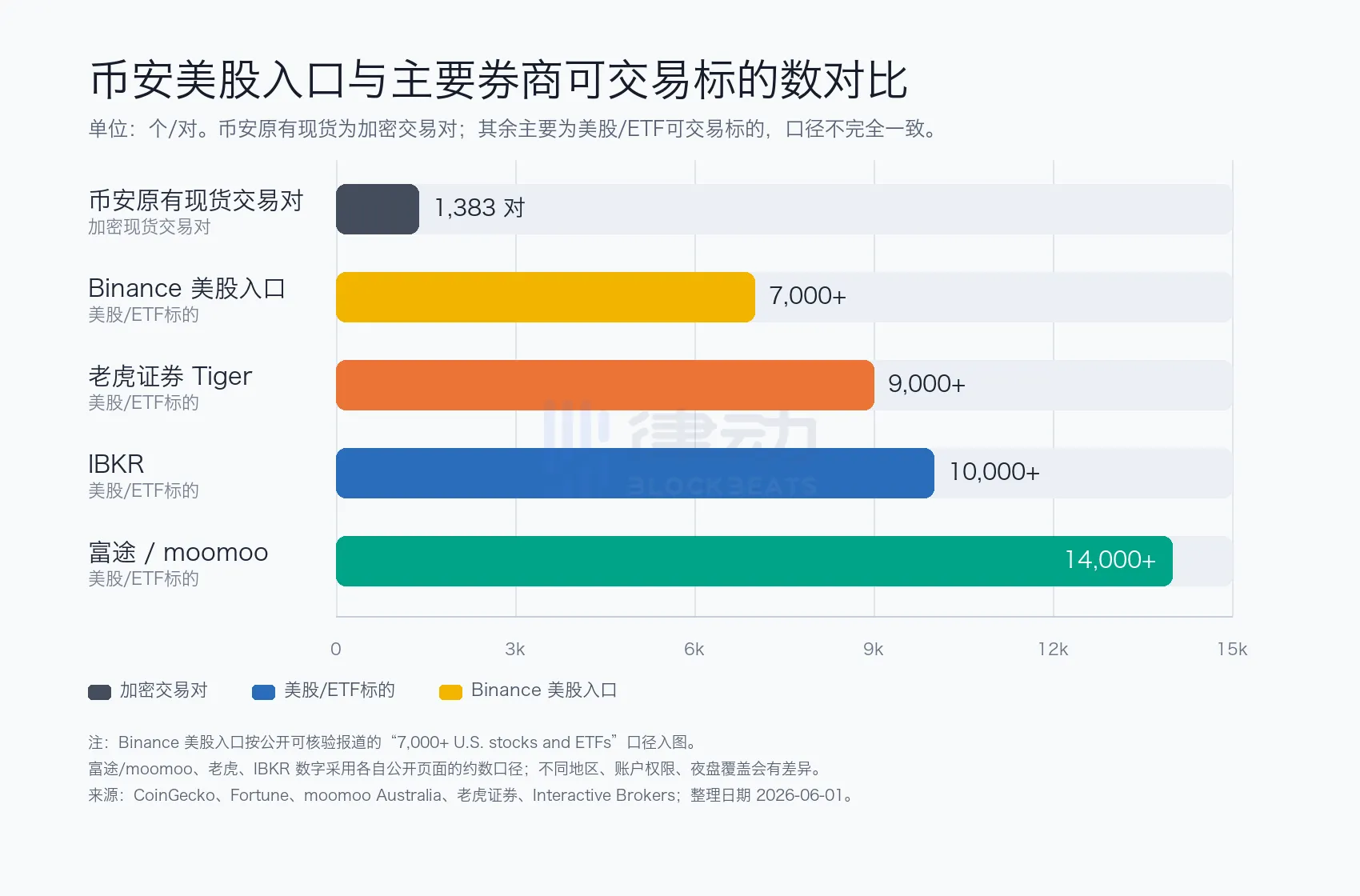
The BlockBeats editor conducted a complete order placement test using NVDA to experience this product from start to finish.
Product Test: How is the experience of Binance's US stock product
Open the "Settings" page of the Binance App, the first thing is to confirm the version number: v3.15.0, the latest version. The language has been switched to Traditional Chinese. The previously mentioned prerequisite raised by the community is validated here: Chinese users who want to participate in US stock trading must switch the language from Simplified Chinese to Traditional Chinese or other languages, with Simplified Chinese being the only language excluded.
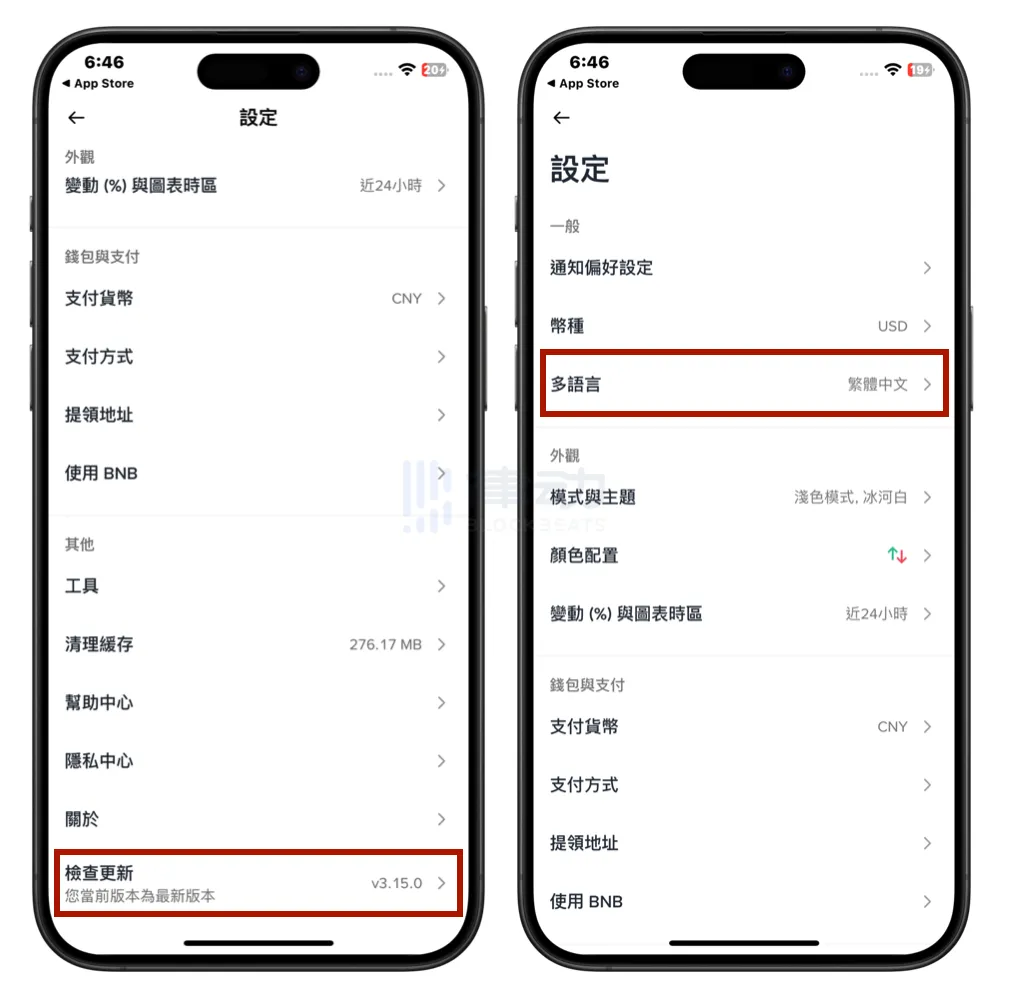
But one detail is worth noting. Although the language has changed, the "Payment Currency" still shows CNY, indicating that the KYC identity and payment currency have not changed due to the language switch. Binance has only blocked the entrance to US stocks for Simplified Chinese on the front end, while the underlying account system remains unchanged. Simplified Chinese is almost equivalent to the jurisdiction of mainland China in terms of compliance, and US stocks are considered highly regulated assets. This invisible geographic barrier is not a technical limitation but a compliance stance: by using a language change to bypass the barrier, responsibility is shifted to the user, and nominal compliance is maintained.
Switching to the "Market" page, a "Traditional Finance" entrance appears at the top tab, alongside "Cryptocurrency" and "Alpha". Further down are three sub-tabs: Stocks, Spot, and U-based Contracts. Under the Stocks tab, there are two filters: "US Stocks" and "ETFs".
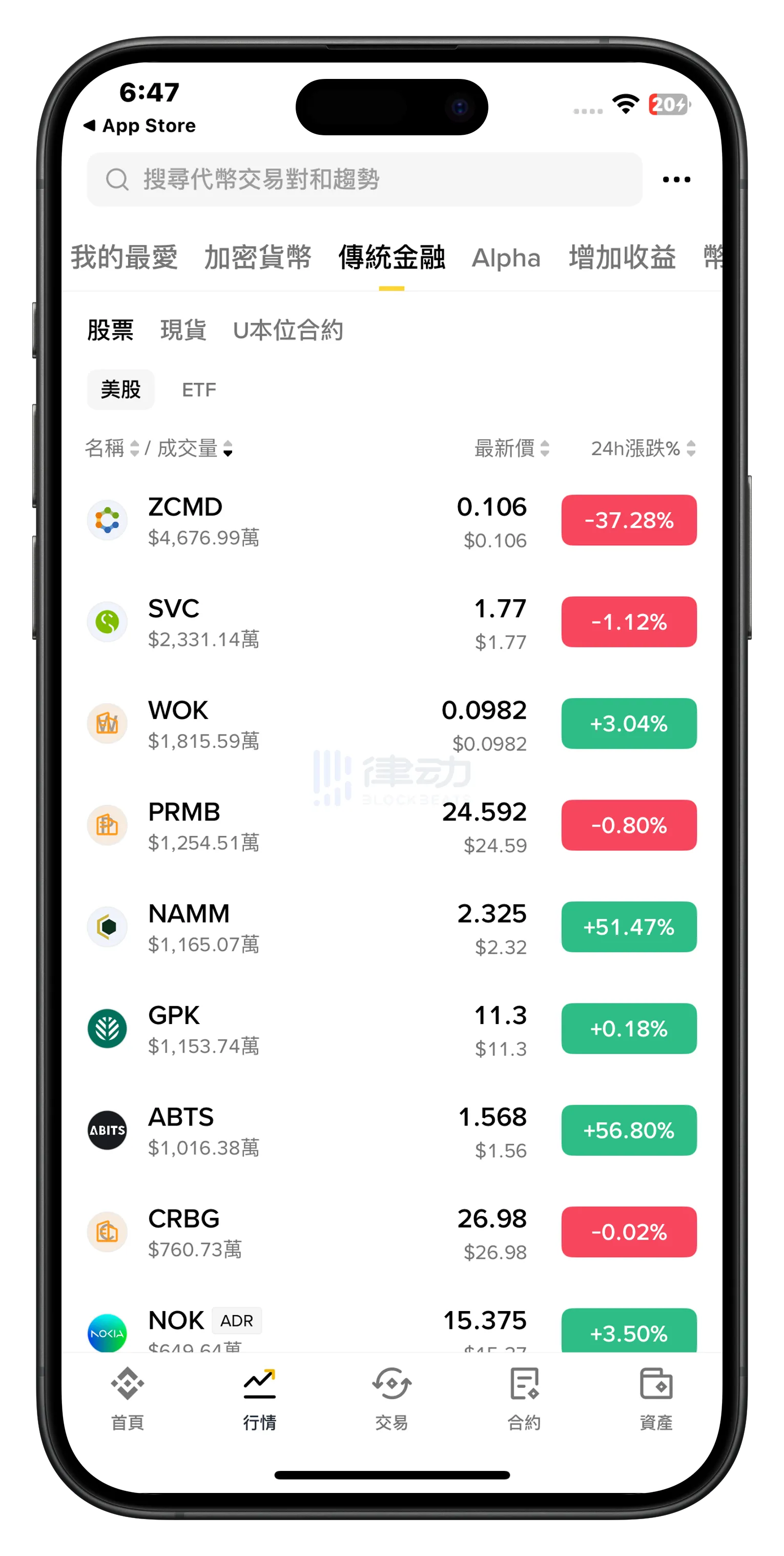
Scrolling through the list, the first thing you see is not Apple and Tesla, but rather ZCMD (with a market cap of approximately $46.76 million), SVC ($23.31 million), WOK ($18.15 million), these lesser-known small-cap stocks that even seasoned US stock traders may not recognize. Next to NOK, there is even an ADR tag. This indicates that the coverage of these 7,000 stocks is not just a facade with a few blue-chip stocks but genuinely extends to small-cap and even ADR levels.
However, if there were other filtering and sorting options that could display mainstream large-cap stocks such as NVIDIA and Intel at the forefront, the experience might be better.
The ability to offer trading pairs for 7,000 US stocks is because Binance is not following the on-chain tokenization route, but rather a real brokerage channel, where the assets are not limited by the issuance progress of the issuer. To put it in perspective: Kraken's xStocks covers over 60 blue-chip stocks, the underlying issuer Backed Finance currently has about 100 stocks, aiming to reach over 500 by the end of the year, and Robinhood's tokenization in the EU covers approximately 200 companies. While others start by tokenizing one by one, Binance has directly onboarded an entire shelf of the US stock market.
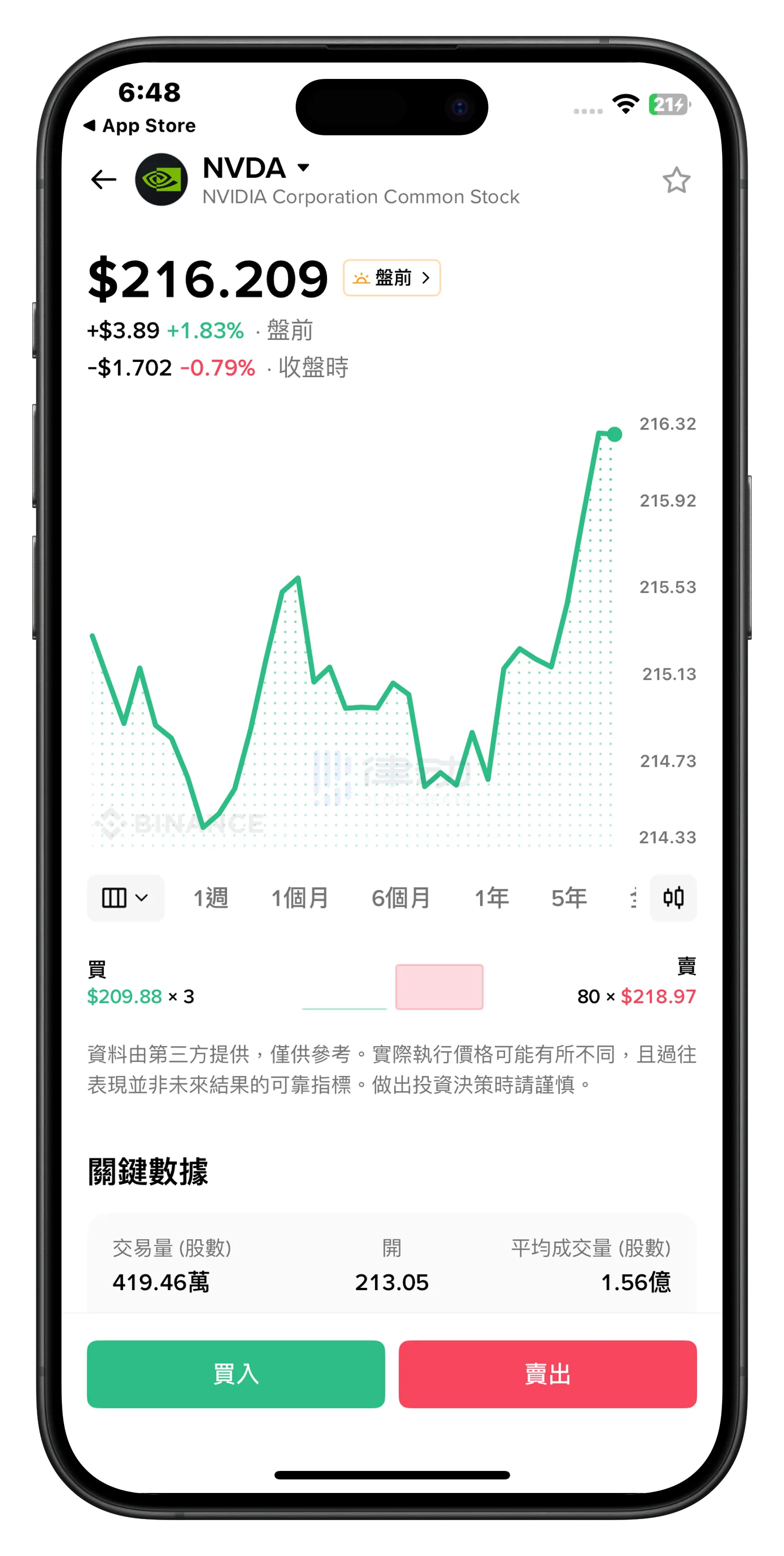
Entering the NVIDIA details page. The price is $216.209, marked as "pre-market," with a pre-market increase of 1.83% and a 0.79% decrease from the previous closing day. The candlestick chart supports a time span from 1 week to 5 years, similar to mainstream brokerage apps.
Scrolling down reveals a set of "Key Data" panels: trading volume of 4.1946 million shares, opening at 213.05, average volume of 156 million shares, 52-week high of 236.54, low of 135.40, market cap of $5.11 trillion, P/E ratio of 32.04, EPS of $6.59, dividend yield of 0.02%, and free cash flow of $1190.76 billion. The data granularity has reached the level of Webull or Robinhood. Further down is the "Corporate Actions" section, indicating a cash dividend on June 4.
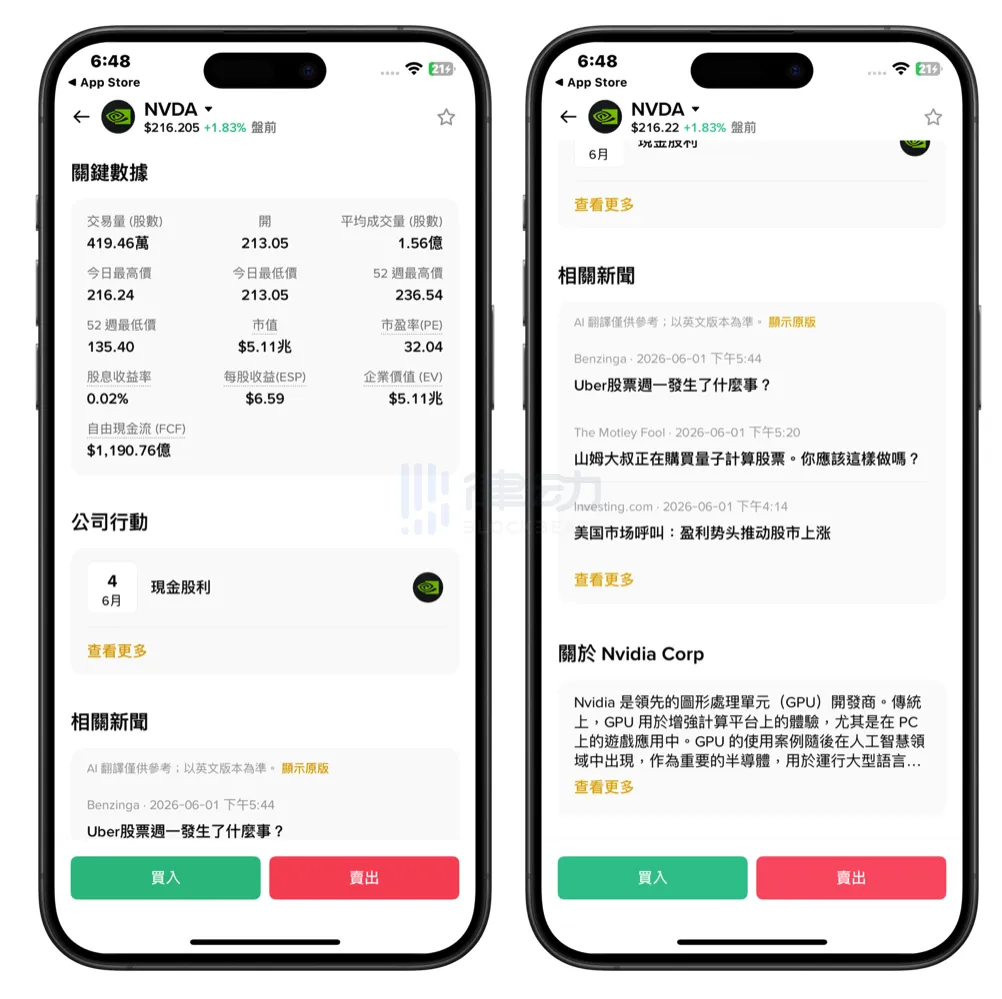
The "Related News" section aggregates third-party sources such as Benzinga, The Motley Fool, Investing.com. At the very bottom is the company overview. The overall information architecture is sufficient for stock novices, but lacks deep data such as financial statements, analyst ratings, institutional holdings, falling short of platforms like Bloomberg or Tonghuashun by an order of magnitude. For Binance's target users, it might be adequate. However, for heavy stock players, it may still lack in information density and professionalism.
Next, we proceed to place an order.
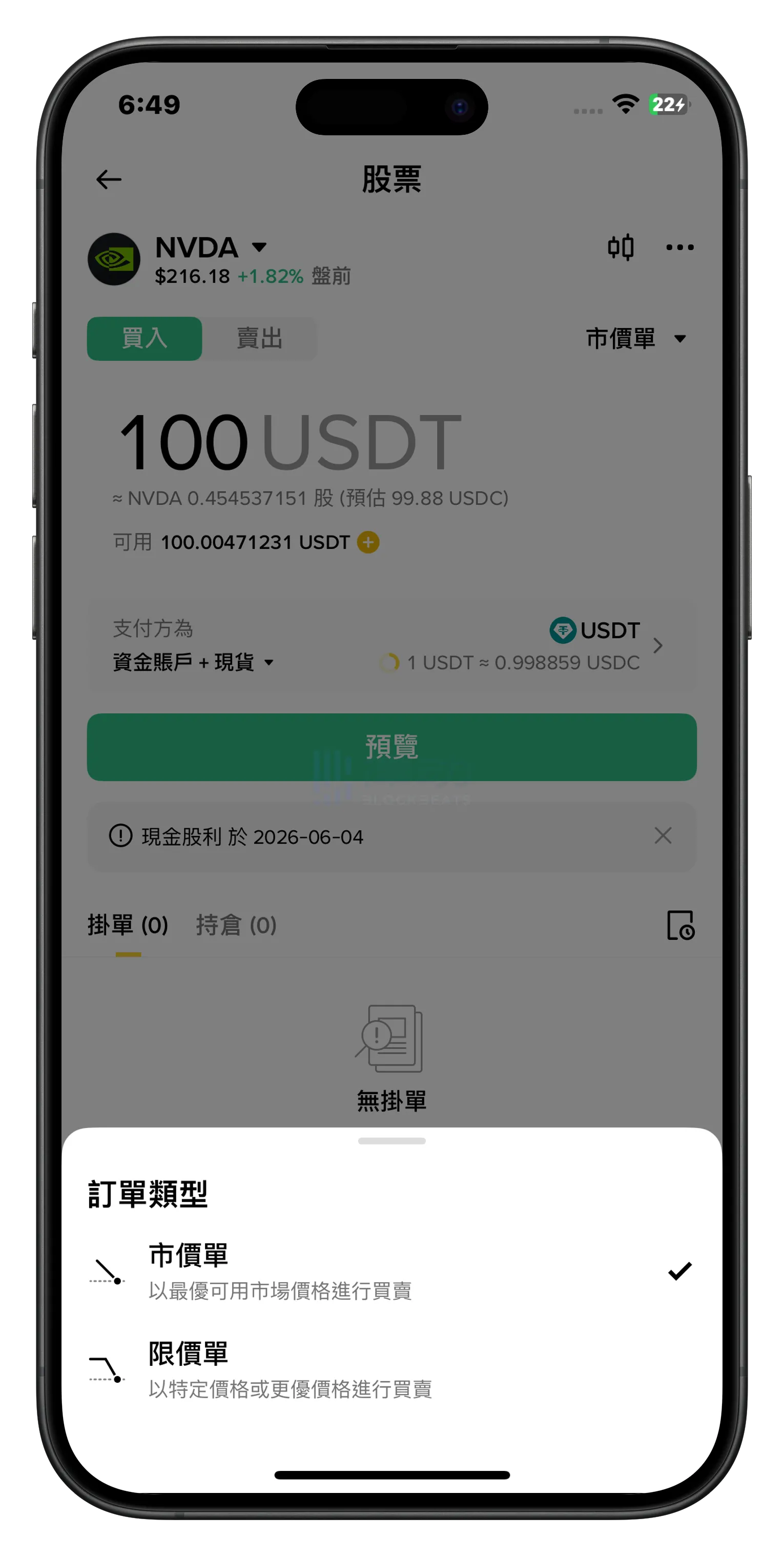
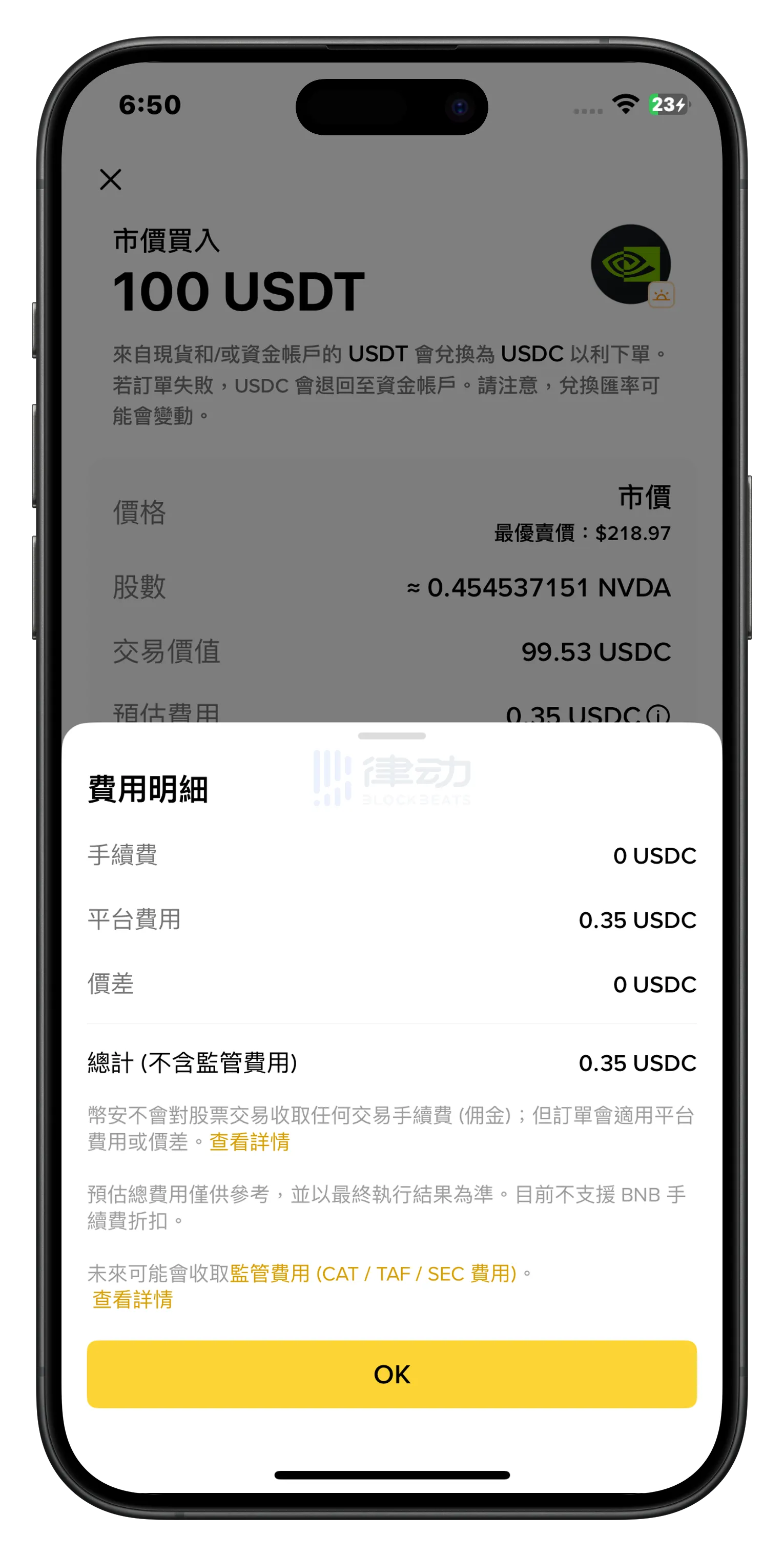
Click on "Buy", enter 100 USDT. The system automatically converts: 100 USDT is first exchanged at a rate of 1 USDT ≈ 0.998859 USDC to approximately 99.88 USDC, then bought at the market price (best ask price $218.97) for about 0.4545 shares of NVDA, with a transaction value of 99.53 USDC, estimated fee of 0.35 USDC.
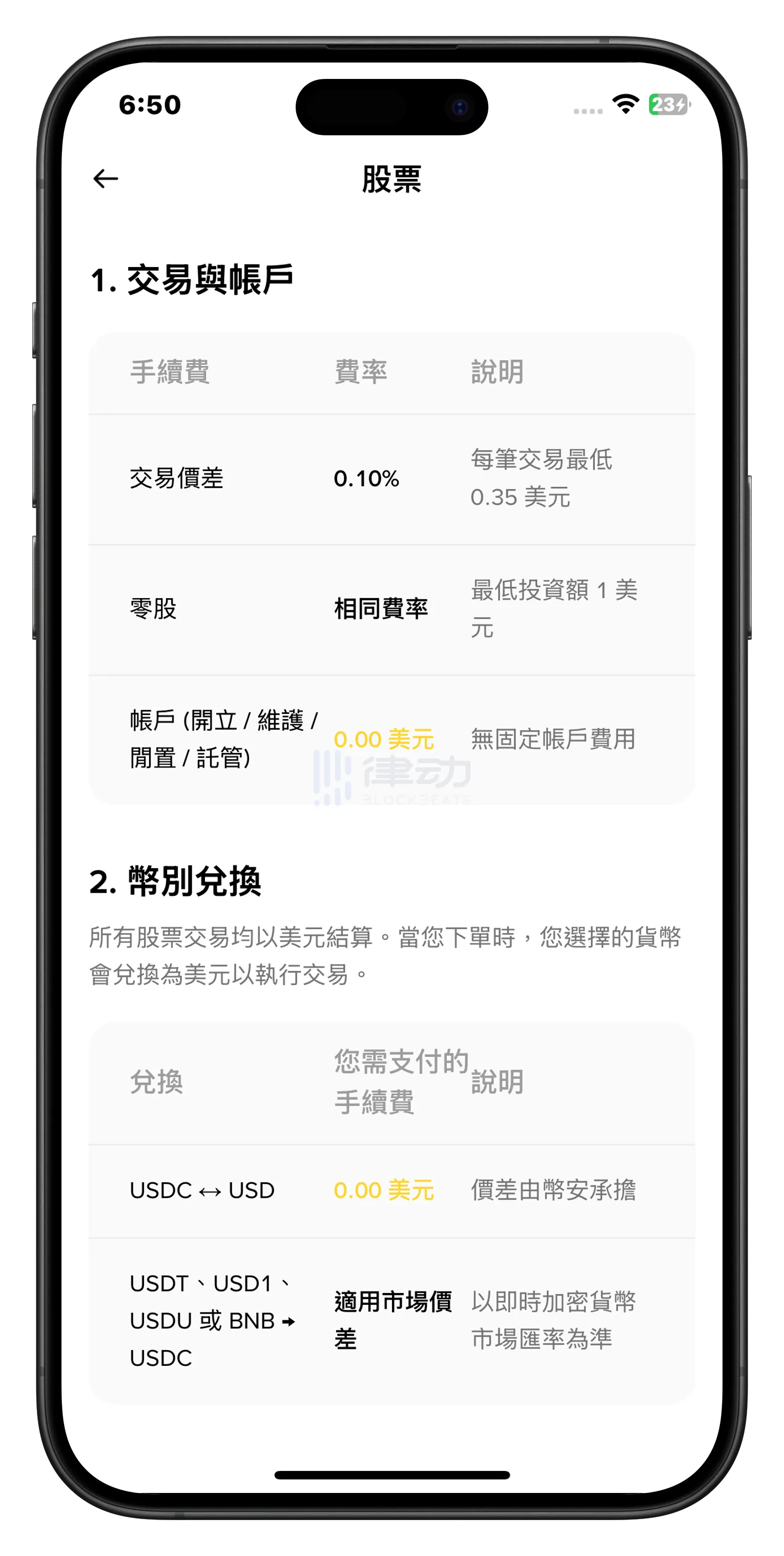
There is an unavoidable intermediate step here: regardless of whether you pay with USDT or BNB, all funds will first be converted to USDC, and then the purchase of shares will be settled in USDC. The conversion fee between USDC and USD is 0 (the spread is covered by Binance), but the conversion from USDT, BNB, and other currencies to USDC incurs an "applicable market spread". In other words, buying directly with USDC is the lowest-cost path, while using USDT or BNB will incur an additional exchange loss.
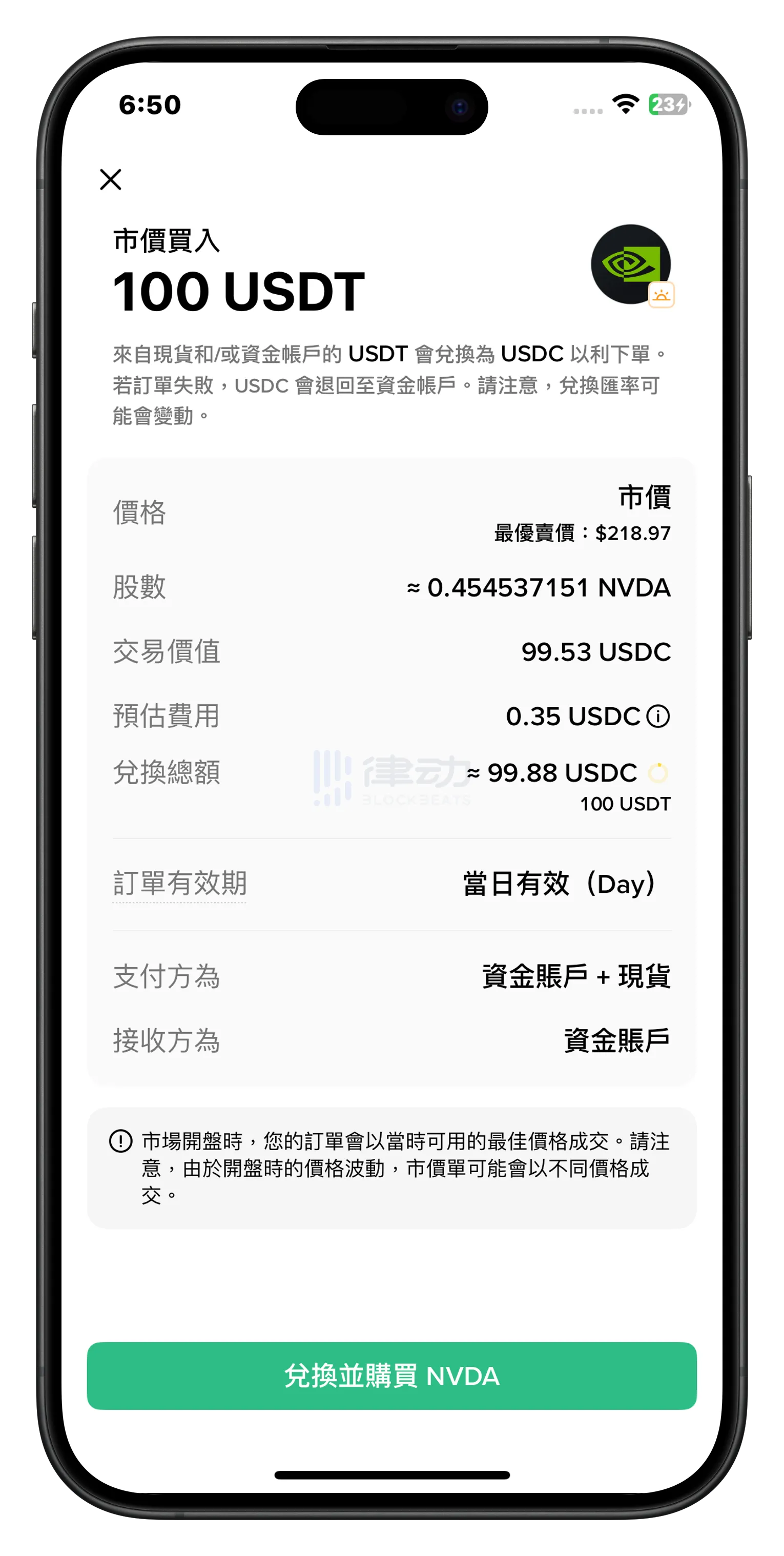
There are currently only two types of order: market order and limit order. The order is valid for the "day". The payer is "Funding Account + Spot", indicating that the system will automatically retrieve balances from two wallets.
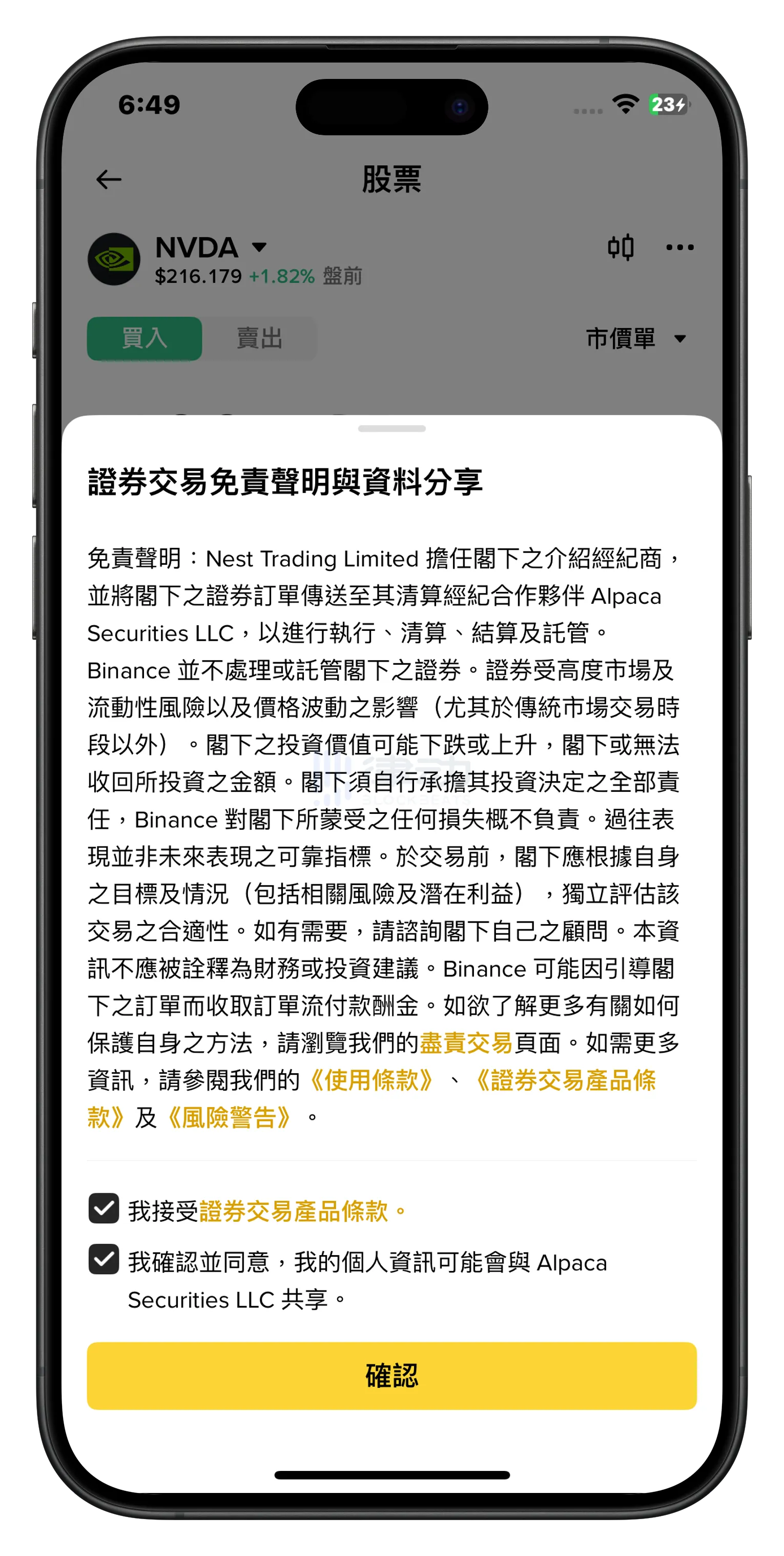
After clicking on Preview, a "Securities Trading Disclaimer and Information Sharing" pops up. The core terms state in a very formal tone that Nest Trading Limited acts as an introducing broker, routing orders to Alpaca Securities LLC for execution, clearing, settlement, and custody. Binance does not handle or custody your securities. Two options must be selected: acceptance of the securities trading product terms and agreement to share personal information with Alpaca Securities LLC.
The fee breakdown in the pop-up is very clear: Commission 0 USDC, Platform Fee 0.35 USDC, Spread 0 USDC, Total 0.35 USDC. The three notes below are all noteworthy: first, Binance does not charge a commission, but orders will incur platform fees or spread; second, BNB fee discounts are currently not supported; third, regulatory fees (CAT, TAF, SEC fees) may be charged in the future.
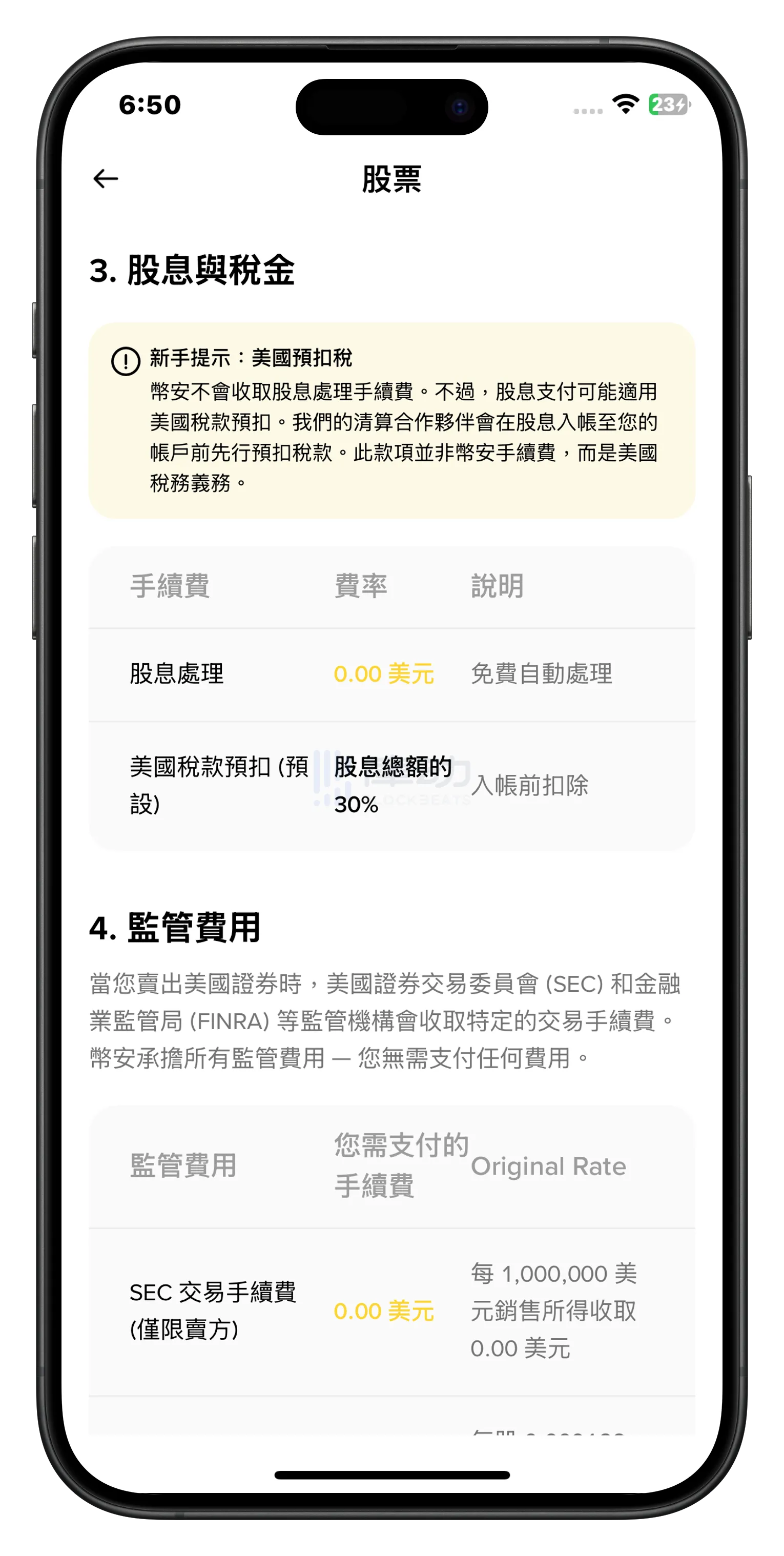
The Fee Schedule has been further detailed: Trading Fee 0.10%, minimum of $0.35 per trade; Fractional Shares follow the same fee schedule, with a minimum investment of $1; There are no fees for Account Opening, Maintenance, Inactivity, or Custody. Regarding regulatory fees, the SEC Transaction Fee (sell-side only) is covered by Binance, with users paying 0.
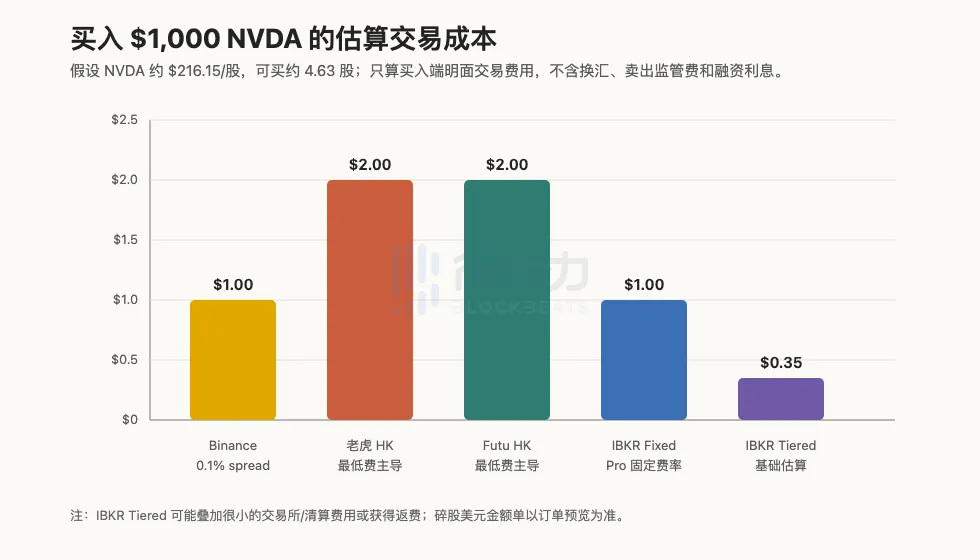
So, the phrase "Zero Commission" should be understood as follows: While the commission is indeed zero, the platform fee of 0.10% (with a minimum of $0.35) is a hard cost, along with the exchange rate spread for non-USDC currencies being a soft cost. For example, in this case of buying NVDA with 100 USDT, the $0.35 USDC platform fee corresponds to a $99.53 USDC trade value, resulting in an effective fee rate of approximately 0.35%. This number may not be low compared to traditional brokers (both Robinhood and Webull are zero-commission), but it is not high within the cryptocurrency exchange platform realm (where the base spot trading fee rate is 0.10%). As for the BNB discount not being supported currently, in Binance's ecosystem where BNB can be used to offset fees across almost all products, this represents a clear expectation gap.
There is also a key figure that has a greater impact on long-term holders: the Dividend Processing Fee is 0, but the default U.S. tax withholding on dividends is 30% of the total dividend amount, deducted upfront before crediting. This is the standard withholding tax rate the U.S. imposes on non-resident aliens and is not a Binance fee, but it means you will only receive 70% of the stated dividend. NVDA's dividend yield is only 0.02%, with a minimal impact; however, if investing in high-dividend ETFs, this 30% becomes significant.
It is important to note that Market Orders placed before market open will not be executed immediately but will be filled at the best available price at the market open.
Trading is available 24/5 from Monday to Friday, but during non-core hours, liquidity is significantly lower, and Market Orders may face substantial slippage. The disclaimer also states: "Securities are subject to high market and liquidity risk, especially outside of traditional market trading hours."
For cryptocurrency users, 24/7 trading is standard practice; however, stock market liquidity cannot be replicated simply by extending trading hours. The quoting of market makers, institutional participation, order flow density – all are concentrated within the 9:30 to 16:00 ET window. The significance of 24-hour availability lies more in being able to place orders at any time rather than guaranteeing execution at a reasonable price at all times.
Securities Lending, Binance's Another Secret Weapon
After experiencing the trading process, the team at CoinBeat now takes a deep dive into Binance's US stock products.
For a cryptocurrency exchange to seamlessly operate US stock trading, the frontend buy button is just the tip of the iceberg. The real heavy lifting lies in the matching engine, custody, and lending. This time, Binance has strictly defined its role at the frontend entrance, delegating the backend operations to two entities.
The first one is Nest Trading Limited. The disclaimer states it is an "introducing broker," sounding like an external partner, but further investigation reveals it is Binance's own entity. In December 2025, the Financial Services Regulatory Authority of the Abu Dhabi Global Market (ADGM) approved licenses for three entities under Binance: Nest Exchange Limited for exchange platform operations (spot and derivatives), Nest Clearing and Custody Limited for clearing, settlement, and digital asset custody, and Nest Trading Limited (formerly BCI Limited) holding a broker-dealer license, handling off-platform trades, exchange services, and other non-platform business. In other words, Nest Trading is not a third party brought in by Binance but its own licensed entity within the ADGM framework, specializing in activities that do not involve the exchange's matching engine. US stock order routing is an extension of such "off-platform" business.
The second entity is Alpaca Securities LLC. This is the true independent third party. Headquartered in New York, Alpaca is a self-clearing licensed securities broker-dealer registered with FINRA, protected by SIPC (up to $500,000 per client account), and a clearing member of DTCC, FICC, and OCC. However, it is not a retail brokerage but a B2B infrastructure provider for fintech companies. Its core product is the Broker API, allowing partners to embed stock, options, bonds, and cryptocurrency trading within their apps. To date, Alpaca's API serves over 200 fintech clients in 40+ countries worldwide, managing over 10 million brokerage accounts. Early partners include Gotrade and Midas, with Binance being its largest-volume cryptocurrency platform integration.
Another noteworthy update is the upcoming launch of securities lending on June 4th.
Fully Paid Securities Lending (FPSL) is a service that allows users to lend out fully owned eligible stocks to market participants (usually institutions that need to short sell, arbitrage, or provide liquidity) and earn interest income.
In the traditional financial markets, FPSL is a mature business. Charles Schwab's securities lending program splits the revenue 50/50 with a minimum asset threshold of $100,000; Fidelity requires a minimum account size of $25,000; Interactive Brokers' Stock Yield Enhancement Program also follows a 50% revenue split with a $25,000 threshold; Robinhood launched its own securities lending program in 2022 with a low threshold and daily interest accrual. The entire securities lending market contributes nearly $10 billion in global revenue annually.
In the crypto exchange space, Kraken has been a pioneer. It launched FPSL for US equities in 2025, allowing eligible users to lend out fully owned stocks to earn interest. This move is also a core hook for Kraken to attract users to transfer their stock positions from other brokers via ACATS. Alpaca itself introduced FPSL for Broker API partners in May 2025, and Binance's securities lending likely directly reused Alpaca's underlying capabilities this time.
For Binance, FPSL is not just another feature label. It is a key step in moving users from "buy and hold" to "buy and earn interest." It is also a precursor to integrating stocks into DeFi lending protocols after the tokenization of bStocks in the future. Running lending within the traditional brokerage framework first and then moving the same logic to the blockchain is a coherent path.
More Than Just Binance: The Same Race Across Exchanges
Zooming out, Binance's move is not isolated. By early 2026, the racetrack was crowded.
Coinbase, OKX, Kraken, and Bybit all announced or launched tokenized stock trading at the beginning of the year, with the market cap of tokenized stocks surging from $32 million to nearly $1 billion in less than a year.
Coinbase is pursuing the "everything exchange" route. In early 2026, it launched traditional stock and ETF trading for US users, offering zero commission, 24/5 trading, starting at $1 for fractional shares, and leveraging a marketing partnership with Yahoo Finance, directly challenging Robinhood. However, in the fine print of the announcement, it deliberately excluded tokenized equities from its licensed broker-dealer and main operating company, leaving a regulatory ambiguity.
Robinhood is the initiator of this tokenization narrative. In June 2025, CEO Vlad Tenev unveiled a three-step plan at an event called To Catch a Token, starting with the tokenization of stocks in the EU, covering over 200 US companies. The core idea is to make tokenization a seamless experience for users. At its core is its proprietary chain, an Ethereum L2 based on Arbitrum Orbit, dedicated to real-world asset tokenization, with full deployment planned for 2026.
Kraken focuses on DeFi integration and self-custody. Its xStocks allow investors to collateralize 1:1 backed equity tokens in a private wallet, settling on Solana and Ethereum, covering over 60 blue-chip stocks, and partnering with Nasdaq. In terms of funding, in April, Deutsche Boerse strategically invested $200 million in Kraken.
OKX also made significant moves. In March 2026, ICE, the parent company of NYSE, announced a $25 billion strategic investment in OKX, focusing on a "unified matching engine" to centralize tokenized equities associated with NYSE. This marked the first time a traditional exchange operator had invested in a top crypto platform for this purpose and secured a board seat.
The other players have been equally active.
Coinbase and Bybit are exploring tokenization, custody, and distribution of US public and Pre-IPO stocks; Bitget and Ondo Finance collaborated to list over 100 tokenized US stocks, with spot trading volume exceeding $1 billion in January 2026. On the issuance side, Backed Finance's xStocks currently cover approximately 100 targets, aiming for over 500 by the end of 2026, with cumulative transactions exceeding $25 billion by March this year. On the chain side, trading of tokenized stock derivatives hit a single-day record of $35.7 billion on May 18, mainly driven by Binance and Hyperliquid.
It is worth noting that this convergence is not unidirectional from crypto to stocks. Traditional institutions are also moving towards the blockchain. BlackRock has packaged US Treasury bonds into blockchain products, while NYSE and Nasdaq have announced plans to integrate tokenization technology into their systems.
Two rivers are flowing towards each other, and the next move will be interesting to watch.
Welcome to join the official BlockBeats community:
Telegram Subscription Group: https://t.me/theblockbeats
Telegram Discussion Group: https://t.me/BlockBeats_App
Official Twitter Account: https://twitter.com/BlockBeatsAsia
