Don't outsource your brain.
A couple of days ago, Anthropic just announced a $65 billion Series H funding round, valuing the company at $965 billion, surpassing OpenAI ($852 billion), becoming the world's most valuable AI startup.
The barrier to entry into this company is skyrocketing at a visible speed. Last year, Peter Bailis, Chief Technology Officer of Workday, gave up his CTO title to join Anthropic as a regular engineer.
In February of this year, an HR professional in London joined Anthropic. She posted on LinkedIn to announce her new job, subsequently receiving over 1000 friend requests and 200+ direct messages. She had to make another public post asking applicants not to call her phone number.
By May, Anthropic made another major announcement, with OpenAI co-founder Andrej Karpathy joining Anthropic's pre-training team.
Everyone wants to join Anthropic.
But the way in is by first turning off AI.

01 "Interview Like Doing Therapy"
Anthropic's interview process consists of 5 rounds, with the use of AI prohibited in each round.
The most crucial round is the "Culture Interview." It is unrelated to technical abilities, only assessing the candidate's values, worldview, and views on AI risks.
California-based career coach Kevin Landucci has interacted with many candidates, and he noted that most people feel that the interview process is "intrusive, completely unlike a job interview, and unlike anything before."
Someone who recruited for Anthropic last year would particularly advise candidates to take this round seriously because the company's leadership views AI safety as a long-term strategic issue, not just a business consideration.
The scoring system is more unique. A cultural interview can be conducted by anyone from any department. A candidate for an engineering position may be evaluated by someone from the marketing department. Furthermore, this evaluator has a veto power—if the candidate receives a low score in this round, even if they pass all technical interviews, they will be rejected.
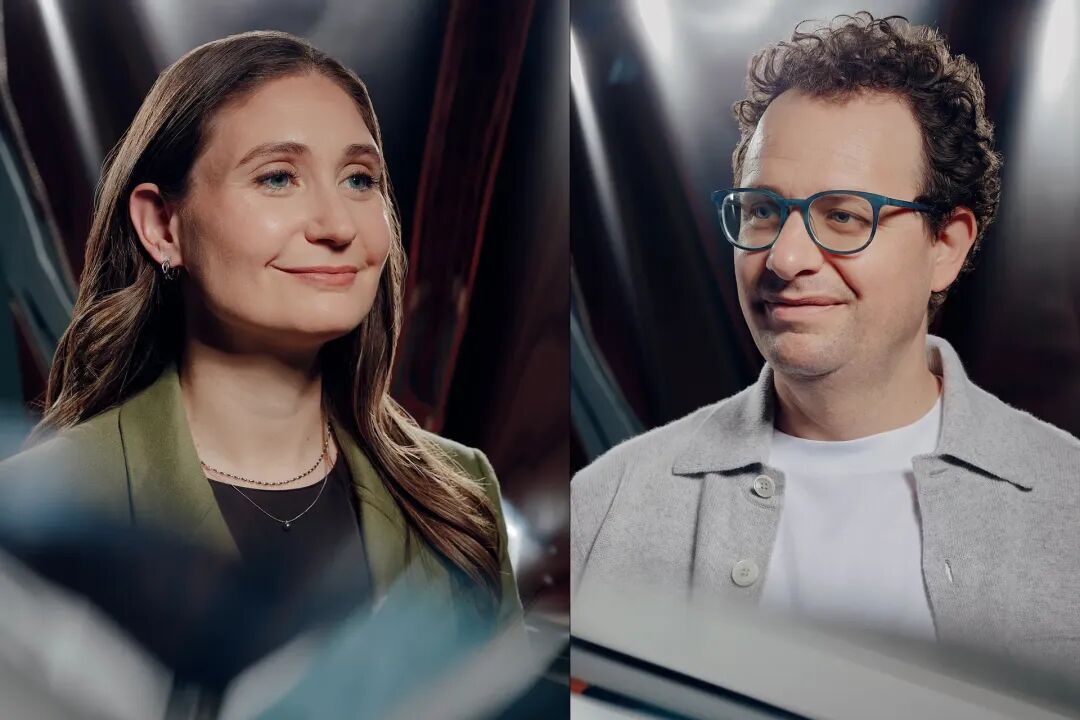
Questions will become increasingly personalized. Anthropic President Daniela Amodei described her classic interview questions on a podcast:
What uncommon beliefs do you hold? In what uncomfortable situation have you stuck to your beliefs? She is not concerned about what the candidate believes. She is interested in whether this person can hold their ground when challenged and can explain why.
Professional ethical dilemmas are a common topic in cultural interviews. Landucci said interviewers will continue to delve deeper:
What were you thinking at the time, what did you do, and how do you evaluate it now in hindsight? His advice is to show genuine discomfort and let the interviewer see that you have genuinely struggled with it. He recommends candidates discuss ethical dilemmas that are "enough to give one pause, but not enough to undermine the company's foundation," such as controversial decisions involving user data.
Most companies claim to value honesty and oppose flattery, but Anthropic truly incorporates this into its recruitment process. Landucci revealed that the cultural interview will test whether candidates dare to question this company and its mission pursuit method. Well-reasoned questioning is highly regarded.
On the other hand, a researcher interviewed last year had a different experience. He said the interviewer's questions were relentless, interrupting whenever the answers no longer provided new information. The researcher talked about specific, immediate risks, such as the danger of people developing emotional dependence on chatbots.
It was apparent that the interviewer found these concerns to be too superficial. The researcher did not pass.
This detail is worth pondering. Emotional dependence is a real issue that has been widely discussed. However, in the context of Anthropic, this may be considered "superficial." It is an AI side effect, not a fundamental risk of AI.
The founding team of Anthropic left OpenAI, with the core motivation being their belief that AI could have too profound of an impact. A candidate who only focuses on product-level risks and does not demonstrate the ability to think about larger-scale issues will be at a disadvantage in this evaluation system.
CEO Dario Amodei claims to spend 30% to 40% of his time managing company culture. For a company with over 3000 employees, having added about 1000 in the past six months, this is arguably the founder's most costly investment. He aims to ensure that every new hire aligns with Anthropic's values.
Thus, in the rapidly changing personnel landscape of the AI industry, Anthropic boasts an 80% two-year retention rate for employees, the highest among peers. The probability of an engineer moving from OpenAI to Anthropic is 8 times higher in the reverse direction, while the probability of a move from DeepMind is 11 times higher. (Source: Venture Capital Firm SignalFire)
02 When Execution Becomes Free, What Becomes More Valuable?
Even in Silicon Valley, Anthropic's approach is considered unique.
This year, Google announced a contrasting interview reform: Candidates can use Gemini in technical interviews, where interviewers will directly assess their "AI fluency". Google's VP of Hiring, Brian Ong, said this was to make interviews more aligned with real-world work scenarios.
Google CEO Sundar Pichai revealed in April that 75% of the company's new code is now generated by AI and reviewed by engineers.
Google's rationale is: since daily work is about human-computer collaboration, interviews should reflect this as well.
Facing the same question of the AI era, two top AI companies have given completely different answers. Anthropic believes that in the face of AI, interviews are actually when AI should be taken away.
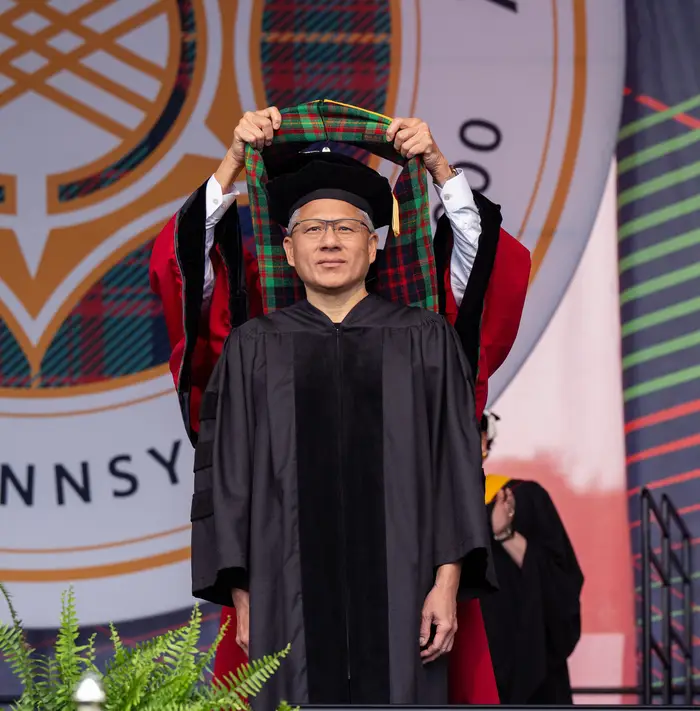
In his 2026 graduation speech at Carnegie Mellon University, Huang Renxun made a widely circulated statement: "AI is unlikely to replace you, but someone who is better at using AI than you may replace you." This statement has been repeatedly quoted because it accurately taps into people's fears of AI while also providing a way out: learn AI.
The problem with this statement is that it anchors human value to the relationship with tools, implying the logic that if the tool changes, you must change with it, or you will be eliminated.
But a more worthwhile question is the reverse:
As execution becomes increasingly cheaper, what actually becomes more expensive?
03 Anthropic's Selection Criteria
Anthropic's interviews offer a different answer.
Daniela Amodei greets candidates with "What unusual beliefs do you hold," and the interviewer encourages you to question Anthropic itself; in fact, they are examining the same thing.
Today, the "production" of viewpoints has become nearly free. AI can generate arguments for any position, it can write well-reasoned articles to support one direction, and immediately write similarly well-reasoned articles to oppose it.
However, it is for this reason that the gap between "holding" a position and "owning" a position is widening. Holding is a choice, while owning is your true self.
Anthropic prohibits the use of AI in interviews and asks probing questions about your true thoughts similar to conducting psychotherapy in a cultural interview, all to ensure that the judgments and beliefs in your mind have grown on their own.
In other words, you have not outsourced thinking.
“Someone who is better than you at using AI may replace you,” this statement is correct at the execution level. But if it is taken as the complete answer, it will lead people down a narrower and narrower path: constantly catching up on what AI can do, and then doing what AI cannot do until AI learns that part too.
Anthropic's hiring logic points in another direction. It believes that in the AI era, what is truly scarce is not people who can control AI, but people who still have something left after turning off AI.
Welcome to join the official BlockBeats community:
Telegram Subscription Group: https://t.me/theblockbeats
Telegram Discussion Group: https://t.me/BlockBeats_App
Official Twitter Account: https://twitter.com/BlockBeatsAsia
