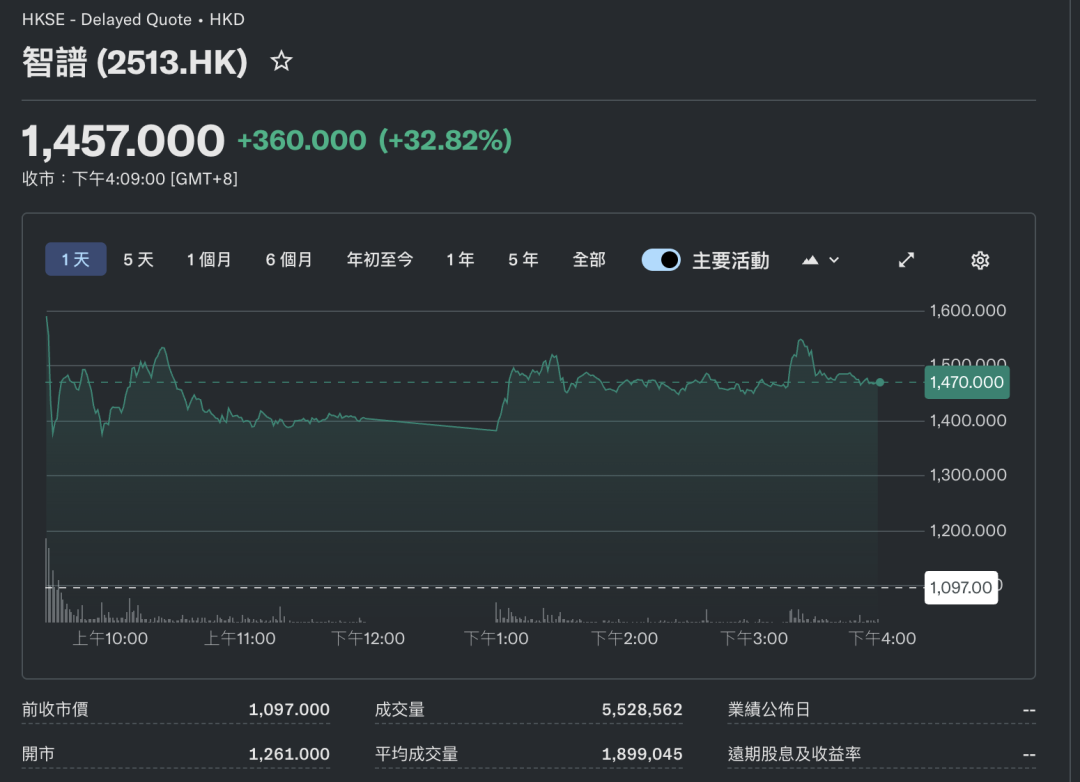
At the opening of the Hong Kong stock market on June 15, MindTech's stock price surged, reaching a peak intraday gain of 47.6%, setting a new record for single-day trading volume since its listing. By the close of trading, the gain narrowed to 32.82%, with a total market value exceeding HK$649.6 billion.
The direct catalyst came from two industry news pieces two days earlier.
On June 12, due to US government export control requirements, Anthropic temporarily suspended access to its latest flagship models, Claude Fable 5 and Claude Mythos 5. A day later, MindTech announced that its latest open-source model, GLM-5.2, would be open to all Coding Plan users and that the API and model weights would be launched next week, following the MIT license.
01 When the Most Advanced Models Begin to Become "Not Necessarily Available"
On June 12, Anthropic issued an official announcement stating that the US government had issued an export control directive based on national security-related authorizations, requiring the suspension of all foreign nationals' access to Claude Fable 5 and Claude Mythos 5, with the restriction covering foreign users both within and outside the US, including even foreign employees within Anthropic.
Due to the technical difficulty in real-time and accurately distinguishing users' nationalities, Anthropic eventually chose to temporarily disable the two models for all global customers to ensure compliance. It has only been three days since the two models were officially released. As of now, both models are shown as unavailable on the Anthropic website, and the restoration time is not yet clear.
As top-tier closed-source models in terms of performance, the Claude series has been deeply integrated by many developers and enterprises in scenarios such as long-term tasks, code development, and complex document processing. The sudden suspension directly impacted the workflow of many teams, leading to a rapid rise in community discussions about alternative solutions.
On the day following the suspension news, June 13, MindTech announced that its open-source flagship GLM-5.2 would be open to all Coding Plan users, covering Lite, Pro, Max, and Team versions, while also hinting that the API and model weights would be launched next week, following the MIT license for open source.
Over the past few years, competition in the large model industry has mainly revolved around capabilities.
The strength of one's reasoning, the quality of one's coding skills, and the ability to break through new capability boundaries almost determine the choice of developers and enterprise customers.
However, the Anthropic incident exposed another issue that was previously easily overlooked: beyond capability, whether the model can continuously and consistently obtain access.
In this Anthropic incident, for many developers and enterprises that rely heavily on overseas models for research and development work, even with accounts and payment qualifications, there may still be a risk of the model suddenly becoming unavailable.
This is also why this incident has sparked discussions in the developer community far beyond the scope of a typical product update.
As AI gradually transitions from a chatting tool to infrastructure in software development, enterprise operations, and even production processes, the stability, sustainability, and controllability of models are becoming as important as the model's capabilities.
In its announcement, Anthropic stated, "Cutting-edge intelligence should not only belong to a few, nor should it be subject to immediate revocation by a few rules." This statement actually reflects a new reality that the global AI industry is currently facing.
02 From "Who is stronger" to "Who is more accessible"
The rapid response of the capital markets is essentially a pre-pricing of changes in industry logic. Compared to stock price performance, the market is more concerned with the signal emitted by GLM-5.2 itself.
According to information disclosed by Anthropic, GLM-5.2 is its most powerful open-source model to date, supporting a 1M context window and focusing on strengthening the capability for long-range coding tasks. Anthropic positions it as a "truly usable 1M context" model, aiming to address the issue of model forgetting context in long-duration, multi-step engineering tasks.
One key term here is "Long Horizon Task." As AI agents evolve from conversational tools to execution tools, models need to continuously process thousands of tool invocations, tens of thousands of lines of code, and a large amount of interim state information. The longer the context window, the stronger the model's ability to maintain project state and task continuity.
The current industry competition has shifted from "answering questions" to "ongoing work." For developers, what truly matters is not the scale of parameters but whether the model can maintain consistency and reliability in complex tasks lasting hours or even days.
From the market's response, it is apparent that investors have also recognized this shift.
Oriental Securities pointed out in a research report that the Anthropic model incident revealed the risk of closed-source model access being subject to the jurisdiction of a single legal authority, which may drive more enterprises to shift their core AI capabilities to domestic base models and localized deployment. Meanwhile, GLM-5.2, being open-sourced under the MIT license, further reduces the threshold for enterprise trials and integrations.
Over the past year, the valuation of large AI model companies by the capital markets has been more based on model capabilities and market share. However, today, with the intensification of the global regulatory environment, another new dimension of valuation is emerging—who can provide developers and enterprises with AI capabilities that are long-term stable and sustainably accessible.
As access to the world's most advanced models begins to be influenced by external factors, openness, accessibility, and self-sovereignty are becoming new chips in the AI competition.
Welcome to join the official BlockBeats community:
Telegram Subscription Group: https://t.me/theblockbeats
Telegram Discussion Group: https://t.me/BlockBeats_App
Official Twitter Account: https://twitter.com/BlockBeatsAsia
