Editor's Note: If you believe the doomsday talks on social media, you might think "all jobs are about to be replaced by AI." Many people have therefore labeled themselves as "anti-AI," trying to use online rage to hide the fact that they are unwilling to change and resist growth.
However, AI is not the biggest threat. The real crisis lies in entrusting your survival and happiness entirely to others. When technological change comes, if you still naively believe that others should be responsible for your future, you are bound to be greatly disappointed.
Crying out is not the way to control the behemoth that is AI. Posting complaints on social media about how much you hate AI cannot stop job replacement, nor can it stop the core skills needed for success from changing in this era of continuous technological development. This article will explore how to escape the fate of being a "wage slave" and find a meaningful way of working. Below is the original article:
1. How to Escape the Fate of a Wage Slave
In plain terms, the so-called "wage slavery" (that is, the fate of a wage earner) is to earn a living, forced to do those meaningless and unpleasant chores for others that you never wanted to do in the first place.
Don't get me wrong, I don't dislike working.
I think work is a pretty good springboard, enabling you to accumulate practical experience and learn real skills.
But every time I say something negative about work, there's always a group of people jumping out to criticize me: "You know nothing! I actually quite like my job!"
That's great. My words are not for you (and I have a slight feeling deep down that you are most likely deceiving yourself, just to avoid exploring your potential, which you haven't realized yet).
I'm talking to those who truly understand "enjoying psychology." Because they simply cannot tolerate such a life script: spending a third of their lives doing chores they didn't choose, a third of their time mentally drained without accomplishing anything meaningful, and the remaining third of their time used for sleeping... and doing this for over 40 years.
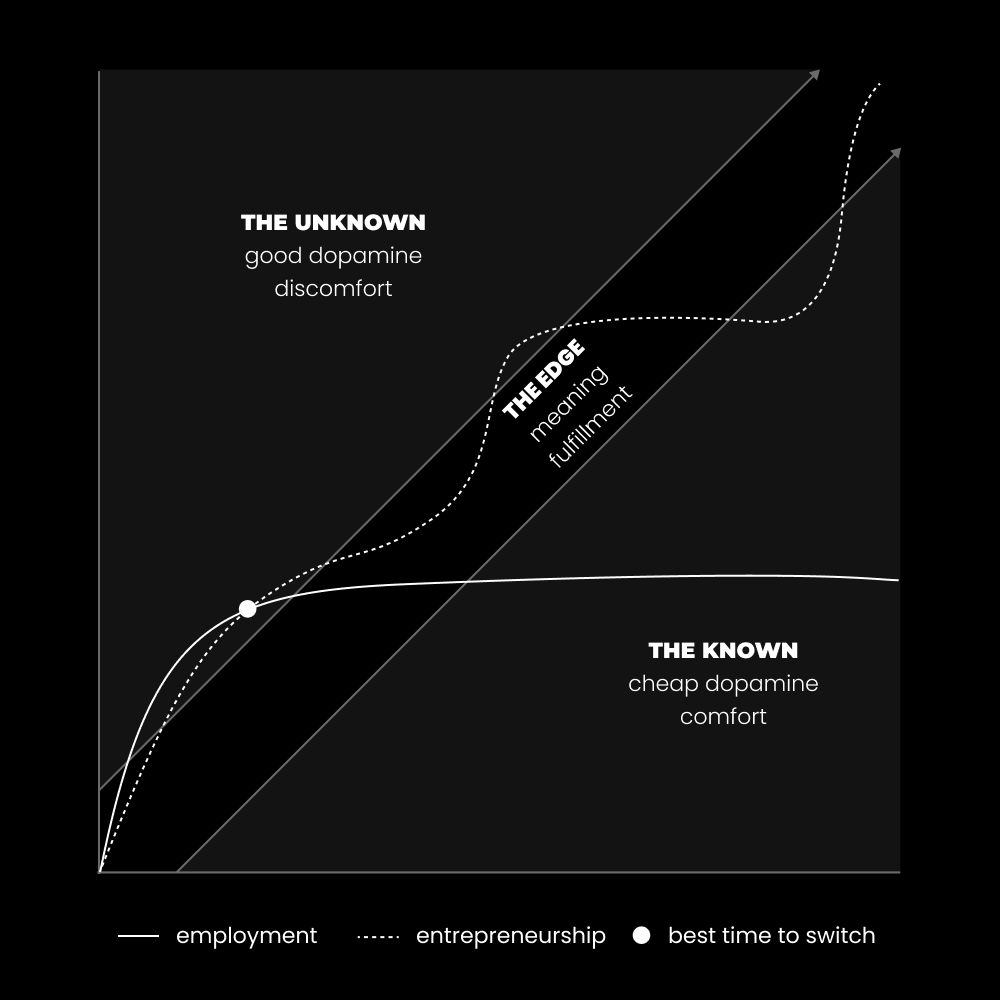
You see, the real fun, meaning, and sense of accomplishment are actually hidden on the edge of your ability. And this is scientifically proven. Don't expect me to cite the source here. Enjoyment comes from tackling challenges that are slightly above your current level. It can't be too difficult, or you'll get anxious; nor can it be too easy, or you'll get bored. Video games have mastered this concept. The tasks you take on are always "just the right difficulty level," because if you are a Level 1 newbie trying to defeat a Level 100 Boss, you'll get wiped out, and you'll definitely delete the game. This is the strongest driver to get you into the flow state. If you can design your life in a way that easily triggers this flow state, then you'll naturally have more fun.
But the problem with work is that a few months later, you know it all. Every day is just about clocking in, working, and clocking out. You start to feel extremely bored. This goes against your nature, you feel it in your heart. Your focus is no longer on work, but on thinking, "What else can I do?" For the vast majority of people, this "what else" is definitely not some meaningful grand goal, but rather taking out your phone, starting to scroll through short videos and letting your brain turn to mush. Very few jobs require you to constantly level up and face bigger challenges.
Career advancement is beneficial, of course, but similarly, you can't control the difficulty of the challenges. After all, you are not working on your own project. Curiosity, passion, a sense of purpose, autonomy, and mastery—these five engines that drive flow, you are destined to lack fuel.
So how does this relate to being a wage slave?
Essentially, human civilization is built on the enslavement of tribes by other tribes. This underlying logic has never disappeared, it has just put on a different coat, transforming into today's employment relationships, laws, and culture. Nowadays, society is simply a huge pyramid scheme. There are always more people at the bottom of the pyramid than at the top, and mathematically, not everyone can be at the top. A boss leads a group of employees, and for the employees to survive, they can only cling tightly to the boss's thigh.
Most of us in this generation have been mass-produced through assembly-line education: you have to become an expert, you have to master a craft, you have to find a high-paying job, so your parents can have face in front of relatives and friends. Because you obediently followed suit, you now see the logic of the entire business operation as a black box. You've only mastered the skill of screwing in screws, but you've never bothered to understand how the payroll system that pays you works. You haven't spent time in other areas, so you have no idea how to start your own thing. The only thing you know how to do is play the role of an employee in someone else's career.
Unknowingly, your ability to think independently has been disabled, even if you are recognized as an "intelligent person" in your field. You're earning a decent salary, but you still feel uncertain, financially tied up, so you're caught in a vicious cycle of stress. Stress narrows your horizons and makes you increasingly afraid to imagine a life where you work for yourself.
You don't have the startup capital to pursue your dreams, nor the time to self-improve. You might have been burnt out long ago (emotionally, not physically) and have no energy to reinvigorate yourself because most of the time you are awake, you are helping others achieve their dreams.
By the way, the only way to survive the AI full replacement trend is: to start your own business.
Unfortunately, slaves often do not realize they are slaves. This issue has long exceeded the scope of wage slavery. To some extent, we are all slaves, usually trapped by various ideologies and belief systems.
Speaking of slavery, everyone always thinks of being forced at gunpoint to work. But the enslavement of employees is financial. If your world will collapse if you don't work for a day, and you have no other way of earning money, then no matter how "good" you feel, you perfectly fit the definition of a slave.
What's even more frustrating is, if you have already engraved "I am an employee" into your DNA, you might even feel that I am insulting you with this speech. You will instinctively put up a defense mechanism, you will want to argue with me, and that's okay, but this just proves my point.
I think you understand what I mean. This is indeed very thought-provoking, it makes me nauseous just thinking about it. So let's discuss, what breakthrough methods are there now, and what can you do.
II. Five Core Elements of Success
If you don't plan the rhythm of your life, others will force their rhythm upon you.
The vast majority of people, for most of their lives, are forced to learn things they have no interest in learning, in order to find a job they couldn't care less about, and to work daily with people they absolutely have no interest in interacting with.
Although I believe that AI, technology, and social media have indeed accelerated our awakening, making us realize that going to school and working are not the only way of life, I also think that people are simply exhausted by the overwhelming sense of meaninglessness in the world around them.
For those who are already tired of the routine, in order to equip themselves with the "resilience" to continue doing meaningful work even if all jobs are gone in the future, you need to master these five core elements:
1. Proactiveness: The ability to "just do it" without needing permission from others. That is, when an opportunity presents itself, even if no one is giving orders, you can seize it.
2. Taste: It's the kind of experiential intuition where "I can tell at a glance whether this thing is worth showing off or not."
3. Persuasion: The ability to convince others to willingly support your cause, without resorting to deceit.
4. Resilience: Understanding that making mistakes is not the end of the world, and that trial and error is a necessary process.
5. Iteration: The process of continuously correcting course based on feedback to progress towards a goal (if unsuccessful, learning and adjusting the direction until successful).
Today, everyone is obsessed with becoming a "high-energy" individual. I get it, it's important. All the big shots in the tech industry are imitating each other, talking about how crucial high energy is, inadvertently revealing their lack of it.
Yes, you do need the courage to proactively pursue your goals. This is also one of the most fundamental differences between a boss and an employee. The so-called entrepreneurs are those who create things that nobody asked them to create.
But this is just one piece of the entrepreneurial puzzle.
The above 5 elements can actually be summed up into two skills: the ability to solve problems, and the experience of knowing what to do.
So far, AI has been excellent in creating assets, but creating a hit product is not the same as creating an asset. Creating assets is a necessary but not sufficient condition for generating a hit product.
"Just like five years ago, anyone could make a video game last week. The technology is off the shelf, it's already been completely commoditized. Do you know how many mobile games are released every year? Tens of thousands. Do you know how many hits come out every year? Zero to five."
― Strauss Zelnick
Now anyone can build anything, which means the barrier to entrepreneurship (the antidote to the rat race) is still plummeting like crazy, but so what:
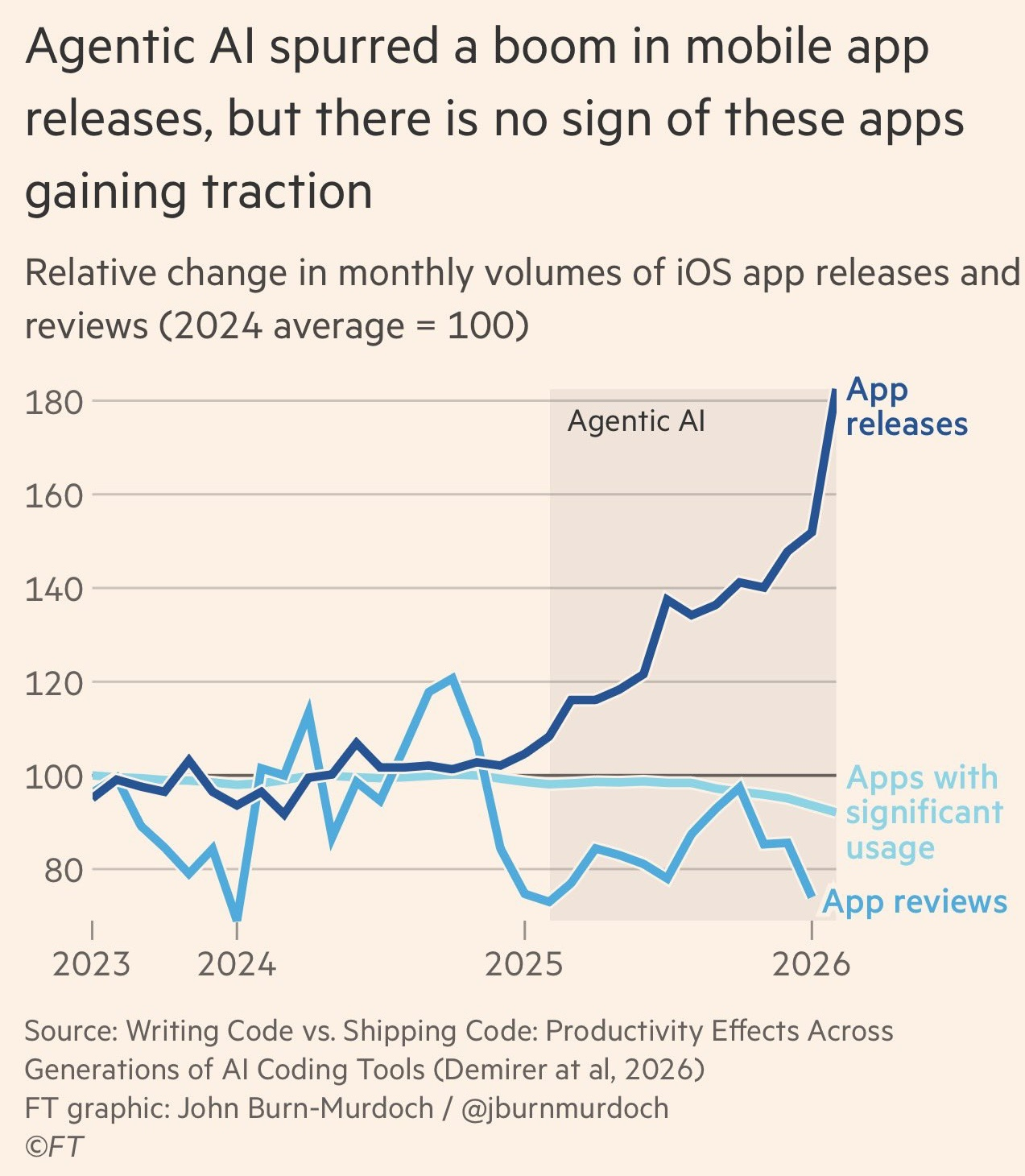
You can now go and develop an app. Not to create the next Notion, but to create an application or tool that is scalable, focused on delivering expected results that truly benefit people. Some things don't necessarily have to be a hit to create value.
I actually recommend doing this; I believe software is the next era of "knowledge monetization" - by that, I mean developing software will become the default choice for creators, solo entrepreneurs, and other small businesses. Knowledge monetization has lasted so long in the past precisely because of its low barrier to entry; anyone could do it, but that doesn't mean everyone could make money out of it.
The above diagram illustrates the first issue.
You can do anything, but that doesn't mean (1) it's worth doing; (2) people will care; (3) you have the ability to persevere based on market feedback, iterate, and turn it into something worth doing and that people care about.
If you truly understand this statement, you will undoubtedly thrive.
The second issue is: agency, taste, persuasiveness, perseverance, and iteration are not the kind of "high-value skills" you can learn by watching a few tutorials on YouTube. Reading self-help tips online every day on how to improve your agency won't increase your agency one bit.
The only way to practice is to immediately start doing your own thing.
Three, The Antidote to Employment is to Make Yourself "Unhirable"
I still remember the day I took on my first web design outsourcing project.
I remember the client gave me $300 to hand-code a basic website. The client was a mattress seller, and they just wanted a place where people could see their mattresses online.
That simple.
$300.
It was in that moment that I had an epiphany. I was very clear in my mind that if I could repeat the process I just did, optimize it, and iterate a few times to make money, I would definitely be able to firmly grasp my lifestyle and future direction. This made me completely someone who "cannot work for others." I planted an obsession in my heart: I could never work for someone else again in my life. I was going to carve out my own path — although it sounds a bit juvenile.
But this $300 does not cover all the preparations that led to that moment — such as the transformation of my identity and how I initially deceived myself into believing this could work. It certainly does not represent what I learned through trial and error in the following 7 years.
I want to give you two things: one is to guide you through a shift in your identity perspective, transforming you into someone who is "unemployable," rather than just thinking it sounds cool; the other is a set of actionable plans that anyone can follow to land on their own path.
1) Immerse Yourself in an Environment that Forces You to Grow
The fastest way to change your life is to uproot yourself from your current environment (whether in real life or the online world). Make a complete transformation overnight. Change where you go, the bloggers you follow, the content you consume... Change it all. It's painful, but it's extremely effective.
Changing Behavior = Changing Identity.
This is like saying you want to lose 30 pounds through dieting, but if you fundamentally don't care about health and can't stand the bland life of clear soup, you will always feel like you are paddling upstream. Eventually, you will, like most people, regain all the lost weight unless you transform into an entirely new person.
So how do you do it?
First, you need to understand how you ended up with your current habits today, which is very helpful.
· When you were born, you were thrown into a family and culture with specific values.
· You were indoctrinated with these values, even if your parents didn't force you to believe.
· You went to schools with specific values, brainwashed by teachers with specific values.
· You are bombarded with massive amounts of information every day, which may push you towards rebellion, lying flat, or a victim mentality.
· Once you got a phone, thanks to the social media feed and our uncontrollable primitive brains, this brainwashing process hit the fast track.
There are many other intricacies involved, but you get my point.
It's not all bad, of course, sometimes it's quite necessary. I've heard a bunch of gurus who preach "being your authentic self" every day, saying how much they hate "imitation" and plagiarism, but what's the end result? They still walk on two legs, speak English. Why? Because that's human society. You are imitating. It's called learning.
But when your actions are completely contrary to the life you truly desire deep down, things get bad. There's a voice in your heart whispering, "I was meant to do something big."
To reformat yourself, you must start by changing your environment.
You must be extremely vigilant of all the stimuli around you because they are shaping you every moment.
All you have to do is: Sleep tonight, wake up tomorrow, and flip the switch completely.
Wake up tomorrow and do not repeat the same old routine from yesterday, even if only for one day. Change your alarm time. Plan out everything you need to do clearly after waking up. Eat something different. Talk to people you usually ignore. Watch something you would never watch before. A complete overhaul.
As you delve deeper into your studies, you will gradually figure out the tricks of the trade and know which direction to tailor your new environment to.
2) Choose a Vessel That Can Give You the Most Genuine Feedback
The most dangerous way of life is to hide in a greenhouse where there is no need to make mistakes.
Once you no longer go through the process of making mistakes, it means you have deviated from the path of challenges, exploration, and wisdom gained through hardship, which are the very steps toward growth and a sense of achievement.
This not only applies to those whose challenge level tends to plateau after becoming familiar with a task in their work. It also applies to business and entrepreneurship, as well as to those who, even after becoming a boss, cannot shake off their employee mindset: always needing someone to tell them what to do or always needing a manual to have confidence in their own steps.
Let me ask you a question:
Before the Internet appeared, before the massive "operation manuals" and step-by-step processes emerged, how did people figure things out? How was the first rocket built?
They did it by trying. They would fail. They did not let failure convince them that everything was impossible, nor did they give up and resort to watching short videos for entertainment when they hit a wall. They set a new direction based on the feedback reality gave them. In the end, they found that needle in a haystack.
They are the truly intelligent people.
Because the most significant feature of an intelligent system is: being able to adjust the course based on feedback. They have a lighthouse in their hearts, and when the wind blows them off course, they do not choose to give up.
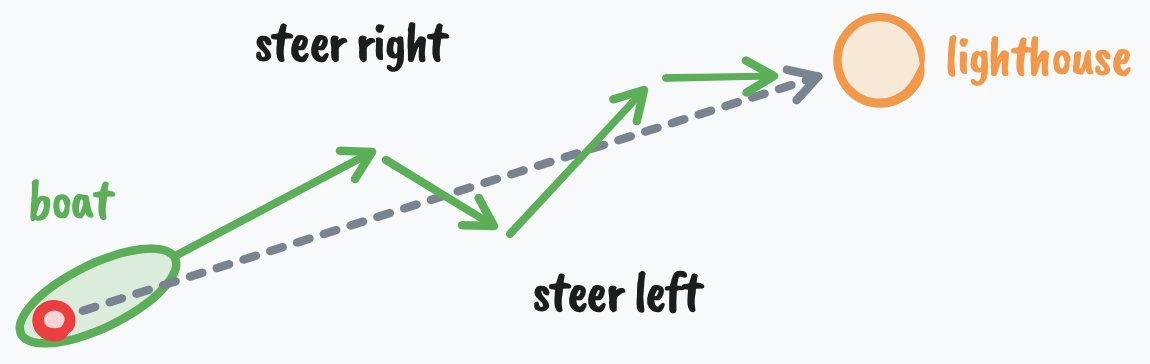
When I talk to you about entrepreneurship, this is what I mean.
I mean embracing your most primal nature. To create. To chase those unknown goals that you absolutely cannot achieve without taking a few big falls.
This is almost the only common trait among all great people.
For them, failure is not a derogatory term at all but a necessary staple for living a cool and fulfilling life.
It sounds very exciting, but how exactly can it be implemented in today's society?
3) If You Want to Navigate Well in the Future, You Must Master These Two Skills
"Code and media are the kind of superleverage that doesn't require anyone else's approval. They are also the secret weapons behind the nouveau riche's wealth. As long as you write software, produce content, they can work for you silently in the background while you are sound asleep with a blindfold on."
—— Naval
As a beginner, as an individual, you have no idea how powerful a leverage you hold, especially in today's age of AI.
And I'm not talking about those low-level players who use ChatGPT as a substitute for Baidu, or those artists who throw a fit cursing AI for "plagiarizing" their work.
What I'm talking about is: you need to realize that you can actually create anything, because AI has forcibly pushed you onto the fast lane of trial and error. Yes, the initial generated stuff is definitely cringeworthy, but as long as you have proactiveness, iterativeness, perseverance, a bit of taste, you can literally do anything, and this trend will only become stronger in the future. And if you have a bit of persuasion skills, the thing you create can bring in money for you while you're dreaming.
Of course, this was possible even before AI. The crux of the matter is that most people simply don't understand this principle: as long as you gather the 5 key ingredients of success, stretch the timeline long enough, there's nothing in this world that you can't achieve. AI just gives you the accelerator to do more, faster, and also hands you a bunch of privileges you couldn't have imagined before—such as superhuman coding abilities, and learning and researching efficiency as if on cheat mode.
Having said that, I truly believe that understanding media (content) is more valuable than understanding code.
Speaking of media, it essentially refers to creating content.
Whether it's graphics, videos, podcasts, or articles, once you put it out there, it can be seen by thousands, even millions of people. In my opinion, this is the most valuable skill for the future, especially at a time when everyone is relying on AI-generated content.
Because in creating content, you need to have the vision to know what is "quality."
You still need to accumulate the kind of insight that AI can't give you, because you haven't even started to experience the hard knocks of trial and error. You don't even know what prompt to feed AI.
The value of content is highly subjective. To a thousand readers, there are a thousand Hamlets. In other words, there's no such thing as a "standard answer" in content creation.
In comparison, the value of code is too objective. As long as the program runs, no one really cares how you wrote it. Like we talked about earlier, there are more apps in the app store now than ever, but the download and usage rates are plummeting.
Why?
Because they simply don't understand how to distribute! They are clueless about media and content. They can't even lure people into downloading, let alone make people feel that the app is worth paying for.
By the way, when I talk about creating content, I'm not referring to the kind of nonsense people on Instagram boast about: "I handed over the account to Claude, went to sleep, and woke up with 100k more followers." Such traffic might look good, but it's worth nothing unless you connect with your fans through storytelling and establishing authority. Of course, you can use Eden to do this, but only if you are clear about the game you are playing.
As JK Molina said: Likes won't fill your stomach.
High-quality content creation is definitely not about posting a few borderline photos or starting a controversial post to gain followers.
Oh, and in case you haven't realized yet: To reshape your identity, you should immerse yourself in new environments that are related to your ideal life, surrounding yourself with people, circles, and habit triggers. Creating content is also a part of this strategy.
4. How to Get Started: Dedicate 15 Minutes Every Day to Rewrite Your Life Trajectory
You have already made a significant impact on the environment you are in. You have also chosen the medium you want to master. You understand that creating content is more valuable than coding because the value of content lies entirely in the eyes of the audience. This subjectivity will quickly render AI-generated articles on a mass scale obsolete, leaving a significant portion of the field for true creators—whether or not you use AI assistance, as once again, AI is never the core issue.
Now, you are left with the most critical question to answer: What do you want to achieve in this lifetime? (Your life's work)
This is the stage we need to set together. What we are aiming for is a lifelong endeavor, not just a flashy "personal brand."
Peterson, Huberman, Watts—indeed, these big shots all have a "personal brand," but these labels are tightly linked to their ultimate goals. They know what they want and effortlessly use social media as a tool to get things done. Because this strategy, combined with AI, is currently the most potent move you can make on your own. After all, if you start from scratch, it's probably challenging to achieve success on TV, radio, or traditional publishing.
Their personal brand is essentially themselves.
It is their identity.
If you want to see what your own identity looks like, go through the Eden onboarding process. It will automatically generate a relational graph that you can explore.
Most people like this concept at first but quickly hit a roadblock. They rush off in pursuit of dopamine rushes, endlessly searching for "which shortcut video can easily earn a six-figure monthly income," refusing to delve into their own years of accumulated experience and stories—all because they think these things are too mundane for them and surely no one would be interested.
The raw material to build your lifelong career has long been buried in your mind. It's just that over the years, others' teachings of "stick to one's expertise," "be practical," and "don't ask why so much" have smoothed it all out. This process is not about feeding you some novel ideas. On the contrary, it is to show you everything you already possess.
Please take this seriously.
Close all those chaotic web pages. Open a blank document. Set a 15-minute timer. Write down each of the following questions honestly. Do not skip any questions that make you uncomfortable.
Step One: Unearth Your Raw Material
Those things that could have made you shine have long been dulled by societal norms. Your curiosity has been deemed frivolous. You dabble in everything and are scolded for being indecisive. Because this system only needs obedient workers.
Your content will only be seen when squeezed from your own flesh and blood.
Answer the following questions. If you can't think of an answer, skip it and let the question hover in your subconscious for a while:
· To what extent do you have knowledge that is definitely not a coincidence? What topic would you be willing to delve into for years, even if you didn't earn a penny?
· What problems have you solved that others thought were unsolvable? What innate abilities do you have that seem to stump others?
· What troubles did you get into as a child for simply expressing your interests too early? What were you obsessed with before being told something was unrealistic?
Now, circle one answer. The answer that resonates with you. This is your raw material. Pay no mind to tracks or content pillars. Focus on the quality of your ideas, for it is this that will ultimately triumph.
Step 2: Find Your "Anti-Consensus" Hard Pill
Nobody needs another person to repackage common sense. Your content needs a unique perspective that only you can see. This perspective comes from something you strongly believe in, but the mainstream has misunderstood. Taste is not just about knowing what is good, but also about seeing what is broken and not being able to turn a blind eye. Answer the following questions:
· Which mainstream advice has actually made your life worse? To get back to normal, what old beliefs did you have to let go of?
· In your field, what do you believe in wholeheartedly, even if experts say you're naive and you refuse to waver?
· What is everyone in your industry pretending not to see?
Look at the answers from Step 1 and Step 2 together. The overlap is your direction. Your answers to these questions are your first batch of posts. The best brands open up that person's inner world for all to explore.
Step 3: Ship Your First Idea Tomorrow
This is a letter, not a course. I wish I could cram 20 modules in here, but I can't; that's what the bootcamp is for. The final step to freeing yourself from financial dependence on others is to take real action, and real action starts with putting out your first post.
By now, you've written down your posting ideas. Pick one.
Think about how to start to grab attention.
Think about how to word the body for impact.
Embrace this reality: the first version will absolutely suck, but you can't improve something that doesn't exist.
If you want a little help, here's a prompt/tip to help you brainstorm different angles and draft different versions, giving you an intuitive feel for "good" content. These are all established methods. We discussed this before in the "Growing on Social Media Is Simple" letter.
Your task is very simple.
Take one answer from Step 1 and one answer from Step 2. Merge them into a sentence that only you can write. Then, tomorrow, put it out as your first piece of content. A post, a video, a newsletter. The format doesn't matter right now.
Now, you finally have real feedback to face.
If the effect is not good, then that's great, you've learned something. You need to research, find a persuasive technique to try in the next post, and then the next one, until you master this skill, because skill acquisition is the process of continually stacking techniques when you encounter problems.
If you're the kind of person who is still saying, "I hope this can be more practical" right now, then you're really blind. I've given you the formula to do anything. And you've just received feedback from your own brain, but you haven't identified it as an error that needs to be corrected.
Welcome to join the official BlockBeats community:
Telegram Subscription Group: https://t.me/theblockbeats
Telegram Discussion Group: https://t.me/BlockBeats_App
Official Twitter Account: https://twitter.com/BlockBeatsAsia
