During this visit to WAIC, I allocated more time to Side Events.
The main venue felt more like a luxury model home. Robots moved between booths, and screens displayed evidence of the impending redefinition of humanity. Each company showcased its most presentable aspects, discussing model capabilities, strategic layouts, and ecosystem collaborations. Attendees lined up to touch the robots, try on glasses, take photos for social media, as if visiting a completed future city.
The atmosphere at Side Events was quite different.
They were scattered in coffee shops, bars, Hacker Houses, and coworking spaces. There were always people crowding at the entrance, squeezing through the door frame and between others' shoulders. Here, there were usually no robots, only humans. People stood on stage presenting products, others sat listening, and after the sessions, they gathered in the corridors to continue their product discussions.
I was more interested in seeing these places.
The main venue showcased what AI has already achieved. But at the Side Events, people's faces were closer, and their words were not as polished.
During last year's WAIC, there were only around twenty Side Events. This year, there were over seventy, a threefold increase in quantity. Some popular events received thousands of registrations, but only a few hundred could attend.
This scene reminded me of F. Scott Fitzgerald's "The Great Gatsby."
When Nick went to Gatsby's house for the first time, he realized he was one of the few truly invited guests. The other guests in the house were uninvited, arriving by car at Long Island, entering, drinking, dancing, and gossiping about the host's true identity. People came and went all night, and some didn't even see Gatsby himself.
WAIC's Side Events didn't have Gatsby's mansion or the sea breeze. Inside, there was only lukewarm beer, a screen displaying the event schedule, and a group of people sitting around the branded tables.
Users Elsewhere
The two most stable groups of people at Side Events were VCs and entrepreneurs.
The ratio varied slightly between different activities, with some leaning more towards investors and others towards entrepreneurs, but these two groups almost always ranked top two. Following them were AI business leaders from major companies, product managers, algorithm engineers, innovation and strategy departments. Then came the media.
The average user is rarely seen.
They probably went to the main venue. After all, the scalpers were selling main venue tickets at ten times the price.
The Side Event was not a consumer expo. It was more like an industry pop-up lounge, where funds, projects, talent, and information quickly mingled within a few hours. After attending several sessions in a row, I began to notice that the people here had formed a complete internal order.
The barrier to entry for the event is not about buying a ticket but about first proving that you belong to the industry chain. You have to be an entrepreneur, an investor, a practitioner, or at least look like someone ready to start a business at any time.
Everyone exchanges business cards, adds each other on WeChat, shares a quick "What are you working on now?" followed by "What trends have you been following recently?"
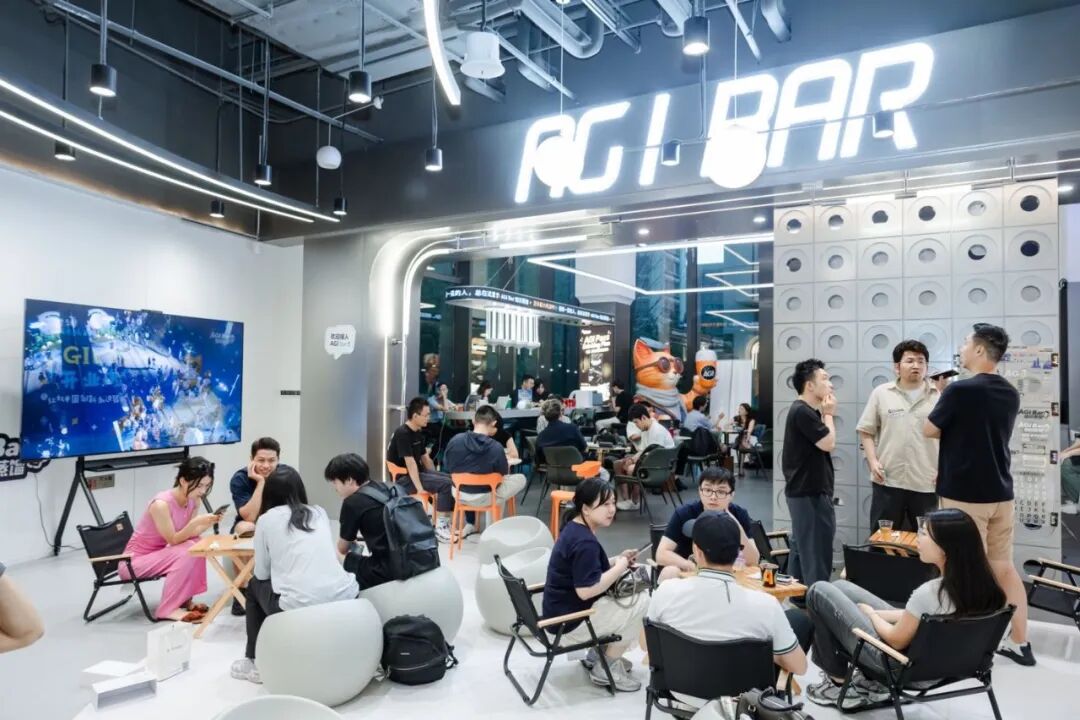
Many events arrange for entrepreneurs to present their products. Some are called open mic sessions, some are called roadshows, with different names but similar formats. A person takes the stage with a PowerPoint presentation, talks about the problem they want to solve, the model they have adopted, the processes they have tested, and how they plan to serve the future.
Most of the audience are also entrepreneurs.
They are also developing products, seeking directions, and figuring out how to integrate a new capability into an old demand. Some listen attentively, and peers can always spot flaws in someone else's PowerPoint. Some engage in conversations or daydream because many VCs are not as enthusiastic about AI applications as they seem. Foundational models, computing power, embodied intelligence, or a story that sounds like it could be worth billions of dollars right from the start usually get their attention.
Products may die, but people must live on
The Social value of the Side Event is probably greater than the product sharing on stage.
On stage, it's ten minutes about what I'm working on now. Off stage, it's two hours of discussion about what we can work on together in the future.
AI has shortened the lifespan of products significantly. A feature that has just been developed could be replaced in the next model update. Something considered a viable entrepreneurial direction today could become a mere toggle in a large model configuration page in a few months.
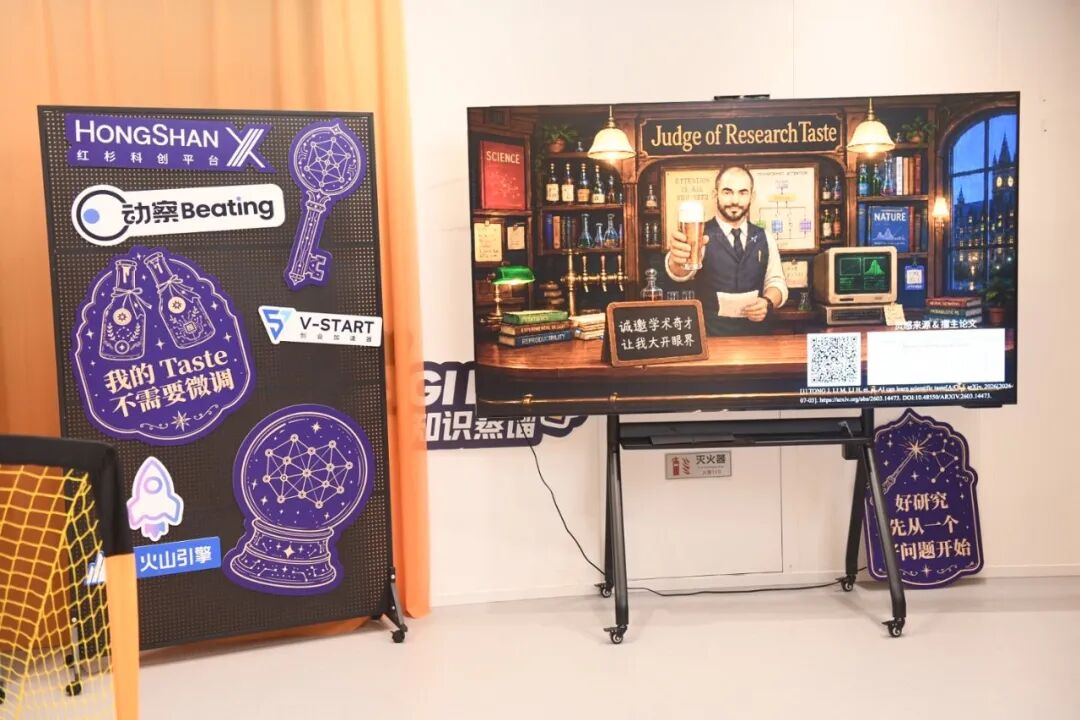
As a result, people move swiftly as well.
Entrepreneurs move on to develop the next product, join big companies, or venture into funds. Young professionals in investment firms switch platforms, move to corporate strategy roles, then exit the company to start their own ventures. Today they are a Founder, tomorrow a Product Manager, and the day after tomorrow, sitting on the investor side, questioning another Founder about their competitive advantage.
In the past, people used to talk about long-termism, referring to a company's lifespan of about ten years. Nowadays, many people's version of long-term thinking is to make themselves more durable.
Products may fail, directions may change, and identities may be reset. Someone who has experienced users not paying, funding falling through, and a partner suddenly going silent in the group chat is much more reliable in getting things done than someone who only knows how to tell a growth story.
Therefore, when attending a Side Event, what people ultimately remember is the person. Is this person only good at storytelling? Have they experienced failure? Do they truly believe in "user needs"? If you were to move to another company in the future, would it be worthwhile to collaborate with them again?
The product presentation segment is like a plate of dumplings hastily wrapped for a vinegar dip; what truly matters is the network and the background of the individuals.
A Roomful of People Predicting the Future
Later, I joined a Side Event group. In a group of several hundred people, many were using NFT avatars. Among them were six Pudgy Penguins, four Milady, and two Lil Ghosties.
People from various industries are all turning to AI. I met many old friends from the Web3 industry, who are now venturing into AI VC, community, and developer ecosystems. There are also a few Web3 public chain ecosystems preparing to establish AI startup accelerators using their own funds and overseas resources.
Everyone has left the previous card table and quickly found a seat at the next one.
In mid-July in Shanghai, the hype around AI is not the kind of abstract hype found in the news. AI is everywhere: by the elevated highway, on airport billboards, in ride-hailing car radios, and in high-speed rail announcements.
AI itself is certainly not a bubble.
The model's capabilities are real, the computational power invested is real, and the anxiety of both tech giants and startups is also real. What used to take weeks to accomplish can now be done in a few hours. The capabilities that only large companies were qualified to touch are now starting to fall into the hands of increasingly smaller teams.
No one can pretend that all of this isn't happening.
However, within the Side Event, another feeling is equally real. The industry's social relationships are maturing faster than its products.
The product is still looking for users, but the ecosystem around it has already been established. There are tickets and screenings, where identity and title must be checked first. Forums, cocktail parties, roadshows, accelerators, funds, and media have each found their place, and everyone can skillfully discuss where the next opportunity will be and how the next piece of the cake should be divided.
The future has not truly arrived yet, but the way we talk about the future is already very sophisticated.
This kind of gathering is certainly valuable.
Capital, talent, technology, and information all need to meet each other first for collaboration to happen. Many truly useful relationships may start with just a "let's catch up later" in the hallway. If a new industry doesn't even have such rooms, it will be hard for anything substantial to grow from it.
The feeling of a bubble comes from a temporal mismatch.
An industry's readiness for the future is far ahead of its validation by reality. The number of users for the product is still low, but there are already many terms describing these users. The demand is still fluctuating, but the PowerPoint presentations about the demand are already very well done. A company might pivot next month, yet people tonight are already discussing what kind of platform it will become.
The language in the room is becoming increasingly professional. Is it multimodal or single modal? How should the workflow be designed? How do agents collaborate? How low can the token cost be pushed? Who among the attendees comes from a big tech company, and which fund is backing them?
Once users actually appear, the problems suddenly seem very small.
What can all these things actually help me do? Can they help me save some time? Can they help me save some money? Will I still open it again tomorrow after waking up?
These questions are so plain that they are a bit disappointing. Yet, precisely because of their simplicity, they ultimately determine how much of those grand narratives can endure.
After the Lights Are On
A Gatsby-esque party always comes to an end.
As the music stops and the lights come on, people get into their cars, leave the house, and return to their work, homes, and their next relationships. Nobody immediately has a better future for having attended a night party.
The side events during WAIC are no different.
Some are looking for investors, some are looking for partners, some are no longer sure if their current product can continue, while others are willing to meet more new people. Business cards are exchanged, QR codes are scanned, and plans are made to "chat again next week."
Of course, genuine collaborations will emerge from these interactions. Some will walk into the next company, the next funding round, or the next entrepreneurial journey because of one encounter.
More relationships, probably there will be no follow-up.
Excitement is not a relationship, and applause is not either.
After the next model update, many products will suddenly look like an old bulky TV. Many communities will gradually decline. The person standing on the stage today may have changed companies, directions, or identities by next year. Most of the people who say "let's catch up later" today may not actually do so.
There is a signature drink in the AGI Bar, with a thick layer of foam floating on top, occupying about ninety percent of the whole glass.
I stood in the room holding it, watching the people around me continue to exchange WeChat IDs, directions, and futures.
The foam is light, yet it fills the glass first.
Welcome to join the official BlockBeats community:
Telegram Subscription Group: https://t.me/theblockbeats
Telegram Discussion Group: https://t.me/BlockBeats_App
Official Twitter Account: https://twitter.com/BlockBeatsAsia
