On a morning in November 2024, Polymarket founder Shayne Coplan woke up to an unexpected visitor in his home. Several FBI agents burst into his New York apartment with a battering ram, conducting a search for evidence related to the platform's illegal gambling activities.
Coplan took to social media to claim that the search was a politically motivated crackdown by the Biden administration. However, privately, he and his team of advisors harbored suspicions about a different target, attributing many of Polymarket's troubles to their main competitor—Tarek Mansour, the CEO of the prediction market platform Kalshi.
Four sources familiar with the matter revealed that months before the FBI raid, Kalshi's lawyers had visited the Manhattan U.S. Attorney's office to report issues related to Polymarket, a matter that had not been previously disclosed. The sources said the lawyers provided prosecutors with a detailed overview of Polymarket's operations, focusing on a key issue: while the platform should have been inaccessible within the U.S., users could still access it.
This standoff was just one extreme clash in the long-standing feud between Kalshi and Polymarket. Both are currently the hottest startups in the tech industry. Ambitious clashes between Silicon Valley founders are not uncommon, and industry battles fueled by arrogance abound, such as Uber and Lyft's competition in the ride-hailing market. In the artificial intelligence sector, the public spats between OpenAI's Sam Altman and Anthropic's Dario Amodei, two billionaire founders, have become a captivating subplot.
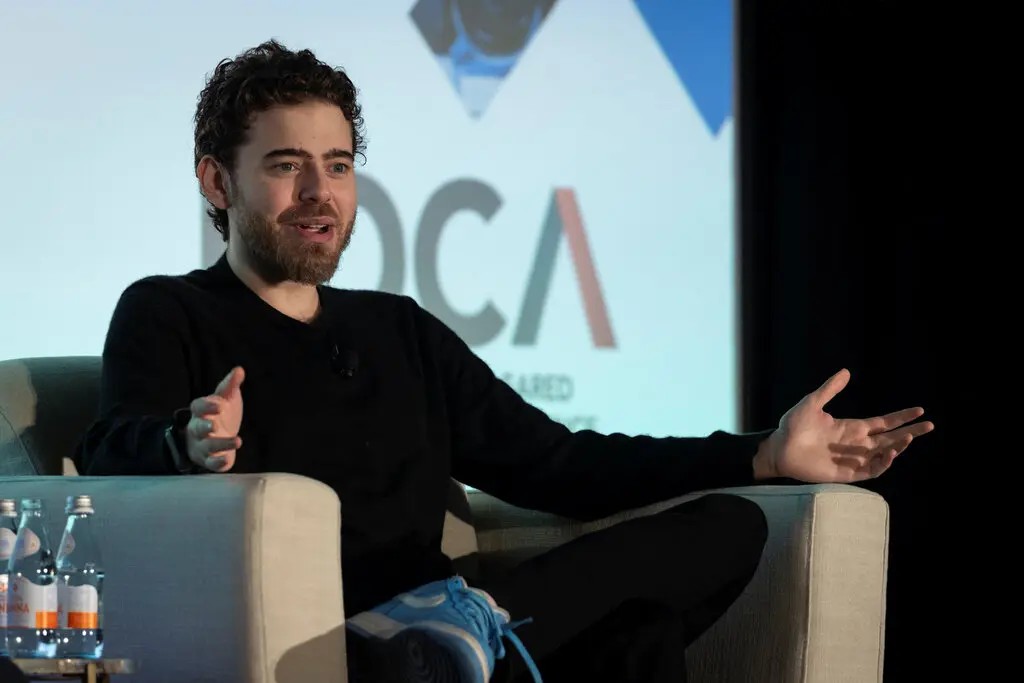
However, the confrontation between the 28-year-old Coplan and the 30-year-old Mansour has long surpassed the boundaries of normal business competition. Over forty insiders from both sides, speaking on condition of anonymity, shared that both are newly minted billionaires determined to monopolize the predictive betting market across all categories including sports, politics, and entertainment. They hold a deep mutual animosity, and this antagonistic sentiment permeates almost all business dealings between the two companies.
Longtime writer of a prediction market industry column Dustin Gouker stated: "The two parties have accumulated deep grievances, and the conflict has long been mixed with personal feuds."
This dispute has spread to internal corporate meetings, U.S. congressional hearings, influencing the direction of Washington regulation, triggering unprecedented industry attention and regulatory concerns. Both companies have trademark squatting against each other, competed for the same business partnership, poached each other's talent, publicly accused each other on the media, and engaged in direct personal attacks on social media. Both sides have established business partnerships with Donald Trump, which was a common public relations strategy within the Washington circles during the Trump administration.
Former Kalshi employee and prediction market investment fund manager Noah Zingler-Sternig commented: "Both companies have crossed boundaries in many aspects, making it difficult for the public to take these two platforms seriously."
The hostility between the two parties is not just a competition for market share; a more profound disagreement lies in their bottom line conduct and business ethics. Kalshi has portrayed an image of compliance benchmarking, insisting on obtaining U.S. regulatory approval before conducting domestic operations; Polymarket, on the other hand, has not obtained a domestic license, and its core platform has operated offshore for an extended period. Kalshi strictly enforces real-name authentication rules and blocks sensitive betting categories; Polymarket users are not required to submit personal information to register, and they can even bet on events like the timing of an Israeli missile strike.
Although Coplan and Mansour have met in the past, they now have almost no communication and only engage in mutual defamation from a distance. Mansour graduated from MIT, claiming to be a mathematics enthusiast. He once likened the competition between the two to Tom Brady and Eli Manning, two legendary quarterbacks engaging in benign competition. However, recently, he bluntly stated that Polymarket's operational model is "illegal and unethical," pointing out that its offshore platform is operated through a Panamanian entity.
In April of this year, Mansour openly stated at an industry conference in Washington: "I don't know what regulations Panama has regarding insider trading in prediction markets, most likely there are absolutely no related constraints."
Coplan, an alumnus of New York University known for his skill in roadshow campaigning, rarely mentions Kalshi in public. However, two insiders revealed that he privately accuses Kalshi of simply copying the Polymarket model and believes that Mansour has been trying to suppress him. Coplan firmly believes that his platform is the best solution for the industry, stating on the "60 Minutes" show last year: "This is currently the most accurate information tool available to humanity."
Kalshi spokesperson Elisabeth Diana stated that the company learned about the FBI search through news reports. She added that Kalshi regularly communicates with regulatory agencies on compliance issues and has publicly pointed out that "there are companies that harm user rights and damage the industry's reputation."
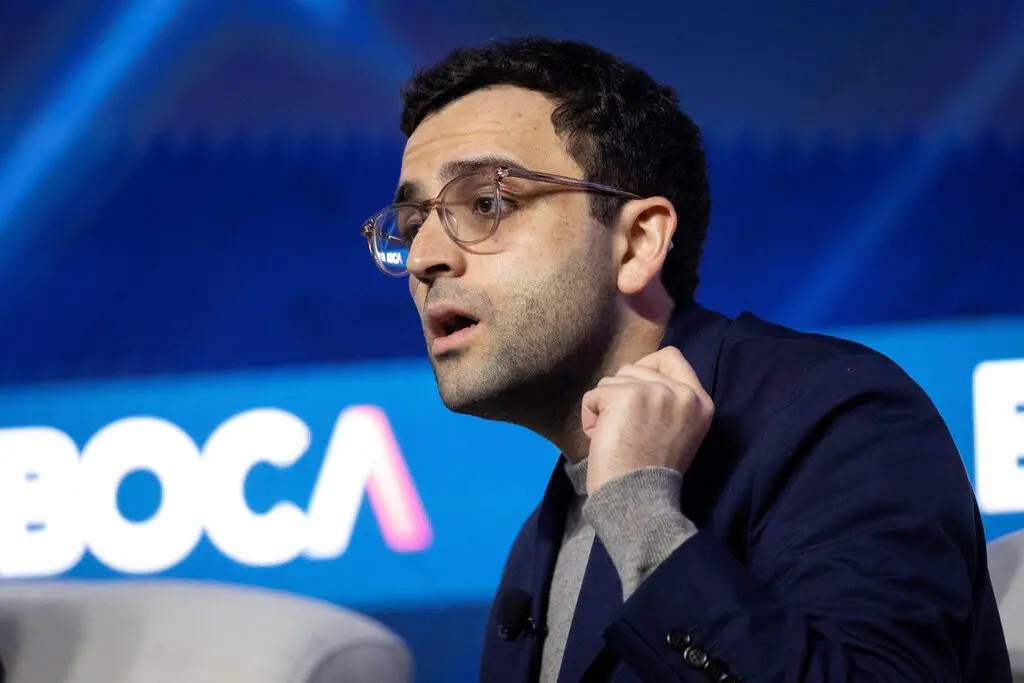
Diana stated, "Mansour himself holds no personal grudge against Shayne; his only grievance is that Kalshi has spent years promoting industry compliance, while the other side operates the racecourse in a ruthless manner."
A Polymarket spokesperson responded to Mansour by quoting a famous Emerson saying, "The louder he talked of his honor, the faster we counted our spoons." The spokesperson also mentioned that the platform has implemented a robust insider trading detection mechanism, has referred suspicious leads to law enforcement agencies nearly a hundred times, and emphasized, "We are committed to building a precise, fair, and transparent trading market."
As the prediction market transitions from a niche track to mainstream popularity, both companies are facing increasing regulatory pressure. Attorneys General from multiple U.S. states have successively sued both platforms, alleging that their sports betting operations violate regulations; Polymarket is also under investigation by the U.S. Commodity Futures Trading Commission (CFTC).
Kalshi's accusations against Polymarket have become more direct. In May, former CFTC Commissioner and current Kalshi board member Brian Quintenz posted on Platform X, introducing Polymarket's user verification mechanism and tagging the official account of the U.S. Southern District of New York Attorney's Office.
The History of the Feud Between the Two Giants
Coplan, a native New Yorker, founded Polymarket in 2020. In the early days, he worked out of an apartment in Lower Manhattan, with a makeshift office in the bathroom, and a single laptop as his only equipment. At that time, he saw himself as a newcomer to the industry, pioneering a completely offbeat new product.
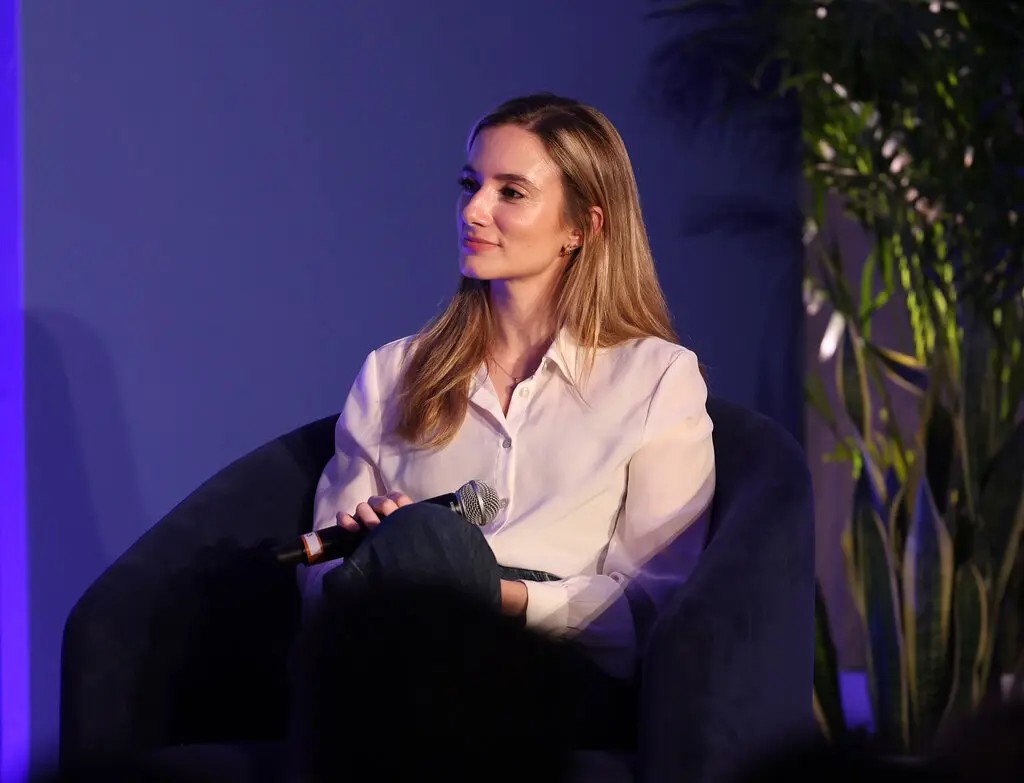
He soon encountered a formidable opponent. Mansour, who grew up in Lebanon and was a Castle Fund trader, co-founded Kalshi in 2018 with Luana Lopes Lara, his fellow MIT alumna and the current company COO. Colleagues describe Mansour as brilliant and daring but somewhat reserved, while Coplan is described as easy-going, with a passion for art and music, embodying the laid-back New York vibe.
The relationship between the two has always been unfriendly. An insider recalled that in an awkward early meeting, Coplan mentioned that both had been raised by single mothers, a remark that made Mansour very uncomfortable.
But the two shared a common belief: that the prediction market would reshape the finance and media industries, relying on "collective intelligence" to produce highly valuable information references. Both Polymarket and Kalshi betting platforms present bets in the form of "yes/no" questions, covering topics such as weather and the Super Bowl. The total amount of user bets determines the odds for the corresponding event.
Even before Kalshi launched its betting operations in 2021, they had applied to the CFTC for a full operating license. Three sources revealed that during the early stages of communication with regulatory authorities, Kalshi had already raised compliance issues related to Polymarket.
The main point of contact for Kalshi was strategic advisor Jeff Bandman, who repeatedly urged the CFTC to investigate Coplan's company, pointing out that the platform could be used in the U.S. without permission. In January 2022, the regulatory agency fined Polymarket $1.4 million and ordered the platform to stop accepting bets from U.S. users.
This ban momentarily positioned Kalshi to dominate the U.S. domestic market, but the company still needed to engage with regulators to seek more lenient operating rules. During the Biden administration, the CFTC prohibited election-related betting, leading Kalshi to sue the regulatory agency in 2023.
While Kalshi was embroiled in legal battles, Polymarket continued to thrive despite being banned from serving U.S. users. American users only needed to use a virtual private network to modify their location to access offshore websites. Prior to the 2024 presidential election, the platform's odds sparked widespread discussions online, with its data showing Trump's win probability significantly higher than traditional polls.
In June, Mansour bluntly stated during a podcast appearance, "They completely bypassed the compliance process and went straight to product launch without any reservations."
Shortly before the election, Kalshi won in court, allowing licensed prediction markets to legally operate in the U.S. Polymarket still lacked domestic operating qualifications, but its platform traffic soared, propelling Coplan to industry fame.
In 2024, the Manhattan District Attorney's Office initiated an investigation to verify whether Polymarket had violated regulations by offering services to U.S. users. A week after Trump's election victory, the FBI conducted a raid on Coplan's Manhattan apartment, seizing all electronic devices.
Kalshi wasted no time in seizing the opportunity. Tech media outlet Pirate Wires exposed chat screenshots showing Kalshi employee Keaton Inglis contacting former NFL star Antonio Brown, instructing him to post on X platform stating that Coplan was "guilty".

Brown later apologized in a post, stating that he was in a business partnership with Kalshi at the time and casually reposted the related content. Mansour also came forward to apologize, stating in a December 2024 podcast, "Some of our team members were overly excited at the time."
The search incident left Coplan and his team highly suspicious, and related rumors quickly spread across the media. Four sources familiar with the matter revealed that internally at Polymarket, there were speculations that Kalshi or its partner had hired a private investigator to track Coplan, and upon encountering the FBI, immediately leaked the information to the media.
Kalshi spokesperson Diana refuted: "This is completely baseless, and the other party's imagination has reached an absurd level."
Undermining a Major Collaboration in Secret
In July last year, Coplan went to the top-floor restaurant Manhatta in Manhattan for a crucial business dinner, boasting a panoramic view from the 60th floor. He was casually dressed, carrying a bagel in a paper bag.
The other party at the dinner was billionaire Jeffrey Sprecher, founder of the Intercontinental Exchange. This $80 billion giant operates the New York Stock Exchange. The meeting of the new and old racing giants was also a key turning point in the competition between Polymarket and Kalshi.
Over the years, Kalshi had the backing of A-list venture capital investors such as Sequoia Capital; Coplan had previously struggled to secure institutional funding. However, both Coplan and Mansour were vying for investment from the Intercontinental Exchange, a giant looking to enter the prediction market arena.
Coplan and Sprecher hit it off. The Intercontinental Exchange had initially considered investing in Kalshi but eventually finalized an investment agreement with Polymarket last fall.
Sources said that Mansour was furious upon learning the news. Five sources revealed that prior to the announcement of the partnership, Mansour separately met with key executives from the Intercontinental Exchange along with Kalshi investor a16z partner Alex Immerman.
Several insiders provided varying accounts of the conversation, but three confirmed that Mansour's communication with Immerman was primarily aimed at persuading Intercontinental Exchange to abandon this investment.
Kalshi spokesperson Diana stated that the company itself had "no intention to proceed with a collaboration with Sprecher".
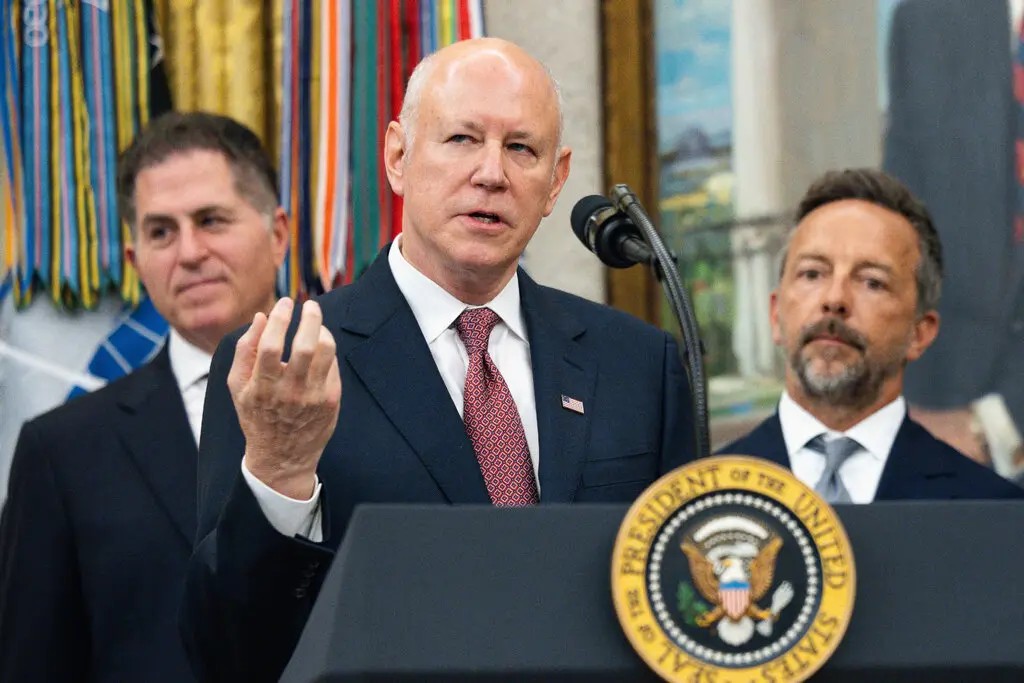
Ultimately, Sprecher chose to back Coplan and in October announced a potential $2 billion investment in Polymarket. This was just one of the positive developments for Polymarket: in July last year, the Trump administration tightened enforcement measures, leading to the Southern District of New York dropping its investigation into Coplan; during the same summer, 1789 Capital, a venture capital firm owned by a Trump son, also announced an investment in Polymarket.
Last year, Coplan said on the "60 Minutes" program, "This administration strongly supports innovation and the crypto industry, especially backing Polymarket, which is very rare."
To capitalize on favorable policies, Polymarket must obtain a U.S. operating license. Coplan plans to acquire a company that already holds regulatory approval.
He once again faced resistance from Kalshi. Five sources revealed that there were rumors in the industry that Coplan intended to acquire the niche prediction platform Railbird. Mansour then reported related risks of this acquisition target to senior CFTC officials.
Despite Kalshi's report, in June 2025, the CFTC approved Railbird's operational qualifications. Coplan eventually spent $112 million to acquire another licensed entity, QCX. Although the offshore main platform remains restricted, after acquiring QCX, Polymarket launched a lightweight version of the app in the U.S., reaching a large number of American users.
Upon announcing the acquisition in July, Coplan posted an image of the American flag on social media with the caption: "We've been waiting for this day for too long. Polymarket officially returns to the U.S."
A Deliberate Provocative Business Game
This spring, the New York Knicks made it to the playoffs, and Mansour was seen courtside at Madison Square Garden, wearing team-colored clothing, smiling broadly.
Officially, this marks Kalshi's new partnership celebration with the arena, as the sixth-floor corridor of the arena is formally named the Kalshi Corridor. However, industry observers see another layer of intent: a deliberate provocation.
Prior to gaining fame, Coplan often shared Knicks-related content on social media and was frequently seen courtside during regular-season games. Insiders revealed that before Kalshi finalized the partnership, Polymarket had also explored a similar sponsorship deal but was unwilling to match the offer.
This also signifies that the industry rivalry, once confined to the niche crypto community, has now entered the mainstream spotlight. In the first six months of this year, the total trading volume of both platforms exceeded $150 billion, a 1200% increase, undoubtedly intensifying the competition.
Current data shows Mansour currently in the lead. After completing a new funding round in May, Kalshi was valued at $22 billion, $7 billion higher than Polymarket. Data firm The Block reported that Kalshi's trading volume last month reached $33 billion, twice that of Polymarket.
Diana denied that the collaboration with Madison Square Garden was aimed at Coplan: "We would not secure a business partnership to taunt our rival; such claims are ridiculous."
The skyrocketing popularity of prediction markets has also attracted increased regulatory scrutiny, with most of the focus on Polymarket. In April of this year, a U.S. Special Forces soldier was charged with using classified information to illegally profit over $400,000 by placing bets on the Polymarket offshore platform through a VPN regarding the arrest of Venezuelan President Maduro. A Polymarket spokesperson stated that the platform explicitly prohibits VPN access.
Both platforms have taken drastically different routes in managing insider trading. Kalshi requires users to submit complete personal information before placing bets, with some scenarios requiring users to disclose their occupation. All Polymarket transactions are transparent on-chain, allowing community users to self-audit for any violations. U.S.-based app users must verify their identities, but users on the offshore main platform are still not required to disclose privacy details such as their names and employers.
Polymarket's paid partnership influencer Aj Pleasanton commented that this model is widespread in the crypto industry, as users generally prefer anonymous operations.
Privately, Mansour has become increasingly dissatisfied with Polymarket's operational model. According to two insiders, he frequently calls Polymarket's Chief Legal Officer Neal Kumar to express his anger.
The two sides have been in frequent conflict. According to sources familiar with the matter and documents reviewed by The New York Times, in the spring of 2025, several influencers under contract with Polymarket extensively spread the news of Kalshi's collaboration with Elon Musk's xAI falling apart.
That same year, Polymarket hired former Uber early employee Max Crowley as the VP of Partnerships. However, less than two months after starting, Crowley defected to Kalshi, leaving Coplan extremely furious. Insiders revealed that during the transition, Coplan and the company's board lawyer Alex Spiro sent him a cease-and-desist letter threatening legal action, which was ultimately not pursued.
Despite sharing common industry interests, the two companies refused to collaborate. Kalshi formed an industry lobbying group to oppose restrictive predictive market regulations enacted by various states, partnering with several peers but conspicuously excluding Polymarket.
The following month, Kalshi suffered a setback in a state sports betting lawsuit, prompting Polymarket to immediately launch a new prediction market, allowing bets on the duration of Kalshi's Massachusetts sports business shutdown.
Welcome to join the official BlockBeats community:
Telegram Subscription Group: https://t.me/theblockbeats
Telegram Discussion Group: https://t.me/BlockBeats_App
Official Twitter Account: https://twitter.com/BlockBeatsAsia
