During WAIC, Zeng Xinxun's product did not appear at any booth.
The only time he publicly introduced "GoodMatch" at the venue was during a flash debate organized by the WeChat Mini Program team. The debate topic was: Should AI emotional products allow users to "use and leave" or strive for "long-term stickiness"?
Zeng Xinxun chose the former.
In an industry where all products try their best to retain users, he believes the true success of a dating app is for users to quickly find the right person and then leave. AI should not be a substitute for a long-term relationship; it should step back after making a match.

A year ago, Zeng Xinxun left Kimi and started working on this AI matchmaking product called "GoodMatch." Prior to this, he had worked in search recommendation at WeChat, TikTok, and his last position was as the AI Search Technology Lead at Kimi.
Search solves the match between information and needs. Now, he wants to replace documents with people.
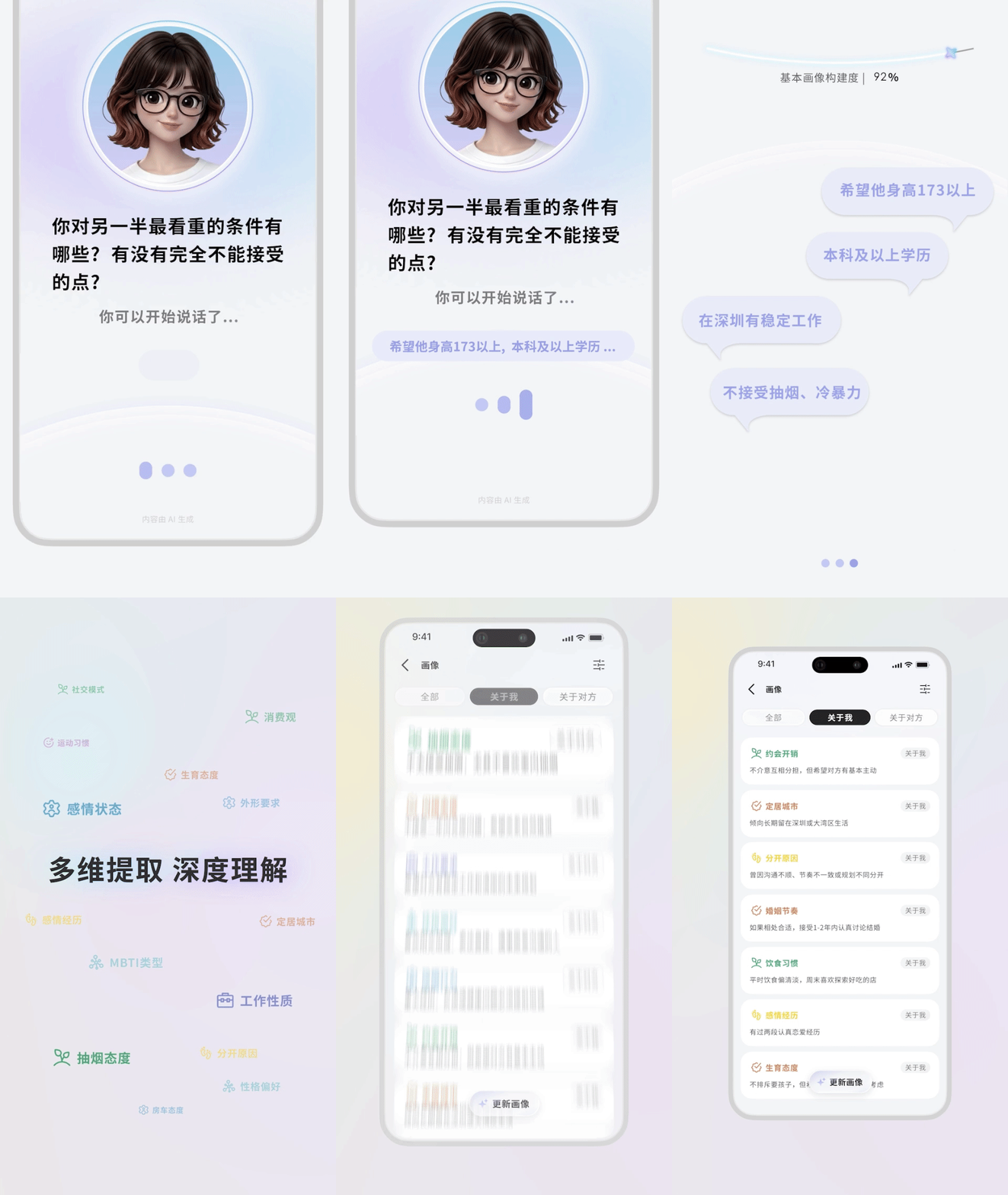
Entering GoodMatch, users first need to have a 20-minute voice conversation with AI to let the model understand their personality, experiences, and partner preferences. The AI then compares the profiles of two individuals, analyzing the probability of their mutual compatibility. After entering into communication, it can also act as an "avatar" and "advisor," answering awkward questions, reading chat records, and helping individuals assess the stage of a relationship.
However, the truly unique aspect of this product is not solely the AI.
GoodMatch requires users to fill out their information carefully, match with only one person at a time, does not restrict the exchange of WeChat contacts between the two parties, and has introduced a "refund if not married within three years" membership plan. Almost every design aspect deliberately abandons the traditional internet product focus on registration conversion, activity, and retention.
Why would someone who used to work on search want to use AI to handle intimate relationships? What tasks should AI complete for humans, and where must it stop? For a product that hopes users will leave quickly, how does it plan to monetize in the end?
We had a chat with Zeng Xinxun.
A Product Growing Out of a Problem
Zeng Xinxun was no stranger to entrepreneurship.
Over a decade ago, he was a student at Southern University of Science and Technology. At a time when food delivery platforms were just emerging, he and his classmates started a network restaurant called "South Wind Dots," delivering cooked food to university dormitories.
This venture was also inspired by his own life.
He was a heavy user of food delivery services. In an era where one still needed to browse menus, make phone calls, and repeatedly provide delivery addresses, he felt that ordering a meal should not be so complicated. So, he deconstructed the offline restaurant process and attempted to use the internet to facilitate ordering, preparation, and delivery.
Over a decade later, he entered a well-established matchmaking market with numerous existing products that had been around for over twenty years, and once again, his starting point was his own life.
Encounter a problem first, then create a product. This was the most familiar entrepreneurial approach for Zeng Xinxun.

When it rained, orders would pour in
DotC Interview: When you started your first business doing campus food delivery, there wasn't a dominant platform in the market yet. Now, in the matchmaking industry, you are facing a market that has existed for over twenty years with a plethora of products. What similarities do you see between these two entrepreneurial experiences?
Zeng Xinxun: All of my product ideas actually come from my own life.
I ventured into food delivery because I was a super heavy user of such services. I would order food over a hundred times a year. Back then, ordering food required lengthy phone conversations, and I felt the process was too cumbersome. There should be a more rational and digitized solution, so I decided to create one.
At that time, we operated in several universities in Guangdong and accumulated a substantial user base. Initially, I didn't think about platforms, competition, or the future market landscape. My competitors were not other food delivery platforms but rather the old-fashioned experience of ordering food over the phone. Later on, when major platforms like Meituan entered the scene, engaging in financing and subsidies, burning through billions or tens of billions of yuan, that was when we were pushed out. But that's a story for another time.
The inspiration behind Liang Pei was similar, stemming from my own blind date experiences.
The difference is that matchmaking is a track that has over a twenty-year history, with websites like Zhenai and Jiayuan, as well as newer ones like Soul, Momo, Tantan, and a whole host of other dating products. I was once a heavy user of these products myself, but I felt they didn't truly address my needs. With the emergence of AI, I believed this experience could be completely transformed.
Interview Excerpt: What Was Your Experience in Finding a Partner?
Zeng Xinxun: When I started my first business, I took a break from school for three years, so by the time I graduated from university, I was already 25 years old. Looking back, I realized that from 18 to 25, I was either busy with entrepreneurship or focused on work and preparing for graduation, without truly experiencing a romantic relationship. I felt it was a pity. Considering that the period from 20 to 30 is a precious time in life, and half of it had already passed, I was still single. Therefore, after graduation, I really made "finding a partner" my key performance indicator.
In the beginning, I tried looking around me, checking if there were any suitable individuals among my colleagues and classmates. After searching around, I found that most of the people I admired were already in relationships. So, I started participating in various activities. I joined company-organized hiking, mountain climbing, badminton, ultimate frisbee, werewolf games, murder mystery games – anytime there was an opportunity to meet new people, I would go. I also attended alumni networking events organized by the school, and even posted on the company's internal social forum.
After trying offline methods without success, I decided to register on dating apps.
I spent over a year on these apps but did not meet the right person. Eventually, feeling a bit disheartened, I uninstalled the apps. After a few months, New Year's Day arrived. I realized another year had passed, and I hadn't achieved this goal. Feeling somewhat unwilling to give up, I reinstalled the apps.
Upon returning to the apps, I noticed that in the past few months, I had received only one message, which was from my current wife. We chatted online for a day, met the next day, and decided to be together on the same day. It has now been six years, and we have a one-year-old daughter.

This experience made me realize that finding a truly suitable partner today is not an easy task.
Whether searching within your circle, expanding it by participating in activities, or using an online platform that seems to offer many choices, there are many difficulties. These challenges are challenging to address with technology because human relationships are too non-standardized. I believe that large-scale model's fuzzy understanding ability has, for the first time, an opportunity to address some of these issues.
A Lavish Two Thousand Words
While using dating apps, Zeng Xinxun wrote a personal introduction of over two thousand words for himself.
It contains his personality, family background, educational and entrepreneurial experiences, as well as future plans, lifestyle habits, diet, and daily routine. He hopes to present himself as comprehensively as possible. If there is anything that the other party cannot accept, it is best to eliminate him early on.
After writing it, the number of "likes" he received actually decreased. However, it was these two thousand words that ultimately led him to meet the right person.
His wife's former classmate was the first to see his profile and forwarded it to the project team's group chat. She registered the software because of this profile and sent him a message. However, Zeng Xinxun had already uninstalled the app at that time and only saw it a few months later.
Both of them described themselves in great detail. Zeng Xinxun wrote over two thousand words, and his wife also wrote over a thousand words.
They did not meet each other because of having too many choices but precisely because both of them were willing to present themselves seriously.
Insight on Beating: What do you think is the core issue with past social and dating apps?
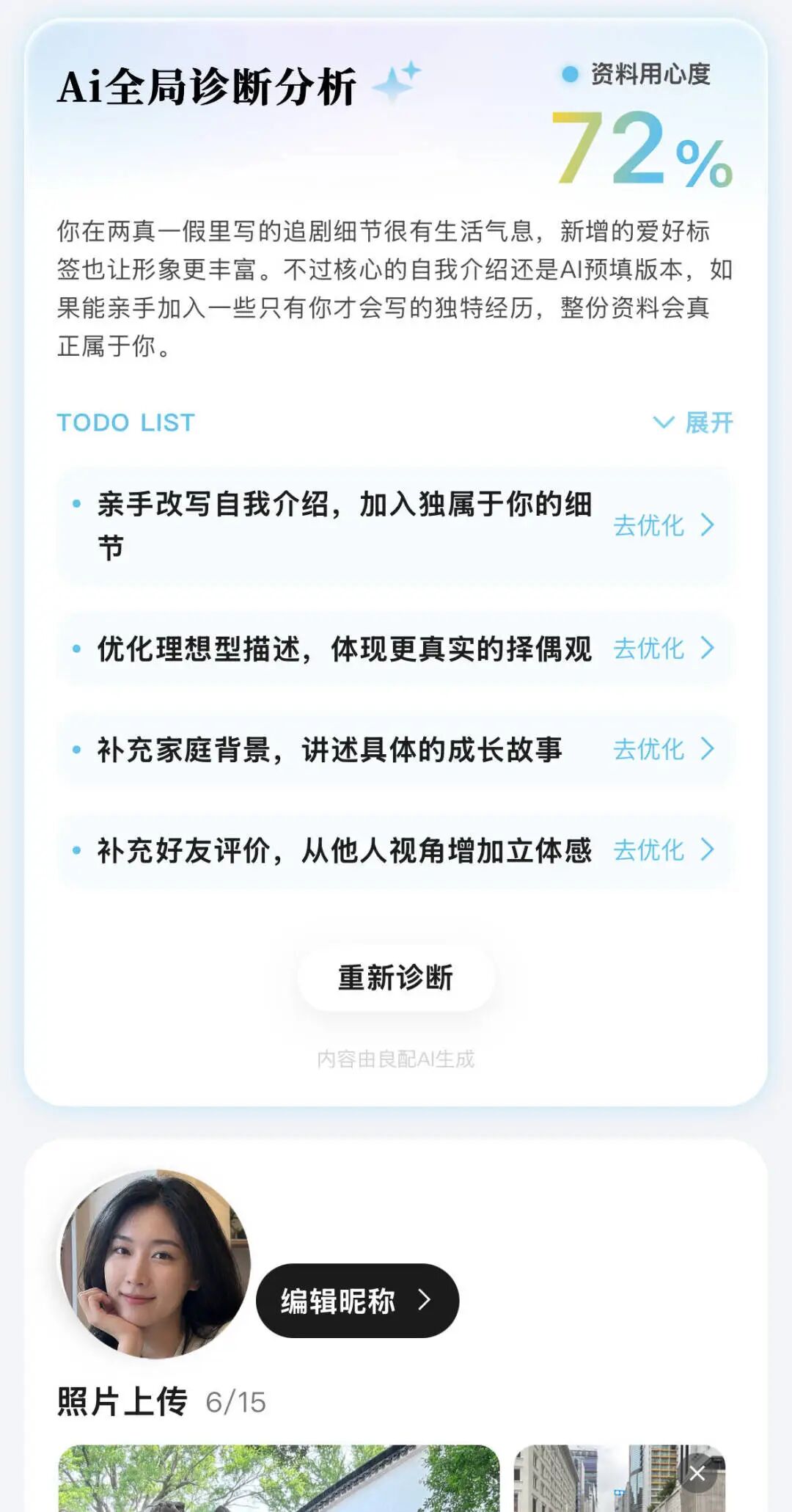
Zeng Xinxun: The first step is that users provide too little information. On many past dating apps, apart from a few photos and some tags, it's difficult to truly understand a person. The lack of information is partly due to willingness. Many people do not have high expectations for dating apps, so they are not willing to invest. It is also partly due to capability. Not everyone can logically and hierarchically introduce themselves, and many people may not know themselves that well.
Next, you can only increase understanding through chatting and meeting in person. This process requires three things.
First is time. You may need to spend an entire Saturday afternoon meeting someone. Second is money. There are costs associated with dining out and taking transportation. Third, and most importantly, is energy. You need to warmly introduce yourself to a stranger, patiently listen to them, and show interest in their life.
But in the end, you are most likely not compatible, and all the prior investment becomes sunk costs.
My patience, time, and emotions should be reserved for someone more deserving. There is no need for everyone to go through trial and error on their own with each person. At the very least, AI can help by providing more context upfront and then filtering out some obviously incompatible people before the meeting.
Interviewer: Dynamic Matching Beating: However, encouraging users to provide more information is not a natural outcome with AI. How specifically can we enhance the richness of the data?
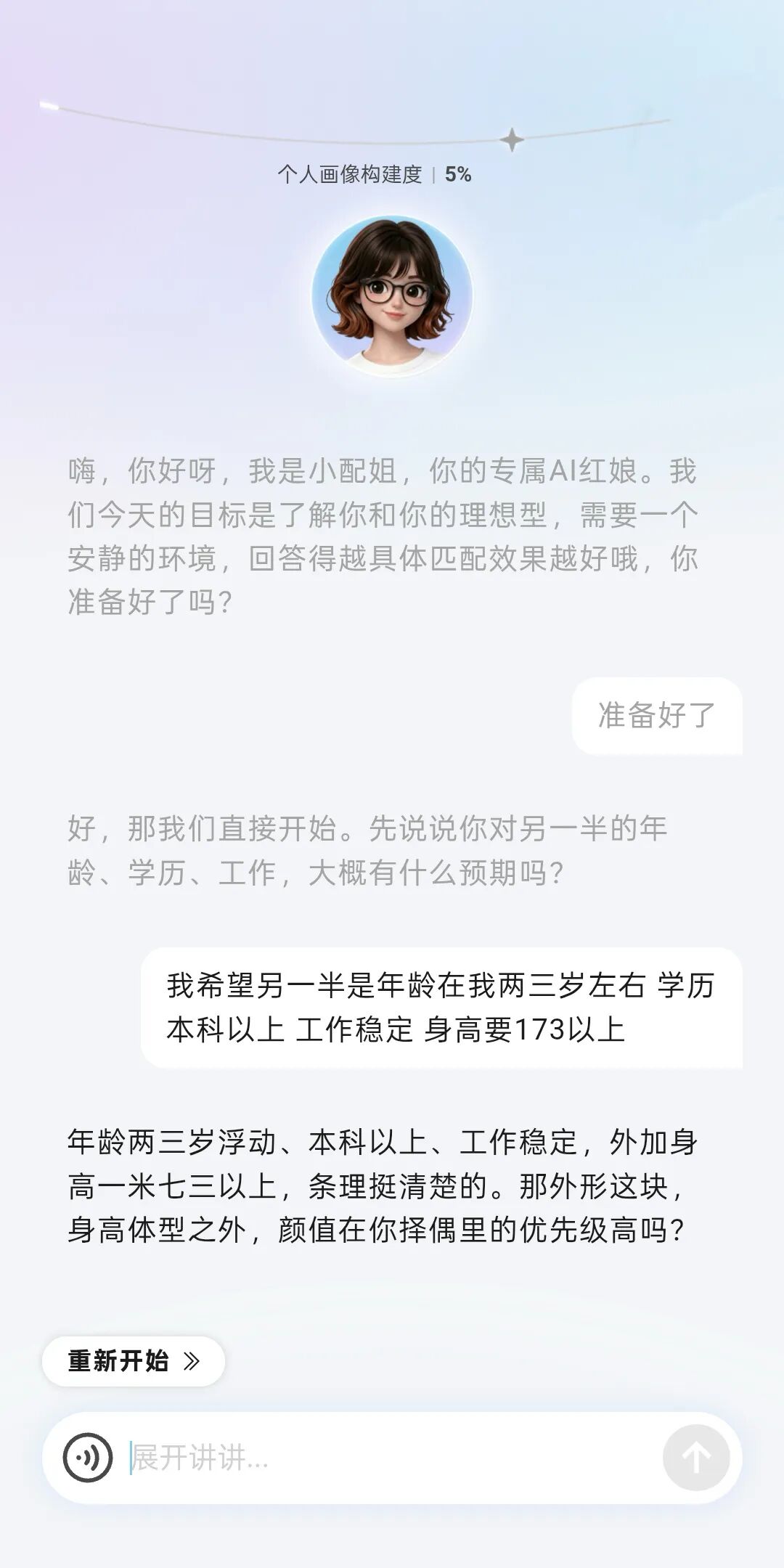
Xinxun Zeng: We have transformed the process of filling out information into a conversational AI-guided dialogue. Not everyone is capable of writing an essay, but if someone talks to you for 20 minutes, as long as you are willing to cooperate, most people can explain their situation quite thoroughly.
What kind of person you are, whether you prefer stability or adventure, wish to continue your career or lead a relatively quiet life, your views on marriage, children, and the city – all these can be gradually unfolded in a conversation.
We have internally compared some competitors, such as Love of Ivy and Hand in Hand. The average user profile in these platforms is only about a little over a hundred words. Currently, in our platform, the average user profile has over four hundred words.
Only when a person is no longer just a few photos and tags, but becomes a more three-dimensional presence, can both parties have a basis to judge suitability.
Interviewer: When people introduce themselves, they often subconsciously present themselves in a certain way. How can AI distinguish between a person's self-imagination and actual status?
Xinxun Zeng: We cannot completely distinguish, and I don't think it is our obligation.
In normal social interactions, everyone tends to slightly package themselves. When you see someone's self-description, you naturally take it with a grain of salt. Someone might say they are 1.7 meters tall when they are actually 1.68 meters; someone might claim to be 1.8 meters when they are actually 1.75 meters. But at least you need to have an original price tag to decide how much discount to apply.
What we do is to encourage everyone to provide a more comprehensive, more three-dimensional "original price." As for the actual situation, it still needs to be gradually confirmed in subsequent interactions. This is better than having no information at all and starting from scratch based on guesswork.
Interviewer: After having more data, why do traditional products still struggle to make successful matches?
Xinxun Zeng: Even with a wealth of data, past products may not necessarily understand it.
Back then, I wrote a two-thousand-word piece, but the platform did not recommend me to people who might genuinely appreciate this content. Can it be that in the whole of Shenzhen, only my wife might like me? Definitely not. The reason is that for traditional recommendation algorithms, a two-thousand-word text may just be a piece of text with a length of two thousand. It can extract keywords, add tags, and then perform tag matching, but it is challenging to grasp the underlying meaning.
For example, I have written about my entrepreneurial experience, which may indicate that I am inclined towards taking risks, but it could also imply that I prioritize adventure over stability in life. Some people may see this as a negative trait, while others may find it appealing.
I once met a girl introduced by a teacher. We chatted on WeChat for a week, had a great conversation, and there was even a hint of romantic interest. However, after our first meeting where I talked about my entrepreneurial journey, she decided to back off. She preferred a more stable life and didn't want to live in constant anxiety, worrying about job security one moment and the next about the success of a startup.
On the other hand, I have also encountered individuals with completely opposite views. She didn't enjoy working all the time in a corporate setting and instead hoped for a partner willing to take risks.
The same characteristic can be a flaw for some and a strength for others. If technology can't comprehend this difference, it will only lead to ineffective communication.
In the past, I worked at Kimi on AI search, which fundamentally involved understanding user needs first, then comprehending documents, and determining if they could align. Now, it's just transforming that document into another person.
AI Doesn't Play Matchmaker
AI's entry into romantic relationships is a delicate matter.
If a product aims for chat duration, it's better suited as a companion; if efficiency in matching is the goal, it's more like a mediator; if the objective is to offer more choices, it will keep presenting new people to the user; if establishing a real relationship is deemed success, it must also know when to step back.
With the same technology, due to different service metrics, it will ultimately cater to entirely different people.
Zeng Xinxun has defined the boundaries for AI, stating that it can understand, filter, restate, and remind, but it can't make a person fall in love with another.
AI handles the parts that don't require human touch, leaving time, effort, and emotion for the aspects that truly demand human involvement.
Dynamic Perception Beating: Where do you think AI should specifically intervene in a relationship, and where should it draw the line?
Zeng Xinxun: AI is meant to assist humans, not make decisions for them. It can't pick out a person and tell you, "You are a perfect match, be together." That would be ridiculous.
Chemistry is needed between people. You need to meet, spend time together, and invest time to develop feelings. These can only be accomplished by humans.
However, not all work has to be done by humans throughout the entire process. In the first step, AI can help you present the information clearly. In the second step, it can understand this information, conduct searches, and make recommendations. In the third step, during the communication between two individuals, it can also take on some intermediary work.
For example, in our platform, we have set up an AI avatar. Each user has their own avatar, which others can ask questions to.
Some questions are more repetitive, such as plans for future city development, marriage plans, etc. Some questions are more sensitive, such as past relationship experiences, family situations, plans to buy a house, parents' retirement funds, views on dowries.
If the answers are already in the user's profile, the AI avatar can respond directly. If not, it will anonymously rephrase the question to the individual to seek an answer, adjusting the wording to remove some potentially uncomfortable expressions.
This approach can both complement a person's profile and avoid everyone being like customer service, repeatedly answering the same questions.
Dynamic Insight Beating: In addition to answering questions on behalf of people, how does the AI Advisor intervene in the conversation between two individuals?
Zeng Xinxun: The AI Advisor reads the profiles and chat records of both parties and provides advice to the users.
We have seen a pair of users. A guy and a girl separately asked the AI the same question: based on the chat records, does the other person have feelings for me? They both actually wanted to progress the relationship but were unsure.
In the past, you might have asked friends or confidantes, but you would need to explain a lot of context, and your friends would not understand the other party. The AI Advisor has a relatively complete perspective in this scenario.
We later planned to add a feature. If both parties ask similar questions, a hidden Easter egg can appear, called "Coincidence" or "Telepathy," telling them: you are both actually curious about each other.
What people are truly afraid of is being the only one invested, afraid of becoming a clown. Few people would mind a confirmed mutual interest.
There was also a girl who chatted well with a guy, but on the third day, the guy suddenly stopped replying. She messaged in the morning, afternoon, and evening, then asked the Advisor: why is he not responding to me?
Initially, the Advisor told her that the other person is pursuing a Ph.D., so they might be busy and she should wait a bit longer. The next day she asked again, wanting to know how much longer to wait. The AI told her to wait a maximum of three days. If there is no response after three days, it is not just busyness; the other person may not be willing to continue this relationship.
On the third day, she came to ask whether she should unmatch, and the AI suggested she end it. In the end, she did unmatch.
Later, during our phone follow-up, she mentioned that she did indeed like the boy's profile a lot, so she was reluctant to give up easily. She just found it hard to make a decision while in the midst of it all. The AI gave her an exit strategy to reassess and exit.
Beating AI: Aren't you concerned that users might leave Good Match immediately after exchanging contact information?
Zeng Xinxun: If they leave, they leave. We aim to address users' needs in finding a partner. When you exchange contact information, it indicates that the relationship has progressed to the stage where you need to switch to another platform for communication. Our mission has been partly accomplished. Why would I keep you here?
Initially, some users were very cautious when exchanging contact information. They would send a WeChat QR code and then retract it, or split their phone number into three parts before sending it, perhaps because they were used to other platforms restricting such exchanges.
Later on, we added reminders. When the system detected users sending their WeChat ID or phone number, it would directly inform them that the platform does not restrict the exchange of contact information.
Users entering a genuine relationship is a good thing.
First Eliminate Those Not Serious
Most internet products try to lower the registration threshold as much as possible. Users can fill in their profiles later, verify their identities later; the key is to get users in first and then figure out how to increase activity and retention.
Good Match chose the opposite approach.
Users need to complete about a 20-minute AI conversation, and their profile quality must meet a certain standard before they can formally enter the product. It also set up real-name authentication, unmarried status verification, and real-person avatar authentication.
These steps will reduce the registration conversion rate and also prompt some who are just casually browsing to exit early.
This is exactly the design's intention. Zeng Xinxun does not intend to persuade everyone to stay. He first determines which type of person is worth serving, and then keeps those who do not belong to this stage outside.
Beating AI: What kind of users are you targeting?
Zeng Xinxun: Currently, it is mainly urban white-collar workers. This is because users need to express themselves clearly and articulate their demands. This is somewhat related to age, education, and life experiences.
But there is only one crucial requirement: Ta does want to seriously find a partner now.
At different stages of life, people have different views on relationships. Sometimes it's just casual, sometimes there's an eagerness to get married, and sometimes it's about actively seeking a partner. The perfect match is only suitable for the latter.
The first 20 minutes of conversation and the thoroughness of the profile check are designed to naturally weed out users who are not currently in this category.
This way, those who stay in the product at least know that both parties have the same expectations. Everyone is willing to have a serious relationship with the goal of a long-term commitment or even marriage.
Beating's Insight: Why does the Perfect Match set up one-on-one matchmaking? Before confirming if someone is suitable, users usually want to compare multiple options.
Zeng Xinxun: On other platforms, users can usually chat with many people simultaneously. They express interest in many people, and once those people respond, they end up with multiple chat partners. A few chats here, a few chats there, and in the end, no real connection is made with anyone.
The Perfect Match's mechanism allows you to express interest in different people, but once one person responds, both sides enter a one-on-one matchmaking state. At this point, the two individuals will no longer see other recommendations or receive messages from others. It's only when one party ends the match that they will return to the recommendation list.
AI can handle the initial screening, but once a potentially suitable person is found, you need to invest time and attention to potentially develop a relationship.
In the past product mechanisms, no one believed they were taken seriously. You didn't know if you were the tenth person on the other's list. We hope that AI and humans can divide the work. AI does the initial screening and understanding, while humans handle the emotional investment part.
The premise of one-on-one is that you cannot treat others as an option.
Beating's Insight: Does this mechanism create pressure for users? Ending a match can feel like openly rejecting someone.
Zeng Xinxun: This is indeed a common concern raised by users. Many people rarely say no directly and feel psychological pressure when ending a relationship. But if the fear of rejection leads to keeping dozens of uncertain chat partners, the end result might be that no one is taken seriously.
Initially, my investor also opposed the one-on-one model. She said that as an investor, she needs to see many projects and make comparisons before investing in one. So why, when looking for a partner, should you only focus on one person after looking at them?
My response is that when an investor evaluates a project, they are in a relatively strong position to make a decision. However, in an intimate relationship, both parties are equal. While you are choosing someone, they are also choosing you.
If everyone wants to keep their options open at the same time, they may end up in a common dilemma. Everyone has many people on their list, but no one is willing to take the first step.
We discussed this issue for a long time and conducted some user interviews. In the end, she accepted that a one-on-one approach may be a good fit, with a mechanism that is highly differentiated and also has the potential to improve matching results.
Beating AI: Will this technology be expanded in the future to find friends, companions, or for professional networking?
Xinxun Zeng: At least it will not be included in the product for good matching. A product must first solve a specific problem before it can delve deep into that problem.
Currently, there are some AI social products that aim to help users find friends, companions, romantic partners, and jobs all at once. By trying to do everything, each type of relationship ends up being superficial. When focusing deeply on one function, users seeking other types of relationships will find it redundant.
Good Match first thoroughly addresses the matter of marriage and relationships. This technology may be used in other products in the future, but it will not try to cram all types of relationships into a single product.
No Belief in User Retention
"Encouraging users to leave as soon as possible" is not an entirely new concept in the world of dating and relationship products.
The Hinge dating app has long positioned itself as an app "designed to be deleted" and established Hinge Labs, involving behavioral researchers to study what kind of profiles, matches, and interactions are more likely to lead users to real dates.
Good Match has taken this a step further.
It not only does not consider user retention as a success metric but also attempts to link revenue to the final outcome. After a user purchases the "Marriage Guarantee Membership Plan," if they do not register a marriage within three years, they can apply for a full refund.
In Xinxun Zeng's design, this is a business model derived from the product's values. The platform cannot expect user success on one hand while relying on users staying longer to make money.
However, deriving product mechanisms from values does not mean that it is automatically a viable business.
Beating AI: Why was "marriage" ultimately defined as the product delivery, rather than matching, meeting, or establishing a romantic relationship?
Xin Xun: This model was derived step by step. We use AI, which consumes Tokens, and we have invested a lot to help users. The goal should be to make it easier for them to find a partner, rather than to make them stay on the platform longer.
Given that, our business model cannot be solely based on user engagement time. Otherwise, we would be working against ourselves: on one hand, we want you to succeed, but on the other hand, we don't want you to succeed. Therefore, revenue should be tied to outcomes.
But what defines success needs further clarification. In the first version, we considered exchanging contact information and meeting offline as a success. This milestone is very easy to verify – you just need to see if both parties have exchanged WeChat. However, users did not accept this. They would say, "I just added them on WeChat; we haven't met yet," or "We met but it didn't work out; how can that be called a success?"
So, we kept pushing forward. Establishing a romantic relationship is something most people would consider a success. But it's hard to verify. Anyone can claim they are not in a relationship, and the platform has no way of confirming it.
Further down the line is marriage. Marriage is a mutually agreed-upon success milestone, and it can be verified through marriage registration. Therefore, the final solution became using marriage as the deliverable.
In terms of time frame, we once conducted a small sample survey of over a hundred registered married couples. According to our survey results, if two people met after graduating and starting to work, rather than through a school relationship, most of them would decide whether to get married within three years of knowing each other. So, it eventually led to the "Refund if not married in three years" policy.
We hope to create a closed loop between the product and success rate. By improving the effectiveness of matching and communication, making it easier for users to succeed, the platform can generate revenue.
Beating Analysis: Your team currently has 17 members, but none have a background in psychology or intimate relationship research. Relying solely on models and product experience, how do you ensure that the matching logic is reliable enough?
Xin Xun: Indeed, we don't have them now, but we will in the future. Once Hinge reaches a certain scale, they also established their own research team dedicated to studying intimate relationships and user behaviors within the product.
There are many theories from psychology researchers in universities, but the platform has first-hand data. Only the product has continuous access to data on how users meet, communicate, and how relationships develop.
In the future, we also hope to establish a similar team to study how relationships on the platform are formed, and then use these results to further optimize the model. Our goal is to make optimal matching one of the most understanding models of intimate relationships.
Products Should Have Their Own Judgment
Xinxun Zeng roughly divides product managers into two categories.
One type believes more in experience, intuition, and value judgment. The other type relies more on data, experiments, and reusable methods.
He also corresponds these two tendencies to his own work experience, feeling at WeChat that a product must first have a stable set of values; at TikTok and ByteDance, it is all about extensive A/B testing and rapid iteration, letting data decide on different approaches.
Liangpei is closer to the former.
Many of its choices may not necessarily perform best in short-term data. A 20-minute voice call will decrease the registration rate, one-on-one interactions will reduce the number of interactions, allowing WeChat exchanges will lower retention, and offering refunds for non-marriage will slow down revenue.
These choices depend on the founder first making a judgment, and then using the product to prove whether the judgment is correct.

Donews Beating: You have divided product managers into "experience-oriented" and "method-oriented" categories, and have also related this to your work experience at WeChat and ByteDance. What is the difference between these two mindsets?
Xinxun Zeng: I actually lean more towards the WeChat approach. During my time at WeChat, I felt that a good product should have its own values, its own judgment. It may not have the best data on every specific metric, but these judgments remain consistent and eventually lead the product onto its own path.
Another approach is to first experiment with everything. Whether to place a button here or there, to add or remove a step in a process, all decisions are made through A/B testing. This may ultimately result in a product without obvious weaknesses, but it also lacks standout features. It's like a very average hexagon, with each side being almost the same.
For those involved in product development, without human judgment, people would resemble more of a machine responsible for launching experiments.
From a market perspective, it also means that products are easily homogenized. Because all companies use similar data and experimentation methods, they may ultimately reach similar conclusions.
After homogenization, competition no longer depends on product insights, but on traffic, funding, and external resources. Startups find it difficult to compete with tech giants in these areas.
So I think startups need to develop products with judgment. Judgment may be right or wrong, but the product should have its own personality.
Interview with Beating: However, the founder's personal judgment may also be wrong. For example, in the case of one-on-one matching, both investors and some users initially opposed it. How do you decide when to stick to your own ideas?
Zeng Xinxun: Investors can provide suggestions, but the ultimate decision-making power lies with the team.
The style of today's capital is that if they have a suggestion for the invested company, they will bring it up several times. But if they cannot convince the founder, they will not insist. In the end, it is still the founder's decision.
We had a long discussion about the controversy of one-on-one matching.
The investors arranged for the team to conduct some user interviews and indeed found that some people liked it while others felt a lot of pressure. We did not ignore this feedback in the end but continued to discuss what the most important North Star metric for a good match is.
If the North Star metric is the number of chats, activity, or session duration, one-on-one matching may not be the best design. But if the North Star metric is to help users quickly enter a serious relationship, then it might be right.
That's why a product should first decide who it is serving, what success looks like, and then determine how the data should be used. It's not just about a certain metric increasing; it is not necessarily correct.
Interview with Beating: Many designs can be copied. What can prevent large platforms from quickly replicating the same features after the successful validation of a good match?
Zeng Xinxun: Unless another me emerges.
There are many decisions in a good match that go against past products. One-on-one matching, a higher data threshold, not restricting users from exchanging WeChat contacts, and taking marriage as an outcome are not things that can be copied by just adding an AI chatbot. They are backed by a complete understanding of dating products.
Until we prove these things correct, others will not be willing to copy because all these designs seem to be undermining what traditional internet cares about the most, which is data. By the time we prove them correct, we have already accumulated more users, data, and understanding of intimate relationships.
Technically, it's the same. Truly integrating AI into specific business processes to solve real-world problems is not as easy as it may seem.
Of course, in the end, this part still needs to be proven by the product results.
Investor Due Diligence: When you first met, what did you say to convince Xu Xin to invest?
Zeng Xinxun: I didn't pitch a grand narrative, and I didn't even have a complete BP at the time. I talked about how I found a partner, why I wanted to do this, and how my technical background aligned with this issue.
At that time, she was also exploring AI in the context of matchmaking. Matchmaking can be divided into job matching and partner matching. She had already seen some AI recruitment projects but was not particularly satisfied. Regarding partner matching, one of the first projects she came across was ours.
Our conversation was very detailed. In the first hour, she hardly asked about the product; instead, she started from my high school experience. Why I chose this university, what major I studied, what my family does, and why I previously started a business. It wasn't until the second hour that she started asking me what I actually wanted to do. In the third hour, she began sharing her investment experience at Today Capital and the entrepreneurs she had encountered.
At the angel round stage, the specific product concept may still change in the future. She was more focused on evaluating me as a person, whether my past experiences, technical background, and current aspirations were aligned.
Key Position for Founders
Before Lianpei's official launch, the early-stage team of 7 people was scattered across 5 cities. Within a month, they successively resigned, relocated, and regrouped in Shenzhen.
The team has now expanded to 17 people.
Zeng Xinxun has worked on search recommendations and AI search. He could continue to stay in the Futian office, training models, improving matching algorithms, and reviewing user interactions.
However, the biggest constraint on the product now is not that the model doesn't know who is suitable for whom, but even if it does, that person may not be in the candidate pool.
The matchmaking product relies heavily on density.
Users not only need to be in the same city but also need to meet each other's age, gender, lifestyle, marriage plans, and emotional preferences. The thinner the user pool, the less significant the algorithm.
As a result, the founder's role has also changed.
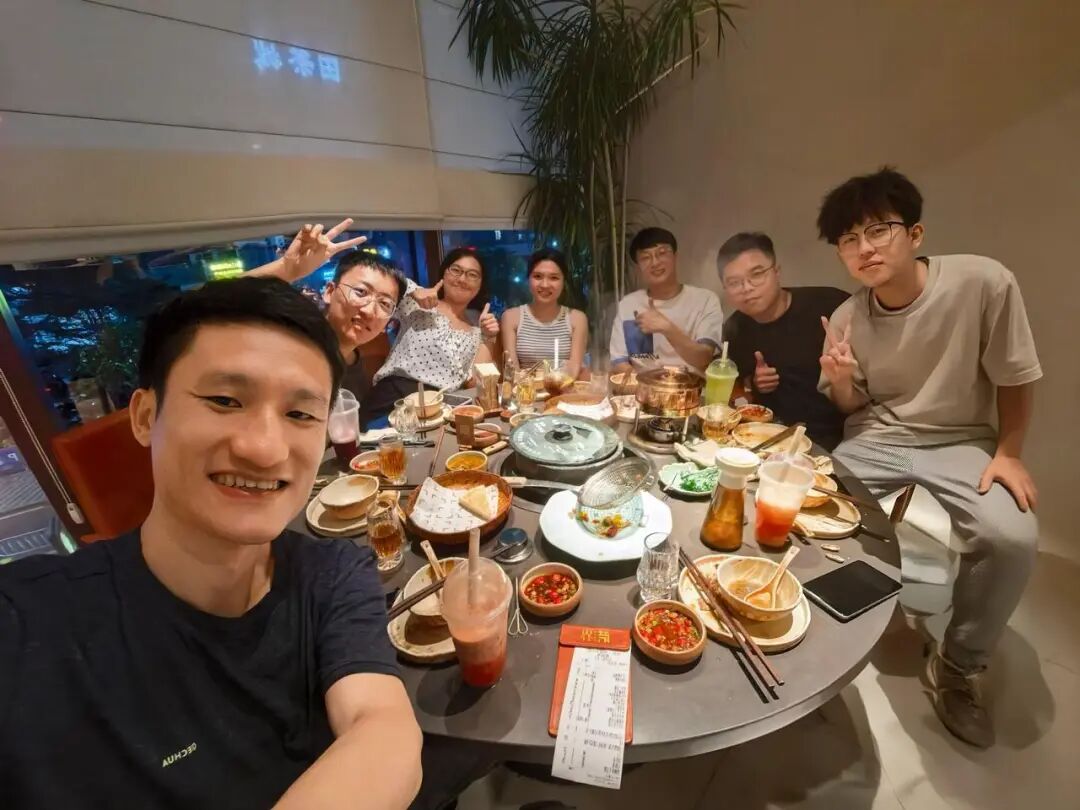
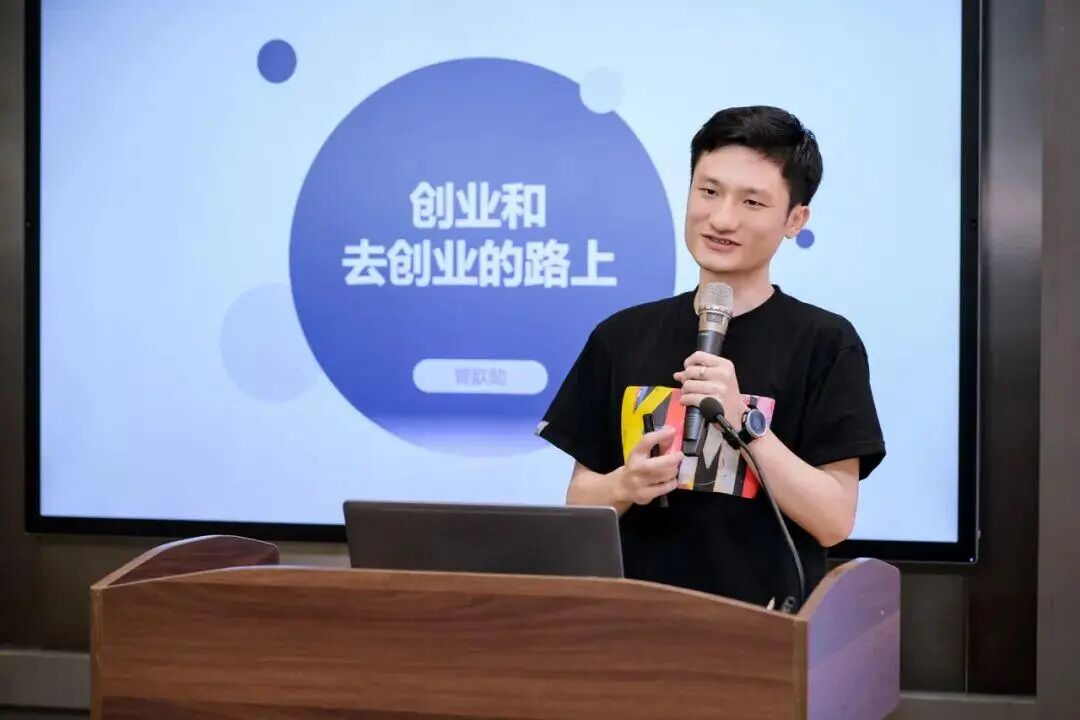
InterView Beating: Over the past year, you have been mostly in the office working on the product. Why have you now started to actively participate in events, meet with investors, and engage with the media?
Zeng Xinxun: Founders need to always know which aspect needs them the most at the moment.
During the R&D stage, the most important things are the product and the team, so I should immerse myself in that. Now that the product is launched, the next crucial aspects are user growth, fundraising, and PR, so I should be out there taking care of these.
I observed this change during my time at Kimi as well. During the R&D phase, founders may pour all their energy into the product and team, not appearing frequently outside. When it's time to take the product to market, they need to come out again to explain the product, pitch, and establish partnerships.
I am now at this stage as well. The team will focus on user growth while continuing to invest in model development to make the large-scale model better understand the matchmaking between people. Both of these require money and visibility.
InterView Beating: What is the key goal for a Good Match in the next stage?
Zeng Xinxun: First, we need to increase the number of users. No matter how good the algorithm is, if there are no suitable people in the candidate pool, there will be no matches. If everyone ends up with very low scores, it may not be that the algorithm is inaccurate but that the right person is simply not in the pool.
We hope to initially have over ten thousand active users in several major cities. Once a city reaches a certain density, matchmaking becomes truly meaningful. Only then can we see if the algorithm has improved success rates, if the one-on-one mechanism is effective, and if users find it easier to enter into a relationship.
The next funding round will also need to progress, but in the short term, user density is still the most important.
After Exiting the System
In Season 4's "Hang the DJ" episode of "Black Mirror," there is a dating system called Coach.
It arranges partners for everyone and sets a duration for each relationship. Some relationships can only last twelve hours, while others go on for years. Users don't need to judge if someone is suitable for them; they just have to obey the system, go on date after date, and wait for it to eventually calculate the highest compatible match.
When Amy and Frank were first paired, the system only gave them twelve hours together. Once the time was up, they were forced apart and entered into new relationships. Later, when they met again, they decided not to follow the system, climbed over the wall together, and escaped from it.
It isn't until the very end that the audience realizes everything that happened before was just a simulation within a dating app.
Out of a thousand simulations, in the vast majority, versions of Amy and Frank choose to rebel against the system and run away to be with each other. The software translated these shared escapes into real-world match probabilities.
The system ultimately proved that the way they were meant to be together was not by following the algorithm, but by finding they were willing to leave the algorithm for each other.
This represents a very subtle aspect of AI intervening in intimate relationships.
It can gather data, arrange encounters, calculate probabilities, and even preemptively point out potential conflicts between two individuals. However, the moment a relationship truly begins is often when people no longer rely entirely on it.
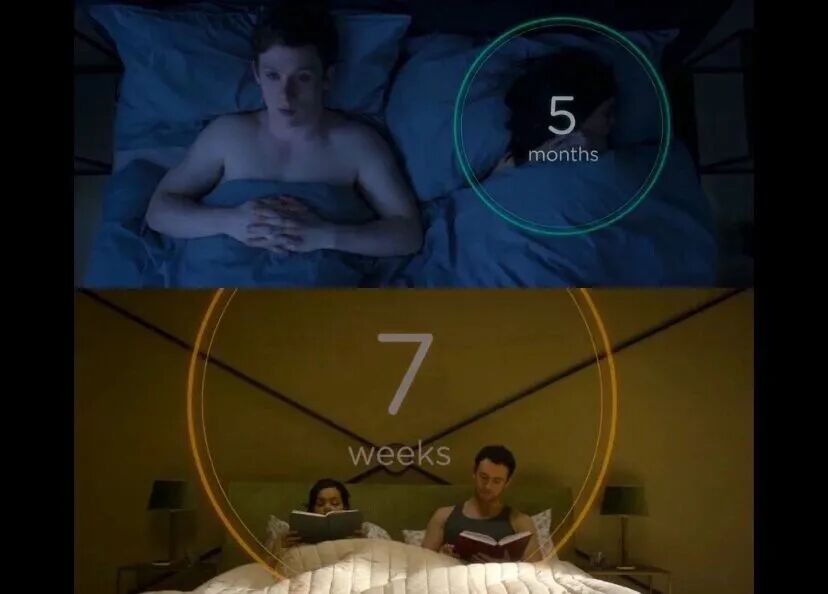
Zeng Xinxun's approach to matchmaking is similar to this.
AI first helps users understand themselves, filters out obviously incompatible matches, and then brings potentially suitable individuals together. Once they start investing time, building rapport, and even switch to WeChat to continue their conversation, the product should take a back seat.
In this logic, user attrition is not a loss but a success.
While this product logic is well-constructed, the business logic has not yet been fully established.
If a user doesn't get married within three years, their membership fee needs to be refunded; during this period, the platform still has to bear the costs of tokens, verification, services, operations, and user acquisition. Marriages are also influenced by factors such as family, city, economy, personality, and personal choices, making it difficult to attribute them entirely to a single algorithmic match.
A more practical issue is that good matches still need to rapidly expand the user pool. Relationship matching heavily relies on user density within the same city, similar age group, and shared needs. However, features like 20-minute voice chats, one-on-one matching, and stricter verification criteria may unintentionally deter some people.
These designs may filter out individuals not taking relationships seriously but could also make it harder for a product that inherently requires a large user base to achieve that scale.
How to price memberships, how to handle funds, what revenue will cover the costs over three years, how the platform can ascertain if a marriage was facilitated by a good match – these questions remain unanswered.
Currently, "a refund if no marriage" seems more like a strong product commitment than a validated business loop.
In "Hang the DJ," the match was only truly established when the two people left the system.
Perfect Match also hopes users will leave in the same way.
But first, it has to prove that it can last until that day.
Welcome to join the official BlockBeats community:
Telegram Subscription Group: https://t.me/theblockbeats
Telegram Discussion Group: https://t.me/BlockBeats_App
Official Twitter Account: https://twitter.com/BlockBeatsAsia
