The AI supply chain is evolving from GPU grabbing to securing early memory and advanced packaging.
On July 24, SK Group announced an expansion of its comprehensive partnership with NVIDIA at the AI Summit in San Francisco, with a total scale exceeding $500 billion, covering AI factories and next-generation memory. Samsung Electronics then signed an MOU with Broadcom, expecting a cooperation scale exceeding $200 billion in memory and foundry fields from 2025 to 2030.
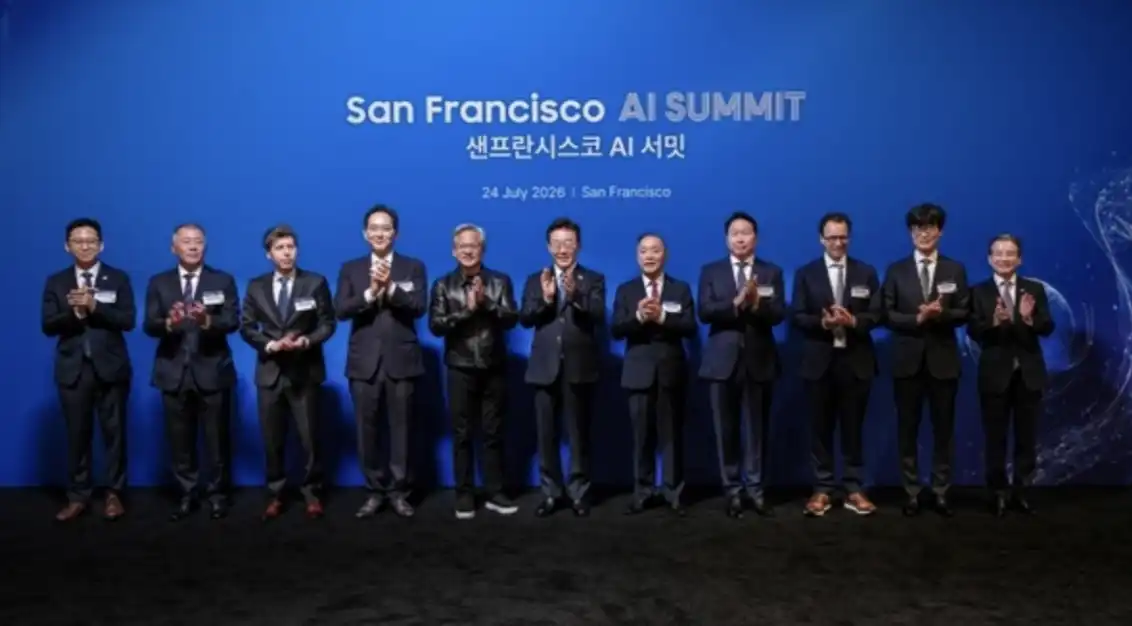
Bernstein's report on July 27 focused on memory rather than another round of AI chip orders. AI servers do not solely rely on GPU expansion. For GPU, ASIC, and other computing chips to truly enter data centers, they also need HBM, DRAM, NAND, advanced packaging, and stable deliveries. If these aspects cannot keep up, shipments from AI chip companies like NVIDIA and Broadcom may be delayed.
These two massive figures also need to be dissected. The over $500 billion is not a separate memory procurement contract obtained by SK hynix alone but a comprehensive partnership between SK Group and NVIDIA, with SK hynix responsible for the HBM4 and next-generation memory cooperation, while SK Telecom is the main entity for the AI factory. The $200 billion MOU between Samsung and Broadcom is more specific, including memory such as HBM, support for next-gen AI accelerators, 2nm-related manufacturing, and 2.3D/2.5D integration.
NVIDIA Locks HBM4, Broadcom Discusses Memory, Foundry, and Packaging Together
The partnership between SK Group and NVIDIA integrates AI data centers and next-generation memory into a single framework.
According to official information from NVIDIA and SK hynix, the collaboration includes SK Telecom's up to 2GW AI factory, NVIDIA DSX, the Vera Rubin platform, and SK hynix's HBM4. The first AI factory is scheduled to go live in 2027.
The market implications of this event are very direct. The AI system following Vera Rubin continues to raise the requirements for HBM and system-level supply, where memory is no longer just a standardized procurement item, but a part of whether the AI chip platform can be delivered on time.
The MOU between Samsung and Broadcom appears more like a comprehensive supply chain solution. Samsung officially stated that the scale of their cooperation over the next five years until 2030 with Broadcom exceeds $200 billion, including memory and foundry support for Broadcom's next-generation AI accelerator, involving advanced packaging related to the 2nm process, 2.3D, and 2.5D integration.
It is not just about whether Broadcom will outsource part of its AI ASIC to Samsung. Samsung is more interested in offering a package of memory, advanced processes, and advanced packaging to AI chip customers, seeking to provide an alternative deliverable solution outside of TSMC.
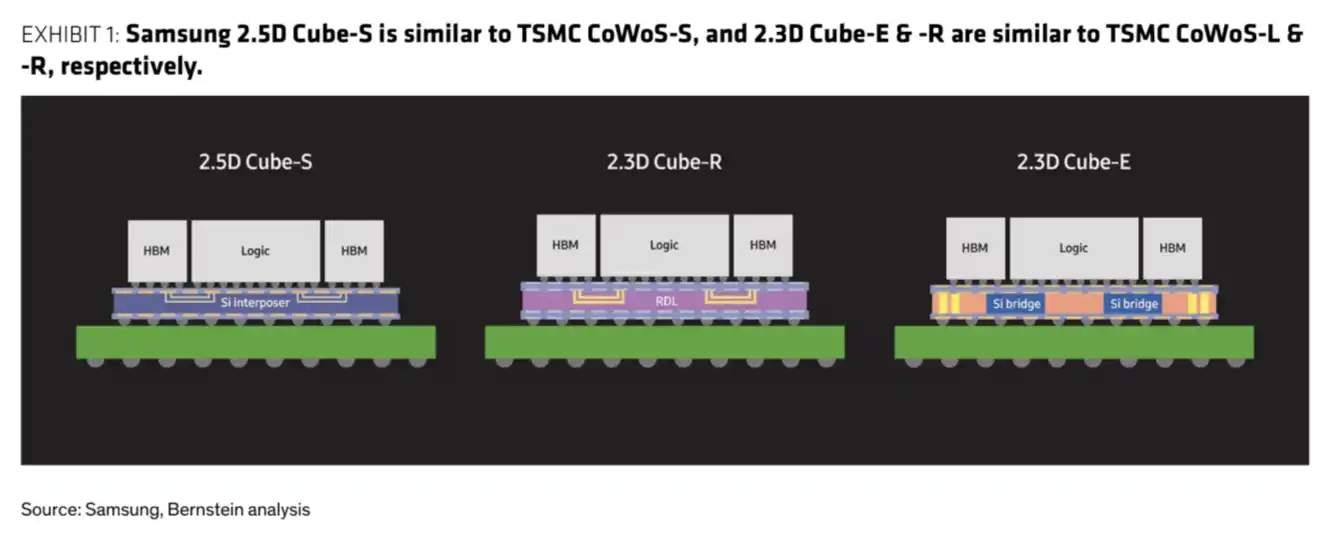
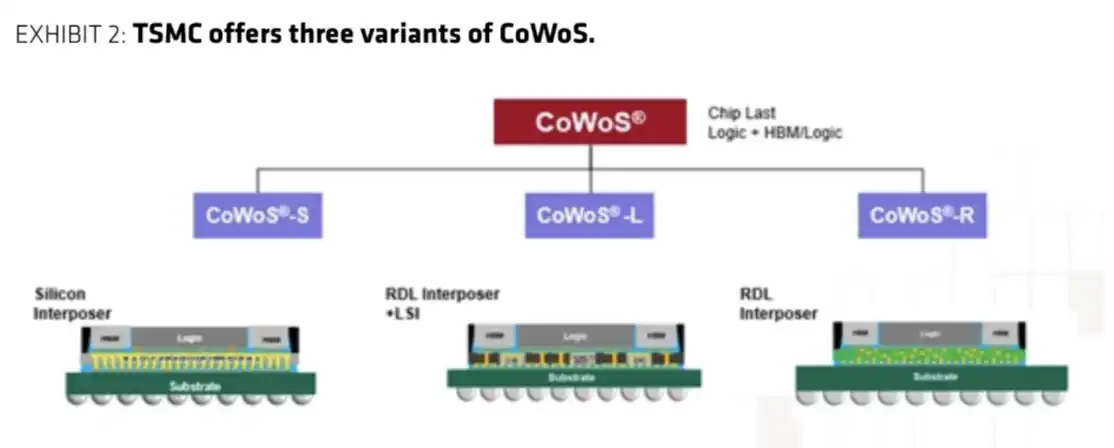
Technically, Samsung's Cube-S, Cube-E/R belong to 2.5D/2.3D Cube packaging. Bernstein compares it to TSMC's CoWoS-S/L/R, with the core aim being to address high-bandwidth connections between logic chips and HBM and multi-chip integration.
Memory Annual Revenue to Reach About $13 Trillion, AI Customers Starting to Queue Early
Bernstein believes the most noteworthy aspect of this announcement is that memory supply has been locked in ahead of time.
As AI server expansion continues, while computational power chips are indeed important, HBM and high-end memory have less supply elasticity, longer customer certification cycles, and advanced packaging will also become a limiting factor in overall system delivery. Major customers are unwilling to wait until capacity is tight to enter the spot market but are securing future supply through multi-year frameworks.
The market consensus cited in the report indicates that global memory industry annual revenue is expected to reach about $900 billion in 2026, with approximately $1.3 trillion in both 2027 and 2028. Earlier public predictions by TrendForce also indicate that the global memory market size will reach around $1.28 trillion in 2027. Participants include Samsung, SK Hynix, Micron, KIOXIA, and Chinese memory manufacturers.
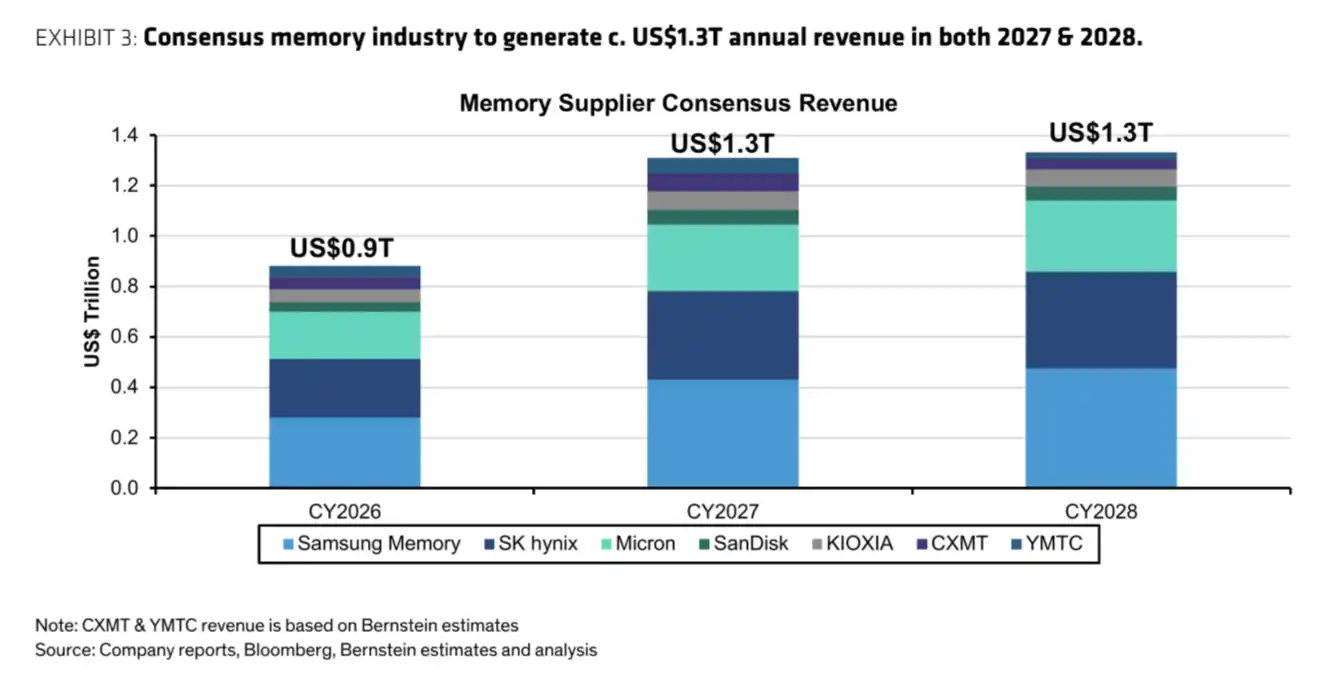
These figures cannot be directly equated to the incremental revenue brought by the collaborations of SK Group, Nvidia, Samsung, and Broadcom. The announcement did not disclose specific procurement volumes, product structures, pricing formulas, delivery schedules, nor did it specify how much of the framework amount comes from new capacity additions and how much is merely extending existing long-term partnerships.
However, the signals are already quite clear. AI customers are viewing HBM and advanced packaging as strategic assets, and as a result, the bargaining power of leading memory manufacturers continues to be closely watched by the market. In the traditional storage cycle, more influenced by PC, mobile, and server inventory levels, in the AI era, HBM is deeply integrated with advanced packaging, making the supply-demand relationship more easily determined by a few large customers and a few suppliers.
Samsung Wants Packaging and Foundry, TSMC Impact Still Seen as Restrained
In the MOU between Samsung and Broadcom, mentions of 2nm and below processes, advanced packaging, and AI accelerators naturally raise questions about the effect on TSMC's market share.
Bernstein's assessment is relatively restrained. Even if Broadcom were to shift some AI ASIC orders to Samsung in the future, the impact on TSMC's recent profits may be limited, as the demand for advanced capacities remains strong. Samsung obtaining more AI customer validation opportunities does not necessarily mean that TSMC will immediately lose orders.
What truly tests Samsung is its delivery capability. AI chip customers do not just require single-point manufacturing capability but stable HBM, logic chips, packaging, substrates, yield rates, and lead times simultaneously. If any of these links slow down, it will be challenging to translate the technological roadmap in the MOU into actual shipments.
For Samsung, this is an opportunity to extend its storage advantage to the AI system-level supply chain. While Samsung has scale in the memory sector, the market has historically focused more on SK Hynix and TSMC for HBM leadership and advanced foundry customer trust. If the long-term framework with Broadcom is executed smoothly, Samsung can reaffirm its combined capabilities in "storage + foundry + packaging."
Ratings Are Bullish, But MOUs Are Not Orders Yet
Bernstein maintained Outperform ratings on Samsung Electronics, SK Hynix, Micron, NVIDIA, and Broadcom in its report, with KIOXIA rated Underperform. As for price targets, Samsung's common stock is set at 440,000 Korean won, SK Hynix at 3.3 million Korean won, NVIDIA at $315, and Broadcom at $550. The related ratings and price targets are based on the source report.
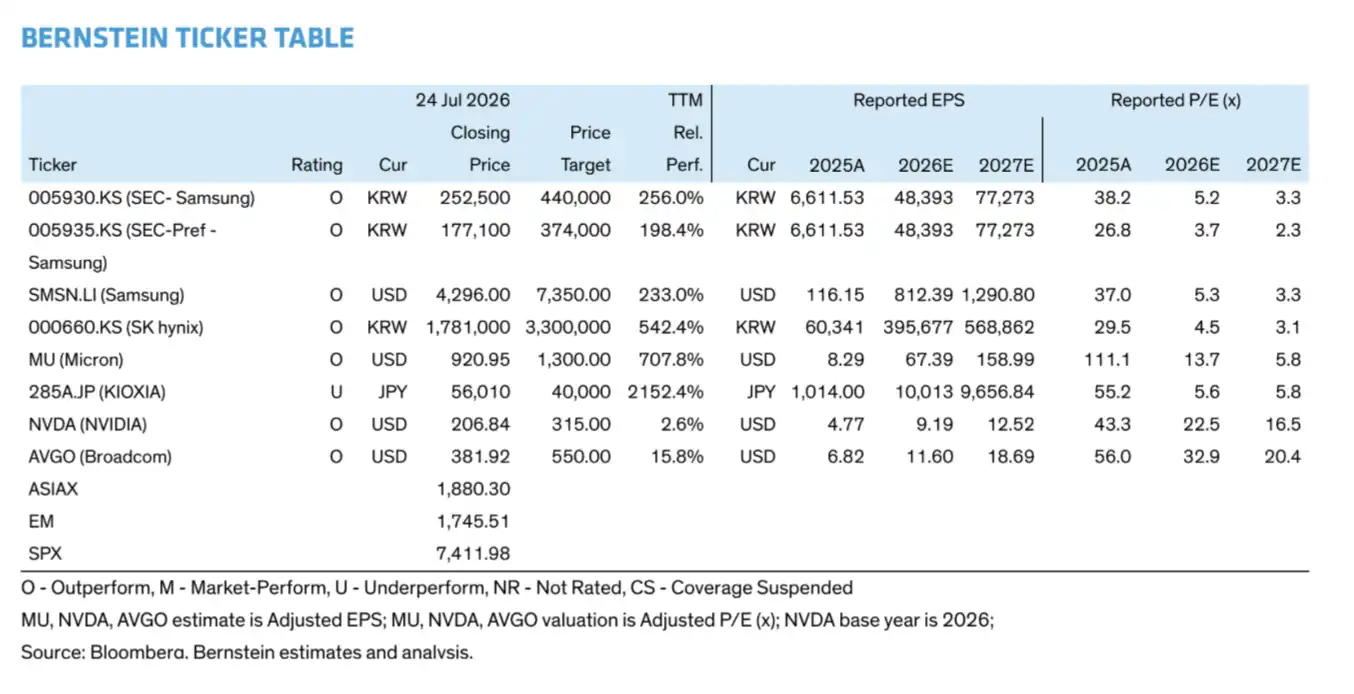
These ratings do not imply that all partnerships have already translated into confirmed performance. A more cautious interpretation is that AI memory supply is becoming more strategic, with leading memory manufacturers and AI chip major customers using long-term arrangements to mitigate future supply risks.
Risks are also clear. MOUs and partnerships are not final purchase contracts, and pricing, quantity, and delivery schedules have not yet been disclosed. Whether Samsung's collaboration with Broadcom can bring substantial AI ASIC foundry or advanced packaging share will also depend on customer validation, yield rates, and capacity arrangements. Even with a significant collaboration amount, it is challenging to assess how much incremental contribution it can make to the approximately $1.3 trillion annual memory market around 2027.
Longer-term pressure comes from competition in the storage industry. The progress of the Chinese storage industry, particularly in the NAND sector, will impact industry profit margins. DRAM and HBM face higher EUV, process, and customer certification thresholds, resulting in relatively little short-term pressure, but the current supply tightness cannot be simply extrapolated into lasting dominance.
The most definitive signal of this collaboration is not that a "$700 billion order has been finalized," but that AI giants are beginning to lock in memory and packaging resources under multi-year frameworks. The ability to deliver on this in the future will depend on capital expenditures in financial reports, HBM shipments, customer prepayments, capacity expansions, and actual delivery schedules.
Welcome to join the official BlockBeats community:
Telegram Subscription Group: https://t.me/theblockbeats
Telegram Discussion Group: https://t.me/BlockBeats_App
Official Twitter Account: https://twitter.com/BlockBeatsAsia
