On July 29th, Beijing time, SK Hynix released its financial report for the second quarter of 2026.
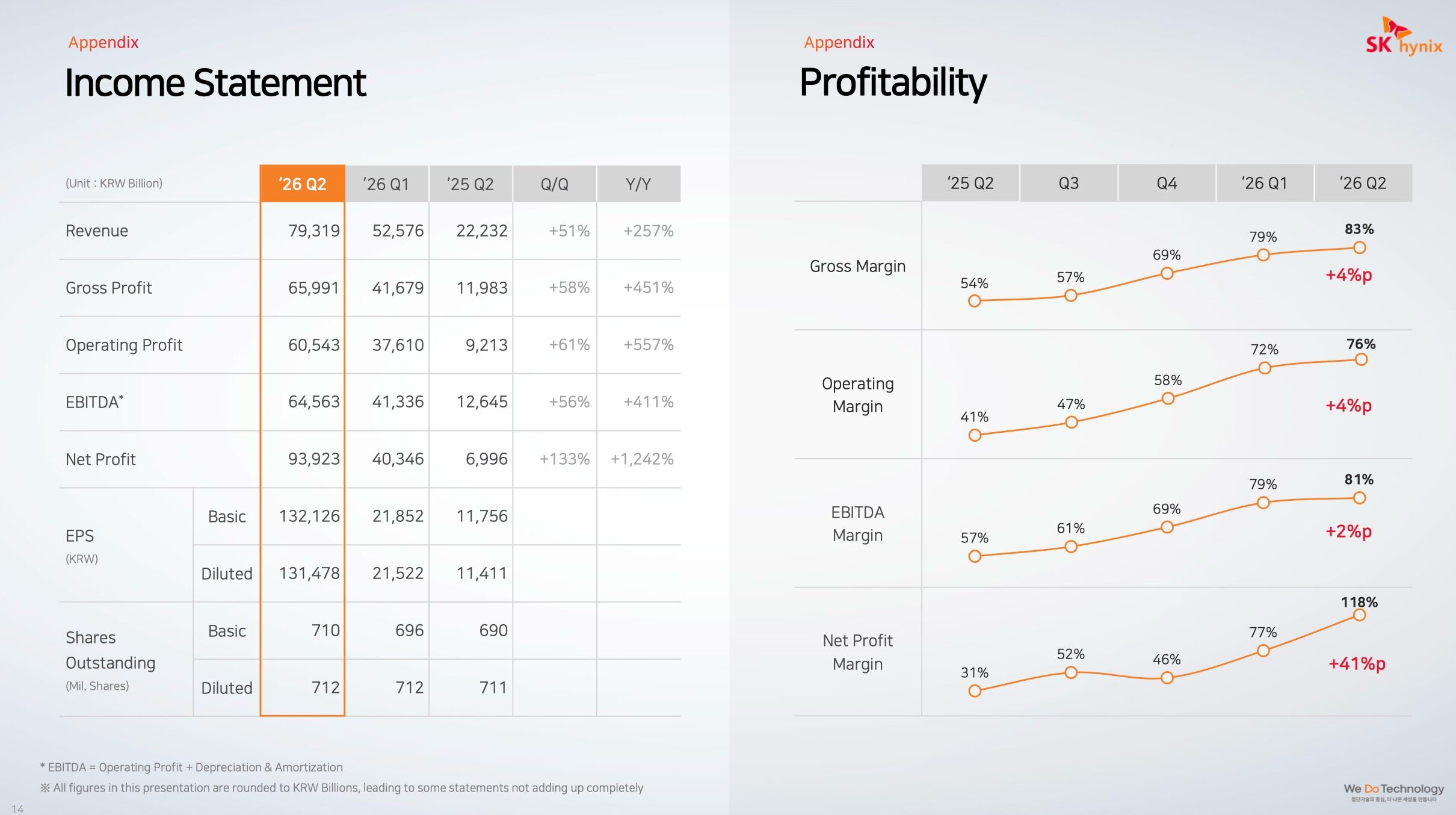
The financial report data shows that SK Hynix achieved revenue of 79.32 trillion Korean won in the second quarter, a year-on-year increase of 257% and a quarter-on-quarter increase of 51%; operating profit was 60.54 trillion Korean won, a year-on-year increase of 557% and a quarter-on-quarter increase of 61%, with an operating profit margin further rising to 76%, reaching a historical high; if we include the one-time investment income of 62.166 trillion Korean won from the sale of a stake in Kioxia, the company's net profit could reach 93.92 trillion Korean won.
In any industry, this can be considered a report card shocking enough to the market.
However, the capital market's initial reaction was completely different. Due to revenue (actual 79.32 trillion Korean won, market expectation 84 trillion Korean won) and operating profit (actual 60.54 trillion Korean won, market expectation 64 trillion Korean won) slightly below market expectations, coupled with SK Hynix's stock price already having fallen more than 40% cumulatively in the previous month, amid a mix of pessimistic sentiments, SK Hynix's ADR stock price fell by about 9% after-hours (yesterday's US stock market close saw a nearly 9% drop), but as investors gradually digested the details of the financial report, the stock price quickly recovered all losses and even turned positive.
At the same time, after the South Korean stock market opened this morning, SK Hynix's stock price initially rose, up 4% at one point, but then gradually weakened, falling by over 9% again as of 10:00.
For a record-breaking financial report, why was there a frenzy of selling at first, followed by a rapid recovery of losses, and then another sharp turn downwards? The answer may lie in the fact that the market is truly concerned not only about how much money SK Hynix made in the second quarter but also about how to reevaluate the company's future growth potential—clearly, the bulls and bears have not yet reached a consensus on this.
Most Profitable Quarter Ever, Why Still Below Expectations?
Solely from the numbers, SK Hynix is still in its most profitable phase.
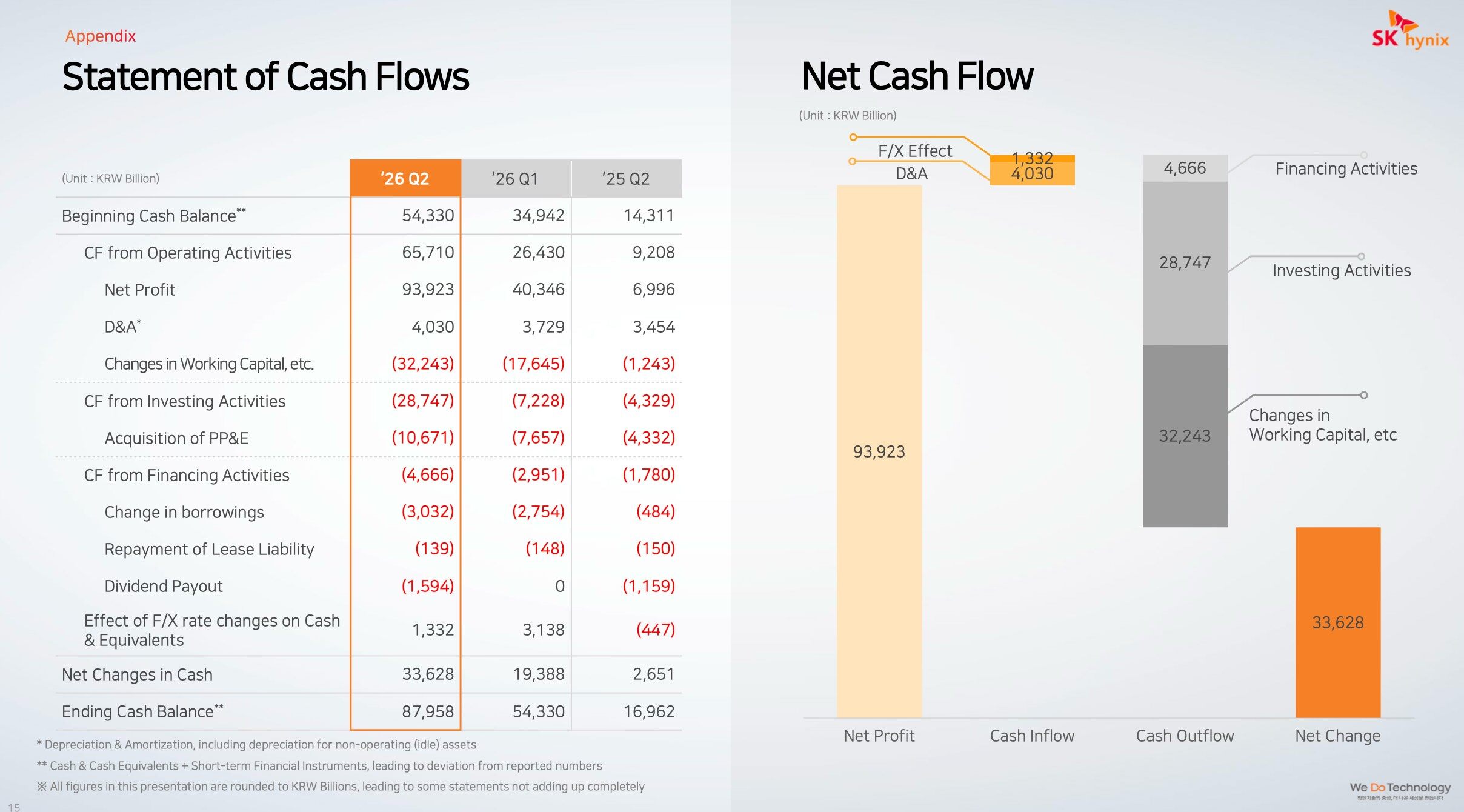
In the second quarter, the company's gross profit margin reached 83%, and the operating profit margin reached 76%. This means that about 76 Korean won is converted into operating profit for every 100 Korean won of products sold, a profitability level that even surpasses most global semiconductor manufacturers. At the same time, the company's cash and short-term financial assets continue to grow rapidly to 87.96 trillion Korean won, expanding its net cash position further, providing ample ammunition for future capacity expansion.
However, the issue lies in the fact that the market had already raised expectations. Previously, the market consensus was that SK Hynix's second-quarter revenue would be around 84 trillion Korean won, with operating profit around 64 trillion Korean won, but the actual data ended up approximately 5% and 6% below expectations, respectively.
For a company, such a deviation is not significant. However, for SK Hynix, which has been labeled as the "biggest beneficiary of AI" and whose valuation is based on high growth expectations, any data below expectations is magnified by the market.
A closer look at the financial report reveals that this time's "below expectations" was not due to a deterioration in market demand but rather stemmed more from changes in the profit structure.
Firstly, a very counterintuitive point is that the continued increase in the proportion of HBM products has actually weakened profit elasticity. In the past few quarters, a key driver of the rapid profit expansion in the entire storage industry has been the continuous rise in traditional DRAM and NAND spot prices. However, since SK Hynix's HBM revenue proportion is much higher than its peers, and HBM mostly uses long-term supply agreement (LTA) pricing, it cannot fully benefit from the rapid increase in spot prices like regular DRAM.
Additionally, SK Hynix also disclosed that the average selling price of mainstream DRAM in the second quarter increased by about 30% QoQ, which, although still showing growth, was significantly lower than in the first quarter. The NAND average selling price increased by 50%-55% QoQ, also showing a slowdown from the first quarter.
In other words, more AI products were sold, but the traditional products saw slower price increases; long-term orders locked in future revenue and also limited short-term profit elasticity. This is why, despite record profits, the results still fell short of the market's previously "fantasized" numbers.
Is the Storage Super Cycle Still On? How the Financial Report Responds
If the operational data answer how much money SK Hynix made in the second quarter, the information provided by the management in the financial report and subsequent conference calls answers another question that the market is more concerned about—Has the AI storage super cycle already started to cool down?
From the current perspective, SK Hynix's response remains optimistic.
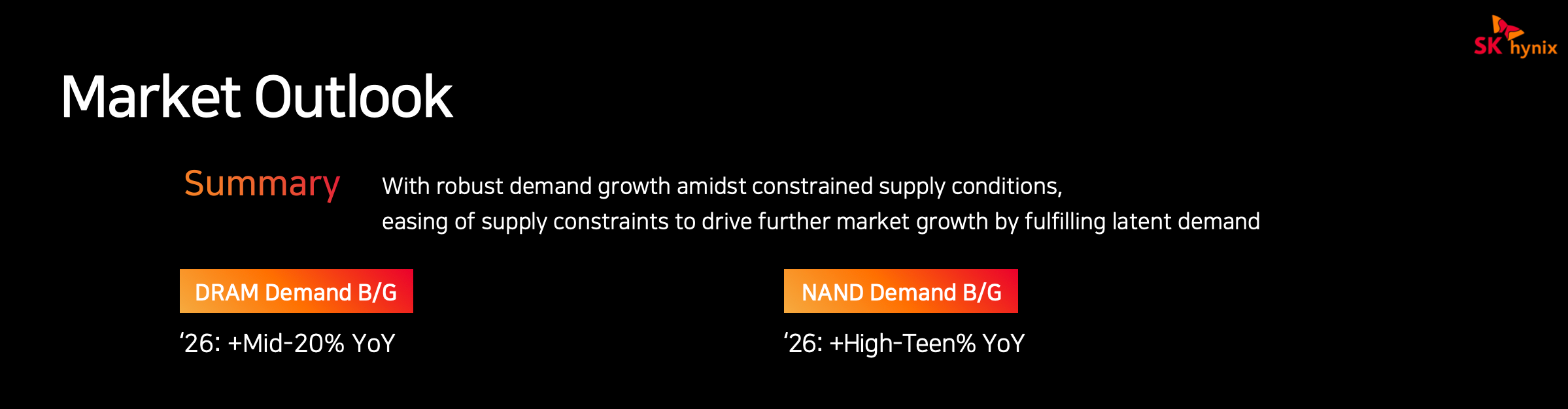
Firstly, in terms of demand outlook, the company did not release any significant cautious signals as the market had feared. SK Hynix expects that global DRAM market demand will continue to grow by a mid-20% YoY in 2026, and NAND market demand will see a high-teen% YoY growth rate. The management also stated in the post-earnings conference call that they have not yet observed any signs of AI investment slowing down and anticipate that AI infrastructure investment will continue to grow steadily beyond 2027.
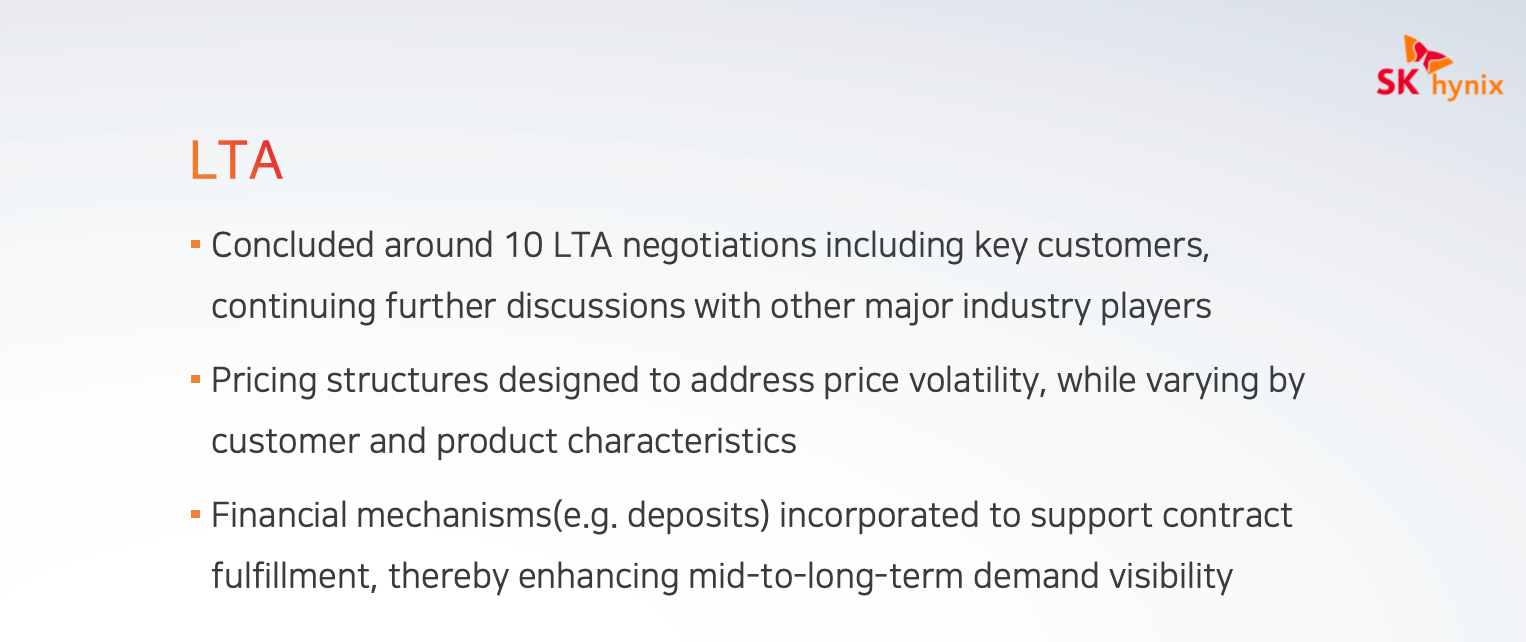
Secondly, another key piece of information worth noting is the further advancement of Long-Term Supply Agreements (LTAs). SK Hynix revealed that the company has now concluded LTA negotiations with approximately 10 customers and is still actively in discussions with other major industry clients. The new generation of LTAs will adopt a pricing mechanism that can withstand price fluctuations and will secure contract fulfillment through an appropriate financial mechanism to enhance the stability and predictability of future demand.
For the storage industry, this change carries significant implications. In the past, products such as DRAM and NAND were more reliant on spot market pricing, with price volatility leading the entire industry to always be associated with a "cyclical stock" label. However, as the proportion of AI-era HBM products continues to rise, an increasing number of large cloud providers are starting to secure future years' worth of supply capacity in advance. The supply-demand relationship is transitioning from short-term gaming to a more long-term and stable cooperative relationship. Although LTAs, like this quarter, will to some extent compress profit margins during periods of rapid spot price increases, what they bring in return is higher revenue certainty over the next few years.
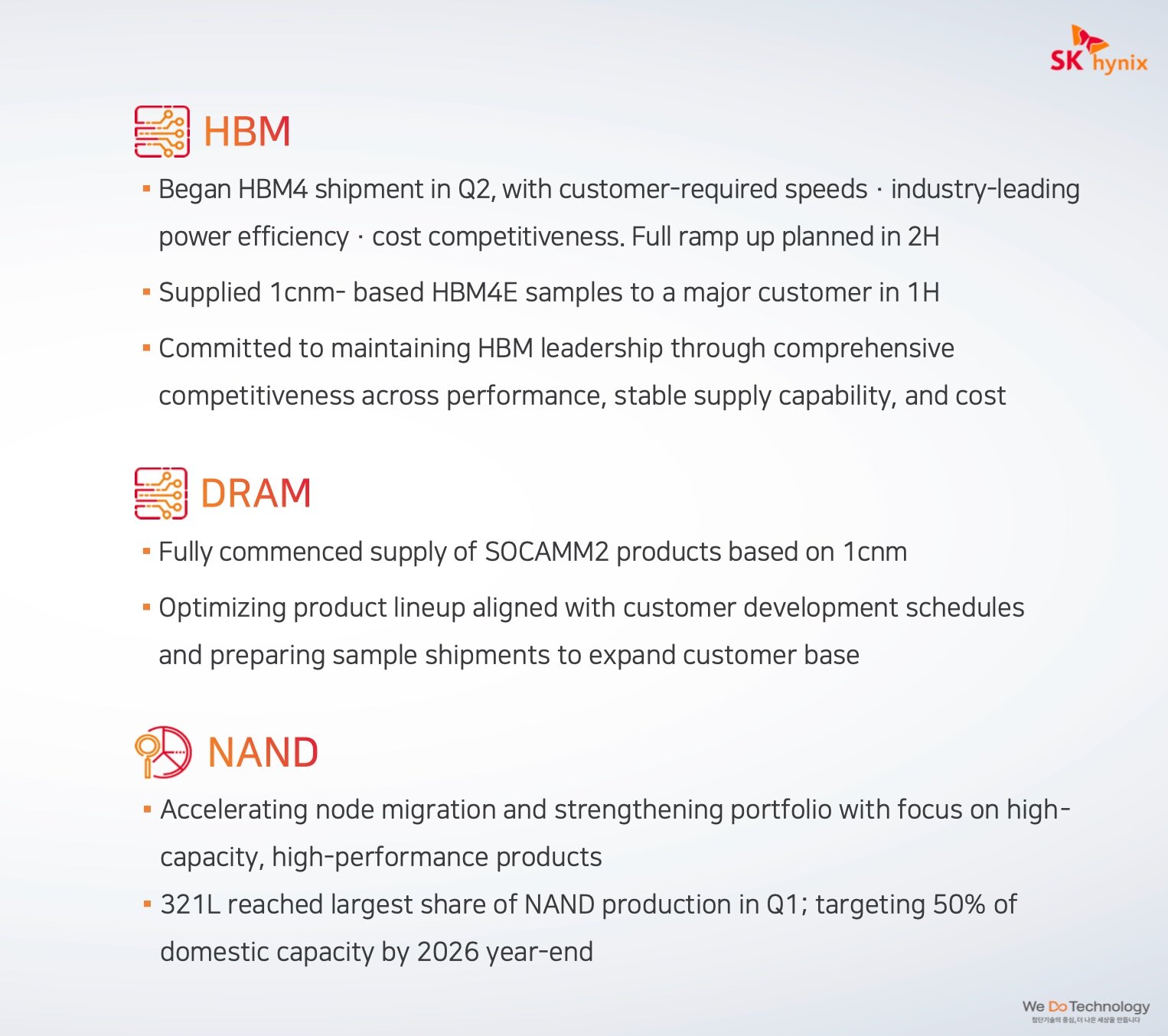
Furthermore, SK Hynix's next-generation product development pace has proceeded as planned without any surprises. The financial report indicates that SK Hynix began shipping HBM4 products in the second quarter and plans to ramp up production in the latter half of the year. Samples of the next-generation HBM4E have also been delivered to key customers in the first half of the year. Additionally, the SOCAMM2 product based on the 1cnm process has officially commenced shipments.
This signifies that SK Hynix continues to lead in product development for the next-generation AI GPU platforms. Considering that HBM4 will be a crucial complementary memory for next-generation AI platforms like NVIDIA's Rubin, the smooth ramp-up in production also indicates that the company still firmly holds a leading position in the high-end AI storage market.
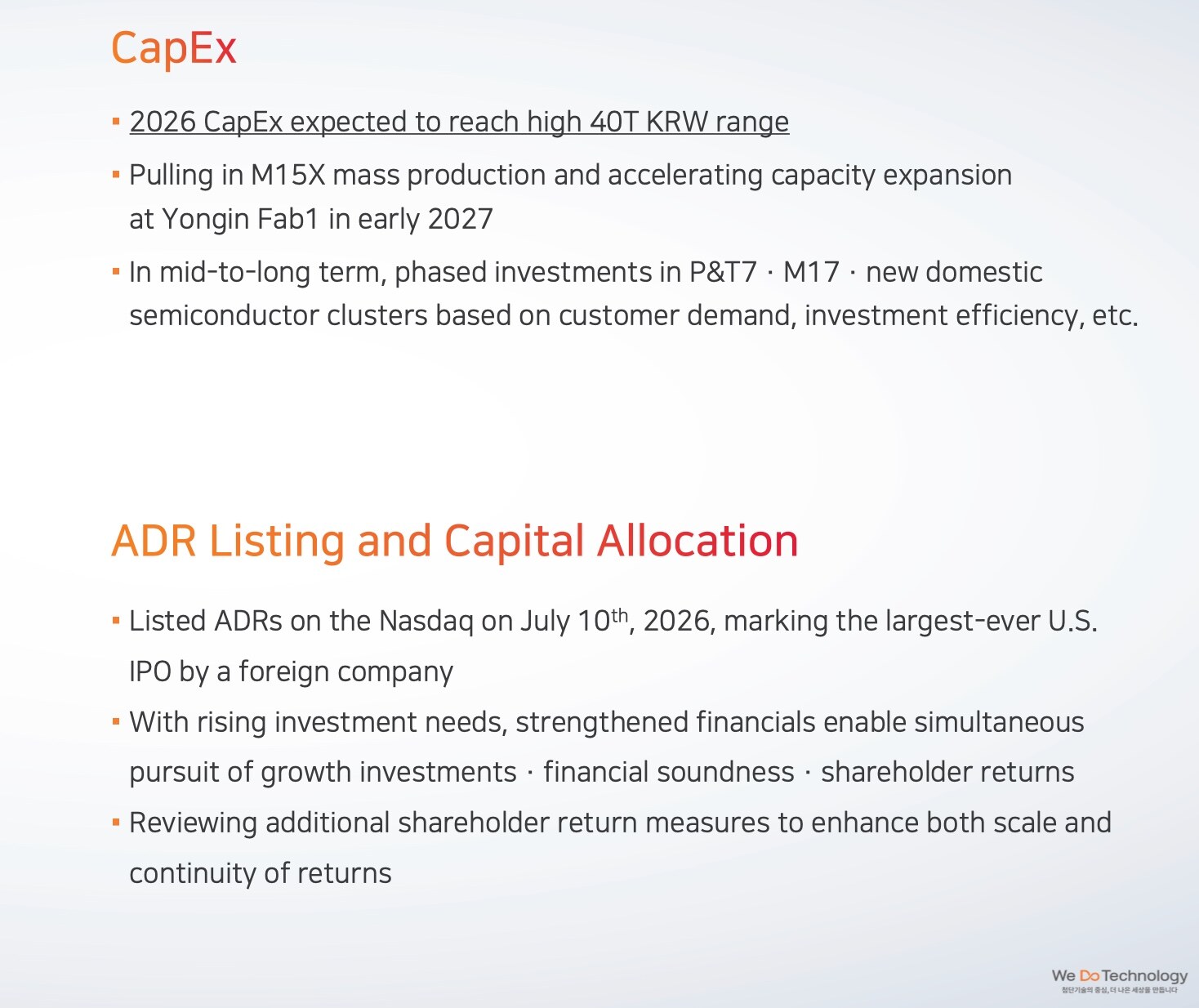
Lastly, in terms of "Capital Expenditure" (CapEx), which best reflects the management's true assessment, SK Hynix not only maintained its expectation of CapEx exceeding the high range of 40 trillion KRW in 2026, but also plans to advance the mass production of the M15X fab, expedite the construction of the Pyeongtaek Fab Phase 1, and continue to advance mid- to long-term projects such as P&T7, M17, and the Korean Semiconductor Cluster.
For a company that has experienced multiple storage cycles, such an aggressive expansion plan is in itself an attitude—the management still believes that the AI storage demand in the coming years is sufficient to absorb this additional capacity.
Focus of Long-Short Game
Today's SK Hynix has become the focal point of the long-short game in the AI storage cycle.
For the long side, record profits, continued expansion of HBM demand, and the AI infrastructure investment cycle still support the company's long-term growth thesis; while for the short side, underperformance, valuation pressure, and market concerns about the sustainability of AI capital expenditure are also amplifying short-term adjustment pressure. The long side is betting on the continued expansion of AI infrastructure, while the short side is worried that the market has already priced in future growth.
Uneasy lies the head that wears a crown. SK Hynix enjoys the valuation of an industry leader, but inevitably needs to bear the pressure of a leader—when the market already believes in your story, excellent performance is no longer enough. Only by continuously exceeding higher expectations can the valuation continue to rise.
Welcome to join the official BlockBeats community:
Telegram Subscription Group: https://t.me/theblockbeats
Telegram Discussion Group: https://t.me/BlockBeats_App
Official Twitter Account: https://twitter.com/BlockBeatsAsia
