Circle's most important operating metrics are picking up pace again.
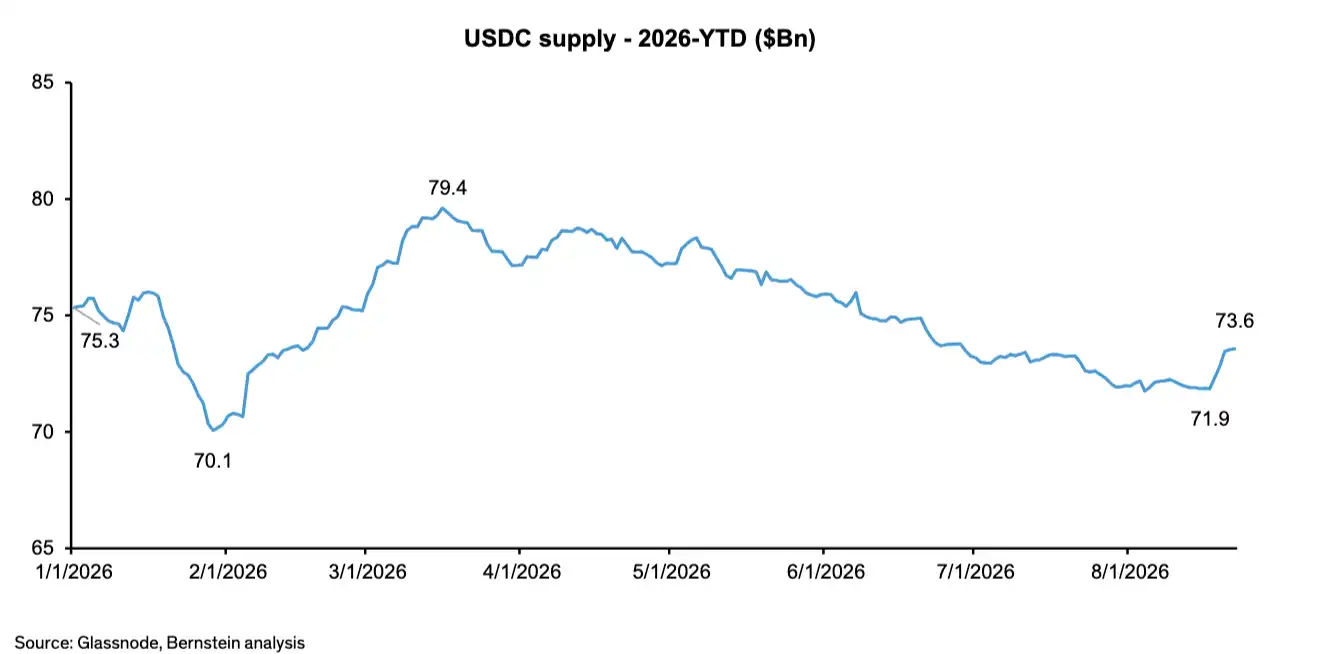
According to the Bernstein report, USDC, after nearly six months of sideways weakness, added approximately $17 billion to $20 billion in supply in the past week. Meanwhile, Circle's stock price has rebounded about 42% from the low point during the market-critical OUSD competition.
Based on this, the report has given Circle an "Outperform" rating and a $140 price target, and suggests that USDC may be at the starting point of a new expansion phase.
This bullish thesis not only depends on a rebound in the crypto market. The report believes that macro environment changes, increasing clarity in U.S. crypto regulation, stablecoin payment expansion, tokenization of real-world assets, and AI proxy payments might collectively drive USDC into a new growth cycle.
However, these factors are still at different stages. USDC supply and on-chain transaction volume have already shown improvement, real-world payments are growing, and Arc and AI proxy economy correspond more to future commercialization space. Whether Circle can sustain the current rebound will still depend on whether these new scenarios can translate into sustained stablecoin balances and revenue.
USDC Expanding Again, Top Structure Unchanged
The current total supply of U.S. dollar stablecoins is about $270 billion.
Compared to the previous cycle, the stablecoin market has shown greater resilience in this cycle. During the period from 2020 to 2023, the combined supply of USDC and USDT reached about $135 billion in early 2022 and then decreased by about 20% by the end of 2023.
In this cycle, despite the overall cryptocurrency market cap falling by around 35% from the October 2025 peak, the stablecoin supply has remained stable overall and has recently begun to grow again. After nearly six months of stagnation, USDC added approximately $20 billion in just one week, indicating that the warming crypto market is gradually spilling over to stablecoin demand.
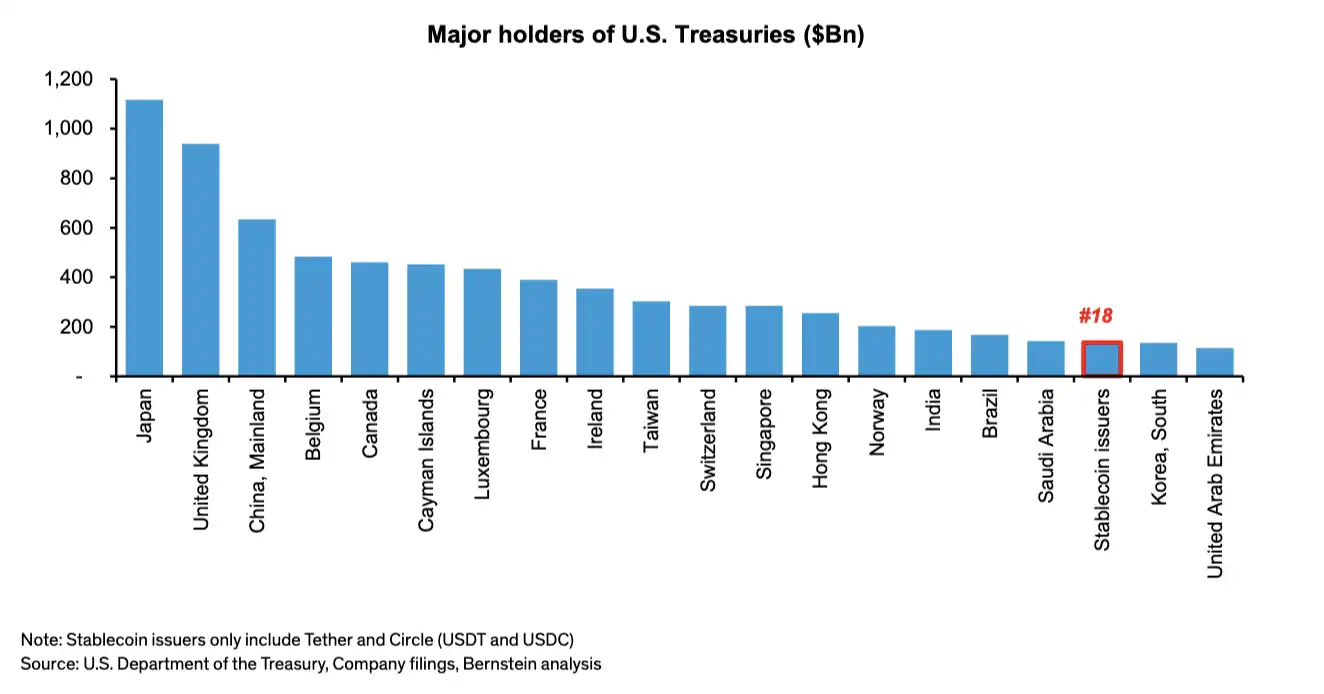
New issuers are also continuously entering the market, including PYUSD, USDG, USAT, and OUSD, but the supply structure of USD stablecoins has not fundamentally changed. By report calculations, USDC and USDT together still account for approximately 97% of the USD stablecoin supply.
The report suggests that stablecoin competition depends not only on product design but also on the long-term accumulation of distribution channels, regulatory qualifications, infrastructure, and liquidity. New partners can quickly access various stablecoins, but actual trading depth and user holdings remain concentrated in the top products.
USDC Captures More Effective Trading Volume Than USDT Despite Lower Supply
Recently, USDC's more significant advantage has been reflected in trading volume rather than supply size.
Excluding bots and high-frequency activities, the adjusted stablecoin trading volume was approximately $11 trillion in 2025. As of July 2026, the corresponding annualized volume is about $17 trillion, representing a year-over-year growth of about 60%.
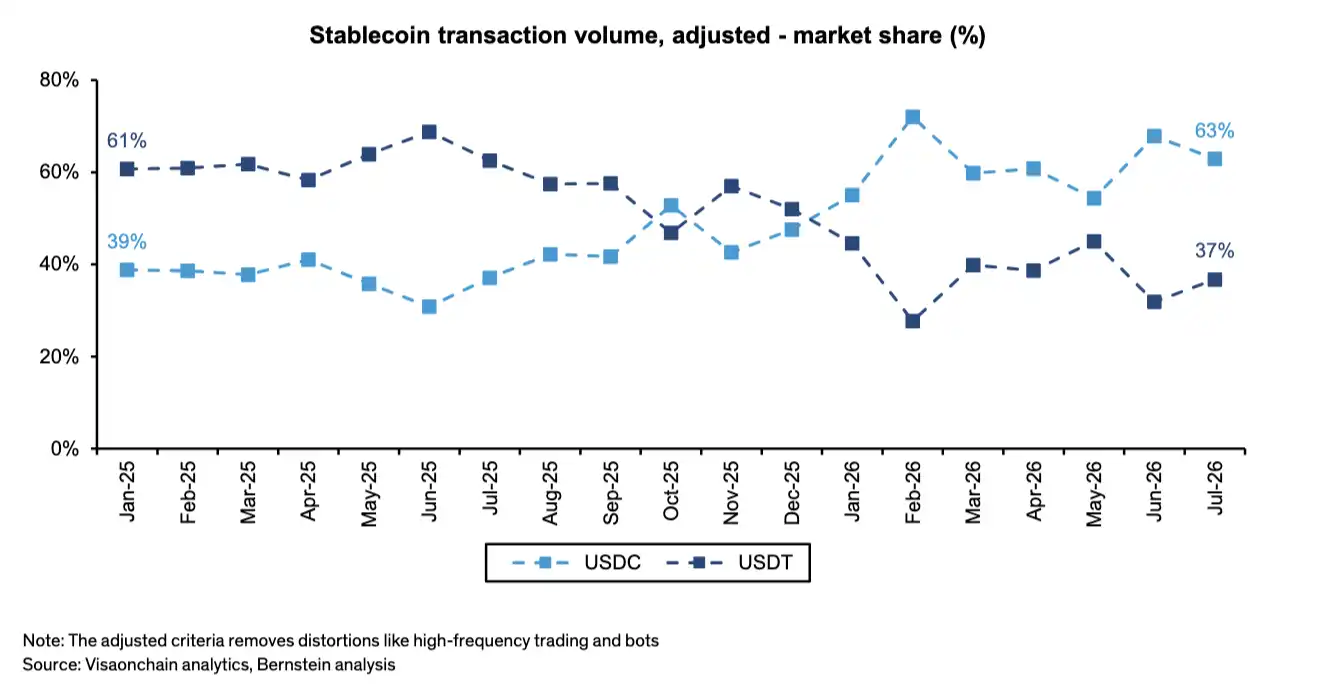
By this measure, USDC has surpassed USDT. Its trading volume share has increased from around 40% in 2025 to over 60% since 2026, with growth coming from various scenarios such as centralized exchanges, decentralized finance, and inter-wallet transfers.
Specifically, USDC's share in inter-wallet transfers has increased from around 23% in 2025 to approximately 50% since 2026.
The unadjusted total trading volume growth is even more pronounced. In 2025, the total stablecoin trading volume was about $56 trillion; by July 2026, the annualized volume had reached around $125 trillion, a year-over-year increase of about 120%. USDC's share in this metric has increased from 65% to 83%.
However, the total trading volume includes bots, high-frequency trading, and other automated activities, making it more suitable for observing on-chain activity intensity and not directly equivalent to real payments or economic activities. In contrast to the nominal size of $125 trillion, adjusted trading volume, stablecoin balances, and actual payment amounts better reflect the quality of USDC demand.
The report also links the expansion of USDC to the U.S. Treasury funding structure.
It argues that the U.S. Treasury's expansion of long-term bond repurchases helps alleviate pressure in the long end of the market; at the same time, the U.S. government continues to issue a large amount of Treasury bills on the short end. Since stablecoin reserves are usually allocated to short-term U.S. bonds, if stablecoin supply continues to grow, issuers may absorb some of the additional short-term debt supply.
In this framework, Bitcoin and stablecoins may benefit through different paths: Bitcoin serves as a "hard asset" and currency depreciation trade, while stablecoins correspond to USD liquidity and short-term debt demand.
It is important to note that this is a report's deduction about the macro environment. Treasury repurchases are not equivalent to quantitative easing, and stablecoin expansion will not be automatically driven by short-term debt supply. Whether USDC can continue to grow ultimately depends on the crypto market, actual payment demand, and regulatory developments.
Payment Growth Steady, AI Agents Still Stuck in "Small and Frequent" Transactions
Stablecoins are entering more real-world commercial scenarios, but currently, they are still mainly used for on-chain transactions and financial activities.
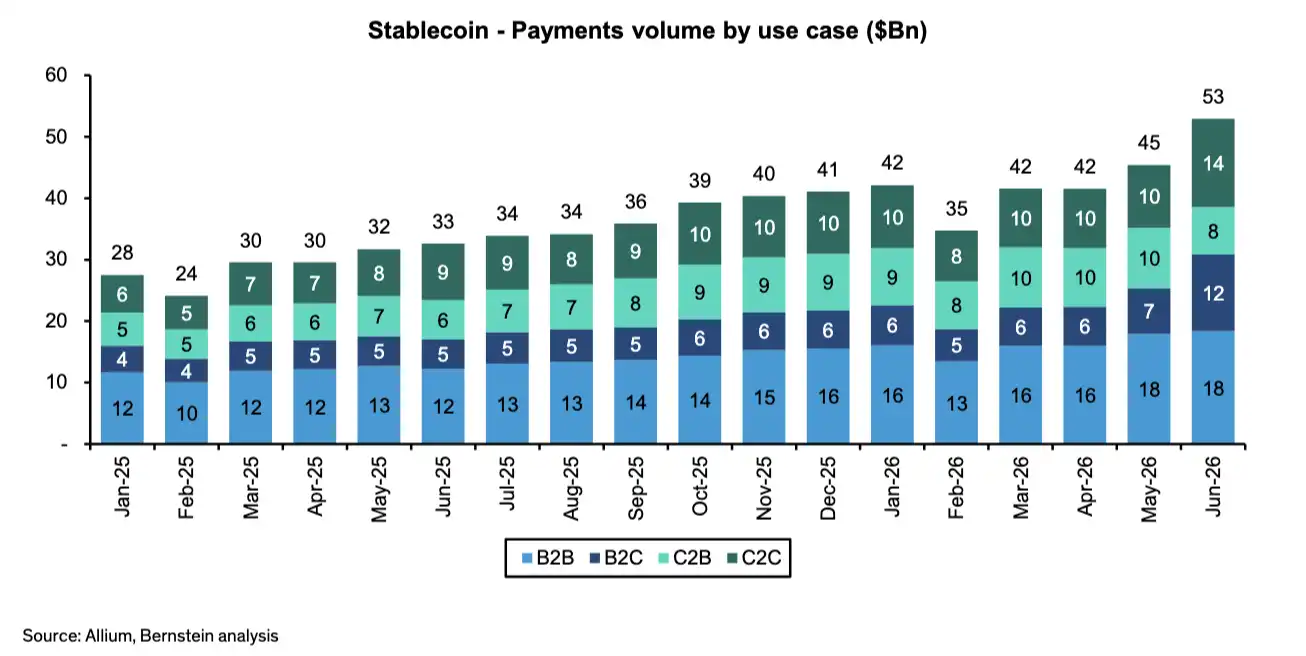
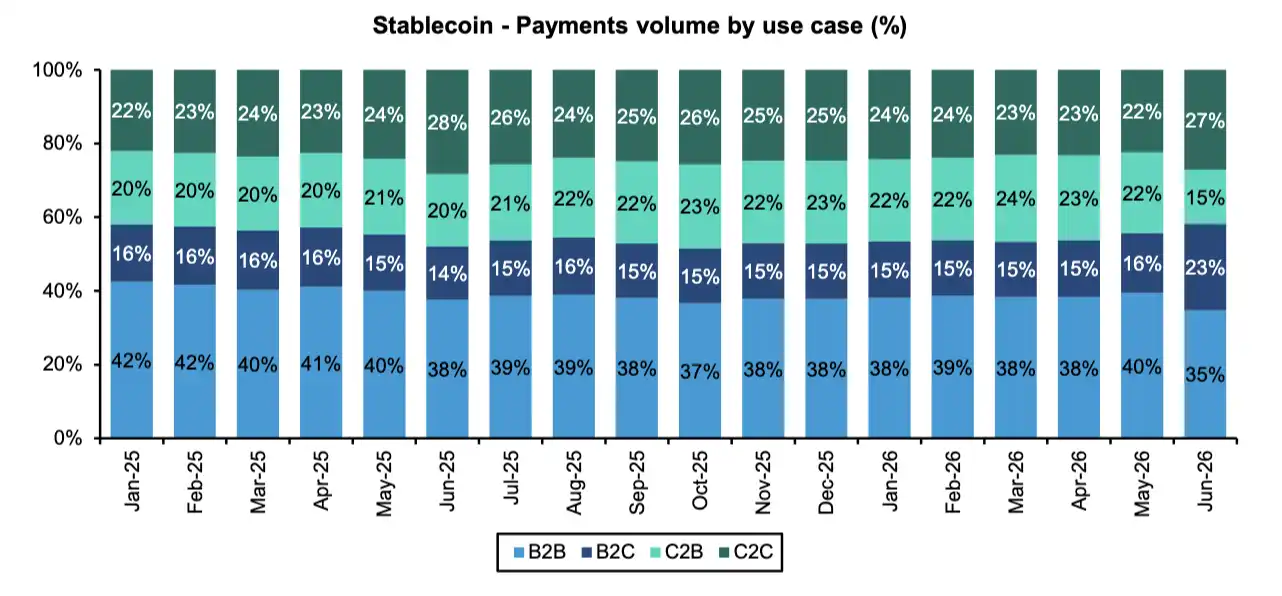
In the first half of 2026, the scale of stablecoin payments was around $260 billion, compared to about $400 billion for the full year of 2025. By the report's measure, the current payment volume has grown by about 30% year-on-year, but it only accounts for approximately 3% of the adjusted stablecoin transaction volume.
Inter-business payments are currently the largest application category:
· B2B payments around $100 billion, accounting for approximately 40%;
· C2C transfers around $60 billion, accounting for approximately 25%;
· C2B payments around $54 billion, accounting for approximately 21%;
· B2C payments, including wages and business payments, around $45 billion, accounting for approximately 17%.
The total percentages disclosed in the report add up to slightly more than 100%, which may be due to rounding, making it more suitable for observing the overall structure.
For Circle, the value of its payment business lies in expanding the holding and circulation scenarios of USDC. The company is expanding USDC distribution through banks, fintech platforms, and payment service providers, but the distance to real-world payments becoming a major source of stablecoin demand is still a long way off.
AI Agent Pay presents a different structure: the number of transactions has increased, while the amount remains very small.
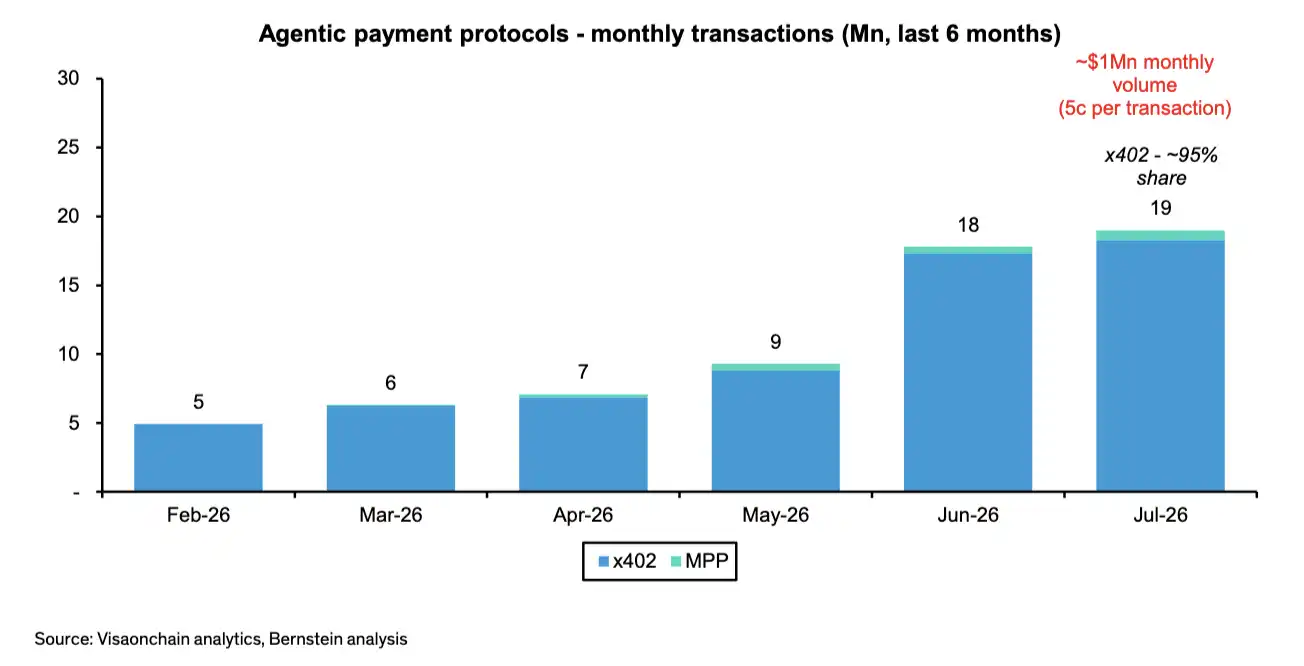
The report states that by July 2026, agent payment protocols such as x402 and MPP collectively completed approximately 19 million transactions, with x402 accounting for about 95%. The nominal amount of these transactions was only about $1 million, averaging about $0.05 per transaction, mainly corresponding to micro-payment scenarios such as API calls, data access, and software services.
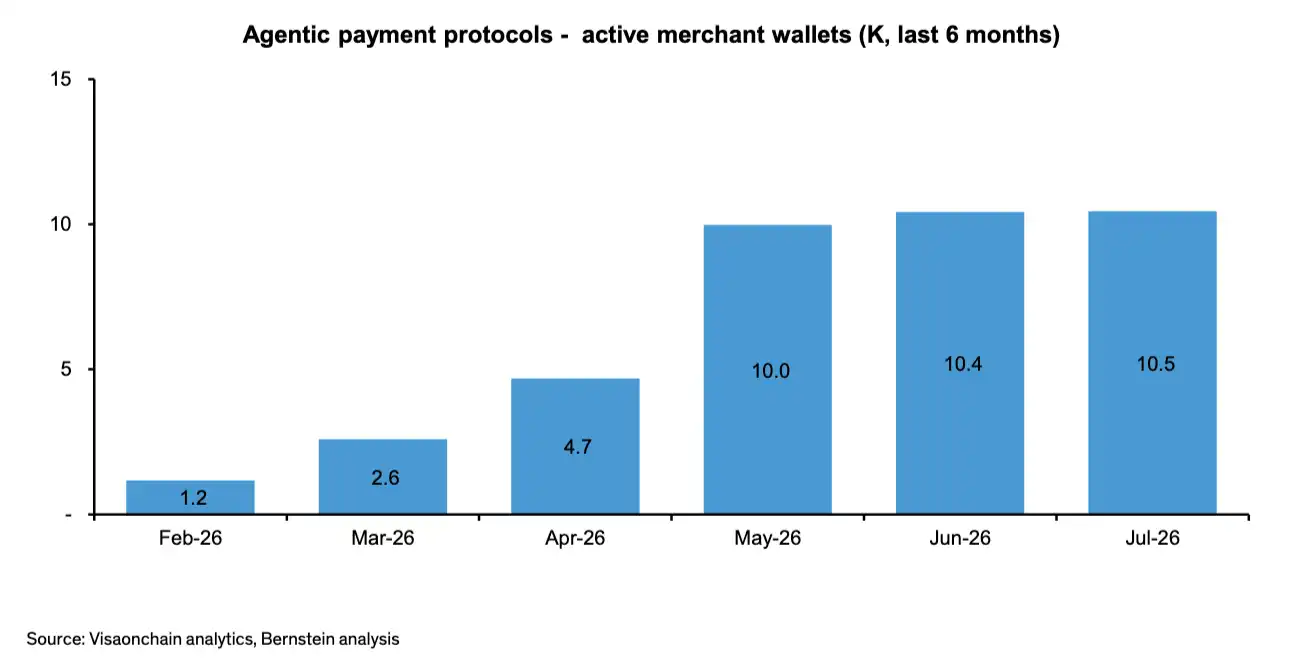
During the same period, the monthly active merchant wallets increased from about 1,000 in February to about 10,000 in July. The Agent Stack introduced by Circle has integrated over 900 paid services, with USDC accounting for over 99% of the x402 agent payment amount.
Close to 20 million monthly transactions indicate that stablecoins are suitable for high-frequency small-value transfers between machines. However, the $1 million monthly scale is not yet sufficient to impact the total USDC supply significantly, making it more challenging to make a significant contribution to Circle's revenue. At the current stage, the AI Agent economy predominantly reflects product and infrastructure adoption, and it will take more time to become a performance-driven factor.
Arc Will Be the True Test of Circle's Platformization
Compared to agent payments, Arc is more likely to become the core driver of Circle's platformization valuation.
According to Circle's disclosed plan, the Arc public mainnet is scheduled to launch on September 16, with founding validators including BlackRock, DTCC, Galaxy, Global Payments, ICE, Mastercard, MoneyGram, SBI, Standard Chartered, Sumitomo, and Visa, among other institutions.
The report states that during the private mainnet phase, Arc has already processed approximately 500 million transactions, involving about 3 million wallets, and has more than 100 ecosystem and institutional builders. This data primarily reflects the progress of testing and development before the public mainnet launch and cannot be directly equated to real user adoption on the public mainnet.
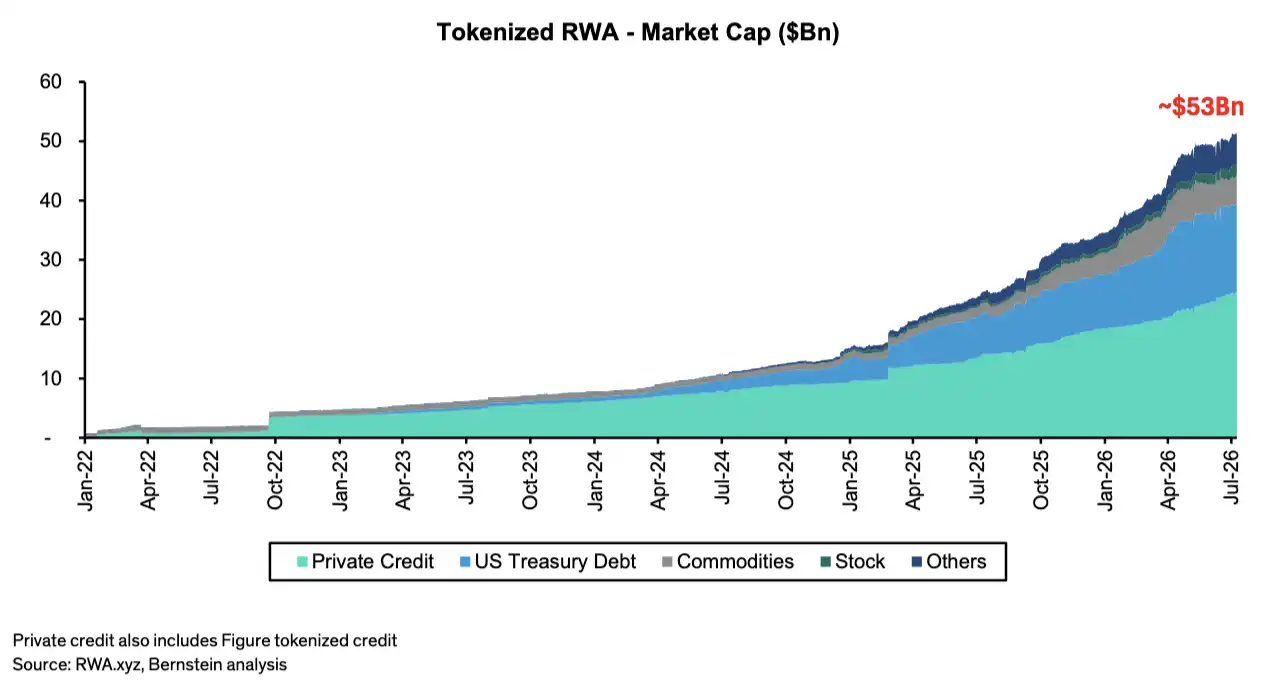
Arc will focus on supporting privacy enhancements, programmable finance, AI agents, and the tokenization of real-world assets. Circle hopes to use this to drive USDC from a stablecoin to the underlying asset for on-chain settlement, trading, and collateralization.
Currently, Circle has announced a series of institutional partnerships:
·DTCC plans to explore enabling asset access within its custody system to Arc, serving security tokenization, settlement, and collateral applications;
·BlackRock's tokenized money market fund BUIDL is expected to expand to Arc;
·BNY and Standard Chartered are expanding USDC minting, redemption, and custody services;
·Marex completed an initial margin transaction in regulated derivatives clearing using USDC;
·Nium will integrate USDC into payment infrastructure covering more than 190 countries and regions;
·JCB, Grupo Bind, Kakao, and OSL are exploring merchant payments, regional liquidity, and digital dollar settlements, respectively.
These partnerships have provided institutional endorsement for Arc, but validator identity, technical access, and partnership agreements cannot directly translate into business revenue. What needs to be truly observed after Arc goes live is: how many assets migrate to the chain, whether USDC settlement volume can grow, if institutions continue to use its collateral and payment features, and whether Circle can establish stable non-interest income from it.
The report gave Circle an "outperform" rating and a $140 target price, but the materials provided did not disclose a specific valuation model, so it is unclear how much of the target valuation Arc, payments, and agent economics respectively contribute.
Currently, Circle's most certain growth still comes from USDC supply recovery and increased market share. Payments, tokenized assets, and AI agent economics offer further possibilities to unlock valuation, but these businesses still need to go through the conversion from partnership announcements, infrastructure adoption to asset and revenue realization.
Next, the market needs to focus on four variables: whether USDC supply can continue to grow, if the adjusted market share can be maintained, whether the share of real-world payments can increase, and whether Arc can attract real assets and transactions after going live.
Welcome to join the official BlockBeats community:
Telegram Subscription Group: https://t.me/theblockbeats
Telegram Discussion Group: https://t.me/BlockBeats_App
Official Twitter Account: https://twitter.com/BlockBeatsAsia
