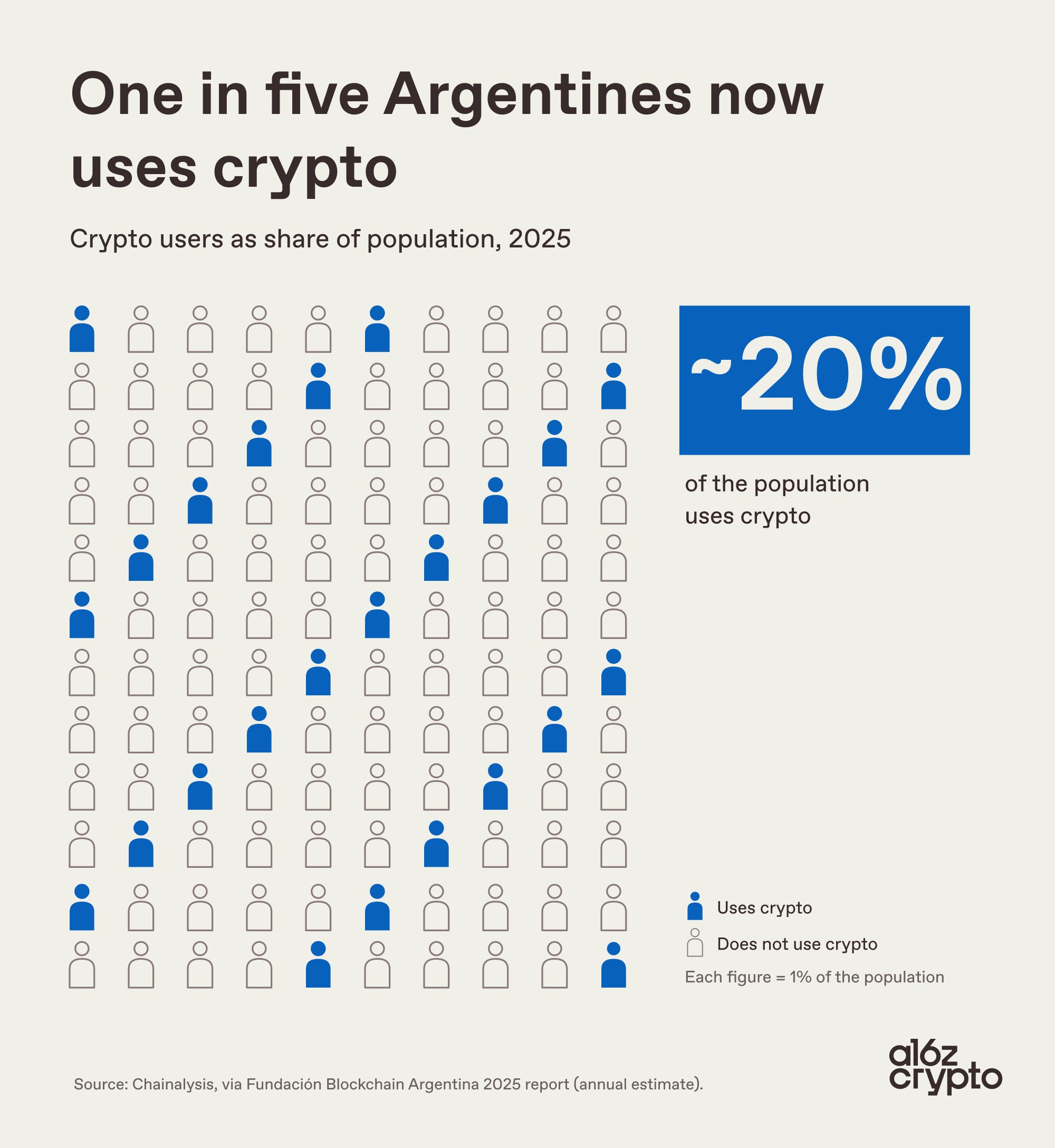
Where in the world are people using cryptocurrency, and how are they using it? Let's start by looking at Argentina. One-fifth of the country's population uses cryptocurrency, making it one of the countries with the highest cryptocurrency adoption rates in Latin America.
This adoption has happened rapidly. In 2024, the download numbers of 15 mainstream crypto apps in Argentina almost doubled compared to the previous year.
Argentinians had a preference for the US dollar even before the emergence of cryptocurrency. Looking back to the 2001-2002 period, when the Argentine government froze bank accounts and, through Law No. 214/2002, forced the conversion of dollar-denominated deposits and loans into pesos. After the depegging of the peso from the dollar, the exchange rate plummeted from 1 peso to 1 dollar to nearly 4 pesos to 1 dollar, almost evaporating the value of the peso against the dollar. This crisis deepened the distrust of the peso among the population and reinforced the habit of keeping savings in physical dollar form outside the banking system, such as stuffing dollar bills under mattresses or storing them in safety deposit boxes.
After the Argentine government re-imposed foreign exchange controls in 2019, stablecoins in the country began to experience rapid growth. Within a few months, the government limited the amount of foreign currency that people could purchase through official channels to $200 per month, with additional eligibility criteria, excluding a large number of citizens directly. Stablecoins pegged to the dollar thus became another pathway for holding dollar assets that did not rely on the official foreign exchange market.
In recent years, stablecoins have been increasingly used for freelancers' wage payments. In April 2024, with Argentina's year-on-year inflation rate reaching 289%, a growing percentage of Argentine freelancers were receiving their wages in USDC.
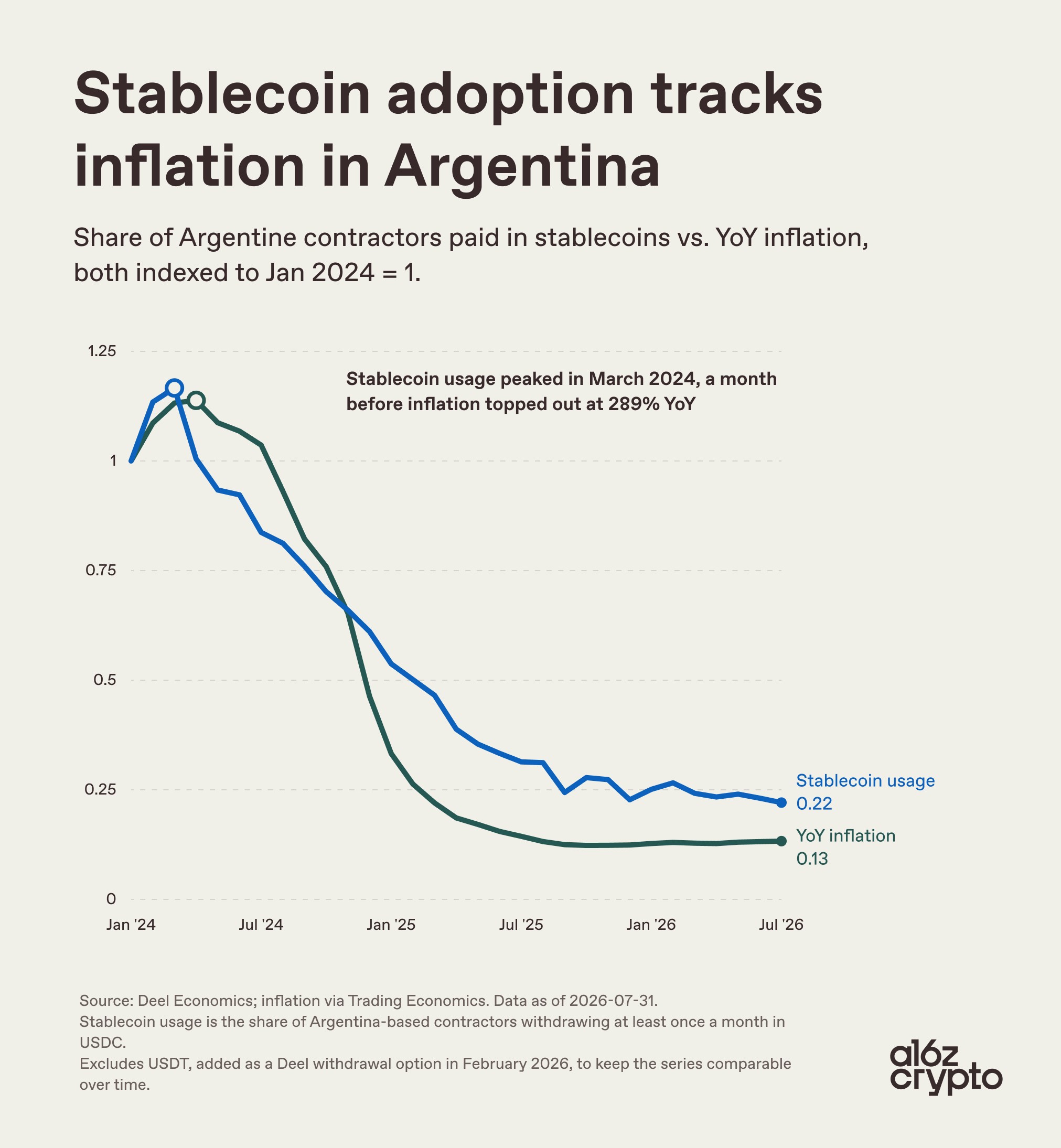
The above data is from Deel, a16z's portfolio company that provides payroll services to freelancers in over 160 countries worldwide. With this data, we can observe the percentage of freelancers in Argentina receiving their monthly wages in USDC and the year-over-year inflation level in the country.
Both sets of indicators are indexed to January 2024, showing the change since that time rather than the original absolute values. For a period, the two indicators moved in close correlation. Subsequently, as inflation eased, the percentage of stablecoin usage also decreased. As of July 2026, both indicators remained at around one-fifth of their respective peaks.
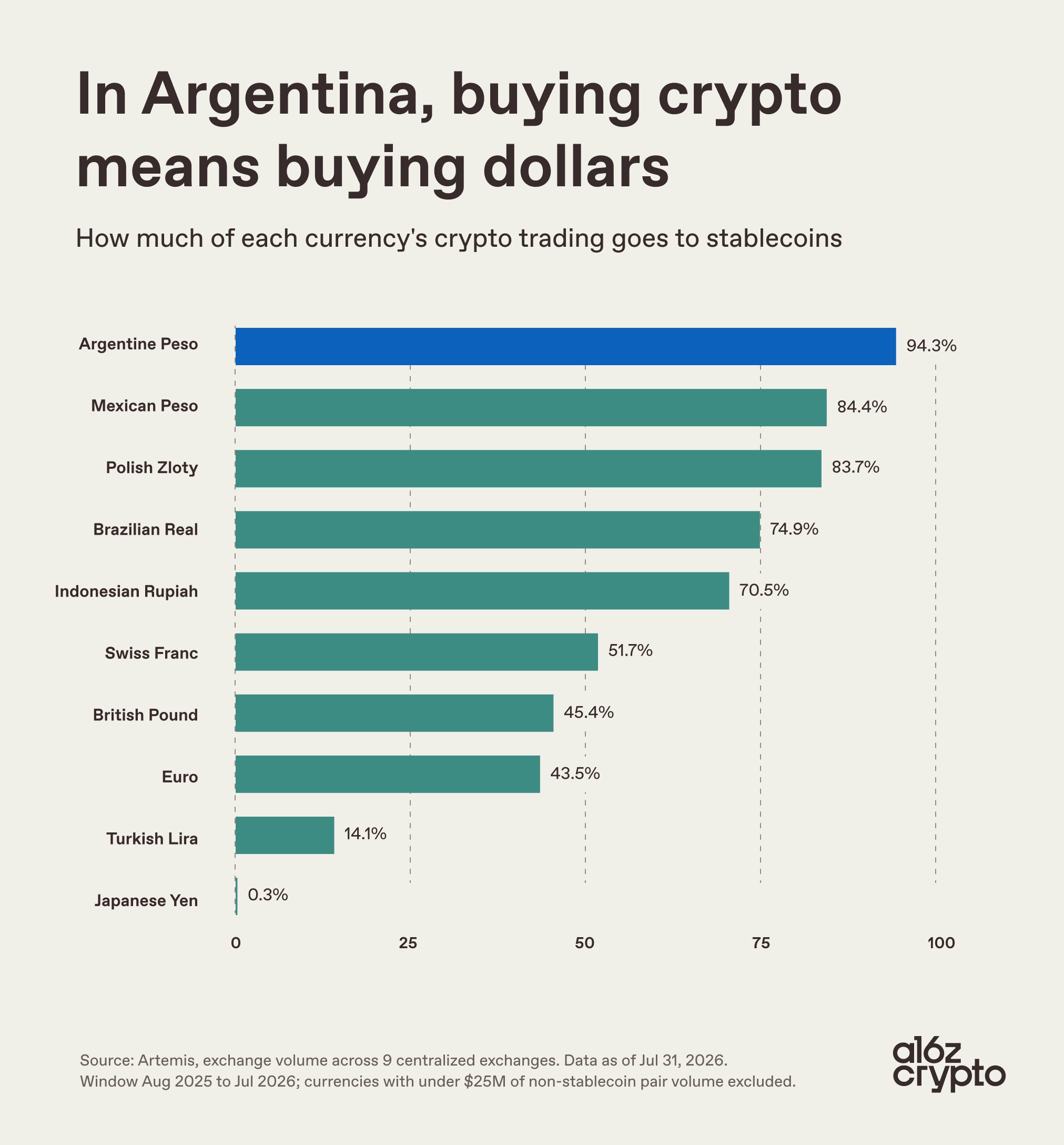
In Argentina, buying cryptocurrency with pesos is essentially a way to purchase US dollars. Data compiled by Artemis shows that 94% of cryptocurrency transactions involving the Argentine peso flow into stablecoins, making it the highest proportion among all major fiat currencies.
An interesting phenomenon to note is that over the past few years, the price of USD stablecoins in the crypto market has consistently been significantly higher than the USD at the official exchange rate.
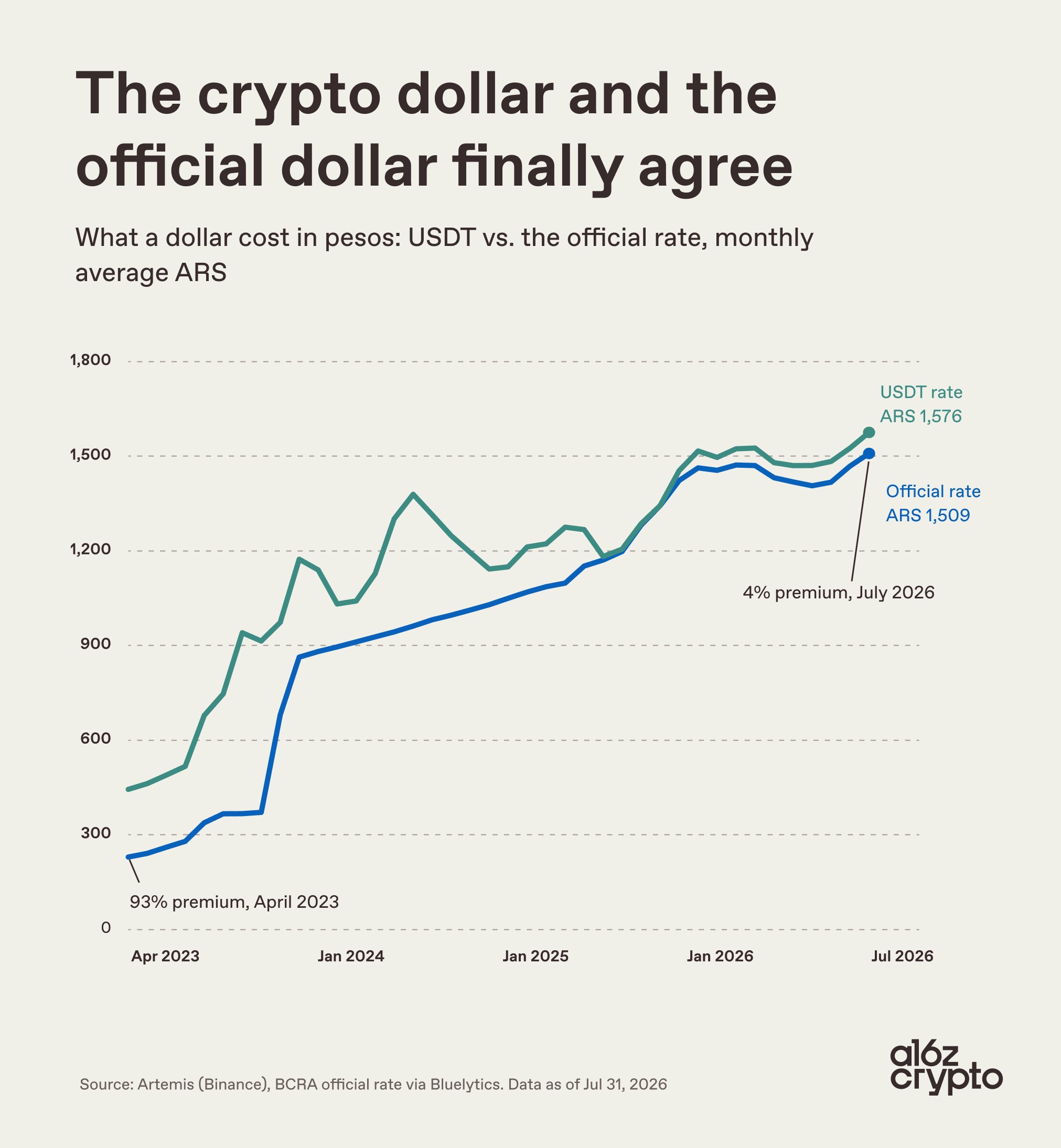
In 2023, capital controls prevented many Argentine citizens from accessing USD through official channels, causing the exchange rate gap between the official and parallel market rates to exceed 100%. Stablecoins emerged as an alternative solution: they could be traded 24/7 without being subject to foreign exchange controls. After the relaxation of most individual FX purchase restrictions in April 2025, the prices of the two types of dollars essentially aligned.
As of August 28, 2026, the price of USD stablecoins is only about 4% higher compared to purchasing USD in the official market.
Argentina's current economic crisis seems to be easing: inflation is declining, individual legal channels for FX purchases have reopened, and the various pressures that initially led many people to turn to stablecoins have somewhat abated. Logically, the popularity of stablecoin usage should decrease accordingly, but reality proves otherwise.
The scale of stablecoin usage for salary settlements has only stabilized and not entirely disappeared. The download volume of Argentina's leading crypto wallet, Lemon, continues to rise every quarter, even as monthly inflation has dropped from 25.5% to 2.1%.
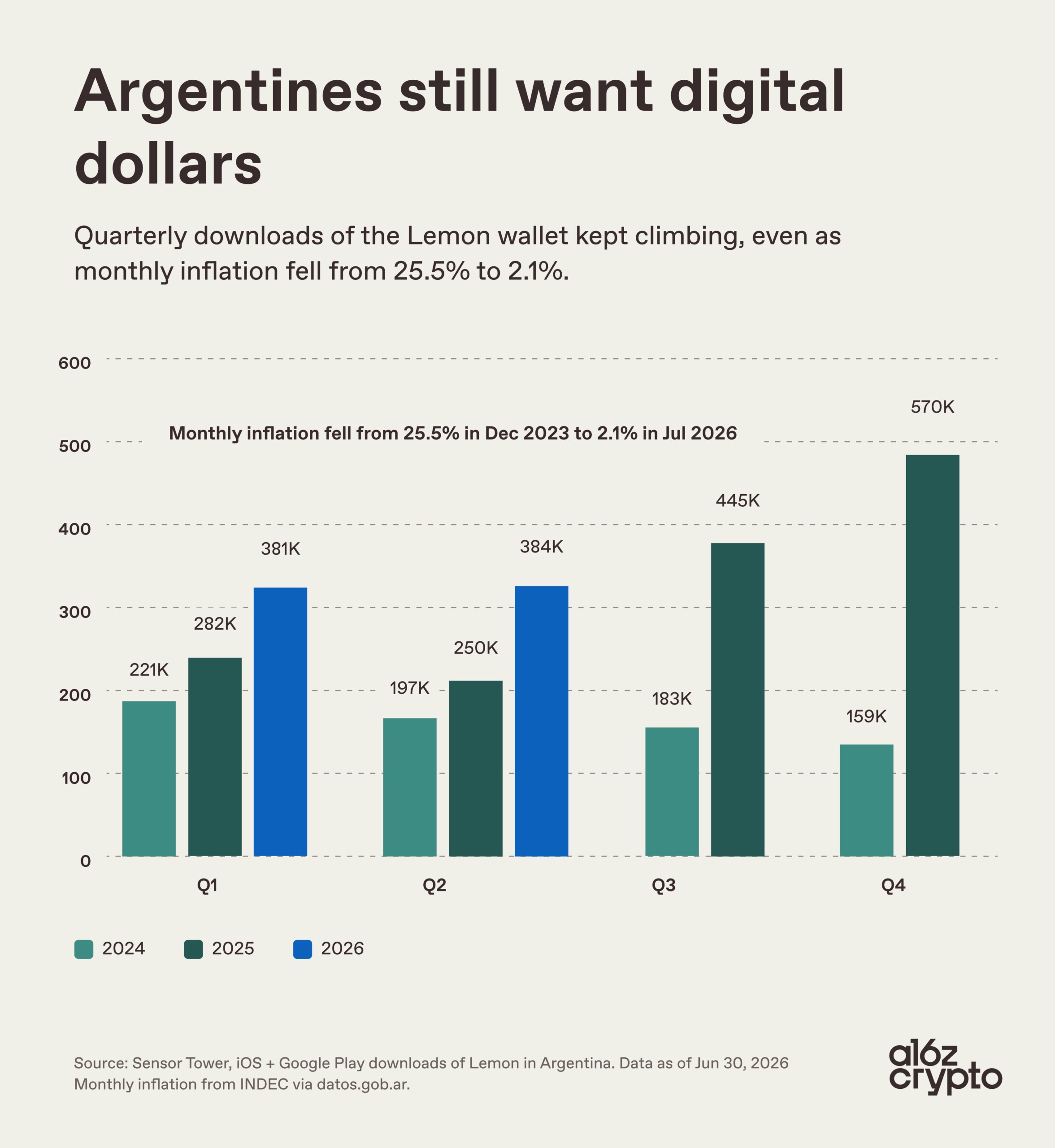
For the Argentine people, a stablecoin may no longer just be a hedge against inflation, it is evolving into a daily habit.
Welcome to join the official BlockBeats community:
Telegram Subscription Group: https://t.me/theblockbeats
Telegram Discussion Group: https://t.me/BlockBeats_App
Official Twitter Account: https://twitter.com/BlockBeatsAsia
