Editor's Note: As the crypto market undergoes a prolonged valuation contraction and capital begins to flow back in, the discussion around token investing is shifting from "what's the next hot narrative" to "which projects have already established verifiable business models." But as revenue, buybacks, and burns gradually become the new language of valuation, a more critical question begins to emerge: Can tokens be priced based on cash flows like stocks, and do their holders truly own the value created by protocol growth?
In this episode of the Bankless podcast, Austin Barack, founder and managing partner of Relayer Capital, discusses valuation methods for application tokens and the potential path of the crypto market migrating from an infrastructure cycle to an application cycle, focusing on projects such as Venice, Hyperliquid, Pump.fun, and ether.fi.
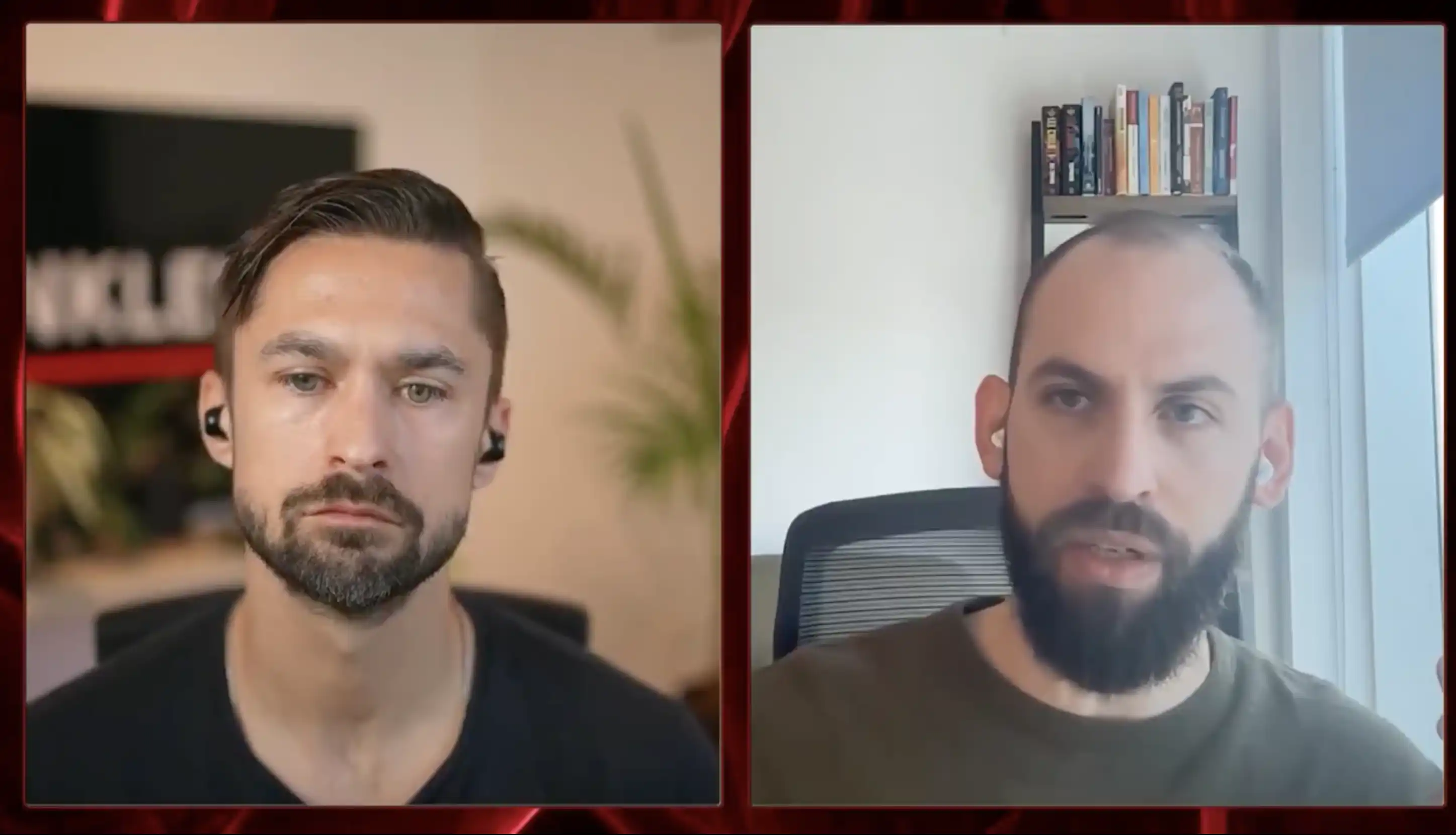
In this conversation, what Austin does is not simply seek out the tokens with the highest revenue or the most aggressive buybacks, but rather break down token investing into a set of more fundamental structural questions: Does the product have real demand, can revenue sustain growth, can business value be reliably transmitted to the token, and is the market still pricing already-transformed businesses using outdated categories?
First, the screening logic for crypto assets is shifting from simply chasing growth to seeking the intersection of "growth and value." In the past, the industry typically relied on new public blockchains, new protocols, and token incentives to manufacture growth expectations, with valuations reflecting more of a forward-looking narrative. The prolonged bear market has compressed this premium, gradually creating a divergence between a small number of projects that have found product-market fit and are experiencing rapid revenue growth, and a large number of tokens lacking real usage. This means the downturn cycle not only brings price discounts but also provides investors with a window to identify real businesses: projects truly worth paying attention to need both growth speed and reasonable valuation, rather than occupying only one end of the spectrum.
Second, token value is beginning to shift from abstract "utility" to observable value回流. Venice uses a portion of revenue from new subscriptions and credit purchases to burn VVV; Hyperliquid uses most of its platform revenue to buy back HYPE; Pump.fun and ether.fi have also established their own buyback mechanisms. In the past, there was often a lack of clear connection between protocol revenue and token performance, and project growth did not necessarily translate into gains for token holders. Now, programmatic buybacks and burns are establishing a valuation anchor for tokens similar to discounted cash flow. However, this stock-like framework still has boundaries: buyback ratios may be adjusted, and the rights relationship between equity entities and tokens has not been fully institutionalized. What investors truly need to assess is not just the scale of revenue, but also the sustainability and credibility of the value回流 mechanism.
Third, revenue quality matters more than revenue itself. The market has long assigned Pump.fun a lower valuation, partly because investors doubt whether demand for meme coin trading can persist and struggle to understand a user base that differs from their own profile. As the platform's revenue has remained resilient for more than two consecutive years, this perception is changing. Similarly, Venice's valuation depends not only on its current subscription revenue but also on whether it can expand from a multi-model gateway into an AI application platform connecting developers and ordinary users. This means valuation cannot mechanically apply buyback multiples; it also requires judging whether revenue comes from temporary incentives and hype or from a repeatable user behavior.
Fourth, the market's old classifications of projects may become new pricing biases. ether.fi was once viewed as a liquidity restaking protocol, but more than 60% of its business now comes from Neo Bank products such as credit cards and lending, and it is further expanding into an on-chain full-service brokerage platform. If the market still prices it according to the restaking sector, it may overlook the changes that have already occurred in its revenue structure. More importantly, ether.fi can directly tap into Ethereum's lending, stablecoin, and tokenized asset infrastructure to expand its products with lighter organizational and capital input. This shows that the true value left behind by the infrastructure cycle may not continue to concentrate in underlying protocols, but may instead be captured by the applications best at packaging these capabilities and directly serving users.
Fifth, application revenue can provide a valuation floor, but it cannot fully detach tokens from crypto cycles. Projects with buyback mechanisms can rely on business growth to form a relatively independent pricing basis, but they still belong to the token asset class and will also be affected by market capital flows, BTC and ETH price action, and changes in on-chain activity. The difference is that when the market rises, trading-oriented applications such as Hyperliquid and Pump.fun may also receive a double boost from capital inflows and business expansion; when the market weakens, real revenue becomes an important buffer distinguishing them from purely narrative assets.
If this conversation is compressed into one judgment, it is this: the core of the next round of crypto asset repricing may no longer be who has a grander infrastructure narrative, but who can convert real usage into sustained revenue and credibly return part of it to the token. In this sense, this article is no longer discussing only whether several tokens are undervalued, but whether the crypto market can further evolve from a narrative-driven financing system into an application economy based on products, cash flow, and value distribution.
The original content is as follows (the original content has been edited for easier reading):
TL;DR
·The core opportunity in the crypto market is shifting from underlying infrastructure to the application layer. In essence, revenue and users are beginning to replace block space narratives as the new source of value.
· Whether application tokens can be revalued depends not on how much revenue the protocol earns, but on whether that revenue can be passed through to the token via stable, transparent buyback or burn mechanisms.
· Venice combines AI application growth with token burn logic, but the $43.9 target price relies on optimistic assumptions such as Minds going live and a higher burn ratio, and cannot be treated as a certain valuation.
· Pump.fun's low valuation mainly reflects the market's skepticism about the sustainability of Meme coin revenue, but more than two years of revenue resilience suggests that highly volatile speculative demand may be a type of long-term consumer behavior.
· Hyperliquid is more cyclically reflexive than typical applications: capital inflows may both lift HYPE's valuation and simultaneously drive up trading volume, fees, and buyback scale.
· ether.fi is still priced as a restaking protocol, but its main revenue has shifted to payments and lending, and the market's old classification of the project may not yet have caught up with changes in its business structure.
· Buyback multiples cannot be directly equated with stock price-to-earnings ratios, because tokens generally lack clear residual income rights, and the value distribution between equity and tokens remains a core risk.
· Fundamentals can reduce high-quality tokens' dependence on the broader market, but cannot eliminate crypto cycles; truly sustainable valuation still depends on revenue quality, value pass-through, and mechanism continuity.
Main Text Highlights
Investment methods in the crypto market have never been fixed.
Strategies that worked in 2017 may not apply in 2021; sectors that were favored in 2021 or 2024 may also lose appeal in the next cycle. In Austin Barack's view, one idea that can be reused across cycles is to look for the intersection of growth and value: a project is growing fast enough, but the valuation the market gives it has not yet fully reflected that growth.
This is not low-valuation investing in the traditional sense. Investors enter the crypto market not to find a mature company growing 10% a year with a price-to-earnings ratio of only 4x. What makes crypto assets truly attractive is that their violent capital cycles can create a combination rarely seen in traditional markets: business growth of several times, while valuation is suppressed by an overall market downturn.
Barack founded Relayer Capital about two and a half years ago, with a strategy covering both early-stage investment and liquid markets. In the fund's early days, the two took up roughly equal attention, but now about 95% of its focus has shifted to liquid tokens, with key focus on two main lines: Crypto×AI and around-the-clock trading and asset tokenization.
The reason is not just that the crypto market may be entering a new upward cycle. Barack believes that the prolonged bear market has already helped the market complete a round of screening: after most tokens lost their narrative premium, a small number of projects that have truly found product-market fit, are experiencing rapid revenue growth, and are still relatively reasonably valued have begun to emerge.
From chasing narratives to calculating buybacks, tokens begin to have a new valuation language
For a long time, the valuation of crypto projects mainly relied on forward-looking assumptions such as market space, network effects, and token utility. Even when protocols generate revenue, there is often no clear link between that revenue and the token.
Now, some applications have begun to use programmatic buybacks or burns to directly convert business revenue into token buying pressure or supply contraction. This allows investors to borrow some methods from stock valuation and use the ratio of buyback amount relative to token market cap to approximate the token's "earnings yield."
But this method cannot be directly equated with a price-to-earnings ratio.
Stocks usually represent legal rights to a company's residual earnings and assets, while token holders do not necessarily have equivalent rights. Project teams can change the buyback ratio, and may also place new business under equity entities. Therefore, the buyback multiple only has strong explanatory power when the value return rules are relatively transparent and the business revenue is sustainable.
Venice is the case Barack focused on discussing. This is an AI application that emphasizes privacy and anti-censorship attributes, allowing users to access different frontier models and open-source models on the same platform. Currently, its main revenue comes from paid subscriptions and the purchase of additional compute credits.
Venice has also established two types of programmatic burn mechanisms for VVV: when users first purchase subscriptions of different tiers, the platform burns a corresponding amount of VVV; when users buy additional credits, about 5% of the purchase amount is used to burn tokens.
According to Barack's estimate, as of August 2026, Venice's annualized revenue run rate is about $107 million, corresponding to an annualized token burn of about $8.3 million. He expects that by 2027, revenue may increase to $336 million, and the burn amount may rise to $70 million. If a 50x buyback multiple is applied, the token valuation corresponding to his model is about $3.5 billion; combined with the expected circulating supply at that time, the VVV target price is about $43.9, while the price at the time the program aired was about $16.
This model carries clearly optimistic assumptions and is not a certain prediction of future revenue.
Of the projected $70 million burn, about $29 million comes from the Minds product, which has not yet officially launched, accounting for more than 40%. Minds plans to allow advanced users and developers to combine different models, prompts, and tools to create structured AI applications for ordinary users, with revenue sharing based on usage, in a format similar to an AI app store.
Barack believes that Minds is not entirely a new product detached from Venice's existing business, because it still revolves around existing models, users, and use cases. But host David Hoffman pointed out that credit purchases are merely an extension of existing services, while Minds is a new business line that has not been market-tested, and the risks of the two cannot be equated.
Barack acknowledged this concern and described his model as "slightly above the base case": if 0 represents extreme pessimism, 5 represents the base case, and 10 represents full optimism, he believes this forecast is roughly at 6.
The model also assumes that Venice may include renewals in the burn scope in the future and increase the burn ratio of credit revenue from 5% to 10% in 2027. None of these measures have currently received firm commitments, so $43.9 is more appropriately understood as a scenario valuation built on multiple business and mechanism assumptions, rather than an unconditional price target.
Venice's real dilemma: Why would a startup buy back tokens too early?
The Venice case also reveals the core contradiction facing application tokens: should a fast-growing startup invest cash in product expansion, or return it to token holders?
In traditional markets, companies in a high-growth phase usually use most of their funds for R&D, hiring, and customer acquisition, and rarely buy back shares on a large scale early on. Venice, however, has used part of its revenue to buy back and burn VVV since the early stages of business development, sacrificing to some extent the funds that could have been used for reinvestment.
Barack believes this approach is related to the dual equity-token structure of the crypto market. Tokens can help a project quickly gather attention, bootstrap a network, and design new product features, but in the absence of clear legal constraints, the market cannot naturally believe that all the value created by the company will ultimately belong to the token.
Therefore, programmatic burning is not only a way to distribute value, but also a mechanism for building trust. The team needs to prove through actual actions that business growth can be transmitted to VVV, rather than remaining only in the equity entity.
Venice is currently adopting a gradual approach: early burning has a certain degree of discretion, followed by the addition of first-subscription burning, and then including 5% of credit purchase revenue in the burn. Barack believes that this arrangement provides value return to the token while retaining most of the funds for growth.
Venice previously raised $65 million, which also alleviated the conflict between buybacks and reinvestment to some extent. Barack's understanding is that external financing provides the company with expansion capital, allowing it to allocate more operating cash flow to the token; the relevant investors also hold token subscription rights, which helps reduce the misalignment of interests between equity investors and token holders.
However, this balance remains fragile. If business growth slows, inference costs rise, or market competition intensifies, the company may need to retain more cash. Conversely, if the burn ratio remains too low for an extended period, the token will struggle to fully share in business growth. Therefore, judging the value of VVV cannot rely solely on observing the total burn amount; it also requires simultaneously tracking revenue growth, gross margin, operating expenses, and whether the company continues to honor its value return commitments.
Pump.fun and Hyperliquid: Same Revenue, Why Does the Market Assign Different Multiples?
Compared to Venice, Pump.fun and Hyperliquid's revenue is more directly tied to the crypto trading cycle.
Barack stated that, based on market data at the time of the show's broadcast, Pump.fun was valued at approximately 5 times its buyback amount, while Hyperliquid and Lighter's corresponding multiples were approximately 30 to 40 times. In his view, this gap reflects the market's bias toward different types of revenue.
Pump.fun's core business comes from Meme coin issuance and trading. Many investors believe that this type of activity depends on short-term speculative heat, and its revenue sustainability is inferior to perpetual contract trading platforms. Such concerns are not unfounded: the crypto industry has seen products whose revenue rose rapidly within one cycle and then declined by more than 90%.
But Barack believes that Pump.fun's performance over the past two-plus years shows that its revenue is more resilient than the market initially expected. The heat around a single Meme coin may fade quickly, but user demand for high-volatility, high-variance speculative products may persist long-term.
He compared Pump.fun to casinos, lotteries, prediction markets, and ultra-short-term options. The point here is not to equate Meme coin trading with the aforementioned products entirely, but to explain a demand mechanism: even if participants overall face negative expected returns, some users will continue to participate because of high volatility and small-probability high payoffs.
Based on this judgment, Barack believes that Pump.fun's buyback multiple could be re-rated from approximately 5 times toward 10 times. If the business scale remains unchanged, the multiple expansion itself could correspond to approximately a 1x upside; if on-chain trading and Meme coin activity recover simultaneously, revenue could grow further.
However, Pump.fun's risk also stems from the relationship between equity and tokens. The project previously used all revenue for buybacks, then adjusted to using 50% of revenue for buybacks over the next 12 months, with the remaining funds invested in business development. Whether this ratio will continue after 12 months still needs to be re-decided.
This means that the authenticity of Pump.fun's revenue can be observed through on-chain data, but there is no permanent guarantee of how much revenue the token can continuously receive. When valuing PUMP, investors need to set a discount for this institutional uncertainty, rather than directly treating all platform profits as token holder returns.
Hyperliquid, on the other hand, has obtained a higher valuation multiple. On one hand, its crypto perpetual contract business has already generated relatively high revenue; on the other hand, the HIP-3 market is expanding its trading scope to contracts related to stocks, commodities, indices, and unlisted companies.
Barack believes that Hyperliquid demonstrates the potential of blockchain for 24/7 trading, instant settlement, and global price discovery. In the future, some assets that have not yet been listed may even first form price signals on-chain, and then be used by traditional financial institutions as a reference for issuance pricing.
But this judgment still needs to be verified by the market. According to Barack, Hyperliquid's recently added real-world asset market has contributed a large amount of trading volume, but because it is still in the expansion stage, it has not yet brought a comparable scale of revenue growth. The currently more profitable business is still mainly crypto asset trading.
Therefore, Hyperliquid has stronger cyclical reflexivity than ordinary applications: when crypto funds flow back, HYPE may not only benefit from a recovery in overall token valuations, but the platform's trading volume, fees, and buyback scale may also grow simultaneously; if market activity declines, this mechanism may also run in reverse.
ether.fi has changed, but the market's classification has not kept up
ether.fi is another kind of valuation mismatch: the project's main business has already changed, but the market still prices it according to its old label.
ether.fi initially entered the market with a liquidity restaking business. When the restaking narrative was hottest in 2024, its fully diluted valuation once reached about $8 billion. As market expectations for the restaking sector declined, ether.fi's valuation also fell back, and it continued to be viewed as an asset similar to staking protocols such as Lido.
Barack believes that this classification can no longer accurately reflect ether.fi's current revenue structure. According to the data he provided on the program, currently more than 65% of the business comes
Since Neo Bank (digital neobank) products, including credit card transaction revenue and lending revenue generated by users using their account assets as collateral; the share of yield and staking business has dropped to about 35%.
As the platform adds tokenized stocks and more on-chain assets, ether.fi is further shifting from a digital neobank to an on-chain integrated brokerage platform. Users can hold and trade different assets, borrow against assets as collateral, and complete daily spending through credit cards.
The advantage of this model is that ether.fi does not need to build all financial infrastructure from scratch. Take the lending business as an example: the platform can call existing DeFi protocols such as Aave and earn revenue through revenue sharing. The richer the stablecoins, lending markets, and tokenized assets on Ethereum become, the broader the range of services ether.fi can offer users.
According to data provided by Barack, ether.fi's credit card daily transaction volume has risen from about $300,000 a year ago to $3 million to $4 million, an increase of more than 10 times; currently only about 4% of revenue comes from lending interest, while about 60% to 70% of revenue at traditional digital bank Nubank comes from this segment. In his view, this shows that ether.fi still has significant room to expand its revenue structure.
Based on a potential buyback of about $30 million over the next 12 months and a 30x valuation multiple, Barack estimates that the ETHFI price could exceed $1, about twice what it was at the time of the program. However, $30 million is higher than the $21 million predicted by another model he cited, and he assumes that ether.fi's future growth rate may accelerate, so this result is also a relatively optimistic scenario.
What is truly noteworthy in this case is not the specific target price, but whether market classification is lagging. If most of ether.fi's revenue already comes from payments, lending, and brokerage businesses, then continuing to use the valuation framework of a liquidity restaking protocol may fail to reflect its current business; but if the growth of the new businesses does not continue, the so-called "reclassification" may also fail to hold.
Fundamentals can reduce correlation, but cannot eliminate crypto cycles
Having real revenue does not mean that application tokens can completely detach from Bitcoin and crypto market cycles.
Barack summarizes this relationship as "partially coupled, partially decoupled." On the one hand, Venice, Pump.fun, Hyperliquid, and ether.fi can build relatively independent valuation foundations based on their own user growth, revenue, and buybacks. Even if Bitcoin moves sideways, as long as the business continues to expand, the tokens may still be revalued.
On the other hand, they still fall under crypto assets. When capital flows back into tokens from equities, AI, and other markets, these projects with fundamental support may be among the first to enter the allocation scope of professional investors. Pump.fun and Hyperliquid will also generate additional revenue from increased trading activity, creating a positive feedback loop between asset prices and business fundamentals.
Venice's direct connection to the crypto trading cycle is relatively weak, and its main external variable is AI usage. If multi-model calls, privacy AI, and generative applications continue to grow, Venice may have a source of demand different from pure crypto applications; if user growth or paid conversion falls short of expectations, its token will not automatically achieve the valuation in the model simply because the crypto market rises.
Barack ultimately places this change within a longer industry cycle. According to the data he cites, for most of the crypto industry's history, execution-layer infrastructure once contributed more than 95% of industry revenue; today, the share of application revenue has risen to about two-thirds. He expects this proportion to continue shifting toward the application side, eventually exceeding 90%.
This prediction has not yet become fact, but it points to the core variables that need to be verified in the next stage: whether revenue continues to migrate from public chains and execution layers to user-facing applications, whether the cash flow generated by applications can be stably transmitted to tokens, and whether buyback mechanisms can maintain continuity amid business growth, market downturns, and regulatory changes.
If these conditions hold, the main valuation targets in the crypto market may shift further from "infrastructure that provides block space" to "applications that use blockchain to sell financial and digital services." By then, the market will no longer be looking only for the next high-performance public chain, but for which products truly connect the crypto world with external demand, and which tokens can continue to share in that growth.
Welcome to join the official BlockBeats community:
Telegram Subscription Group: https://t.me/theblockbeats
Telegram Discussion Group: https://t.me/BlockBeats_App
Official Twitter Account: https://twitter.com/BlockBeatsAsia
