Chinese new energy vehicle companies all want to be AI companies now.
But the starting point of this business had neither algorithms nor computing power, and it was not even fair to call it a commercial logic.
In 2009, the "Ten Cities, Thousand Vehicles" program was launched, and the government began spending real money to subsidize an experimental product that no one was buying. China's auto industry had been trapped for more than half a century by internal combustion engine patents and sought to seize the opportunity to change lanes and break through. Once the gate opened, real carmakers and rent-seeking arbitrageurs mixed together, and ambition and speculation raced side by side on the same track.
Those years were full of chaos. Some carmakers installed the same batch of batteries onto chassis, claimed acceptance and collected the money, then immediately removed them and stuffed them into the next batch of empty-shell vehicles to collect the money again; there were also cars that never touched a road in their entire lives, with odometers left spinning in the workshop on instruments. Making cars did not require understanding users; as long as one thoroughly understood the fiscal documents, the declared numbers on paper could be exchanged for large amounts of cash.
It was not until the list of subsidy fraud was made public that the industry took a head-on blow. Around 2016, public opinion almost pronounced a death sentence on it. For a trade force-ripened by fiscal blood transfusions, the day policy support receded seemed destined to be the day it died young.
But at the edge of the ruins, the true spark instead landed on the ground. NIO, XPeng, and Li Auto successively launched projects, with BYD, which had already placed its bets, lurking nearby.
Li Bin had sold automotive software, He Xiaopeng had built a browser, and Li Xiang had run a vertical portal. Carrying the capital they had earned in the internet and mobile eras, and bringing engineers who wrote code, they plunged headlong into this heavy-asset furnace that was most hostile to outsiders. "PPT carmaking" was the most conspicuous label outsiders threw at them at the time.
The real turning point came in 2019. Tesla's Shanghai Gigafactory was completed, and the domestically produced Model 3 entered the market with price pressure. This dragon crossing the river pushed Chinese peers to the brink of survival, but objectively it also completed the full reshaping of the sinews and bones of China's industrial electric supply chain. Batteries, motors, electronic controls, and later chips and algorithms, which became the decisive factor, were forced to mature in this cruel testing ground.
Riding this momentum, China's automobile production and sales sat in the world's number one position for more than a decade.
By 2026, these companies, which had barely fought their way out of near-death and had truly figured out how to build cars, suddenly no longer wanted to be called car companies.
Tearing Off the Sheet Metal
On August 24, 2026, XPeng released its second-quarter earnings press release. Financial websites churn out hundreds of such PR pieces a day, and very few people would check the inconspicuous line of company introduction at the end.
But all the anxiety and ambition are hidden in those few lines of small print. In the 2020 IPO prospectus, XPeng printed "smart electric vehicle company"; by the end of 2024, it had changed to "global AI mobility company"; just one year later, it was renamed "global embodied intelligence company"; and by the summer of 2026, it had simply switched to the pure English "world-leading physical AI company."
Four changes in four years, each time the vocabulary grew broader in scope, while the smell of engine oil grew fainter each time.
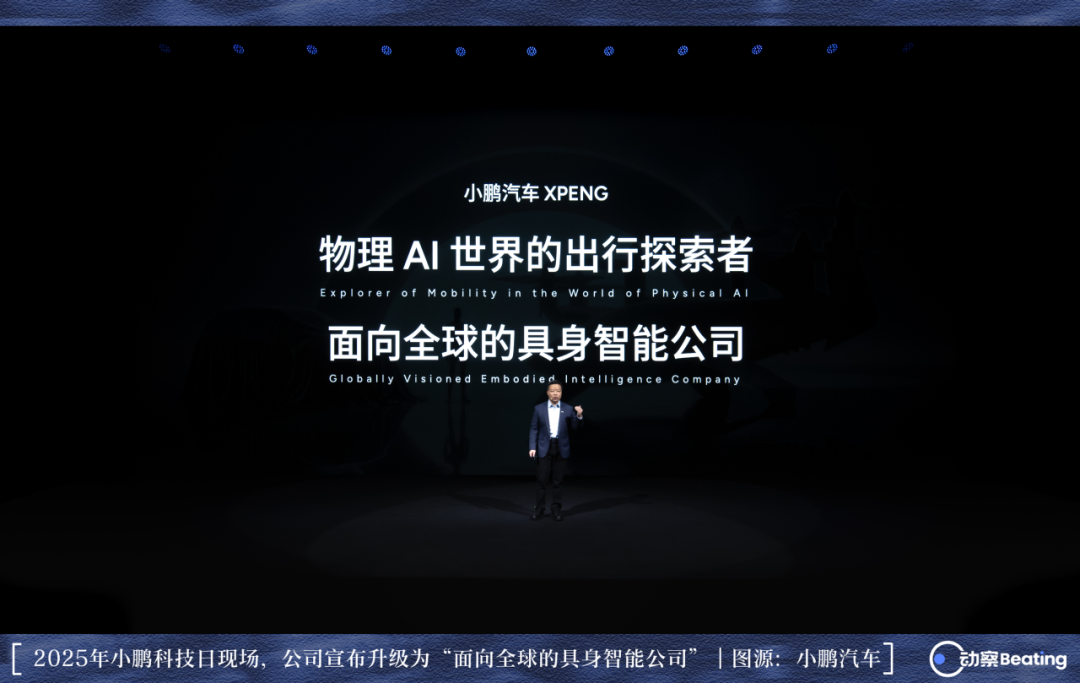
XPeng is not the only one eager to tear off the traditional manufacturing label. Geely set up a "full-domain AI system" at its CES booth, iterating from 1.0 to 2.0 in two years; NIO spun off its smart driving chip business, pulling in RMB 2.257 billion from external investors in the first round; Li Auto wrote artificial intelligence into the highest vision of its all-hands letter as early as the beginning of 2023, while in reality, its bottom-line profit is still firmly propped up by range-extender vehicles.
The scene in showrooms is changing too. Chery replaced sales staff who accompanied visitors to view cars with humanoid robots, whose mechanical arms rise to point the way for guests; Seres reclaimed the trademark rights to AITO and turned to external large models to create a new brand called AIVA. In the eyes of the capital markets, pure hardware manufacturing has always been harshly valued. When even the most solidly welded car doors cannot escape the valuation ceiling of manufacturing, migrating toward technology and algorithms has become everyone's collective choice.
Even those who nominally keep their automaker signboard have long since shifted their chips under the table. Great Wall's Haomo.AI shut down entirely at the end of 2025, and Wei Jianjun immediately brought in three suppliers—Zhuoyu, Yuanrong, and Momenta—replacing an expensive early-stage route with pragmatic supply chain procurement.
BYD, with the deepest pockets, announced in the early summer of 2026 that it would invest more than RMB 100 billion, betting its chips fully on AI and setting goals such as a zero-accident super driver and super secretary. Even Leapmotor, long known for cost control, brought out a self-developed humanoid robot at its tech day, and Zhu Jiangming bluntly laid out the commercial essence: "A robot that can go for a stroll is no skill; a robot that can make money is what counts."
By 2026, the two letters "AI" had been thoroughly written into automakers' financial reporting segments, organizational charts, and financing agreements.The capital markets have always been stingy with hardware assembly, yet willing to pay a premium for frontier technology. As the dividends of vehicle manufacturing are rapidly diluted, no one dares to slow down at this juncture of technological transition.
Long Cycles and Short-Lived Players
In 2019, NIO's stock price fell to just over one dollar, and Li Bin became "the most miserable man of the year," only recovering after a capital injection from Hefei state-owned assets. That same year, NIO began assembling a chip team.
Xpeng followed closely behind. In 2020, it had just delivered 27,041 vehicles on the brink of survival, with book losses hitting bottom, and likewise pulled together a team at year-end to develop chips. Li Auto moved the slowest, quietly establishing a chip design company in 2022.
For an automaker with annual sales of less than 30,000 vehicles and cash flow on the verge of depletion to bet on self-developed chips is almost incomprehensible in the eyes of the traditional automotive industry. Automotive-grade chips have cycles measured in years and cost enormous sums, but the price of outsourcing chips is handing over computing power allocation, architecture, and pricing power entirely to others. Between becoming an assembly plant and diving into deep waters themselves, they chose the latter. Many visions in heavy industry are, in essence, merely the only way out after being cornered.
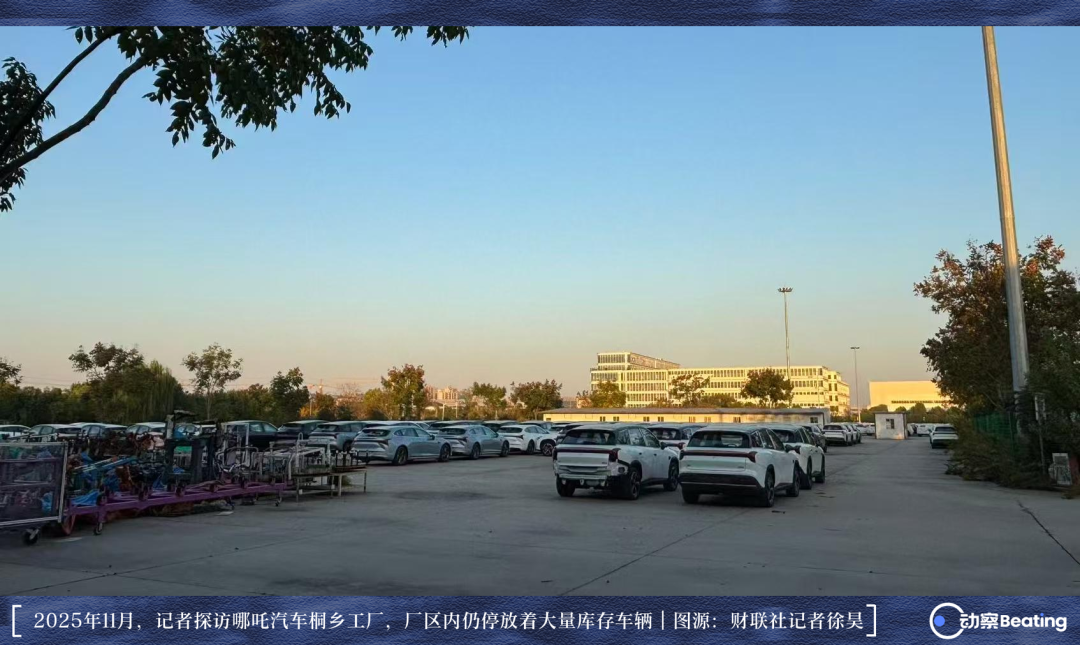
Another group of peers who chose to take shortcuts paid a painful price.
In 2022, Neta claimed the new forces delivery champion title with 152,100 vehicles, with its three major bases operating around the clock and local state capital vying to inject funds. Just three years later, Neta's book funds hit bottom, with 1,631 creditors filing claims for RMB 26.58 billion in massive debt. WM Motor struggled through its restructuring plan, while HiPhi's bankruptcy plan was repeatedly delayed by the courts. From annual sales champion to deep distress, only thirty-six months separated the two.
A price war followed in quick succession. In 2023, subsidies tapered off, and Tesla was the first to slash prices, with per-vehicle reductions of up to RMB 36,000. In early summer 2025, BYD cut prices on 22 models, and within two weeks more than a dozen brands followed suit, with 73 models across the industry listed at rock-bottom prices in the first five months. In 2024 alone, 4,419 4S dealerships exited the network nationwide. When Ford's price cuts reshuffled the market back then, it faced a rapidly expanding market; today's close-quarters strangulation is happening in a contraction cycle.
In 2025, nominal GDP growth was 4.0%, mortgage balances declined for eleven consecutive quarters, and the proportion of residents inclined toward precautionary savings exceeded 60%. The overall auto market bled along with it. In 2025, national passenger vehicle retail sales evaporated by RMB 170 billion, average prices snapped a six-year upward trend to fall to RMB 170,000, the average profit margin of vehicle manufacturing slid to a historic low of 1.5%, and average gross profit per vehicle was only RMB 14,000.
In the summer of 2026, new energy vehicle penetration surged to 62.8%, but overall passenger vehicle sales in the first half plunged 6.2%. The only growth came from going overseas, with domestic sales falling by 20%, propped up entirely by exports surging 60% year-on-year.
Policymakers then intervened with heavy measures. Regulators successively halted below-cost sales and cracked down on supply chain payment terms. The 15th Five-Year Plan stuffed capacity warnings into documents while also creating a dedicated chapter on artificial intelligence. But business logic is an objective arithmetic problem. An automaker with a profit margin of only 1.5%, earning the thinnest micro-profits in manufacturing, is expected to benchmark against tech giants to fund cutting-edge R&D for the next decade. The two sets of books simply don't add up.
Since selling cars on the ground has already hit the profit ceiling, automakers must package this accumulated engineering and algorithms and sell them a second time in a larger arena.
A New Container of $50 Trillion
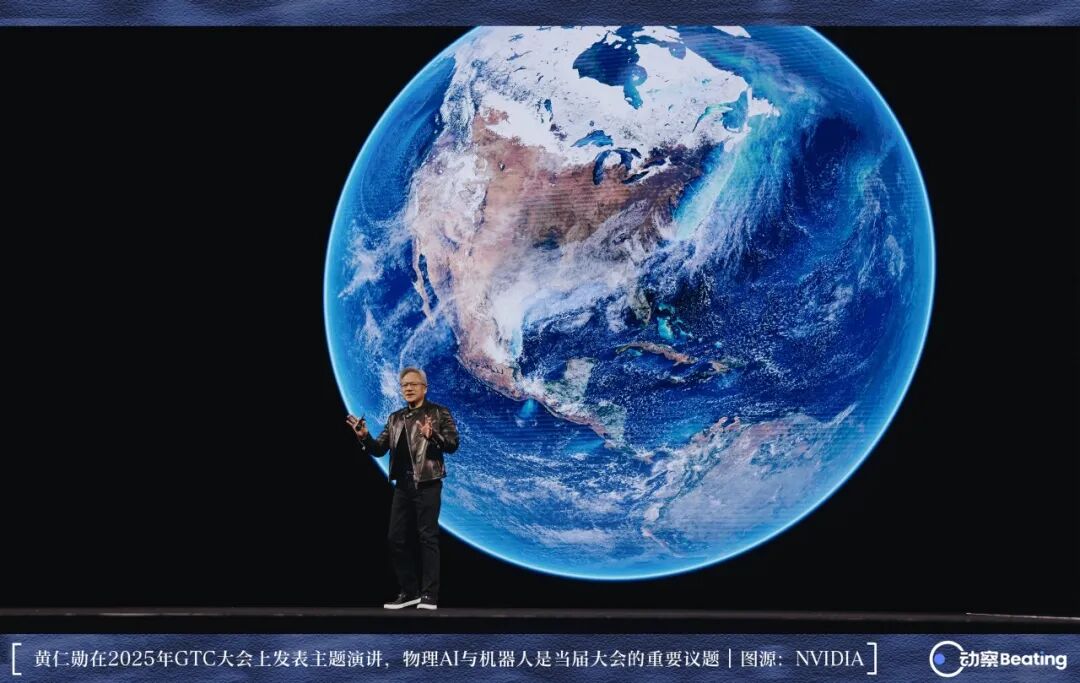
At the GTC conference in the spring of 2025, Jensen Huang broke down the evolution of artificial intelligence into four steps: perception, generation, agents, and physical AI. So-called physical AI means letting models step out of cold screens to grasp gravity, friction, and stiffness in the real world, and command metal machinery to work in an unpredictable physical environment.
At CES the following year, he announced that the turning point for physical AI had arrived, launching the world model Cosmos, the simulation platform Omniverse, and the robotics kit Isaac. The target he pointed to is a global manufacturing and logistics market worth as much as $50 trillion.
This figure is an order of magnitude larger than the annual sales of the global automotive industry. The weight of a term is directly tied to the stature of its evangelist. When Nvidia's market value crossed the $5 trillion threshold and it became the controller of the world's computing power foundation, the direction described by Jensen Huang quickly pulled hundreds of billions of dollars in global capital flows.
Policy has been equally swift. From the Ministry of Industry and Information Technology listing humanoid robots as a disruptive product after smartphones and new energy vehicles, to "embodied intelligence" and "AI+" being written successively into the highest-level government work reports, technical terms quickly gained the weight of industrial layout and resource allocation in core planning.
But this cutting-edge technology is still in the pioneering stage in the industrial world.
When Li Auto published a world model paper at an academic conference, it admitted at the outset that academia still has no unified definition of world models. Domestic technical routes also differ. Huawei and Nio advocate world models, while Xpeng and Li Auto bet on VLA models that integrate vision, language, and action. Xpeng publicly focuses on VLA, while internally some teams are also advancing world models in technical reports. Momenta, called by outsiders "the first physical AI stock," avoided the term entirely in its Hong Kong Stock Exchange prospectus for the sake of rigor, and listed world models only as an in-development project.
Technical definitions are still evolving, but the concept has already been pushed to the forefront by capital. Real money is accelerating upward along the industrial chain, and the first to cash in are still the shovel sellers who control the computing power foundation.
Autonomous driving operations on the other side of the ocean reveal a thought-provoking industrial reality.
Since 2024, Waymo has continued to import China-made Zeekr chassis from the Port of Los Angeles, totaling more than 3,000 vehicles. This batch of vehicles from a Ningbo factory had autonomous driving software and hardware and networked communication modules removed at customs declaration, entering in pure skateboard chassis form to comply with local regulations, and after arriving in Arizona, Magna installed autonomous driving kits.
The self-driving cars Waymo operates on American streets have chassis that demonstrate China's absolute hard power in mechanical engineering and cost control. Chinese automakers have secured top-tier hardware orders, but when it comes to the algorithm brain and commercial operations that truly command high-end premiums, they still face layer upon layer of barriers in global competition.
Two Yardsticks
The sign is up, but the gravity of technology must ultimately land on the ground. To measure the real-world maturity of physical AI, the industry has two core yardsticks: one is Tesla, which pushes deepest into the edges of technology and regulation, and the other is Waymo, which has the largest commercial operating scale.
In early autumn 2026, Tesla began testing passenger service with the Cybercab, a vehicle stripped of steering wheel, pedals, and mirrors, presenting a highly striking form.
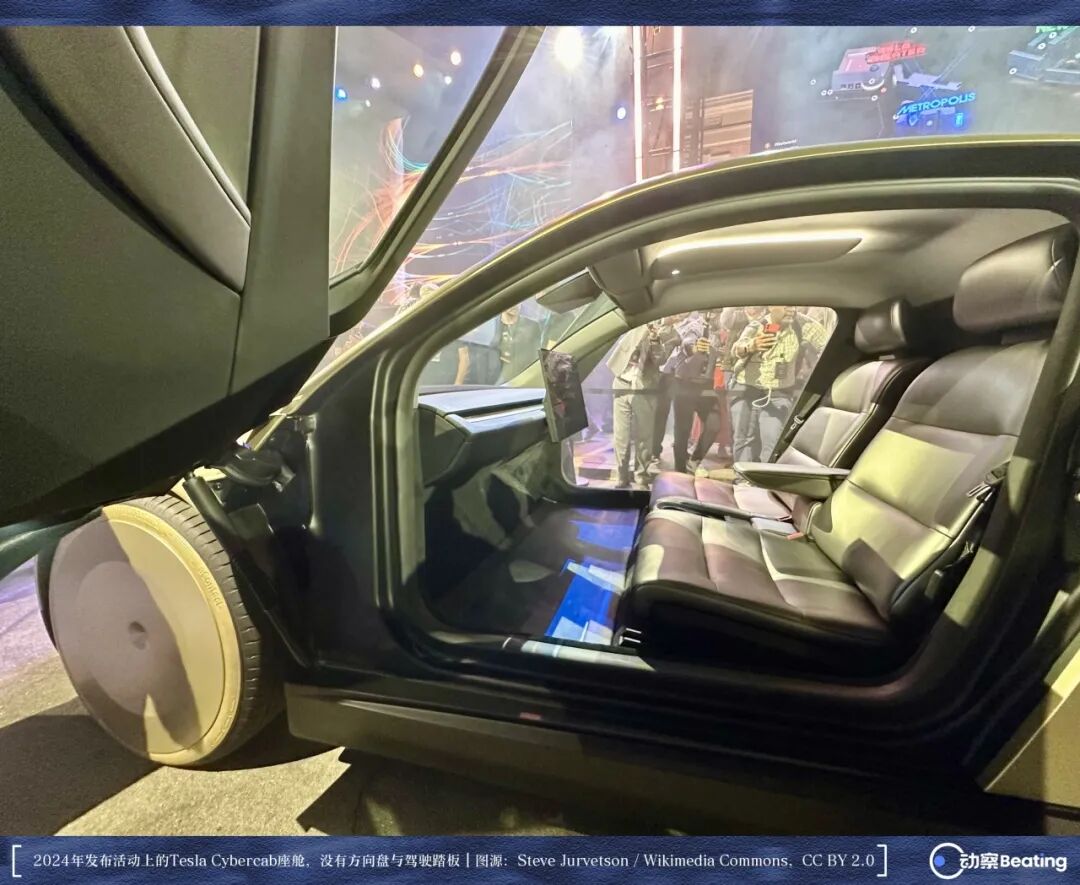
But on the very day it hit the road, the National Highway Traffic Safety Administration formally opened an investigation. The special inquiry letter sent down went straight to the core admission issue, with item 19 directly citing Federal Motor Vehicle Safety Standard 135, explicitly stating that service braking must be activated through a foot control device. Yet the test vehicle before them had no foot control component at all.
Musk has yet to obtain a federal-level special safety exemption. In Texas regulatory records, the number of Cybercabs Tesla reported was updated to 45 vehicles on the eve of the launch; in its home base of California, Tesla holds only a testing permit with a safety driver on the DMV list, and its name still does not appear on the Public Utilities Commission's commercial operations roster.
Even in the formal report Tesla submitted to regulators, the footnote still cautiously notes that the vehicle requires active driver supervision. From frontier concept to legal commercial use, institutional and safety redundancy remain a narrow gate that cannot be bypassed.
Under the second yardstick, Waymo reveals the efficiency bottleneck behind scale expansion.
As the global leader in autonomous driving commercialization, Waymo's weekly order volume has hovered in the 500,000 range for months. Its operating cities have expanded to 15, and its fleet has grown by more than a thousand vehicles, yet average weekly trips per vehicle have slid from 167 to 125.
Public estimates show that more than 40% of Waymo's operating mileage in California is empty running. Alphabet's Other Bets segment, which includes autonomous driving, generates just over $300 million in quarterly revenue, against an operating loss approaching $1.8 billion.
The high cost of frontier exploration has not eased even as valuations climb to $100 billion.
The domestic market is likewise undergoing a serious technological stress test. In early spring 2026, multiple autonomous vehicles came to a collective halt on an elevated road in Wuhan, triggering months of industry self-examination and a regulatory overhaul of testing standards. Baidu's previously optimistic profitability timeline subsequently became more pragmatic, with its financial reporting retreating to a per-vehicle break-even target; Pony.ai also publicly stated that its fleet would need to reach at least the scale of 40,000 to 50,000 vehicles before free cash flow could turn positive, while at the time its actual operating fleet numbered fewer than 2,000 vehicles.
Along the long marathon, a large number of pace-setters fell by the wayside.
GM's Cruise significantly slowed its pace after accident-related restructuring, with its parent company suspending further funding; Ford-backed Argo AI announced dissolution and recorded a $2.7 billion asset impairment; and Zhongzhi Xing ultimately headed toward liquidation due to an unpaid labor arbitration enforcement payment of 15,000 yuan.
A startup can be tripped up by an extremely small funding gap, while the leading giants have poured hundreds of billions into this technological path and are still waiting for the day when a positive commercial cycle is achieved.
The Card That Cannot Be Moved
Chinese automakers did not cross over empty-handed.
In 2023, China's industrial robot density reached 470 units per 10,000 workers, ranking among the highest globally, with one out of every two newly installed industrial robots worldwide landing in a Chinese factory.
Four years ago, NIO, XPeng, and Li Auto relied entirely on externally sourced autonomous driving chips. Four years later, XPeng's Turing chip has cumulatively shipped over 200,000 units and secured a design win with Volkswagen; NIO's Shenji NX9031 autonomous driving chip has cumulatively shipped over 550,000 units; and Li Auto's Mach M100 has delivered over 50,000 units.
In the autonomousization of core hardware, domestic new forces have genuinely crossed a critical threshold, though this batch of chips is currently still entirely used for in-house closed-loop development and has not yet truly entered the external open market as independent products.
The more complex challenge lies in the fact that, in crossing from four-wheeled automobiles to bipedal humanoid robots, the assets that can be directly transferred diminish progressively from the bottom layer upward.
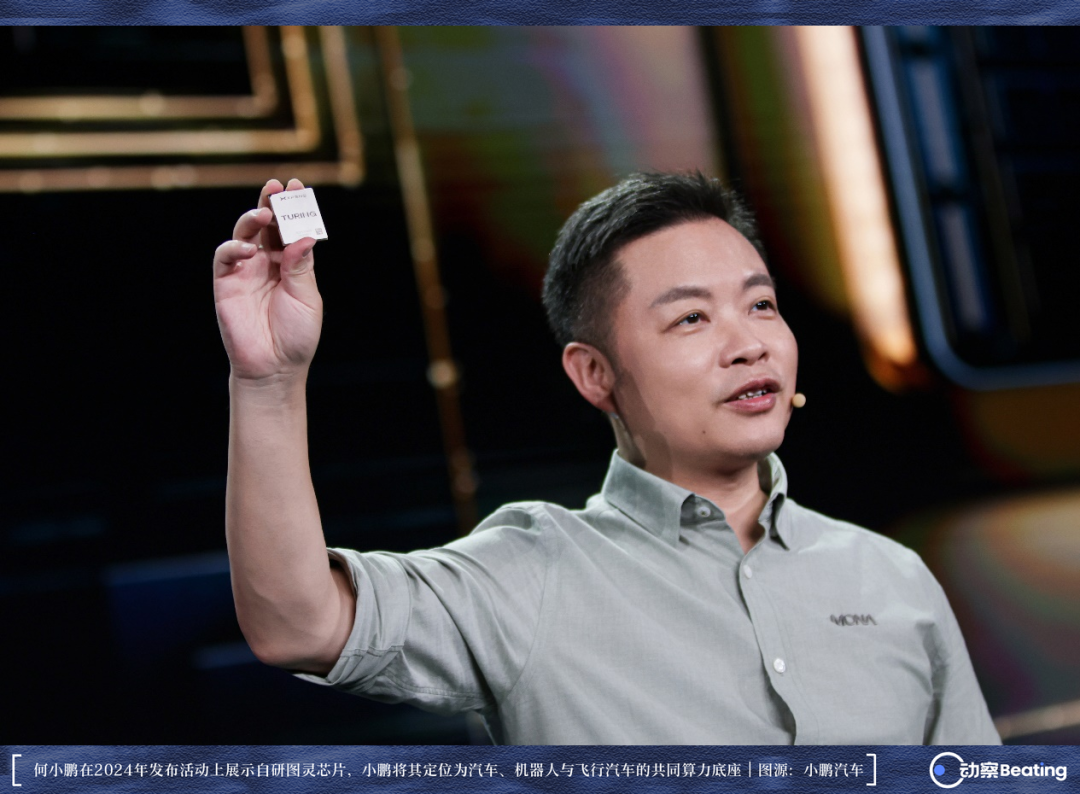
The most easily reusable asset is computing hardware. After in-house chip development succeeded, XPeng's humanoid robot naturally inherited the same computing power; engineering teams could also collaborate horizontally. In early 2026, XPeng merged its autonomous driving center and cockpit center into a general intelligence center, with over 200 engineers coordinating across autonomous driving, robotics, and low-altitude operations.
But the closer one gets to the core of algorithms, the more pronounced the cross-domain barriers become. Automobiles involve planar wheeled motion on structured roads, whereas humanoid robots involve full-body coordination across dozens of degrees of freedom, dynamic gravitational balance, and tactile feedback. The model generality discussed in the industry remains more at the level of data annotation and engineering pipelines; when it comes to motion control algorithms specifically, the architecture still needs to be built anew.
Even end-to-end technology that has matured through vehicle-level validation cannot be directly applied to physical robotic systems.
Li Auto spent several months in closed development in 2024 to get end-to-end intelligent driving working, and Li Xiang once admitted that he previously thought people working in AI were frauds, only becoming fully convinced after seeing the actual vehicle performance.
Li Auto tried to replicate this R&D cadence onto the more complex VLA vision-language-action model, compressing the cycle to half a year, but when deployed to complex operating conditions, the generalization success rate fell noticeably short of expectations, and it subsequently had to pragmatically reduce the proportion of large language models in direct control.
Industry field tests likewise reflect the complexity of reality: higher-order multimodal models with an order of magnitude more parameters have not shown a fundamental gap in fine motion control performance compared with small models that have been specifically optimized, and in some academic benchmarks, the completion rate of closed-loop routes still hovers at low levels.
The hardware is working, but getting a steel body to truly understand the physical world remains a scientific long march that must be tackled head-on.
The Second Monetization
In the report card XPeng delivered in the second quarter of 2026, a brand-new commercial balance was revealed.
During the period, the company's automotive sales revenue was RMB 17.05 billion, up slightly by 1% year on year, with a gross margin of 12.1%; while other revenue, including technology R&D services, reached RMB 2.7 billion, nearly doubling year on year, with a gross margin as high as 75.1%. On this statement, the meager gross profit earned from selling cars and the high returns brought by technical services are almost on par, and the thin margins of traditional hardware manufacturing and the premium of software technology form a sharp contrast within the same company's accounts.
But this external extension of technology's ability to generate cash is still in its early stages.
The external automaker truly paying for it is mainly Volkswagen. A Volkswagen China executive once clearly stated that what Volkswagen pays for is authorization for the overall electrical and electronic architecture and underlying code, while XPeng's most differentiated core intelligent driving and cockpit applications remain independent.
Beyond Volkswagen, there are not many cases among OEMs that can take on large-scale full technology licensing, and another major external gain recorded in the accounts during the same period came from carbon emission credits purchased by Porsche.
The asset-heavy logic of simply selling cars faces a ceiling, and independently capitalizing R&D achievements has become a common choice for automakers.
XPeng's humanoid robot team Pengxing completed an independent spin-off and financing, and even though it has not yet entered large-scale commercialization, it still obtained a post-investment valuation of more than $6.2 billion in the capital market, close to 60% of the market value of its parent company XPeng Motors; NIO similarly spun off its self-developed chip business Shenji as an independent entity, bringing in RMB 2.257 billion in external capital in the first round.
Through independent financing, automakers isolate the cash flow pressure of their parent companies while also finding an external supply pipeline for the long R&D marathon.
The form of assets is changing, and the pricing logic for talent is being restructured accordingly. Li Auto regarded seizing the AI beachhead in early 2026 as a key strategy and quickly adjusted its organizational structure to set up parallel teams. In the battle for technical talent, a group of algorithm and hardware backbone staff plunged into entrepreneurship, and several embodied intelligence startups spun out of automaker teams secured large financing rounds within months. Li Auto subsequently also participated in early rounds of former employees' projects as a strategic investor.
In the flow of capital and talent, the value scale of traditional manufacturing is being rewritten. The pay gap between manufacturing and cutting-edge software algorithms has widened to more than twofold, and salary expectations for top algorithm talent have risen even further. While maintaining its manufacturing foundation, BYD is tilting more resources toward cutting-edge technology R&D; while controlling overall operating costs, Li Auto is doing everything possible to protect its core algorithm budget.
The capital market treats traditional hardware and cutting-edge narratives completely differently. When new vehicle deliveries face brutal industry price wars, the secondary market often reacts cautiously; but once a company demonstrates technical depth extending toward physical AI, capital tends to grant more generous valuation tolerance.
BYD ties its hundreds of billions in R&D focus closely to vehicle intelligence, Li Auto narrows its front to protect core algorithms, NIO participates in frontier incubation through ecosystem investment, and XPeng pushes its technology business and robotics to generate cash independently. Their paths have different emphases, but the underlying logic is the same: under the reality that traditional manufacturing profits are being compressed to the extreme, automakers must learn to complete a second monetization of this technology asset forged with real money within a larger capital and commercial coordinate system.
Four Blank Spaces
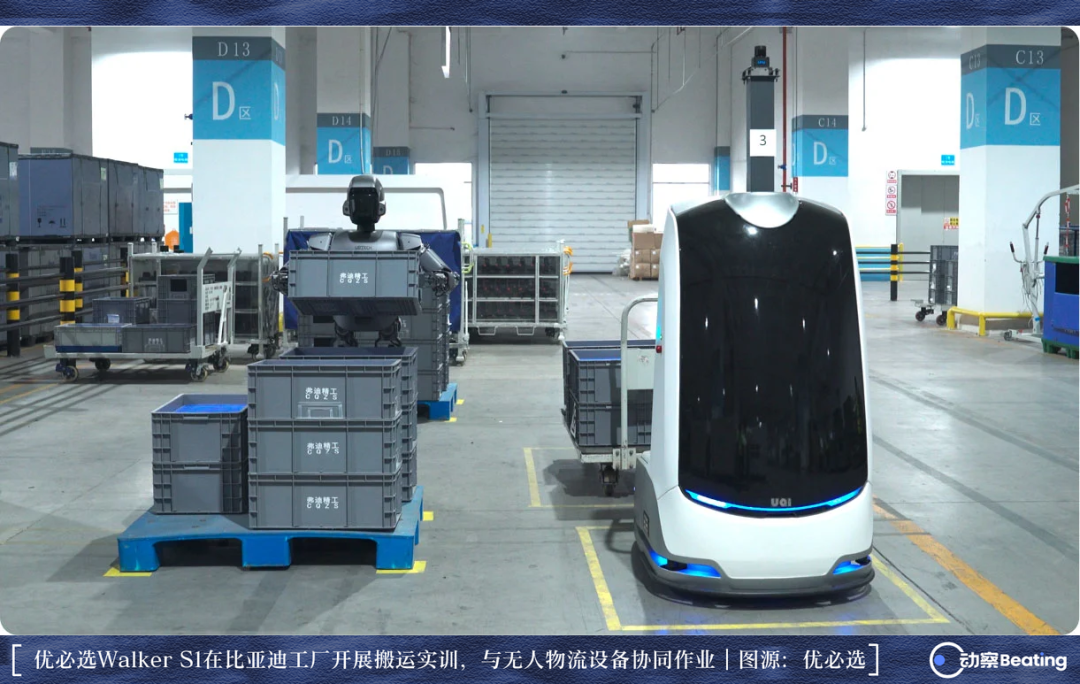
The robot's actual working hours, failure rate, manual intervention rate, and customer payback period—these four core indicators are still difficult to find through public channels across the entire industry.
This is not because companies deliberately conceal them, but because these four sets of data are scattered in the deepest parts of actual production lines, recorded in emergency stop button trigger logs, safety light curtain alarm frequencies, backend engineers' takeover records, and the takt time tables of production line control systems.
Body manufacturers lack the authority to stay on-site long term to read data, and in the early stage of the industry, everyone is more accustomed to using mean time between failures to refer to stability. But this indicator only records the interval between two failures and cannot reflect the actual downtime loss each stoppage brings to the entire production line.
In industrial history, emerging technology equipment moving from the laboratory to the workshop often requires policy mechanisms to pave the way first.
In the spring of 1980, Japan's Ministry of International Trade and Industry led the creation of the Japan Robot Leasing Company (JAROL), turning expensive and uncertain robotic arms into leaseable equipment with monthly fees, with industrial policy picking up the first tab for an unformed market.
Today's scattered computing power centers, local state-owned enterprise centralized procurement, and demonstration application subsidies are, in terms of mechanism logic, the contemporary continuation of this model. Policy sets the stage, enterprises test the waters, and together they provide the initial incubation soil for a frontier technology that may disrupt the future.
But from policy support to genuine endogenous market demand, there is still a clear temperature gap in between.
Among the 218 winning bids in industry statistics for the first half of 2026, orders that truly landed on the front lines of industrial production accounted for just over 20%, with the rest mostly concentrated in prototype testing and scenario validation, and payment collection cycles for some projects stretched to more than a year.
From the financial data, revenue actually earned from working in factories remains thin. Unitree's revenue from industrial scenarios was about RMB 15 million+, accounting for less than 3% of its entire humanoid robot business; of UBTECH's more than 16,000 units shipped, full-size embodied intelligent robots numbered 921, with the vast majority still desktop-level or educational devices; Leju's revenue from industrial scenarios was likewise in the range of several million yuan.
Between intention orders on paper and real fulfillment in harsh industrial sites, there remains a considerable technological and commercial gap.
In contrast to the cautious domestic industrial deployment is the overseas demand shown by customs export data.
Starting in 2026, humanoid robots obtained a dedicated customs tariff code. In the first seven months, cumulative exports exceeded 10,000 units, with a total value of nearly RMB 1 billion, and an average declared value per unit of about RMB 95,000. The largest export destination was none other than the United States, which has the strictest supply chain review. In late summer, Serbia pressed the start button in Šabac for the first humanoid robot factory in Europe invested in by a Chinese company, while around the same time, trade and compliance barriers targeting related intelligent hardware quietly tightened on the other side of the ocean.
The same batch of machines carrying algorithms and motors faces a complex external compliance environment on one hand, while relying on solid supply chain capabilities to enter global markets on the other.
This collective migration toward a new name is not unfamiliar in the history of the technology industry. More than 20 years ago, when the internet wave was at its hottest, more than 100 listed companies across the United States stuffed .com into their names. After the tide went out, the names quickly became ineffective, and what truly remained were optical cables, servers, users, and cash flow.
Today's physical AI will sooner or later undergo the same screening.
Chinese automakers are holding something more tangible. Over the past decade, they have turned massive R&D investment into factories, supply chains, chips, algorithms, and engineering teams. The question now is whether these capabilities can move beyond cars and into robotics, autonomous driving, and more real-world physical scenarios.
Chinese automakers are betting the capabilities built up over the past decade of carmaking on the next industrial revolution.
Over the past decade, Chinese automakers have already won one bet. From an industry that started with subsidies, was rife with subsidy fraud, and was seen by almost no one as likely to survive, they managed to build the world's most complete new energy vehicle industrial system.
Now, they are pushing all the chips accumulated over the past decade onto the next card table.
Welcome to join the official BlockBeats community:
Telegram Subscription Group: https://t.me/theblockbeats
Telegram Discussion Group: https://t.me/BlockBeats_App
Official Twitter Account: https://twitter.com/BlockBeatsAsia
