On October 9, the U.S. Commodity Futures Trading Commission (CFTC) released two documents in opposite directions on the same day. One proposal would write event contracts — such as sports, politics, culture, and weather in prediction markets — into the definition of swaps, while a temporary final rule explicitly kicks licensed sports betting and casino games out of swaps.
In plain terms, a swap is a contract whose payment is determined by an outcome. Under U.S. derivatives law, once a type of contract is classified as a swap, it typically falls under the CFTC's unified regulation, beyond the reach of state gaming licenses and state taxes — this is federal preemption.
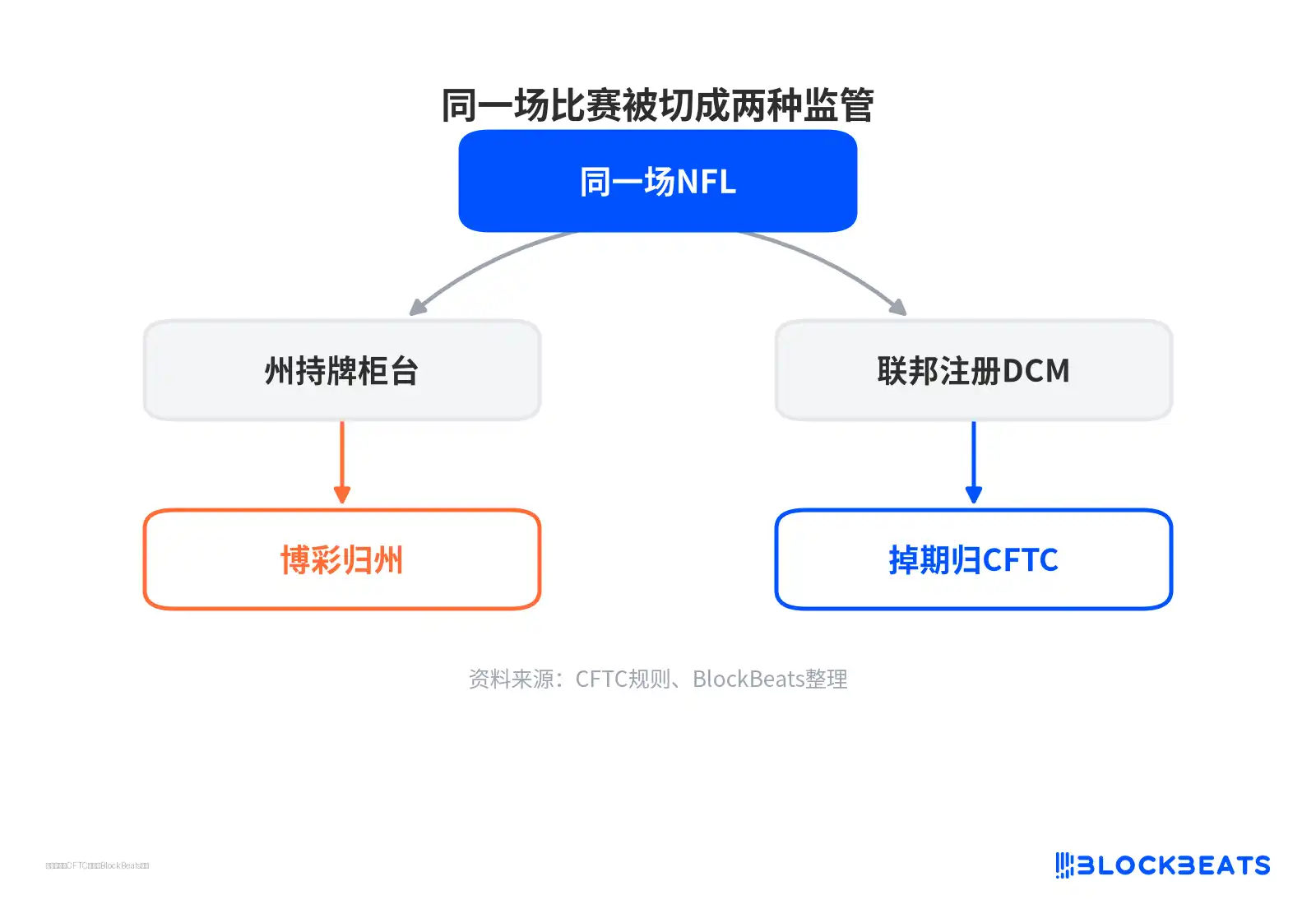
So the core question at stake is who gets to write the rules for the same NFL game: placed at a Vegas counter or inside a DraftKings app, it is state-regulated gambling; placed on a federally registered exchange like Kalshi as an event contract, the CFTC asserts it is a swap.
CFTC Chairman Michael Selig is the only sitting commissioner on the five-seat commission. His position is straightforward: Americans use event contracts to hedge, speculate, and access information, and these products are commodity derivatives within the CFTC's exclusive jurisdiction. Casino-style products, by contrast, are not derivatives.
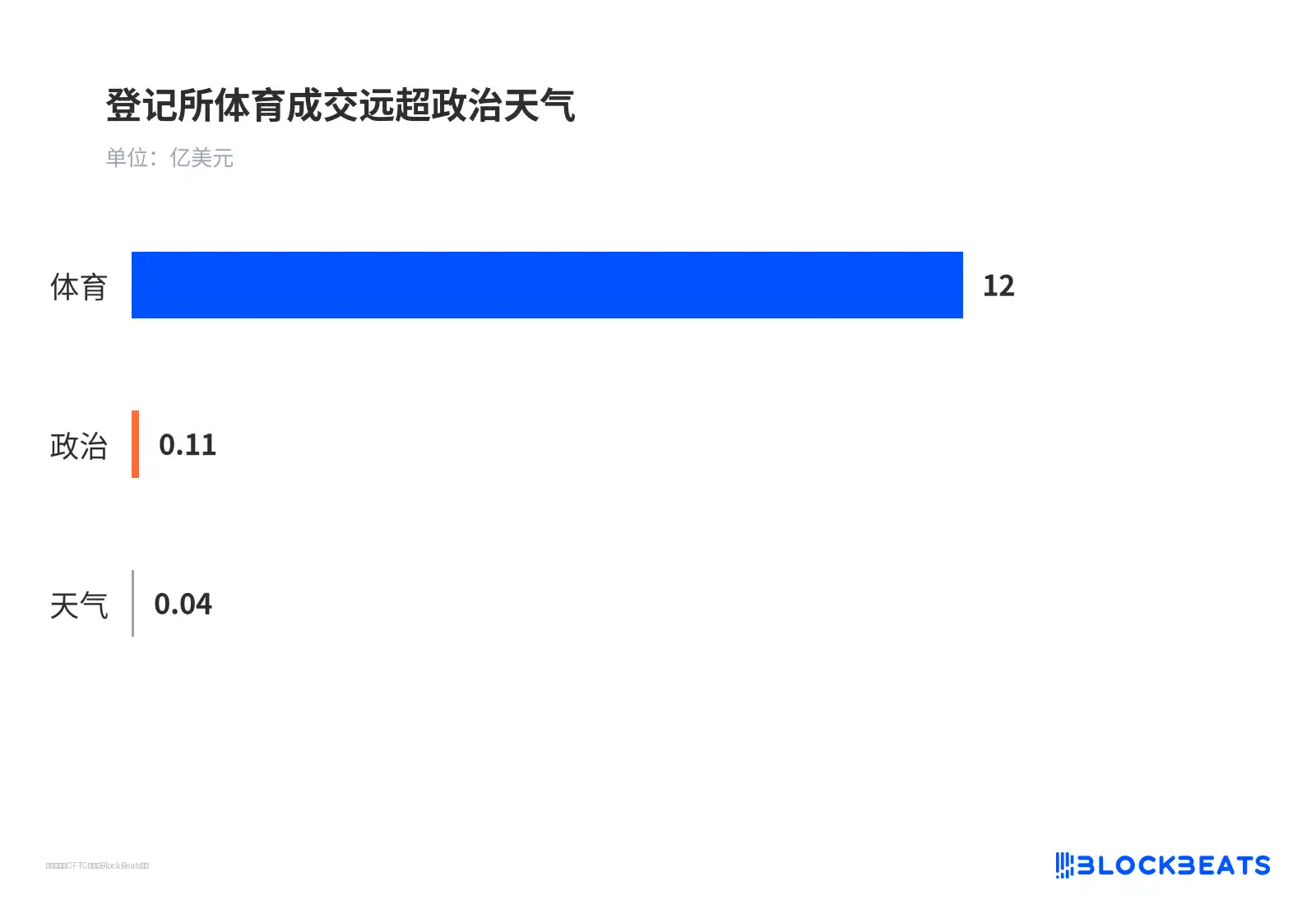
Trading volume is the backdrop to this round of action. The CFTC self-reports that in August, event contracts on U.S. registered exchanges (DCMs) totaled about $1.5 billion, of which sports accounted for about $1.2 billion. Market estimates are far larger: Kalshi and Polymarket combined for about $8.56 billion in trading over a two-day weekend in October, with sports contracts the main source of this surge in volume.
One In, One Out — the Swap Definition Written in Two Directions
The proposal answers what counts as a swap; the temporary final rule answers what does not. The latter draws the line with two tests: only bets offered by licensed state or tribal gaming operators and not matched by a multilateral exchange are excluded — both conditions must be met simultaneously to qualify as casino.
Together, the two boundaries cut sports betting in half—one half stays with the states, the other goes to the federal government. The same sports wager is gambling when placed at a Las Vegas counter, but becomes a swap when placed on a federally registered exchange like Kalshi.
Similar doubts also appeared in the American Gaming Association's court filing: if sports wagers count as swaps, do bets at Las Vegas counters also have to go through a DCM?
TD Cowen policy analyst Jaret Seiberg offers another reading. In litigation, the states have repeatedly argued that the CFTC's classification of event contracts as swaps is too broad a definition and would make bets at state and tribal casinos federally illegal.
The interim final rule first carves casinos out, precisely to dismantle this line of attack in court. Seiberg's judgment is that this step is mainly about improving the legal position; whether it works is another matter.
If this dividing line does not hold up in court, the states can follow the casino thread and pull event contracts back under state law as well.
NFL and 39 states: who should set the rules for the same game
A clear split has already formed in the courts. New Jersey has taken its jurisdictional dispute with Kalshi to the Supreme Court, and the NFL and 39 states plus Washington, D.C., have filed court briefs supporting New Jersey.
The NFL argues that sports event contracts are gambling that creates new risk, not swaps that hedge existing risk, and specifically points out that the CFTC has not banned easily manipulated markets, nor has it covered injury-related markets, referee-related markets, and the 21-year-old threshold. On the first Sunday of this season, prediction market volume was about $3.3 billion, of which $1.8 billion was related to football.
U.S. federal appellate courts are divided by region, and different circuits can issue opposing rulings on the same legal question. Only after a circuit split forms is the Supreme Court more likely to step in. So far this year, three federal circuit courts of appeals have reached opposing conclusions:
Third Circuit (April this year): held that sports contracts on DCMs are swaps and can preempt state law.
Sixth Circuit (September) and Ninth Circuit (August): reached the opposite conclusion, holding that these contracts are not swaps and that state law can apply.
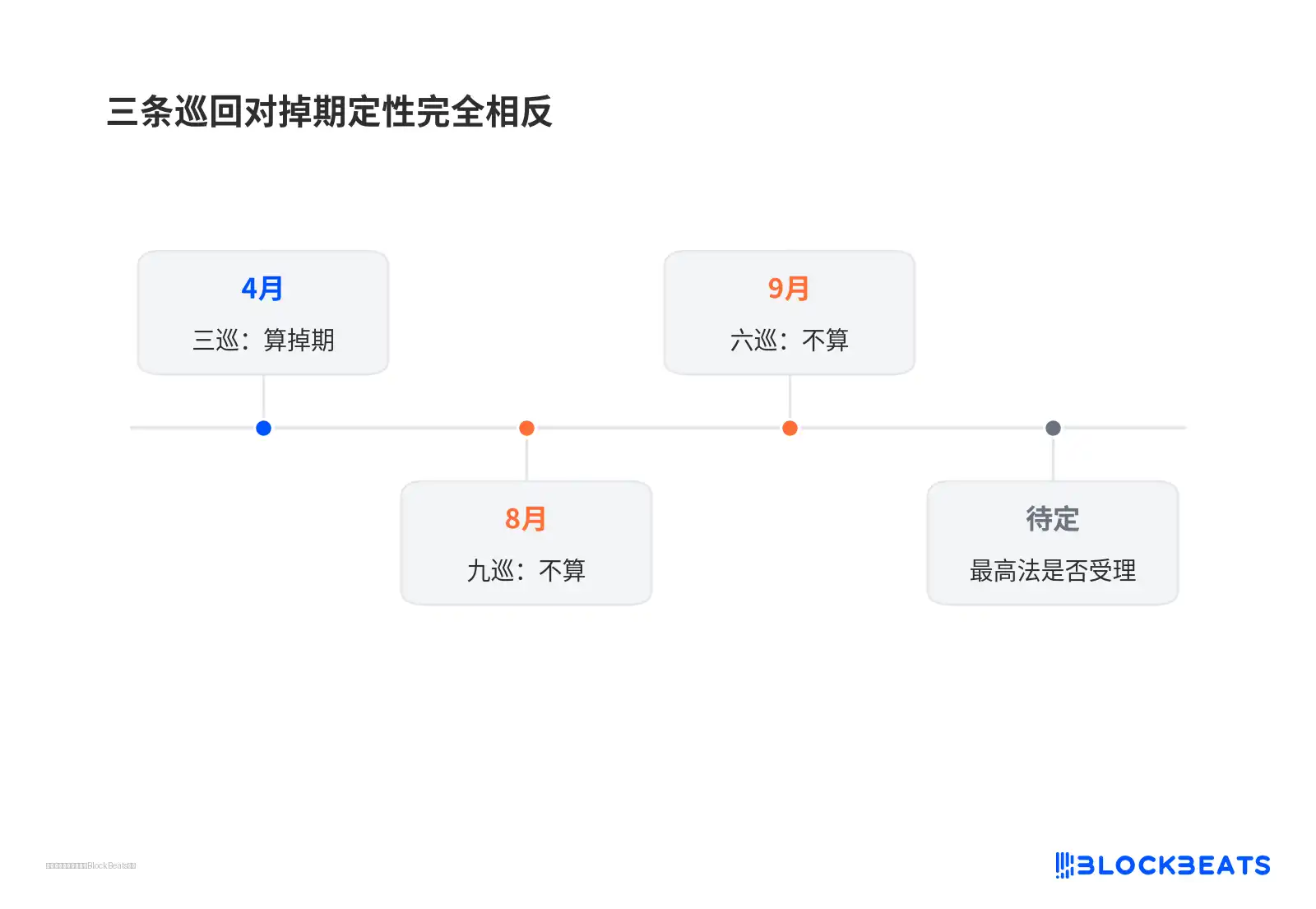
The three circuits each hold their own view, and the same contract may receive opposite characterizations in different jurisdictions. This is precisely why New Jersey wants to send the question to the Supreme Court. Kalshi's response deadline is November 9, and the Supreme Court has not yet decided whether to grant certiorari.
Rules not yet effective, variables lie with the courts and commission seats
As of now, neither document has appeared in the Federal Register. The comment period for the proposal runs 30 days from the date of publication, and the interim final rule likewise must be published before it takes effect. To describe it now as "open for comment" or "already in effect" would both be inaccurate.
The more critical variable lies with the courts. New Jersey's petition places the split between the Third Circuit and the Sixth and Ninth Circuits before the nine justices, and there is still no word on whether it will be heard. An administrative rule can reinforce the arguments for the Third Circuit's template, but the final authority to interpret the text rests with the judges.
Selig is the only sitting commissioner on the five-seat commission. Advancing rules under a quorum deficit is legally defensible, but the checks and balances are thin. Once the commissioners are filled in, or if the courts do not accept this set of definitions, today's talisman could all be rewritten.
In this round of contention, the regulated protagonists have instead been quiet. Kalshi and Polymarket have so far made no public statements on the record.
Welcome to join the official BlockBeats community:
Telegram Subscription Group: https://t.me/theblockbeats
Telegram Discussion Group: https://t.me/BlockBeats_App
Official Twitter Account: https://twitter.com/BlockBeatsAsia
