On October 13 during Asian trading hours, Bitcoin briefly fell below $81,000 before recovering above $83,000 within hours. Over the same period, South Korea's KOSPI closed down 5.46%, with Samsung Electronics and SK Hynix plunging roughly 7% and 9% to 10% intraday respectively. The crypto market quickly framed this divergence between price and Asian tech stocks as a "decoupling."
But stretching the timeline to a week, the picture is not consistent. From October 5 to 9, U.S. spot Bitcoin ETFs saw combined net outflows of about $681 million, the largest weekly outflow since June, with Fidelity's FBTC leading declines at about $380 million. Prices held firm between $83,000 and $84,000, yet capital was leaving over the same period.
Net outflows from spot ETFs mean holders are redeeming shares for cash, and the fund must sell its Bitcoin to meet redemptions — it is the yardstick for judging whether price and capital flows are in sync. Perpetual contract liquidations, on the other hand, occur when accounts that borrowed to bet on direction have insufficient margin and are forcibly closed out, amplifying price volatility without bringing in new spot buying.
A Rebound Propped Up by Liquidation Short Covering
In the early hours of October 13, Bitcoin first fell below $81,000, while the KOSPI plunged over the same period due to a valuation pullback in chip stocks. Contract data shows that roughly $800 million was liquidated over the surrounding 24 hours, with longs accounting for about 86%, and open interest (total contract positions) declining in tandem, consistent with deleveraging rather than new capital entering.
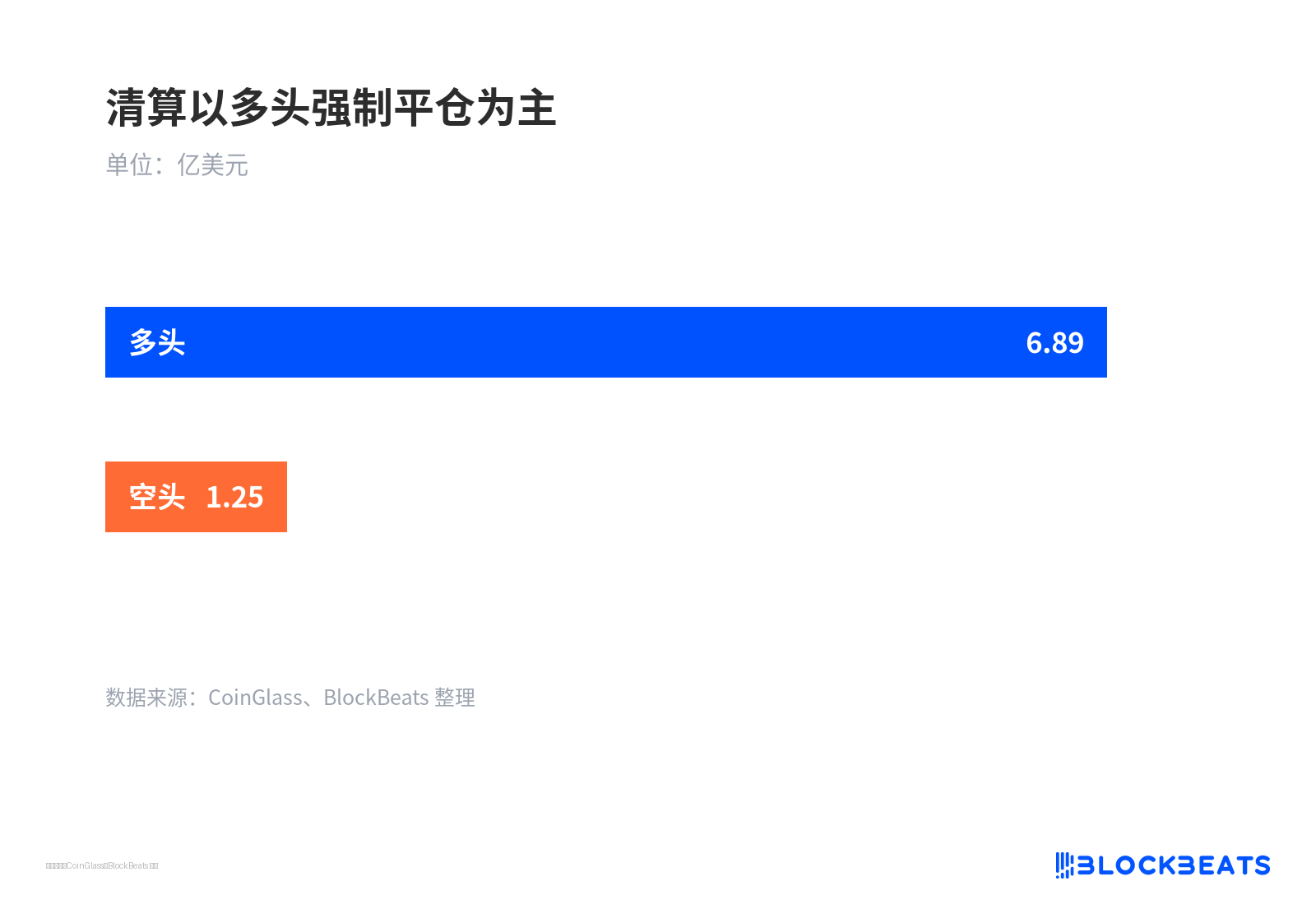
The liquidation structure itself also explains the source of the rebound. What was washed out was mainly longs betting on gains, and after prices bottomed, short covering took over to push prices higher, which explains why Korean stocks continued to fall while Bitcoin was able to recover $83,000. In the same window, tokenized perpetual contracts linked to chip stocks also saw large liquidations.
In other words, there was indeed short-term support near $81,000, but that support came from passive liquidation of leveraged accounts, not new institutional buying in the spot market. One rebound in the Asian morning session is still not enough to support the conclusion of a "permanent decoupling."
ETF outflows and Strategy's symbolic add-on purchase
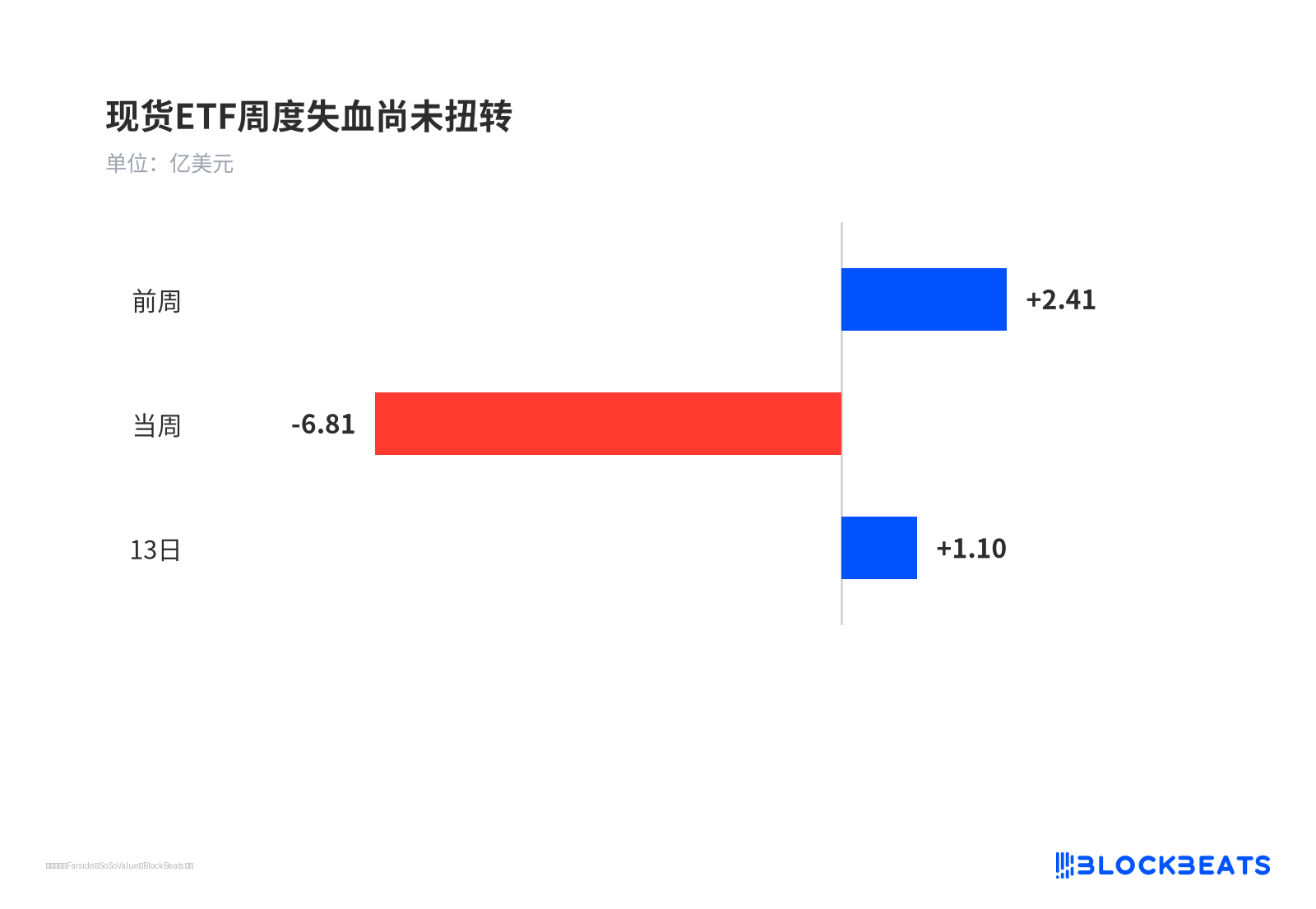
The evidence from fund flows is more honest than prices. After a net outflow of $681 million last week, about $65.4 million flowed out again on October 12, and only on October 13 did mixed daily data show about $110 million. Weekly outflows cannot be placed side by side with single-day prices as cause and effect, but the direction is consistent: the institutional pipeline is still losing blood.
Strategy's behavior is also worth a closer look. The company's October 12 announcement showed that from October 5 to 11 it purchased only 250 bitcoins at an average price of $86,194, for a total expenditure of about $21.5 million. During the same period, funds used to repurchase preferred stock STRC amounted to about $192.4 million, nearly nine times the amount spent on buying coins.
250 coins was one of Strategy's smallest weekly purchases this year, whereas previous single-week purchases had been far above that level.
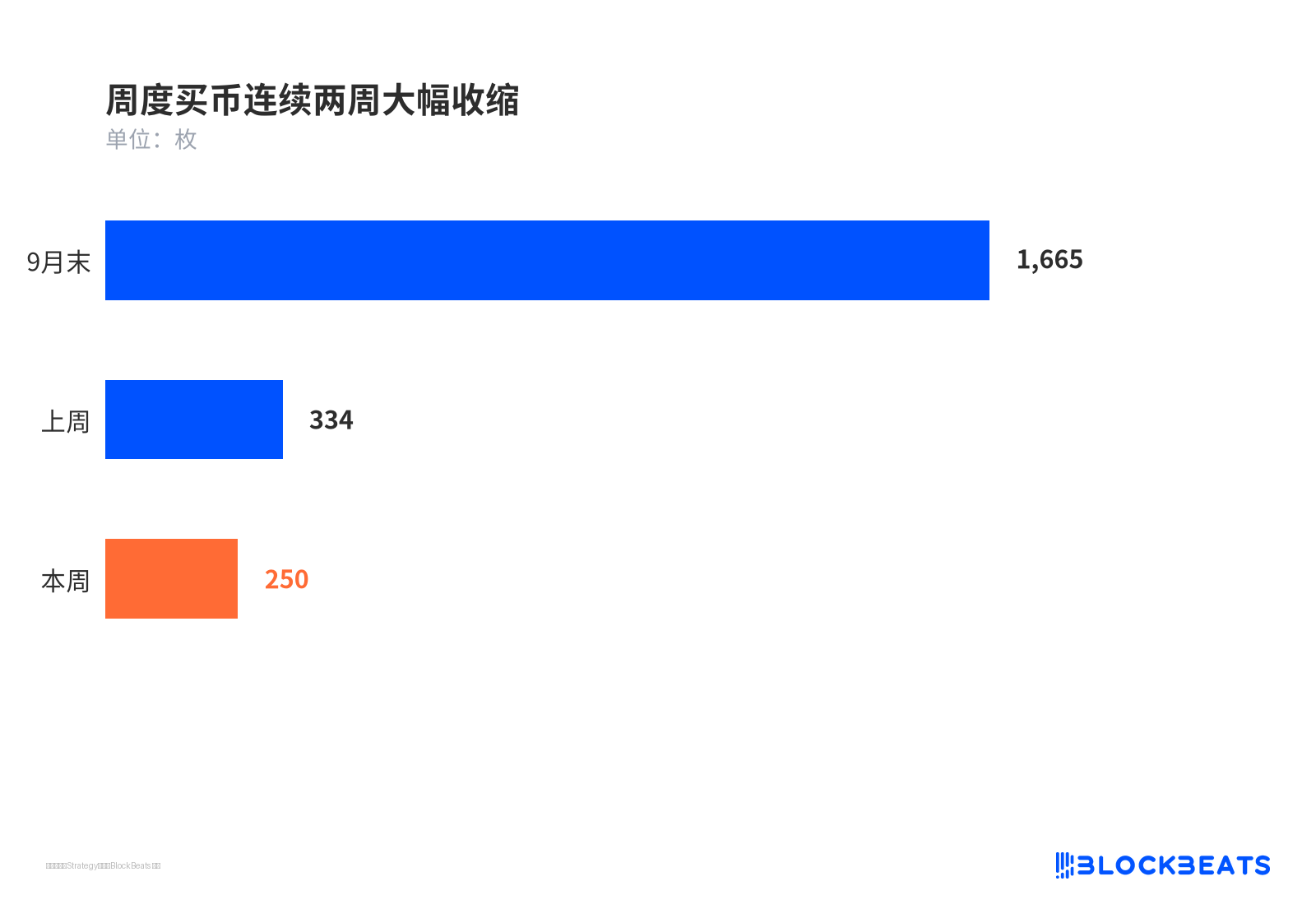
It looks more like a narrative signal to maintain "always buying" rather than capital evidence of a cyclical turning point. Reading it as "aggressively bottom-fishing" would overestimate the fundamental support for this rebound.
Saylor's $100,000 target and MSCI's removal risk
On October 13, Saylor said in an interview with Bloomberg at DC Fintech Week that the Bitcoin bear market had ended slightly below $60,000, that it would return above $100,000, and gave an expected annualized growth rate of 20% to 30% over the next several years. As the head of the largest corporate bitcoin holder, he is the most steadfast bull in this market.
On one side of the standoff is MSCI. The index provider launched a consultation in August on "non-operating companies," with feedback due by September 30 and results expected no later than October 16. Under its simulation criteria, companies primarily holding financial assets are closer to investment vehicles than operating companies, and Strategy, Metaplanet, and others could be removed from global investable indexes.
The weight of this rule lies in passive flows. Once excluded, funds tracking MSCI can only sell under their mandates and can no longer add to positions. JPMorgan estimated in 2025 that Strategy faced roughly $2.8 billion in potential passive selling pressure. Saylor called the $80,000 range the starting point of a new bull market, while MSCI's questionnaire framed the same level as an index identity crisis.
CPI and MSCI determine the upper and lower bounds of the range
Bitcoin remains stuck in a range of $81,000 to $84,000, well below last year's all-time high. The rebound occurred below the market's estimated institutional cost basis and after a week of redemptions — a position that leaves it inherently under pressure.
The September CPI report due on October 14 is the first test of the range's upper bound. Analysts expect a year-over-year reading of about 3.6% to 3.7%, up from 3.4% in August. If the core reading comes in cool, short covering could push prices toward $86,000 to $87,000. If it runs hot, $81,000 or even $80,000 will be tested again.
Even if MSCI's results land on October 16, the passive selling pressure won't actually be executed until the November index rebalancing.

What needs watching is whether MSTR's premium to Bitcoin narrows, and whether subsequent daily ETF flows can turn consistently positive. Only these two signals will determine whether this rebound is a mechanical repair within the range or a sign that capital flows have shifted back to the bulls' side.
Welcome to join the official BlockBeats community:
Telegram Subscription Group: https://t.me/theblockbeats
Telegram Discussion Group: https://t.me/BlockBeats_App
Official Twitter Account: https://twitter.com/BlockBeatsAsia
