On October 13, Goldman Sachs, JPMorgan Chase, Citigroup, and Wells Fargo released their third-quarter scorecards for the period ended September on the same day. All four posted year-over-year net profit growth, with Goldman Sachs reporting net revenue of $18.68 billion, up 23% year over year, and Citigroup earnings per share of $2.85, above the $2.66 expected.
Yet share price performance on earnings day diverged from the results. The KBW Bank Index fell another 1.40%, most of the four banks closed lower, and Citigroup led the decline. The market had originally expected earnings to bring a recovery, but stocks delivered a rejection first.
These earnings were supposed to answer two questions. Did the bond market selloff hurt bank profits, and can the U.S. consumer still hold up? The headline answer was "no damage."
The disagreement lies in what is being priced. The market is not trading how much more was earned this quarter, but whose profit center can still be defended under the next stretch of interest rates.
Bank stocks fell before earnings
The decline in bank stocks did not begin with the earnings release. The KBW Bank Index peaked at 195.55 on August 17 and closed at 169.02 on October 13, a pullback of about 13.6% from its high.
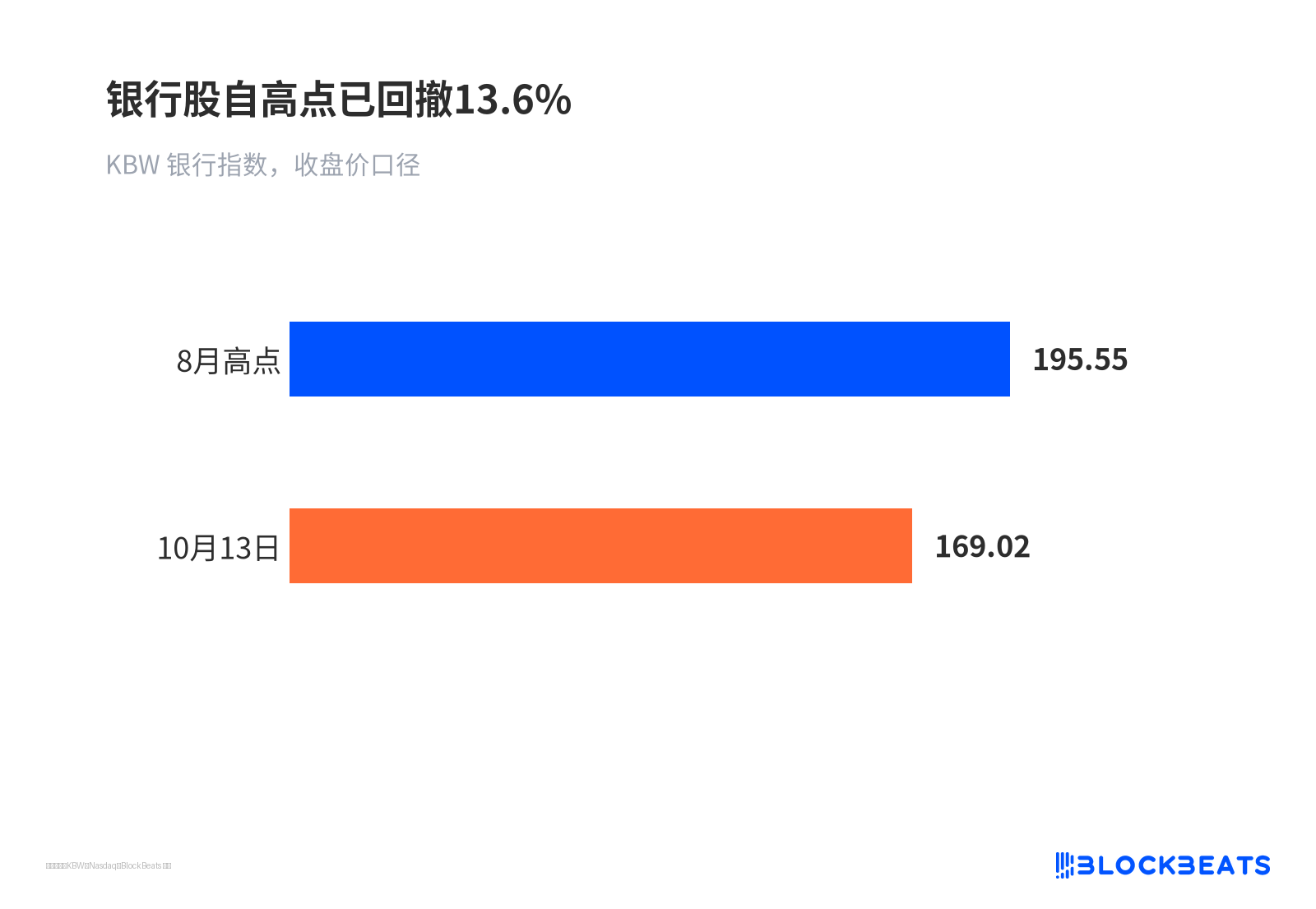
Over the same period, the 10-year U.S. Treasury yield briefly rose above 5.3% last week, near multi-year highs, and rate futures pricing for the Federal Reserve's subsequent path also moved higher.
Rising yields hit valuations first, and earnings only provided after-the-fact confirmation. The market priced in higher rates before the results were released, and earnings could only change the direction of divergence, not the overall direction.
Fixed income was pressured, equity financing stepped up
The clearest signal this quarter came from the divergence within trading divisions. Goldman Sachs' equities business revenue was $6.44 billion, up 72% year over year, of which financing revenue reached a record $3.37 billion, surging 96% year over year.
In the same period, FICC (Fixed Income, Currencies and Commodities — the business line where banks buy and sell bonds, currencies and commodities for clients, earning spreads and financing fees) revenue was $3.47 billion, roughly flat and below market expectations of about $3.7 billion.
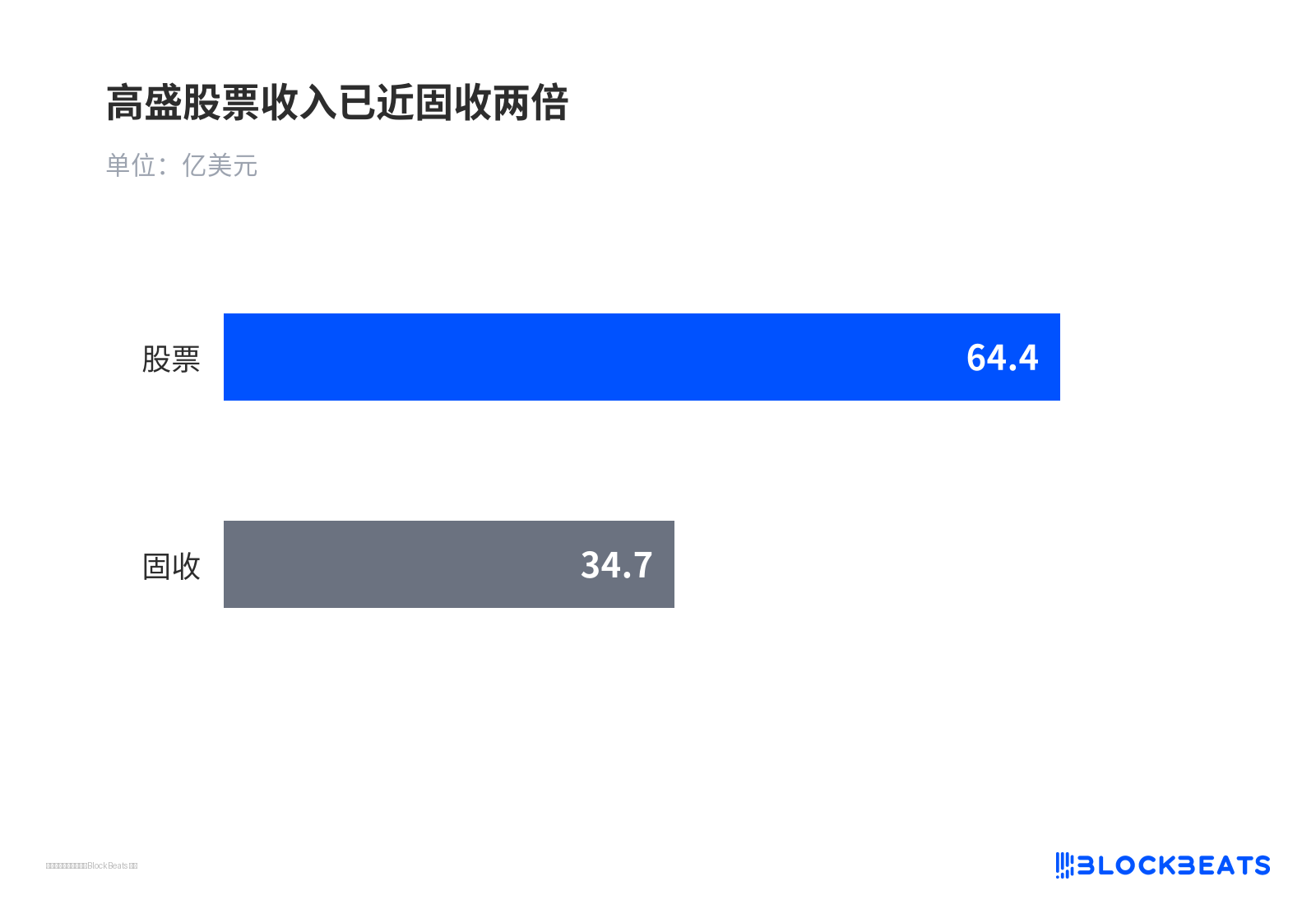
JPMorgan is moving in the same direction. Equities trading revenue was about $5 billion, up 49% year-over-year, while fixed income trading fell 4% to about $5.4 billion. Bloomberg data shows that the five largest U.S. banks' equities business revenue for the first nine months is on track to exceed $66 billion, about $3 billion higher than their bonds, currencies and commodities divisions, potentially marking the first time equities have overtaken fixed income on a full-year trajectory.
That framing still needs caveats. It is an industry aggregate of nine months across five major banks, and Bank of America and Morgan Stanley have yet to report, so it is hardly an industry-wide certainty.
Where does the money for equities financing come from? It is essentially lending cash and securities to hedge funds for long and short positions, charging based on balances, and earning from volatility rather than commissions. Pressure on traditional businesses is concentrated at Wells Fargo. Net interest income (NII — the spread income from loan interest received minus deposit interest paid) was $12.52 billion, up 5% year-over-year but still missing expectations, while credit provisions rose to $1.03 billion.
Consumers haven't cracked yet; succession chatter is a sideshow
Consumers remain the most important buffer for now. JPMorgan Chairman and CEO Jamie Dimon said the economy is still driven by corporate capital expenditure and consumer spending, with credit card spending up 10% year-over-year and more than 650,000 new checking accounts added.
But he warned that fiscal deficits, sticky inflation, elevated asset prices, rising rates and geopolitical risks are "moving beneath the surface," and banks need to prepare for multiple scenarios, which is why the bank reduced buybacks and retained capital this quarter. Wells Fargo CEO Charlie Scharf said customers remain in good shape, though inflation and high rates are headwinds.
On governance, there is another source of noise. Goldman CEO David Solomon said on the earnings call that there is no ongoing succession transition or timeline. The Wall Street Journal previously reported that the board had discussed the possibility of COO John Waldron taking over as early as next year, with Solomon moving to executive chairman for one to two years. This is a routine governance discussion and not directly tied to these results, but it will become a discount factor in Goldman's valuation.
Valuations have already priced in "higher for longer"
The valuation multiples of the banking sector are themselves reflecting the rate path. The KBW bank index currently trades at about 10.9 times forward earnings, versus about 19.3 times for the S&P 500.
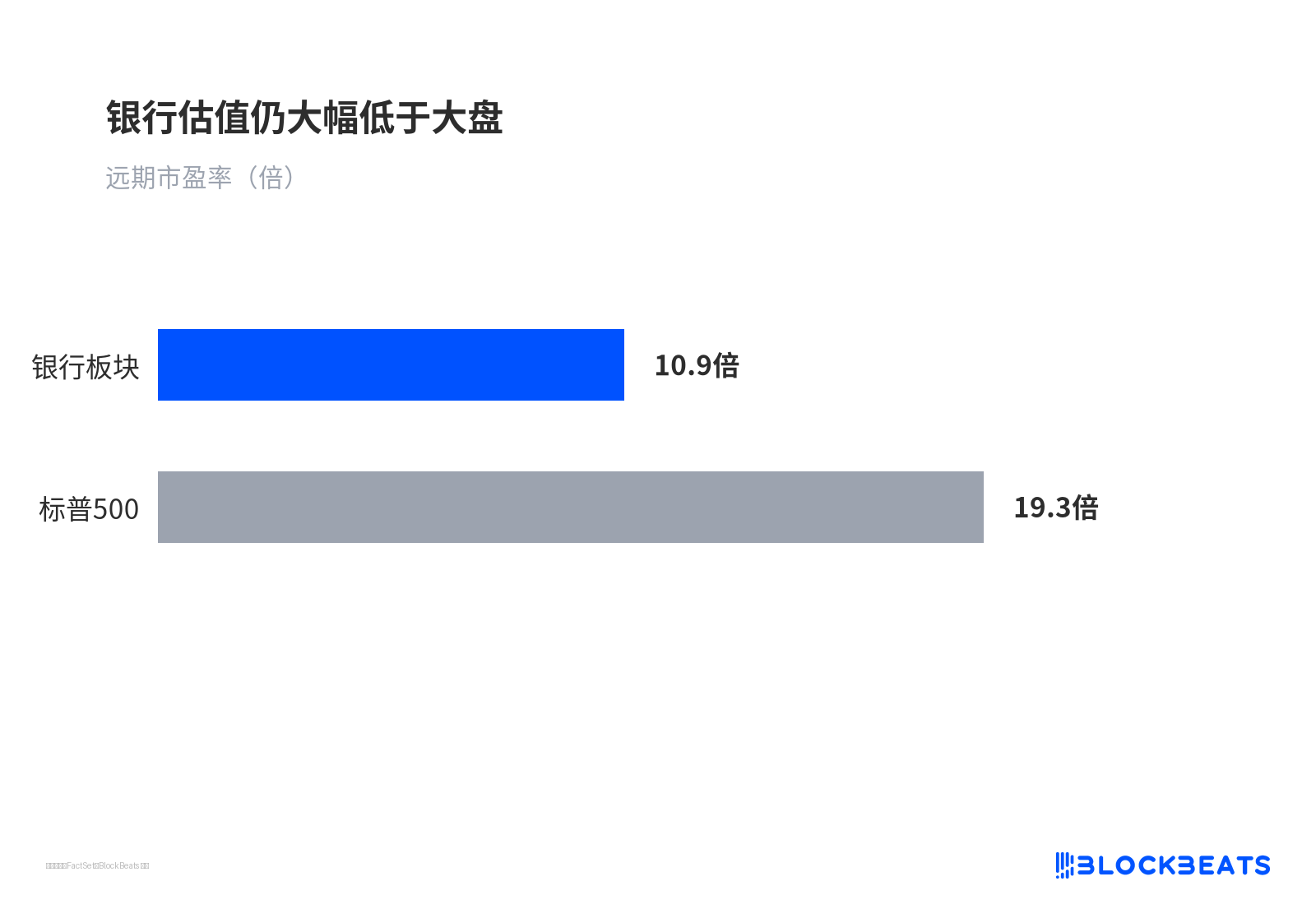
Citi trades at a forward P/E of about 10.4x and a price-to-book ratio of about 1.3x, while Wells Fargo's price-to-book ratio is about 1.8x.
This discount means that even if return on equity (ROE) can be maintained at around 15%, a higher discount rate will压低 the reasonable valuation center. This is the source of "decent earnings, stagnant stock price."
Market disagreement is also concentrated here. Wells Fargo Securities' Mike Mayo believes the market's panic trade over AI is overdone and that banks' deposit moats remain intact. Truist's Brian Foran pointed out that financial stocks' relative performance versus the S&P 500 in September was among the worst since 1990, and the selloff may have gone too far. Neither turned bullish on fundamentals; they merely judged that the discount was excessive.
Rate endpoint and credit costs determine re-rating space
Two things remain unverified. Whether yields will continue to rise, and whether credit costs will lag and climb alongside balance sheet expansion.
The Fed's published dot plot shows a median federal funds rate of 4.1% by the end of 2026, while rate futures price a higher path, with institutional target ranges for the 10-year Treasury broadly around 4.75% to 5.5%.
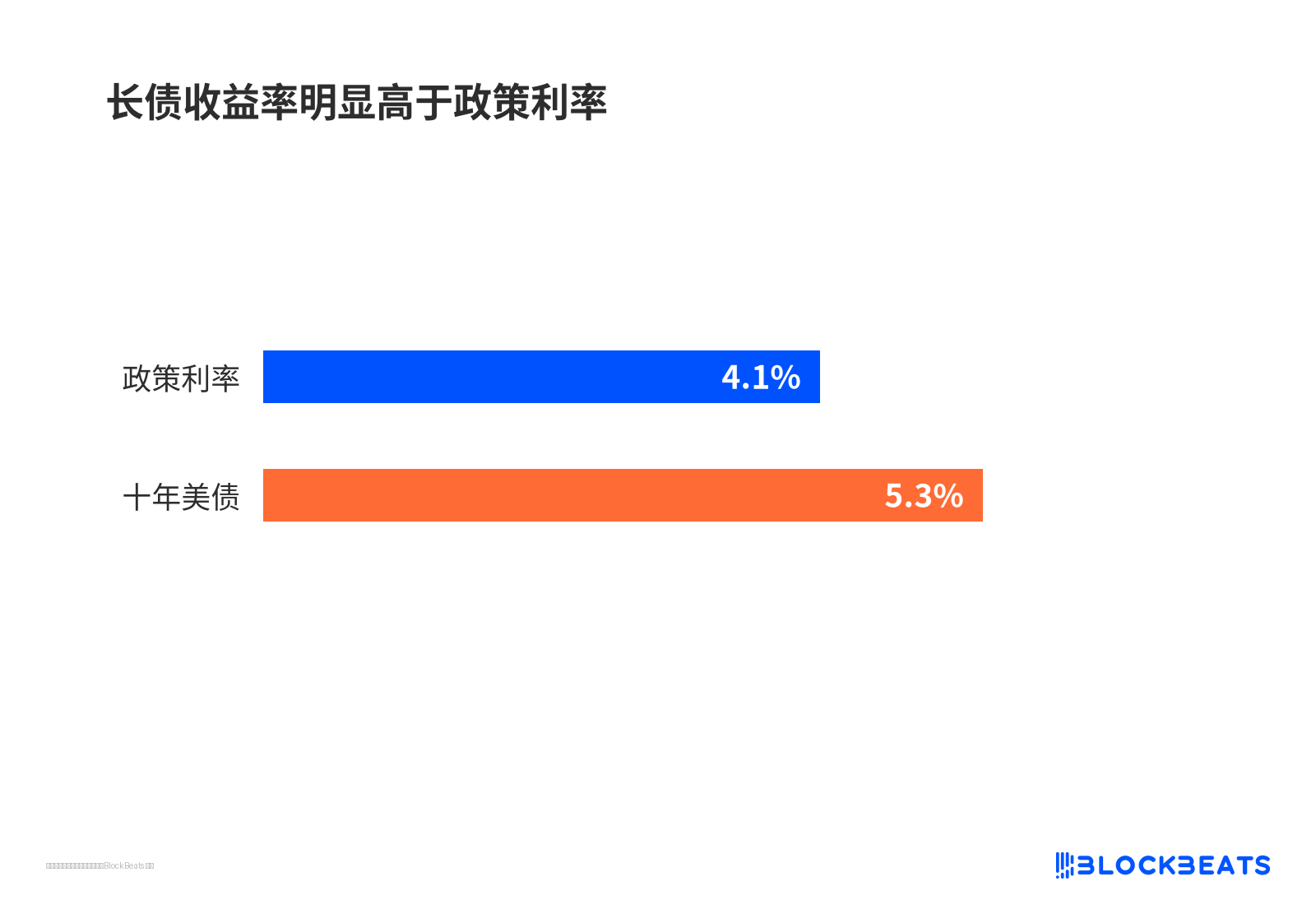
If yields stabilize at current levels, the stickiness of equity financing may support the ROE center. If they continue to surge, pressure on net interest income and credit quality will gradually emerge.
Bank of America and Morgan Stanley's October 14 earnings will push "equities overtaking fixed income" from the nine-month trajectory of the five major banks toward industry-wide validation. For now, a single quarter's windfall in equity trading is not enough to call it the starting point of a new investment banking cycle, and Citi's one-day plunge does not equal a failed transformation. What determines the next phase of re-rating space is still the rate endpoint and how much longer the consumer buffer can last.
Welcome to join the official BlockBeats community:
Telegram Subscription Group: https://t.me/theblockbeats
Telegram Discussion Group: https://t.me/BlockBeats_App
Official Twitter Account: https://twitter.com/BlockBeatsAsia
