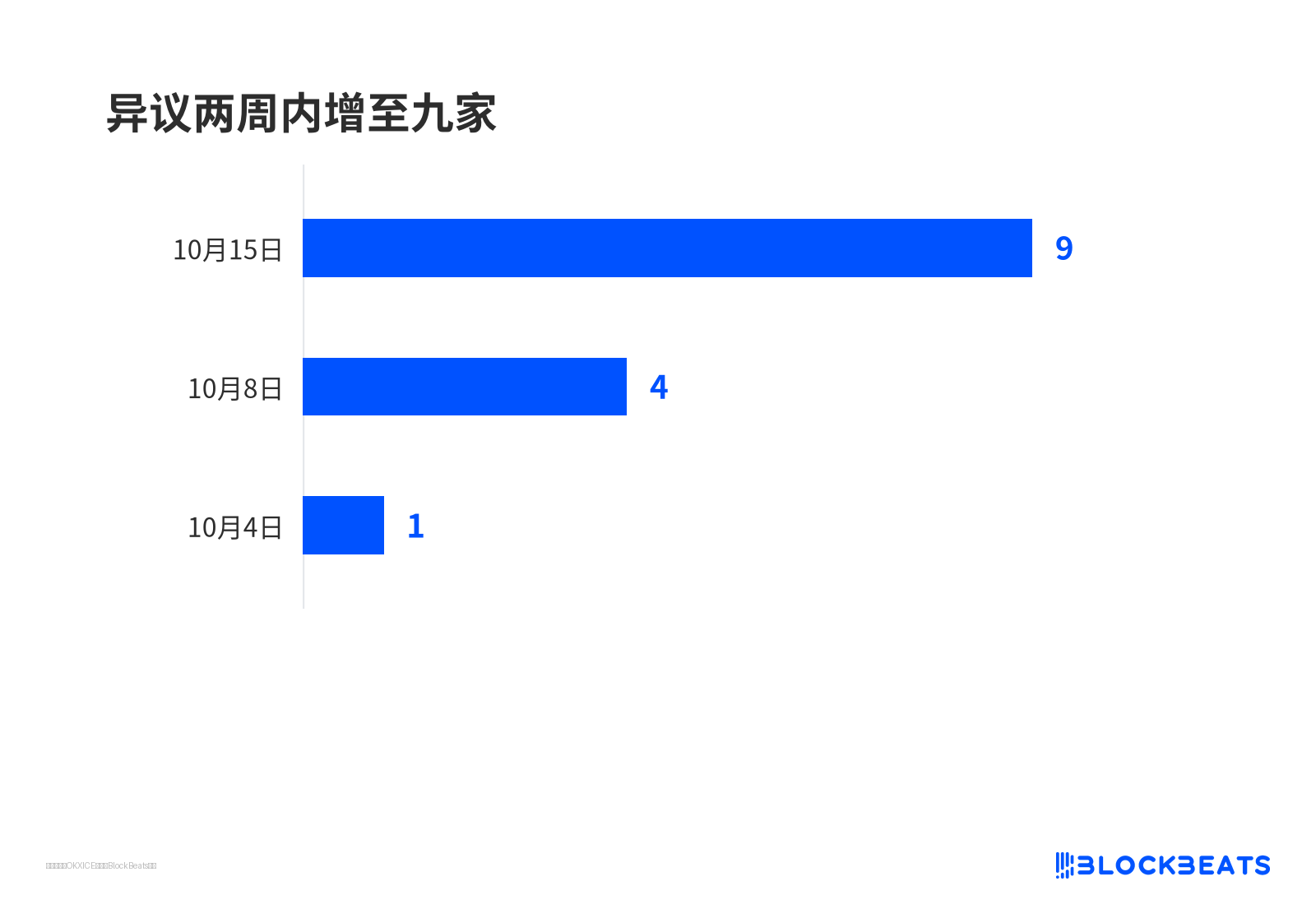
On October 15, OKXICE updated its public notice, confirming that nine U.S. stock issuers had filed written objections to its plan to tokenize their shares, including Broadcom, Verizon, UnitedHealth, CoreWeave, and Applied Optoelectronics, plus Cerebras, which had previously stated its position. The platform originally planned to list 63 U.S. stocks in the first batch.
OKXICE is registered in Texas and is 50/50 owned by Intercontinental Exchange and OKX; the former is the parent company of the New York Stock Exchange. After the SEC granted a five-year temporary channel on September 17, it was among the earliest and largest batch of applicants, and the market at one point read this as direct endorsement of on-chain equities by traditional finance.
The first batch of opposing votes, however, came from the stock issuers themselves.
The SEC's "innovation exemption" frees tokenized securities trading venues (TSVs) from full exchange registration, with a grace period through September 17, 2031. The price is that tokens must carry equivalent dividend and voting rights, cannot be synthetic exposure, and there are volume caps for single underlying assets.
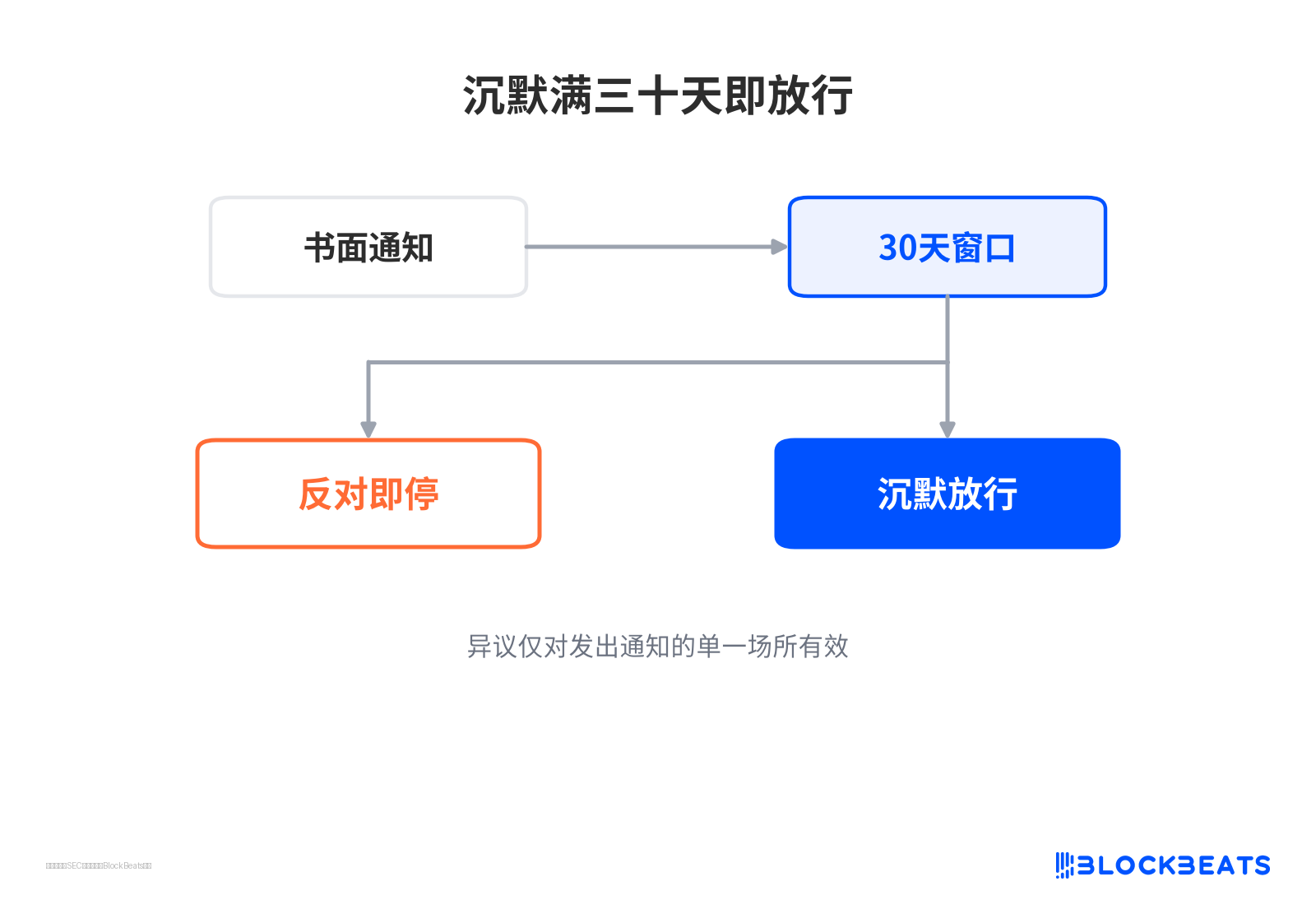
The most important rule is that before each stock is tokenized, the venue must notify the issuing company in writing and wait a full 30 calendar days. During that period, if the issuer objects in writing, the venue cannot list that stock. The nine companies did not bypass regulation; they pressed the switch the SEC built into this exemption.
A veto binds only one venue; silence means clearance
Among the nine, only Applied Optoelectronics (AAOI) publicly explained its reasoning. A company spokesperson told The Wall Street Journal that it was uncertain about the impact of tokenization on its share price, liquidity, and volatility, and worried that investors might mistake unendorsed third-party tokens for products issued by the company itself, adding that it "sees no clear benefit to Applied Optoelectronics or its shareholders."
The other eight did not publicly explain their motives, and there is no evidence that they acted in coordination.
An objection is only valid for the one venue that filed it; to block another platform, a separate written objection must be filed. Conversely, failing to respond within the 30-day window is tantamount to allowing that platform to list its stock by default.
So "nine firms vetoing tokenized U.S. stocks" is not accurate; based on what we've seen, it only shows that "nine firms vetoed the same platform."
Nasdaq opts out, calling it a shadow market
Nasdaq's move is more drastic, though in the opposite direction. In its issuer guidance updated on September 29, Nasdaq Inc. stated it intends to withdraw its own stock from the TSV track.
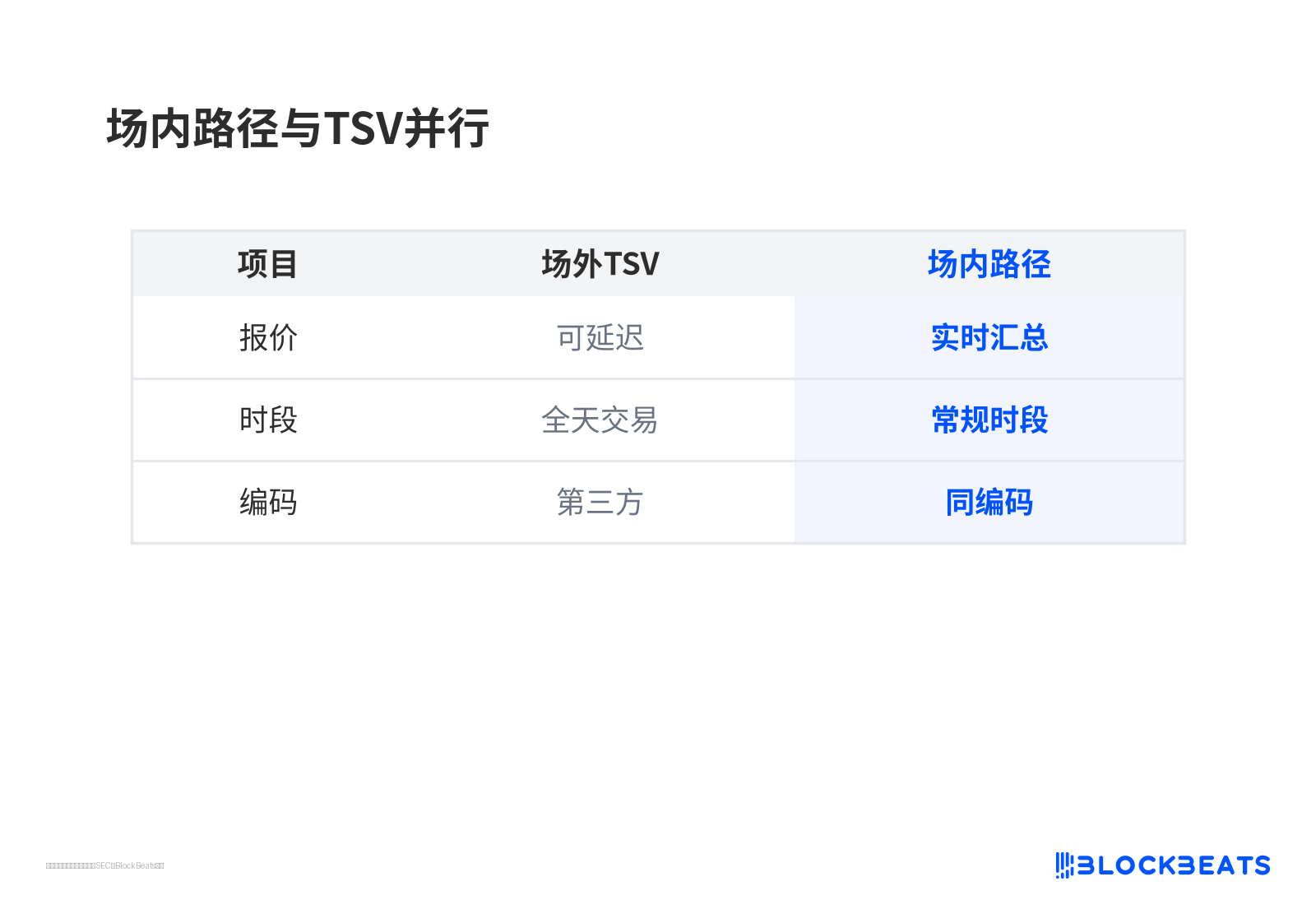
The guidance cited the reason that such venues are not required to display best quotes in real time, are not required to report to the consolidated tape, and can delay trade publication by ten minutes — "this effectively creates a shadow market for stocks that may be disconnected from the broader market in pricing and transparency."
The underlying rules of the U.S. stock market — the National Market System — require all venues to consolidate best bid and offer in real time, with every trade entering the consolidated tape. This is the precondition for retail investors to get roughly uniform prices across different brokers, and TSV is exempted from it.
Thus it can be 24/7, settled in stablecoins, and deployed in automated market-making pools. That is exactly OKXICE's approach, with permissioned pools running on XLayer.
Nasdaq does not oppose tokenization itself; it takes another path, where tokens and common shares share the same securities identifier and sit on the same order book.
Intercontinental Exchange is more subtle: it holds a stake in OKXICE, the off-system track, while simultaneously advancing on-venue tokenization through the NYSE.
Volume caps and no leverage limit how much volume TSV can capture
OKXICE told The Wall Street Journal it still plans to launch dozens of names, including Nvidia, Apple, Microsoft, Amazon, and Tesla. The platform said issuer concerns are within expectations.
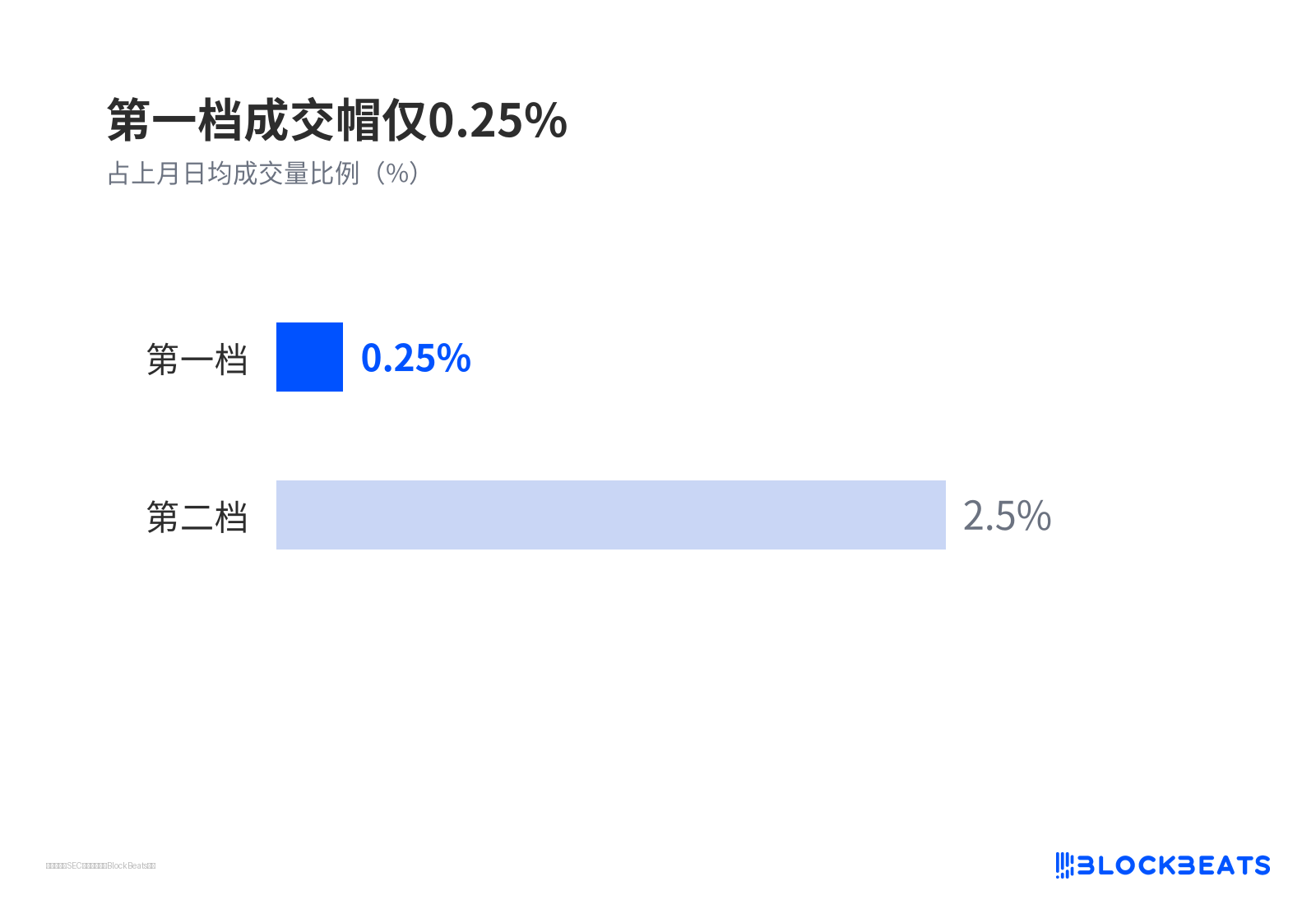
The limits are written into the exemption text. Tier one allows a maximum of 75 names, with single-name volume not exceeding 0.25% of the prior month's average daily volume. Tier two allows a maximum of 250 names at 2.5%.
Excluding leverage, lending, and staking, trade data may be disclosed with a ten-minute delay.
Some market analysts argued in late September that such venues are not bound by order protection rules, and prices across multiple market-making pools may diverge from exchanges. With a 0.25% execution cap, off-hours sessions, and no leverage, the design simply cannot compete with the national market system.
What to Watch in the Next Round of Notices
What is confirmed now is only the first round—about eight of 63 were removed, and the platform says the rest continue. To judge whether this is noise or a trend, several things that have not yet happened must be watched.
When other TSVs send notices to the same group of companies, will these nine reject again, and will new large-cap issuers follow suit? Whether the 30-day window has fully run its course for the remaining names, and the list may still grow longer.
When the exemption expires in five years, will the permanent rule maintain "no response means consent," shift to requiring issuer authorization by default, or make issuer consent a precondition? This determines whether third-party tokenization is a standard channel or an exceptional arrangement.
There is also a comparison line: how much real execution volume can the same-code on-exchange path at Nasdaq and NYSE generate? If it proves that transparency and efficiency can coexist, TSV's 24/7 and stablecoin settlement come closer to a retail gateway rather than new market infrastructure.
Welcome to join the official BlockBeats community:
Telegram Subscription Group: https://t.me/theblockbeats
Telegram Discussion Group: https://t.me/BlockBeats_App
Official Twitter Account: https://twitter.com/BlockBeatsAsia
