SanDisk delivered an unusual earnings report. On October 29, the memory chip company announced results for the first quarter of fiscal 2027, with revenue once again setting a new high over the prior quarter, while also announcing a stock split and a large-scale buyback.
There is a more intriguing shift within the report. Many people know SanDisk for the memory cards in cameras and the portable hard drives beside computers. But this quarter, the biggest contributor to new revenue growth was the data center. Revenue from the retail consumer business actually declined.
SanDisk CEO David Goeckeler attributed the faster growth in the data center segment to strong and expanding product demand in the earnings announcement. Reading further into the report, this round of growth also carries implications in terms of pricing, customer mix, and cash collection methods.
Where does the growth come from?
According to SanDisk's earnings report, revenue in the latest quarter reached $11.031 billion, nearly 4.8 times the year-ago period. Behind this figure, changes across customer categories were uneven.
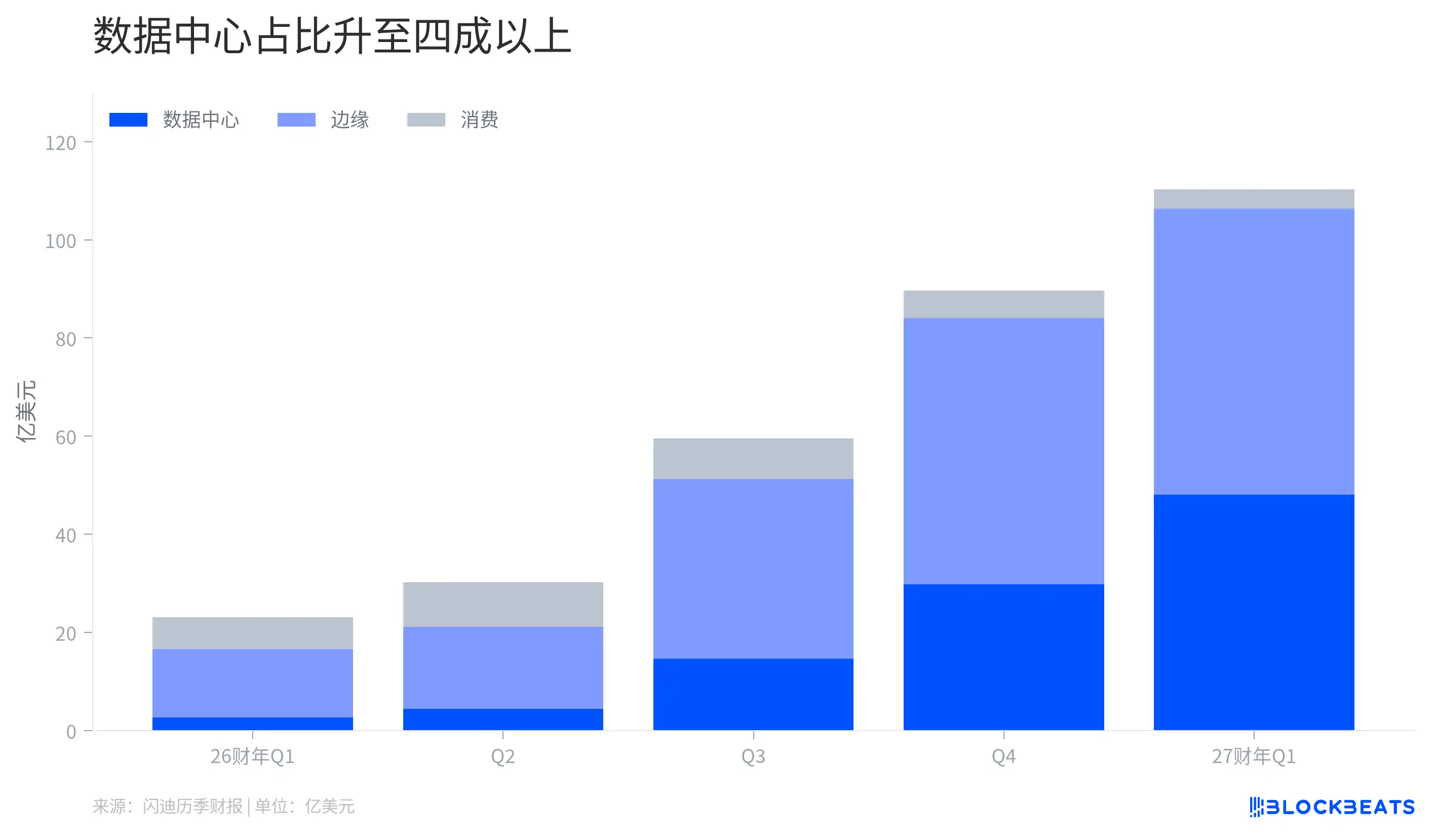
A year ago, the edge business was already SanDisk's largest revenue source. This category covers customers in mobile phones, personal computers, automotive, and industrial sectors, and is calculated separately from the consumer business that includes retail memory cards. Today the edge business remains the largest block, but the data center is catching up faster.
Based on the earnings data, the data center's share of revenue rose from about 12% to about 44%. In other words, for every $100 of product sold in the year-ago period, about $12 came from this market; now it is close to $44.
The consumer business has followed a different trajectory. After reaching a阶段性 high in the second quarter of fiscal 2026, it has declined for consecutive periods. The retail brands familiar to SanDisk customers still exist, but when looking at the company's overall growth, the memory cards on store shelves no longer tell the whole story.
This also reminds readers to pay attention to classification. SanDisk's "consumer" refers to retail and other end-user products, while flash memory purchased by phone and PC manufacturers falls under the "edge" business. A decline in the consumer business does not mean that all storage demand for personal devices is declining.
Who is driving the company forward in the latest quarter?
Subtracting the prior quarter from the latest quarter makes the shift in business structure more intuitive.
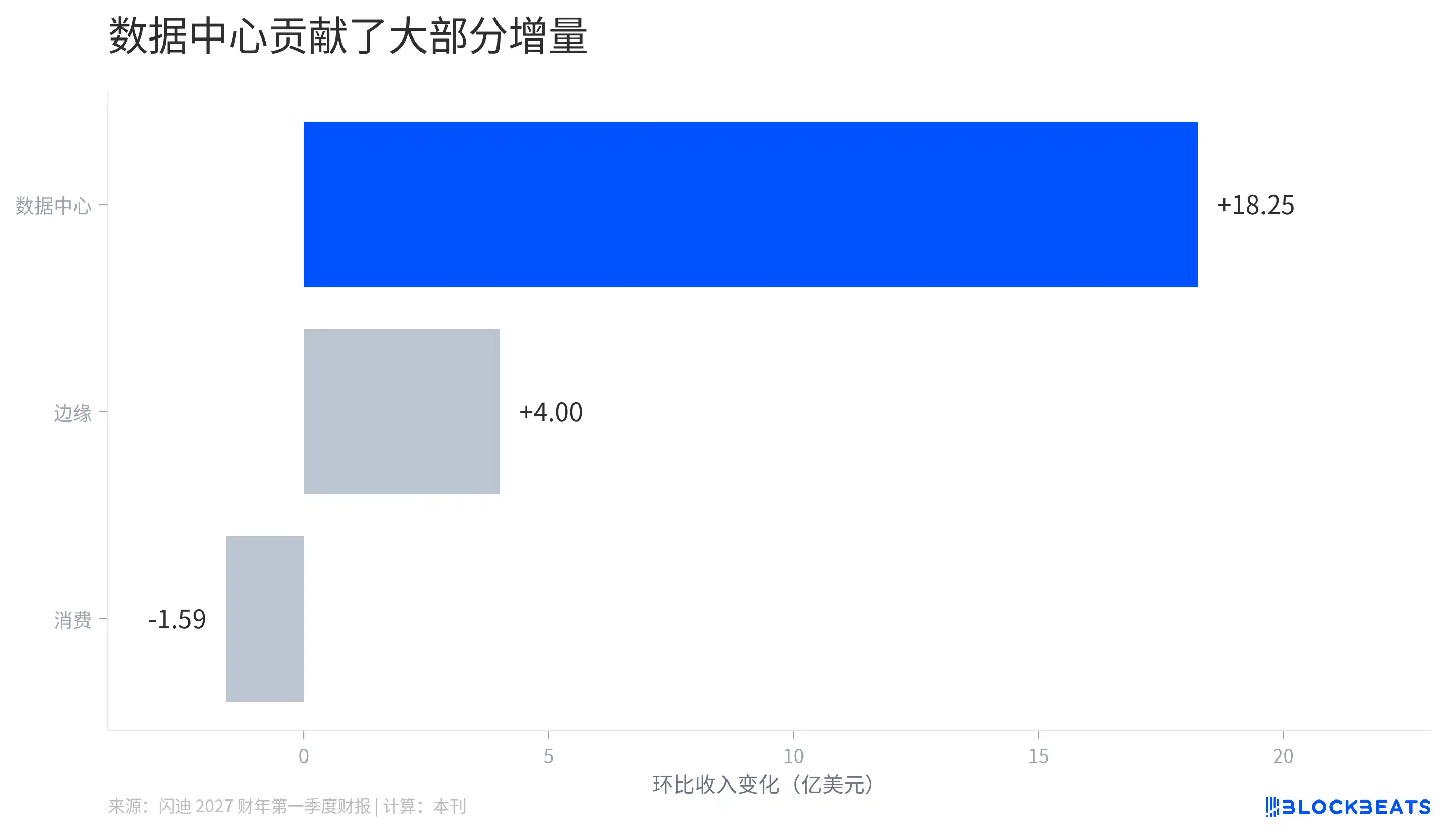
According to SanDisk's financial report, data center revenue increased by $1.825 billion quarter-over-quarter. Measured by total net revenue increment, it contributed about 88%. This ratio is on a net increment basis, and the decline in the consumer business is also included in the denominator.
The edge business is still growing, but the increment is significantly smaller than that of the data center. The decline in the consumer business offset part of the growth. This means that even as overall revenue rises, different customer groups that SanDisk faces may be on different purchasing cadences.
There is also a question here that cannot be answered directly from the revenue chart. Rising revenue could mean either more capacity was sold, or each unit of capacity was sold at a higher price. The two have different implications for understanding industry cycles, and revenue growth cannot be entirely equated with shipment growth.
SanDisk provided a breakdown once in its previous quarter's financial report. The company said that about two-thirds of the quarter-over-quarter revenue growth came from price and about one-third from volume. This was the explanation for the previous quarter and cannot be directly applied to the latest quarter.
Over a longer time horizon, price also occupies an important position. SanDisk's annual report states that in fiscal year 2026, data center business volume measured by capacity grew about 120%, and revenue per GB grew about 150%. These two approximate figures reflect different dimensions and cannot simply be added together as the revenue growth rate.
What do high gross margins mean?
Along with SanDisk's revenue growth, gross margin has also changed dramatically.
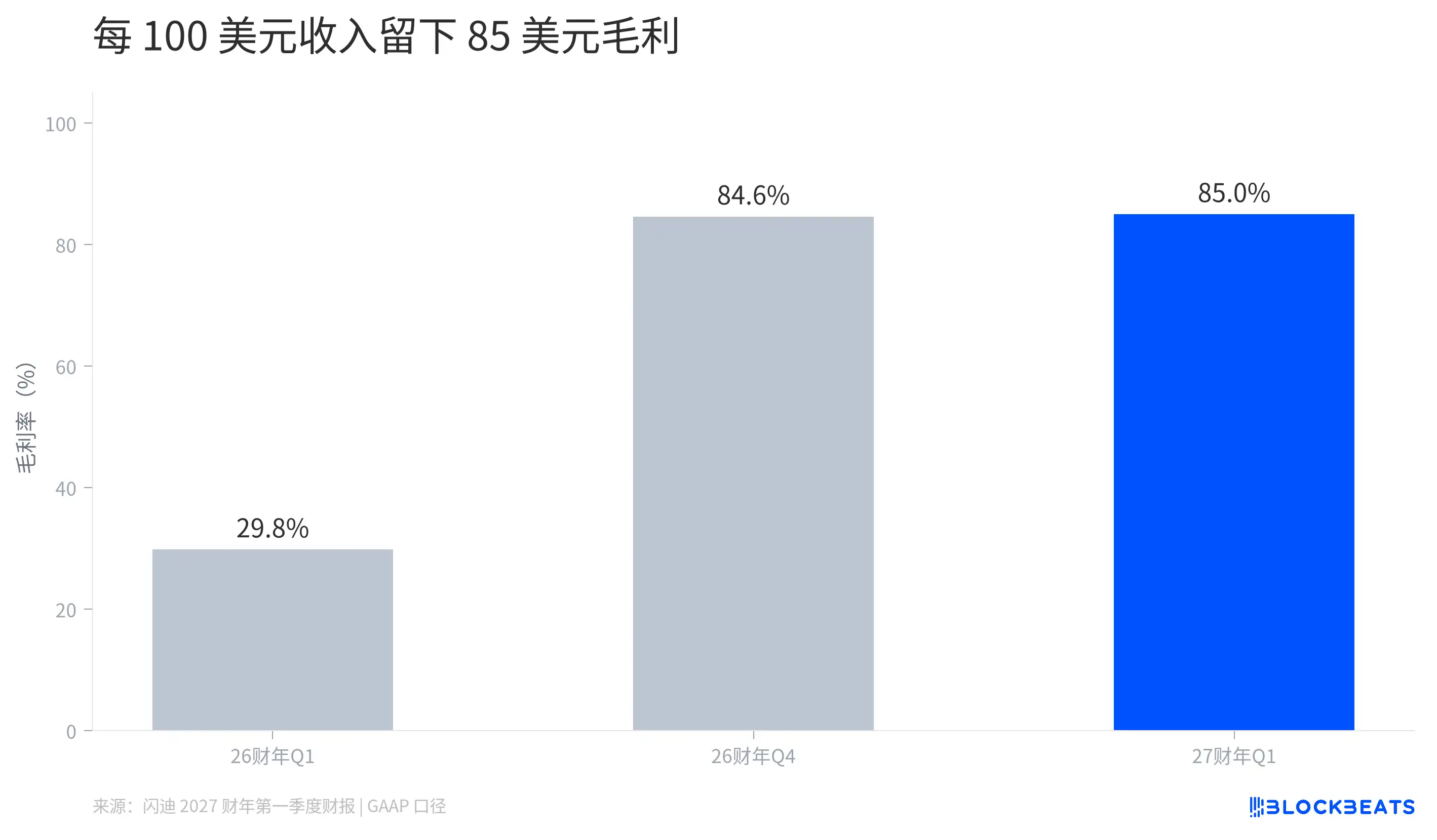
According to the latest financial report, under U.S. generally accepted accounting principles, for every $100 of revenue SanDisk receives, it retains about $85 of gross profit after deducting cost of sales. In the same period last year, this figure was less than $30.
Gross profit is not yet final profit. The company still needs to pay research and development, administrative, and selling expenses, followed by interest, investment gains, and taxes. The latest quarter's GAAP net profit includes gains from securities investments, and when interpreting operating performance, it cannot all be treated as profit brought by storage product sales.
Price increases and customer mix changes offer clues for understanding gross margin. SanDisk mentioned higher pricing and a shift in product mix toward higher-value customers in its prior fiscal year results. However, these data alone cannot precisely isolate each factor's contribution to the gross margin change in the latest quarter.
It is worth noting that gross margin in the latest quarter rose only slightly compared with the previous quarter. Revenue is still growing, but the jump in gross margin has already slowed. The two lines point to different questions: one is how much revenue was sold, and the other is how much is left from each dollar of revenue after deducting cost of sales.
How much cash did accounting profit turn into?
At the end of the earnings report, there is another set of figures explaining how SanDisk collects cash and how it uses cash.
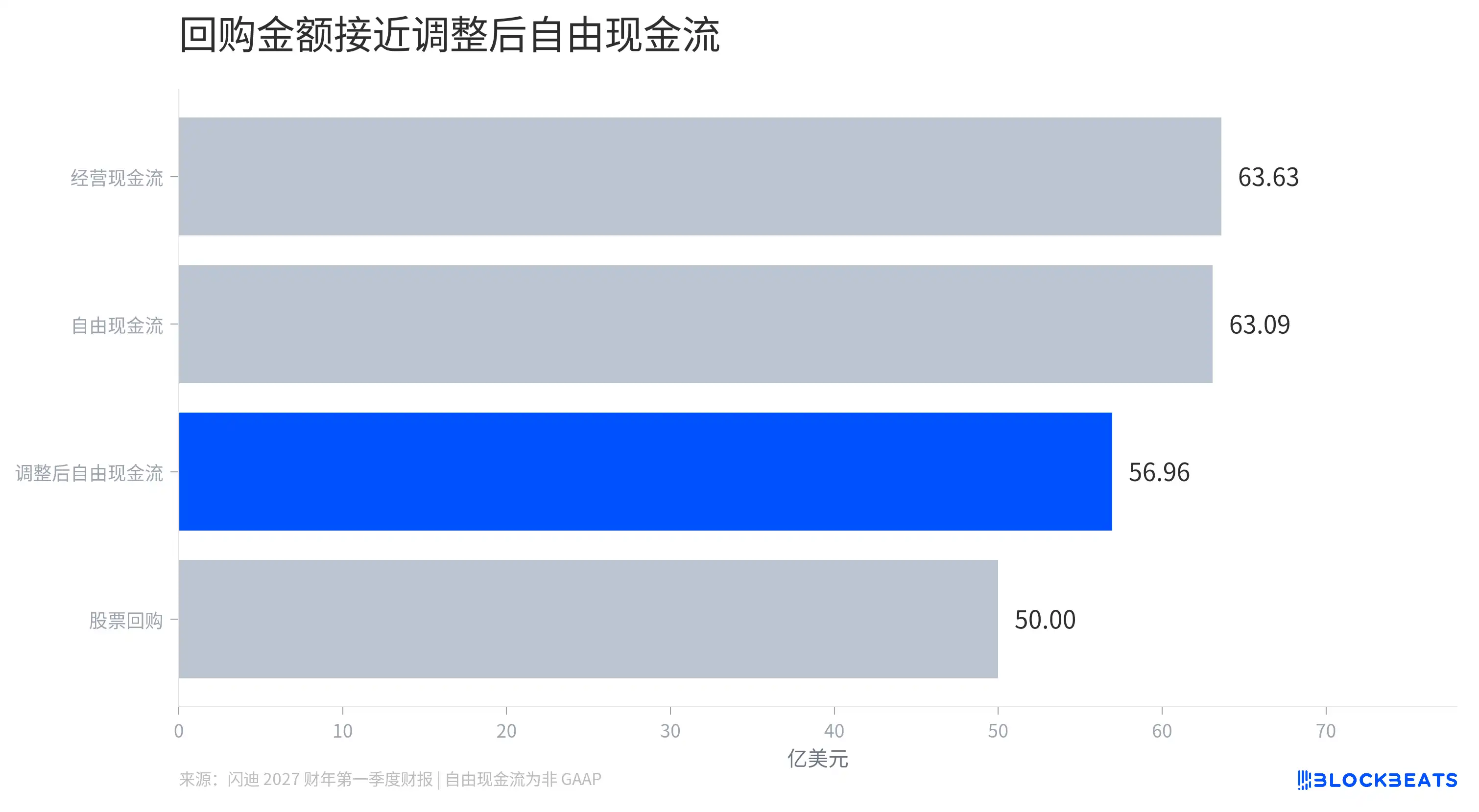
According to SanDisk's earnings report, cash generated from operating activities in the latest quarter was $6.363 billion. After deducting capital expenditures on fixed assets, the free cash flow disclosed by the company was slightly below this figure.
But the company also listed adjusted free cash flow. It adjusts free cash flow for activities related to the Flash Ventures joint venture, as well as the impact of prepayments and deposits under the new business model agreements. This is intended to help observers see the cash flow the company believes better represents the underlying business; it does not mean the prepayments were not actual cash received.
In the same quarter, SanDisk used $5 billion to repurchase shares, an amount close to adjusted free cash flow. Putting the two together helps with understanding scale, but the earnings report does not say the buyback funds were set aside separately from this metric.
This new business model also changes customer relationships. SanDisk said in its Investor Day announcement that expected shipment capacity covered by the relevant agreements already accounts for about half of fiscal 2027. Customers committing and paying in advance means cash flow cannot be observed only through single-quarter net profit.
The changes at SanDisk this quarter are reflected both in data center revenue and in the selling price per unit of storage and the way customers pay.
Welcome to join the official BlockBeats community:
Telegram Subscription Group: https://t.me/theblockbeats
Telegram Discussion Group: https://t.me/BlockBeats_App
Official Twitter Account: https://twitter.com/BlockBeatsAsia
