Last week, a Chinese woman living in San Francisco announced her new position on LinkedIn. The new job title was "Silicon Valley Trophy Wife."
These four characters have drifted around the Chinese internet for years. In 2022, an article defined it this way: "I'm a trophy wife in Silicon Valley—what I really mean is I'm unemployed in Silicon Valley, I'm a resentful woman in Silicon Valley."
Most of the people writing such things are wives who followed their husbands' H-1B visas to the Bay Area. They hold H-4 dependent visas—before 2015, they couldn't legally work a single day, and even after 2015, only some of them got work authorization. Many waited years, waiting for their husbands' green card priority dates, waiting for a piece of paper that would let them work.
The entire city of San Francisco behind her is now waiting too.
Anthropic is preparing to list in November, with a target valuation circulating in the market approaching $2 trillion. OpenAI also secretly filed for an IPO in June—it raised a large round in March at an $852 billion valuation, and is reportedly negotiating the next round at a $1.4 trillion valuation.
Employees at these two companies are clutching the most valuable things in this city that they currently cannot spend. They can't sell before the IPO, and after listing they're locked up for another 180 days.
The money is still locked up, but San Francisco can no longer wait. Some people are looking for marriage partners by company name; others are pledging their unlocked shares to borrow money and buy homes outright.
Cap Table
In 2010, Zhao Qinghua finished her PhD in electrical engineering at UC San Diego and stayed in the Bay Area. Over those years she tried every mainstream dating site and never met a suitable Chinese person, so she and a friend simply built their own overseas Chinese matchmaking site and named it "Two Red Beans."
Fifteen years later, Two Red Beans hosts mixers and speed-dating dinners in Silicon Valley. Female clients' requirements have narrowed ring by ring—from Silicon Valley to engineers, from engineers to AI engineers. Recently, company names have appeared directly in the requirements.
"The first tier is Anthropic and OpenAI," Zhao Qinghua said.
Fifteen years ago, the most prominent field on the site's profile page asked how many years you'd been in America. Now, female clients ask which company you work for first.
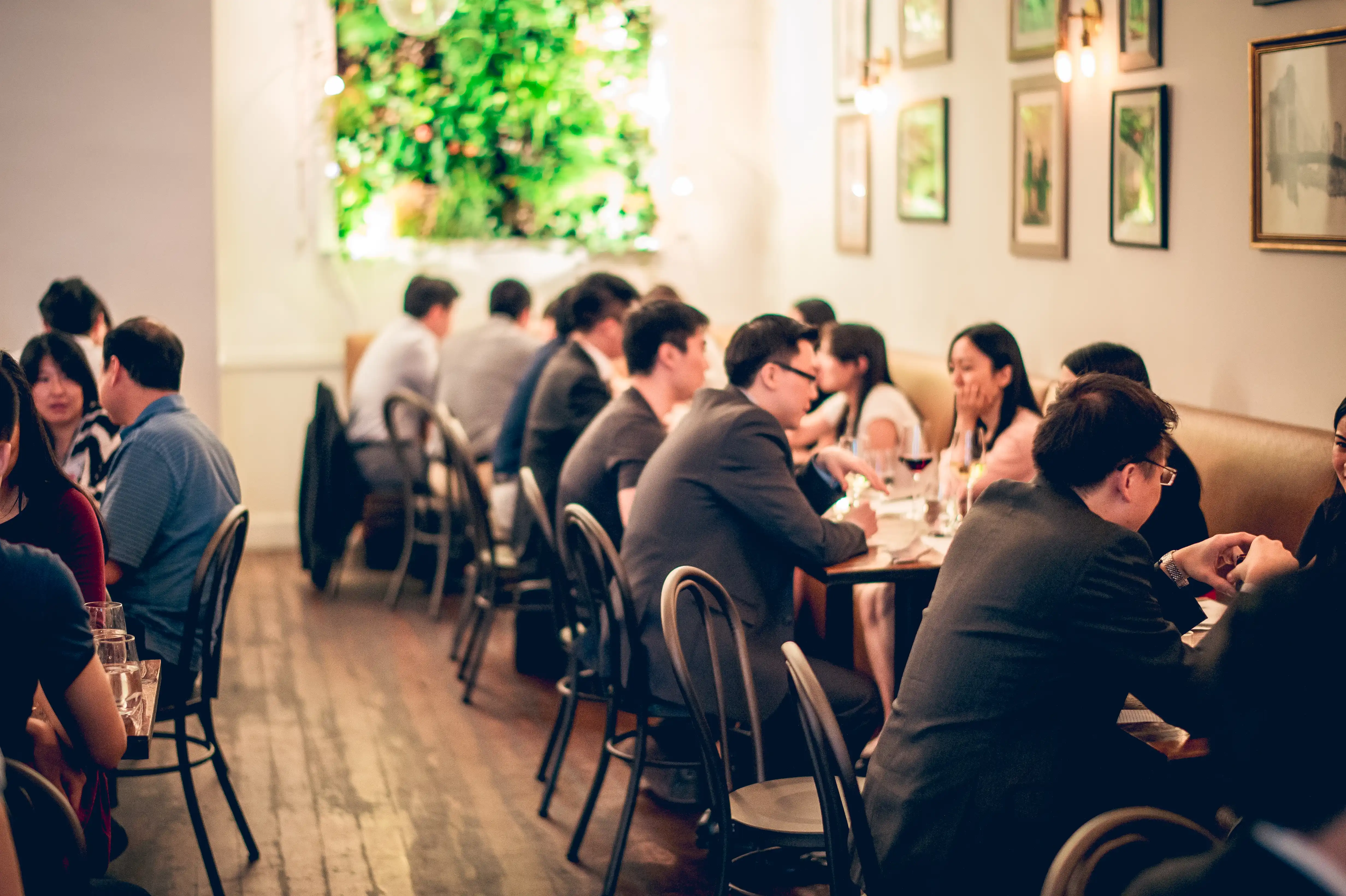
A speed-dating dinner hosted by Two Red Beans in Silicon Valley | Image source: 2RedBeans / New York Post
Last October, OpenAI allowed employees to sell some old shares. More than 600 current and former employees cashed out about $6.6 billion in total, with a cap of $30 million per person, and about 75 people sold the maximum. In August this year, OpenAI bought back about $7 billion of employee shares at a valuation of $852 billion.
Anthropic's employees are more patient. In February this year, the company opened an employee tender offer at a valuation of $350 billion, and it is said that many people were reluctant to sell. At the end of May, Anthropic completed a $65 billion Series H funding round, with a post-money valuation of $965 billion. Those who were reluctant to sell saw the shares in their hands rise to nearly three times in just over three months.
Menlo Ventures partner Deedy Das posted on X in May this year that about 10,000 people who have worked at OpenAI, Anthropic, or Nvidia could retire right now. People earning less than $500,000 a year could work their whole lives and never reach that line.
Zhao Qinghua said that these men in Silicon Valley have very high IQs, but their emotional intelligence is not necessarily as high. They have been trained in technology and logic since childhood, and they want a warm partner who understands them. She also added that once a man's net worth rises, "of course he will want to find someone prettier."
Bay Area matchmaker Amy Yang previously worked in tax analysis at Oracle. She said that now people fly to the Bay Area every week specifically to find a partner, hoping to meet engineers, and those working in AI are even better. She has a client in Los Angeles who is considering moving to San Francisco for half a year to be closer to companies like OpenAI.
34-year-old Sue Zhong is her client. She came to the United States from China at 16, worked in her family's marine fuel business, and moved from New York to Los Angeles last year. She has tried several matchmaking agencies and spent $1,500 at Amy Yang's agency for three introductions.
She said there is a group of people in Silicon Valley who want to change the world, and she is very curious about AI founders and can fly over from Los Angeles to meet them at any time. Men who live on a fixed salary have little left after taxes, and she wants to find a CEO or someone with an even higher income. But she also said that spiritual connection and chemistry are much more important than net worth.
There is also a businesswoman in her forties, divorced, still in China, with a son from her first marriage, who is planning to move to Silicon Valley. "For me, marriage now is an asset restructuring."
She pays special attention to men working at AI companies preparing for IPOs, looking at the shares in their hands and how much these shares can still rise. She is willing to grow with the other person and admits that there are risks involved.
The New York Post wrote about this group under the headline "Gold Diggers Are Flocking to Silicon Valley."
Girlfriend PRD
The successful AI men in Amy Yang's circle are looking for partners who have a bachelor's degree and a stable job of their own in the Bay Area.
Kinjal Nandy, 21, looks for a girlfriend the way he does product. Two years ago he dropped out of Cornell and came to the Bay Area, where he co-founded an AI company with friends and works 84 hours a week. Following the format of a product requirements document, he wrote a PRD for his future girlfriend in his phone's notes app, with criteria including high emotional intelligence and good boundaries.
He later met someone on a members-only app that gives users only about twenty-something right swipes a day. "We only met a few weeks ago," he said, "and so far it feels pretty good."
Once, over dinner in Hayes Valley, he and a friend talked about the experience and came up with an idea. His company began giving new employees free dating app memberships. The next few job openings each received more than 500 resumes.
On dating apps, AI is the strongest calling card. Some people on Hinge list "AI lab" directly in the company field, and Bumble lists AI alongside skiing and yoga as interest tags. A "Date My Friend" event was held in the Mission, where a woman gave a several-slide presentation on stage to pitch her friend, with most of the slides devoted to what the friend does at an AI company.
Conor Brennan-Burke, CEO of Hyperspell, uses AI to screen people. The 33-year-old once said he would "stay single until the B round," and he is still single. He won't date people who hate AI or hate capitalism. The person he wants must be willing to join him in biohacking for longevity and ultimately plug her brain into AI with him.
He even ranks companies. People from OpenAI are dateable; those from Anthropic require some thought, since that company was close to doomers in its early years, and he thinks living with a doomer would be a bit of a struggle.
On the same list, 24-year-old second-grade teacher Jessica Traver sees things exactly the opposite way. An OpenAI badge is something of a red flag in her eyes, while Anthropic has some moral sense, since Dario Amodei has publicly called for AI to slow down.
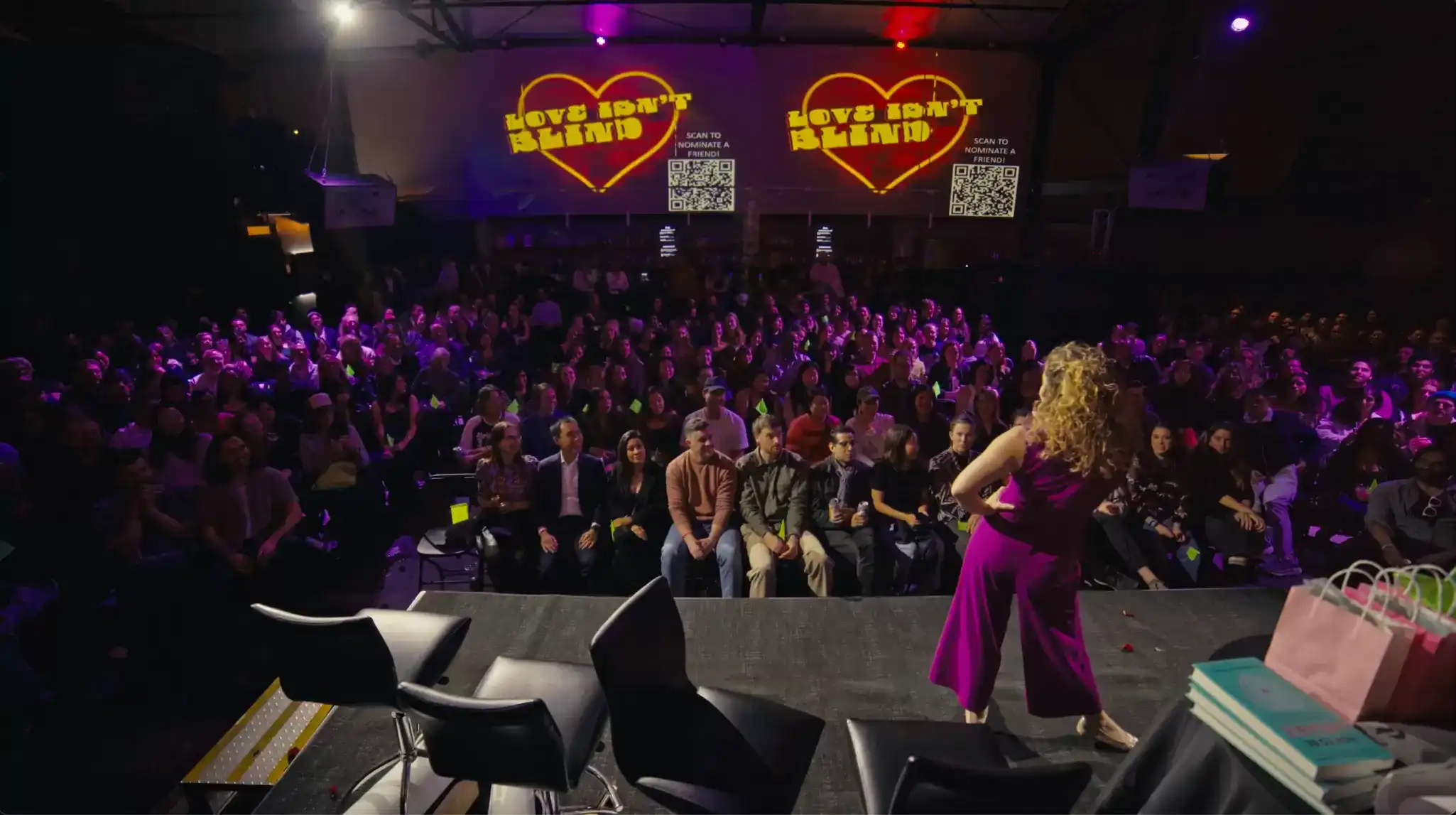
Alli Goldberg hosts the live dating show "Love Isn't Blind" | Image source: Alli Goldberg / The San Francisco Standard
Madison Hsieh, 25, an AI product manager at Amazon Web Services, had an ex who worshipped Elon Musk, grew increasingly extreme over time, and secretly dated several women at once behind her back. Since then, all AI founders have been blacklisted by her. Her current boyfriend also works at an AI startup, and she has only one bottom line: he cannot go out and start his own company.
Alli Goldberg brought this pickiness to the stage. She toured seven cities with the show "Love Isn't Blind," scrolling through male guests' phones in public on stage, going through ChatGPT chat histories and Reddit posts one by one. On that night at The Foundry in San Francisco's SoMa district, two of the four male guests worked in AI, and the audience booed one of them.
Honey Pot
Amy Andersen worked early in her career as a financial advisor at Merrill Lynch. Once, while on a date with a VC at Harry's Bar in San Francisco, the man spent the entire evening scanning the bar for someone else, looking for a BBD (bigger, better deal). She said that night scared her badly.
In 2003, she opened a matchmaking agency called Linx Dating in Menlo Park. The following year, Google went public, and Silicon Valley gained thousands of millionaires overnight.
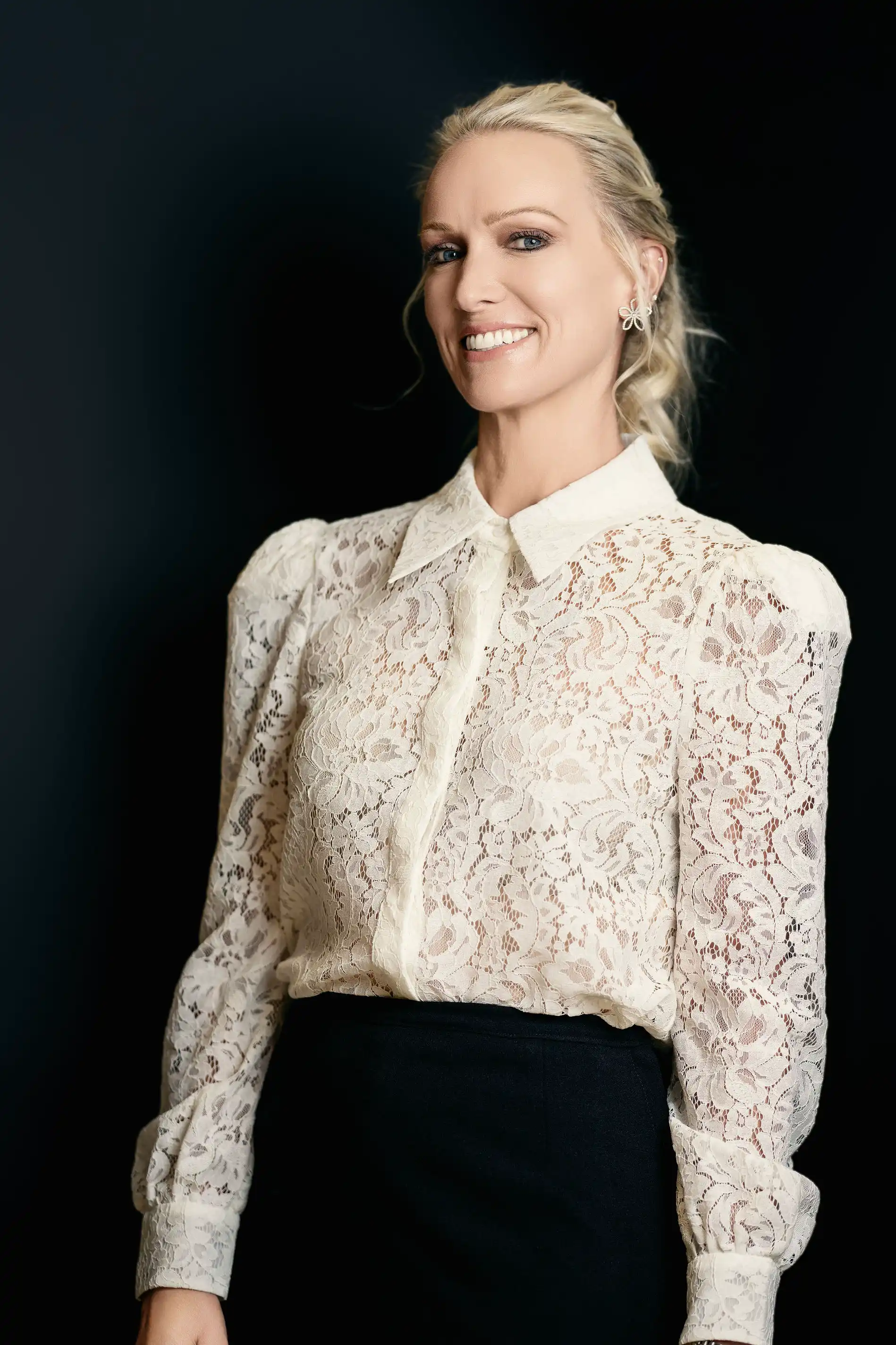
Amy Andersen, founder of Linx Dating | Image source: Linx Dating
By 2013, she was already known as the "Silicon Valley Cupid," with a basic package at $2,500, a VIP package starting at $50,000, and 19,000 people in her database.
Twelve years later, her starting rate is $150,000. She turns down about 98% of business and takes on fewer than ten clients at a time. She has booked private jets to Paris for clients and chartered nighttime yacht dinners on the Seine.
She says there's nothing wrong with dating for money, but the wealthy can spot insincerity at a glance. About a third of her wealthy clients are women. "Many of my clients built these AIs themselves, built all kinds of dating apps, and in the end they still chose me."
29-year-old Domo Vang is a younger generation. Her clients are mostly male employees at OpenAI, Anthropic, Nvidia, and Google, many of whom found her through her Instagram videos. The product she sells is a $1,000 "dating diagnosis": the first half hour simulates a date with you, and the rest of the time she tells you what went wrong and which lines to never use again.
Two 22-year-old Stanford dropouts turned matchmaking into AI outright. Their app is called Known: users first have a voice chat with the AI, it recommends only one person at a time, and it charges $15 per date arranged. Last July, Known held a launch party at the nightclub Great Northern, and later put up an ad in the Bay Area that read, "You might die alone."
Then came October 9, when a Saudi engineer who had worked at OpenAI was arrested by the FBI for planting recording devices in the San Francisco office. OpenAI subsequently gave its employees a counterespionage class.
The class covered the honey pot—using sex and romance to get close to a target—citing an old case of sending someone to seduce a U.S. diplomat in Russia, and also a real incident at a San Francisco amusement park where a stranger sidled up to an OpenAI employee and asked about work matters. The company warned employees not to wear clothing with the company logo outside the office.
Mark Trott, who spent more than a decade in counterespionage at the FBI's San Francisco field office, says the density of espionage activity in San Francisco is on par with, if not greater than, Washington. A local newspaper even wrote a reminder for single readers: a date who is more interested in your job than in you might be a spy.
Quiet Loan
During the days the FBI made its arrests, San Francisco was in the middle of Fleet Week, with the Blue Angels flight demonstration squadron soaring between the Golden Gate Bridge and Alcatraz. A condo in Cow Hollow with a 900-square-foot terrace and head-on views of the Blue Angels had just sold weeks earlier. Listed at $4 million, half of the nine offers were all-cash, and it closed at $6.7 million.
In the first eight months of this year, one out of every three homes sold in San Francisco was an all-cash deal, and three out of four of those were single-family homes priced above $6 million. The share of all-cash transactions in the Bay Area has reached its highest point in twenty years. In March, the median price of a single-family home in San Francisco rose to $2.15 million, setting a record.
Alexander Lurie, brother of Mayor Daniel Lurie, sells luxury homes in the city. He said many AI clients have stocks still in lockup periods and can't sell them, so they pledge them first, borrow a quiet loan, and use the borrowed money to pay all cash. Many of these people can't earn seven figures on salary alone, and carrying a loan on a $10 million house, they still have to pay their mortgage every month.
In Duboce Triangle, right next to "Cerebral Valley," an Edwardian home that underwent two years of renovations was listed in June of this year at just under $3 million. The attic staircase is electric, and the marble kitchen island seats six. The seller let it be known that payment could be made with OpenAI or Anthropic stock.

The living room and kitchen of a renovated home in Duboce Triangle, San Francisco, where the seller once said payment with AI company stock could be considered | Image source: BBC (republished by AOL)
On open house day, one visitor told agent Kristal Pollack that he really wished it were six months from now.
In August, a home in Pacific Heights listed at around $4 million received 16 offers and ultimately sold for $6.63 million to a couple, one of whom is the founder of an AI recruiting company. In early October, an AI researcher bought a Victorian home on the same block for about $8 million.
Alexander Lurie said the city is running a "luxury home deficit." About 50 buyers are looking for homes in the $20 million range, fewer than ten such homes come on the market each year, and about 70% of the deals he handles have never been publicly listed.
Prices are even higher by the lake. In March of this year, a lakefront mansion at Lake Tahoe sold privately for $125 million, with the buyer a company connected to SpaceX board member Steve Jurvetson, and the sale price was double the previous local record. In January, Sergey Brin bought a lakefront estate in Nevada, which has no state personal income tax, for $42 million.
On June 12, SpaceX listed on Nasdaq, raising approximately $85.7 billion including the over-allotment, making it the largest IPO in history.
By mid-June this year, business jet takeoffs and landings in San Francisco were up about 11% year-over-year, the fastest growth among major U.S. cities. In Brownsville, the small Texas city near SpaceX's launch site, there were 97 business jet movements during the IPO days, nearly triple the usual number.
A California aircraft broker said that a decade ago, one in five of his buyers worked in tech; now it's three out of four. Planes he sold last year can now be resold for 10% to 15% more.
Cleveland lawyer Amanda Applegate specializes in handling aircraft purchase contracts. Her firm's business is up 25% this year, and she's been so busy she canceled her annual vacation. She said this wave was driven by several major tech-sector cash-outs.
Ted Egan, San Francisco's chief economist, has watched the city's economic data for twenty years and seen several boom cycles, and he says no previous one ever reached this level. Yet over the past three years, San Francisco has lost about 40,000 jobs, mostly in tech. He says AI is growing wildly while older tech companies are contracting.
Caviar
At the height of the dot-com bubble in 2000, Jason Calacanis threw a 3,000-person party in New York with a caviar budget alone of $12,000.
Twenty-six years later, Nikita Khandheria, a 24-year-old event planner who organizes events for OpenAI and Anthropic, says she hasn't heard anyone mention caviar in a long time—no one cares.
Moreover, this crowd of clients isn't big on drinking. Khandheria's AI clients spend about 80% of their budget on experiences, with food and drink accounting for only 20%. The most expensive event she's handled had a budget of $2.2 million. In July this year, she held a fire-breathing class for eight AI executives at a 4,000-square-foot venue in the Marina district, with performers flown in from Europe. Everyone got so into it that the venue's ceiling had to be repainted afterward.
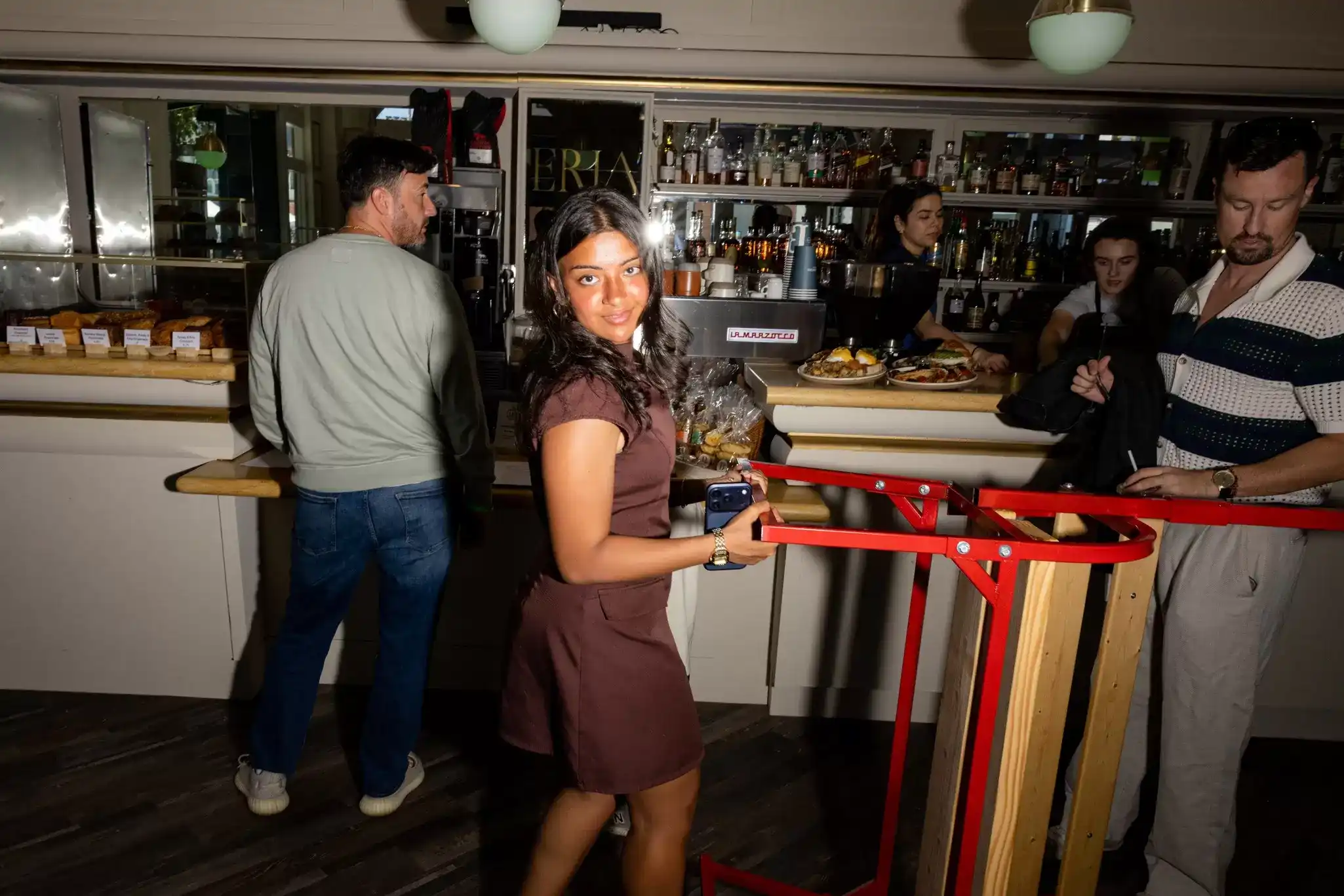
Event planner Nikita Khandheria helps set up before a party in San Francisco's Marina district | Image source: The San Francisco Standard
Speaking of the strange things clients love to do, she said, "I have a very, very strong legal team."
Vivienne Errington-Barnes, CEO of the events company Shift + Alt, said clients have a crazy craving for human connection. AI companies hosting these events also want to dispel outside fears, letting people see face-to-face that those working in AI are flesh-and-blood humans too.
On May 18, 2012, Facebook went public. The next day, Mark Zuckerberg hosted fewer than a hundred guests in his backyard in Palo Alto; guests only realized upon arrival that it was a wedding, with Mexican food and sushi from two nearby restaurants on the tables.
Fourteen years later, the next item on Nikita Khandheria's schedule is a tech executive's wedding vow renewal.
She needs to install an indoor skydiving machine at the venue—the kind that uses wind to blow people into midair. "This thing is attached to the ceiling at the top and anchored to the floor at the bottom."
The vows are to be spoken in midair, and she said the hardest part is the microphone: "Once a person is in weightlessness, the microphone becomes hard to control."
Two in the Morning
Alessandra Ram has two babies at home: one is a ten-month-old daughter, and the other is a large language model—both wake people up at two in the morning.
Her husband leads AI at a company. In May of this year, she published "Meet the Sad Wives of AI" in Wired, with a subtitle apologizing to readers: "If the man you married is obsessed with AI, I am truly, truly sorry."
She wrote that if her husband talked about Claude Code for one more minute, she felt she would really die.
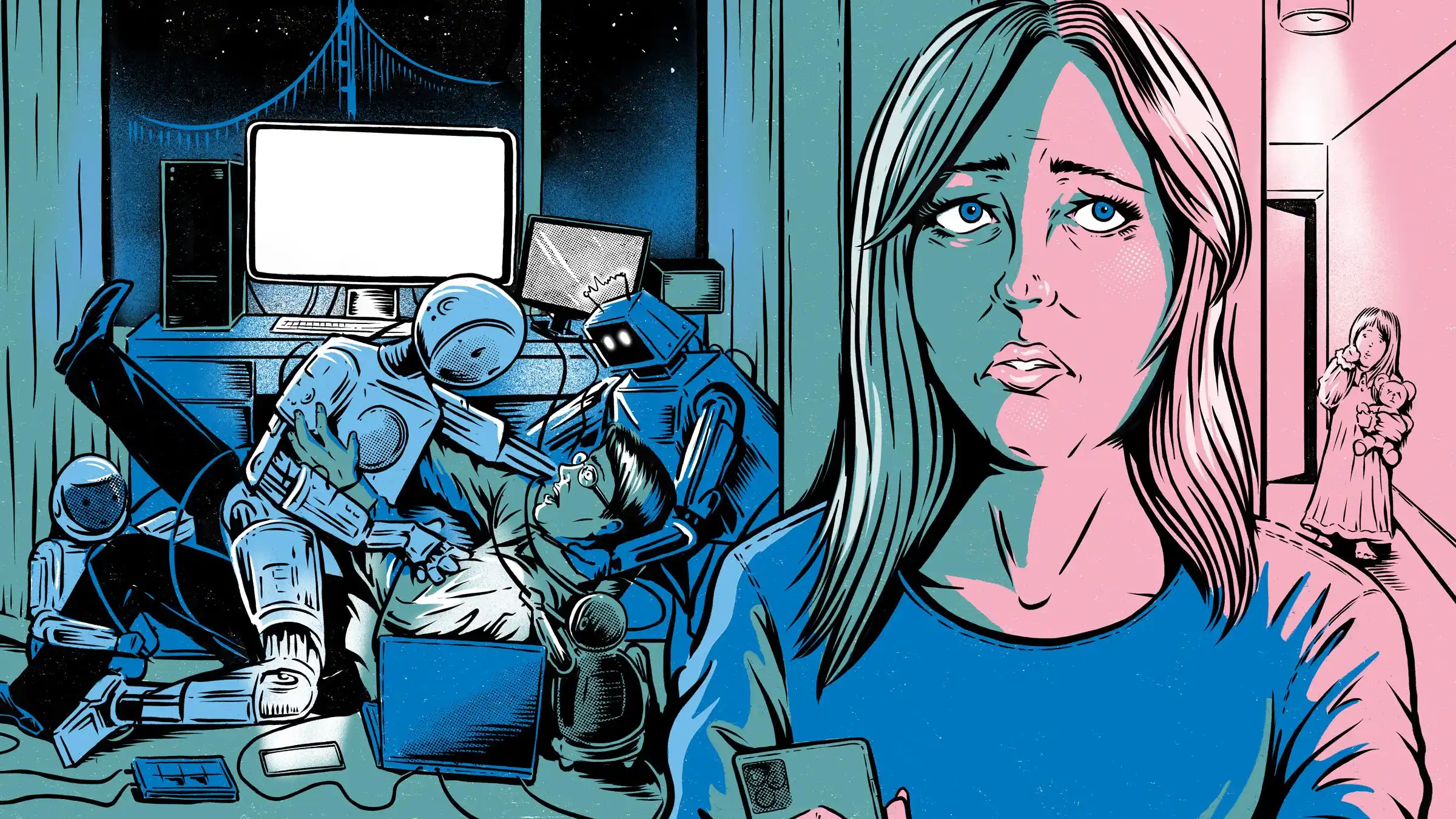
The original illustration for Wired's "Meet the Sad Wives of AI" | Image source: Cat Sims / WIRED
The people she interviewed were mostly white-collar couples in the Bay Area. The most common division of labor at home is that he does AI and she does everything else. In a worse version, he desperately tries to squeeze into the AI circle and feels he must get in, while she just wishes he would do something else—anything at all.
Several family therapists she asked all said that such families are becoming more and more common. Yana van der Meulen Rodgers, a labor economist at Rutgers University, calls these husbands "ideal workers," completely surrendered to this wave, afraid of missing something if they stop for five minutes, like men who left their families and headed west during the gold rush.
After the article was published, many men on X were unhappy, and someone wrote a piece titled "Meet the Sad Husbands of AI" in response.
But the story did not end. On July 21, another post spread on social platforms, saying that a husband in San Francisco pushed almost all childcare onto his wife so that he could become "AI native," and it got more than 100,000 views within a few hours. A joke was also popular on TikTok: a woman works desperately at a laptop while a man beside her runs an AI company that loses $30,000 a month.
In the hands of sad wives, there is actually something solid. California is a community property state, and by default half of the options and RSUs the husband receives after marriage belong to her. If the options were granted before marriage and vest gradually after marriage, the court has a ready formula to divide them proportionally based on how many years of work occurred during the marriage.
Washington State also has this system. In 2019, when MacKenzie Scott and Jeff Bezos divorced, she took about 4% of Amazon shares, then worth more than $30 billion, making her one of the richest women in the world.
So the wealthy party will sign a prenuptial agreement first. Bay Area family lawyers advertise prenuptial agreements, with terms written as RSU, ISO, vesting, and carried interest, reading like an offer letter. Amy Andersen wrote seven rules for people who want to date the ultra-wealthy, and the last one is also to sign a prenuptial agreement.
There are also wives whose current worry is still whether they can go to work.
For wives who came to the Bay Area on their husbands' H-1B visas, it was not until 2015 that a new rule allowed some H-4 dependents to apply for work permits. Among those who received permits in the first few years, 94% were women. In early September this year, a proposal appeared on the U.S. Department of Homeland Security's regulatory agenda to rescind this rule. It has not yet reached the formal proposed rule stage, and permits already issued are currently still valid.
In the same autumn, someone on LinkedIn described "Silicon Valley wife" as a new job. And some people may have to go back to before 2015, waiting at home for a piece of paper that approves them to go to work.
Leverage
On Monday, October 26, the document the whole city had been waiting for was made public.
Anthropic publicly filed its prospectus with the U.S. Securities and Exchange Commission, preparing to list on Nasdaq under the ticker ANT, with Goldman Sachs and Morgan Stanley leading. The number of shares to be offered and the price have not yet been disclosed. It is said the listing could happen as early as mid-November, with a market valuation between $1.5 trillion and $2 trillion.
In the prospectus, Anthropic reported revenue of $4.6 billion last year and a net loss of $42 billion. In the first half of this year, revenue was $16.3 billion and net loss was $80.7 billion, of which about $72.4 billion came from fair value changes in convertible bonds and other financial instruments.
The business itself turned around in the second quarter. First-quarter revenue was $4.7 billion, with an operating loss of $1.7 billion. Second-quarter revenue was $11.6 billion, with an operating profit of $974 million.
It also stated in the prospectus that AI models could bring catastrophic or even existential risks to humanity, and that if such an accident really occurred, the entire insurance industry combined might not be able to cover the damages.
The seven co-founders reiterated in the prospectus their pledge to donate 80% of their personal wealth. At the most recent round's price, that 80% is worth about $79.4 billion. The prospectus also states that this pledge is voluntary and can be withdrawn.
As of the end of September, Anthropic had approximately 5,300 employees in total. These are the people in the first tier that Zhao Qinghua mentioned.
The six-month unlock period the whole city had been anticipating also has a more detailed arrangement. According to the currently disclosed plan, some employees and early shareholders can sell shares from the first day of listing, with additional batches released on the 27th, 48th, 62nd, and 76th days. The entire lockup is split into more than twenty windows spread over about a year, and most shares will still be locked for 180 days.
Four days before the prospectus was made public, on Thursday, October 22, the market had just endured an AI selloff.
After the close the previous day, Meta reported its third-quarter results. Capital expenditure for the quarter was $34.9 billion, exceeding the $32.8 billion in cash generated from operations, turning free cash flow negative at $2.1 billion. It also raised the lower bound of this year's capital expenditure to $135 billion and proposed issuing a new class of non-voting shares. On Thursday, Meta's stock fell 7%, and the Nasdaq dropped 2.6%, its worst day since early June.
Also in recent days, OpenAI lowered the valuation of its new funding round from $1.4 trillion to $1.25 trillion, with some investors complaining that the original price was too high.

Harborview restaurant terrace in San Francisco, with the Ferry Building clock tower visible in the distance | Image source: Harborview / BentoBox
On the evening of October 22, Domo Vang hosted a matchmaking dinner at Harborview, a Cantonese restaurant on the Embarcadero.
The restaurant has been listed in the Michelin Guide, its menu features Peking duck, and from the terrace you can see the Ferry Building clock tower and the Bay Bridge. Everyone who came had submitted an application in advance. Among the men were Anthropic employees, with the oldest in his 70s. The women ranged from their early twenties to around thirty-five.
On dating apps, men have always outnumbered women, and it is mostly women who do the choosing. But offline in San Francisco, seven men each paid $800 while fifteen women entered free, and the ones doing the choosing became the men.
Domo Vang said that dating in San Francisco right now is dominated by men working in AI. "Honestly, they hold a lot of leverage."
Welcome to join the official BlockBeats community:
Telegram Subscription Group: https://t.me/theblockbeats
Telegram Discussion Group: https://t.me/BlockBeats_App
Official Twitter Account: https://twitter.com/BlockBeatsAsia
