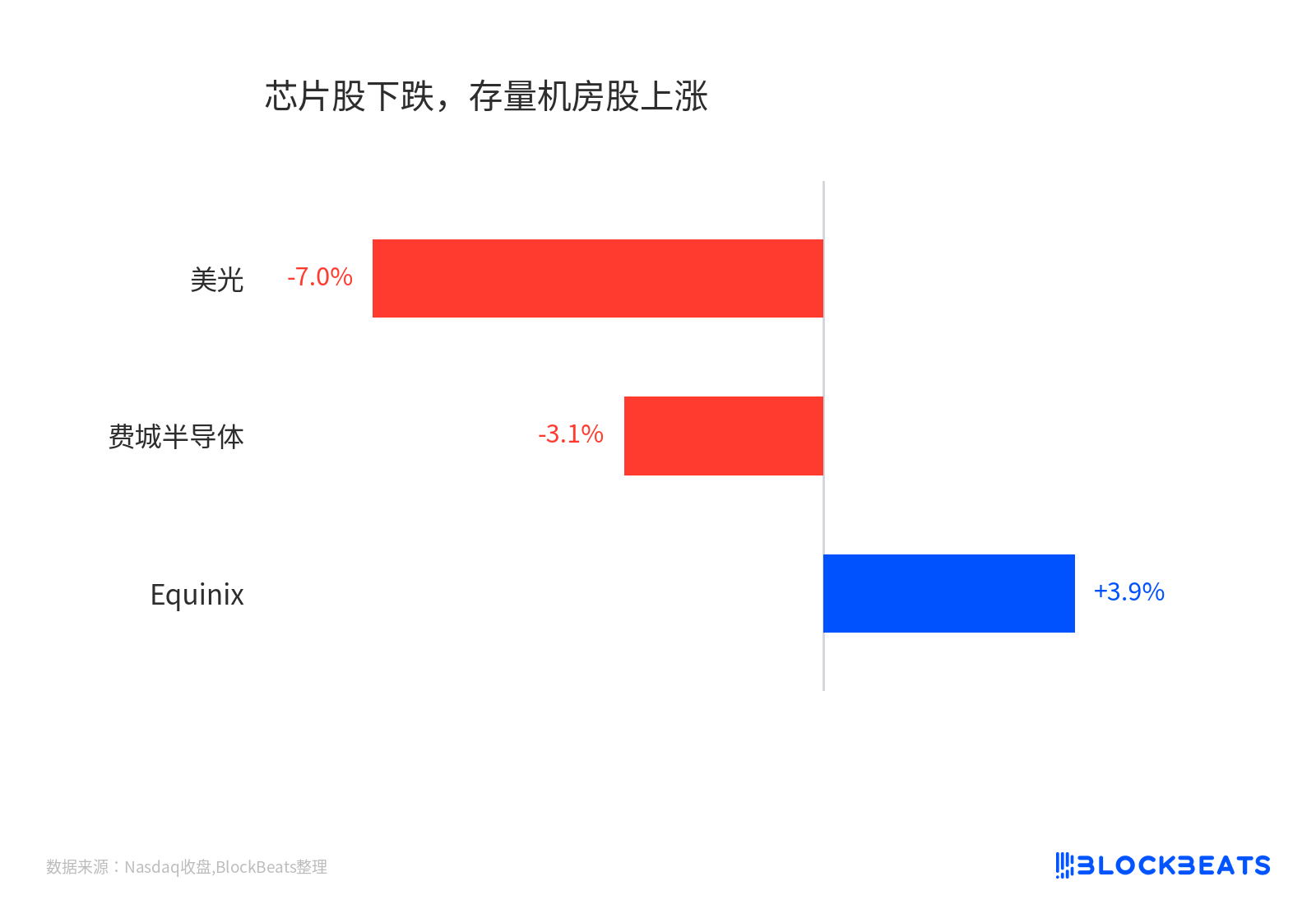
In the November 3 midterm elections, Democrat Gina Hinojosa won the Texas governor race. She pledged before the election to immediately pause all new data center approvals upon taking office until the state legislature passes legislation protecting local residents. The next day, US stocks gave a split reaction: Micron (MU) closed down about 7%, the Philadelphia Semiconductor Index fell about 3.6%, while Equinix and Digital Realty, which own existing data centers, rose against the trend.
Texas accounts for roughly one-quarter to 30% of US planned data center capacity, with slight variations across different research firms. Over the past year, part of the AI trade's valuation was built on the assumption that "new projects can secure power and permits on schedule." The election result rewrites exactly this layer of expectations.
But what's blocked is "new approvals," not data centers already powered up. This distinction is the key to understanding the day's price divergence.
Grid interconnection queues are the scarce resource being priced
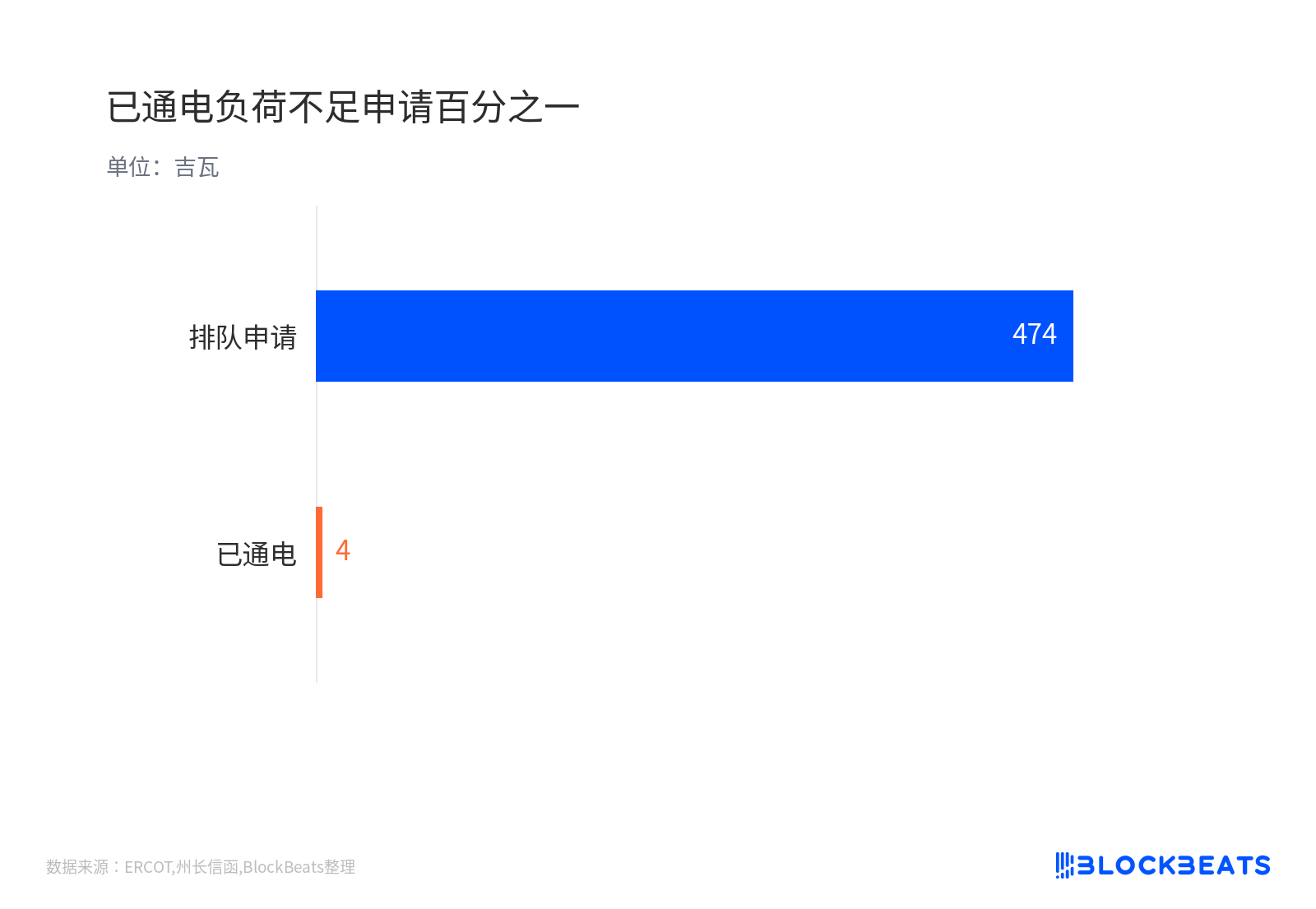
Data centers must first secure a grid interconnection slot—i.e., grid connection approval. This slot is scarcer than one might think. ERCOT's interconnection queue at peak tracked over 400 gigawatts of applications, far exceeding what is actually buildable.
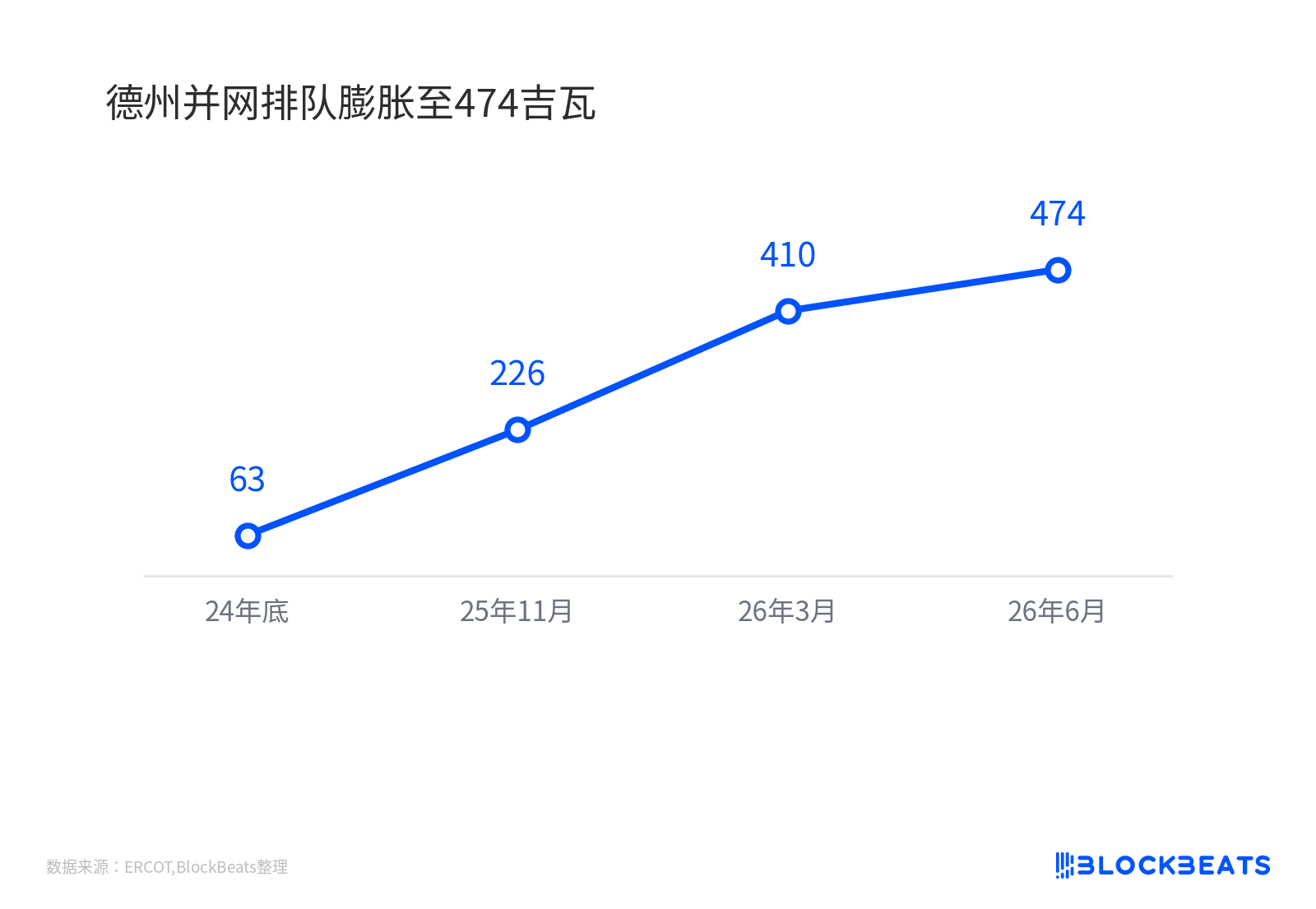
Once approvals shift from "accelerating" to "paused," the first thing to be discounted is these planned projects that haven't yet secured a slot. Sell-side estimates put the risk magnitude as significant—about 47 gigawatts of planned projects face suspension, with roughly 13.3 gigawatts under pressure in Texas alone. While methodologies vary, the direction is quite consistent: pressure is concentrated on the end that hasn't yet materialized.
Political pressure isn't only coming from the governor. In this election, roughly 41 data center-related ballot measures across 10 states—nearly all of which restricted or rejected pro-development proposals—with Ohio alone accounting for about 21 of them. A pre-election survey by Heatmap Pro showed that 71% of registered voters oppose building data centers near their homes.
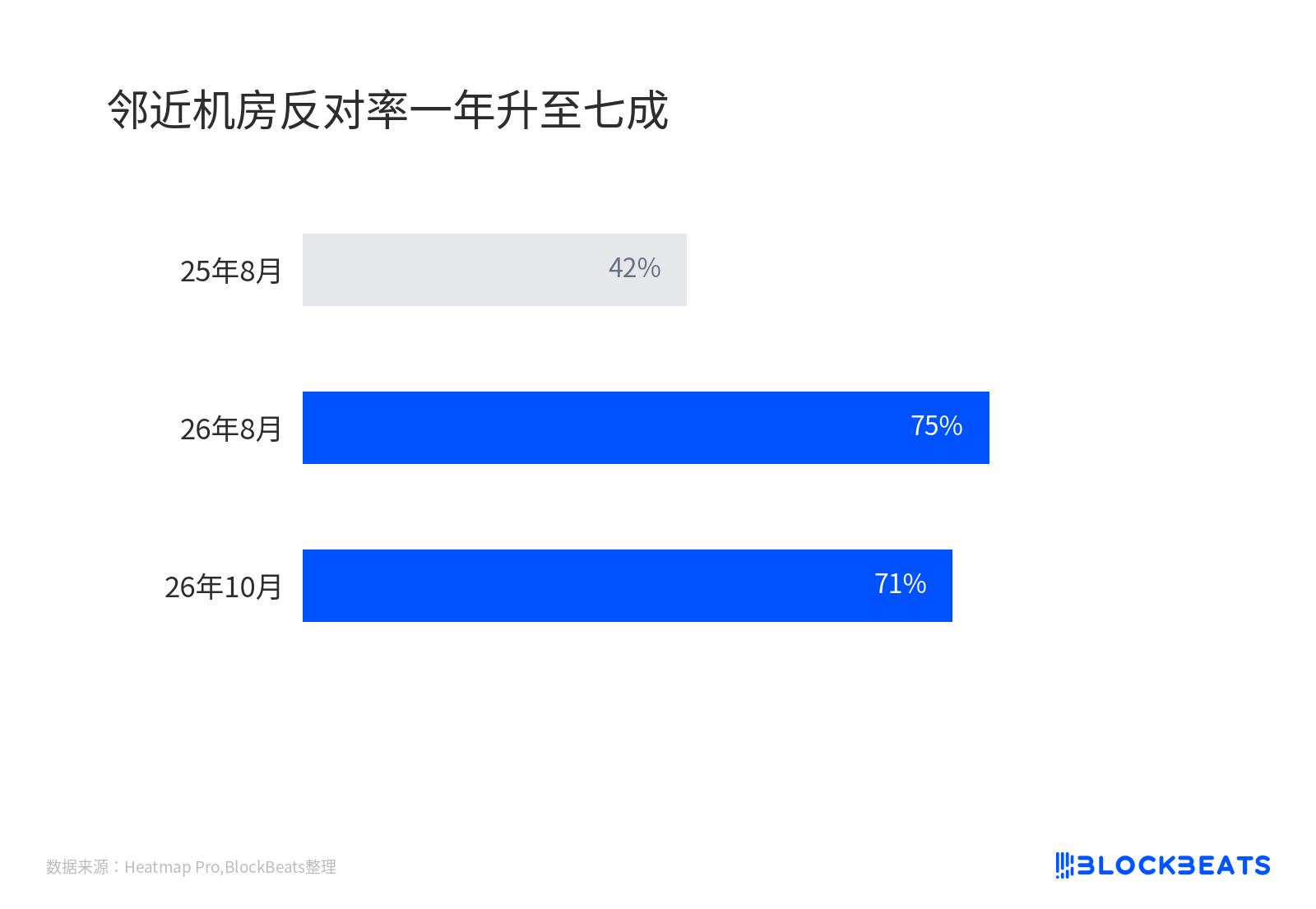
What the market is reading is not a single governor's promise, but a systemic backlash forming at the local level around electricity prices, water usage, and neighborhood opposition.
The moratorium was already in effect; what changed is the expectation of lifting it
Texas's pause on new grid connections already existed before the election. Incumbent Governor Abbott had asked the Public Utility Commission of Texas (PUCT) and ERCOT back in August to pause new grid connections and some environmental permitting. What was truly rewritten was the market's expectation of "when it would resume."
The original baseline scenario was Abbott's reelection and a likely resumption of approvals after the election. Hinojosa's victory amounts to swapping that baseline for "the moratorium extends to the 2027 legislative session." What got repriced was that option of lifting the ban.
A distinction must be made between two tools here. An executive moratorium can be ordered directly by the governor and can immediately halt new approvals—it determines how fast the shock hits. Measures such as eliminating sales tax exemptions and granting local veto power must go through the state legislature—they determine how deep the shock goes.
Chip stocks, miner stocks, and data center stocks are trading three different things
The three asset classes are trading different underlying targets: chips trade on installation pace, miners trade on expansion options, and data center stocks trade on existing rental income.
Micron had no company-level negative news that day; its 7% decline looks more like a valuation repricing. The market fears that if new installations slow in 2027–2028, the demand slope for memory and servers will be revised downward.
Divergence within the miner space is more pronounced. Bernstein analyst Chhugani cut price targets on seven miners by roughly 35% to 54% citing tightening financing conditions compounded by Texas uncertainty, while maintaining Buy ratings.
His own caveat is that IREN, Riot, and Cipher—which already have approved grid connections—could become more valuable as new connections become harder to obtain. Deep target cuts with unchanged ratings reflect precisely the logic of expansion options being discounted and already-secured grid connection rights appreciating. Framing miners broadly as victims would be reading this main thread backwards.
Data center stocks are on a different trajectory. Data center REITs (listed companies that treat data centers as rental properties) rely on existing rental income, not on new construction for next year. Equinix and Digital Realty are rising against the trend, trading on the scarcity of existing capacity. On the same day, hyperscaler stock prices are also climbing, indicating that capital is not fully retreating from risk assets—it is merely applying a separate discount to the option value of new supply.
The January 19 executive order will determine whether the shock lasts months or years
The scope of the executive order upon taking office is the first watershed. The campaign promise was to pause all new approvals until legislation passes, but an executive order can halt new approvals—it may not be able to stop projects already under construction. Projects already funded and under construction typically will not be halted by a pause on new approvals.
The second watershed is how much of that 47 GW exposure consists of projects under construction versus paper planning. If the bulk is paper planning, the shock is closer to a rise in discount rates, with the overall installation pace pushed back. If a large number of projects under construction are blocked, the 2027–2028 installation forecasts will need a substantive downward revision, and order visibility for storage and servers will deteriorate accordingly.
Another variable yet to be confirmed is the final vote count in the Texas Senate. If the legislature does not take up legislation, the executive pause may only be a transitional period, and the 2027 legislative session will be the real inflection point.
Market attention has shifted from AI demand to the option value of new supply. What could falsify this logic is the actual scope of the next executive order, the next round of hyperscaler capex guidance, and whether the ERCOT interconnection queue reopens.
Welcome to join the official BlockBeats community:
Telegram Subscription Group: https://t.me/theblockbeats
Telegram Discussion Group: https://t.me/BlockBeats_App
Official Twitter Account: https://twitter.com/BlockBeatsAsia
