On November 24, Eastern Time, HP released its fourth-quarter and full-year results. Revenue and adjusted earnings per share both exceeded Wall Street expectations, but the company's guidance for the new fiscal year was cautious. During the earnings call, when analysts pressed on how material costs and finished-product prices would change, HP CFO Karen Parkhill pulled out an estimate from earlier in the year. At that time, memory and storage accounted for less than 20% of a computer's bill of materials.
Quarterly revenue in the earnings report reached $16 billion, up 9.3% year over year, driven mainly by the Personal Systems business. This division sells personal computers, workstations, and related services. In the same quarter, the division's operating margin fell to a fiscal-year low.
How much has a computer's materials bill changed?
Parkhill said that by the fourth fiscal quarter, memory and storage had reached nearly 40% of material costs. To put it in terms of every $100 of materials, at the start of the year buying these two component categories cost less than $20; by the fourth fiscal quarter, spending on them was already close to $40.
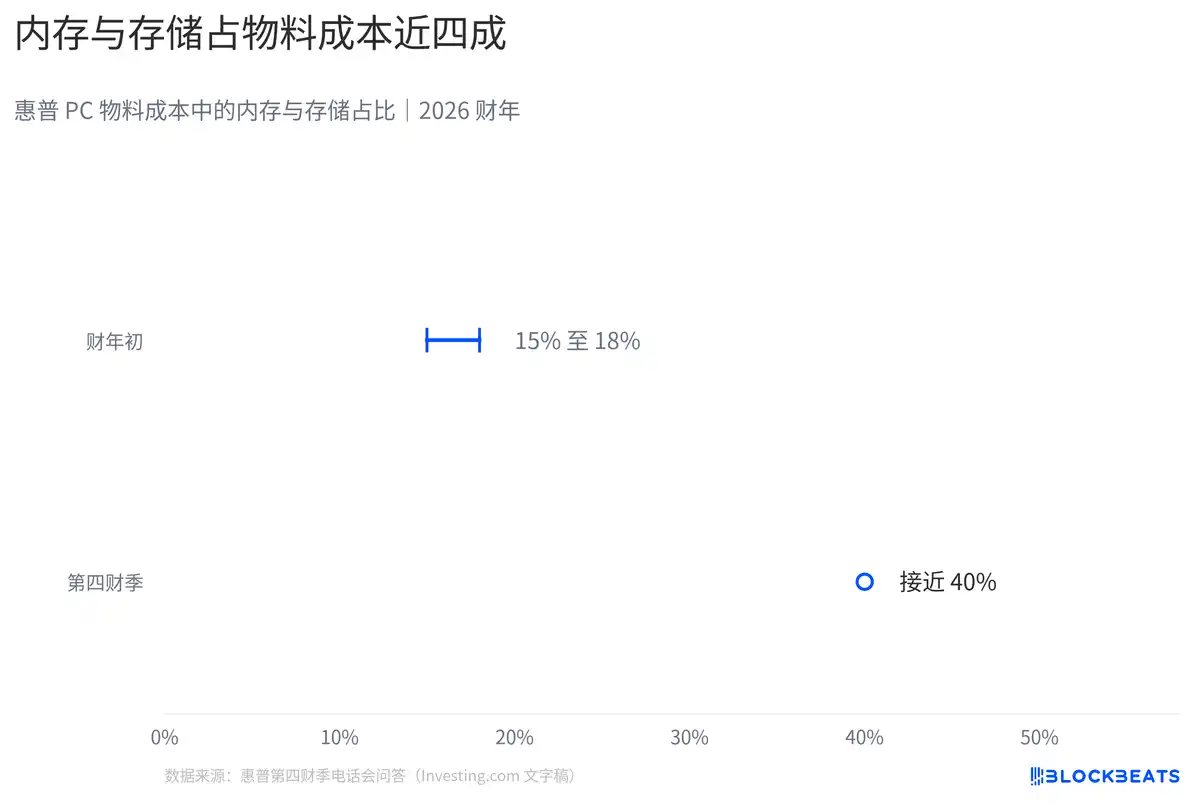
The denominator of these figures is HP's material costs. Selling more or fewer models and changes in configurations within the same series will both alter the mix of components the company ultimately purchases. HP only provided the proportions at two points in time, making it difficult to infer from that how much the purchase price of a particular memory module or solid-state drive rose. Parkhill also cited product and configuration changes as a reason for temporarily not updating the proportion forecast.
For the new fiscal year, HP's budget still incorporates memory and storage price increases, but expects the pace of increase to be milder than in the past year. Processor costs are also expected to rise. If computer configurations and selling prices remain unchanged, every extra dollar spent on the procurement side adds one more dollar of cost for the finished-product business to absorb. Changing configurations, renegotiating procurement terms, and adjusting selling prices determine how much of this bill HP ultimately bears.
Someone pressed during the Q&A session on whether HP would continue raising prices because components are getting more expensive. Parkhill ranked price increases after other response measures, on the grounds that raising prices easily suppresses demand. The same manufacturer can sell more expensive configurations in commercial orders while running promotions at retail to clear inventory held by distributors.
The PC business is still growing, but where is the money made?
HP's Personal Systems business achieved double-digit revenue growth in all four quarters. Its operating margin reached a fiscal-year high in the second fiscal quarter, then fell for two consecutive quarters. By the fourth fiscal quarter, Personal Systems retained only about $3 of operating profit for every $100 of revenue. HP's segment disclosures also show that the fourth-quarter operating margin was lower than in the same period a year earlier.
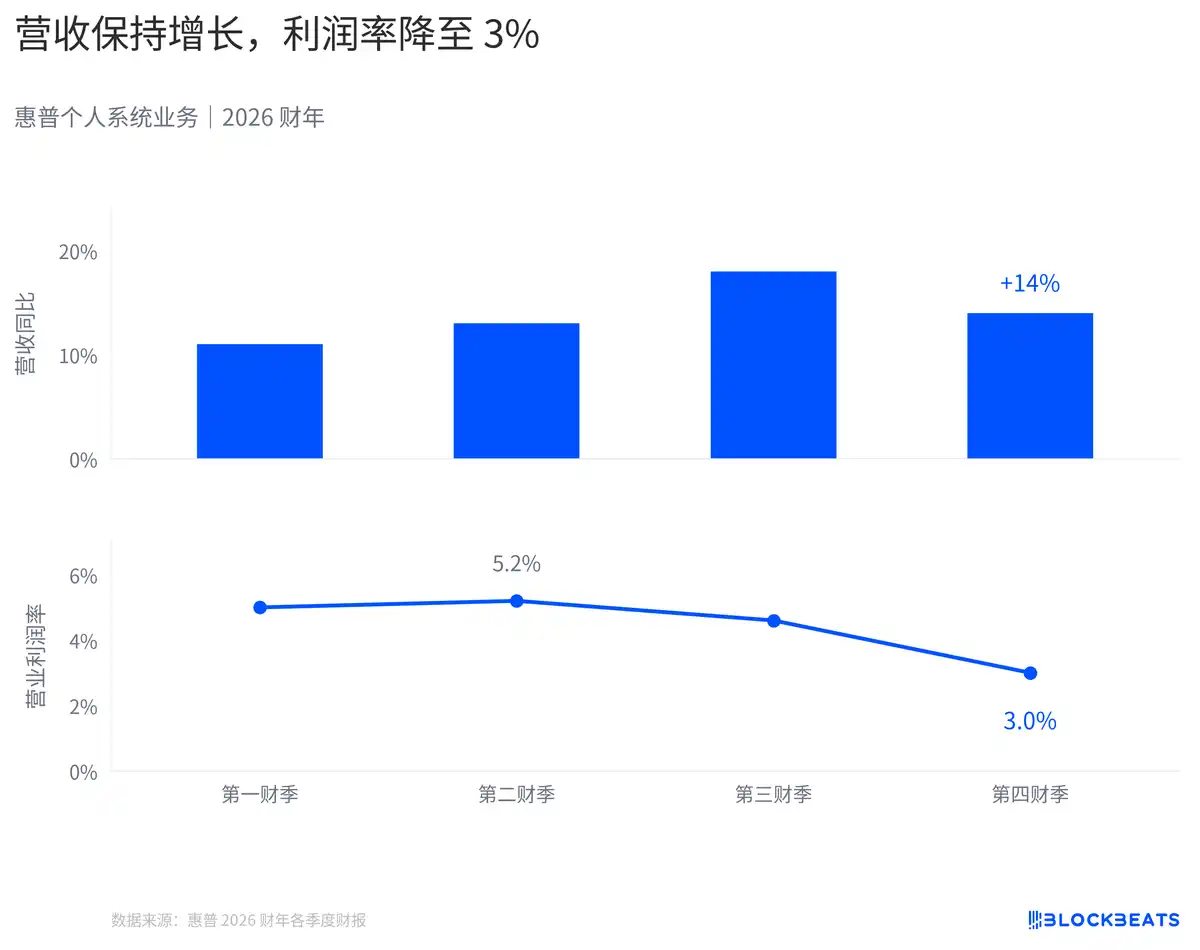
Commercial revenue grew 23% this quarter, while consumer revenue fell 7%. On the earnings call, HP said pricing of commercial products, premium models, and services sold with devices supported revenue. The consumer market weakened in the second half of the quarter, with resellers reporting slower sell-through and higher inventory. Price adjustments for retail channels helped inventory turnover, but margins for the quarter came in below the company's prior expectations as a result.
In the same earnings report, total Personal Systems unit shipments fell 29% year-over-year. Dividing segment revenue by unit shipments can easily misread product mix changes as price increases for ordinary PCs. HP's disclosed revenue also includes workstations, premium models, and attached services. A higher share of more expensive devices in orders, or enterprises buying more services delivered with devices, can both lift revenue even as unit shipments decline.
HP has arranged two things for the consumer side. For PCs already piled up with resellers, the company will accelerate promotions. For newly launched mainstream-priced products, HP is trying to压低 costs from design and procurement. The head of the Personal Systems business cited the OmniBook 5 as an example on the call. Promotions address inventory already in channels, while cost reductions on new models will only show up in future sales.
At the industry level, HP expects PC unit shipments to decline by high single digits to low double digits in calendar 2027, with sales roughly flat. This outlook relies on prices and the mix of premium models offsetting part of the unit decline. HP also expects its Personal Systems margin to recover quarter by quarter, returning to its long-term range before the end of the new fiscal year.
Results beat expectations—how should we read the new fiscal year guidance?
According to Investing.com consensus, Wall Street had expected HP's fourth-quarter adjusted earnings per share of $0.75, while the company reported $0.83. Adjusted EPS for the quarter was still below the year-ago period.
In the same earnings report, HP disclosed that tariff refunds contributed $0.15 to earnings per share in the quarter, higher than the $0.08 included when the company set its original guidance.
Based on the figures disclosed in the report, excluding the portion of refunds above the company's estimate, adjusted earnings per share for the quarter were about $0.76, still slightly above the midpoint of the company's original guidance.
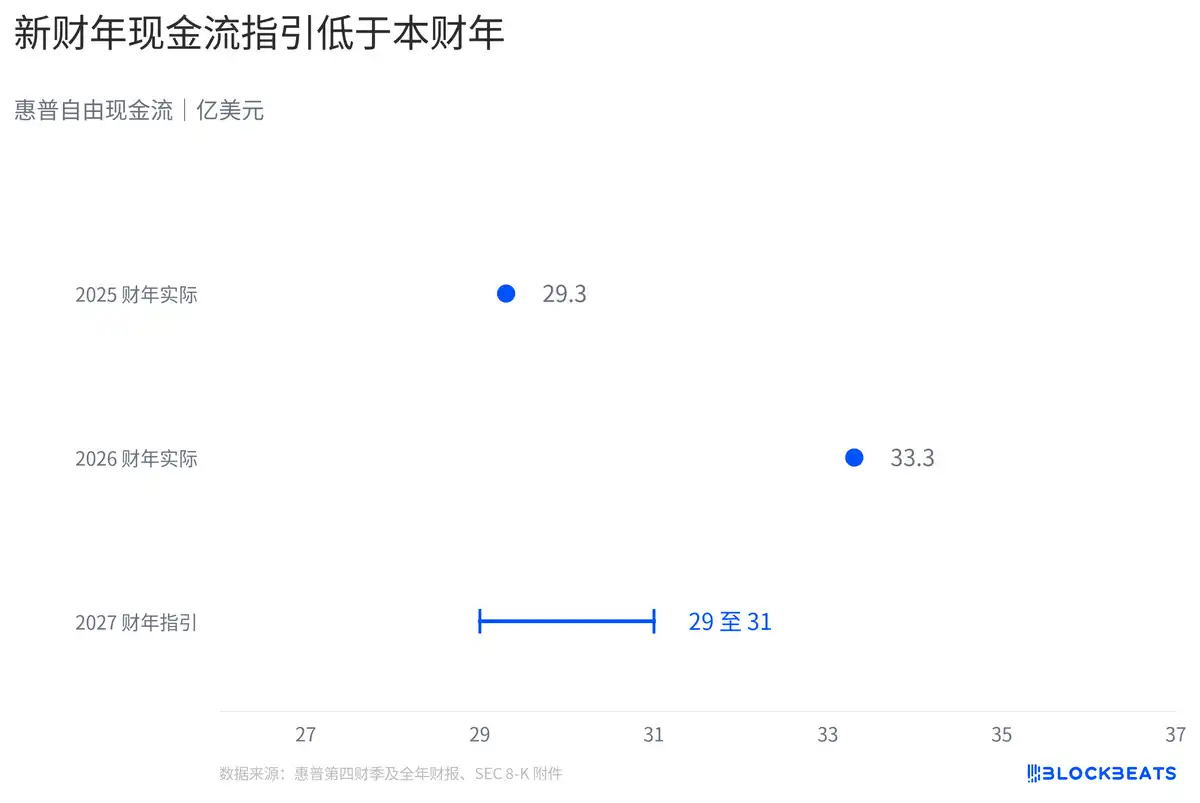
Cash flow guidance provides another set of directly comparable figures. The company's new fiscal year range is below the actual value for the fiscal year just ended and spans the level of the year before that. On the call, Parkhill said capital expenditure plans are roughly flat and the company aims to reduce inventory during the year to improve working capital. She attributed the expected decline in free cash flow mainly to earnings and noted that the guidance does not include new tariff refunds.
The EPS guidance also involves two adjustments. HP's adjusted EPS for the just-ended fiscal year was $3.33, which included a $0.26 tariff refund benefit.
The new fiscal year guidance assumes no additional refunds and excludes stock-based compensation expense from adjusted profit. For the stock-based compensation adjustment alone, the company disclosed that recalculating under the new methodology would add $0.38 to the just-ended fiscal year's EPS.
HP's adjusted EPS range for the new fiscal year is $3.15 to $3.45.
Using the just-ended fiscal year's adjusted EPS as a starting point, adding back the impact of the stock-based compensation methodology change, and subtracting the tariff refund benefit yields a comparable baseline of approximately $3.45. The new fiscal year would need to reach the upper end of guidance to roughly match this baseline.
Welcome to join the official BlockBeats community:
Telegram Subscription Group: https://t.me/theblockbeats
Telegram Discussion Group: https://t.me/BlockBeats_App
Official Twitter Account: https://twitter.com/BlockBeatsAsia
