Ansem's ANSEM has been caught in a "Rug" controversy.
On November 24, a Solana wallet associated with him concentratedly sold off ANSEM and other meme coins, with the同名 token dropping about 60% in less than an hour. Approximately $2.57 million was subsequently transferred to an address on Arbitrum.
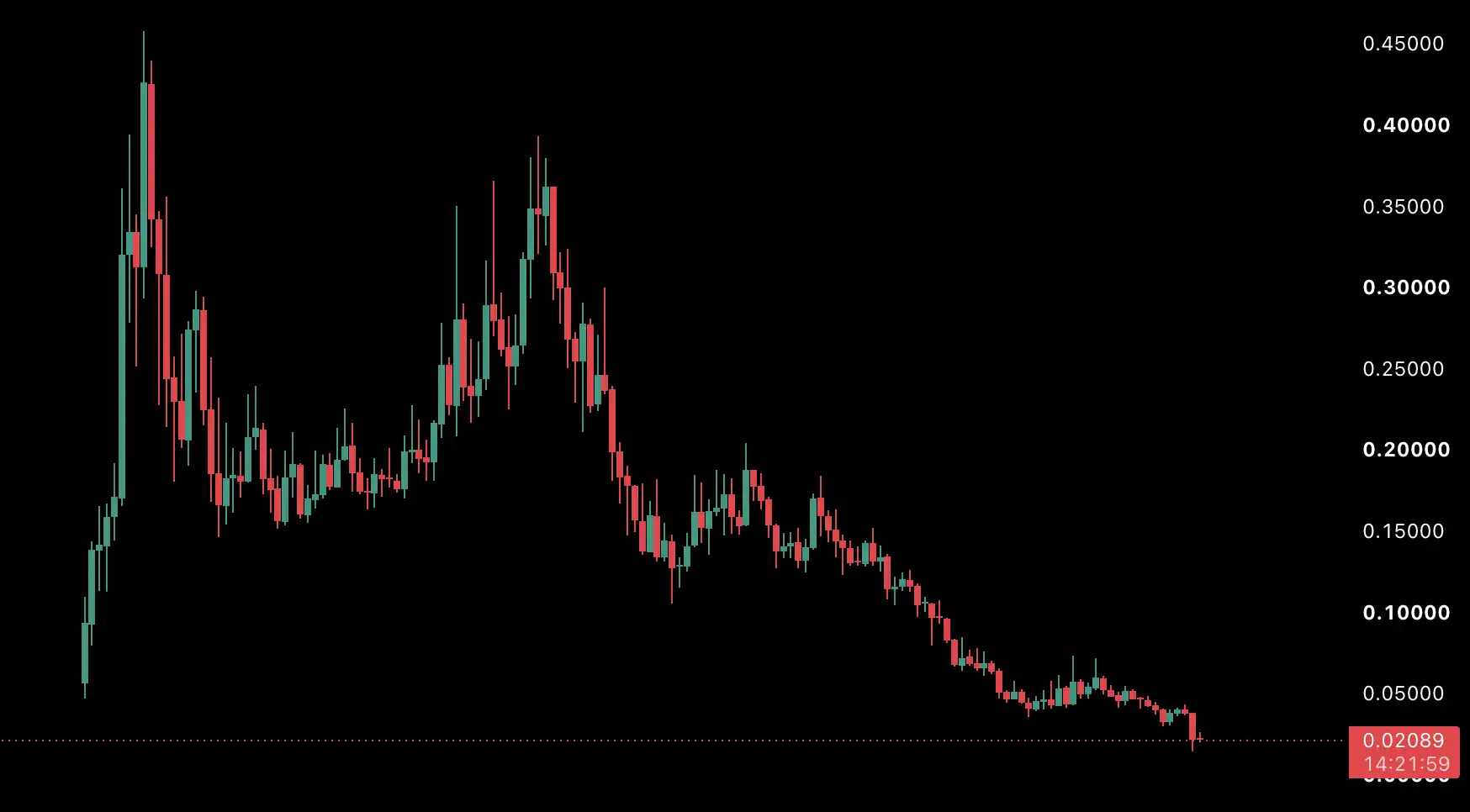
Ansem quickly explained on X: the Pump wallet was hacked, and he suspected someone gained unauthorized access to his Bullpen account. Bullpen is a front-end application for meme trading, into which he had imported the Solana private key for this wallet.
But on-chain analyst MLM offered another explanation. He found that an old wallet previously tagged as belonging to Ansem had transferred money to the wallet that later received the proceeds from the token sales before the sell-off occurred.
This suspicious transfer turned a wallet theft alert into a "self-staged" controversy.
The Best-Performing Altcoin
In Solana's meme circle, Ansem is a name that can bring in buy orders. He built influence in 2024 through trading views on tokens like WIF, gradually becoming a representative figure of this meme wave.
In June of this year, an anonymous developer created The Black Bull via Pump.fun, named after him with the token ticker ANSEM, and allocated a substantial portion of the supply to him. In July, Ansem publicly stated that he held approximately 58% of the total ANSEM supply.
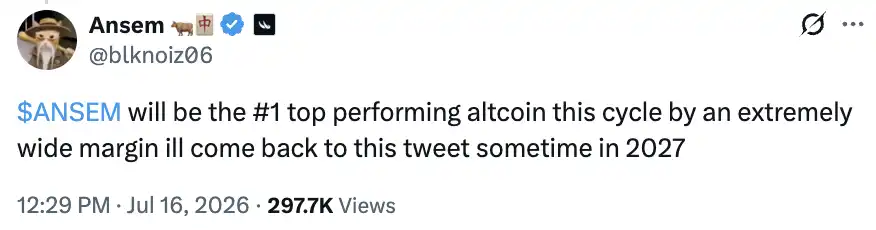
On July 16, he directly shilled it on X: "ANSEM will be the best-performing altcoin of this cycle by a massive margin. I'll come back and revisit this tweet sometime in 2027."
In the article "The ANSEM Thesis," he also built a narrative of a "tokenized creator economy" around the coin, claiming that ANSEM has the potential to become the leader of the next $2 trillion crypto sector after RWA. Buying this coin was described by him as a way to bet on the continued growth of his personal brand and influence; he also promised to link ANSEM to all his businesses in the crypto industry.
His marketing logic is also straightforward: "There is no better marketing than a rising coin price." To this end, he proposed phased airdrops, distributing tokens only after market cap, holder count, and community contributions reach certain milestones, to reduce selling pressure and continuously create demand. Regarding the common issue of insider dumping in celebrity coins, he claimed that he holds most of the supply and that no insiders received preferential tokens to dump on buyers.
Who Actually Stole It?
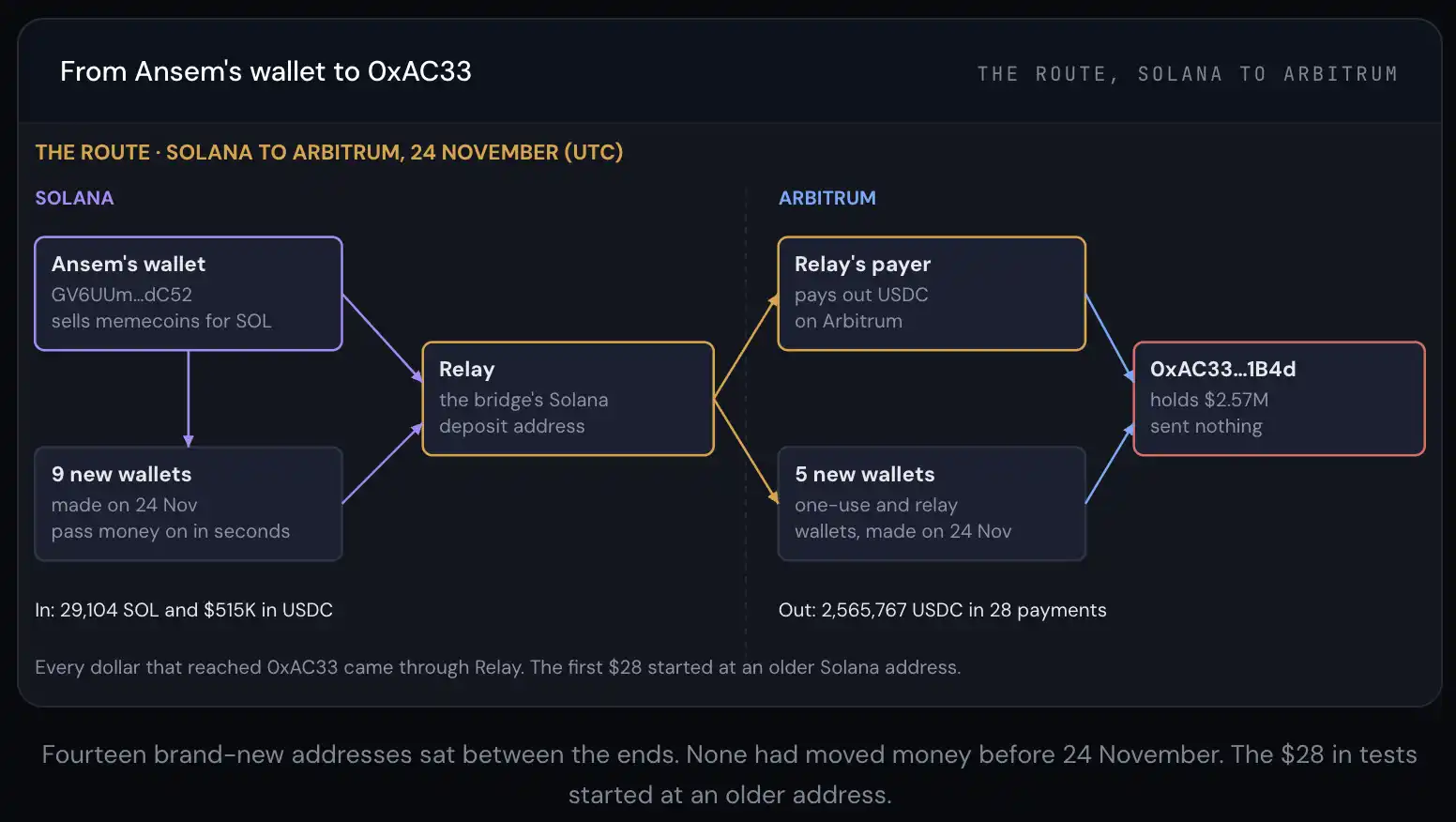
According to Bitquery's tracking, at around 2:46 PM Beijing time on November 24, Ansem's main wallet first transferred out approximately 515,000 USDC. After that, the wallet began processing the Meme coins it held, and the SOL obtained from selling them was sent to the Relay cross-chain bridge.
The sell-off covered a wide range, involving 124 tokens with a total of 877 sell transactions. ANSEM was the most affected, while other scattered holdings were also processed one by one. After cross-chaining, the assets were converted to USDC and sent to a receiving address on Arbitrum starting with 0xAC33. This round of transfers ultimately pooled about $2.57 million in USDC, after which the funds were moved to Bitcoin via Bridgers.
Was it Ansem himself or a "hacker" who executed these transactions?
According to on-chain detective MLM, about an hour before the sell-off began, a wallet that had been idle and was tagged by him as belonging to Ansem a year earlier provided funding to the address that later received the proceeds from the token sales. Therefore, he judged that these on-chain actions did not look like a hack at all.
Another on-chain analyst, Specter, also raised questions about the method of selling. He argued that attackers typically transfer assets away first and then sell, whereas in this case the tokens were sold directly from the original wallet and then cross-chained.
Some even noticed that Solana zealot and former Multicoin partner Kyle Samani sold all of his ANSEM holdings three days before Ansem was "hacked."
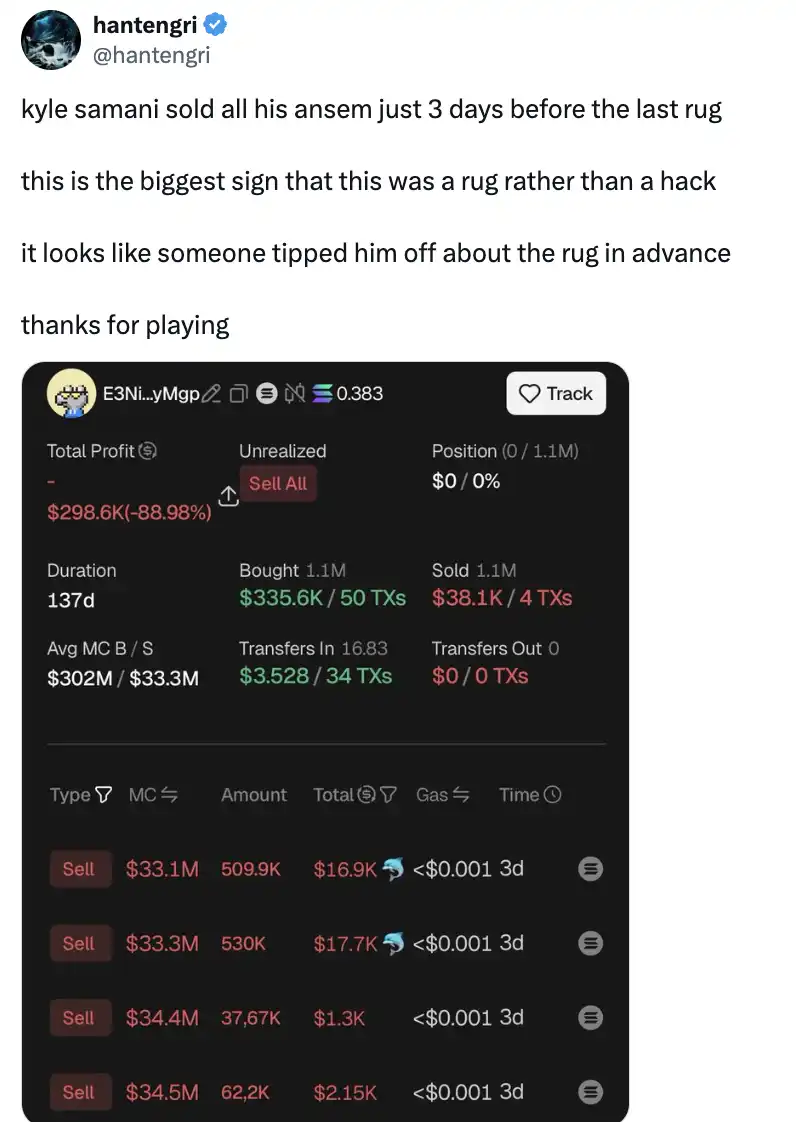
Based on this evidence, it is hard not to suspect that this was Ansem "staging a theft" himself.
Ansem himself denied operating these transactions, demanded that MLM stop spreading misinformation, and said a security audit was underway. His explanation was that if the Bullpen account had been compromised, the attacker would have been able to access the other wallets in the account at the same time; at that time, his EVM wallet positions were still open and the funds had not moved.
ZachXBT, who previously publicly criticized Ansem for promoting low-market-cap tokens, this time holds a different view on the speculation of exit cashing out. He believes that proactive selling of tokens usually involves more covert methods such as small wallets or one-sided liquidity pools, as public selling is both conspicuous and poorly executed.
Subsequently, Bullpen, the trading app used by Ansem, issued an announcement stating that unauthorized asset transfers were discovered in early test accounts. Initial estimates involve 18 to 19 accounts, including Ansem's; these accounts were opened between April and June 2024, and the affected test services have been taken offline.
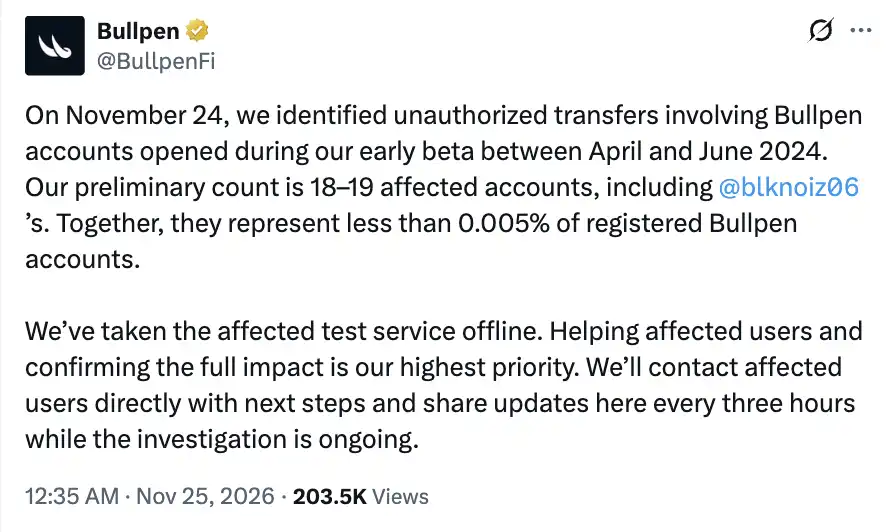
Bitquery identified another six Hyperliquid accounts, with approximately $659 transferred out through the same receiving chain; the old Solana wallet that previously raised suspicions was also emptied on the same day. These records support the explanation that multiple wallets were compromised simultaneously.
Backlash
After Ansem announced the theft, why did some immediately suspect it was a self-staged high-level cash-out? This reaction itself reflects the accumulated trust issues in the Meme market.
Meme has brought enormous traffic to the crypto industry. A name, an image, a social hotspot can make people who previously didn't care about blockchain download wallets, buy SOL, and learn to trade. Compared to understanding complex technical roadmaps, buying a celebrity coin they recognize is much easier.
This dissemination method has also normalized some bad behaviors. In an evaluation system that only looks at profit screenshots, those who make money retain their reputation, while those who lose money have to accept being mocked as "unskilled."
Devs, KOLs, and trading platforms have fully capitalized on the traffic dividend of Meme, but the "dark side" is borne collectively by the crypto industry. Outsiders only see token price crashes, "wallet thefts," and mutual accusations among KOLs.
The credit score of meme trading is approaching zero. Perhaps in time, during the Democrats' "reckoning" of Trump's crypto landscape, a few renowned "meme traders" might be implicated as well.
Welcome to join the official BlockBeats community:
Telegram Subscription Group: https://t.me/theblockbeats
Telegram Discussion Group: https://t.me/BlockBeats_App
Official Twitter Account: https://twitter.com/BlockBeatsAsia
