On February 10, 2026, Google's parent company, Alphabet, issued a bond in London with a maturity date set for one hundred years later.
One hundred years.
The person who bought this bond effectively made a bet that by the time their grandchild retires, this company will still be alive and able to repay the debt.
In the historical context, a hundred-year bond is extremely rare. Disney issued one in 1993, Coca-Cola did as well, and going further back, the Norfolk Southern Railway also did. In fact, this kind of term was a standard for 19th-century railway companies because of their need to lay tracks, dig tunnels, and build bridges, resulting in a very long investment payback period that could only be measured in "centuries."
But now, an internet company is borrowing money like a railway company. Why?
Over the past eighteen months, the answer to this question has gradually emerged. It is not found in any AI presentation slides, not in benchmark rankings, nor in the spats over "when AGI will arrive." Instead, it lies in the capital expenditure section of financial reports, in the spread changes of bond issuances, and in the cliff-like drop of free cash flow.
To understand this answer, we first need to understand how something vanished.
A Self-Destroyed Printing Press
First and foremost, we need to understand that over the past twenty years, what Wall Street believed in the most was not a particular tech company itself but a financial structure adopted by these companies.
These tech companies' revenue comes from advertising, cloud services, platform cuts, all delivered digitally with nearly zero marginal costs. No factories needed, no inventory, no mines or oil wells. The more users, the thinner the costs spread, and the higher the profit margins.
The direct outcome of this structure is free cash flow. Unlike net income, which can be manipulated by accounting standards, free cash flow is cold hard cash flowing into bank accounts, available for share buybacks, dividends, and future investments. This is why U.S. tech stocks received premium valuations.
There used to be a joke about Apple sitting on over $200 billion in cash not knowing how to spend it; Google generating hundreds of billions in free cash flow year after year, as if its search box were directly linked to a gold mine; Amazon, under the facade of low-margin e-commerce, actually operating a cash-printing machine through cloud computing; Meta making heaps of money by serving ads to over two billion people daily.
What investors are buying is not just growth; they are buying into the narrative of 'light asset, high cash flow,' as it promises that these companies will never be weighed down by factories like General Motors, crushed by infrastructure debts like AT&T, or tormented by the capital expenditure cycle like oil companies. They can directly ignore the gravity of industrial capitalism.
And then AI arrived. And the results brought by AI were unexpected.
At the end of April this year, Amazon released its Q1 earnings report, with good revenue, profit, and AWS growth. In the past twelve months, Amazon's operating cash flow was $148.5 billion, a 30% year-on-year increase, looking good. However, the free cash flow for the same period plummeted from $25.9 billion to $1.2 billion, evaporating by 95%.
Where did the money go? Amazon's Q1 capital expenditure was $44.2 billion, a 76.7% year-on-year increase, with a full-year guidance of around $200 billion. Almost all of this money was invested in AI infrastructure, such as data centers, GPUs, network devices, and power contracts.
Amazon is not losing money; on the contrary, they are earning more than before. It's just that they almost threw all this money into the AI black hole. Operating cash flow is like the Yangtze River, capital expenditure is like the Three Gorges Dam, and free cash flow has become a meager stream below the dam.
Other companies aren't faring much better.
In 2026, the four tech giants have a combined capital expenditure guidance of $700 to $725 billion, with Amazon at around $200 billion, Microsoft at around $190 billion, Alphabet at around $185 billion, and Meta at $125 to $145 billion. In 2022, the total for the four companies was $162 billion, which has multiplied by 4.5 times in four years. In just Q1 of 2026, the four companies together spent over $130 billion, more than the GDP of many countries in a year.
At first glance, these companies still look pretty good. Revenue is rising, profit margins are holding up well, and those AI product launches are still lively. But the "free cash flow" doesn't see it that way.
“Profit” is essentially a point of view; there is wiggle room in how depreciation schedules are defined, how R&D is capitalized, and how revenue is recognized. However, “cash flow” is a fact; how much money comes in, how much goes out, is crystal clear. Profit tells a story, cash flow tells the truth.
So the truth is, the most core "asset-light, high cash return" financial advantage these companies spent twenty years building is being eaten away piece by piece by AI capital expenditures.
The next question that arises is, free cash flow has bottomed out, but they are still increasing their investments, so where is this money coming from?
Borrowing. And the way they are borrowing now is unprecedented.
Three Months, Borrowing Half the World's Money
In February, Alphabet borrowed $32 billion.
A month later, in March, Amazon completed a $36.9 billion bond issuance in a total of 11 tranches ranging from two to fifty years. Investor orders totaled $126 billion, oversubscribed by 3.4 times. After this bond issuance, Amazon's total debt nearly doubled in a year. Another month passed. On April 30, Meta issued $25 billion in bonds.
Another month later, on May 11, Alphabet announced that it was preparing for its first yen-denominated bond. Interestingly, in addition to the US dollar, Alphabet's bond issuance in February included 31 billion Swiss francs.
This is a California-based US company, with almost all revenue denominated in dollars, yet it went to Switzerland to borrow money. And in May, they set their sights on the yen. In Amazon's deal in March, there were also euro tranches.
This is not a currency diversification made by these tech giants' finance departments for appearance's sake; this is forced upon them.
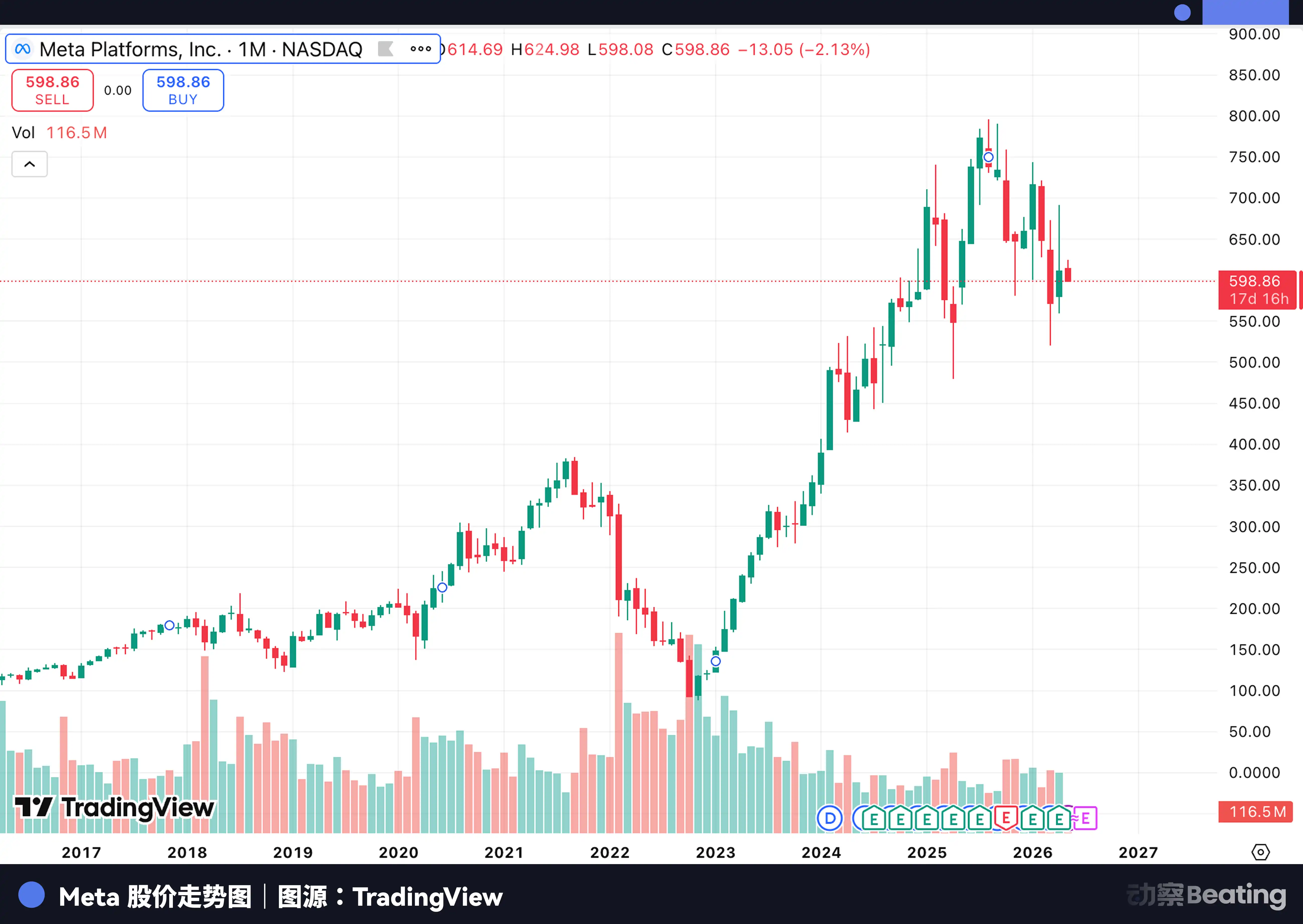
Look at Meta, in the $25 billion bond issuance in April, the longest tranche maturing in 2066 had a spread of 1.47 percentage points, which is the risk premium investors demanded Meta pay over US Treasuries. Six months ago, during the issuance of a similar forty-year tranche maturing in October 2025, the spread was only 1.10. In six months, it has widened by 37 basis points, and not just on the longest tranche; almost every tranche they issued had a higher premium than the previous round.
So, all these giants need to find places with lower interest rates. The Swiss National Bank's policy rate is the lowest among major economies, and Swiss franc bond yields are far below those of the dollar. Although Japan has ended its negative interest rate era, the cost of yen financing still has a significant advantage. More importantly, investors in Zurich and Tokyo have not been inundated by Silicon Valley tech debt, have a fresh appetite, and are not as picky as those in New York. For a top-tier credit borrower like Alphabet, borrowing money from a different place is not only cheap but also avoids waiting in line.
The capital expenditure of AI is incurred in the United States (data centers) and Taiwan (chips), but the money for the bill comes from Switzerland, Japan, and Europe. Silicon Valley has been globalized in technology for twenty years, and now it has also been globalized in debt.
However, the buyers of these bonds are not hedge funds or venture capital. Those who can absorb hundred-year and fifty-year bonds are pension funds, insurance companies, sovereign wealth funds—the most risk-averse money in the global financial system. Their mission is to preserve capital, be prudent, outpace inflation, not to take risks.
But now, the pension of a retired teacher in Zurich, the reserve prepared by a Tokyo insurance company for life insurance policies, is flowing through the bond market transmission chain into a data center in Oregon or Virginia, turning into GPUs on racks and cooling towers on rooftops. Most of these holders are unaware of the underlying assets of their bonds. Their fund managers bought "Alphabet Aa2-rated credit" or "Amazon A1-rated credit," relying on the letters from rating agencies for reassurance. As for what exactly the money eventually builds, what equipment it installs, what models it runs, whether that model can generate enough revenue to repay the debt—there are too many intermediate steps involved, making it impossible to see clearly from Zurich or Tokyo.
The world's most conservative money is providing seed funding for the world's most revolutionary technology.
When Internet Companies Grew Smokestacks
Yet, this funding has not turned into advertising spending, user subsidies, or stock buybacks. None of the most common paths that tech companies have taken to spend money over the past twenty years have been pursued this time.
This money has turned into concrete, steel, copper wires, transformers, and cooling pipes.
Amazon's $200 billion capital spending target for 2026 means it has to spend $550 million per day, $23 million per hour, $380,000 per minute. Microsoft announced a $10 billion investment in AI infrastructure in Japan from 2026 to 2029 alone.
This is not the expansion pace of a software company; this is infrastructure.
And the essence of infrastructure is to make a company heavier.
The construction period, investment scale, and operational complexity of a large data center are on the same level as that of an automobile assembly plant or a semiconductor wafer plant. The entire process of site selection, environmental impact assessment, power access agreements, water source security, and physical security must be run through.
The role GPUs play in AI is similar to high-end machine tools in manufacturing—expensive, limited production capacity, rapid depreciation. The chips purchased at a high price today may be outdated in two to three years, but you cannot wait because the competition does not wait.
Electricity has become a strategic resource, with the power consumption of a large AI data center equivalent to that of a medium-sized city. Tech giants are now entering into long-term power purchase agreements, investing in nuclear power, and negotiating dedicated power lines with utility companies.
Cooling water is now in competition with residents for water rights, and many communities in arid regions have found an unexpected guest on their water usage list.
These scenarios would have been unthinkable for tech companies twenty years ago. Site selection negotiations, grid access, water rights disputes, and local tax incentives used to be the domain of railroad companies, power companies, and refineries. The last time these financial tools were heavily utilized was also during the era of railroad and telecommunication infrastructure development, with hundred-year bonds, fifty-year bonds, and cross-currency issuances.
Looking at the balance sheets and cash flow statements of these companies in 2026, their numbers are now closer to TSMC, Duke Energy, or Union Pacific Railroad than they were to their own selves a decade ago.
This brings us to the topic of valuation. The pricing logic that investors used for tech giants in the past was based on the core assumption of decreasing marginal costs, where adding another user or another ad incurred almost zero incremental costs, resulting in continuously expanding profit margins. However, this is not the case for AI infrastructure. Training one more model, deploying another set of inference clusters, or building another data center all require substantial investments. Whether these investments can be recouped depends on whether customers are willing to pay, how the model's efficiency evolves, and how the competitive landscape changes.
Yet, all of these factors are uncertain.
This is more akin to semiconductors, where each new process generation requires larger fabrication plants, and returns depend on yields and the market. It is also similar to electricity, where initial capacity investment is significant, and returns depend on electricity prices and usage. And it resembles railroads, where tracks are laid first, and returns depend on whether the economy along the route can develop.
Therefore, as the financial structure of tech giants becomes more akin to that of heavy asset-based companies, the market's valuation multiples for them will inevitably move closer to those of heavy asset-based companies.
Some may argue that once the infrastructure is built, they will revert to a light asset model. This is overly optimistic. Railroads have been under construction for over a hundred years and are still expanding, the power grid has been in place for a century without pause, and semiconductor fabrication plants need to be upgraded every few years. The infrastructure of general-purpose technologies is never truly "completed."
AI may not be a continuation of the internet but rather a resurgence of industrial capitalism, dressed in code and standing on a foundation of concrete. While the internet spent twenty years helping tech companies break free from gravity, AI has managed to pull them back down in just two years.
Every General-Purpose Technology Revolution
In the 1840s in Britain, the railroad was the AI of that era, transforming freight transport from a few miles per hour by horse-drawn carriage to tens of miles per hour by train, achieving a remarkable leap in efficiency.
And then the capital flooded in. In 1846, the total railway investment authorized by the British Parliament was about £600 million, while the UK's annual GDP at that time was only around £500 million, with a country betting more than a whole year's national income on a new technology. To put it in today's terms, it would be equivalent to the US pouring over $25 trillion into AI.
Early railways relied mainly on stock issuance for financing, with investors holding onto visions of the future. As the scale of construction grew larger and the returns were delayed, and the quality of later projects declined, equity financing became insufficient, and debt financing took the stage. Railway companies began issuing bonds, using the future revenue of unfinished lines as collateral. The financing became more and more aggressive, shifting from domestic to international borrowing.
What killed the prosperity was not a problem with the railway technology but the interest rates. In 1846, the Bank of England tightened its monetary policy due to grain imports and gold outflow caused by the Irish famine, matters completely unrelated to the railways. However, interest rates, regardless of the reason, only cared about killing off the most vulnerable borrowers. The railway stocks collapsed, and a large number of railway companies went bankrupt.
The good thing is that the railways themselves remained. The tracks, stations, tunnels, and bridges did not disappear because investors lost money. They were taken over at discounted prices by successors, integrated into operations, and eventually became the arteries of the British Industrial Revolution. The rise and fall of cities, the layout of industries, and the movement of populations all realigned along the railway tracks.
Twenty years later, the same drama was replayed across the Atlantic. After the end of the American Civil War, the federal government encouraged western railway construction through land grants and loan guarantees. During the boom period, over 35,000 miles of new tracks were laid, with railway bond yields ranging from 6.4% to 6.7%, making them the most attractive fixed-income instruments at the time. Funds poured in from the East Coast, from Europe, flowing towards the wilderness of the American West.
In 1873, Jay Cooke & Company declared bankruptcy, once a major financier of the Northern Pacific Railway and one of the largest investment banks in the US at the time. The chain reaction eventually led to the closure of 18,000 companies within two years, and 89 railways went bankrupt within six years.
But the American railway network was eventually completed. It was the physical foundation that made the US a super industrial power in the 20th century. However, the people who built the railways were not the same ones who ultimately made money from them.

Similar stories can be found with fiber optics.
In the late 1990s, the rise of the Internet fueled people's immense imagination of bandwidth. Telecom companies began madly laying fiber optics, connecting not only cities but also continents and crossing oceans. Between 1996 and 2001, US telecom companies issued over $500 billion in new bonds to finance this construction, with millions of miles of cables buried underground and sunk into the seabed.
The pace of deployment far outstripped demand. When the bubble burst, only about 5% of the already laid fiber optic cables in the U.S. were connected to devices and transmitting data. The remaining 95% were "dark fibers" lying underground, waiting for a future that might never come.
WorldCom, the U.S.'s second-largest long-distance telephone company with $107 billion in assets, filed for bankruptcy in 2002 in what was then the largest bankruptcy case in American history. Global Crossing, which had built one of the world's largest fiber optic networks, also collapsed that same year. Winstar, 360networks, McLeodUSA—all these names fell victim to the surplus of dark fiber.
However, the fiber optics infrastructure ultimately endured. The undersea cables and metropolitan area networks that were mocked as overbuilt in the 1990s became the backbone of the entire internet economy over the next two decades. Netflix's streaming, Google's search, Amazon's cloud—all run on that batch of fiber optics, or their upgraded versions.
Throughout these three periods of history, the same logical chain of events kept repeating.
Firstly, the technology itself was indeed real. Railways were indeed faster than horse carriages, fiber optics were indeed faster than copper wires, AI indeed could do things that were previously impossible. No one denies the inherent value of technology in hindsight.
Yet, the construction pace far exceeded short-term demand because competitors wouldn't allow anyone to pause and wait for demand to catch up. It was believed to be a winner-takes-all game, where the early builders locked in customers and ecosystems, forcing everyone else to keep running.
Everyone was racing ahead, leading to massive overbuilding. To sustain the rapid construction, financing became increasingly aggressive—equity wasn't enough, so they turned to debt; short-term financing wasn't enough, so they turned to long-term; domestic currency wasn't enough, so they turned to foreign currency. This was true for railways, for fiber optics, for Swiss franc bonds, Japanese yen bonds, century bonds, and so forth.
And the trigger for adjustments often wasn't a technological issue but a change in financial conditions. In 1846, it was rising interest rates; in 1873, it was investment bank failures leading to a credit chain rupture; in 2001, it was the internet bubble bursting alongside a recession. Technology continued to advance, but the companies couldn't hold up.
In the end, the infrastructure remained, but a significant portion of the builders did not. The beneficiaries of the railways were the cities and factories along the lines, not necessarily the original shareholders of the railway companies. The beneficiaries of fiber optics were Google, Netflix, Amazon—not WorldCom's bondholders.
Of course, today's tech giants should not be directly equated with the 19th-century railroad tycoons or the 1990s telecom adventurers. The key difference is that these companies have enormous and still-growing core business cash flows. Amazon has AWS and e-commerce, Alphabet has search and YouTube, Meta has the world's largest social advertising network, Microsoft has Office and Azure.
They are not startups that started from scratch and built data centers with investors' money burning, but giants with real profits overdrawing their own future.
So the question is the return period of capital expenditure, whether it can outpace the debt repayment period. Railways are good, but borrowing money for six years to build a line that will take twenty years to break even is also a killer. Fiber optic cables are good, but borrowing money for five years to lay cables that only 5% are being used is also unable to save the balance sheet.
AI data centers are certainly good. But how much AI revenue does a $200 billion annual capital expenditure need to match? How many years are needed to recover the total investment of $700 billion? If model efficiency progresses faster than expected, such as a new architecture that requires only one-tenth of the computing power for the same task, will the computing power built expensively today become the dark fiber of the new generation?
All the Issued Bonds Are for Buying the Same Thing
Back to that hundred-year bond at the beginning.
The institutional investor who bought it, maybe a Swiss pension fund, maybe a UK insurance company, made a decision that day: to lend money to Alphabet and be repaid in one hundred years.
Behind this decision is a string of beliefs, believing that AI will be widely adopted, Alphabet will survive this competition, its search and advertising business will continue to generate revenue, its built data centers will be fully utilized, and there will be no disasters that will destroy the company in the global economy over the next century.
The holders of Amazon's fifty-year bonds have a similar long chain of beliefs in their minds. The holders of Meta bonds accepted a record CDS premium, but their chain is shorter because the market's credit window for Meta is clearly narrower than for others.
Chains vary in length, but they are buying the same thing. It's not GPUs, not data centers, not fiber optics and transformers, as those are all intermediaries. What they are truly buying is time.
AI models are becoming homogeneous. From open source to closed source, from small models to large models, the performance gap is narrowing. Before this window closes, before everyone can run almost the same model, whoever first lays out the computing power and locks enterprise customers in their cloud will be able to turn temporary technical superiority into a lasting business moat.
Therefore, what the giants are betting on is not "whose model is the smartest," but a more fundamental proposition: Can I build infrastructure and customer relationships to a scale that others cannot catch up with before AI capabilities fully diffuse.
This is time arbitrage, using today's low-interest funds to acquire tomorrow's market position.
Time arbitrage has a brutal premise: the future must arrive on time.
Four companies face different time pressures.
Amazon is the most urgent, with free cash flow depleted by capital expenditures to just $1.2 billion. The AI service revenue from AWS must scale in the next two to three years; otherwise, debt pressure will seep from the balance sheet into the income statement.
Meta is the most fragile. While social advertising is profitable, there is a missing link between AI infrastructure commercialization. While Azure and AWS can directly sell computing power to enterprise customers, after spending over a hundred billion on infrastructure, Meta's story of product transformation, target customers, and pricing strategy remains incomplete. The market's impatience is already reflected in its stock price and CDS.
Alphabet is the most poised. Search and YouTube continue to generate revenue with minimal maintenance. Even if AI doesn't yield short-term returns, the core business can provide a safety net. The market has granted it a century-long trust, giving it the longest time horizon among the four companies. However, the $185 billion in capital expenditures is 2.5 times that of last year, and the acceleration itself is eroding patience. Poise does not equate to safety.
Microsoft is the most clear-cut. Deep integration with OpenAI has made Azure a direct beneficiary of AI commercialization. With Copilot already monetized, GitHub Copilot is one of the highest-paying AI products among programmers. The path from infrastructure to revenue is the shortest. However, with $190 billion in capital expenditures, even with a clear path, the scale of the bet is so significant that everything must go according to plan to break even.
All four companies are betting on the same thing: borrowing money from the future to build something today that is not fully understood yet, gambling on the eruption of use cases before the debt repayment date.
This path has been traveled by railways, by fiber optics. Each time, technology ultimately proves its value, and the infrastructure remains. However, each time, there is a group, sometimes a large group, who foot the bill for the construction but do not live to see the payoff. The technology is correct, but the timing is wrong, and the financial market does not give a second chance for mistakes in timing.
No one knows if the "future" of AI will arrive on time. One thing is certain: the most conservative pools of capital worldwide have already sealed a contract with Silicon Valley by purchasing these century-long, fifty-year, and forty-year bonds.
The terms of the contract are simple: we lend you our time; you return the future to us.
As for whether the agreement will be honored in the future, no one can say for sure at this point.
Welcome to join the official BlockBeats community:
Telegram Subscription Group: https://t.me/theblockbeats
Telegram Discussion Group: https://t.me/BlockBeats_App
Official Twitter Account: https://twitter.com/BlockBeatsAsia
