Article by Sleepy
On June 17, SK Hynix posted a job advertisement. In the past, they only recruited core technical positions requiring a bachelor's degree or higher. However, starting that day, they have removed all educational requirements. Even high school graduates can now apply for R&D positions. This round of hiring aims to recruit over a hundred people, with the deadline set for June 23. They also mentioned that the educational requirements for production line positions will be adjusted in the future.
In a country that has spent seventy years staking its fate on the word "diploma," the company that ranks first is now saying that diplomas are no longer necessary.
According to Korea Herald, this company ranked first in the list of companies that Korean university students most want to work for in 2025.
The reason is simple: SK Hynix pays extremely well. In September of last year, they signed an agreement with the labor union stating that 10% of the annual operating profit would be allocated as a bonus, without a cap. With a projected profit of 47 trillion Korean won in 2025, the year-end bonus amounted to 2964% of monthly salary for the average employee, approximately 700,000 RMB. In the first quarter of 2026, the profit margin was 72%, higher than even NVIDIA. At this rate, the average bonus per person could exceed 3 million RMB for the whole year.
SK Hynix employees now hold a status in the Korean blind date market equivalent to traditional high-income professions like doctors and lawyers. Matchmaking agencies say that since the semiconductor industry entered a super cycle, engineers who have unexpectedly high incomes are more popular than lawyers.
Korea Herald reported an interesting detail. Someone listed an SK Hynix labor union vest on the second-hand platform Karrot for 40,000 Korean won, with the product description containing four words: "blind date battle armor." The post quickly trended.
There is a joke circulating around. When Hynix employees go on blind dates, they humbly say they work for Samsung. Only when they meet someone with a good character do they confess that they actually work for Hynix.
Samsung is indeed suffering. In just four months, at least 200 engineers have left for Hynix. Those who made the switch mentioned their income more than tripled. When the Samsung labor union chairman revealed this number to the press, his expression was grim because Samsung couldn't offer the same salary. Samsung's scale is too large, and despite the semiconductor division making huge profits, the mobile phone and home appliance divisions are still losing money in the same quarter.
When SK Hynix announced the removal of educational requirements, they provided a set of explanations. They stated that in the age of AI, educational background alone is not sufficient; creativity and potential are also crucial. SK Group Chairman Choi Tae-won mentioned three words: critical thinking, adaptability, empathy.
All good words.
A Suspension Bridge Under Repair for Seventy Years
South Korea is the world's most extreme country when it comes to the concept of "diploma." According to OECD statistics, 71% of South Koreans aged 25 to 34 hold a university degree, the highest rate globally. On the day of the college entrance exam, flight paths are adjusted, the stock market opens later, and police cars are responsible for escorting late students. It's not because South Koreans have a particular reverence for knowledge, but because a university acceptance letter in South Korea is almost equivalent to a visa, allowing individuals to move from the lower class to the middle class.
Without it, you can't get anywhere. With it, at least you can line up.
How did this visa become so important? To understand, we need to go back sixty or seventy years.
During the Park Chung-hee era, South Korea tied the entire economic lifeline to a few large conglomerates. Samsung, Hyundai, LG, SK—they held the most profitable businesses, paid the highest wages, and offered the most secure jobs. The wages in small and medium-sized enterprises were about 60% of what conglomerates paid. 81% of the workforce worked in small and medium-sized enterprises, but everyone's eyes were fixed on the less than 1% opportunity in conglomerates. In South Korea, a graduate's first job basically determined their lifelong income.
How did one enter a conglomerate? With what? A university diploma, a diploma from a prestigious university.
The entire country's families began to squeeze onto this path. The Bank of Korea conducted a study showing that students with similar abilities, the economic status of parents had a whopping 75% impact on the probability of admission to a prestigious university. One-third of Seoul National University's freshmen come from Seoul alone, with just the three districts of Gangnam accounting for 12%.
Youth in South Korea have coined a self-deprecating term called the "spoon theory." Those with a family fortune exceeding 2 billion Korean won are called "gold spoon," while those with less than 50 million are called "dirt spoon." About 70-80% of South Koreans feel that social mobility is no longer related to them.
Someone wrote about their family online. The gist was, my mom ran a small restaurant, working tirelessly for ten years, saving enough for my university tuition. I attended a mediocre university in another city, majoring in liberal arts. Now I work as a waiter in a café, earning a monthly salary of 1.8 million Korean won. My younger sister is about to graduate from high school, and I told her not to go to university and learn a trade instead. But my mom disagreed. She said it was because we lacked education that we ended up like this.
In small towns in Chungcheong, Gyeongsang, and Jeolla provinces, families like this are everywhere.
In local towns in South Korea, the lights of cram schools shine until late at night. Walking out, you see deserted streets, even the convenience store clerks are dozing off. Sixteen- and seventeen-year-old kids walk home, and their knowledge of Seoul comes solely from their phone screens. Parents send hundreds of thousands of Korean won to cram schools every month, which for families running small restaurants or fried chicken shops is like cutting off chunks of meat. But they still send the money because if they don't, their children won't even have the opportunity to line up on the suspension bridge.
Koreans joke about the "Fried Chicken Hypothesis." No matter what you're doing now, whether you're a programmer, architect, or engineer, there's a high probability that you'll end up as a fried chicken restaurant owner. Because there are only so many spots in chaebols, and those who can't get in will eventually fall down, all ending up in the same place. Small-town youths resonate the most with this hypothesis because they are the furthest away from that spot, falling down the fastest.
Someone once said that living in Seoul is all the hells he can imagine. But what if you don't go to Seoul? The local job market is quieter than hell itself. So quiet that even hell finds it too desolate.
So they still go. Squeezing into Seoul, residing in goshiwon, rooms not much larger than a bed, walls so thin you can hear the neighbor toss and turn, with a shared restroom at the end of the hallway. They spend their days attending classes or preparing for interviews, and at night, they cram TOEIC vocabulary under a desk lamp. Young people in their early twenties live in a four-square-meter box, all to save enough for a ticket to become a "job seeker for a large corporation." Education, English scores, qualifications, internships, volunteer activities – Koreans call this whole set of things "spec," just like adding attribute points to a character in a game, each requiring time and money to level up.
In the '70s and '80s, mom was right. Back then, society was like an elevator, and a diploma was your ticket to ride up.
The elevator has been stuck for a long time now.
When 71% of young people hold a university degree, the diploma no longer proves your worth; it only shows you haven't fallen to the very bottom. Everyone has it, which is almost the same as no one having it. What truly matters are the extras that come with the diploma. Overseas exchange experiences, extracurricular competitions, networking referrals, interview training – each requiring money to acquire.
Walking this one-way bridge, children walk on the surface while family wealth carries the weight underneath.
The Bridge Dismantler Stands at the Other End of the Bridge
SK Hynix says, "No need to cross the bridge." You can work in chip development with just a high school diploma. They look at your skills, not your paper.
I try to look at this from another perspective.
If they don't care about diplomas anymore, what do they care about? Companies mention a few words: growth potential, ability to creatively solve problems, cultural fit.
College entrance exam scores are black and white, a national standard - you can argue that this standard is crude, but there's no way around it. "Growth potential" is not like that. Its shape is determined by the interviewer. "Cultural fit" is even more elusive; it can be almost anything or nothing at all.
A kid graduates from a small-town high school and sits at the interview table at SK Hynix Icheon Campus. He grew up in a small city in Gyeongsangbuk-do, three hours away from Seoul. His high school had no semiconductor lab, no programming clubs, and the library's books on chips might have been published ten years ago. He is smart, but no one has ever shown him what a wafer looks like.
Now the person across from you has to determine in an hour whether they have "flexible thinking." This judgment is based on how they speak, their posture when thinking about a problem, and a certain quality displayed in the conversation. These things are related to talent, but depend more on the kind of environment a person grew up in, what books they have read, who they have met, where they have been, and whether someone has taught them how to clearly articulate their thoughts in front of strangers.
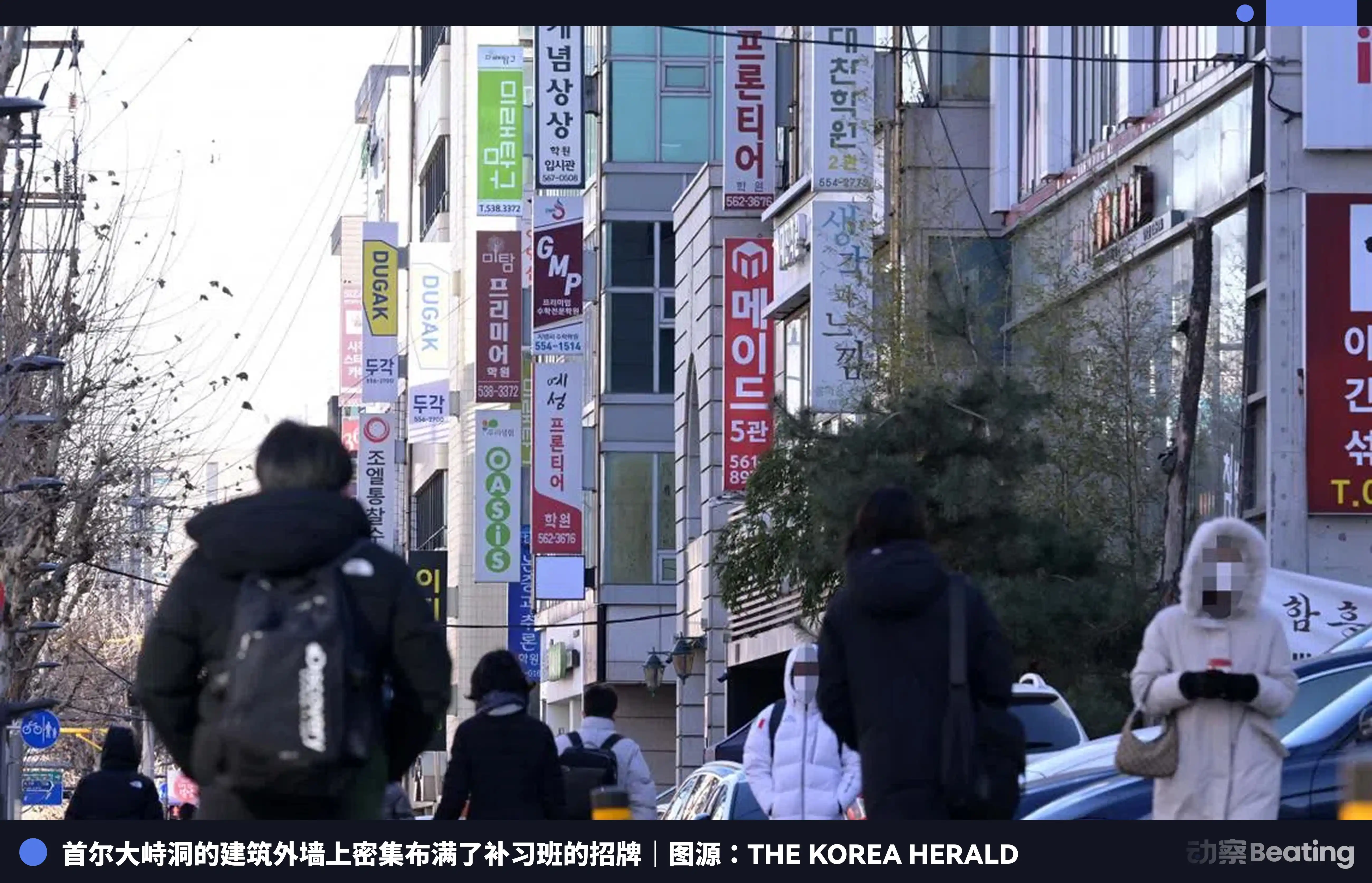
Meanwhile, the interview coaching classes in Daechi-dong, Gangnam-gu, Seoul, will not close; they will only change their curriculum. Business is not affected; in fact, it may even thrive.
The old rules are rigid but clear. When the score is reached, it's final, and no one dares to reject you in person without giving a reason. The new rules are soft and polite, full of goodwill. However, the softer the ruler, the easier it is to bend, and which way it bends depends on whose hand is holding it.
There's the mother who ran a restaurant for ten years to put her daughter through college. She only held one card, and that was the diploma. Not because that piece of paper has any magical power. It's because in this game, this was the only card she could afford.
The children in Gangnam-gu don't rely on this card. They start coding in elementary school, spend summers in Silicon Valley, and have extracurricular activity schedules that fill three pages. Whether they have a diploma or not doesn't matter. The same card means everything to one person and is a mere decoration to another.
The rules of the game have changed, and the first card taken from the table happened to be the only card the poor had.
A New Tightrope
SK hynix dropping the educational requirement is a good thing purely in terms of recruitment efficiency. They are currently experiencing the best years in the company's history, with HBM orders scheduled two years in advance, in desperate need of capable individuals. If a high school graduate can truly do chip design, the rule standing in their way makes no sense.
However, SK hynix is the first choice for Korean university students. When it says the diploma is no longer important, this statement will penetrate through the campus walls and reach every cram school. Every high school student still solving problems under the lamp will have a moment of hesitation.
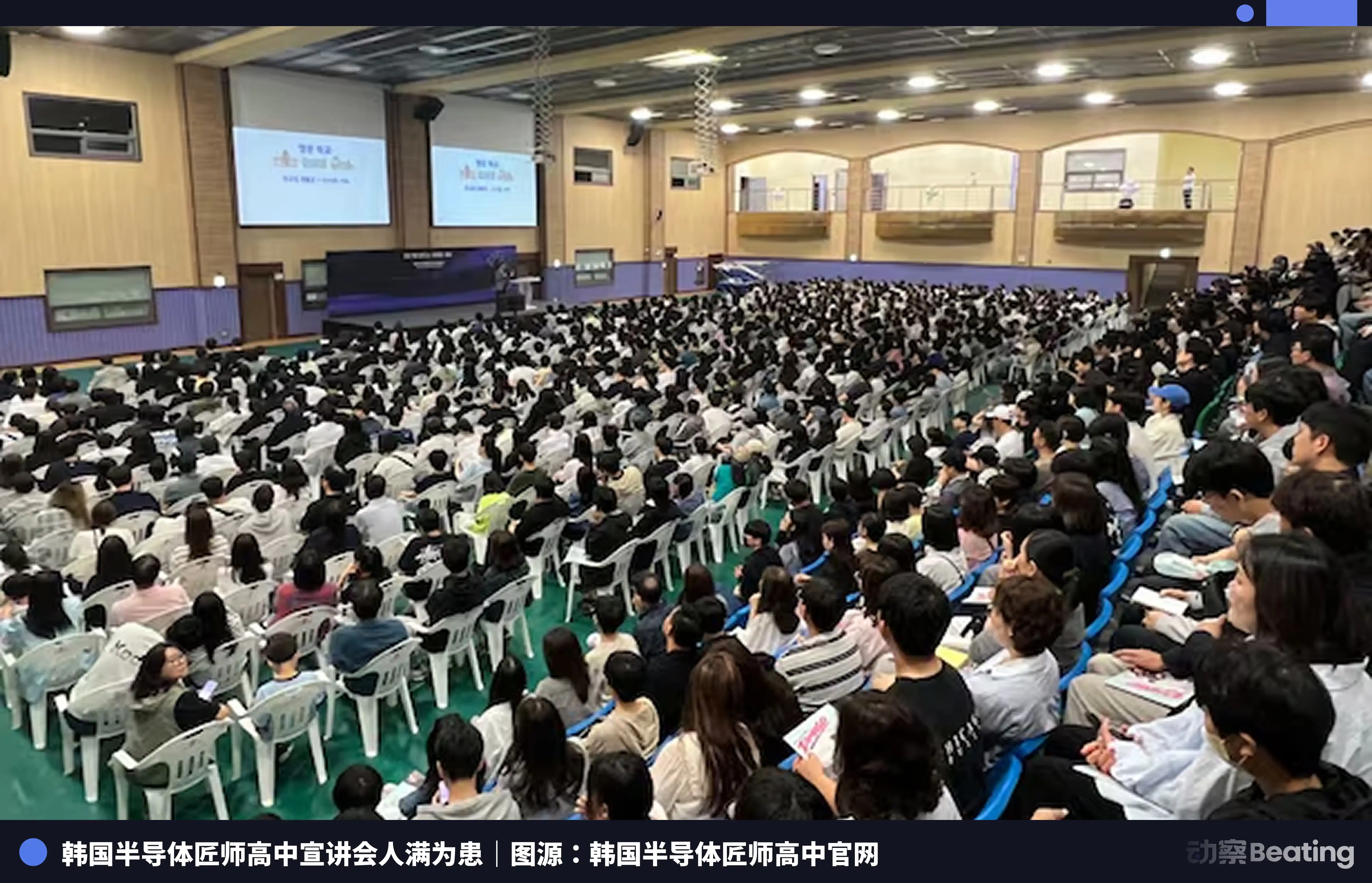
Korea already has a semiconductor vocational high school. There is one called the "Korean Semiconductor Craftsmen High School," which recently held its first enrollment briefing, and it was packed. Coming out after three years and stepping onto hynix's production line, the money earned in a year may surpass what a father earned in his entire lifetime.
In the same month, data from Statistics Korea showed a year-on-year decrease of 40,000 in May's employment numbers, the first negative growth in seventeen months. Manufacturing employment has been declining for twenty-three consecutive months. Only the semiconductor sector is rising, while other industries are on the decline.
A new bridge has been built. But this time, the other end of the bridge is not a university, but a company.
In the past, despite all the stress surrounding university entrance exams, there were hundreds of universities to choose from, thousands of majors, and various directions to take. If the entire bet of the next generation of young Koreans shifts from "getting into a good university" to "joining a good company," they are still gambling, just with a different bookie.
Micron said it no longer looks at academic backgrounds, and 40,000 Samsung employees are on strike demanding a share of the profits. Combining these two events reveals one truth. It's not a self-reform of the academic background system. It's that the money is too strong, so strong that even the system standing in front of the profits has to step aside. The rules follow the money.
That river has always been there. The bridge that has been on it for decades has been replaced several times. From the imperial examinations to the college entrance exam to university diplomas, this time it has been replaced with "comprehensive quality assessment."
That river represents the 60% salary gap between chaebols and small companies, the world of resource disparity between Seoul and the rest of the country, the line between the gold spoon and the dirt spoon, a fate sealed at birth.
Yanagimori wrote about a man in "JR Ueno Station Park Exit." He came from rural Fukushima to Tokyo to build the venue for the 1964 Olympics. He sold his strength, sent money home, didn't complain, didn't stop, did everything he was asked to do. When the venue was completed, Tokyo no longer needed him. He ended up sleeping on a bench in Ueno Park, beside the stadium he had built. People came for walks, people came to take pictures. No one saw him.
He did nothing wrong. It's just that the things he did were no longer needed the day after he did them.
While reading this book, I kept thinking about the mother who opened a small restaurant. Today, she must have seen the news about SK Hynix.
I guess she won't change her mind; her younger daughter will still go to college.
Not because she doesn't understand. It's because even if she understands, she dares not admit it. If she admits it, then the past ten years were in vain. Those days of working around the clock, those days of splitting every penny of profit in half, those days of refusing to close the shop even when running a fever, were all for her daughter to receive that piece of paper. If that paper is truly no longer important, then what are all those things she did?
So she will continue to support, continue to save, continue to send money to cram schools. In that 4-square-meter cubicle in the exam institute, her younger daughter will eventually move in.
Welcome to join the official BlockBeats community:
Telegram Subscription Group: https://t.me/theblockbeats
Telegram Discussion Group: https://t.me/BlockBeats_App
Official Twitter Account: https://twitter.com/BlockBeatsAsia
