Last weekend, Trump announced that the "agreement with Iran has been finalized" and the Strait of Hormuz will be open. However, peace is never something Trump can achieve with just one post. This weekend, the execution of the Memorandum of Understanding (MOU) saw the first wave of significant friction — and oil prices, precious metals, and stock indices all followed this storyline in a full round trip.
On June 19-20, Israel continued airstrikes on Lebanon, causing Iran to temporarily postpone talks with the U.S., the Revolutionary Guards declared a "high alert," and threatened to withdraw from negotiations if Israel continued its attacks.
On June 20, Trump, on one hand, stated that "about 700 ships are passing through the strait, and Iran must reach an agreement within 60 days," and on the other hand, in an interview, described this ceasefire memorandum as "basically equivalent to Iran's unconditional surrender," and threatened further action if no agreement is reached within 60 days. Tehran was completely outraged. Later that day, Iran's highest military joint command claimed that they would close the Strait of Hormuz due to the U.S.'s "violation of the ceasefire memorandum." Despite the U.S. Central Command's rebuttal that "Iran does not control the strait," 55 merchant ships still passed through that day.
On June 21, a technical-level consultation involving the four parties (U.S., Iran, Qatar, Pakistan) kicked off in the Swiss town of Bülach, with Vice President Vans leading the team and sitting at the same table with Iranian Foreign Minister Aragchi. During the first 80-minute closed-door meeting, the Iranian delegation briefly walked out in protest of Trump's remarks but quickly returned.
By the morning of June 22, the atmosphere had significantly warmed up. Qatar and Pakistan issued a joint statement announcing three phased achievements: the establishment of a high-level political oversight committee, the identification of a 60-day final agreement roadmap, and the initiation of a mechanism to resolve the Lebanon conflict. The mediators described the negotiation atmosphere as "extremely positive and constructive." The Pakistani side also revealed that Iran would not impede ships passing through the strait in the next 60 days, and passage would be free. An Iranian Foreign Ministry spokesman stated, "The Swiss talks have made good progress."
Crude Oil
The weekend's movement in crude oil prices continued to be influenced by news volatility, but overall maintained a downward trend.
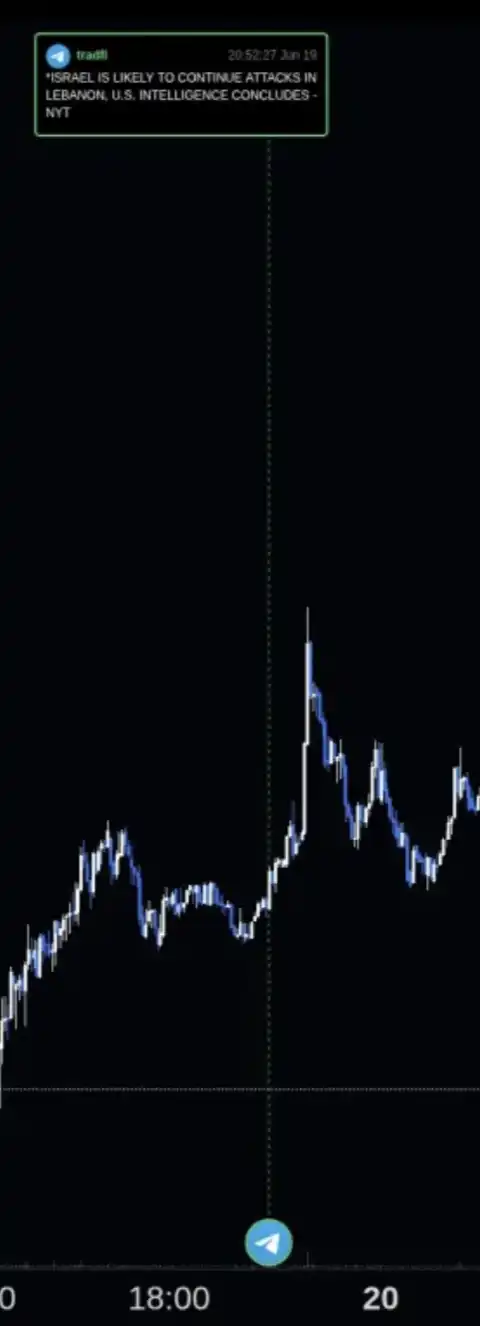
On June 19, The New York Times cited U.S. intelligence stating "Israel is likely to continue to strike Lebanon," causing oil prices to spike from $76.5 to around $78.
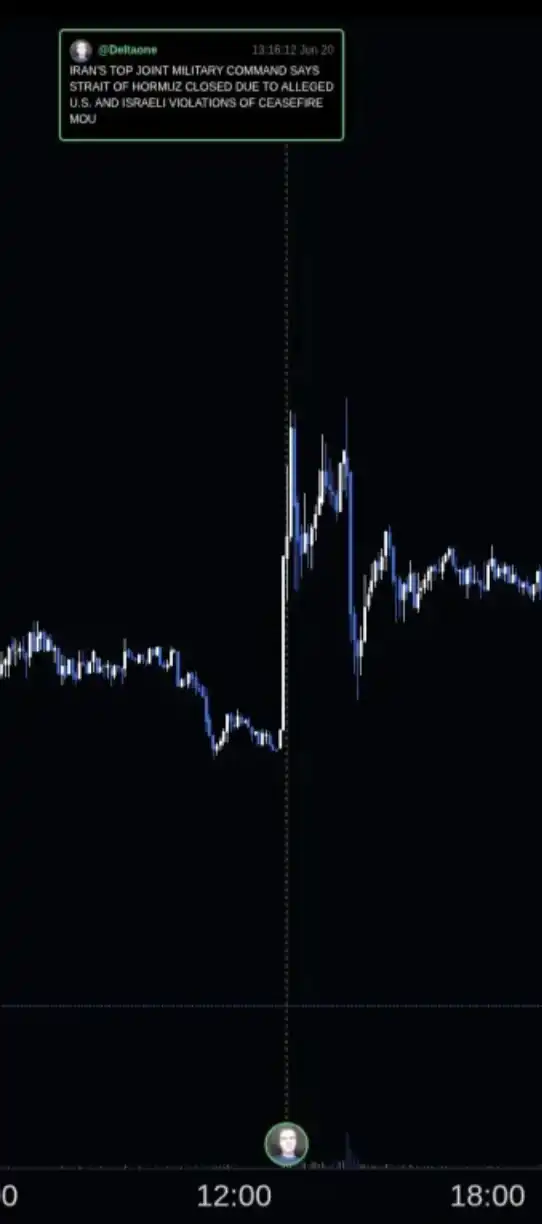
On the evening of June 20, Iran's highest military command announced the "closure of the strait," instantly pushing oil prices to a high of $79.
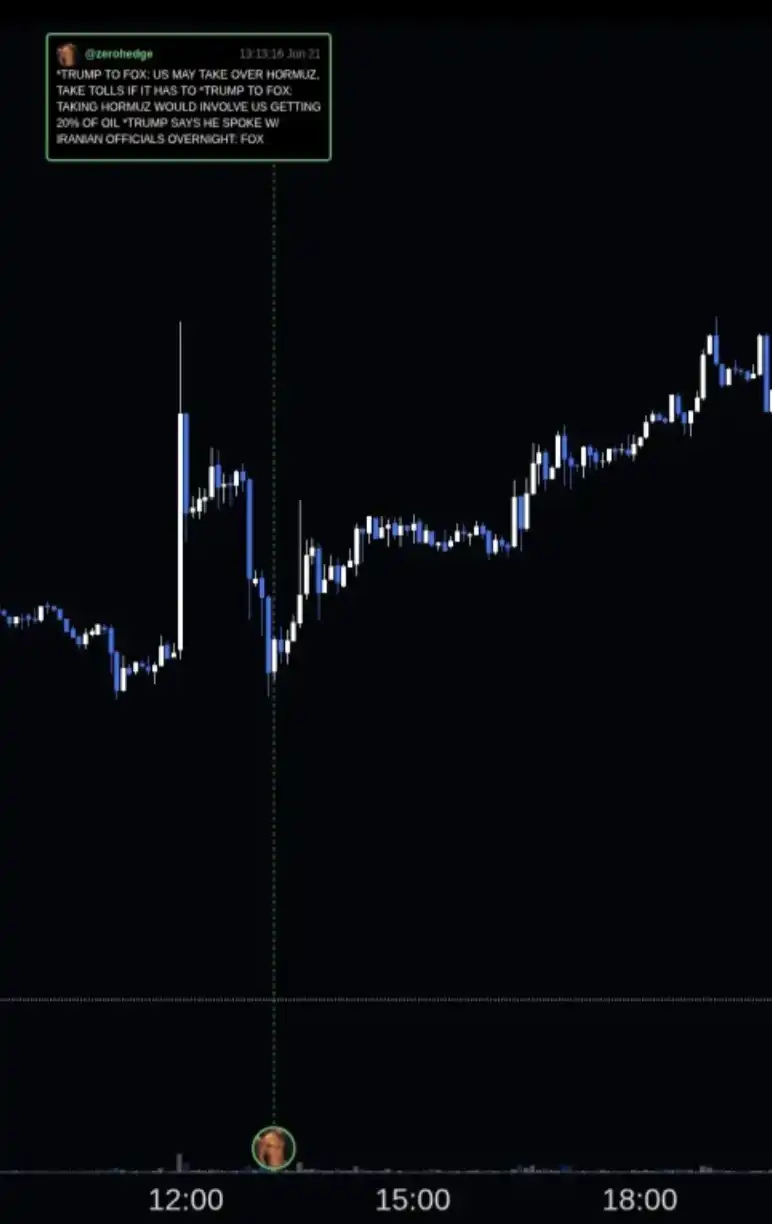
Following that, Trump made a more aggressive statement on Fox, saying, "The U.S. may take over the Strait of Hormuz and impose a toll for passage when necessary," and claiming that "taking over the strait would mean the U.S. gets 20% of the oil," and he mentioned having overnight talks with Iranian officials. Crude oil then slowly rose.
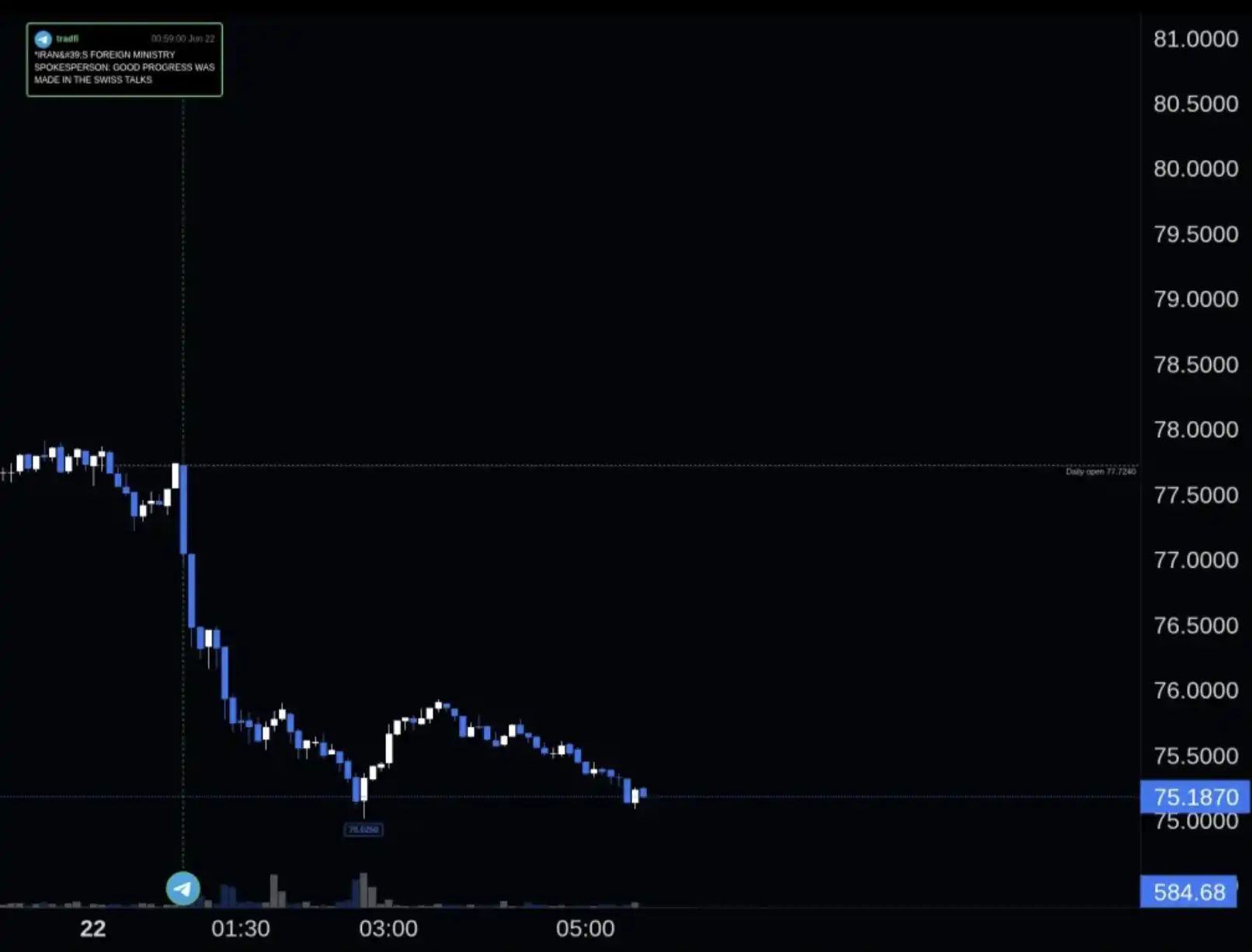
In the early hours of June 22, the Iranian Foreign Ministry set the tone for the "Swiss talks making good progress," causing the price of oil contracts to fall nearly 6% from the weekend highs.
U.S. Stocks
In contrast to the violent fluctuations in oil, U.S. stocks showed a much more subdued performance this week.
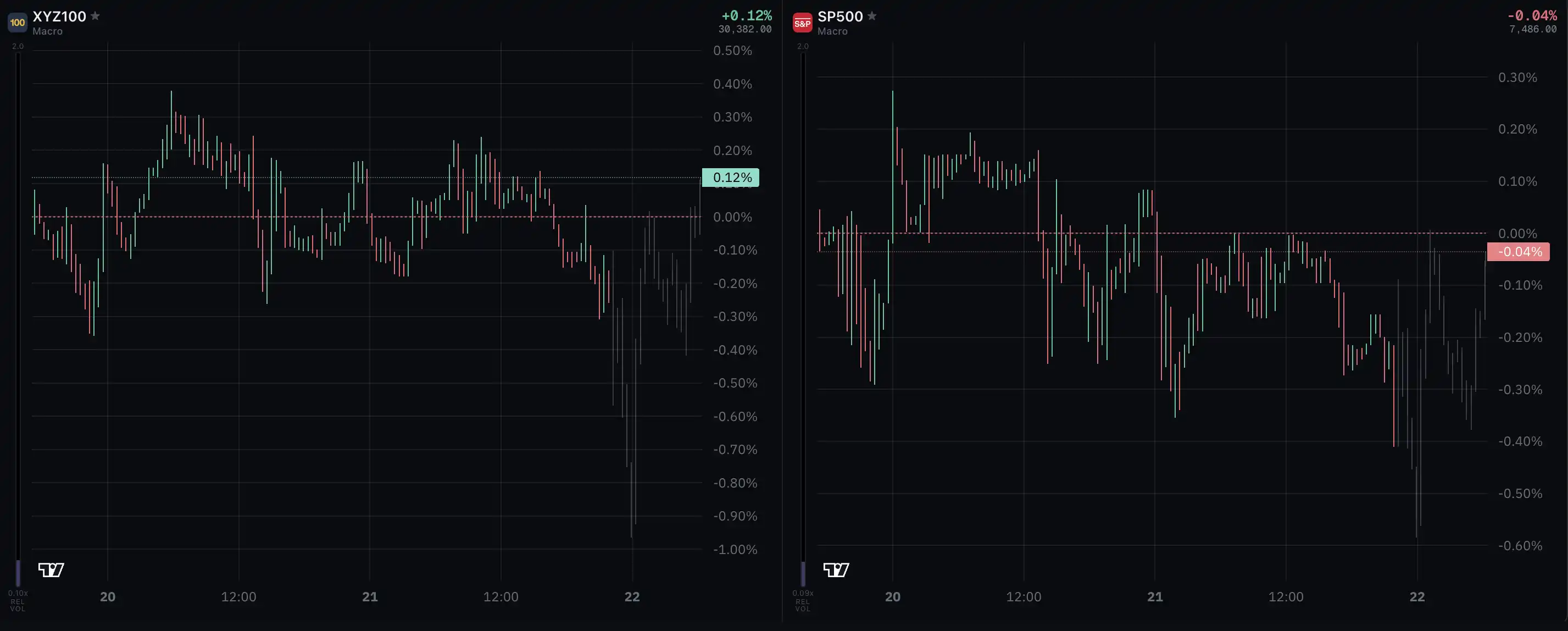
On the index side, the XYZ100 and SP500 basically oscillated around the zero axis throughout the weekend, with a temporary weakening during the trading session (SP500 reaching as low as around -0.6%), followed by a recovery with the opening gains of stock index futures.
At the individual stock level, there was generally a slight decline following the broader market, with the technology sector seeing declines: SKHX -0.79%, MU -0.63%, NVDA -0.8%, SMSN -3.0%.
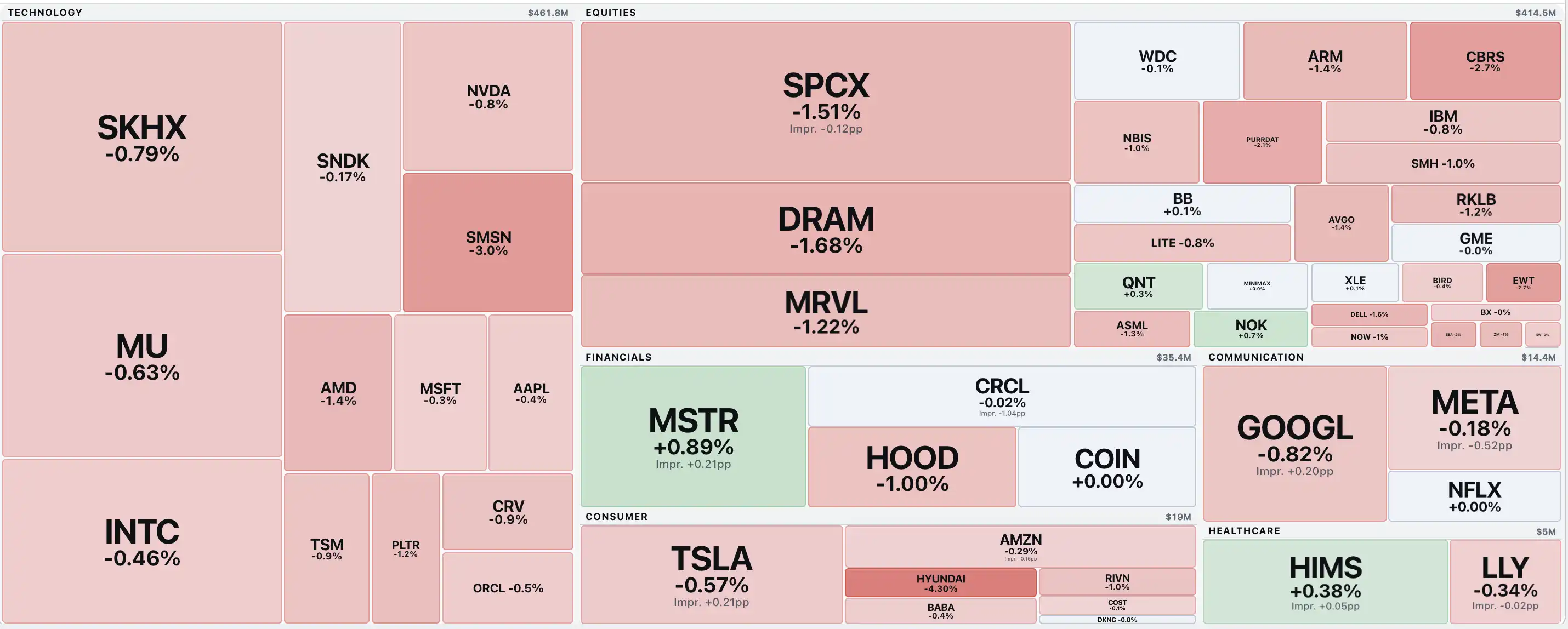
High Beta growth stocks SPCX -1.51%, DRAM -1.68%, MRVL -1.22% also experienced a synchronous pullback; stocks showing relative strength included MSTR +0.89%, HIMS +0.38%.
Commodity Futures
Gold and silver saw a jump at the futures open. This continued the "loose repricing" logic that emerged over the weekend. The decline in oil prices strengthened expectations of a peak in inflation, a retreat in yields, and a weaker dollar, propping up precious metals instead of traditional safe-haven buying.
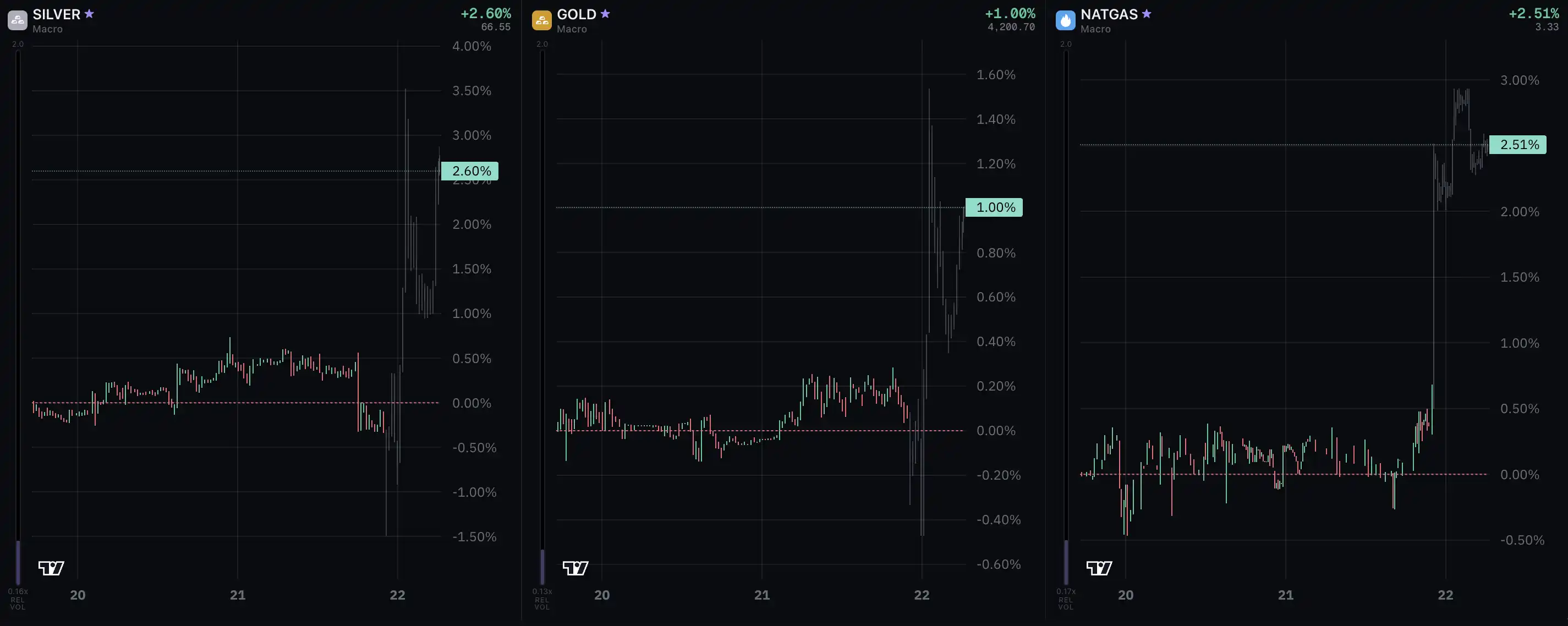
Unexpectedly, natural gas saw a counter-trend rise (+2.51%).
The rise may be linked to an unexpected incident. Earlier today, a natural gas explosion occurred at the Ras Laffan LNG processing plant, a core facility in Qatar's Ras Laffan, resulting in 54 injuries and 18 people missing. The plant's Barzan natural gas facility supplies gas for Qatar's domestic industry and power generation, and it is currently unclear if LNG production is affected. Qatar was the world's second-largest LNG exporter pre-war and had halted production earlier in the conflict due to facility attacks and strait blockades.
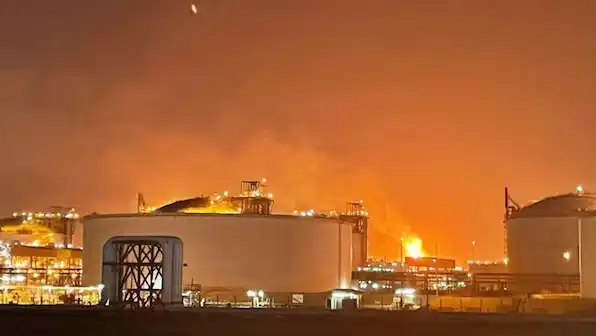
In a stark contrast to this explosion, another signal of “resumption” has emerged: Qatar has started to recall its empty LNG vessels to re-enter the Persian Gulf, with the market anticipating a recovery in natural gas supply from Qatar.
Welcome to join the official BlockBeats community:
Telegram Subscription Group: https://t.me/theblockbeats
Telegram Discussion Group: https://t.me/BlockBeats_App
Official Twitter Account: https://twitter.com/BlockBeatsAsia
