Stock trading in the US has become a new popular trend in the crypto world, there is no doubt about it. When we talk about stock trading in the crypto world, we often focus on the "competition between various CEXs and Hyperliquid".
Solana, a public blockchain that is primarily known for meme coins in the eyes of many players, is relatively less focused on in the stock trading race. However, they have quietly entered this latest battle for market share in the crypto world.
Solana Wins the Battle for On-chain Tokenized Stock Market
From Solana's recent official updates, it is clear that their tweets have been heavily focused on their on-chain stock trading recently. Just the other night, Solana officially announced the launch of tokenized MU stocks on Solana.
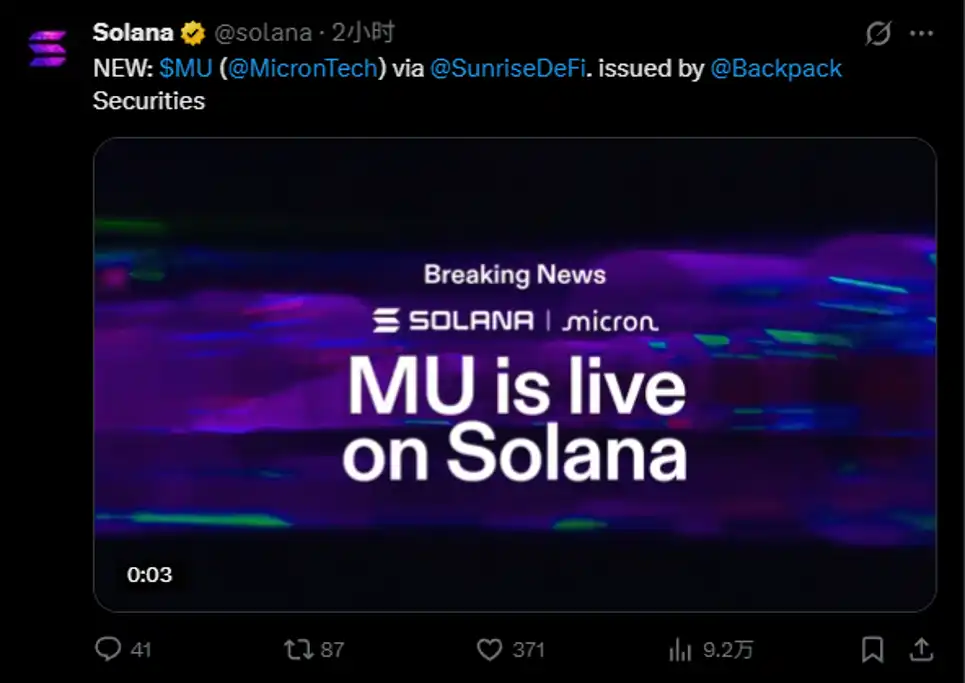
Obviously, as a public blockchain, Solana has also made stock trading its most important recent development focus. And from the data, it is evident that they are doing quite well and are in a leading position in the on-chain stock trading competition among blockchains.
One week after the SpaceX IPO, Solana set a record with a $10.4 billion weekly trading volume of tokenized stocks. The trading volume of $SPCX reached $439 million, accounting for 91.7% of all SpaceX tokenized stock trading volume.
In the past week (6/15-6/21), the trading volume of tokenized stocks on Solana reached nearly $1.3 billion, while Base and BNB followed with approximately $14.1445 million and $12.9154 million, respectively, with Ethereum's mainnet only having around $0.3128 million.
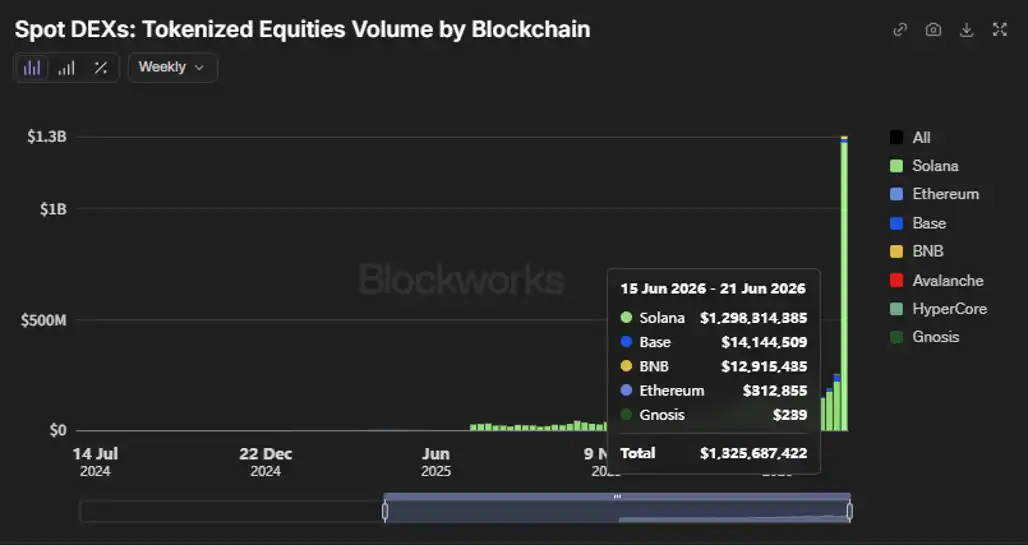
Comparing various CEXs, in the past week, Binance had a tokenized stock trading volume of nearly $500 million, followed by Gate with nearly $220 million and Bybit with $107 million. In May of this year, Solana also had a trading volume of around $870 million, ranking just below Binance (around $1.1 billion), Gate (around $1.088 billion), and Bitget (around $880 million).
To achieve such results, PropAMM has also made significant contributions. Taking the data from the past week as an example, the trading volume of PropAMMs like Zerofi, Goonfi, and Tessera only ranked below Orca and Raydium.
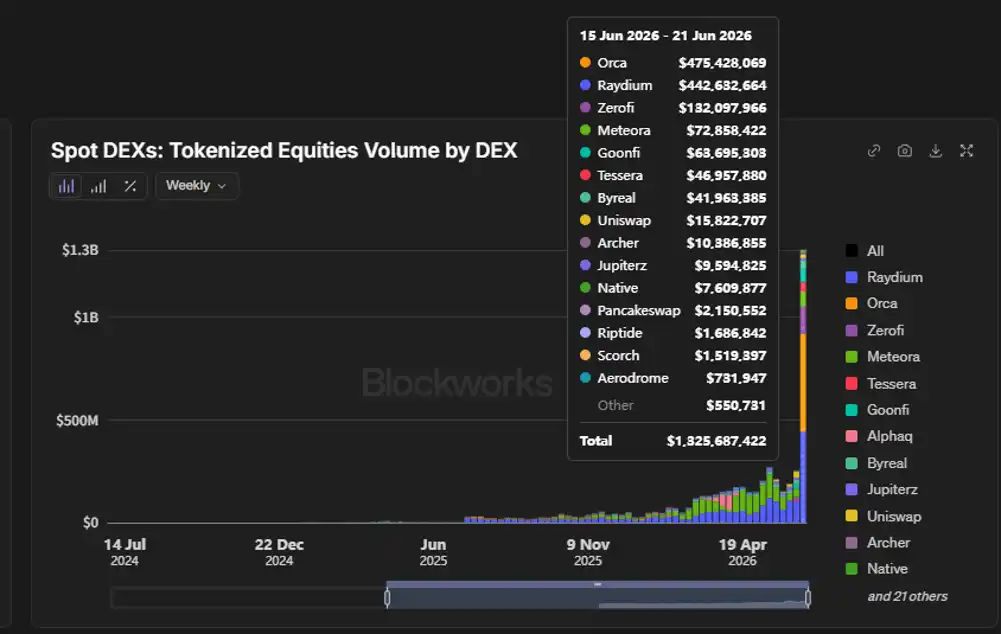
These self-operated AMMs managed by professional market makers are 100% funded by the market makers themselves. Unlike traditional simple x*y=k open-source passive AMMs, these PropAMMs provide active pricing. They are closed source, do not publicly expose liquidity, usually lack a frontend and instead use aggregator routing. They can update quotes multiple times per block, even every 50ms, and can also mitigate MEV attacks.
In terms of spot asset price efficiency, Solana has already outperformed mainstream CEXs. Moreover, in this efficiency advantage in spot trading, the main trading volume on Solana's various DEXes has been exclusively in tokenized stocks.
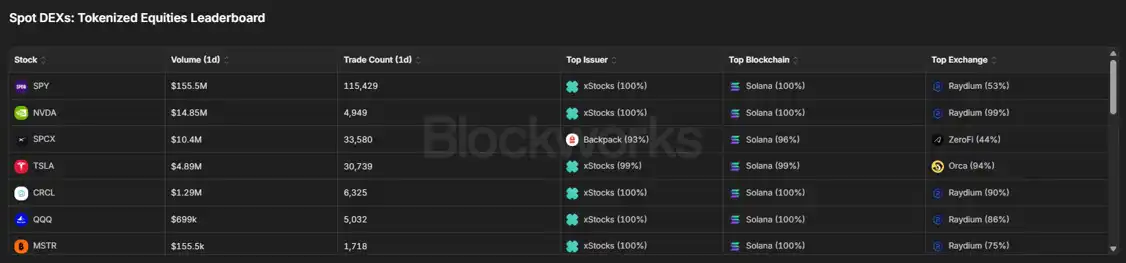
「Stocks on Solana」
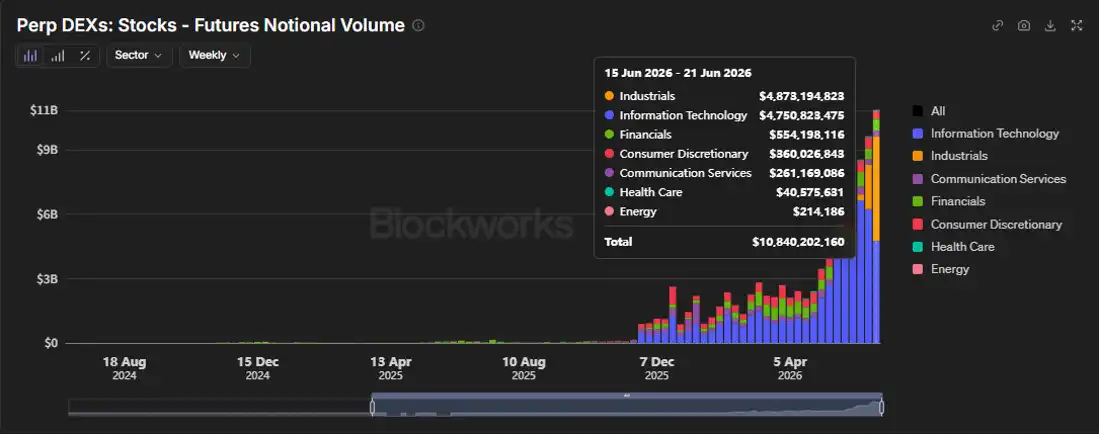
While Solana's momentum in the tokenized stock spot market is strong, for the crypto industry's stock trading, perpetual contract trading volume still far exceeds spot trading. The stock trading volume on Perp DEX has reached tens of billions of dollars in the past week:
Following Solana, it is expected that efforts will be made in this area as well. However, there is still room for development in trading tokenized stocks beyond trading. The composability of tokenized stock spot trading is a potential advantage for Solana.
Compared to simply trading stocks for profit, on-chain DeFi provides more diverse and flexible revenue streams for tokenized stock positions. On platforms like Jupiter, Raydium, Kamino, users can use their tokenized stocks for borrowing or providing liquidity. Users can execute various combination strategies with their tokenized stocks, such as partial borrowing and partial liquidity provision.
In addition to these conventional DeFi strategies, there have been some fresh approaches on Solana recently. Nest allows users to mint the stablecoin nUSD using tokenized stocks or USDC.
nUSD can be staked to receive snUSD and earn protocol income (expected APY of 6%) as well as dividends.
After the protocol income distribution is complete, the remaining portion will be used to buy back and burn the governance token $NEST.
While we look forward to more innovative gameplay, what is even more anticipated is Solana's partnership with various projects within its ecosystem to further promote the stock DeFi gameplay to on-chain players in a more prominent way (such as with more intuitive guidance in a mobile app). Combined with cross-chain asset gateways like Sunrise, this will create a network effect, leading to a pleasantly surprising differentiating competitive effect in the tokenized stock derivatives market.
Welcome to join the official BlockBeats community:
Telegram Subscription Group: https://t.me/theblockbeats
Telegram Discussion Group: https://t.me/BlockBeats_App
Official Twitter Account: https://twitter.com/BlockBeatsAsia
