1. Executive Summary
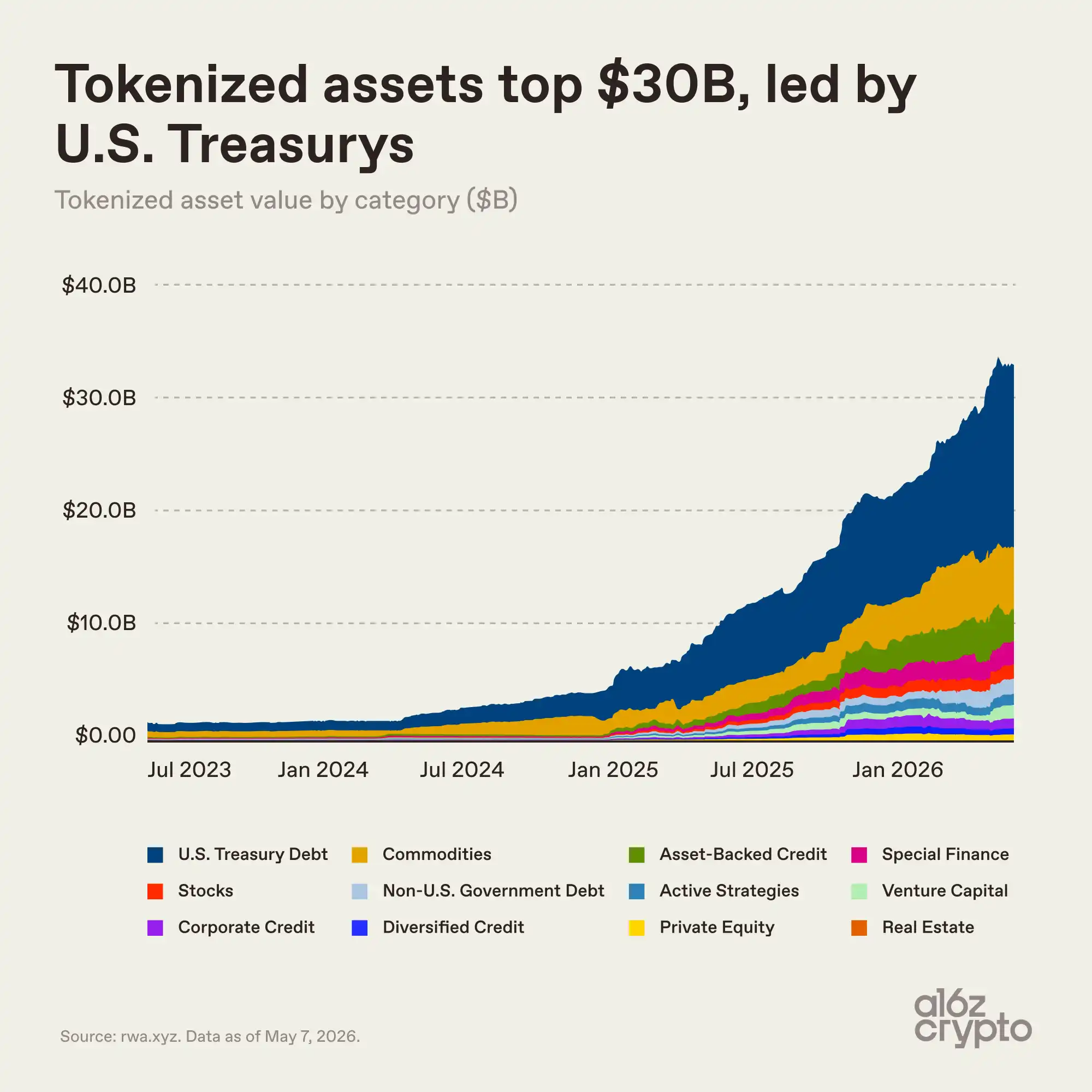
Over the past two years, RWA tokenization has completed the first phase of proof of concept. The scale of tokenized assets in non-stablecoin terms has grown from under $30 billion in mid-2024 to surpass $300 billion in April 2026, stabilizing at around $340 billion. This indicates that traditional financial assets can be effectively mapped onto the blockchain, with institutions beginning to view blockchain as a new infrastructure for issuance, settlement, and asset management.
However, growth in scale does not equate to financialization completion. The core issue in the current RWA market has shifted from "can assets be put on-chain" to "are assets useful once on-chain." Tokens can represent ownership and income rights of bonds, gold, fund shares, or credit assets, but this does not mean they have become financial building blocks that are freely composable, collateralizable, repricable, and embeddable in DeFi protocols.
The key finding of this report is that RWA and DeFi are entering the same second half. RWA's first half was proving that assets can be tokenized, registered, and held on-chain, while the second half will demonstrate whether these assets can be used as collateral, form secondary liquidity, enter lending markets, become stablecoin reserves, and be used in buybacks and structured products. DeFi's first half was proving that permissionless finance can operate, and the second half will demonstrate that protocol revenue can be sustainable, risks can be managed, and tokens can capture value. The convergence of these two storylines is fundamentally a key turning point for the crypto market from "narrative assets" to "cash flow assets."
Therefore, the report suggests that RWA's next stage is no longer just "asset on-chain" but "cash flow on-chain, credit on-chain, risk on-chain": stablecoins solve the on-chain cash leg, RWAs provide low-volatility income assets and traditional sources of collateral, and DeFi protocols offer a trading, lending, leverage, liquidation, and capital allocation layer. Only when these three elements form a closed loop can RWA evolve from a static instrument into a dynamic financial infrastructure.
As the research arm of Huobi HTX, HTX Research has been tracking the evolution path of RWAs, stablecoins, and on-chain financial infrastructure. This report not only makes trend judgments but also outlines the new requirements posed by this turning point for the exchange platform product suite. It discusses how institutional narratives can be transformed into financial products that everyday users can practically use, drawing on Huobi HTX's product practices in yield management, structured products, on-chain income, and collateralized financing.
2. RWA Market: From Concept Validation to Financialization
2.1 The True Significance Behind the Market Size Leap
The tokenized asset market, excluding stablecoin-calibrated assets, grew from under $3 billion in mid-2024 to around $34 billion in the second quarter of 2026. This leap is not just about the "RWA narrative heating up"; more importantly, it demonstrates that three fundamental conditions are maturing simultaneously: compliant cash legs, institutional-grade infrastructure, and sustainable product demand.
First, stablecoins are gradually becoming institutionalized, providing a more predictable institutional environment for on-chain payments, settlements, and minting and redeeming. The U.S. OCC document shows that the GENIUS Act came into effect on July 18, 2025, establishing a regulatory framework for payment stablecoin activities. Stablecoins are the most critical cash leg between RWA and DeFi. Only with compliant certainty in the cash leg can institutions more easily integrate on-chain fund flows into their auditing, risk management, and operational systems.
Second, infrastructure is transitioning from "pilot usable" to "production usable." Custody, KYC/AML, on-chain identity, oracles, compliance transfer modules, institutional-grade wallets, and on-chain audit solutions are gradually maturing, lowering the technological barriers for traditional financial institutions to issue and manage on-chain assets.
Third, institutions are moving from POC to productization. Early-stage RWA was more like a blockchain experiment for financial institutions, but now tokenized government bonds, money market funds, gold, and credit assets are gradually becoming sustainable operational product lines. Behind the market size growth is the traditional asset management system beginning to embrace on-chain issuance and settlement as a new infrastructure option.
2.2 Concept Validation Completed, But Financialization Still in Early Stage
Despite the significant growth of RWA, $34 billion is still a tiny fraction within the global financial system. The size of the global bond, stock, gold, credit, and fund markets is in the tens of trillions or even hundreds of trillions of dollars, while tokenized assets currently represent only a tiny proportion. The penetration rate of tokenized bonds, gold, and stocks compared to their underlying markets remains extremely low.
This means that the most accurate positioning of RWA at present is not "already mainstream" but "already proven viable." It has validated the operability of on-chain issuance, on-chain holding, and on-chain settlement, but has not yet validated the sustainability of large-scale asset composition, large-scale credit creation, and large-scale secondary market liquidity.
The first phase of RWA addressed the question of "can it be put on chain." The second phase of RWA will answer "whether there is new financial efficiency created after being put on chain." This is also a key watershed for RWA to transition from conceptual validation to financialization.
2.3 Shifting from Scale Growth to Financial Utility
In the past, the market used tokenized asset scale, issuance quantity, and on-chain holder quantity as measures of RWA development. However, as we move into the next phase, more important metrics will include utilization rate, turnover rate, collateralization ratio, borrowing demand, real yield, default handling, secondary market depth, and protocol revenue.
If a tokenized sovereign debt product is only held long-term in a whitelisted wallet, it is more like an on-chain yield certificate; only when it can be used for collateralized borrowing, repo transactions, stablecoin reserves, DAO treasury management, or derivative margins does it truly enter the on-chain financial system.
Therefore, the next competitive dimension of the RWA market is no longer "who can issue more assets" but "who can make assets truly flow, combine, and price on-chain."
3. Asset Categories, On-Chain Utilization, and Multi-Chain Landscape
3.1 The Easiest Assets to Put on Chain Are Not Necessarily the Most Valuable On-Chain
A clear hierarchy has emerged within the RWA market.
The first tier consists of government bonds and gold. They are the largest asset categories by scale and the easiest to bring on chain. U.S. government bonds are highly standardized, with stable returns, transparent prices, and clear investor demand. For crypto investors, tokenized government bonds are a tool to earn money market-like returns on idle stablecoins; for institutions, it means faster settlement, more flexible collateral circulation, and a closer entry point to the digital asset market. Tokenized U.S. government bonds have been a major driver of recent RWA growth.
Gold is also naturally suited for tokenization. It is globally standardized, easy to custody, price transparent, and various non-physical forms of gold ownership such as paper gold, gold ETFs, and gold certificates already exist in traditional finance. Public data also shows that the tokenized commodity market is dominated by gold, which accounts for the vast majority of this category's scale.
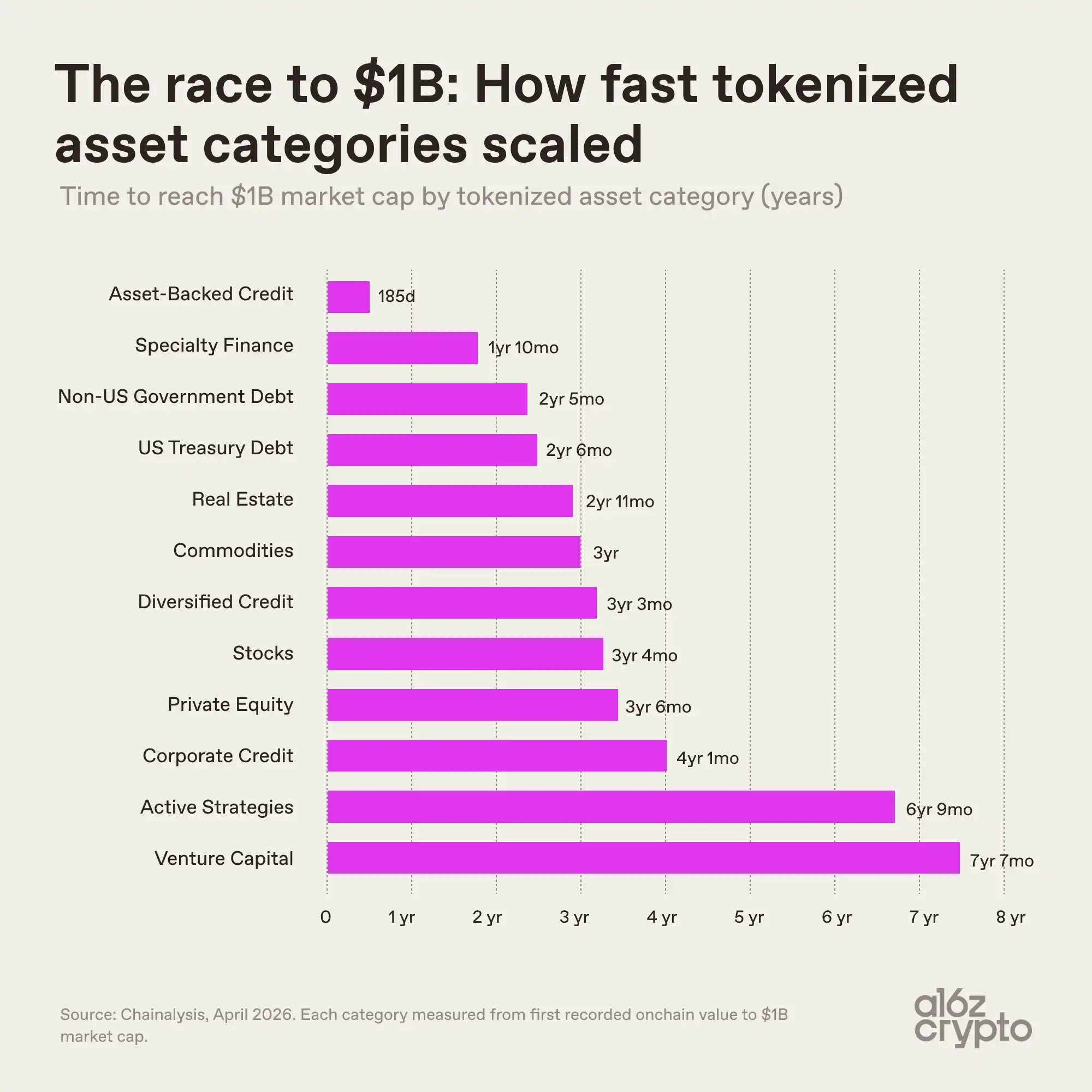
The second tier includes private credit, reinsurance, Bitcoin mining notes, and lending treasury tokens, which are financial products closer to on-chain native demand. While these products may not be the largest in scale, they emphasize on-chain use cases from the outset, such as collateralization, layering, yield distribution, protocol access, and risk transfer. Asset-backed credits and specialized financial products have quickly reached a scale of $1 billion, reflecting the pull of on-chain native demand on specific asset structures.
The third layer consists of VC funds, actively managed strategies, private fund shares, and partial equity assets. These assets are very attractive in narrative but more challenging to implement. The difficulty lies not only in technology but also in legal relationships, valuation mechanisms, investor suitability, lock-up periods, disclosure of information, redemption arrangements, tax treatment, and cross-border compliance, all of which together create a high barrier to entry.
This illustrates that RWAs are not a single track but a collection of asset structures, legal structures, and financial use cases. The tokenization of government bonds and gold is closer to "digitization," that is, moving existing asset records onto the blockchain; while private credit, reinsurance, and on-chain loan shares are closer to "on-chain financialization," that is, considering on-chain composition and on-chain usage from the inception of product design.
Therefore, measuring RWA projects cannot solely rely on asset size. A large-scale tokenized government bond product, if mostly held in whitelist wallets most of the time, may have a lower marginal contribution to the DeFi ecosystem compared to an asset pool that is smaller in scale but can be widely used as collateral, liquidity provision, or risk transfer tools. The future core evaluation system of RWAs needs to shift from "asset issuance volume" to "financial utility volume."
3.2 On-Chain Utilization Rate Paradox: Largest Asset Category, Lowest DeFi Activity
The current RWA market exhibits a clear "scale-activity inversion." The largest asset categories often have the lowest on-chain utilization rate; assets designed for on-chain use, albeit smaller in size, are more likely to enter DeFi protocols. Public data shows that tokenized bonds are one of the largest asset categories, but only about 5% of the supply is deployed in DeFi; reinsurance token sizes are smaller but have a higher proportion deployed in DeFi protocols.
This phenomenon reveals a key issue: "tokenization" and "on-chain financial use" are two completely different concepts. The former emphasizes the representation of asset rights, while the latter emphasizes asset composability, collateralization, and transferability.
Many government bond and gold products are fundamentally still on-chain receipts. The underlying assets are collectively managed by traditional custodians, fund managers, transfer agents, compliance service providers, and the banking system, and tokens serve as a more efficient registration and transfer interface. They can enhance holding and settlement experiences but do not necessarily possess open transferability, permissionless collateralization, cross-protocol composition, and automatic liquidation capabilities.
There are four main reasons for the low utilization rate.
First, compliance transfer restrictions. Many RWA tokens can only be transferred between wallets that have completed KYC, met investor suitability requirements, and entered whitelists, naturally limiting open DeFi compositions.
Second, redemption and NAV calculation cycles are not continuous. Treasury bond funds, private credit funds, and fund shares are often redeemed on a business day or batch basis, while DeFi protocols operate in a 24/7 environment, creating a natural mismatch in their time structures.
Third, price and risk models are immature. DeFi protocols require real-time prices, discount parameters, liquidation thresholds, and liquidity depth, but many RWAs do not have a continuous secondary market and can only rely on NAV, broker quotes, or model valuations.
Fourth, legal recourse and default handling still occur off-chain. Smart contracts can automatically allocate profits, but they cannot automatically deal with real estate foreclosure, corporate loan collection, or bankruptcy settlements.
Therefore, the core of the next stage of RWAs is not to have more assets "on-chain," but to have more assets "securely available for on-chain finance." This requires mature compliance asset standards, permissioned DeFi pools, on-chain identities, verifiable reserves, oracles, off-chain legal enforcement, and on-chain clearing mechanisms to mature together.
3.3 Multi-Chain Landscape: RWAs Will Not Be Monopolized by a Single Public Chain
The network distribution of the RWA market presents a "one super, multiple strong" pattern. Ethereum, with its first-mover advantage in DeFi, security, institutional recognition, and smart contract ecosystem, remains a key infrastructure. However, networks such as BNB Chain, Solana, Stellar, Liquid Network, XRP Ledger, ZKsync Era, and Arbitrum have also established their own RWA maps. Public data shows that Ethereum accounts for about half of the tokenized asset market share, but other chains have also seen distributed growth in scenarios such as treasury bonds, payments, gold, cross-border settlements, and low-cost transactions.
This indicates that RWAs will not simply converge on a single chain. Different assets will choose different infrastructures based on cost, compliance, liquidity, ecosystem relationships, and issuer channels.
Ethereum is suitable for high-security, high-value assets that require a DeFi stack; Stellar and the XRP Ledger are more focused on payments, cross-border settlements, and institutional networks; Solana is suitable for high throughput, low cost, and assets geared towards transaction experience; ZKsync, Arbitrum, and other L2 solutions have differentiation in privacy, scalability, compliance proofs, and EVM ecosystem compatibility.
However, a multi-chain approach also brings new challenges. Cross-chain circulation of compliance assets is more complex than that of regular crypto assets because it involves not only token bridges but also investor identities, jurisdictional restrictions, transfer eligibility, sanction screening, reserve status, and synchronized legal rights.
The future focus of RWA infrastructure competition will shift from "ability to issue assets" to "ability to enable compliant assets to flow across chains, protocols, and scenarios." Whoever can solve the cross-chain circulation and cross-protocol composition of compliant assets may become the core infrastructure of the second half of RWA.
4. DeFi Cash Flow Valuation: Shifting from TVL Logic to Profit Logic
4.1 The Beginning of DeFi Cash Flow Valuation Era
As DeFi protocols gradually accumulate real users, real transactions, and real fees, the valuation framework of crypto assets also needs to change. In the past, the market commonly used metrics such as TVL, trading volume, FDV/TVL, and FDV/Revenue to measure DeFi projects. However, these metrics mainly reflect scale and may not necessarily reflect profitability and value-capture ability.
A more mature analysis framework should place crypto assets on a "commodity—financial claim" spectrum.
Commodity-like assets, such as Bitcoin, are mainly driven by scarcity, liquidity, security, monetary premium, and adoption. They do not promise future cash flows, so they are more suitable for using a network value, monetary premium, and macro asset comparison framework.
Cash flow-type assets, such as some DeFi protocol tokens, can be analyzed through income, profit, fee distribution, treasury assets, governance mechanisms, and token value capture paths. These assets are no longer just narrative vehicles but are gradually approaching equity expressions in on-chain financial networks.
A leading example of this shift is the lending protocol Aave. Aave has real borrowing demand, real interest income, an observable fee structure, and a continuous iterative capital allocation mechanism. DeFiLlama has broken down Aave's fees and income items, with fee sources for Aave V3 including borrowing interest, flash loan fees, liquidation fees, Paraswap exchange fees, and Chainlink SVR, among others.
However, this does not mean that traditional financial valuation models can be easily applied to DeFi tokens. Governance tokens are not equivalent to stocks, and protocol revenue does not necessarily belong to token holders. But when the protocol's business model, revenue structure, and value capture mechanism are clear enough, cash flow frameworks become increasingly important.
4.2 Going Deeper: The True Test of Cash Flow Valuation is the "Transmission Chain"
One common misconception surrounding DeFi cash flow valuation is that as long as the protocol has revenue, the token should be valued using traditional P/E or DCF. In fact, this is only the first layer. More importantly, it is crucial to identify whether the chain of revenue transmission from protocol activities to token value is complete.
This value transmission chain consists of at least six key links.
First, does the protocol have real demand? Is the revenue coming from fees paid by actual users, or from short-term incentives, subsidies, speculative trading, or market sentiment? If the revenue heavily relies on short-term transaction volume, it is closer to cyclical revenue rather than cash flow that can be capitalized.
Second, can the protocol retain revenue? Many DeFi protocols have high total fees, but a significant portion of these fees need to be paid out to liquidity providers, validators, market makers, liquidity providers, or external service providers. What can actually be used for valuation is not the gross fee but the net revenue that the protocol can retain and control.
Third, is the revenue able to cover the cost of risks? Lending protocols must deal with defaults, liquidation failures, oracle risks, and security module expenses; DEXs must deal with liquidity incentives and market-making costs; derivative protocols must address insurance fund pressure during extreme market conditions. A revenue model without considering risk costs tends to overestimate the protocol's profit-making ability.
Fourth, does the DAO have capital allocation capabilities? Once the protocol's revenue enters the treasury, is it used for buybacks, burns, incentives, security reserves, developer expenses, or ecosystem subsidies? Different allocation methods will lead to completely different token value trajectories.
Fifth, does the token have a clear value capture mechanism? Governance rights alone do not equate to cash flow rights. Protocol revenue is more easily priced into a token only when mechanisms such as buybacks, burns, staking rewards, fee rebates, or other mechanisms are sufficiently clear in capturing value for the token.
Sixth, is this value transmission recognized by regulators? Governance tokens are different from traditional equity; token holders usually do not necessarily have legal claims to protocol assets or future cash flows. Therefore, legal structure and regulatory classification will directly affect whether institutional funds can price such assets at a lower discount rate.
Therefore, the key to DeFi cash flow valuation is not to mechanically apply traditional financial models to tokens, but to assess whether the protocol has established a complete chain of "real demand - revenue retention - risk deduction - governance distribution - token capture - legal interpretability."
4.2.1 Why Aave Became the Representative Case of "On-Chain Banking"
Aave's business structure is relatively clear: depositors provide liquidity, borrowers borrow assets with collateral, and the protocol generates cash flow through spreads, liquidation fees, flash loan fees, partnership revenue, treasury earnings, and GHO stablecoin revenue.
It is not a traditional bank as it does not have a centralized balance sheet or engage in maturity transformation in the traditional banking system; however, economically, it does indeed play the role of on-chain money markets and collateralized lending infrastructure.
Aave is different from purely narrative-based tokens as it has real-world utility and observable income sources. Borrowing interest, flash loan fees, liquidation fees, protocol fee, and stablecoin-related income together form the foundation of the protocol's cash flow.
What makes Aave unique is also its position at the intersection of RWA and DeFi.
Firstly, stablecoins are a crucial part of Aave's lending activities. Stablecoins such as USDC, USDT, and GHO form the on-chain credit market's cash leg.
Secondly, the development of the institutional market and permissioned pools allows protocols like Aave to tap into the demand for compliant asset-backed lending. If tokenized sovereign debt, fund shares, private credit, and other compliant assets can be safely onboarded into permissioned markets, they no longer remain just credentials in wallets but can become the underlying assets for on-chain credit expansion.
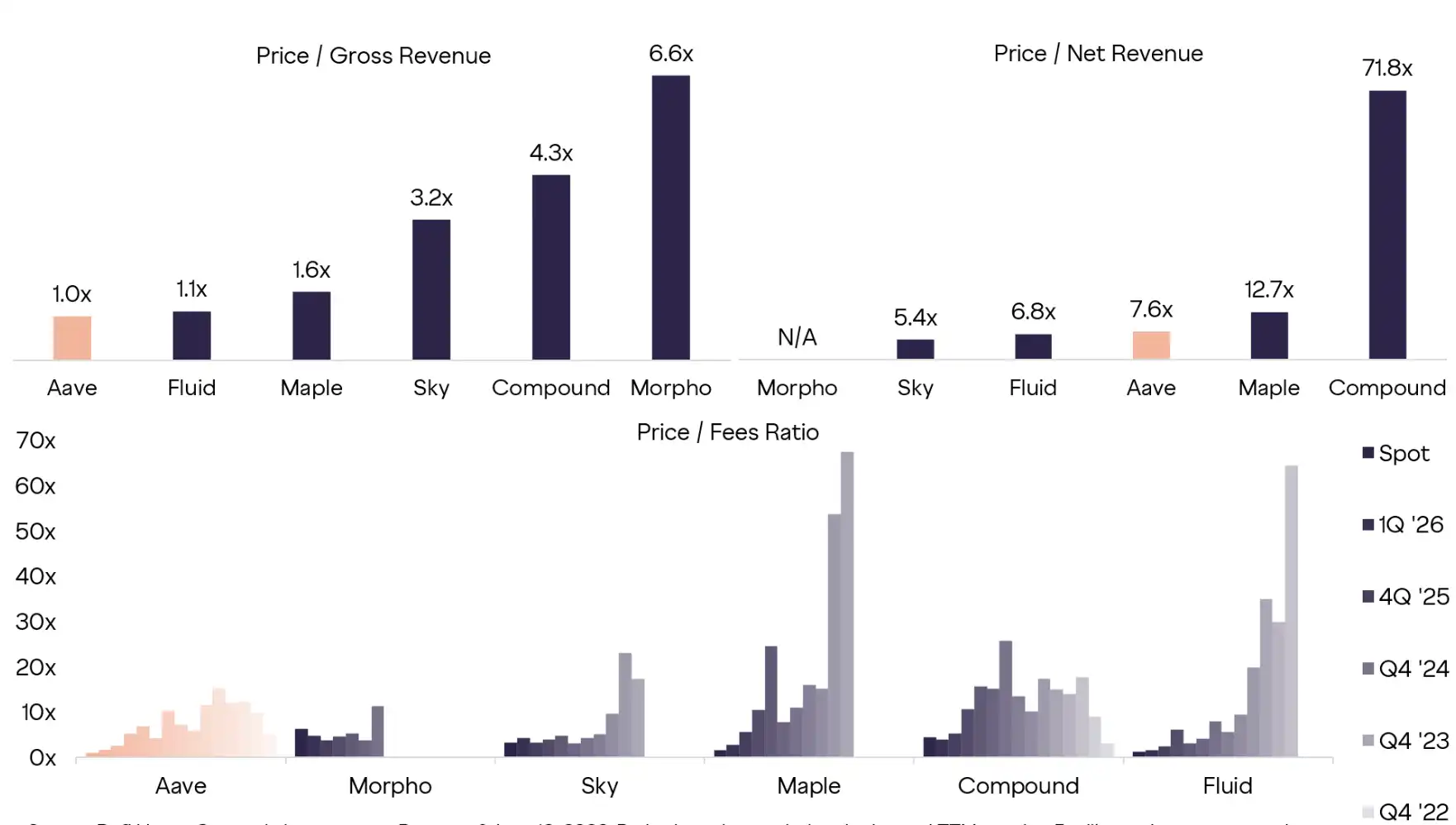
Furthermore, Aave's product architecture is evolving from a single lending market to a more comprehensive on-chain financial platform. Unified liquidity framework, stablecoin business, security modules, and user-side applications are all designed to enable the protocol to handle more complex assets, finer risk parameters, and a broader range of user needs.
This also explains why Aave is seen as a crucial case study for DeFi cash flow valuation. RWAs require a protocol layer that can provide liquidity, collateralization, and risk parameter management; lending protocols like Aave serve as a potential onboarding layer.
4.2.2 Protocol Revenue Does Not Equal Token Value
Aave's case also reminds the market that there is no automatic equivalence between protocol revenue and token value. Just because the protocol is earning money does not mean the governance token will inevitably appreciate in proportion. Considerations include how fees enter the DAO treasury, how the DAO decides on buybacks, incentives, insurance, security expenditures, and product development, whether token holders can capture protocol value through stable governance, and whether regulators acknowledge this value transmission mechanism.
Therefore, the key to DeFi valuation is not revenue but the conversion rate, i.e., the rate at which the protocol’s economic activity converts into value for token holders.
Common pathways include burning, buybacks, rebates, and staking rewards. Burning reduces supply to affect long-term scarcity; buybacks create a buy pressure in the market using protocol revenue; rebates directly return a portion of fees to users or holders; staking enhances token utility through lockups and yield distribution. The immediacy, sustainability, regulatory risks, and market impact of different mechanisms vary significantly. The efficiency of value transmission via buybacks, burns, rebates, and staking rewards differs, and DAO expenditures, token emissions, and legal structures all influence the final valuation results.
When evaluating a DeFi protocol in the future, one should not just look at TVL and revenue scale, but should establish a framework similar to an “On-chain Income Statement + Capital Allocation Table”:
First, Total Fees represent how much users are willing to pay for the protocol.
Second, Protocol Revenue represents how much the protocol actually retains.
Third, Net Income represents how much is left after deducting incentive, security, development, and operational costs.
Fourth, Treasury Assets and Liabilities represent how much capital buffer the protocol has.
Fifth, Value Capture Mechanism represents how profits impact the token.
Sixth, Reinvestment Efficiency represents whether retained profits enhance future revenue-generating capabilities.
This framework is also suitable for analyzing products resulting from the combination of RWA and DeFi. In the future, what truly matters is not just the scale of a protocol, but whether that scale can be transformed into sustainable revenue, manageable risk, and value that can be captured by users or token holders.
5. Stablecoins, Regulation, and Risk Framework
5.1 Stablecoins as the Common Underlying Asset for RWA and DeFi
The intersection of RWA and DeFi heavily relies on stablecoins. Stablecoins serve not only as a unit of exchange rate but also as on-chain cash, collateral, settlement layers, and revenue distribution mediums.
Without stablecoins, tokenized government bonds struggle to access on-chain funding; without stablecoins, DeFi lending finds it hard to form stable loan demand; without stablecoins, cross-border payments, institutional settlements, and RWA secondary markets all lack a unified cash leg.
The regulatory clarity of stablecoins is a structural variable for both RWA and DeFi. For RWA, stablecoins provide a compliant cash gateway, a medium for issuance and redemption, and an on-chain settlement unit. For DeFi, stablecoins provide low-volatility liabilities and the foundation of lending demand. For institutions, clear stablecoin regulation means they can more easily integrate on-chain fund flows into compliance, auditing, and risk management systems.
In the long run, stablecoins, RWA, and DeFi will form a three-tier structure.
The first tier is compliant stablecoins and on-chain cash management, handling payments and settlements.
The second tier consists of tokenized government bonds, money market funds, private credit, gold, and securitized assets, managing income and collateral.
The third tier comprises protocols such as Aave, Maple, Sky, Pendle, Uniswap, Hyperliquid, handling lending, trading, interest rates, risk, and leverage.
The tighter these three layers are integrated, the closer on-chain finance gets to a true capital market. Stablecoins solve the "money" problem, RWAs solve the "asset" problem, and DeFi solves the "financial function" problem. Only when these three elements are combined can a complete on-chain financial system be formed.
5.2 Risks of RWA and DeFi: Efficiency Improvement Will Also Amplify Complexity
The combination of RWA and DeFi is not without risks. On the contrary, it will stack off-chain financial risk, on-chain smart contract risk, market liquidity risk, and regulatory risk together.
In traditional finance, asset defaults, valuation markdowns, redemption runs, and regulatory scrutiny are already complex enough. If these risks enter the 24/7, leveraged, composable, and automatically liquidating DeFi environment, the system's response speed will be faster, and risk transmission may also be stronger.
The first type of risk is asset authenticity and reserve risk. Whether the underlying asset behind tokenized assets actually exists, whether the reserve is sufficient, whether the custody is independent, whether audits are timely, whether assets are double-counted, are all key issues. Stablecoins have already proven that reserve transparency is crucial for market confidence, and RWAs will face the same issue.
The second type of risk is liquidity mismatch. Many underlying assets of RWAs only trade on business days or have periodic redemptions, but the DeFi lending and derivatives market operates 24/7. If RWAs are used as collateral for loans, once market pressure arises on weekends or holidays, oracle prices, redemption mechanisms, and liquidation processes could be mismatched.
The third type of risk is compliance and composability risk. The advantage of open DeFi is permissionless composability, but RWAs often require whitelisting, KYC, investor suitability, and jurisdictional restrictions. How to maintain composability without violating compliance is a challenge for the entire RWAFi.
The fourth type of risk is DAO governance and value transmission risk. Whether protocol income should be used for token buybacks or for security modules, user incentives, risk reserves, and product development is essentially a capital allocation issue. Low DAO voting turnout, token concentration, stakeholder conflicts of interest, regulatory uncertainty, can all impact valuation.
The fifth type of risk is oracle and pricing risk. The valuation of RWAs may come from NAV, exchange quotes, broker quotes, model valuations, or manual disclosures. Different price sources have varying delays, manipulation vulnerabilities, and update frequencies, directly affecting the liquidation safety of lending protocols.
Therefore, the combination of RWA and DeFi should not be simplistically understood as "traditional assets entering the chain can unleash liquidity." Real-world implementation requires conservative risk parameters, layered market structures, permissioned pools, compliant secondary markets, transparent reserve proofs, stress tests, and clear default rules. Only when the risk framework is mature will funds move from pilot projects to scaled deployments.
6. Conclusion, Product Insights, and Business Implementation of Huobi HTX
6.1 The First Half of RWA is Issuance, the Second Half is Utilization
RWA tokenization and DeFi cash flow valuation may seem like two different topics, but they actually point to the same industry inflection point: the crypto market is transitioning from "asset existence" to "asset utility," from "protocols being used" to "protocols being profitable," and from "narrative premium" to "common pricing based on cash flow, governance, and compliance."
The first phase of RWA proved that assets can go on-chain, but the second phase needs to demonstrate that assets can create higher financial efficiency after going on-chain. The first phase of DeFi proved that permissionless finance can operate, but the second phase needs to show that protocol revenue can be sustainable, risks can be managed, and value can be captured by tokens. Stablecoins serve as the foundational currency layer connecting these two phases.
The most noteworthy direction in the future is not simply "more assets on-chain," but five types of scenarios that truly form financial depth:
First, tokenized national debt entering the on-chain collateral and repo market.
Second, private credit combined with institutional lending protocols to form an on-chain fixed income market.
Third, tokenized gold and commodities becoming derivatives and margin assets.
Fourth, compliant stocks and fund shares entering the 24/7 global trading and financing system.
Fifth, DeFi protocols entering the era of cash flow valuation through explicit value-capture mechanisms.
These directions collectively point to the same trend: RWA's competitive focus will shift from "on-chain speed" to "on-chain depth," and DeFi's competitive focus will shift from "TVL scale" to "cash flow quality."
6.2 Huobi HTX's Formed Product and Financial Business Matrix
From a business perspective, the development of RWA and DeFi not only means new asset narratives, but also implies that the product ecosystem of trading platforms needs to evolve from a single trading entrance to asset allocation, yield management, on-chain participation, and risk-stratified entrances. At the product level, Huobi HTX has already formed a product matrix covering basic finance, structured income, on-chain yield, and collateralized financing, with these modules highly corresponding to the core needs of the second half of RWA/DeFi.
First, Huobi Earn has taken on the role of a comprehensive yield entrance. In the Huobi HTX Earn Upgrade Announcement, the Earn feature was restructured into five core sections, including Overview, Simple Earn, New Listings, Structured Products, and On-chain Earn. This structure has fundamentally divided users' yield needs into account yield overview, basic finance, new asset participation, structured income, and on-chain yield scenarios.
Secondly, Simple Earn has covered the basic yield layer. The official announcement from Huobi HTX indicates that Simple Earn includes both flexible and fixed-term products, allowing users to select different terms based on their liquidity needs. Against the backdrop of the continuous development of RWAs and stablecoins, these products correspond to on-chain cash management and low-volatility yield demands. It does not directly issue RWAs but serves as a "stablecoin and mainstream asset yield gateway" in terms of user experience.
Thirdly, Structured Products have covered the structured yield layer. The Huobi Earn Coin Product Upgrade Announcement reveals that Structured Products integrate structured yield coin products such as Dual Investment and Shark Fin, providing users with a more diverse risk-reward portfolio. The significance of these products lies in transitioning users from single-asset yield holding to a framework of target prices, terms, volatility, and structured returns. As DeFi and RWA assets mature gradually, structured yield products represent a crucial product layer catering to users with different risk appetites.
Fourthly, On-chain Earn has covered the on-chain yield layer. The Huobi Earn Coin Product Upgrade Announcement shows that On-chain Earn integrates blockchain-native yield services such as ETH 2.0 node staking, offering users an on-chain asset growth channel. These products correspond to a core trend in the latter part of DeFi: users may not necessarily need to interact directly with complex protocols but require a more secure, transparent, and standardized entry point to participate in on-chain yield.
Fifthly, Margin Swap has covered the collateralized lending and asset efficiency layer. The Huobi Margin Swap page indicates that verified users can swap digital assets by pledging specified assets in their accounts, with the incoming assets arriving shortly thereafter. This product supports flexible, 7-day, 30-day, 45-day, and 90-day terms, accepting various assets as collateral. The essence of these products is to help users improve capital efficiency without selling their core assets directly, aligning with the direction of "collateral asset securitization" in DeFi and RWA.
Therefore, Huobi HTX's business focus in the RWA and DeFi tracks does not merely involve asset observation or trade matching but has already formed a relatively complete user asset efficiency gateway through products such as Earn Coin, Simple Earn, Structured Products, On-chain Earn, and Margin Swap.
From a product logic perspective, Huobi HTX has covered four key layers:
First, Cash Management Layer: Through Simple Earn, Savings, and Time Deposit products, catering to users' demand for stablecoin and mainstream asset yields.
Second, Yield Structuring Layer: Through Dual Investment, Shark Fin, and other products, expanding user yield management from a single interest rate to target price, time, and volatility structures.
Third, On-chain Yield Layer: Through On-chain Earn, PoS Staking, and ETH 2.0 Node Staking, lowering the barrier for users to participate in on-chain protocol rewards.
Fourth, Collateral Efficiency Layer: Through products like Margin Swap, allowing users to increase their capital efficiency while maintaining exposure to core assets.
This also means that Huobi HTX has already covered in product form the most critical user needs in the second half of RWA and DeFi: low-volatility yield, structured yield, on-chain yield, collateralized financing, and asset efficiency management. The second half of RWA is about "usage," the second half of DeFi is about "cash flow," and the productization capabilities of trading platforms are the key bridge from institutional narratives to everyday users' accessible financial products.
References
1. https://a16zcrypto.com/posts/article/tokenized-asset-rwa-market-data-charts/?utm_source=chatgpt.com
2. https://research.grayscale.com/reports/guide-to-buying-the-dip-valuing-crypto-with-cash-flows?utm_source=chatgpt.com
3. https://www.grayscale.com/the-stack/how-to-value-digital-assets-with-cash-flows?utm_source=chatgpt.com
4. https://defillama.com/protocol/aave?utm_source=chatgpt.com
5. https://www.occ.gov/news-issuances/bulletins/2026/bulletin-2026-3.html?utm_source=chatgpt.com
6. https://www.htx.com/en-us/financial/earn/home
7. https://www.htx.com/support/44978464400614?utm_source=chatgpt.com
8. https://www.htx.com/support/85020287114222?utm_source=chatgpt.com
Welcome to join the official BlockBeats community:
Telegram Subscription Group: https://t.me/theblockbeats
Telegram Discussion Group: https://t.me/BlockBeats_App
Official Twitter Account: https://twitter.com/BlockBeatsAsia
