US midterm elections have elevated data center approval authority to state ballots. In data center hubs like Texas, Ohio, and Georgia, candidates running on platforms to restrict new projects have become election focal points. Texas State Representative Gina Hinojosa has pledged in her campaign to pause approvals for new data centers until the state legislature passes community protection legislation. Ohio gubernatorial candidate Amy Acton has also made restricting data centers part of her campaign platform.
Vote counting and inauguration procedures are not yet complete, and it is impossible to predict what executive orders will look like. The market did not wait. From November 4 to 5, Bernstein cut price targets for seven mining companies and AI hosting providers, with neoclouds (firms that borrow to buy chips and then rent out compute) like CoreWeave and IREN continuing to decline; on the other side, built-out racks and approved power are being repeatedly cited by sell-side as "scarce." The same election has split the AI infrastructure trade in two.
Electricity bills become ballots
The identity of data centers has changed. In the past, they were investment promotion projects, bringing tax revenue and jobs, and localities competed for them. Now they are local bills—who pays for electricity, how much water is used, how much noise is generated, and whether confidentiality agreements have been signed.
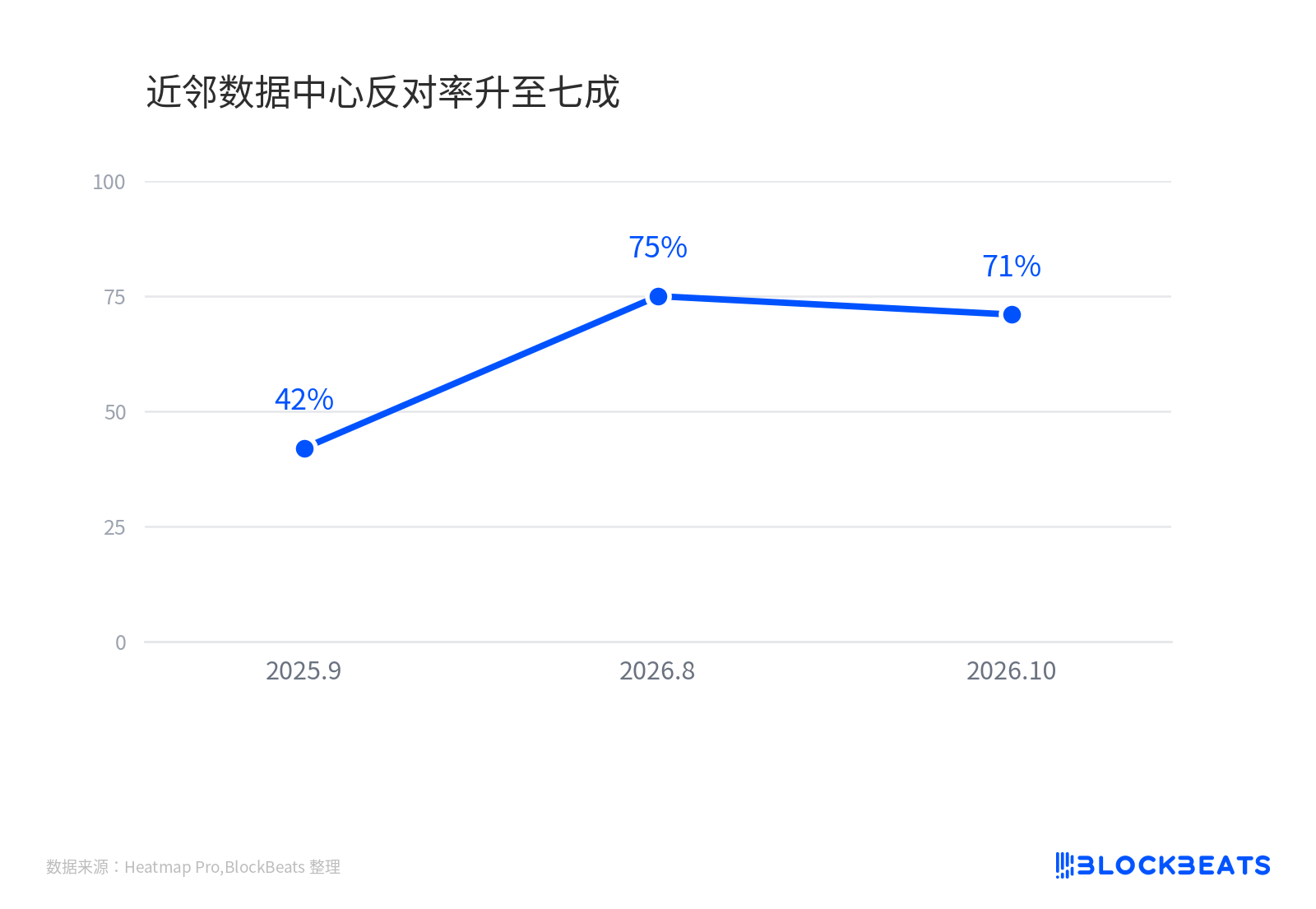
A Heatmap Pro October poll shows that 71% of Americans oppose building data centers near their homes. The proportion is unusually high.
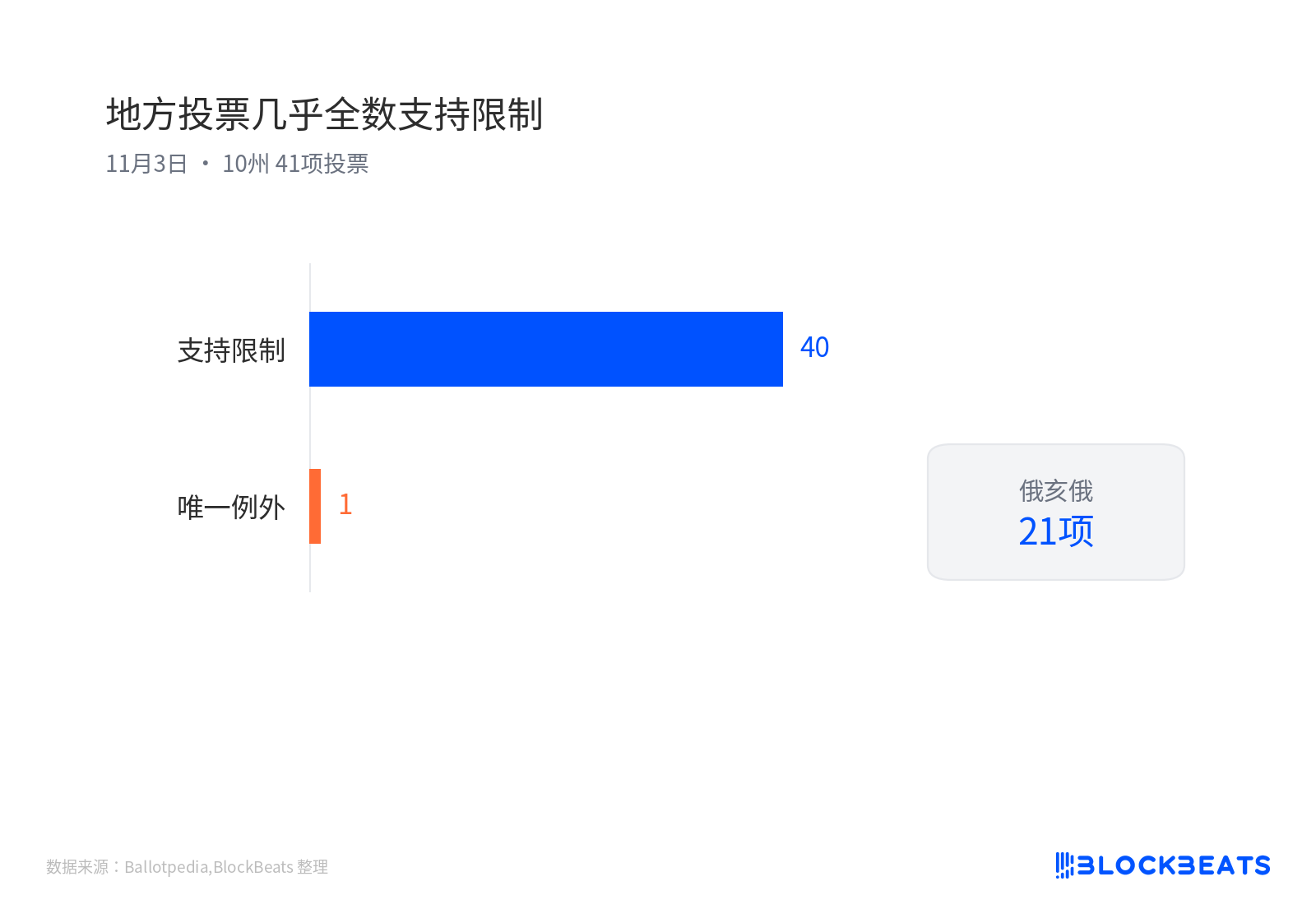
Voting results turned sentiment into rules. According to public statistics, there were 41 data center-related local ballots across 10 states this year, and except for one in North Dakota, almost all supported restrictions or rejected pro-construction proposals, with Ohio alone accounting for 21. In the past, a county would reject a specific project; now gubernatorial campaigns are directly writing "pause" into their pledges.
The implication of the pause is that new projects will not be approved for the time being until rules on electricity cost allocation, water usage, and disclosure are introduced; existing data centers are not affected. Texas is the second-largest data center market in the U.S. and is currently vying for the top spot, and the governor also controls the personnel and permitting pace of the Public Utility Commission. A full federal construction ban is unlikely; the constraints mainly appear in state permitting, local zoning, and grid interconnection.
Wall Street moves first: cutting price targets for unconnected projects, raising approved capacity
On November 4, Bernstein analyst Gautam Chhugani cut price targets for seven mining companies and AI hosting providers by 35% to 54%, citing tighter financing and Texas uncertainty. IREN was cut from $100 to $55, CORZ from $32 to $19, CIFR from $23 to $15, and MARA from $17 to $10.
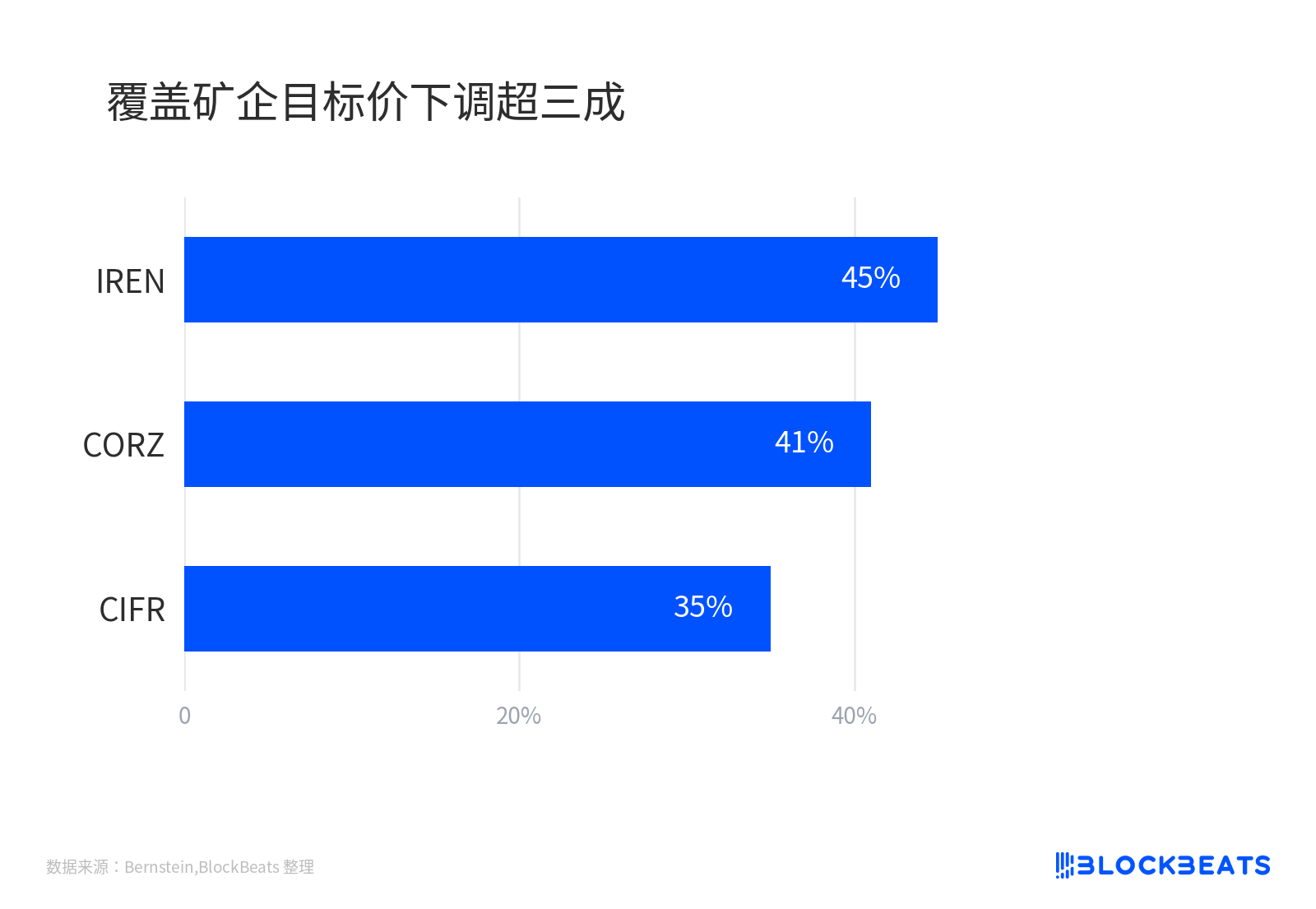
The second half of the same report says that the gigawatt-scale power already approved for these companies may become scarce and more valuable. What was cut were the growth stories not yet connected to the grid; what was raised was the capacity that has already obtained permits.
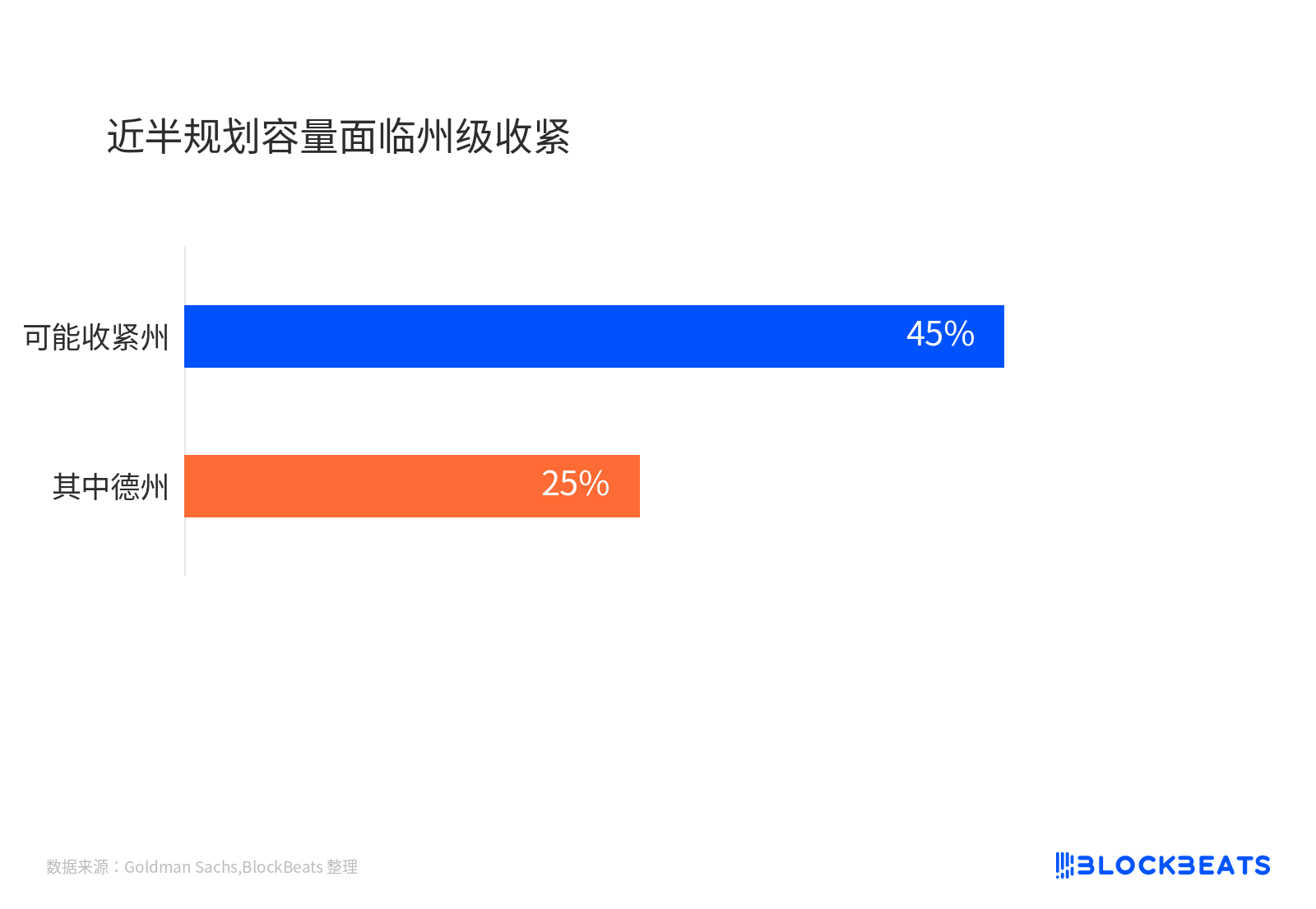
Other institutions offer different measures of the same thing. Goldman Sachs' Hatzius team estimates that states that may tighten rules account for about 45% of U.S. planned capacity, with Texas at about 25%; UBS believes about 30% of new capacity in 2028 could be affected; BMI's judgment is that about 53% of hyperscale pipeline growth is concentrated in such states, but most 2027 construction schedules are already locked in, with pressure arriving in 2028 and beyond.
These figures point to planned capacity and political exposure, not capacity that has already been canceled. Reading 45% as "45% of capacity invalidated" is the most common misinterpretation in this round of trading.
Can paying for electricity oneself win back permits?
The most directly affected are two types of entities: mining companies that have not yet secured power and are pivoting to AI, and neoclouds that borrow money to buy chips and then rent them out. Their valuations are built on the assumption of "turning power into revenue in the coming years"; if approvals slow, their growth curves will flatten.
The other side is being reread as existing assets under supply constraints. Meta executive Dina Powell McCormick said at the Wall Street Journal Tech Conference that after the election it will be very difficult to start new construction in the U.S., while expanding existing campuses is relatively easy, and almost every hyperscaler is discussing whether to put capacity overseas.
This is also why the industry has begun making concessions. OpenAI released a community compact on November 5, committing to pay for electricity and supporting grid infrastructure at its own self-operated campuses, provide financial guarantees if projects are canceled, and disclose water, electricity, and noise data. In the same week, Google confirmed its data center project in Laramie County, Wyoming, with a long-term investment of $17 billion, part of the power coming from self-built natural gas fuel cells and carbon sequestration.
The compact has boundaries. OpenAI's plan explicitly excludes capacity built by partners on its behalf, and Google's self-paid electricity costs only cover its own campuses. An earlier signal came from utilities: Duke Energy's signed data center power supply agreements total about 7.8 gigawatts, nearly stalled since the second quarter, and management has pushed the remaining pipeline to the first half of 2027.
How long the discount can last depends on whether permits or orders give the answer first
Current pricing is trading on expectations; policy has not yet taken effect. The governor will not take office until January. Whether the executive order is an immediate pause or turns into negotiations to retain investment, whether both chambers of the state legislature cooperate, and whether the public utilities commission changes personnel will determine whether this is months of friction or years of constraints.
The demand side is already giving an answer. Duke's stalled pipeline shows that developers themselves are delaying. If signing in the first half of 2027 cannot resume, supply constraints will turn from political risk into real order downgrades.
Conversely, if self-paid electricity costs and community compacts become a new template that local areas are willing to accept, data centers will become more expensive and slower, but demand will not disappear. This round of valuation selloff is just a repricing of the growth slope; the AI cycle itself is not over.
Welcome to join the official BlockBeats community:
Telegram Subscription Group: https://t.me/theblockbeats
Telegram Discussion Group: https://t.me/BlockBeats_App
Official Twitter Account: https://twitter.com/BlockBeatsAsia
