Johor Bahru has no hills.
Johor Bahru is the capital of Johor state at the southernmost tip of Malaysia, separated from Singapore only by the Johor Strait. The highest point in the city is just a small hill, called Bukit Timbalan in Malay, which older Chinese call Flag Hill. On the hill stands the Sultan Ibrahim Building completed in 1940, formerly the Johor state government, which the Japanese army used as a command post for attacking Singapore in early 1942. Looking south from the building, across the strait is Woodlands at the northernmost tip of Singapore, with rows of government-built public housing estates standing along the shore.
Even the name "Johor Bahru" was brought over from the other side. The Kranji area in northwestern Singapore was early on planted with gambier, a shrub whose branches and leaves were boiled into paste blocks that could be used for tanning leather and dyeing cloth. Older generations of Chinese called that area Old Hill; later, when the land lost its nutrients and the firewood for boiling the paste was all cut down, people crossed the strait and opened a new patch in Johor, which was called New Hill.
One hundred and eighty years later, Old Hill was once again drained dry.
In 2019, Singapore suspended approvals for new data centers, as land, fresh water, and electricity had all reached their limits.
So the people crossed the sea again.
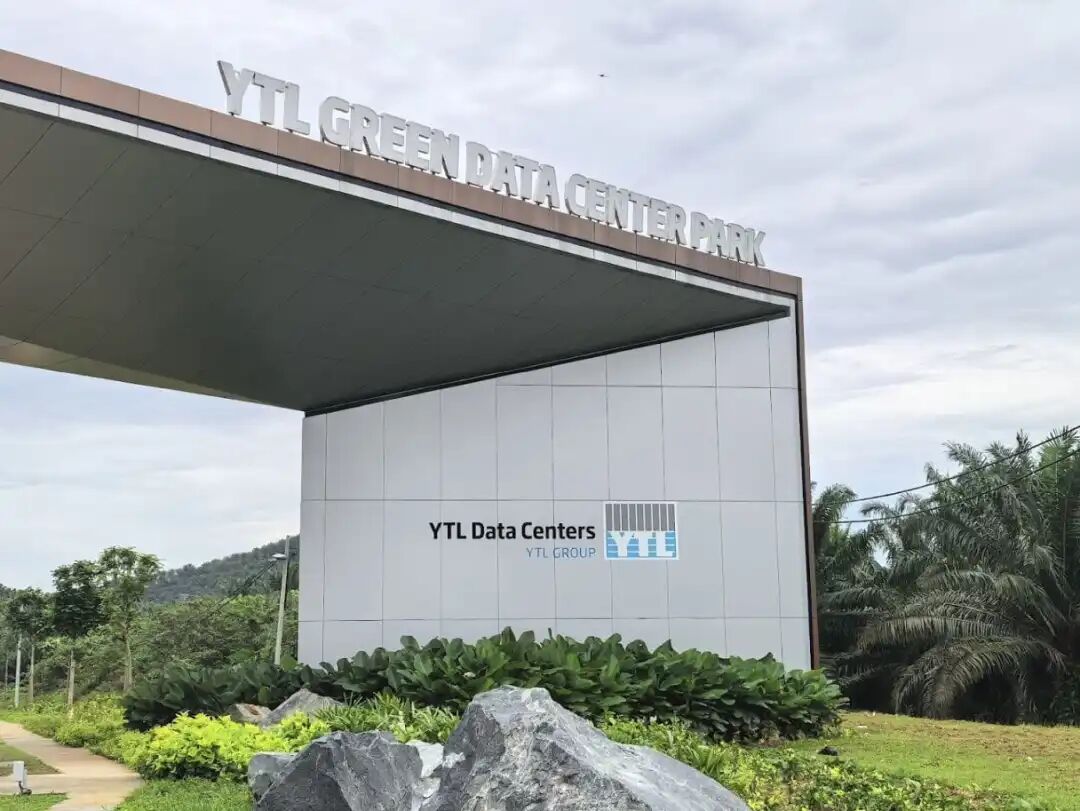
In the two small towns of Kulai and Sedenak, thirty kilometers north of Johor Bahru, where gambier was once boiled along the riverbanks, machine rooms have now grown up. Solar panels are spread across more than 1,600 acres of converted oil palm land, and the machine room buildings rise a head above the surrounding oil palm trees. In just over three years, Johor's data center capacity has surged from 10 megawatts to 1.3 gigawatts. According to a 2026 report by real estate consultancy Knight Frank, Johor's planned data center pipeline reaches 8,542 megawatts, ranking first in Asia-Pacific.
The technology park in Sedenak is now incorporated into a new development area of more than 7,000 acres called Ibrahim Technopolis, borrowing the name of Johor Sultan Ibrahim. At the park's unveiling, the president of the investment institution under the Johor state government explained the division of labor between the two sides to the media, saying that Johor provides land and scale, while Singapore provides capital and speed.
Nanyang Chinese rarely name anything without reference to water. More than a hundred years ago, the people who carried silver dollars and family letters back to their hometowns in China for Nanyang Chinese were called water guests. Singapore's water guests usually traveled south with the northeast monsoon in December and returned north with the southwest monsoon in June the following year, taking a commission of 10 to 20 percent in the early years, which later dropped to 3 percent as more people entered the trade. They did not write contracts or seek guarantees, relying on shared hometown and clan ties, and on knowing which village your family was in. The households that received the money would send back a short letter called a reply slip, mostly also written on their behalf by the water guest.
Later, "shuike" (water goods carriers) on both sides of the Shenzhen River specifically referred to people who smuggled goods across the border between Shenzhen and Hong Kong by carrying them on their backs. For example, the Hong Kong Port of the Hong Kong-Zhuhai-Macao Bridge once stopped a private car declared as empty, whose trunk contained about 280 kilograms of live lobsters, with 70 old-model professional graphics cards pressed underneath.
But in the eyes of those doing computing power business in Singapore and Malaysia, the graphics card resale trade on both sides of the Shenzhen River is just small-time. Those who truly operate at scale use Singapore entities to buy cards directly from upstream, ship the machines into data centers in Malaysia, insert several layers of nominee holding companies in between, and then lease the computing power to major Chinese companies. According to them, for a long period this did not even count as smuggling, because it was legal.
In February 2025, Nvidia listed Singapore separately in its financial report for the first time. In that fiscal year, revenue with billing addresses in Singapore was $23.684 billion, accounting for 18% of total revenue; by the quarter ending in late July, the proportion rose to 22%. A city-state of just over six million people once supported more than one-fifth of this chip giant's revenue.
And in a line of small print on the same page, Nvidia noted that customers used Singapore for centralized billing, but products were almost always shipped elsewhere, with goods actually arriving in Singapore itself accounting for less than 2% of that fiscal year's revenue.
In November 2025, Nvidia changed to disclosing revenue by the location of customer headquarters, and the Singapore column disappeared from its financial reports thereafter. As for Malaysia just across the water, it never appeared even once in Nvidia's financial reports during those years.
Until November 13, 2026, Malaysia's Ministry of International Trade and Industry was still reiterating that bringing AI chips into Malaysia required no permit, and only export and transshipment did. Three days later, the U.S. Department of Commerce issued new rules requiring licenses for exports of advanced chips to Singapore, Malaysia, Thailand, Indonesia, and Brazil, with only end users headquartered in the United States allowed to switch to monthly reporting; any data center worldwide providing large-scale computing power to companies headquartered in China would likewise require a license.
Within days, Moonshot AI canceled a $150 million contract to rent Nvidia B300 chips through Indonesia. To secure the cards, the company had originally agreed to prepay half the purchase price, while the industry norm was only 15%. Just two months earlier, ByteDance had jointly borrowed a $29.6 billion syndicated loan from multiple banks, with Chinese banks subscribing more than 60%, and people familiar with the matter said the money was mainly directed toward overseas AI infrastructure.
People running this business see this round of tightening as campaign-style enforcement: everyone pulls back during a crackdown, and once the storm passes, add a few more layers between Chinese customers and data centers, and the business can continue.
Just like Yoshiki Tanaka's "Legend of the Galactic Heroes," where the Galactic Empire and the Free Planets Alliance fought for over a hundred years, with the Autonomous Dominion of Fezzan wedged in between. On the surface, the two sides were locked in a life-or-death struggle, but their private dealings never ceased for a single day. There always had to be a place where both sides tacitly understood and were willing to extend credit, to complete their transactions for them.
Singapore is fundamentally a Chinese society, yet outwardly it must maintain distance from China; Malaysia is fundamentally an Islamic country, yet outwardly it draws close to China. And these two countries happen to be the two with the highest proportion of overseas Chinese in their populations.
At its narrowest point, the strait is less than one kilometer wide.
The Port Deed of the Tebrau River
On a Saturday around 1824, at five in the morning, Abdullah of Malacca set out from Singapore town with five Chinese.
He was the Malay secretary to the British colonial official and founder of Singapore, Raffles, later known as Munshi Abdullah—"Munshi" meaning teacher in Malay.
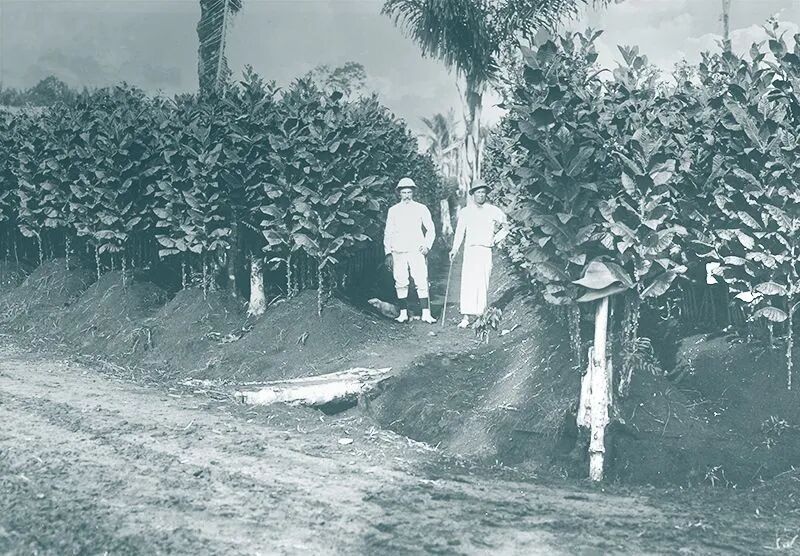
That day he wore a pair of torn trousers, draped an old cloth over his shoulder, wrapped a torn handkerchief around his head, and carried in his bosom a one-rupee copper coin, a small knife, a pencil, and a piece of paper. Their guide was a secret society chief, a Chinese born and raised in Malacca who ordinarily spoke Malay—known locally as a "Baba."
The group avoided the official roads, taking only wild trails, climbing over tree stumps, crossing swamps, and wading through mud. The Baba told him that if the roads were easy to travel, the police, soldiers, and Europeans would have come long ago. As they neared their destination, the Baba had Abdullah take over the bundle and umbrella, posing as a Malay beggar encountered by chance on the road, and instructed him to simply play dumb.
Past noon, they rested at a gambier plantation, where the people there offered him cucumbers and roasted sweet potatoes. He sat in the shade eating, while from the corner of his eye he secretly counted the weapons on the walls—large shields, iron tridents, long and short blades, and a row of muskets leaning against the wall.
At four in the afternoon, they arrived at a settlement deep in the forest. Before them were three large thatched longhouses, the longest over fifty meters. A moat was dug around the perimeter, with a drawbridge at the entrance that was only lowered for those recognized. Beyond the bridge were grass-covered pit traps. Lamps were lit inside the longhouse, and sharpened wooden stakes and bamboo poles were piled along the walls. There were about five or six hundred people inside, and fewer than twenty did not smoke opium.
At nightfall, drums sounded. Abdullah was shoved into the secretary's small curtained room and watched through a gap in the curtain. Five or six hundred people ate, drank, and made merry for an hour, the commotion like that of battle. Then music began to play, and the crowd sat in rows facing the idols, their faces flushed red like hibiscus flowers.
The chief took his seat on the high chair, and eight swordsmen drew their blades and stood on either side. A new recruit, disheveled and bare-chested, was escorted in, made to kowtow on the spot, and blades from both sides were pressed against his neck.
The chief asked who his parents were, whether they were alive or dead. Even if his parents were still living, the recruit had to answer, "My parents are both dead." Joining the society meant dying once to the mortal world. A vessel was placed before the idol, filled with arak—a Southeast Asian spirit brewed from coconut flower sap and rice—mixed with the blood of the society's members. The recruit cut his finger with a blade, let blood drip into the liquor, took a small sip, and then the chief and several hundred members drank in turn. After the ceremony, the chief instructed him to find the secretary the next day to collect a booklet printed with the society's rules and secret codes.
Next, a man with his hands bound behind his back was brought in. He refused to kneel and took more than a dozen strokes of the bamboo cane. Asked whether he would join the society, he remained silent throughout. The swordsman made as if to strike, but the chief raised his hand and called him off, then asked again—still he refused. The chief said, "Execute him tomorrow morning."
What Abdullah saw through the door curtain that night was what nineteenth-century Nanyang Chinese called a "kongsi."
In the Nanyang of that era, the word could refer to a plantation opened by several fellow townsmen as shareholders, or to an armed secret society bound by blood oaths to deities. The Tiandihui was a secret society that arose in Fujian and Guangdong during the Qing dynasty; Chinese in Singapore and Johor called it the "Ghee Hin Kongsi." A kongsi had its own incense hall, laws, and enforcers, as well as its own burial hill.
The kongsi's business first grew in gambier plantations. Boiling gambier consumed enormous amounts of firewood, and the rainforest around the plantations was cut down patch by patch, forcing plantation owners to move deeper into the forest.
By 1844, Singapore's forests were nearly cleared. Across the strait in Johor, the Temenggong Daeng Ibrahim—a powerful royal minister—held vast tracts of virgin forest but lacked manpower and money. He began issuing Malay documents called Surat Sungai to Chinese leaders, which the Chinese called "port titles." Whoever received a port title could open up land along a designated river and became the kangchu of that river. One river, one independent little kingdom.
That year, the 41-year-old Teochew man Tan Kai Soon is said to have led four thousand Ghee Hin brothers across the strait, traveling up the Tebrau River in what is now eastern Johor Bahru, and built a settlement on the riverbank named after his own surname—Tan Chu Kang—which at its peak housed five thousand people. Crocodiles lurked in the river and tigers in the forest, so they erected on the bank a shrine to Tua Pek Kong, the earth deity worshipped by Nanyang Chinese, to keep watch over them.
At noon on May 5, 1854, in Singapore town, a Hokkien and a Teochew quarreled over a catty of rice. Fellow townsmen from both sides gathered and took sides; hundreds poured onto the streets, shops bolted their doors, and clubs, stones, and blades flew through the air. The governor rode into town on a white horse to suppress the riot and was driven back by a mob that did not recognize him. By dawn on the third day, hundreds more men had appeared in the town—all summoned overnight by society leaders from the jungle and from the sailing vessels in the harbor. Over those ten-odd days, four to five hundred people died, three hundred houses were burned, Singapore's trade came to a halt, grain ships could not cross the strait, and the coolies along the Johor River were immediately cut off from food.
The Malay rulers of Johor knew exactly how to profit from this power. In 1873, Johor promulgated the eighty-one articles of the Kangchu Ordinance. Article 2 stipulated that the Kangchu would receive two rattan canes and a spear as symbols of authority; Article 11 permitted the Kangchu to establish private courts, detain offenders for no more than three days, impose no more than six strokes of the cane, and levy fines not exceeding ten dollars; Article 75 was the centerpiece of the entire ordinance—the Kangchu held exclusive rights within his jurisdiction to deal in opium and liquor, monopolize the pork trade, and operate gambling houses and pawnshops.
The capital for this kingdom came from Singapore. A typical Johor gambier company was usually formed by several planters sharing the same surname together with a Singapore boss who put up the money—in Hokkien, such a boss was called a "towkay." The towkay advanced rice and provisions to the plantation workers at four to six times the market price. The kangchu licenses themselves were split into shares and traded back and forth across the strait.
And the fuel that kept this machine running day and night was opium.
Singapore's prepared opium factories lit their fires at three o'clock every morning, boiling raw opium shipped from India into a dark, black paste.
The residue left after boiling was called "opium dross" and was sold cheaply to the poor; the ash left after the dross had been smoked once could be sold yet again. The rich used silver pipes with ivory mouthpieces, while coolies lay on the high bunks of opium dens, picking at the opium with silver needles by lamplight. A three-cent packet of prepared opium sold for forty cents—exactly half a day's sweat and blood for a coolie.
Wages were paid out by the towkay, and in the blink of an eye passed over the counter of the opium den, flowed into the hands of the syndicates that farmed the revenue farms, and were then converted into taxes paid to the colonial government and the Johor royal house. The so-called revenue farms meant the government leased the exclusive rights to sell opium and liquor to merchants as a whole package, awarded to the highest bidder; the merchant paid rent monthly and kept the rest of the proceeds.
From 1825 to 1910, in the Straits Settlements under British administration—Singapore, Penang, and Malacca—opium revenue consistently accounted for thirty to fifty percent of government annual income, reaching 59% in 1904; the Temenggong's opium and liquor revenue farm rent soared from $350 per month in 1847 to $8,000 in 1860. Most coolies labored their whole lives for nothing—opium consumed about two-thirds of their wages, nailing them firmly to the towkay's debt ledger.
From 1870 to 1879, the Hokkien merchant Zhang Fanglin, the Teochew merchant Chen Chengbao, and Johor's largest Kangchu, Chen Xunian, joined forces to farm the opium and liquor revenue of four territories at once—Singapore, Johor, Malacca, and the Riau Islands south of Singapore. The British merchants called it "the Great Syndicate."
In 1876, Zhang Fanglin paid out of his own pocket to turn an empty plot in front of the police court into Hong Lim Park. By 2000, it had been designated Singapore's "Speakers' Corner," becoming the only place in the country where citizens could hold public speeches and assemblies without applying for a police permit.
Coolies were shipped in endlessly from the sea. In the nineteenth century, Singapore was the labor trading platform for the entire Nanyang region; in the 1870s, about 50,000 people landed each year, and by around 1900, the number had risen to 200,000 annually. Penniless individuals traveled on the "credit ticket" system, owing their fare upfront; when the ship docked, they were still locked in the hold, waiting for the comprador of some mine owner or plantation owner to redeem their tickets and then lead them away like livestock. In South China, this business was called "selling piglets."
Tan Hiok Nee, who monopolized the tax farms of four territories, is said to have set sail in this manner. He was born in Jinsha Village, Haiyang County, Chaozhou; his father died when he was young, and he sold oil while carrying a pole. In 1853, he obtained his first port lease, and ten years later, he acquired four ports in a single week, the largest of which was named Sedenak Port after the colloquial name of his hometown.
In 1870, he was appointed as the Chinese headman of Johor, a position unprecedented and unmatched. That same year, he began construction of the Congxi Ancestral Hall in his hometown of Chaozhou, which took fourteen years to complete and cost approximately 260,000 silver dollars.
In 1875, Tan Hiok Nee suddenly sold off all his properties in Johor and retreated to Singapore overnight; the reason remains a mystery to this day.
Just a year before Tan Hiok Nee left Johor, in the Larut tin-mining area of Perak on the west coast of the Malay Peninsula to the north, the two major secret societies, Ghee Hin and Hai San, had already fought fiercely over mining sites and waterways. A quarrel at a gambling table could lead to Hai San capturing fourteen Ghee Hin brothers and hacking thirteen to death.
With the tin supply cut off, the British finally found an excuse to intervene. On January 20, 1874, the colonial steamer Pluto was anchored off Pangkor Island in the waters off Perak; the Governor of the Straits Settlements signed a treaty on board with Perak Malay nobles, under which Britain would dispatch a Resident whose advice must be sought and acted upon on all matters of administration other than those touching Malay religion and custom. Also on board were twenty-six Chinese, led by the heads of both Ghee Hin and Hai San. Larut was thereafter renamed "Taiping."
Hai San leader Chung Keng Quee later became the largest tin mine owner in Perak, donating 100,000 taels of silver to the Qing court to support military provisions, in exchange for a second-rank official position; in 1893, he purchased the old headquarters of the Ghee Hin company in Penang and converted it into his own grand residence, which today is known as the Pinang Peranakan Mansion.
The Gamble at Kampung Ah Fook
Around the time of the 1854 riot fought over a catty of rice, a 17-year-old from Taishan, Guangdong, arrived in Singapore by sailboat.
His name was Wong Ah Fook, and his hometown was Yanjing Village in Taishan. Unable to pay his passage, he sold himself to a carpenter to settle the debt; after enduring a year, he stayed on, and a few years later he was allotted a share in the carpenter's shop. In 1863, he built two warehouses for the Temenggong's agency in Singapore, and thus came to know the future Sultan of Johor, Abu Bakar.
In the decades that followed, the Johor royal palace was built by him, as were the prison and seawall in Johor Bahru. In December 1892, the Sultan's Istana Tyersall in Singapore was completed, also constructed by him; it is said to have been the first building in Singapore to have electricity.
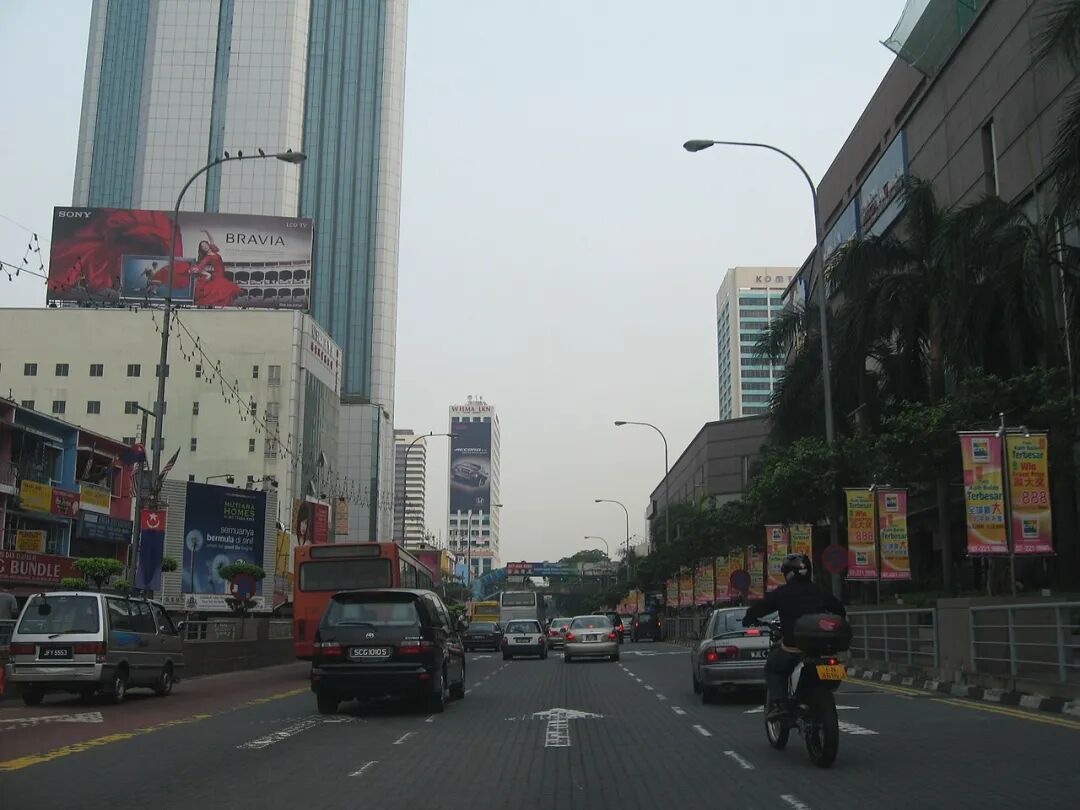
The Sultan's reward to him was a charter. In September 1892, Abu Bakar granted Wong Ah Fook a concession over a tract of land in Johor Bahru, with a 99-year lease and a nominal annual rent of just $120. The first right listed in the original Malay document was permission to open a gambling den within the territory. In Malay, a village is called a "kampung," and the area later became known as Kampung Ah Fook.
That was the era when Johor Bahru served as a casino for Singapore. Singapore had banned gambling outright as early as 1829; Johor had not. In 1903, the railway from Singapore to Woodlands opened, and gamblers would alight from the train and transfer to the Singapore or Johor ferries to cross the strait. Sundays drew the biggest crowds, and contemporaries likened Johor Bahru to the Monte Carlo of the East. Casino owners generously paid for gamblers' Sunday return train tickets to Singapore, and the third-class carriages on Sunday evenings were always packed to the brim.
Wong Ah Fook's casino operated right under the nose of the Sultan of Johor and within Singaporeans' weekends, inevitably drawing envy. In 1908, another revenue farm contractor wrote a letter complaining about unfair competition from Kampung Ah Fook, and the Sultan immediately ordered that outsiders be barred from gambling there, with police stationed at the casino entrance to block them. The two sides later reached an agreement: a monthly payment of $1,000 to the government, and the police withdrew. Then on New Year's Day 1915, the police were back at the casino entrance.
Wong Ah Fook filed a lawsuit, taking the Johor state government to court.
On August 7, 1915, the Johor High Court ruled in Wong Ah Fook's favor. The judge cited the constitutional declaration signed by the Sultan himself in 1908, holding that a person who rules by personal will rather than by law cannot be considered a true ruler; the Sultan too is subject to the law, and the court has the power to review the Sultan's orders.
Three years later, Wong Ah Fook died of illness at his home in Singapore. Today, there is still a Jalan Wong Ah Fook in downtown Johor Bahru.
Wong Ah Fook's generation slowly came ashore on the old planks of secret societies and revenue farms.
In 1890, Singapore outlawed secret societies; in 1909, it took opium into government monopoly. Johor was half a beat slower: in 1916 it ordered the dissolution of Ghee Hin, and by the end of the following year it abolished the kangchu system.
In 1955, Singapore enacted the Criminal Law (Temporary Provisions) Ordinance, and three years later added the power to detain secret society members without trial, on the grounds that witnesses feared retaliation and no one dared testify. This so-called temporary law has been renewed every five years, with the most recent term starting in October 2024. Today its target list includes loan sharks known as "Ah Long"; in 2019, the authorities used this law to detain the head and financier of a loan-sharking syndicate implicated in more than 1,800 cases of harassing debtors.
The old secret societies have dispersed, but the network of fellow townsmen and clansmen remains, only wrapped in a more respectable shell.
The first shell to emerge was the bank. In 1903, Wong Ah Fook, together with several Cantonese fellow townsmen, founded the Kwong Yik Bank, the first Chinese bank in Singapore. Its predecessor was actually an internal money house where Wong Ah Fook printed his own notes to pay wages on his plantations and collected workers' savings.
What truly established the Chinese banks was rubber. Singapore, formerly known as "Shilat," used the Straits dollar issued by the Straits Settlements. Rubber prices fell from 1.14 Straits dollars per pound in 1925 all the way to 4 cents at the trough of the Great Depression in 1932. Hoe Hong, Chinese Commercial, and Overseas Chinese—three banks—merged into today's OCBC Bank. The man who led the merger, Lee Kong Chian, was the son-in-law of rubber tycoon Tan Kah Kee.
Three years later, Wee Cho Yaw, whose ancestral home was in Kinmen, opened United Overseas Bank in a three-story building on the banks of the Singapore River, specializing in business with Hokkien merchants. Chung Khiaw Bank, later swallowed by UOB, was founded by Hakka tycoon Aw Boon Haw, who made his fortune from Tiger Balm and the Sin Chew Daily. In 1937, Aw Boon Haw built Haw Par Villa in Singapore, personally supervising the construction of the clay sculptures of the Ten Courts of Hell, the fourth of which was dedicated to punishing tax evasion and commercial fraud.
Yet on the Malay Peninsula, it was not so easy for the Chinese to come ashore safely and securely.
The British discovered that the guerrillas' rice, medicine, and intelligence all depended on the support of Chinese scattered along the forest edges.
From 1950 onward, some 500,000 people—the vast majority of them Chinese—were surrounded by military and police trucks before dawn and taken away whole families at a time before they could gather their belongings, herded into 450 barbed-wire-fenced "New Villages."
Robert Kuok, a Foochow native born in Johor Bahru, studied at Raffles Institution, a prestigious Singapore school, where he was classmates with Lee Kuan Yew. During the Japanese occupation, he worked as a clerk in Mitsubishi's rice department. After the war, he and his brothers founded Kuok Brothers, which at one point monopolized 80 percent of Malaysia's sugar market, earning him the title "Sugar King of Asia."
On May 13, 1969, racial bloodshed erupted in Kuala Lumpur. Two years later, the New Economic Policy, aimed at boosting the economic status of the Malays, was introduced, mandating that enterprises surrender shares to Malays and other indigenous peoples.
In his memoirs, Robert Kuok wrote that his shipping company was twice required to issue additional shares to Malay institutions, and he was told this was simply the price of his success.
Since identity was useful, some simply paid for it outright. "Datuk" is an honorary title in Malaysia, similar to a British knighthood, conferred by state sultans, state governors, or the Yang di-Pertuan Agong, who is rotated among the nine hereditary sultans. According to Agence France-Presse, 700 to 1,200 new Datuk titles are awarded nationwide each year, so much so that a politician joked, "You could throw a stone into the street and hit a Datuk."
In 2023, the Malaysian Anti-Corruption Commission dismantled a syndicate selling honorary titles, with black market prices openly listed: a Datuk sold for RM150,000, a higher-ranking Datuk Seri for RM250,000, and a Tan Sri for RM2 million. Only the Sultan of Johor, Ibrahim, refused to sell. He once publicly said that an intermediary offered RM2 million to buy one Tan Sri title from his quota. In the 2026 round of the Sultan's birthday honors, Johor awarded only four Datuk titles, all to police officers and civil servants.
In other states, titles are often tied to shady businesses. In 2021, the Pahang Palace revoked the Datuk Seri title of businessman Liao Shunxi, after police found that his syndicate was running transnational scams and had at least 34 law enforcement officers on its payroll.
Others made it ashore through a different path. Lin Wutong, a native of Anxi, Fujian, went to Southeast Asia from Xiamen at age 19 to work as a carpenter. In 1965, he cut roads through the Ulu Kali mountain northeast of Kuala Lumpur. The winding mountain road was originally expected to take 15 years, but he pushed through 180 landslides and completed it in three years, building what is now Genting Highlands.
On April 28, 1969, Genting obtained Malaysia's first and only casino license in history. According to Genting, it took only six hours from submitting the application to approval.
Today, the channel to shore is wider and quieter. Family offices, set up specifically by wealthy families to manage only their own wealth, numbered about 400 in Singapore at the end of 2020 and exceeded 2,000 by the end of 2024.
Penang-born Chinese Jho Low took another shortcut. In June 2009, he opened an account at a private bank in Singapore for a Seychelles shell company, and $700 million from Malaysia's sovereign wealth fund 1MDB immediately flowed into an account in Zurich.
The U.S. Department of Justice estimated that more than $4.5 billion was diverted from the fund by Jho Low and his co-conspirators. The money was turned into a Beverly Hills mansion, Monet and Warhol paintings, investment funds for The Wolf of Wall Street, and a 92-meter mega-yacht with two helipads. In 2016, the Monetary Authority of Singapore revoked the local commercial banking license of Switzerland's BSI Bank, the first such move since 1984.
On the evening of November 10, 2026, 73-year-old former Prime Minister Najib returned home to Kuala Lumpur under police escort, with his pardon converted to house arrest. Jho Low remains missing, and the yacht seized by the Malaysian government was sold to Genting Group for $126 million as early as 2019.
Myawaddy and Phnom Penh
In the 19th century, the Ghee Hin Kongsi needed a stretch of rainforest that the colonizers couldn't be bothered to enter, and a port charter issued by the Temenggong; in the 21st century, the underwater companies need exactly the same things—an enclave where state power cannot reach, a local warlord or powerful figure willing to take money as a protector, plus a blood vessel leading to China.
Along Southeast Asia's fragmented borderlines, such enclaves form a chain. In the Golden Triangle where Thailand, Myanmar, and Laos meet, Zhao Wei, a timber merchant from Northeast China, leased 10,000 hectares of land by the Mekong River from the Lao government in 2007, also on a 99-year lease. In the special zone, clocks run on Beijing time, the currency is the renminbi, and Chinese signs line the streets.
A few hundred kilometers west lies Kokang in northern Myanmar. After 2009, four major families including Bai Suocheng grew powerful under the patronage of the Myanmar military, separately controlling administration, militia, police, and over a hundred closed gambling and scam parks. In the 41 parks controlled or jointly operated by the Bai family alone, gambling- and scam-related funds exceeded RMB 29 billion.
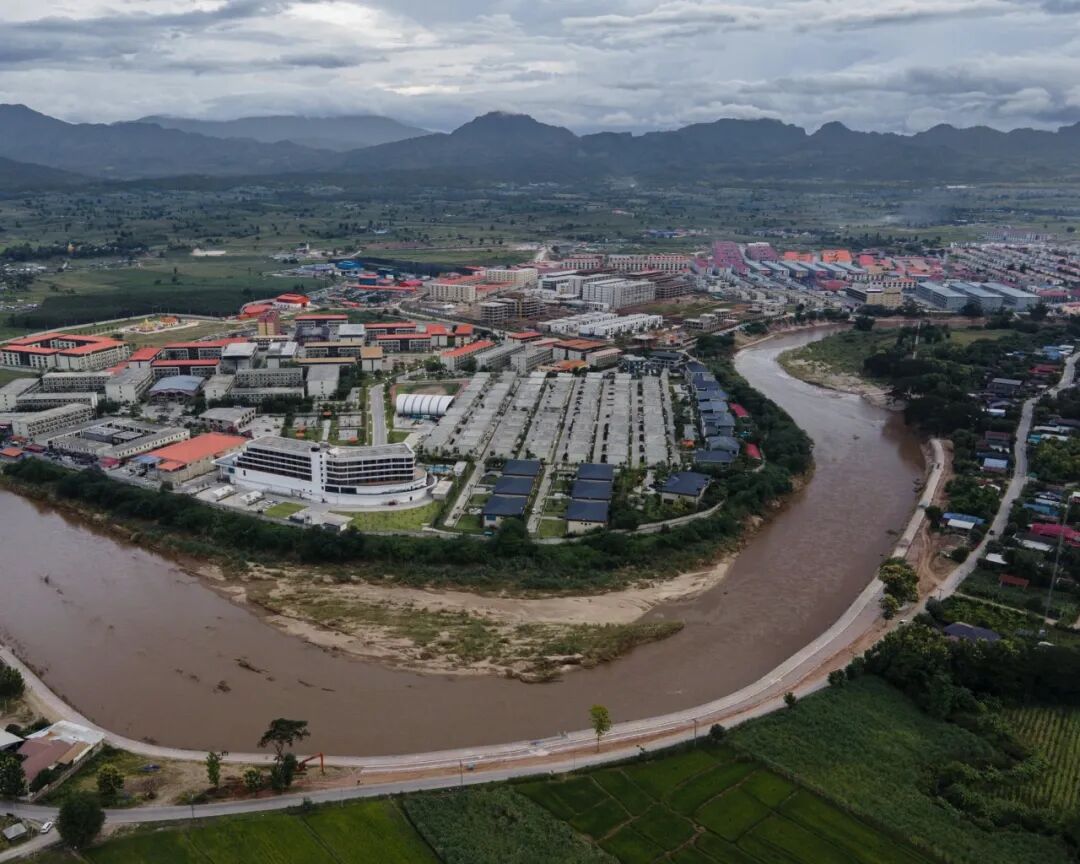
At the end of 2023, the four major families of Kokang were destroyed amid gunfire, and by 2026, core members were successively led to the execution ground. But Kokang has fallen, while Myawaddy—a small city on the Thai-Myanmar border facing Thailand across the river—remains.
Here, a term from the coolie lodges of 19th-century Singapore's Chinatown, Kreta Ayer, has been revived verbatim. People tricked into the parks are collectively called "piglets"; a single piglet is worth RMB 100,000 to 200,000, depending on education level and typing speed.
Where does the money earned by these parks ultimately go?
A source told Dongcha Beating that although the operators of many parks hide out year-round in Myanmar and Cambodia, many of the major shareholders who convene board meetings according to the articles of association and take the lion's share of dividends have long since laundered their identities and moved ashore, living in Kuala Lumpur.
On March 15, 2020, the "Investor Appreciation Gala" of Myawaddy's Dongmei Park was openly held at the Marriott Hotel in Kuala Lumpur; the park's promoter, Yin Guoju—known as "Broken Tooth" and a former head of Macau's 14K—also served in the same year as chairman of a Malaysian listed company.
In Cambodia, the bosses running scam and gambling operations, known in the trade as "plate owners," don't even need to maintain private armies. Just like buying a Datuk title in Malaysia, they directly buy the title of "Oknha" in Cambodia. The Cambodian government confers the title of Oknha on major donors, with the threshold rising from $100,000 all the way to $500,000, yet the number of recipients has doubled instead—631 people were conferred over the sixty years from 1955 to 2016, while 711 people were conferred in the mere nine years from 2017 to 2025.
Chen Zhi of the Prince Group is one such figure. Born in 1987 in Lianjiang, Fuzhou, he earned his first pot of gold in his hometown by running internet cafes and setting up private game servers. In 2014, he became a Cambodian citizen; four years later he bought a Cypriot passport; in 2020 he was conferred the title of Senior Lord, became an adviser to former Cambodian Prime Minister Hun Sen, and opened his own Prince Bank.
In October 2025, the U.S. Department of Justice indicted Chen Zhi and simultaneously filed a civil forfeiture action against approximately 127,000 bitcoins. Two months later, Cambodia swiftly stripped him of his citizenship and title. On January 6, 2026, Chen Zhi was arrested in Phnom Penh, and the next day he was put on a flight to Beijing.
The Balcony on Bukit Timah
One hundred and fifty years ago, money in these waters flowed north.
The hard-earned savings of coolies on the banks of the Johor River—after deducting cigarette money and the boss's interest—had their remaining scraps stuffed into letters, handed to water couriers who traveled north with the monsoon, and delivered months later to ancestral halls and families in Chaoshan and southern Fujian.
Later, the water couriers' business grew large enough to spawn dedicated remittance houses that sent money and letters on behalf of overseas Chinese. Even when the British colonial government forcibly pushed official postal branch offices in Singapore in 1876—sparking bloody riots incited by Teochew merchants—and even when the Pacific War broke out and Singapore and Hong Kong fell in succession, with the Japanese military blockading sea routes, the private remittance houses could still route money home through jungle paths via Mong Cai in Vietnam and Dongxing in Guangxi.
Now, the waterway has reversed. Money flowing out of China and graphics cards flowing out of the United States collide head-on at this Southeast Asian crossroads.
Some of the money flowing south is dirty. In the jargon of the black and gray industries, money wired in by victims and gamblers is called "material." The "gambling material" lost by gamblers is the cleanest—rarely reported to police, and laundered for the lowest commission. Money obtained by impersonating public security and judicial officials is the hottest to handle, and carries the highest cut. Gangs responsible for pooling money through domestic bank cards, cashing it out, and converting it into the U.S. dollar-pegged stablecoin USDT are called "car teams," and the dens dedicated to laundering are called "water rooms."
Nineteenth-century water couriers built trust on shared clans and hometowns; today's car teams and racket bosses trust no one in the dog-eat-dog jungle. So a batch of escrow platforms grew up on Telegram. Car teams first deposit a sum of USDT on the platform, the platform pulls both buyer and seller plus the escrow party into a group to hold the funds in custody, and only releases the money once it confirms the funds have arrived clean.
The largest is Huione Guarantee, under Cambodia's Huione Group. From its launch in 2021 to its ban in May 2025, Huione Guarantee handled over $31 billion in transactions, while the group's Huione Pay processed at least $103 billion in volume, billing itself as the "Alipay of Southeast Asia."
Another Chinese-focused business, "Xinbi Guarantee," registered in Colorado, USA, moved its merchants to an encrypted chat app developed by a Singaporean company after being banned by Telegram. On September 9, 2026, the U.S. Treasury Department designated it as a transnational criminal organization and froze over $52 million in assets. Xinbi Guarantee announced that same day it would switch to another stablecoin to continue operations. As blockchain analytics firm Elliptic put it, the financial networks in these waters are merely migrating, not collapsing.
The laundered fortunes must ultimately find the safest harbor.
On August 15, 2023, Singapore deployed over 400 police officers in an island-wide sweep, simultaneously arresting ten Chinese nationals in sprawling bungalows in the established central wealthy district of Bukit Timah and Nassim Road, as well as in luxury homes on Sentosa Cove's Pearl Island. None of the ten were Singaporean citizens or permanent residents, but their passports spanned seven countries: China, Cambodia, Cyprus, Vanuatu, Turkey, St. Kitts and Nevis, and Dominica.
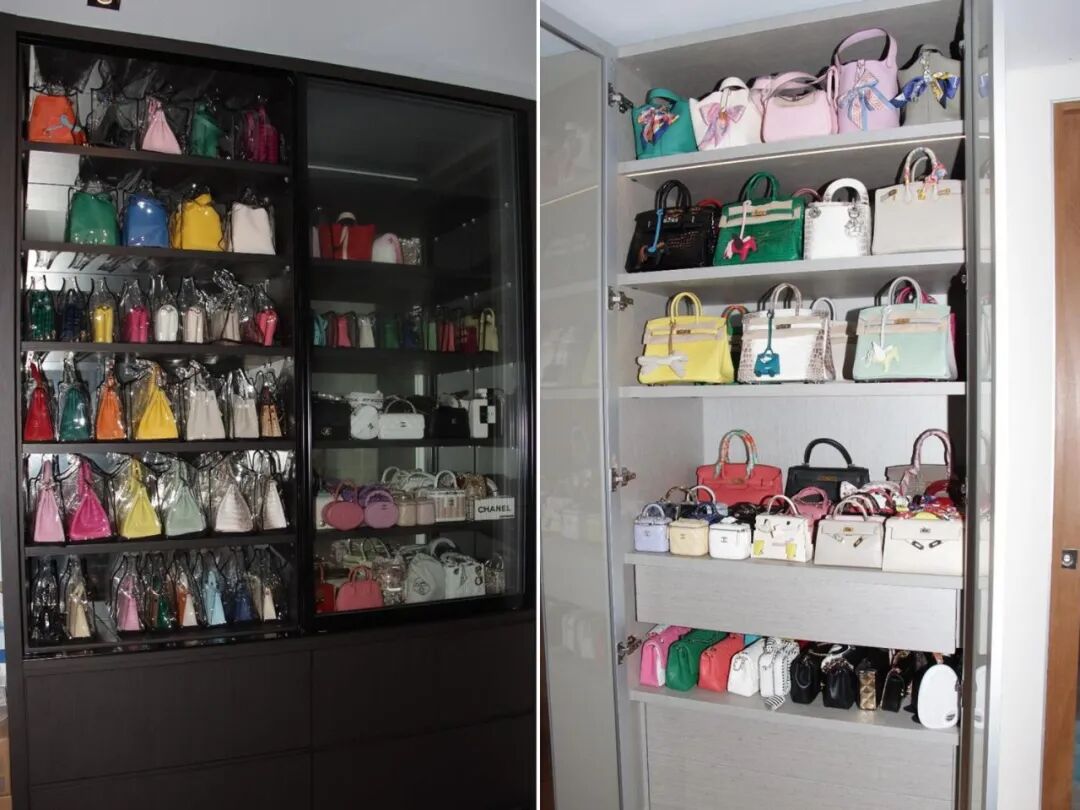
Police seized boxes of gold bars, hundreds of designer handbags, over a hundred luxury watches, thousands of bottles of fine wine, a grand piano, and 56 Bearbrick figures. The seized assets ballooned from S$1 billion in the first day's announcement to over S$3 billion, and the Singaporean government spent S$2.65 million over two years just renting warehouse space to maintain these ill-gotten goods.
In July 2026, Deloitte was commissioned to auction 47 luxury cars, including at least 11 Rolls-Royces. One Phantom had sat in the warehouse for nearly three years, with only 284 kilometers on the odometer.
All ten defendants pleaded guilty and received sentences ranging from 13 to 17 months. Most were deported to Cambodia after serving their terms. The fugitive Su Binghai was driven by an employee across the Johor Causeway on the night of the raid and calmly flew out from Kuala Lumpur International Airport two days later. Cross-border investigative journalists later found that on the seventh day after fleeing Singapore, a company under Su Binghai's name purchased nine apartments near Buckingham Palace in London in one go; by late 2024, he splashed £12.4 million at a London auction to acquire three Jurassic dinosaur skeletons.
Singaporean authorities issued fines totaling over S$27 million to nine financial institutions, including Credit Suisse, UBS Singapore branch, and local United Overseas Bank.
But former industry practitioners told Beating that Singapore has always been fully aware of where this money comes from—it simply needed to absorb hot money from various sources in earlier years. Now that Singapore's economic output has pulled ahead of Hong Kong, with pockets full, it naturally has the luxury of being selective about its clients.
Yet the supporting services beneath the surface have never ceased. Singapore company secretary Xie Yong was the sole named director of 980 local companies in early 2021, managing shell companies for Chinese clients; among the nominee directors he recruited, some charged only S$50 per name. When Malaysia's Inland Revenue Board investigated the shadow economy in 2026, it found that about 90% of the companies involved had shares held by local nominees, and among the nominal major shareholders were even homeless people from the streets.
Seventy Kilometers off the East Coast
About seventy kilometers off Johor's east coast lies a 1,200-square-kilometer anchorage, roughly the size of Hong Kong.
It sits precisely outside Malaysia's territorial waters but within its exclusive economic zone, where the coastal state can regulate resources in the sea but cannot regulate passing ships. Nautical charts label it the "Eastern Outer Port Limits," and on any given day over a hundred giant vessels float on its surface, with maritime consultants estimating that nearly half are linked to Iran. In late July 2026, an Iranian tanker named HUMANITY—330 meters long, equivalent to the Eiffel Tower laid horizontally across the sea—transited the Singapore Strait, switched off its Automatic Identification System broadcasting its position outside Malaysian waters, and went completely dark on radar screens. That month, a total of 18 Iranian-flagged tankers sailed here and then vanished into thin air.
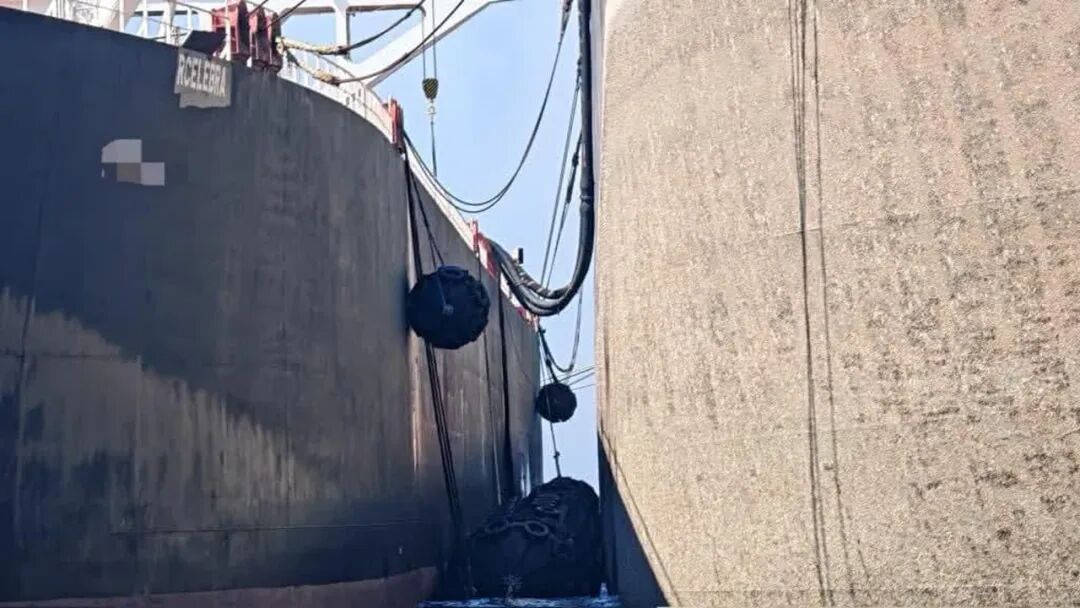
Transferring oil between ships at sea is called ship-to-ship transfer in industry jargon. In late January 2026, two sanctioned tankers were caught in the act of conducting a transfer off Penang, one of them carrying crude oil worth $129 million. As a result, both vessels were permitted to weigh anchor after paying a $76,000 bond under Malaysia's maximum maritime law penalty standard—the fine amounting to only six ten-thousandths of the cargo's value. The giant vessel loaded with crude oil slowly rounded Singapore and dropped anchor again off Johor.
On this stretch of sea, even the national territory itself has been renamed and shipped in.
When Singapore gained independence in 1965, its land area was 581.5 square kilometers; by mid-2025 it had expanded to 736.3 square kilometers. The extra 155 square kilometers was mostly reclaimed using sand from neighboring countries.
Malaysia banned sand exports in 1997, and Indonesia banned sea sand in 2002, so exporters simply reclassified sea sand as "land sand" on customs declarations. In the Riau Islands south of Singapore, more than twenty small islands have been literally sucked off the nautical charts by sand dredgers.
In October 2024, Indonesia's fisheries minister was on a boat tour of Batam, the largest island in the Riau Islands closest to Singapore, when he intercepted a 130-meter sand-suction vessel in open waters. On deck stood crew members including 13 Chinese nationals, and in the hold sat tens of thousands of cubic meters of sea sand pumped up over nine straight hours. The captain insisted the sand had been dredged from off Muar on western Johor and was bound for Changi in eastern Singapore. A month later, Indonesian authorities, unable to prove whether the sand was Indonesian or Malaysian, let the ship go.
Crude oil and sea sand switch nationalities at sea, while AI chips switch identities in onshore warehouses.
In Texas, a businessman peeled the factory labels off Nvidia H100 and H200 chips, slapped on a fabricated brand called SANDKYAN, and declared them ordinary computer components. In Florida, a real estate company called Janford Realtor, which had never sold even half a house, funneled 400 A100 chips into China via Malaysia and Thailand in just a few months. In March 2026, the U.S. Department of Justice indicted the co-founder of a major server manufacturer—widely believed by the media to be Supermicro. Prosecutors wrote in the indictment that a Southeast Asian company placed $2.5 billion in server orders over two years; the defendant had pre-staged thousands of dummy servers that couldn't even boot, so when auditors came to inspect, the fakes sat neatly stacked in the warehouse while the real machines had long since shipped to China.
At the free trade zone of Kuala Lumpur International Airport, customs intercepted 72 and then 30 servers packed with AI chips in June and October 2026, declared on paperwork as computer parts and electronic components respectively.
These re-skinned chips ultimately ended up in data centers in Johor. Data centers guzzle power—and they guzzle water.
Singapore's history of drawing water from Johor stretches back further than its sand purchases. A water supply agreement signed in 1962 remains in force today, allowing Singapore to draw up to 250 million gallons of raw water per day from the Johor River at a price fixed at 0.03 ringgit per thousand gallons—unchanged for over sixty years.
The pipes run along the Johor Causeway across the strait. Today, the river upstream of that old pipeline must simultaneously feed citizens on both sides, sand dredging operations, and ever-denser data centers.
In late October 2025, a washing pond at a sand quarry in Kota Tinggi, southeastern Johor, burst its banks, sending yellow mud slurry pouring into the Johor River. Raw water turbidity readings skyrocketed from the usual 400 to 37,400—a more than ninetyfold spike. Water treatment plants along the river, including the plant Singapore's water agency operates in Johor, all shut down. Eight hundred thousand people lost water supply, and over a ton of dead fish floated on the river's surface. By November 2026, the Johor state assembly disclosed that 19 operating data centers across the state had originally applied for 73.08 million liters of water per day; the state government, gritting its teeth, approved less than a third of that.
In Gelang Patah on the western outskirts of Johor Bahru, a hill called Bukit Resam has been largely flattened, clearing 43 hectares of land for a data center campus. Krishnan, an aircraft engineer living 400 meters from the construction site, had to buy two new air conditioners and keep his doors and windows tightly shut so his family could sleep peacefully away from the roar and dust. On February 7, 2026, he and more than fifty neighbors blocked the construction site entrance, launching Malaysia's first anti-data-center protest in history. The developer's appeasement plan was to lay an additional 10,000 square meters of dust netting and offer free car washes to nearby residents.
The 1,056-meter Causeway
Morning in Johor Bahru begins at 4 a.m.
Motorcycle lights before the checkpoints merge into a long red dragon, inching toward the other side of the strait. Every day, three to four hundred thousand Malaysians cross the sea to work in Singapore like migratory birds, and on peak days, the two land checkpoints between Malaysia and Singapore handle nearly 589,000 crossings in a single day.
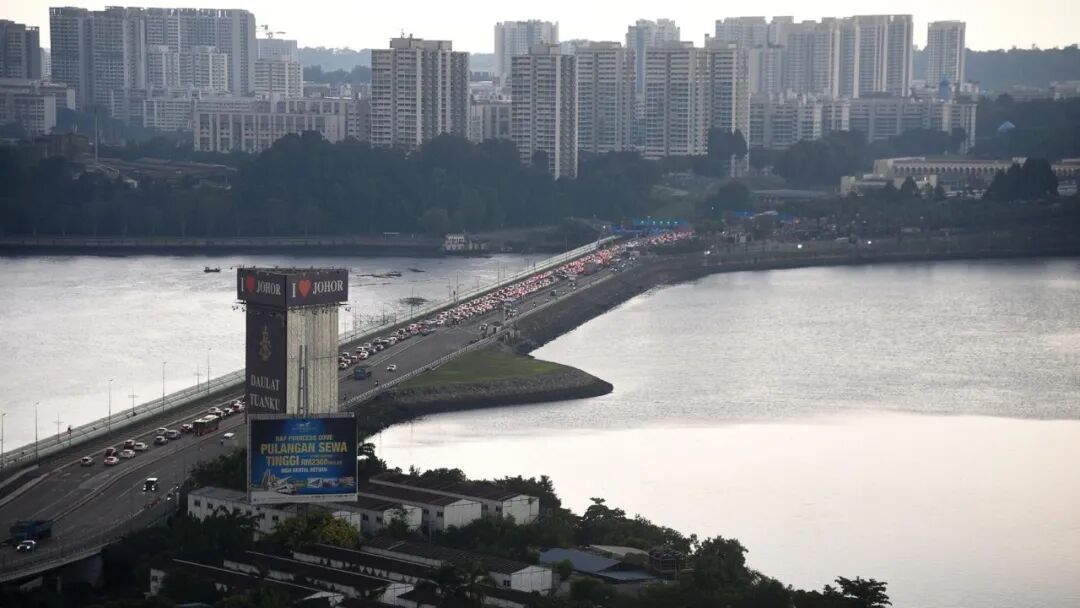
Of the two checkpoints, the older one sits on the Johor Causeway. Built in 1924, this causeway connects Johor Bahru and Woodlands and is actually only 1,056 meters long.
When traffic came to a dead stop, impatient people simply abandoned their vehicles and walked. On a Friday night in January 2025 during the monsoon rains, someone walked 36 minutes along the edge of the lane through the rain to clear the checkpoint; in July, when Johor bus drivers went on strike, thousands of workers had no choice but to walk across the causeway.
People doing business between Malaysia and Singapore told Dongcha Beating that the scene was strikingly similar to migrants trekking through Central America to enter the United States. Heavy trucks roar past right beside them, and nearly every year nighttime travelers lose their lives on the causeway.
On weekends, the flow reverses. Over a century ago, Singaporeans took Sunday trains and ferries across the sea to gamble in Kampong Ah Fook; today they drive their own cars over to fill up on cheap gasoline, get massages, and clear supermarket shelves, with more than 11 million arrivals in the first seven months of 2025 alone. On the water east of the causeway, the cross-border metro linking Johor Bahru and Woodlands has already been joined up, and when it opens in early 2027, the crossing will take just five minutes.
Heading west along the coast, on four artificial reclaimed islands at the western mouth of the strait stands "Forest City," an offshore new town jointly built by Chinese developer Country Garden and a local Johor joint-venture partner. This new town, once billed as home to 700,000 people, has the local joint-venture partner holding a 30 to 40 percent stake, and the controlling shareholder behind it is none other than the Sultan of Johor.
From mid-2025 to mid-2026, only 13 homes sold in the entire Forest City over the course of a year. Warning signs on the beach read "Beware of Crocodiles, No Swimming," and a lone yacht was moored offshore. By July 2026, Johor police had just arrested 335 telecom fraud suspects on the island, 309 of them Chinese nationals, who had relocated to the island from Cambodia only a few weeks earlier.
On the same island, Silicon Valley utopian believers had also briefly set up camp.
Former Coinbase CTO Balaji rented a venue on the island and launched Network School. In July 2026, the city hall revoked the license, and the very next day, Balaji had already signed a memorandum of cooperation with Kazakhstan.
There had previously been rumors that Forest City would be saved by issuing casino licenses. The Menteri Besar of Johor state specifically took to Facebook to debunk them, saying that since the era of the late Sultan Ibrahim, Johor had shut down casinos within its borders, and the current Sultan would never allow casinos to reopen in Johor.
The late Sultan mentioned by the Menteri Besar was the very one who, a century ago, stationed police at the entrance of the Wong Ah Fook gambling den; and the current Sultan, also named Ibrahim, is his great-grandson. This master of Johor Bahru is now also the Yang di-Pertuan Agong of Malaysia, with roughly three hundred luxury cars to his name, including a 1936 Mercedes 540 said to have been a gift from Hitler to his great-grandfather. He also commands the Royal Johor Military Force, the only state private army in all of Malaysia owned by a royal household.
In 2010 he obtained a train driver's license, and the following year, when Malayan Railways ran its final train from the Tanjong Pagar terminus in Singapore, the man at the controls driving the train back to Johor Bahru was the Sultan himself.
On the waters of the strait, relics of an old era are being dismantled bit by bit. For example, fishermen once drove wooden stakes into the shallows and built stilt wooden huts for fishing and fish farming, which locals call "kelong." The last few remaining kelongs in Singapore are also being demolished, with the maritime authority setting a clearance deadline of December 31, 2026.
Only on the twenty-first day of the first lunar month each year does the deity procession in Johor Bahru's old town still march until well past midnight.
The Johor Ancient Temple, an old temple of the Johor Bahru Chinese community, houses five deities belonging to the Teochew, Hokkien, Hakka, Cantonese, and Hainanese dialect groups, divided by ancestral origin. Every year in the first lunar month, the temple carries the deity statues through the streets. At 7:20 PM on March 9, 2026, the night procession set off, with over ninety floats leading the way and tens of thousands of devotees escorting the palanquins on foot around the city for eight kilometers, arriving more than two hours later at the main stage on Wong Ah Fook Street. Among the crowd was a 41-year-old French R&D director who personally shouldered a palanquin for a stretch. As the procession set off, devotees shouted in unison in Teochew and Hokkien: "Heng ah, Huat ah!"
Old-timers in Johor Bahru remember that this century-old deity procession once had years when no one could lift the palanquin. After gambier and pepper declined in the early twentieth century, fewer and fewer Chinese youths were willing to put in the effort to carry the deity palanquin, and the ancient temple at one point had to pay the poor and Indians to carry it.
Later, a saying gradually spread through the city that a poor young man had turned his luck around and struck it rich because he carried the palanquin for the ancient temple. Since then, the number of Chinese eager to carry the deity palanquin has grown year after year.
On the Mianyu Ting burial ground, the public cemetery of the Johor Bahru Chinese community, there is a lone grave completed in 1921 called the "Ming Tomb." In 1916, the Ngee Heng Company was ordered by the Johor government to dissolve, and the twenty thousand dollars left after liquidation was awarded by the court to Foon Yew School, founded by the Johor Bahru Chinese, with the sole contractual condition that Foon Yew must send people to pay respects at the Ming Tomb every year.
The elders say that beneath the Ming Tomb there is actually not a single set of remains—what is buried is only the ancestral tablets of the Ngee Heng Company from those years. Today, Foon Yew High School is already one of the largest Chinese independent high schools in Malaysia, with three campuses and more than fourteen thousand students and teachers, and the school board of directors, composed of leaders of the five clans, still goes every spring and autumn to bow and pay respects before that grave where the society's tablets are buried.
Tan Kiah Soon, who crossed the sea one hundred and eighty years ago with four thousand Ngee Heng brothers to open up Johor Bahru, was buried after his death in a rubber plantation in Kangkar Tebrau. Later the rubber plantation was sold to a real estate developer, and the old port master's grave could no longer be found.
It was his ancestral tablet, however, that was later fished up from the Whampoa River in Singapore across the strait.
And now some people smuggling chips are already scouting out the next stop.
Some have set their sights on Canada, where there are many Chinese, it is close to the United States, and the weather is cold, making data center cooling cheap—the only drawback is that labor is a bit expensive.
-END-


Welcome to join the official BlockBeats community:
Telegram Subscription Group: https://t.me/theblockbeats
Telegram Discussion Group: https://t.me/BlockBeats_App
Official Twitter Account: https://twitter.com/BlockBeatsAsia
